Son Doong Cave Vietnam – World’s Largest Underground Wonder
Son Doong Cave
Hidden deep within Vietnam’s Phong Nha-Ke Bang National Park lies the magnificent Son Doong Cave, the largest cave in the world. Known for its awe-inspiring size, underground jungle, and massive stalagmites, Son Doong Cave is not just a geological wonder—it’s a portal into another world. For explorers and adventurers, this cave represents one of the last untouched frontiers on Earth.
The Discovery of Son Doong Cave
Son Doong was first discovered in 1991 by a local man named Ho Khanh. Still, it remained unknown to the wider world until 2009, when British cave explorers from the British Cave Research Association officially surveyed it. What they found inside changed the world of speleology forever. Measuring over 5.5 miles long and reaching heights of more than 650 feet, the cave could easily fit a 40-story skyscraper inside.
Son Doong Cave, Vietnam
Located in central Vietnam’s Quang Binh province, Doong Cave sits inside the protected Phong Nha-Ke Bang National Park, a UNESCO World Heritage site. The park is known for its stunning limestone karst formations, underground rivers, and biodiversity. Visitors to Son Doong not only experience the cave itself but also witness the pristine forests, mountain ranges, and rivers that make this part of Vietnam truly spectacular.
The name “Son Doong” translates to “Mountain River Cave,” an apt description for the underground river that once carved its passage through the limestone rock. Over millions of years, the force of water sculpted this massive subterranean wonder.
Son Doong Cave Map
The Son Doong Cave map reveals a vast underground system filled with unique formations, skylights, and chambers the size of entire city blocks. The main passage is over 200 meters high and 150 meters wide in certain areas. The cave’s map also highlights its underground river, “Great Wall of Vietnam” (a 90-meter-tall calcite barrier), and lush underground jungle, where sunlight filters through massive sinkholes known as dolines.
These dolines create natural skylights that allow trees and other vegetation to thrive inside the cave—a phenomenon found in very few places on Earth. The map also shows interconnected passages leading to smaller, unexplored chambers, making Son Doong one of the most mysterious caves ever found.
Son Doong Cave Tours
Because of its delicate ecosystem and extreme size, access to Son Doong is highly restricted. Only a limited number of tourists are allowed each year, making Son Doong tours one of the most exclusive adventures in the world.
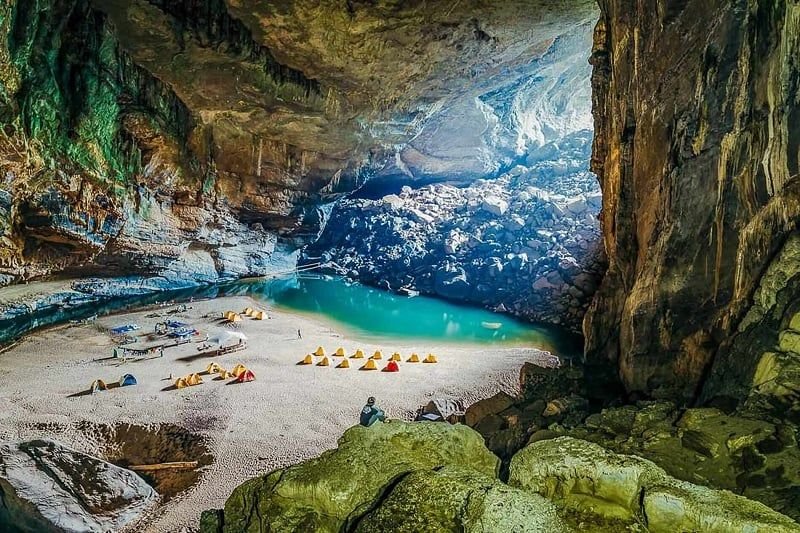
Oxalis Adventure, the only authorized tour operator, leads these expeditions. A typical Son Doong tour lasts 4 to 5 days and involves trekking through dense jungle, crossing rivers, and camping inside the cave itself. The experience includes walking through enormous chambers, swimming in underground pools, and sleeping under the natural skylight where ferns and trees grow.
Tours require good physical fitness since participants must hike roughly 25 kilometers through rugged terrain. Professional guides, porters, and safety experts accompany every group, ensuring both safety and environmental protection.
Exploring the Hidden World of Son Doong
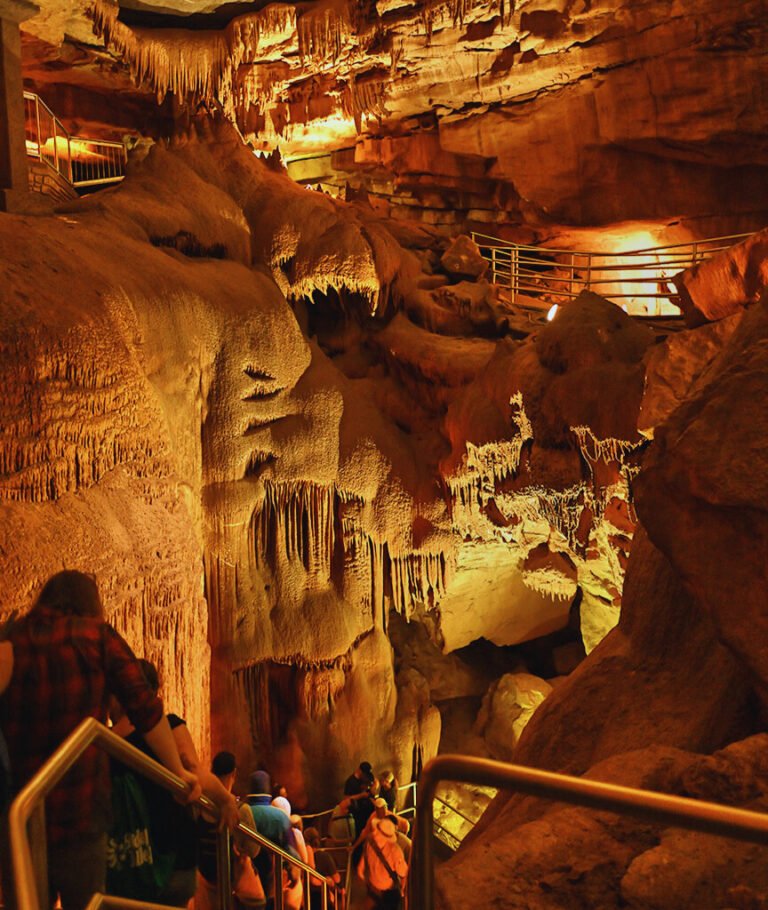
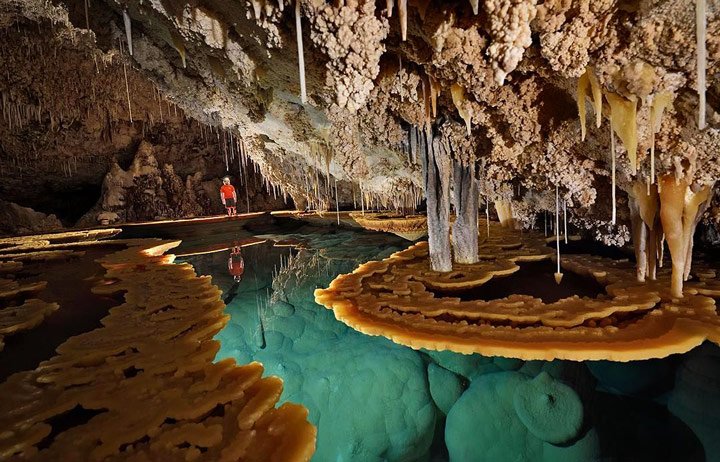
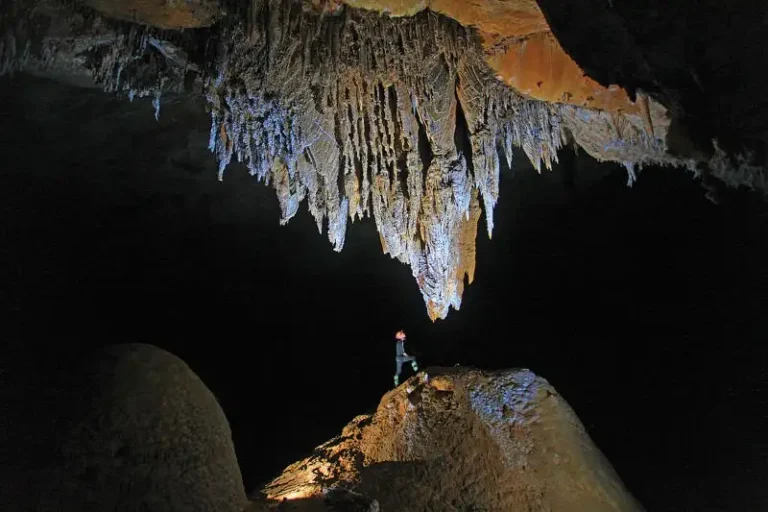
Inside the cave, visitors encounter surreal formations such as stalactites resembling chandeliers and stalagmites reaching up like ancient towers. Mist rises from the underground rivers, creating an otherworldly atmosphere. Biologists have discovered unique plant and animal species adapted to the cave’s ecosystem, many of which are still being studied.
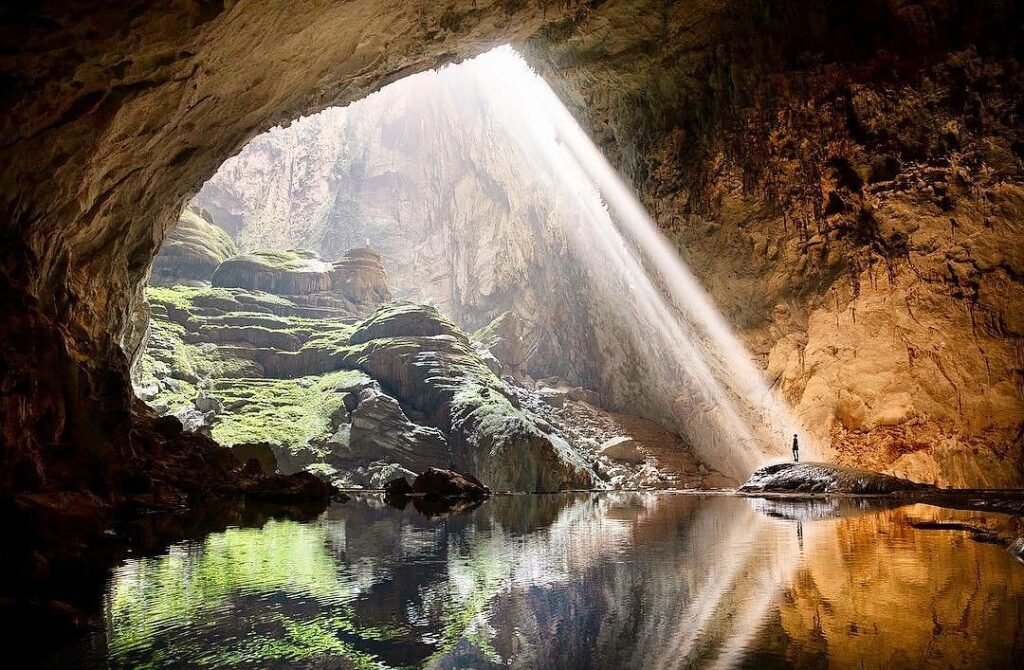
The underground jungle within Son Doong is perhaps its most fascinating feature. Sunlight from collapsed ceilings supports a miniature forest complete with vines, moss, and shrubs. This natural skylight makes the cave feel like an alien world hidden below Earth’s surface.
Why Son Doong Cave Is So Special
Son Doong’s immense scale sets it apart—it is over twice the size of Malaysia’s Deer Cave, once considered the world’s largest. But beyond size, Son Doong stands out for its combination of natural light, underground rivers, and thriving vegetation.
The cave also plays a critical role in scientific research. Geologists study its mineral structures to understand Earth’s evolution better, while climatologists use its formations to track ancient weather patterns. Environmental scientists emphasize its importance in maintaining regional biodiversity and groundwater systems.
Best Time to Visit Son Doong Cave
The ideal time to visit Son Doong is from February to August, during Vietnam’s dry season. The weather is more stable, with less chance of flooding. Tours are typically closed from September to January due to heavy rainfall and rising water levels that make certain passages unsafe.
Since tour slots are limited and often booked months in advance, it’s best to plan early.
Son Doong Weather
The weather in the Phong Nha region is tropical, with hot, humid summers and cooler winters. Inside the cave, temperatures remain constant year-round—around 68°F to 73°F (20°C to 23°C). The humidity is high, often exceeding 90%, which helps preserve the cave’s delicate formations.
Even though it’s warm, the moisture and darkness can make it feel cooler during long treks. Proper clothing, footwear, and waterproof gear are essential for comfort and safety.
Son Doong Cave Photos
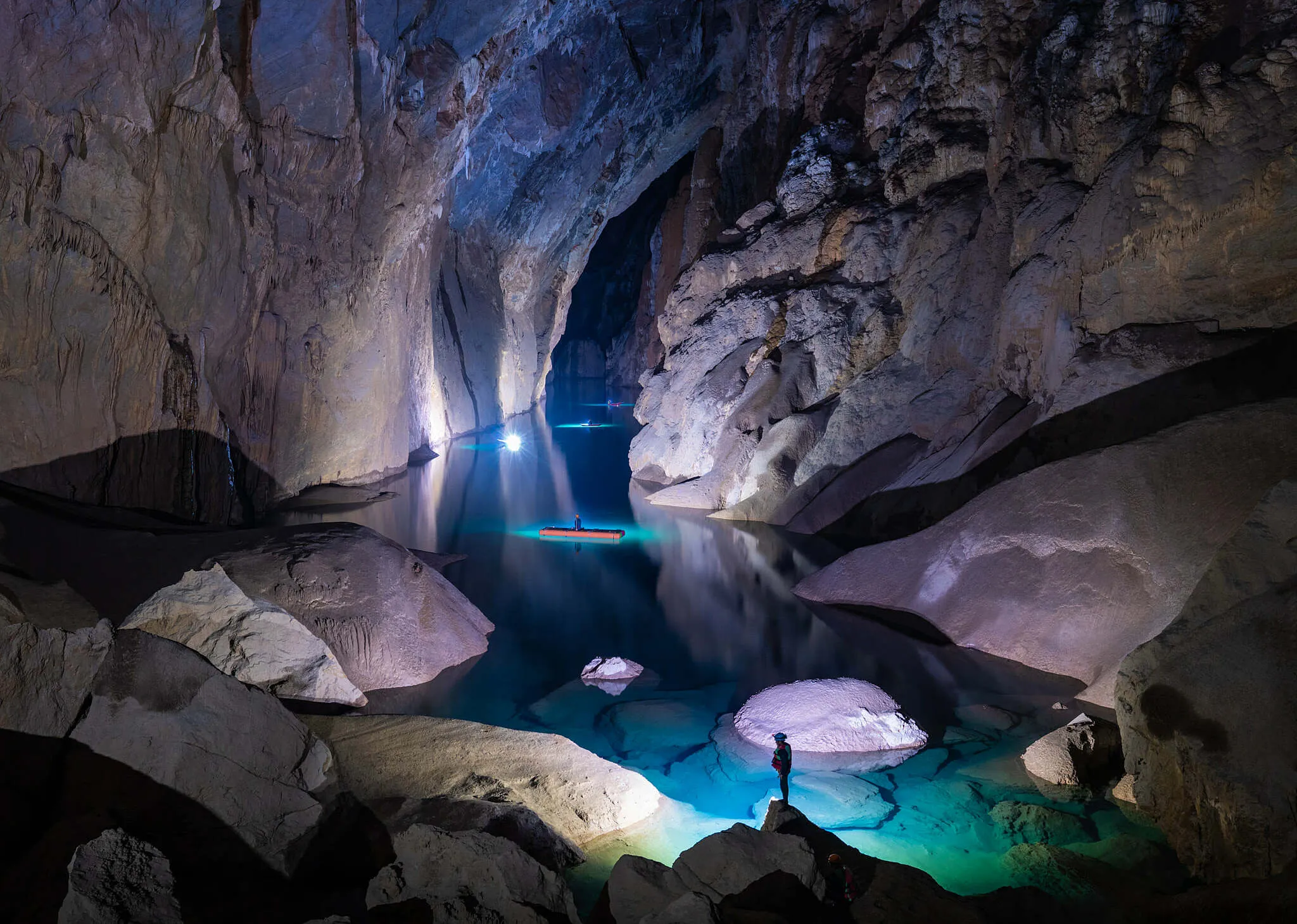
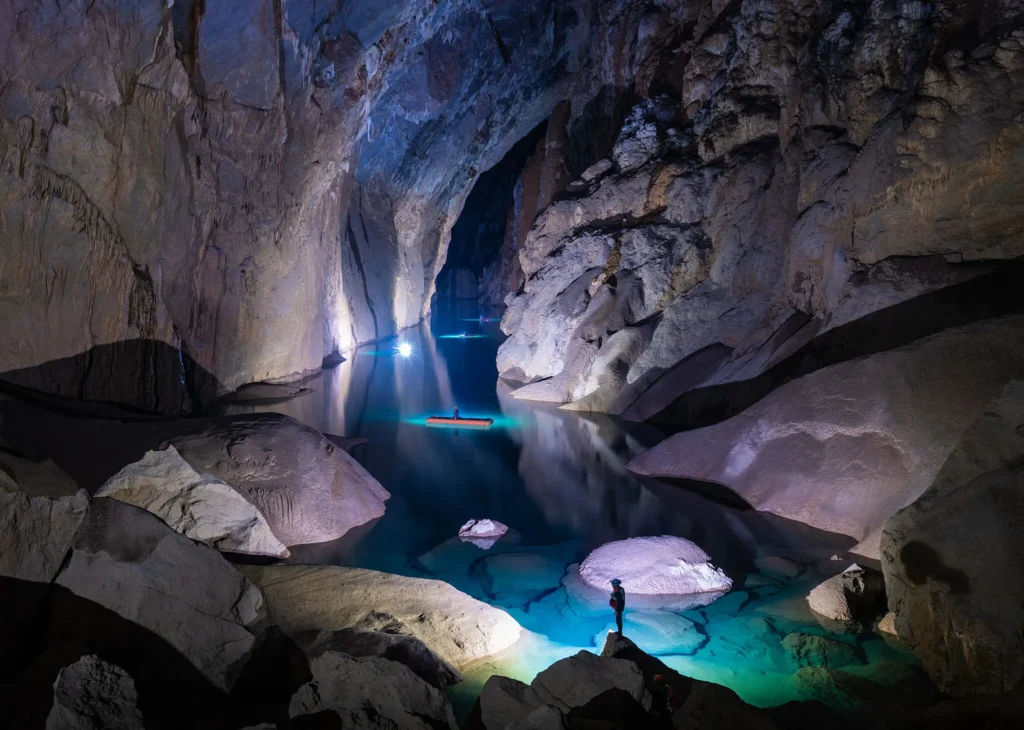
Photographers and adventurers alike are captivated by the ethereal beauty of Son Doong. Photos of the cave reveal massive chambers illuminated by beams of sunlight piercing through the skylights. The underground jungle, reflective pools, and towering stalactites make it one of the most photogenic places on Earth.
Because of the cave’s limited access, each photograph represents a rare glimpse into a world that few humans have ever seen. Many of these images have been featured in National Geographic and international documentaries.
Protecting Son Doong Cave
Conservation is at the heart of every Son Doong expedition. The Vietnamese government and Oxalis Adventure have implemented strict measures to protect the cave’s fragile ecosystem. Only a few hundred visitors are allowed each year, and every tour follows a “leave no trace” policy.
Scientists continue to study the cave to ensure that exploration and tourism do not harm its natural state. By regulating access and promoting sustainable tourism, Vietnam has become a model for balancing adventure travel with environmental preservation.
How to Get to Son Doong
Travellers typically fly into Dong Hoi Airport, located about 45 kilometres from Phong Nha-Ke Bang National Park. From there, visitors can take a car or bus to Phong Nha village, the starting point for Son Doong tours. The journey includes jungle trekking and river crossings before reaching the cave entrance.
Nearby attractions include Paradise Cave, Phong Nha Cave, and Dark Cave—each offering unique experiences for those interested in Vietnam’s incredible underground world.
Why Visit Son Doong Cave
Son Doong offers a once-in-a-lifetime adventure for nature enthusiasts and thrill-seekers. It’s not just about exploring a cave; it’s about experiencing the raw power and beauty of nature in its purest form. Whether you’re drawn by its immense size, rare geological features, or the challenge of the trek, Son Doong promises an unforgettable journey.
FAQ
1. Where is Son Doong Cave located?
Son Doong Cave is located in Phong Nha-Ke Bang National Park in Quang Binh Province, central Vietnam.
2. How deep is Son Doong Cave?
The cave is over 650 feet (200 meters) high in some chambers, making it the largest cave on Earth by volume.
3. Can anyone visit Son Doong?
Only a limited number of visitors are allowed each year through authorized tours organized by Oxalis Adventure.
4. How long does a Son Doong Cave tour last?
Most tours last 4 to 5 days, including trekking, camping, and exploring various sections of the cave.
5. What makes Son Doong unique?
Its size, underground jungle, and skylights make it unlike any other cave on Earth.
Final Thoughts
Son Doong Cave is one of nature’s greatest masterpieces. Hidden beneath Vietnam’s lush forests, it stands as a reminder of how vast and mysterious our planet still is. For those fortunate enough to explore it, Son Doong is not just an adventure—it’s an experience that changes how you see the world.