Largest Cave in the World: Explore Nature’s Hidden Giant
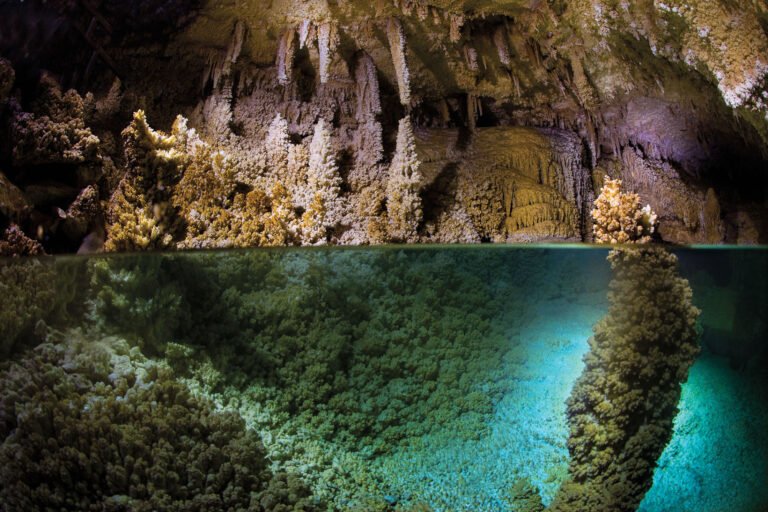
Caves have always fascinated people with their mysterious beauty and geological wonders. From deep underground chambers to glittering rock formations, every cave tells a story written over millions of years. But among all these natural marvels, one stands above the rest — the largest cave in the world. This breathtaking natural structure is a world within itself, attracting scientists, adventurers, and travelers eager to witness its majesty.

The Discovery of the World’s Largest Cave
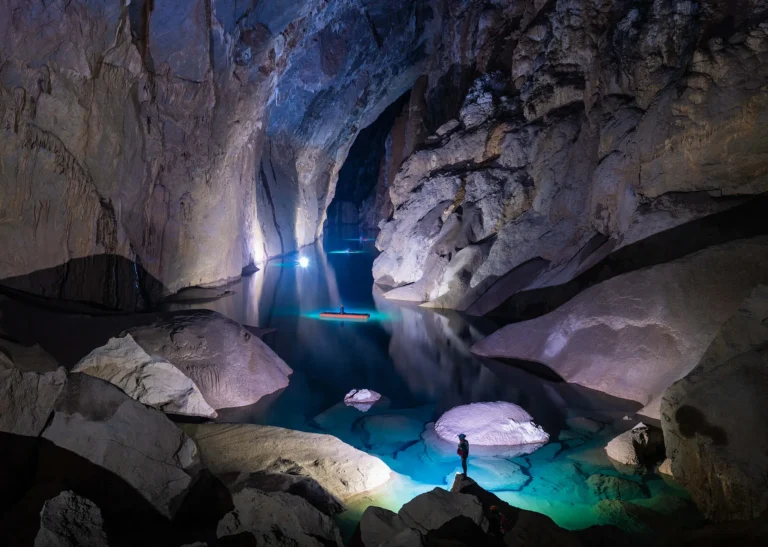
The largest cave in the world is Hang Son Doong Cave, located in Phong Nha-Ke Bang National Park in Vietnam. It was first discovered in 1991 by a local farmer named Ho Khanh, but it remained hidden from the world until 2009, when British cave explorers officially mapped it. What they found was beyond imagination — a massive underground system large enough to fit entire city blocks.
Hang Son Doong Cave is more than 5.5 miles long, 660 feet high, and 490 feet wide at some points. The cave’s ecosystem is so vast that it has its own river, weather system, and even forests growing inside.
The Largest Cave System in the World
While Hang Son Doong holds the title for the single largest cave chamber in the world, there are also vast cave systems that stretch for hundreds of miles underground. One of the most famous is the Mammoth Cave System in Kentucky, USA.
Mammoth Cave is officially recognized as the largest cave system in the world by length, with more than 426 miles of interconnected passages explored so far — and new tunnels are still being discovered. This underground labyrinth has been formed over millions of years through the erosion of limestone by water.
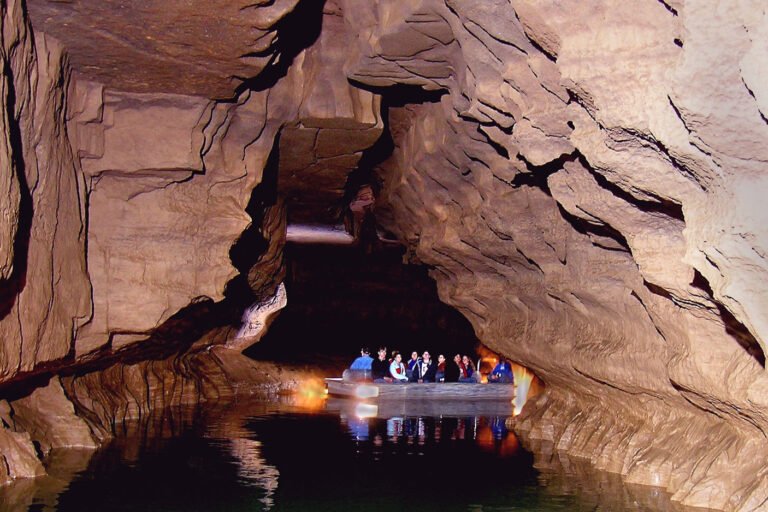
Visitors to Mammoth Cave National Park can explore guided tours that reveal vast chambers, tight crawl spaces, and underground rivers, offering a thrilling experience for adventurers and nature lovers alike.
The Biggest Caves in the World
Beyond Hang Son Doong and Mammoth Cave, there are several other caves that stand among the biggest caves in the world, each remarkable for its size, formation, and beauty.
- Sarang Cave, Malaysia – Known for its huge chambers and fascinating stalactites.
- Deer Cave, Malaysia – Part of the Gunung Mulu National Park, this massive cave can fit a Boeing 747 jet inside.
- Chevé Cave, Mexico – One of the deepest and longest cave systems, still being explored by scientists.
- Lechuguilla Cave, New Mexico, USA – Famous for its rare mineral formations and its delicate ecosystem.
- Krubera Cave, Georgia (Abkhazia) – Once known as the deepest cave on Earth.
These natural wonders highlight how diverse and mysterious the underground world can be, with each cave offering unique geological and biological treasures.
Deep Caves in the World
While some caves are known for their vastness, others are remarkable for their depth. The deepest caves in the world challenge explorers with their vertical drops, tight passages, and extreme darkness.
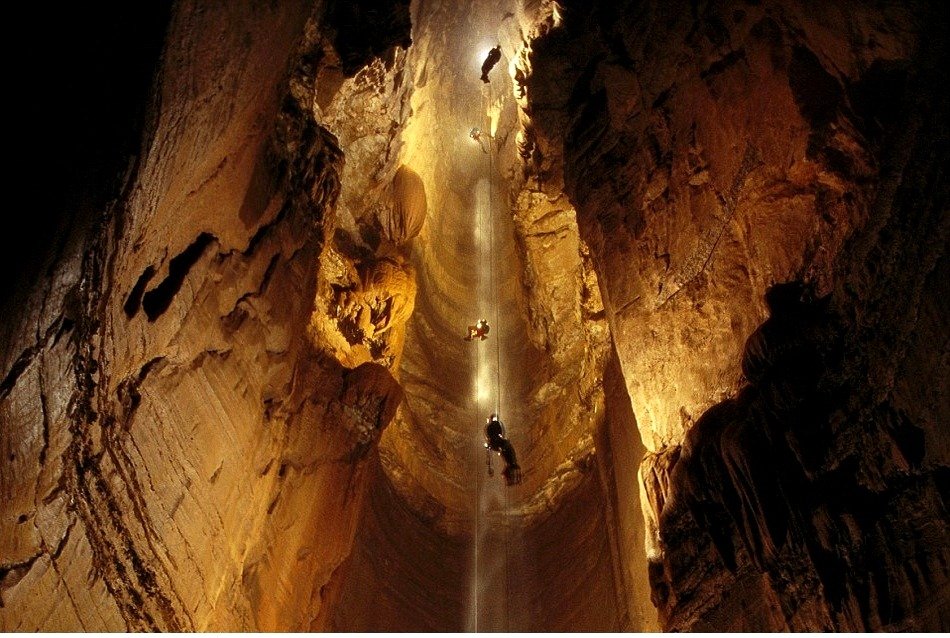
The Veryovkina Cave, located in Abkhazia, Georgia, currently holds the record as the deepest cave in the world, plunging over 7,257 feet (2,212 meters) below the surface. The conditions inside are extremely difficult, requiring specialized gear, weeks of exploration, and precise planning.
Other deep caves include the Krubera Cave, also in Georgia, and the Gouffre Mirolda Cave in France. These caves are not just natural wonders but also vital for understanding geological and hydrological systems deep within the Earth.
What Makes Hang Son Doong So Special
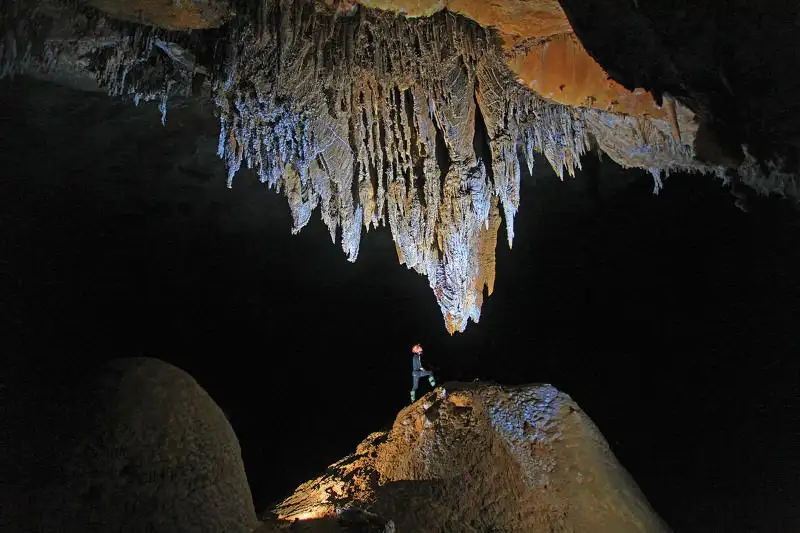
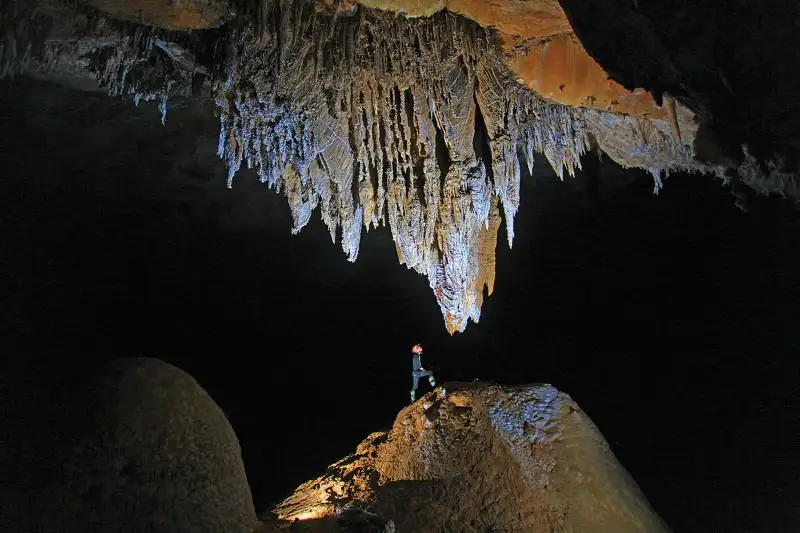
Hang Son Doong is more than just a big cave — it’s a world of its own. Inside, explorers can find underground jungles, giant stalagmites, and even clouds formed by temperature differences between the inside and outside air.
The cave’s size is so immense that entire skyscrapers from New York City could fit inside. Some parts of the cave ceiling have collapsed, allowing sunlight to pour in and create lush green patches where plants and trees thrive. This makes Hang Son Doong not only a geological wonder but also an ecological one.
For travelers, exploring Son Doong is a once-in-a-lifetime experience. However, access to the cave is highly restricted to protect its delicate environment. Only a few hundred people are allowed each year through guided expeditions that follow strict conservation guidelines.
The Science Behind Cave Formation
Caves like Hang Son Doong and Mammoth Cave are formed primarily through karst processes, where water dissolves soluble rocks such as limestone, dolomite, and gypsum. Over millions of years, rainwater, slightly acidic due to carbon dioxide, seeps through the soil and gradually erodes the rock, creating tunnels, chambers, and underground rivers.
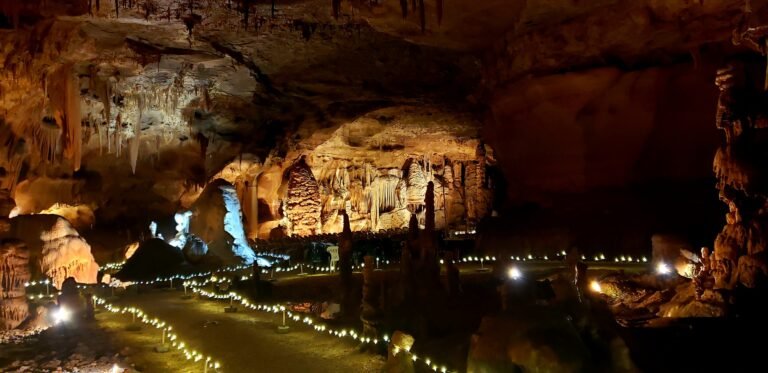
This slow natural process leads to the creation of stunning formations such as stalactites (hanging from ceilings) and stalagmites (rising from the ground). These formations grow at an incredibly slow rate — often less than an inch every hundred years.
Famous Cave Systems Around the World
Apart from the world’s largest and deepest caves, there are many remarkable cave systems worth exploring:
- Carlsbad Caverns (New Mexico, USA) – Known for its massive chambers and stunning limestone formations.
- Waitomo Caves (New Zealand) – Famous for glowing worms that illuminate the dark tunnels.
- Jenolan Caves (Australia) – One of the oldest cave systems in the world, filled with crystal-clear underground lakes.
- Postojna Cave (Slovenia) – Offers train tours inside and is home to unique amphibians known as “baby dragons.”
Each of these sites adds to the global fascination with caves and the natural artistry carved by water and time.
Conservation and Protection of Caves
Caves are fragile ecosystems that can be easily damaged by human activity. Pollution, unregulated tourism, and careless exploration can harm their delicate structures and rare species that thrive in complete darkness.
That’s why many governments and conservation groups have placed strict regulations on cave access. Sustainable tourism and scientific study go hand-in-hand to ensure that these underground wonders remain intact for future generations.
Exploring the World Beneath
The world’s largest and deepest caves represent one of the last frontiers on Earth. They challenge explorers with their beauty and danger while offering scientists a glimpse into the planet’s history. From the massive Son Doong Cave in Vietnam to the intricate tunnels of Mammoth Cave in the U.S., these natural marvels show how extraordinary our planet truly is.
Whether you’re a traveler, a scientist, or simply an admirer of nature, the world’s caves remind us how much there is left to explore — and protect — beneath our feet.
FAQs
1. What is the largest cave in the world?
The largest cave in the world is Hang Son Doong Cave in Vietnam, located in Phong Nha-Ke Bang National Park.
2. How big is Hang Son Doong Cave?
It stretches more than 5.5 miles long, 660 feet high, and 490 feet wide, large enough to fit skyscrapers inside.
3. What is the largest cave system in the world?
The Mammoth Cave System in Kentucky, USA, holds the record for the longest cave system, with over 426 miles of explored passages.
4. Which is the deepest cave in the world?
The Veryovkina Cave in Georgia is the deepest known cave, reaching more than 7,200 feet below the surface.
5. Can tourists visit the largest caves?
Yes, but access to many large caves like Hang Son Doong is restricted and only available through guided tours to protect the environment.