Some travel experiences sound made up. This is not one of them. About 30 minutes from Reykjavik, there is a dormant volcano called Thrihnukagigur, and inside it sits a hollow magma chamber the size of a cathedral. Since 2012, tourists have been riding an open industrial lift straight down through the crater and into that chamber, 120 meters below the surface. It is the only place on Earth where this is possible, and there is nothing else quite like it anywhere in travel.
If the name feels familiar, it might be because Jules Verne sent his characters down into a volcano in Journey to the Center of the Earth. Icelanders like to joke that this is as close as anyone will ever get. After reading hundreds of traveler reviews and digging through the 2026 tour details, I can tell you the reality is weirder, prettier, and more worth the money than the fantasy.
Why Thrihnukagigur Is the Only Place Like This on Earth
Here is the geology, and it is worth understanding because it explains everything. A magma chamber is the pocket of molten rock that sits beneath a volcano and feeds its eruptions. When a volcano goes quiet, one of two things normally happens: the magma cools and hardens into solid rock, or the chamber collapses inward and leaves behind rubble. Either way, the chamber disappears.
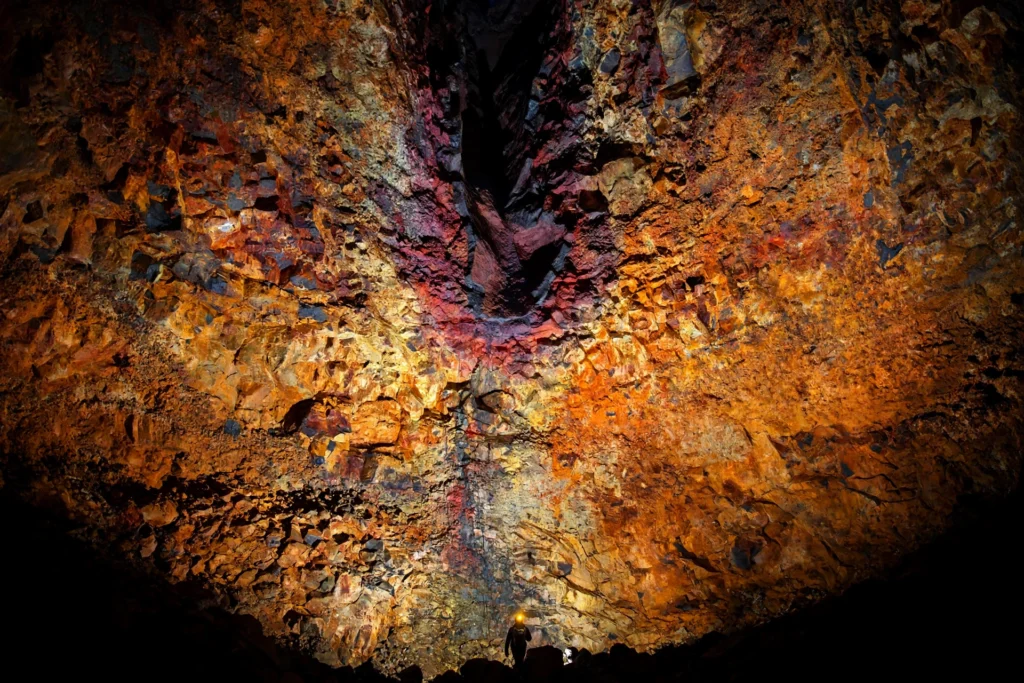
At Thrihnukagigur, something rare happened. Roughly 4,000 years ago, the volcano erupted and the magma simply drained away, like pulling the plug out of a bathtub, instead of solidifying or caving in. What remained was a gigantic empty void, still perfectly intact, lined with the vividly colored rock that the magma left behind as it flowed. Red, orange, gold, and charcoal streaks run across the walls in patterns that look almost painted on.
Geologists did not even know the chamber was accessible until 2005, when a National Geographic expedition descended through a small opening and discovered the void below. It took years of engineering to make it visitable, including a custom open platform lift that was purpose-built for the site. Nobody else has anything like it. Other famous “volcano tours” around the world either take you to lava tubes (old tunnels, not chambers) or to craters you peer into from above. This is the actual belly of the volcano, and you stand on its floor.
What the Tour Actually Feels Like, Hour by Hour
Almost every review says the same thing: the tour is really two adventures in one, and the first one is the hike.
The lava field hike (about 3 km each way)
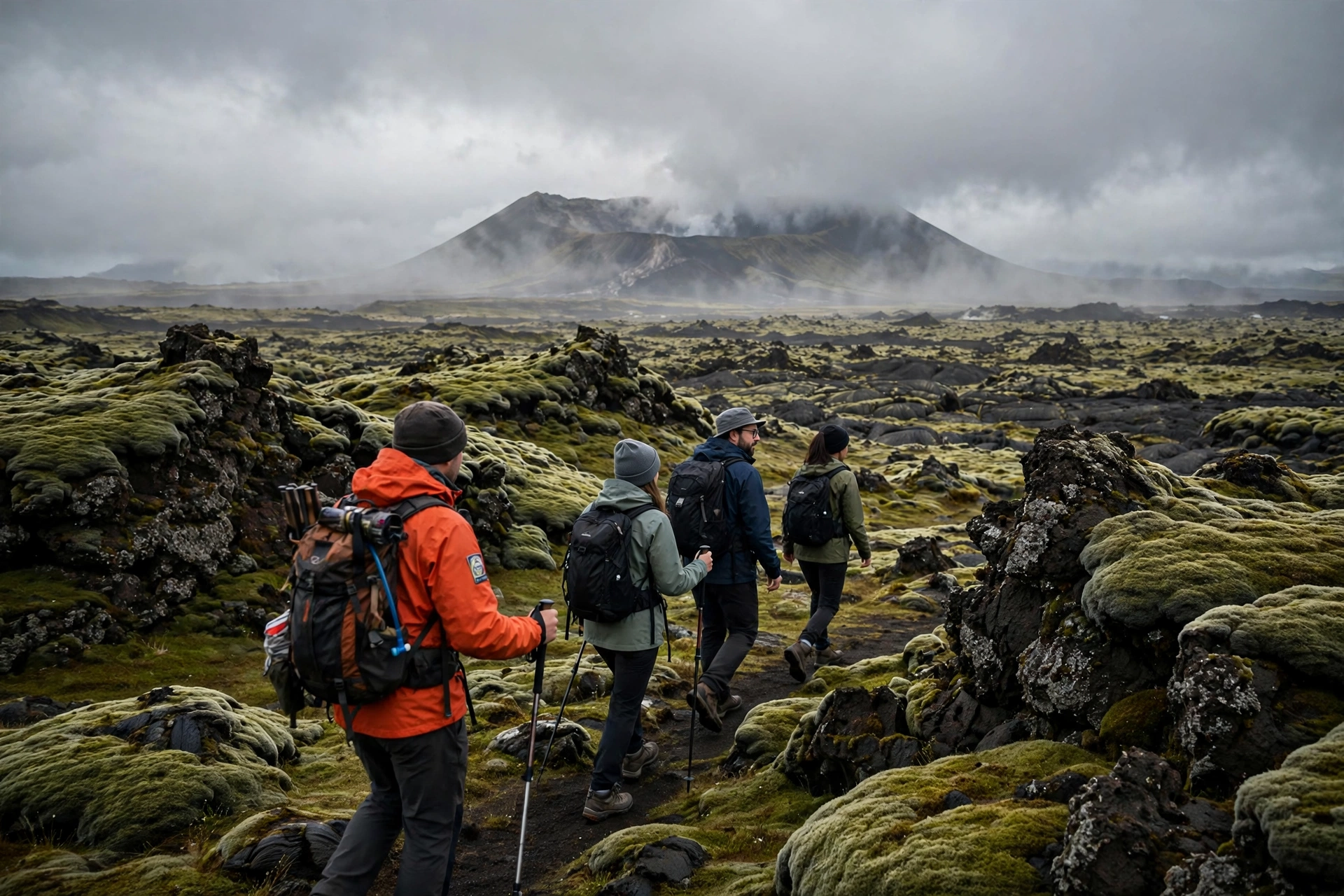
You meet at the base camp, a small setup at 206 Hafnarfjoerdur on the edge of the Blue Mountains. After a safety briefing, you set off on foot across a lava field that looks like another planet. Black basalt, green moss creeping over the rocks, no trees, no buildings, just wind and wide open sky. It takes most people 45 minutes to an hour to cover the 3 km to the crater, and the route is classified as moderately difficult. You do not need to be an athlete, but you do need sure footing, and the trail can be boggy and uneven in bad weather.
This part of the day is genuinely beautiful in its own right. Several reviewers said the hike alone would have been worth the trip, and I believe them. Iceland’s raw volcanic landscape does a lot of heavy lifting here.
The descent (120 meters, roughly 400 feet)
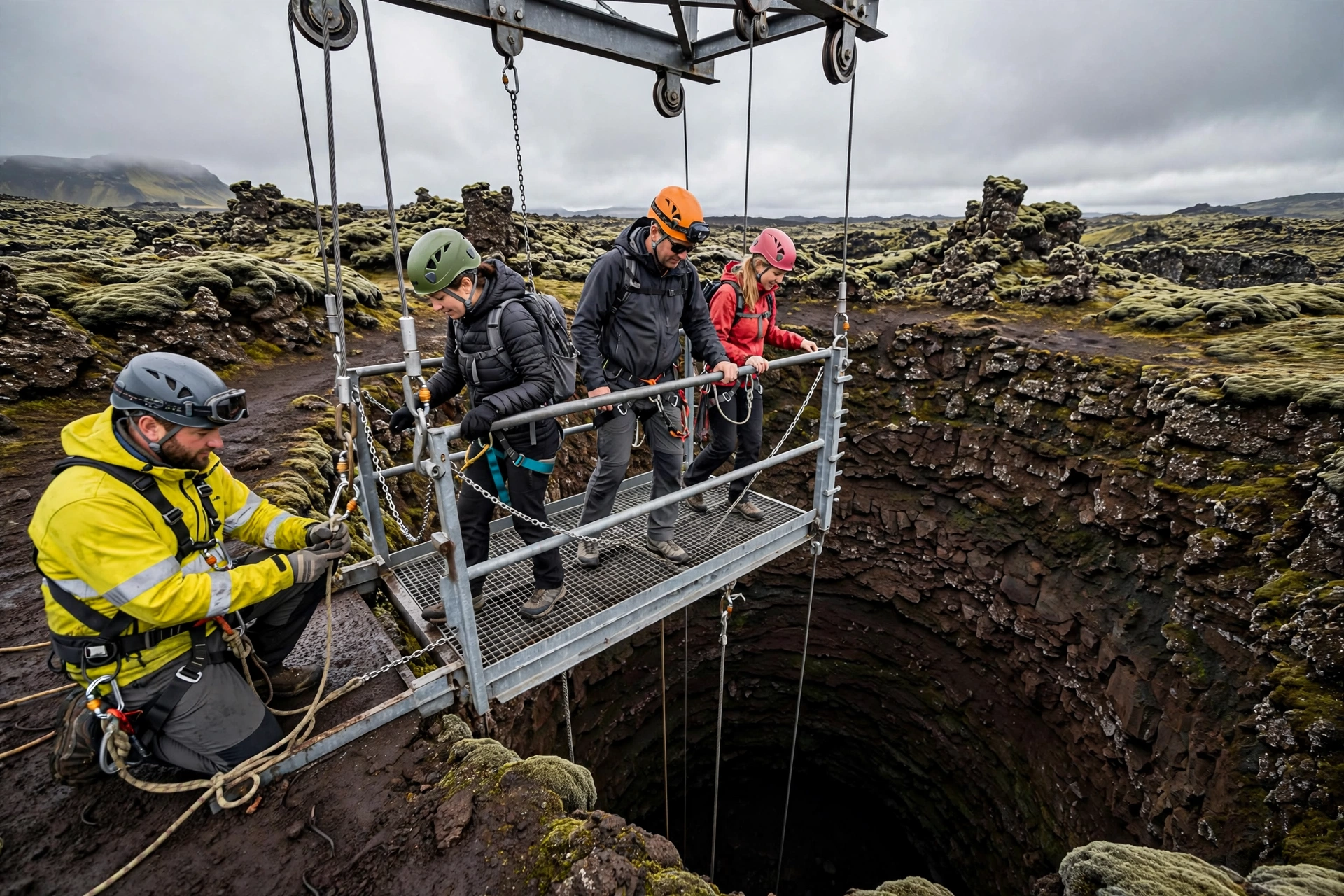
At the crater mouth, you clip into a harness, put on a helmet, and step onto an open steel platform about the size of a small elevator. There are no walls, no roof, just railings. A crane lowers the platform slowly into the dark. If you are even slightly afraid of heights, this is the moment that tests you, though most reviewers say the descent felt smoother and calmer than they expected. The whole thing takes a few minutes, and guides keep a steady stream of commentary going to keep everyone relaxed.
The 30 minutes inside
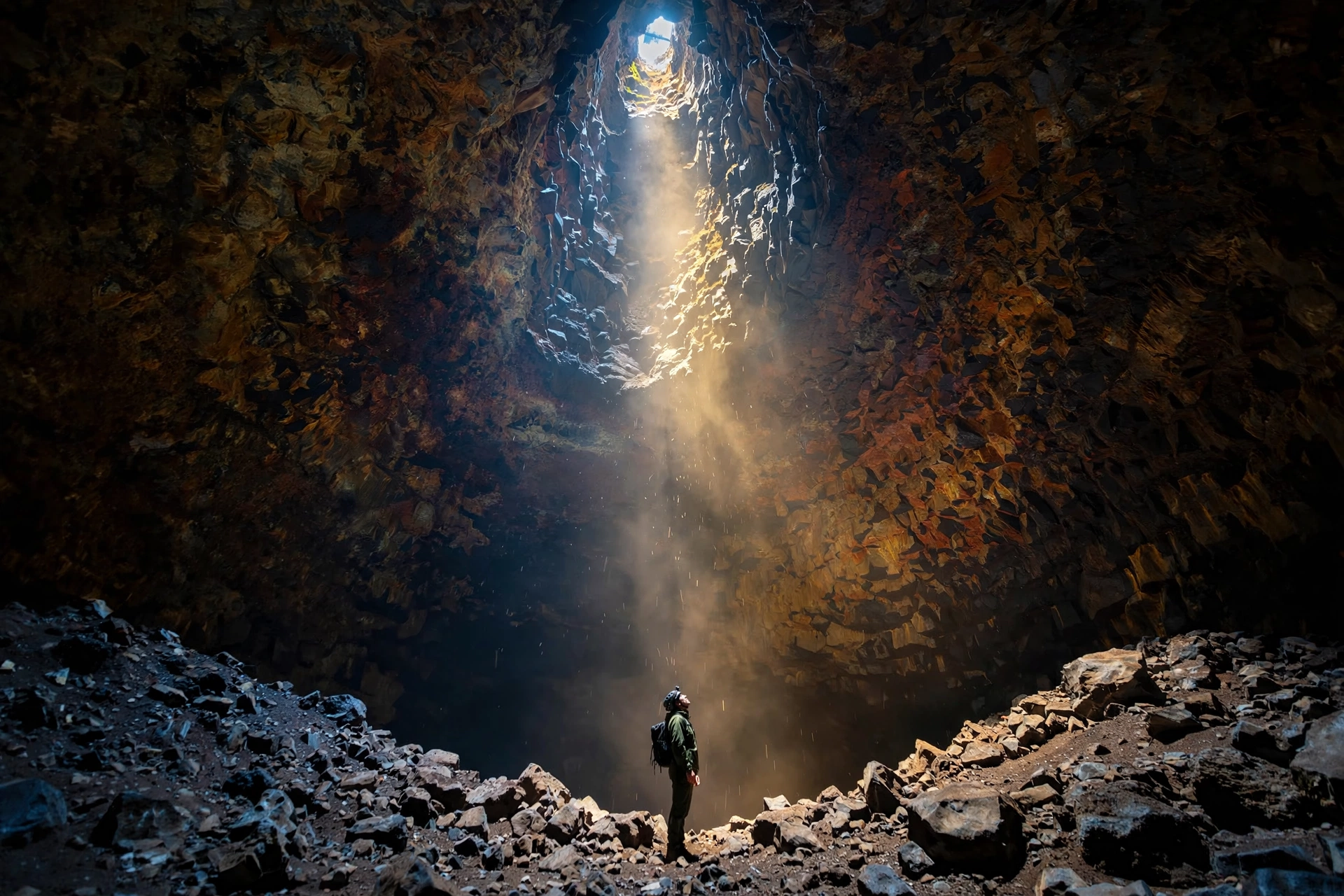
And then you are standing on the floor of a magma chamber. The space is enormous: big enough that the tiny lift platform and the other visitors look like toys. The walls glow in those impossible colors, lit by work lights, and when you look straight up, there is a small circle of daylight 120 meters above you, a thread of connection to the world you came from. It is quiet down there in a way that is hard to describe. People mostly whisper. One reviewer wrote that no YouTube video gets close to the real thing, and that is probably the single most repeated sentence in the reviews: it cannot be filmed properly, it has to be stood in.
Guides use the 30 minutes to explain the geology, often with real academic backgrounds, and they answer questions patiently. Then it is back onto the lift, back up into the daylight, and the hike returns you to base camp.
The lamb soup
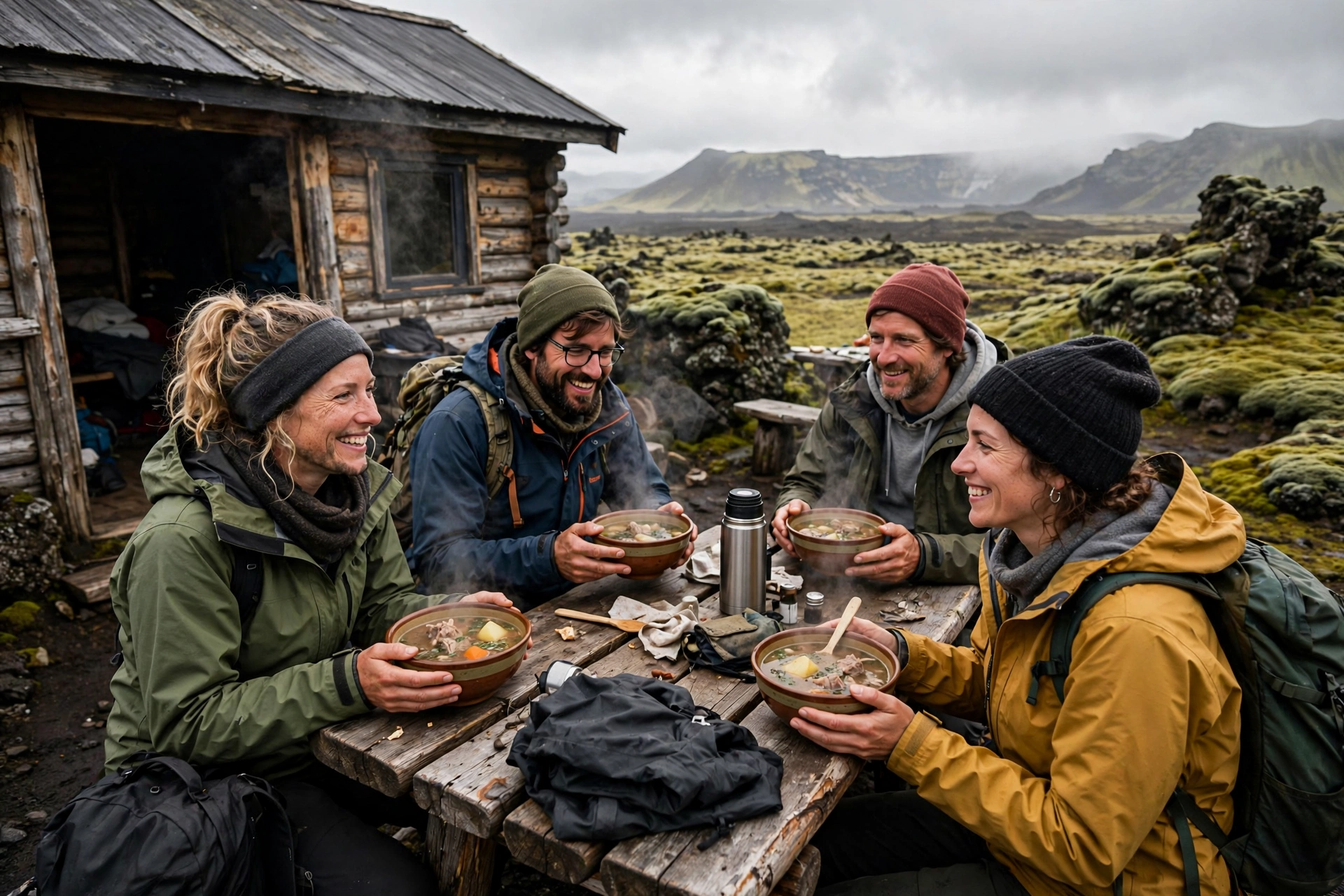
This deserves its own mention because travelers keep talking about it. After the return hike, the tour serves traditional Icelandic lamb soup at base camp, with vegetarian options, plus coffee, tea, and hot chocolate. After hours of wind and walking, people describe it as one of the best meals of their entire Iceland trip. It is included in the price, and it is a small thing that makes the whole operation feel human rather than corporate.
How Much It Costs in 2026 (and What Is Included)
Let us talk money, because this is not a cheap tour. As of the 2026 season, the standard price is 55,500 ISK per adult (around $400 USD, depending on the exchange rate) and 29,500 ISK for youths. Booking in advance through the official operator with the promo code BookIceland gets you 5% off, which is worth using on a ticket this size.
Why so expensive? The operator is unusually transparent about it: the slow open lift caps how many people can descend each day, the fragile protected site means numbers are deliberately limited, the season only runs about five months, and every departure needs a dedicated guiding team. You are paying for scarcity as much as for the experience. Resellers like GetYourGuide and Viator list it from roughly $407 to $438 per person, so booking direct with the promo code is usually the cheapest route.
What the price covers: the guided hike, the lift descent, all safety gear (helmet, harness), about 30 minutes inside the chamber, the meal at base camp, and hotel pickup from Reykjavik on some options. There is no upsell inside, no gift shop gauntlet, no surprise fees. What you see is what you get.
When to Go: the Season Is Brutally Short
The tour runs roughly mid-May to October only (this year about May 5 to October 30). There are no winter departures. The lava field approach gets dangerous in ice and snow, and operating the lift in Icelandic winter conditions is not feasible.
Here is the practical part: October is basically the last call for 2026. If you are reading this after the season closes, the smart move is to watch for the 2027 dates and book early, because departures sell out. The limited daily capacity plus a short season means popular summer slots vanish weeks ahead. Book the earliest departure of the day if you can: the light in the chamber and on the hike is best, and you beat the wind that tends to pick up in the afternoon.
How Fit Do You Need to Be? (The Honest Answer)
This is the question everyone asks, and here is the straight version. The 6 km round-trip hike is the hard part, not the volcano. No climbing skill is needed inside, you just stand on a platform, and no caving experience either. The operator classifies the hike as moderately difficult, and reviews from people in their 60s and 70s say they managed fine at a steady pace. The minimum age is 8, which tells you plenty about the difficulty level.
That said, this is not for everyone. It is not suitable for people with mobility impairments, and if you have a genuine fear of heights, the open lift will be a problem you should think about honestly before paying $400. Wear proper waterproof hiking boots with ankle support, bring warm layers even in summer (the wind on the lava field is no joke), and carry water. The operator provides rain gear in bad weather, which tells you something about how often the weather turns.
Is It Worth It? Reviews Say Yes, With One Caveat
GetYourGuide shows a 4.8 out of 5 rating from nearly 700 reviews, which is exceptional for a tour at this price point. The word that appears most often is “once-in-a-lifetime.” The most common criticism is the price, and a few reviewers felt the high cost needed clearer justification upfront. But the same reviewers almost always concluded it was worth it after the fact. The lamb soup gets its own devoted fan club in the review section.
My honest take: if you are already flying to Iceland and you want the single most distinctive thing you can do there, this outranks the Golden Circle buses and the Blue Lagoon crowds. Nothing else on your itinerary will look, feel, or sound like 30 minutes inside a hollow volcano. If your budget is tight and you have to choose, the Golden Circle is cheaper, but it is not rarer.
How to Book (and Avoid Overpaying)
Book directly through the official Inside the Volcano operator when possible, use the BookIceland promo code for 5% off, and book weeks ahead for summer dates. If you are going through a reseller, compare prices: some markups are steep for the exact same departure. Read the weather policy before you book: Iceland’s weather can force cancellations, and you want to know the refund or reschedule terms in advance. And screenshots of your ticket on your phone are smart, since there is no signal out on the lava field.
Pair It With Iceland’s Other Underground World
Thrihnukagigur is not Iceland’s only underground wonder, just its most exclusive one. If the volcano tour lights a fire for subterranean adventure, Iceland’s ice cave season runs through the winter months and takes you inside blue crystal caves under glaciers, which pairs perfectly as the cold counterpart to the volcano’s fire. For the bigger picture of the world’s great cave systems, Son Doong in Vietnam shows what happens when a cave gets truly enormous, and our 2026 guide to Iceland’s ice cave tours covers the country’s other famous underground season in full detail.
The Bottom Line
Thrihnukagigur is one of those rare travel experiences that actually deserves the word unique. Not “unique” as in nice, but unique as in: there is one of these on the entire planet, and you can stand inside it. The price is real, the hike is real, the wind is real, and then for 30 minutes you are inside a hollow mountain that should not exist but does. If that sentence does not make you want to book a flight, nothing on this site will.
Follow The Cavee on Pinterest for more underground adventures, volcano descents, and the world’s strangest caves. New discoveries and travel guides every day. Read the full story on thecavee.com.