A Cave That Changes Color: Inside Chile’s Marble Caves of Patagonia (2026 Guide)
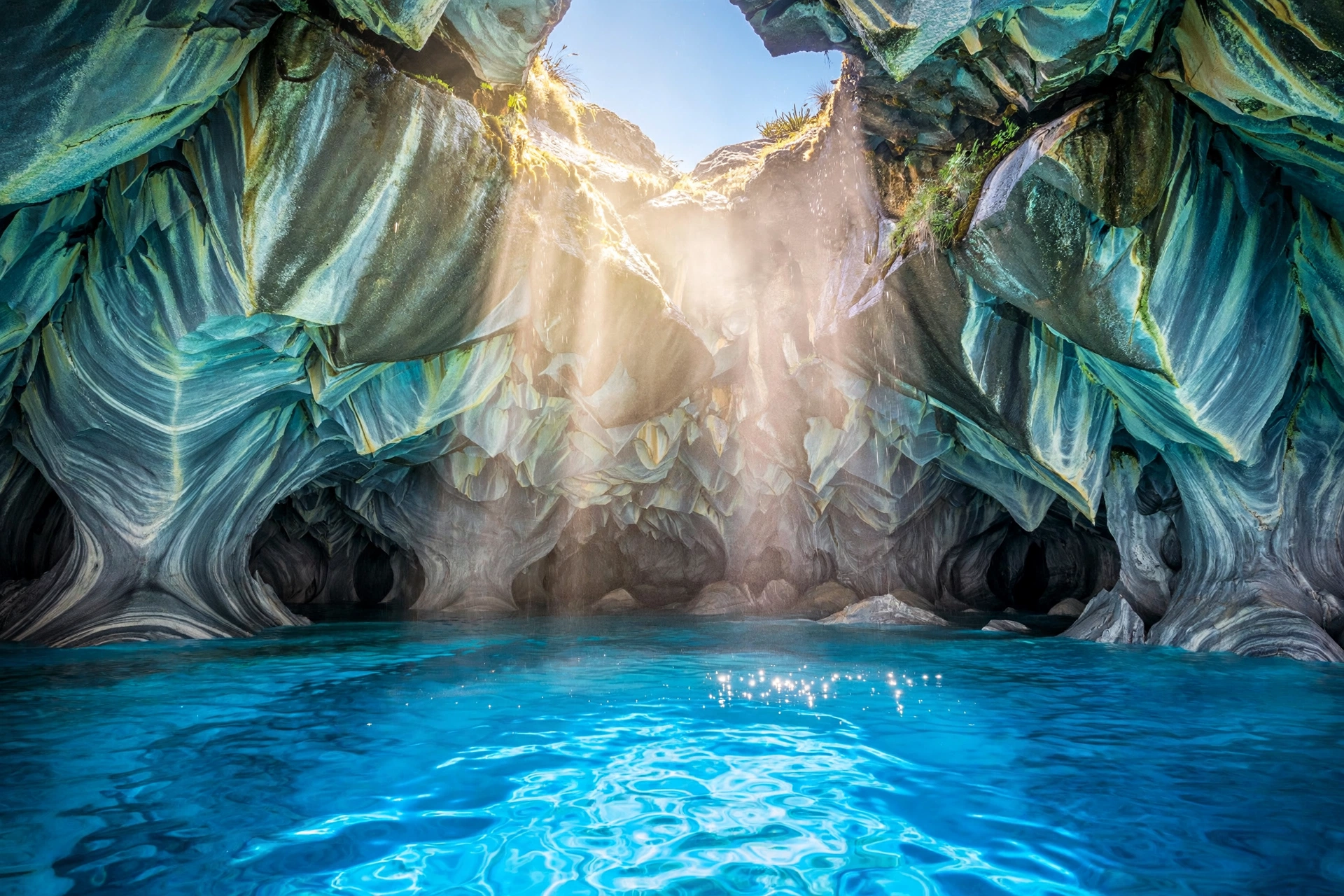
Here is something they do not tell you in most travel brochures: this cave changes color. Not metaphorically. The actual color of the stone on the walls shifts through the year, from pale turquoise to deep ocean blue, depending on the season, the water level, and the angle of the sun. I have been writing about caves for a while now, and the Marble Caves on Lago General Carrera in Chilean Patagonia might be the single strangest, most beautiful cave system I have ever covered.
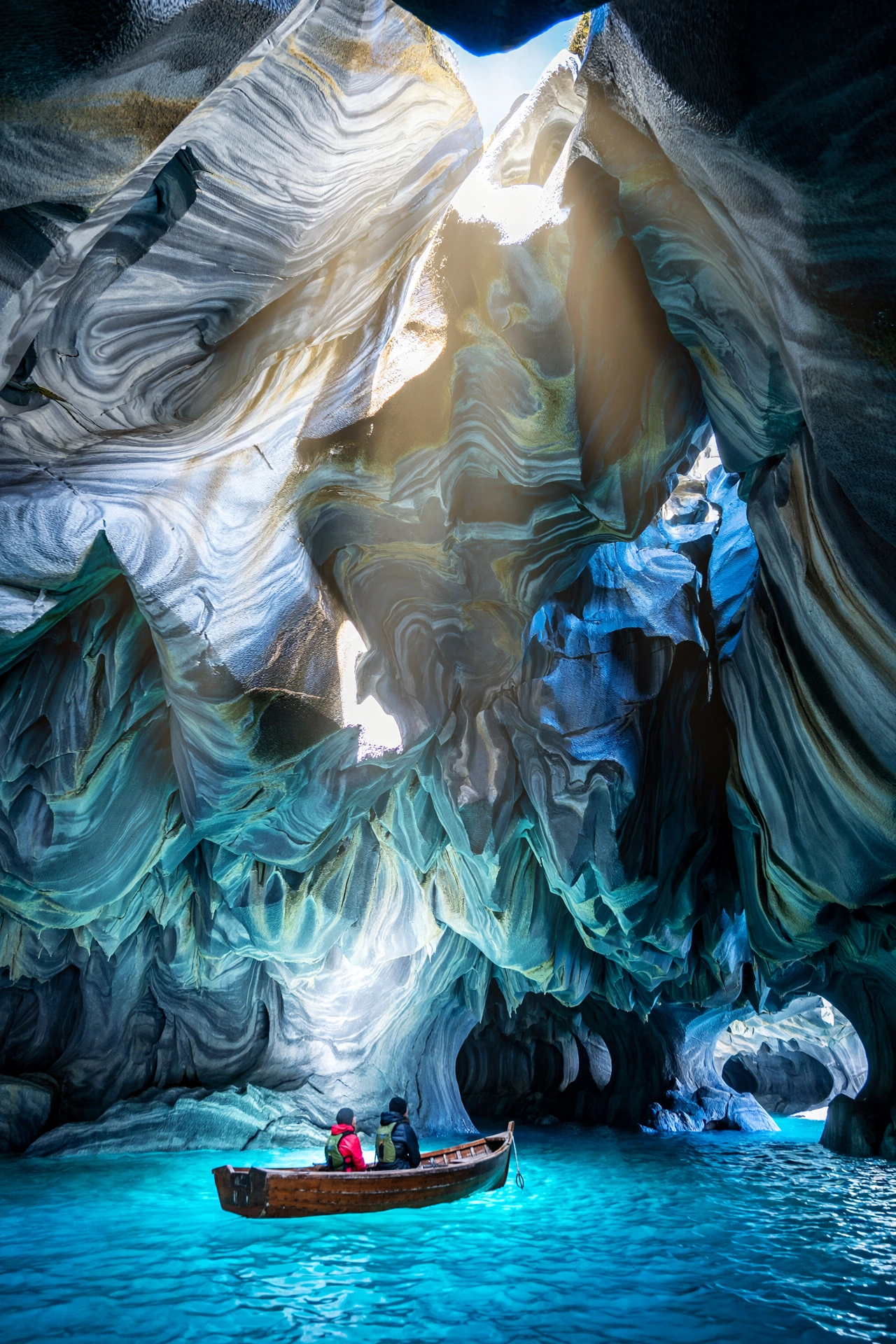
You have probably seen a photo of it already. The glowing blue grottos, the swirling white marble, the little boat floating on water that looks lit from underneath. Most people assume the photos are over-edited. They are not. If anything, they undersell it.
What the Marble Caves Actually Are
First, the name is a little misleading. These are not caves in the way you are picturing them. You do not walk into a dark tunnel with a helmet and a headlamp. The Capillas de Marmol, which is Spanish for the Marble Chapels, are a cluster of grottos, caverns, arches, and tunnels carved into a peninsula of solid marble on the shore of Lago General Carrera, the huge glacial lake that straddles the Chile-Argentina border in the Aysen region of Patagonia.
And yes, it really is solid marble. The peninsula is a single chunk of metamorphic limestone that got cooked and squeezed under tectonic pressure millions of years ago until it turned into marble, complete with rippling brown and yellow veins from the impurities trapped inside. Then the glaciers carved the whole Patagonian landscape, and when they began to retreat roughly 10,000 to 15,000 years ago, the lake’s waves went to work on the exposed marble.
How long did it take? Geologists estimate around 6,000 years of wave action to sculpt what you see today. That is fast in geological time. Marble (well, the calcium carbonate kind) is among the most soluble rocks that exist, so the lake chewed through it far quicker than it would have through granite. The area was declared a nature sanctuary back in 1994, and it is still being carved, drop by drop, every single day.
Here is a detail I love: people have lived in this part of Chile for more than 12,000 years. Which means the first humans in the region watched these caves form over hundreds of generations. Nobody “discovered” them. They were always there, slowly emerging.
Why the Water Glows Like That (The Real Science)
Okay, the question everyone asks: is the blue real? Completely. And the science is kind of wonderful.
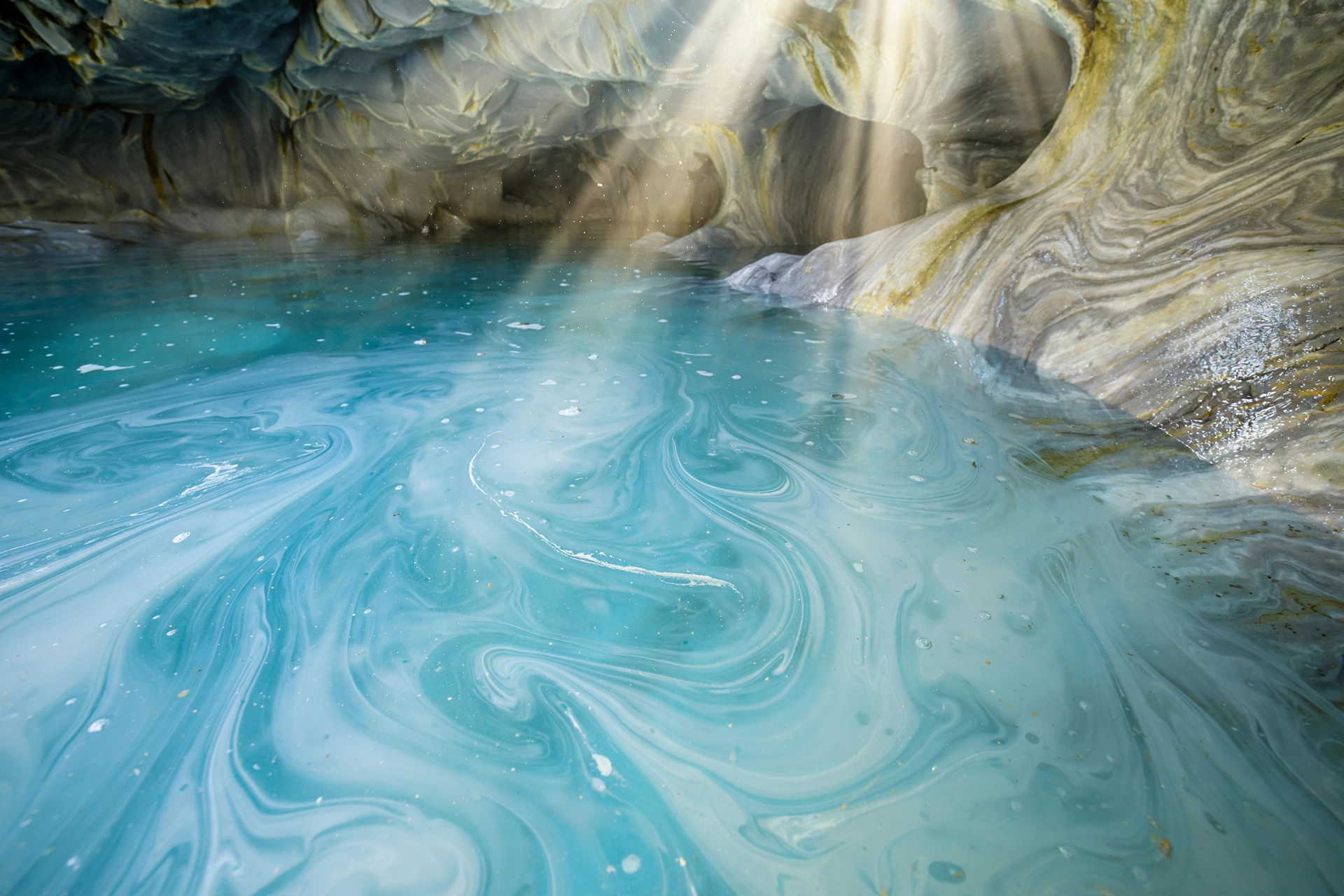
The lake is fed by glacial meltwater, and that water carries ultra-fine pulverized rock called glacial silt, or rock flour. This is dust ground so fine by moving glaciers that it used to be mountains. Now here is the physics trick: that silt absorbs short-wavelength light (the purples and indigos) while reflecting blues and greens. The result is that electric turquoise color, the one that looks tropical even though the water is ice cold from its glacial origins.
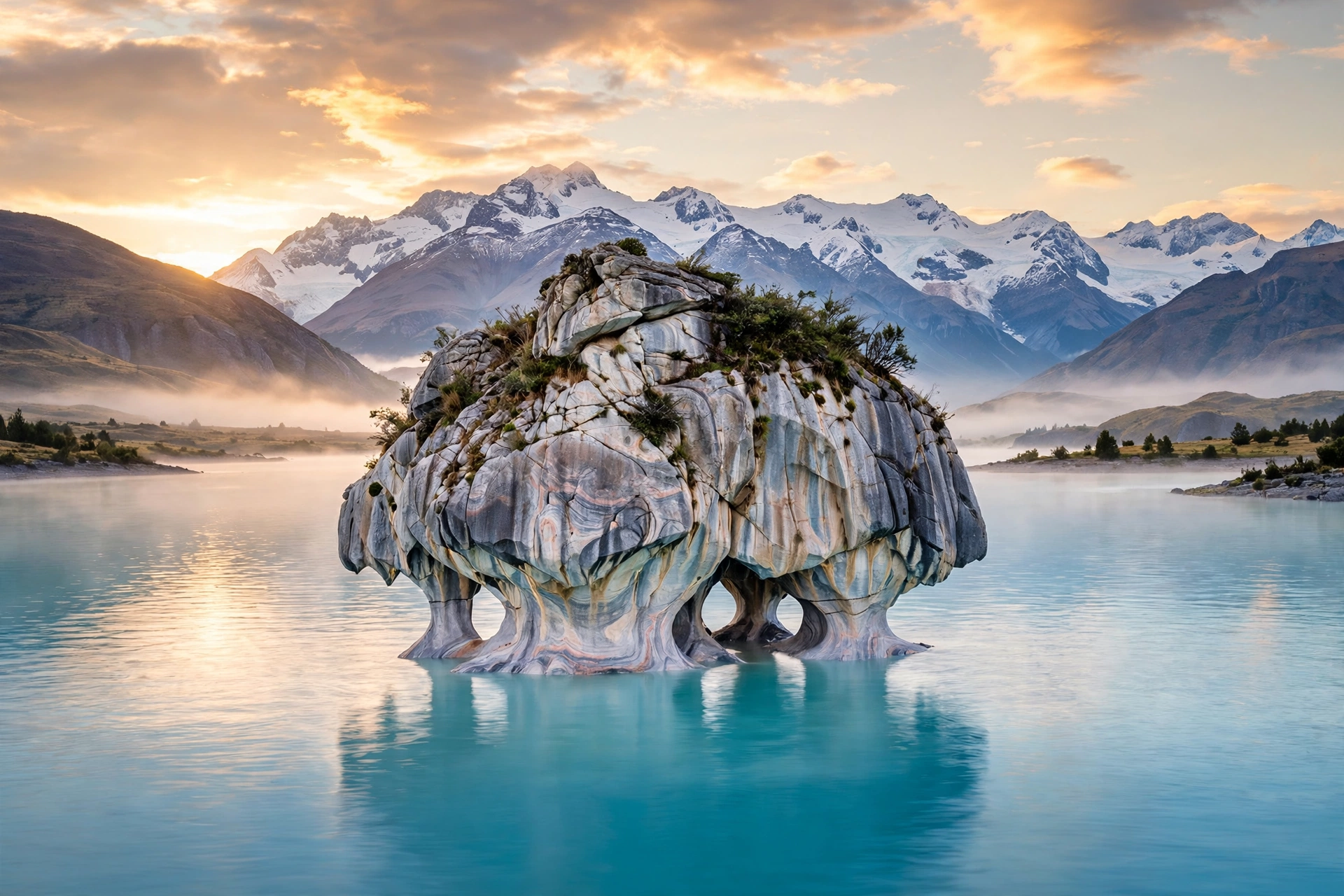
Now put that glowing water inside a cave made of pale marble, and something magical happens. The turquoise light reflects off the water and bounces up onto the marble walls and ceiling. The stone literally glows blue from reflected light. On a sunny day, the whole interior looks like it is lit by neon.
And because the lake level changes with the seasons, the color changes too. In early spring, the water is shallow and turns a crystalline turquoise that shimmers against the swirling walls. In summer, when glacial melt raises the lake, the water deepens into a rich ocean blue and the whole cave takes on a darker, moodier tone. Same cave, different mood, different photos. Locals say spring and fall are the sweet spot: the perfect mix of water level and reflected light.
The Three Formations You Will Actually See
Every boat tour visits three main features, and they each have their own personality:
1. The Marble Cathedral (Catedral de Marmol)
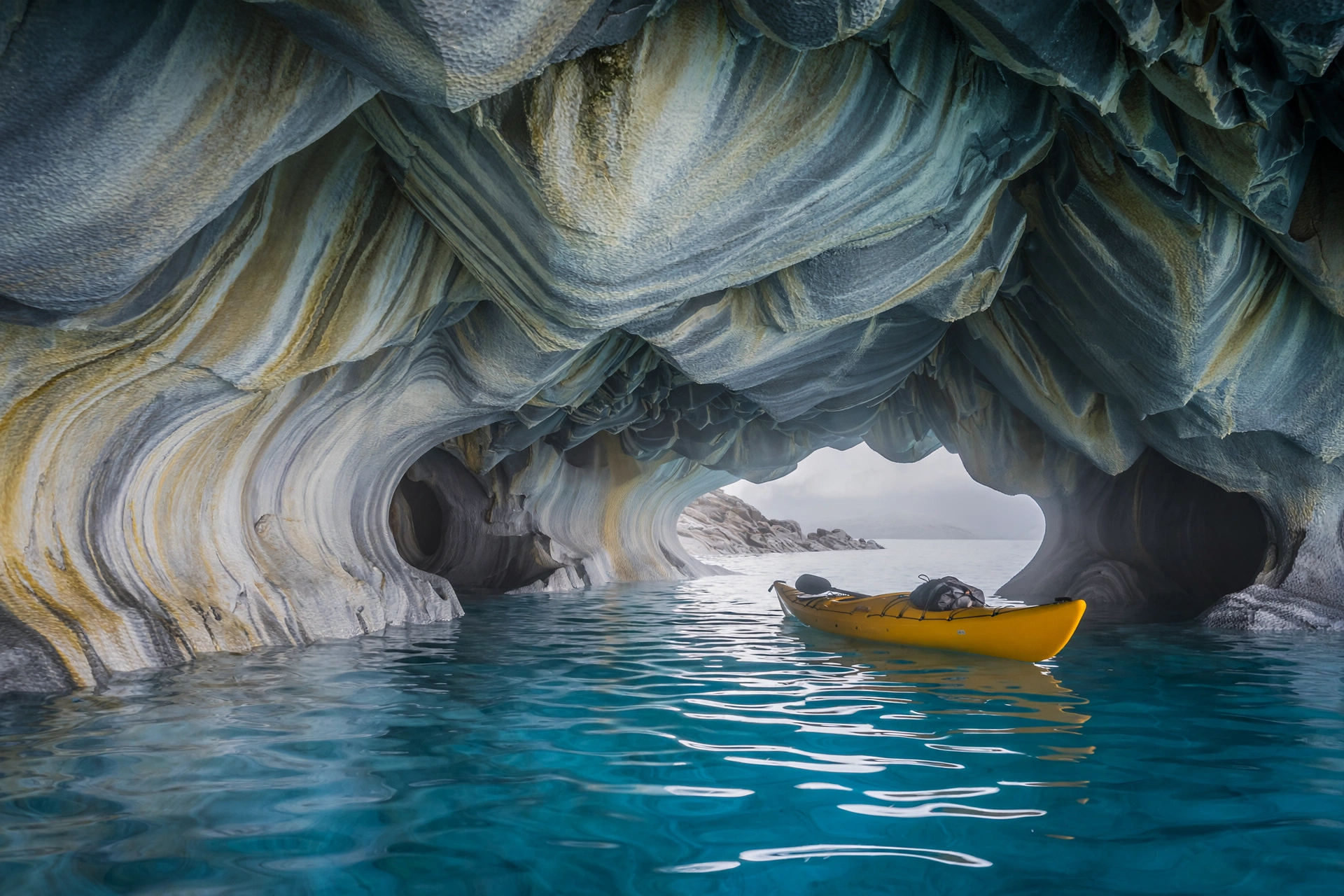
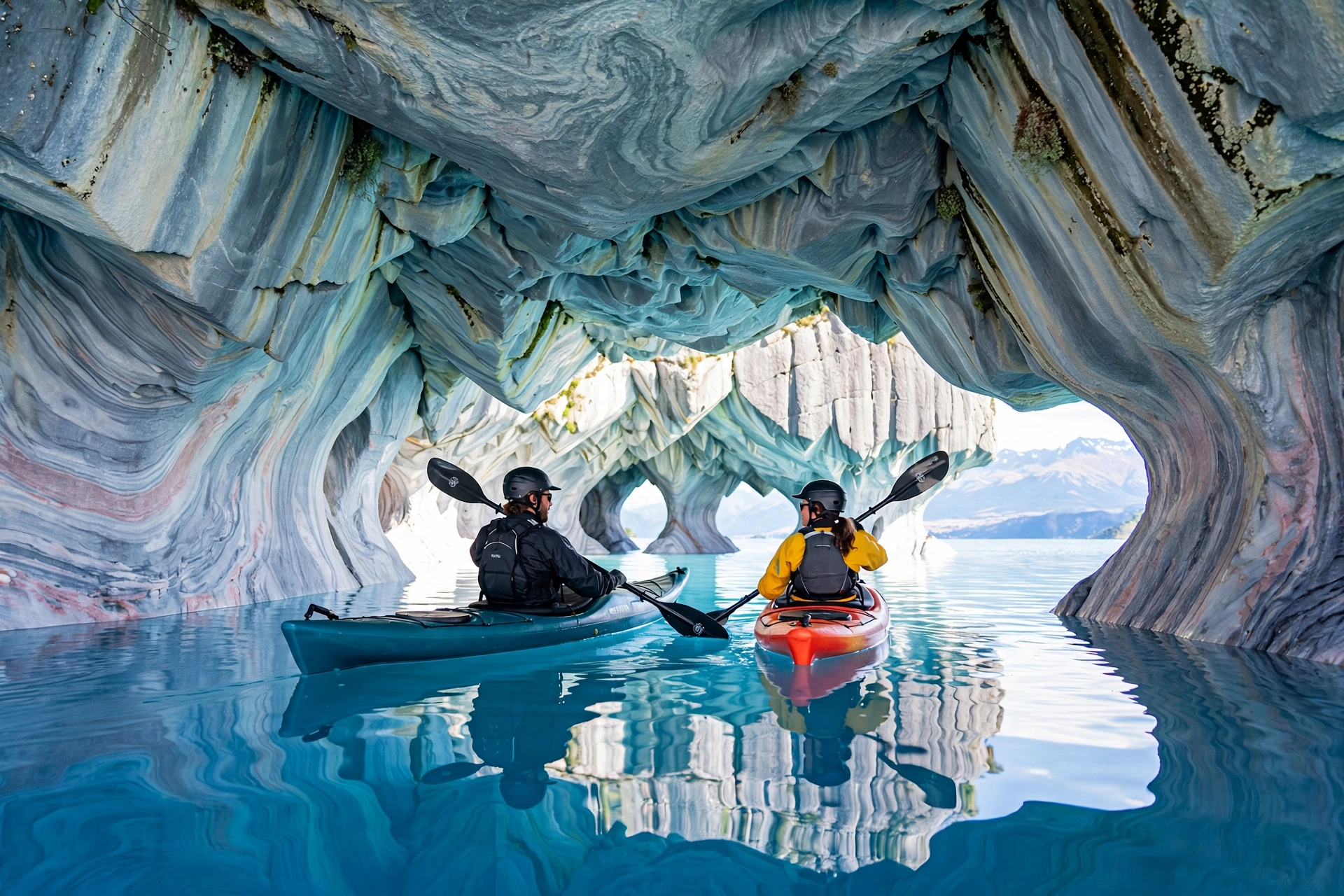
This is the showstopper. A freestanding island of marble rising straight out of the lake, pierced with natural arches and pass-throughs. Kayakers spend most of their time here because the tunnels are too small for boats, and you can paddle right through the arches. On a sunny day, with the milky blue water reflected onto the swirls, it looks almost painted. There is one sobering fact the guides will tell you: with erosion being a constant reality, this freestanding formation will not last forever. Geologically speaking, it is temporary.
2. The Marble Chapel (Capilla de Marmol)
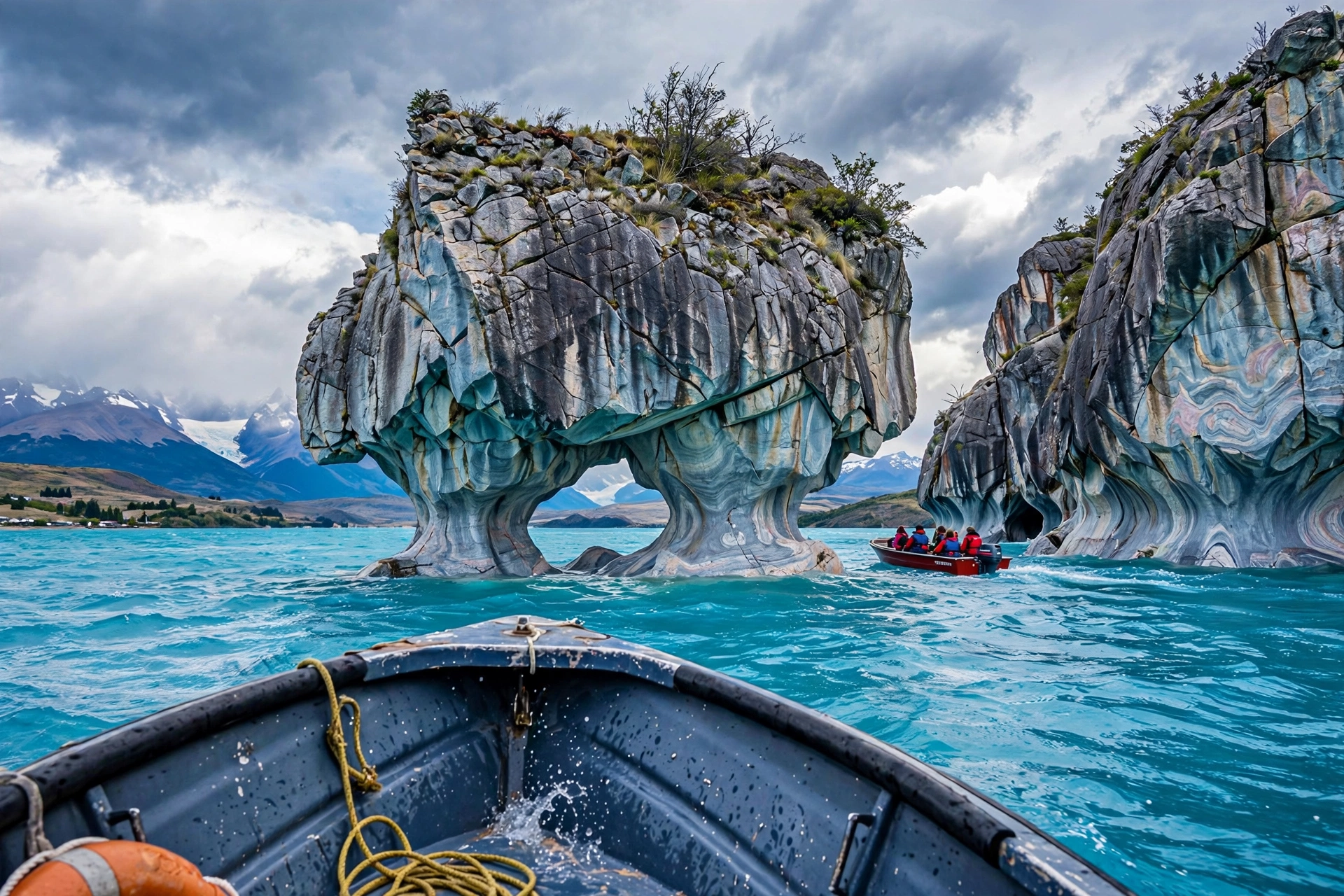
Smaller and more intimate, the Chapel has a natural window eroded right through it, and boats can pause inside the shallow formations so you can sit quietly and take it all in. It is the one that photographs best up close, with those delicate layered formations that look like an elaborately frosted cake.
3. The Marble Caves (Cuevas de Marmol)
The main grotto complex along the shoreline, where the boats thread through swirling marble passages and pause inside the caverns so you can touch the marble and feel how smooth six millennia of waves have made it. The swirls, divots, and bands of color on the walls are the real thing, not lighting tricks.
The Best Time to Go (And the Mistake That Ruins Trips)
This is the problem-solving part, so listen up. The number one mistake visitors make is booking the boat trip on a gray, overcast day. The whole magic of the caves is the sunlight reflecting off the turquoise water onto the marble. No sun, no glow. The caves are still impressive in flat light, but you will miss the electric-blue effect that makes the place famous.
So here is the playbook:
- Go on a sunny day, ideally mid-morning to midday. The light beams angle down into the grottos and the reflection is at its strongest. If the weather looks bad, wait a day if you can. Patagonian weather changes fast.
- December to February (Patagonian summer) is the most reliable weather window and the lake is most accessible. This is also peak season, so book tours a day or two ahead.
- October to November and March to April are the shoulder seasons. Fewer crowds, and many guides say the light and water levels are actually at their best in spring and fall.
- Early spring gives you shallow, crystalline turquoise water. Summer gives you deeper, darker blue. Pick your aesthetic.
Dress in layers. Patagonian weather can flip in an hour, and the lake is windy. Waterproof and windproof outer layers, sunglasses, sunscreen, and shoes that can handle a wet boat deck. Kayakers should expect splashes.
Getting There: The Journey Is Half the Adventure
Let us be honest: this place is not easy to reach. That is exactly why it is still special.
The standard route is a flight to Santiago, then onward to Coyhaique, the gateway city of the Aysen region. From Coyhaique it is about a 200-mile drive on rough dirt roads along the legendary Carretera Austral (Route 7) to the tiny lakeside hamlet of Puerto Rio Tranquilo. The whole trip from Santiago is roughly 800 miles. Budget a full day of travel each way.
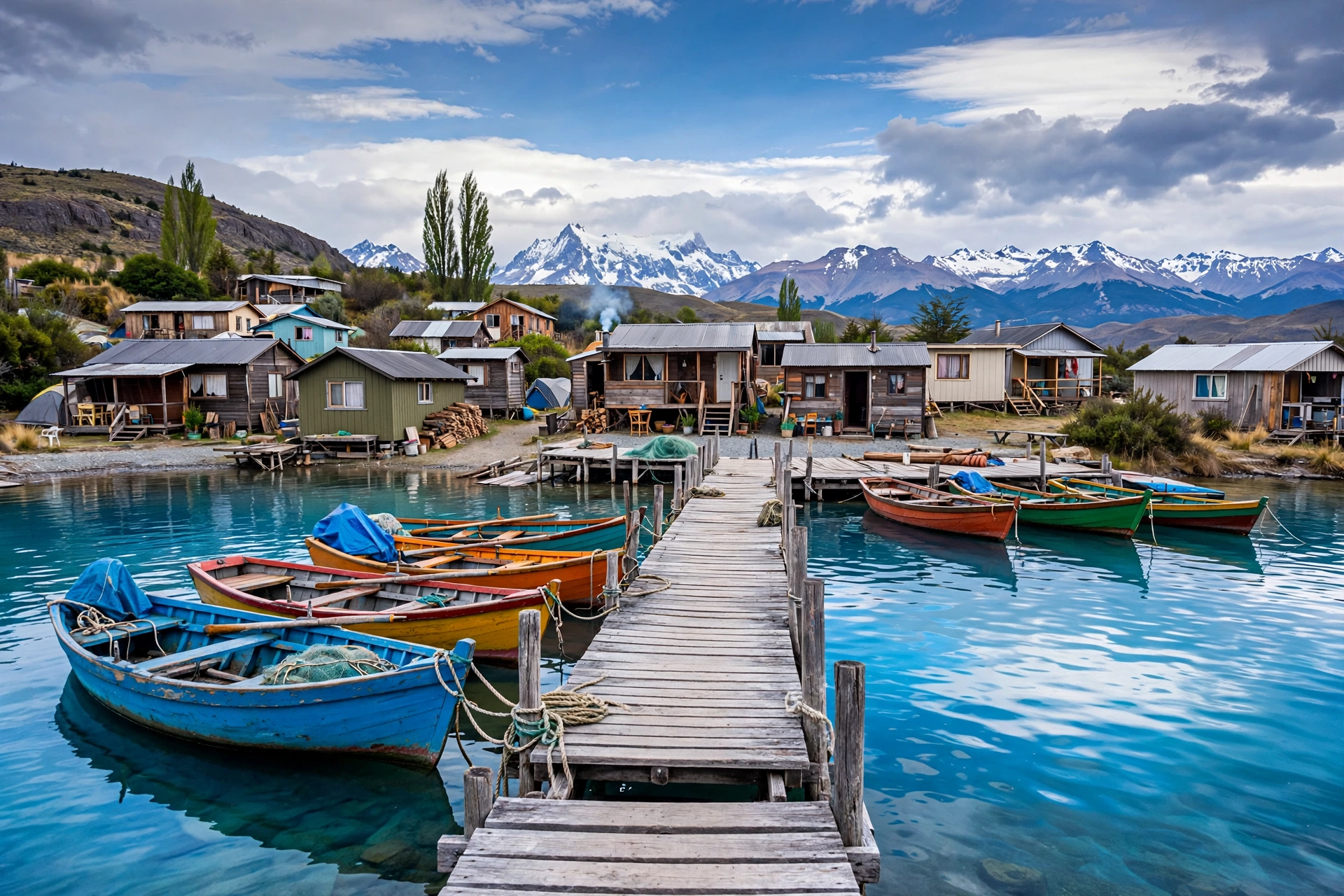
Puerto Rio Tranquilo itself is worth the stop. A few decades ago this whole area was cattle country; everyone worked in ranching. Now a good chunk of the local population works in tourism, and the town’s whole rhythm revolves around the lake. It is the kind of place where your boat captain is probably the cousin of your guesthouse owner, and that is a feature, not a bug. Book locally if you can: multiple tour operators work right out of the hamlet, and walk-up prices are often cheaper than the online platforms, especially outside peak season.
Boat or Kayak: Which Tour Should You Book?
You have two ways to see the caves, and they are genuinely different experiences:
The boat tour is the classic. Most run 1.5 to 2.5 hours, visit all three formations, and include a local guide who explains the geology and the history of the area. Life jackets are provided, and it is family friendly. Prices in 2026 run roughly $39 to $71 per person depending on the operator and platform, with local walk-up bookings at the cheaper end. Book the earliest sunny slot of the day you can.
The kayak tour is the insider pick. You sit lower on the water, closer to the marble, and you can squeeze through the small tunnel into the Marble Cathedral that boats cannot enter. It is quieter, more intimate, and honestly better for photography because nobody’s head is in your frame. The trade-off: it is more physical, you will get a little wet, and there may be age restrictions for kids. If you are reasonably fit and the lake is calm, do the kayak. You will not regret it.
2026 Prices and Practical Tips
Real numbers, so you can budget properly:
- Boat tours: about $39 to $71 per person (2026 listings). The 1.5-hour Capillas de Marmol plus Cathedral trip is the most common format.
- Longer guided tours (around 2 hours 40 minutes, three caves, photo stops): roughly 49 GBP per person on international booking platforms.
- Kayak tours: similar range, sometimes slightly more.
- Getting there: flights to Coyhaique from Santiago, then a rental car or bus for the Carretera Austral leg. Fuel up whenever you can; services are sparse on the dirt stretches.
A few more tips from people who have actually done it: bring a dry bag for your camera, because spray on the return leg is real when the wind picks up. A polarizing filter makes the turquoise pop in photos. And do not skip the other side of the lake either; the whole General Carrera basin is outrageously beautiful, and the Carretera Austral drive alone is a bucket-list road.
A Cave That Will Not Last Forever
Here is the thought that stuck with me after researching this place. The Marble Cathedral, that freestanding island of arches everyone photographs, is being eaten by the same water that made it beautiful. Every wave takes a microscopic bite. The formations you see today will not look exactly the same in fifty years. The sanctuary designation in 1994 protects the area from development, but nobody can stop erosion. It is the price of being made by water.
That impermanence is part of why it hits so hard in person. You are looking at 6,000 years of slow sculpture, still in progress, and you happen to be there for your tiny slice of it. Caves like Benagil in Portugal give you the sea-cave drama; Iceland’s ice caves give you the frozen blue. But nothing else on Earth gives you this: a cave carved from solid marble, painted blue by a glacier-fed lake, changing color with the seasons.
If Patagonia is on your list at all, move the Marble Caves to the top of it. And when you go, pick a sunny morning, take the kayak if you can, and just sit inside the grotto for a minute without your camera up. Some things are better stored in memory than on a memory card.
Loved this? We pin a new cave or adventure story every single day. Follow The Cavee on Pinterest for your daily dose of the underground world, and read the full story here on thecavee.com.