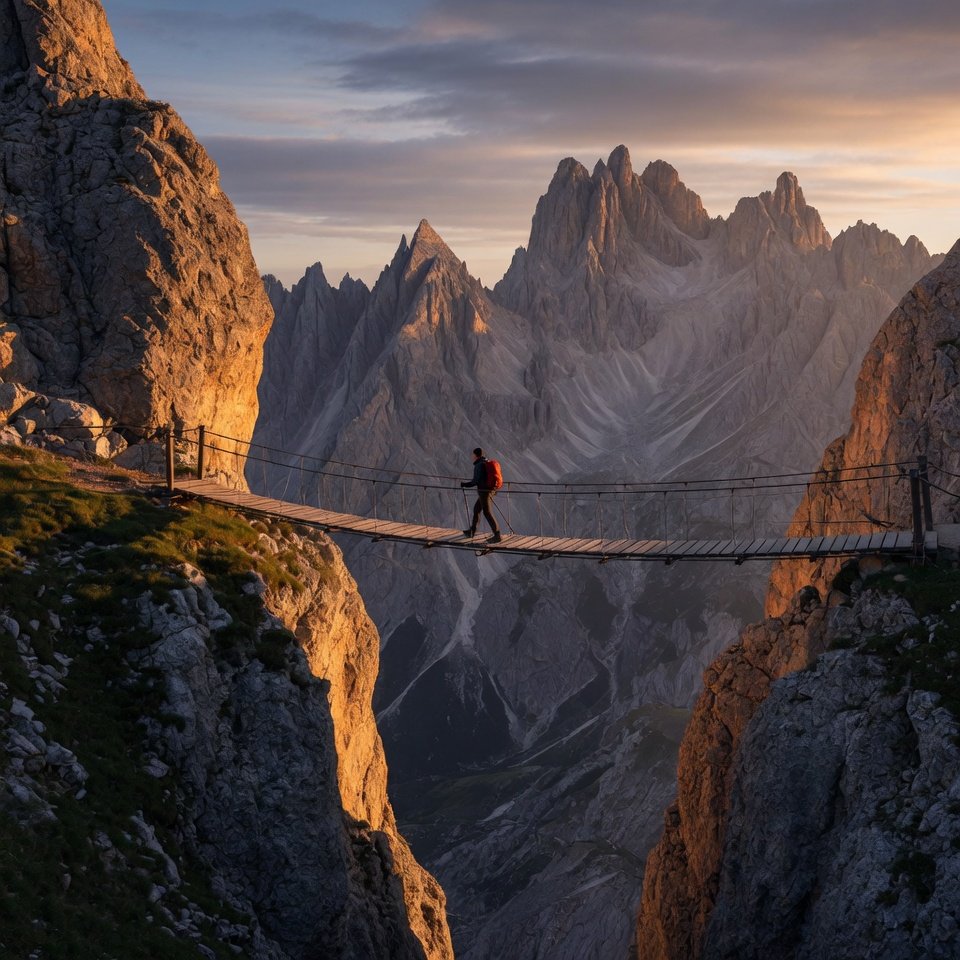
There is a moment on almost every via ferrata route in the Dolomites when you stop, look down at the valley falling away beneath your boots, and realize you are standing somewhere that should require years of technical climbing experience to reach. Except it does not. You are clipped to a steel cable that has been bolted into the rock for over a century, and with nothing more than a harness, a helmet, and a bit of courage, you have just climbed a mountain face that once belonged only to soldiers and expert alpinists.
This is the magic of via ferrata, and nowhere in the world does it better than the Italian Dolomites.
What Exactly Is a Via Ferrata
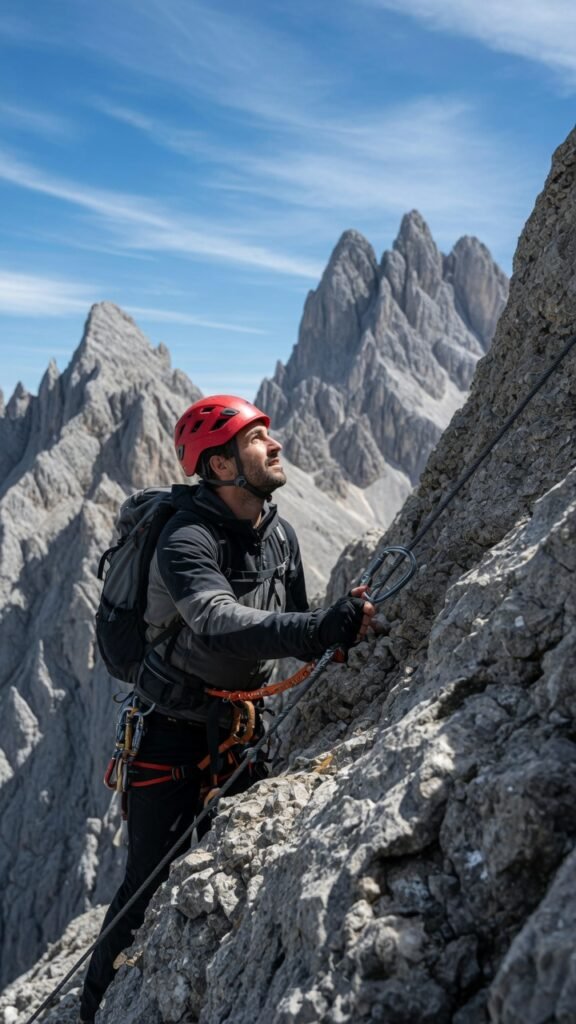
Via ferrata translates from Italian as iron path, and that name describes exactly what you are getting into. These are mountain routes fitted with fixed steel cables, iron rungs, ladders, and occasionally suspension bridges, allowing hikers to ascend steep or vertical rock faces that would otherwise require serious climbing gear and years of practice. You wear a harness connected to the cable through a specialized lanyard with an energy absorber, so even on the most exposed sections, you remain continuously protected as you move.
The concept was born out of necessity rather than recreation. During World War I, Italian and Austro Hungarian troops fought at brutal altitudes across the Dolomites, and both armies needed a way to move soldiers, weapons, and supplies across steep ridgelines quickly and safely. Engineers drilled iron rungs into the rock and strung cables along the most difficult sections, effectively turning impassable cliffs into usable mountain paths. Long after the war ended, those same routes were maintained, expanded, and eventually opened to the public, and today the Dolomites host the densest network of via ferrata in the world, with more than 700 routes scattered across the range.
The Problem Most Hikers Run Into
If you love mountains but have never taken a technical climbing course, you have probably run into this exact wall before. Standard hiking trails, no matter how scenic, eventually stop before the truly dramatic terrain begins. The vertical walls, narrow ridgelines, and summit views that make mountain photography so striking are usually reserved for people with years of rock climbing training. Via ferrata solves that problem directly. It gives ordinary hikers with a reasonable level of fitness and a good head for heights access to genuinely vertical, exposed alpine terrain, without needing to spend years building technical climbing skills first.
That accessibility is exactly why via ferrata has exploded in popularity over the last decade. You do not need to be an athlete. You need decent fitness, comfort with heights, and the discipline to follow safety procedures.
Understanding the Difficulty Ratings
Before choosing a route, it helps to understand how via ferrata routes are graded. Italy generally uses a letter scale from A to D, with A representing an easy route suitable for complete beginners and D reserved for extremely difficult routes with sustained vertical climbing and serious exposure. In parts of the Dolomites influenced by Austrian tradition, you may also see the Schall scale, running from K1 through K6, where K1 is an easy cabled path with low exposure and K5 or K6 demands excellent physical conditioning and real climbing technique.
Complete beginners should stick to A or B rated routes for their first outing. These typically involve short vertical sections with good handholds, moderate exposure, and a level of physical effort comparable to a strenuous hike. Once you have a route or two under your belt and feel comfortable with the equipment, moving up to more demanding routes becomes a natural progression.
Some of the Best Routes to Consider
For a first via ferrata experience, Via Ferrata Gran Cir near Passo Gardena is hard to beat. The ascent takes only about sixty to ninety minutes, making it a low commitment way to learn how the equipment works before tackling anything longer. The summit rewards you with sweeping views of the Sella mountain group and the distinctive spires of Sassolungo.
For something with more historical weight, several routes near Cortina d’Ampezzo follow old wartime trenches and tunnels, letting you explore genuine World War I fortifications while making your way up the mountain. These routes combine the physical thrill of climbing with a quieter, more reflective sense of walking through history.
Climbers looking for one of the most photographed experiences in the entire region should aim for Via Ferrata Brigata Tridentina, a classic route built in the 1960s and named in honor of the Italian Army troops who constructed it. Its main draw is a dramatic suspension bridge connecting two rock towers, offering a genuinely thrilling crossing high above the valley floor before leading hikers onward to a mountain hut for the night.
More experienced climbers often gravitate toward Via Ferrata Merlone, considered one of the most spectacular routes in the entire Dolomites. The exposure is constant throughout, and much of the climb relies on natural hand and footholds rather than artificial rungs, giving it a more genuine climbing feel. It tops out at nearly 2,800 meters, with sweeping views across some of the most photographed peaks in the range.
What You Need Before You Go
Proper gear is not optional on a via ferrata. At minimum, you need a climbing helmet, a full body harness, and a certified via ferrata lanyard with a built in energy absorber, which limits the force on your body in the event of a fall. Sturdy hiking or mountaineering boots with good ankle support are essential, along with gloves to protect your hands from the steel cable. Most towns near major via ferrata routes, including Cortina d’Ampezzo, have rental shops where you can pick up everything you need if you do not own your own gear.
Timing matters as much as equipment. The via ferrata season generally runs from June through October, with July and August offering the most stable weather but also the biggest crowds. Afternoon thunderstorms are common and genuinely dangerous on routes covered in steel cable, so the standard advice among experienced climbers is to start early in the morning and aim to be off any exposed route well before early afternoon.
If this is your first time attempting a via ferrata, hiring a certified mountain guide for at least your first route is a smart investment. A guide can teach you proper technique, help you judge your own comfort level with exposure, and make decisions about weather and route conditions that come from years of local experience.
Making the Most of a Dolomites Adventure
One of the best things about basing a trip around via ferrata is how easily it combines with everything else the Dolomites has to offer. Many climbers pair a morning route with an afternoon hike through nearby nature parks, or combine multiple via ferratas into a multi day hut to hut traverse, sleeping in mountain refuges along the way and eating hearty alpine meals as the sun sets over the peaks. Some adventure operators near towns like San Vigilio di Marebbe even pair a via ferrata climb with an afternoon zipline session, giving you two very different kinds of adrenaline in a single day.
A Brief Look at Where It All Began
The story behind the very first via ferrata is worth knowing before you clip in for your own climb. Back in 1907, a blacksmith named Luigi Gilarduzzi, known locally as Minighel, realized there was a faster way to reach a mountain refuge than the long winding trail everyone else used. Working alone, he forged and hammered nearly two hundred iron pegs into a steep rock wall near Cortina d’Ampezzo, creating a direct route that still exists today. What started as one man’s shortcut eventually became the foundation for an entire style of mountain travel that soldiers would later expand across the range during the war. Knowing that history adds a certain weight to every rung you grip and every cable you clip into on a modern route.
Common Mistakes First Timers Make
Even experienced hikers sometimes underestimate what a via ferrata actually demands. One of the most common mistakes is starting too late in the day. Afternoon storms build quickly over the Dolomites during summer, and being caught on an exposed steel cable during a thunderstorm is genuinely dangerous rather than just uncomfortable. Aim to be on the trail early and off any exposed section well before early afternoon.
Another frequent error is choosing a route based on photos alone rather than an honest look at difficulty ratings. A route that looks stunning in someone’s social media post might involve sustained vertical climbing that requires real arm strength and a strong tolerance for exposure. Matching the route to your actual fitness and comfort level, not your ambition, makes the difference between an exciting day and a miserable one.
Skipping proper gear is another mistake worth avoiding entirely. Some hikers attempt easier looking routes in running shoes with no harness at all, assuming the cable alone will keep them safe. It will not. A certified harness, helmet, and energy absorbing lanyard exist specifically because falls happen even on routes rated for beginners, and proper equipment is what turns a fall into a minor scare instead of a serious injury.
Why This Belongs on Your Travel List
Via ferrata is one of those rare travel experiences that genuinely delivers on the promise of adventure without requiring years of preparation to access it. You get real exposure, real height, and real vertical terrain, all while clipped safely to a cable that has protected climbers for generations. Add in the layered history of routes built during one of the most brutal mountain wars ever fought, and you have an experience that engages your body, your sense of adventure, and your curiosity all at once.
For travelers chasing something more meaningful than another scenic viewpoint, the iron paths of the Dolomites offer a rare combination of accessibility and genuine thrill. Once you clip into that first cable and start climbing, it becomes easy to understand why so many hikers get hooked after their very first route.