Mount Kinabalu – The Majestic Crown of Borneo
Introduction
If you love mountains, adventure, and breathtaking landscapes, Mount Kinabalu should be on your travel bucket list. Standing proudly in Southeast Asia, this iconic peak is not just a mountain, it’s a symbol of natural beauty, biodiversity, and cultural heritage.
In this complete guide, you’ll discover everything about Mount Kinabalu: its height, location, climbing experience, biodiversity, best time to visit, travel tips, and much more. This article is fully SEO-optimized, human-friendly, and written in simple English to help readers understand easily.
Where Is Mount Kinabalu Located?
Mount Kinabalu is located in the state of Sabah on the island of Borneo in Malaysia. It lies within Kinabalu Park, Malaysia’s first UNESCO World Heritage Site.
The mountain is about 90 kilometers from Kota Kinabalu, making it accessible to both local and international travelers.
How Tall Is Mount Kinabalu?
Mount Kinabalu stands at 4,095 meters (13,435 feet) above sea level. It is the highest mountain in Malaysia and one of the highest peaks in Southeast Asia.
Although it is not as tall as Mount Everest, Mount Kinabalu is still considered challenging due to its steep granite summit and unpredictable weather.
The History and Cultural Importance
Mount Kinabalu is deeply respected by local communities, especially the Kadazan-Dusun people. They believe the mountain is a sacred place where the spirits of ancestors rest.
The name “Kinabalu” is believed to come from the words “Aki Nabalu,” meaning “Revered Place of the Dead.”
Because of its spiritual importance, climbers are expected to show respect while hiking.
Kinabalu Park – A UNESCO World Heritage Site
Kinabalu Park was designated a UNESCO World Heritage Site in 2000 for its incredible biodiversity.
The park covers over 750 square kilometers and is home to:
- More than 5,000 plant species
- Over 300 bird species
- Around 100 mammal species
It is considered one of the most biologically diverse places in the world.
Why Mount Kinabalu Is Famous
Mount Kinabalu is famous for many reasons:
1. Incredible Biodiversity
The mountain has plants from different climate zones—from tropical rainforest at the base to alpine vegetation at the top.
2. Unique Wildlife
Rare species live here, including:
- Orangutans (in nearby forests)
- Clouded leopards
- Kinabalu giant red leeches
- Beautiful orchids
3. The Rafflesia Flower
The world’s largest flower, Rafflesia, can sometimes be found in the region.
4. Granite Summit
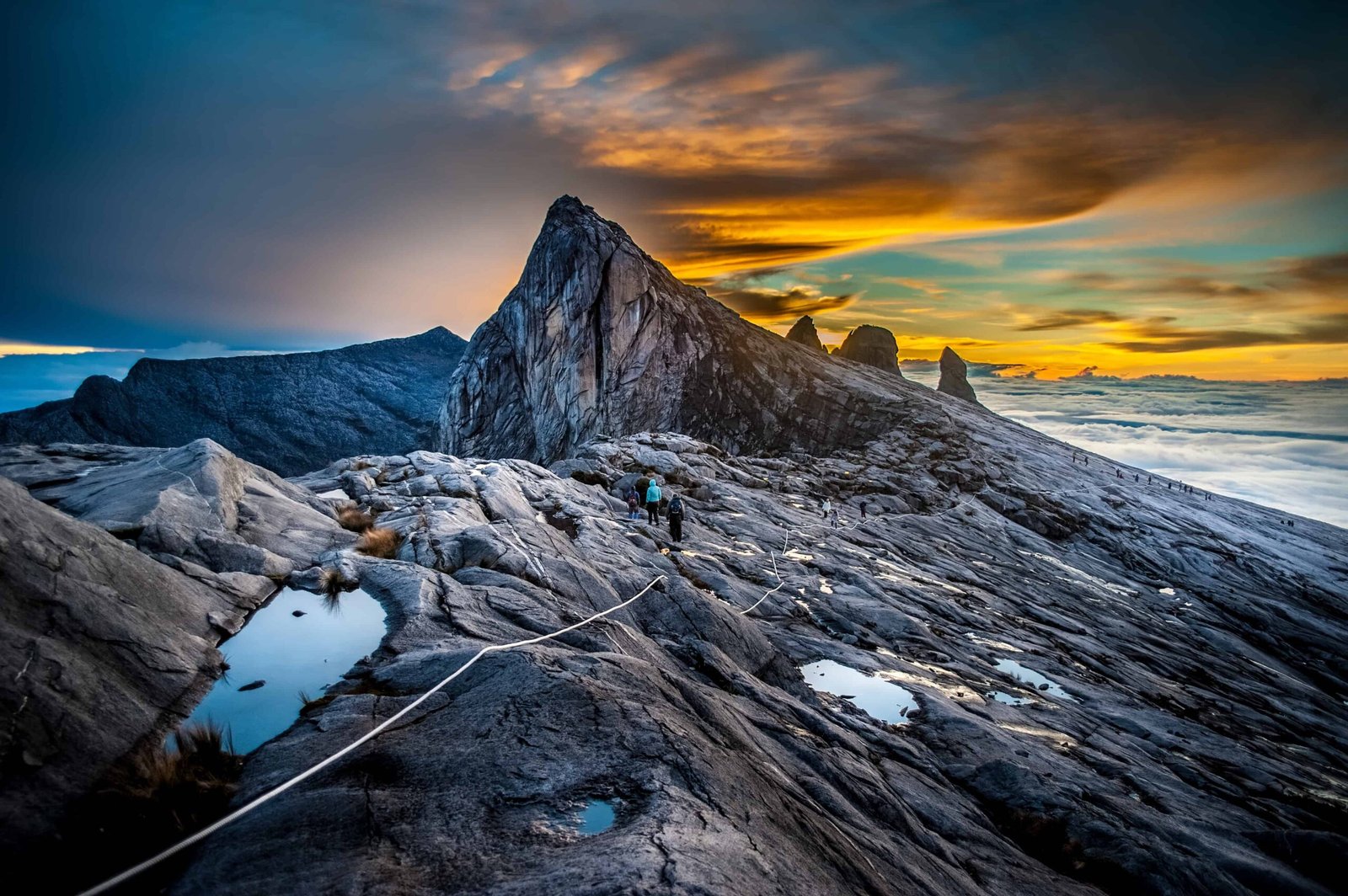
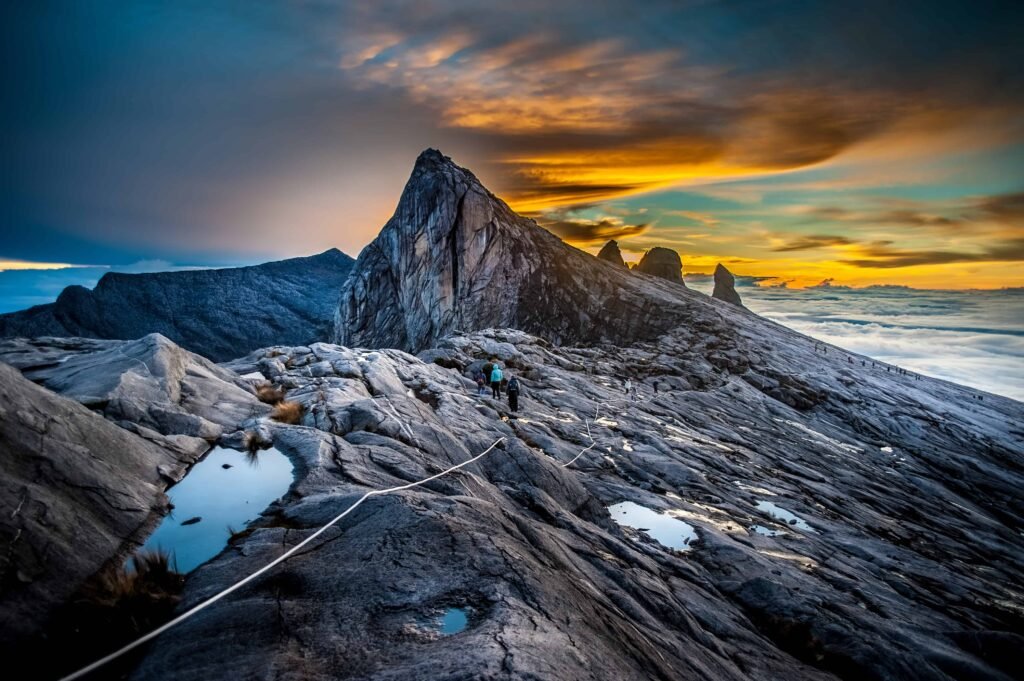
The top of Mount Kinabalu is made of massive granite rock slabs, giving it a unique appearance.
Climbing Mount Kinabalu – What to Expect
Climbing Mount Kinabalu is a dream for many adventure lovers. The good news? You don’t need advanced mountaineering skills.
However, you must be physically fit.
Duration of the Climb
Most climbs take 2 days and 1 night:
- Day 1: Hike to Laban Rata (rest house)
- Day 2: Early morning summit push to Low’s Peak
The Summit – Low’s Peak
The highest point of Mount Kinabalu is called Low’s Peak. It offers breathtaking sunrise views that many climbers describe as magical.
From the summit, you can see clouds below you and golden sunlight spreading across Borneo.
Climbing Routes
There are two main routes:
- Timpohon Gate Route – The most popular and easiest path.
- Mesilau Route – Longer but scenic (currently limited access depending on conditions).
Most climbers choose the Timpohon route.
Best Time to Visit Mount Kinabalu
The best months to climb are:
- March to September
During this period, rainfall is lower, and trails are safer.
Avoid the heavy monsoon season from November to January.
Weather Conditions
The weather can change quickly on Mount Kinabalu.
At the base:
- Warm and humid
At the summit:
- Cold and windy (can drop to 0°C)
Always carry:
- Warm jacket
- Gloves
- Raincoat
Permits and Regulations
Climbing Mount Kinabalu requires:
- A climbing permit
- A registered mountain guide
- Booking
Only around 130–160 climbers are allowed per day to protect the environment.
How Difficult Is the Climb?
Mount Kinabalu is considered a moderately difficult climb.
Challenges include:
- Steep stair sections
- Long hiking hours
- High altitude
Some climbers may experience mild altitude sickness.
Biodiversity Zones of Kinabalu
One of the most amazing things about Mount Kinabalu is how the environment changes as you climb.
1. Lowland Rainforest (Below 1,500m)
Dense jungle and tropical trees.
2. Montane Forest (1,500m–2,800m)
Cooler temperatures and mossy trees.
3. Subalpine Zone (Above 3,000m)
Shrubs and unique alpine plants.
4. Alpine Zone (Near Summit)
Bare granite rock and limited vegetation.
Wildlife Around Mount
Animals found in the area include:
- Bornean gibbons
- Wild boars
- Tree frogs
- Colorful butterflies
Bird watchers especially love Kinabalu Park.
Earthquakes and Safety
In 2015, Kinabalu experienced a 6.0 magnitude earthquake. Some trails were damaged, but they have since been repaired.
Today, safety measures have improved, and climbing operations continue normally.
Accommodation Options
Inside Kinabalu Park
- Laban Rata Resthouse
- Panalaban Hostels
Nearby Areas
- Kundasang town
- Kota Kinabalu city
Booking early is very important because slots fill quickly.
How to Reach Kinabalu
By Air
Fly to Kota Kinabalu International Airport.
By Road
From Kota Kinabalu, it takes about 2 hours by car to reach Kinabalu Park.
Things to Pack for the Climb
Here’s a simple checklist:
- Hiking shoes
- Headlamp
- Warm clothes
- Energy snacks
- Water bottle
- Gloves
- Personal medicine
Packing light but smart is key.
Sunrise at the Summit
One of the biggest highlights of climbing Mount Kinabalu is watching the sunrise from Low’s Peak.
Most climbers wake up at 2:00 AM to reach the summit before dawn. The view is worth every step.
Is Mount Kinabalu Worth It?
Absolutely yes.
Even though the climb is tiring, the experience is unforgettable:
- Incredible views
- Unique plants and wildlife
- Personal achievement
- Cultural significance
It’s one of the most rewarding mountain experiences in Asia.
Interesting Facts About Kinabalu
- It is one of the youngest non-volcanic mountains in the world.
- The mountain is still rising about 5mm per year.
- It is Malaysia’s first UNESCO World Heritage Site.
- Thousands of international climbers visit every year.
Tips for First-Time Climbers
- Train with stair climbing before your trip.
- Stay hydrated.
- Walk slowly to avoid altitude sickness.
- Listen to your guide.
- Respect local culture and nature.
Photography Opportunities
Mount Kinabalu is a paradise for photographers.
Best photo spots:
- Timpohon Gate
- Laban Rata
- Low’s Peak summit
- Kinabalu Park gardens
Sustainable Tourism and Conservation
Authorities limit the number of climbers daily to protect the fragile ecosystem.
Visitors are encouraged to:
- Avoid littering
- Stay on marked trails
- Respect wildlife
Sustainable tourism helps preserve Kinabalu for future generations.
Conclusion
Mount Kinabalu is more than just the highest mountain in Malaysia. It is a place of adventure, spirituality, and extraordinary natural beauty.
From lush rainforests to granite peaks, from rare flowers to stunning sunrises, Mount Kinabalu offers an unforgettable experience for every traveler.
Whether you are an experienced hiker or a passionate traveler looking for your next challenge, Kinabalu deserves a spot on your travel list.