There's a special kind of disappointment in biting into a baguette you bought yesterday and finding out it has already turned into a weapon. You know the feeling. The crust that was shattering and golden last night is now either leathery and sad or hard enough to chip a tooth. And the worst part is, you paid good money for that bread.
I used to accept this as one of life's small tragedies. Bread goes stale, that's just what bread does. Then I started looking into how bakeries, actual French bakeries where bread is practically a religion, keep their loaves tasting fresh. Turns out the answer has been sitting on kitchen counters since the 1800s: a wooden bread box.
Why Your Bread Goes Stale in Two Days (The Science, in Plain Words)
Staling has almost nothing to do with bread "drying out," which is the first thing most people assume. The real culprit is something called starch retrogradation, and it sounds complicated but the idea is simple.
When bread bakes, starch molecules inside the dough absorb water and swell up into a soft, flexible network. That's what makes fresh bread soft and springy. But the moment the loaf comes out of the oven, those starch molecules start slowly reorganizing themselves back into rigid crystals, squeezing the water out as they go. That process is staling. It happens fastest at refrigerator temperatures, which is why the fridge is the worst place you can put your bread, despite what your grandmother told you.
Room temperature slows the process down, but air speeds up moisture loss from the crust. So you need a storage spot that is cool, dark, and holds just the right amount of humidity around the loaf. A plastic bag traps too much moisture and ruins the crust. An open counter lets too much air in and dries everything out. A wooden bread box hits the sweet spot right in the middle.
The Plastic Bag Problem Nobody Talks About
Let's be honest about what most of us do. We bring home a beautiful loaf, shove it in the plastic bag it came in, twist the tie, and hope for the best. By day two, the crust has gone soft and chewy in the worst way, and the inside is already on its way to cardboard.
Plastic is airtight, which sounds like a good thing until you realize the bread is still releasing moisture. That moisture has nowhere to go, so it condenses on the crust and turns it soggy. Meanwhile, if there is any warmth at all in your kitchen, that sealed, humid environment becomes a five-star resort for mold. You have basically created a tiny greenhouse for fungi on your countertop.
And then there is the waste angle. The average household throws away a shocking amount of bread. In the UK alone, bread is consistently one of the most wasted foods. Every loaf you toss because it went stale too fast is money in the bin and plastic in the trash. A one-time purchase that keeps bread edible for days longer pays for itself fast, both in your wallet and your conscience.
How a Wooden Bread Box Actually Keeps Bread Fresh
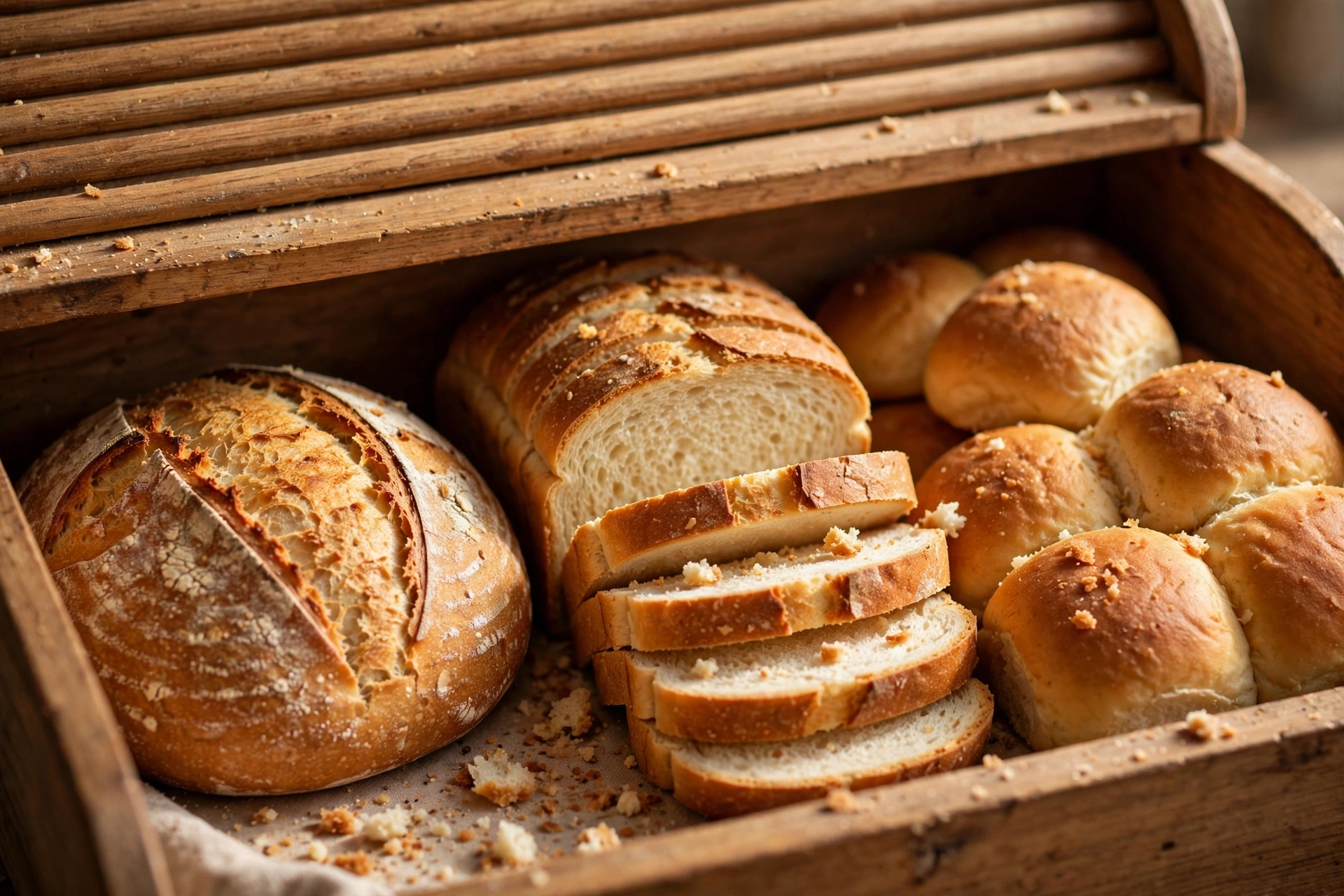
A bread box works on a beautifully simple principle: controlled airflow. The wooden walls absorb excess moisture when the air inside gets too humid, and release it back when things get too dry. Wood is naturally hygroscopic, meaning it breathes with the environment instead of sealing it off like plastic or trapping nothing at all like an open counter.
Inside a good bread box, the air stays dark and still, with humidity hovering in that magic zone where the crust stays crisp but the crumb stays soft. Most people find their bread lasts three to five days, sometimes longer for dense loaves like rye or sourdough, which were basically designed to keep.
There is also a detail people overlook: darkness. Light accelerates staling and can encourage mold growth. A bread box is a little dark cave for your loaf, and your bread is happier for it.
Roll-Top, Hinged, or Pull-Down: Which Style Fits Your Kitchen?
Bread boxes come in three main designs, and the differences actually matter in daily use.
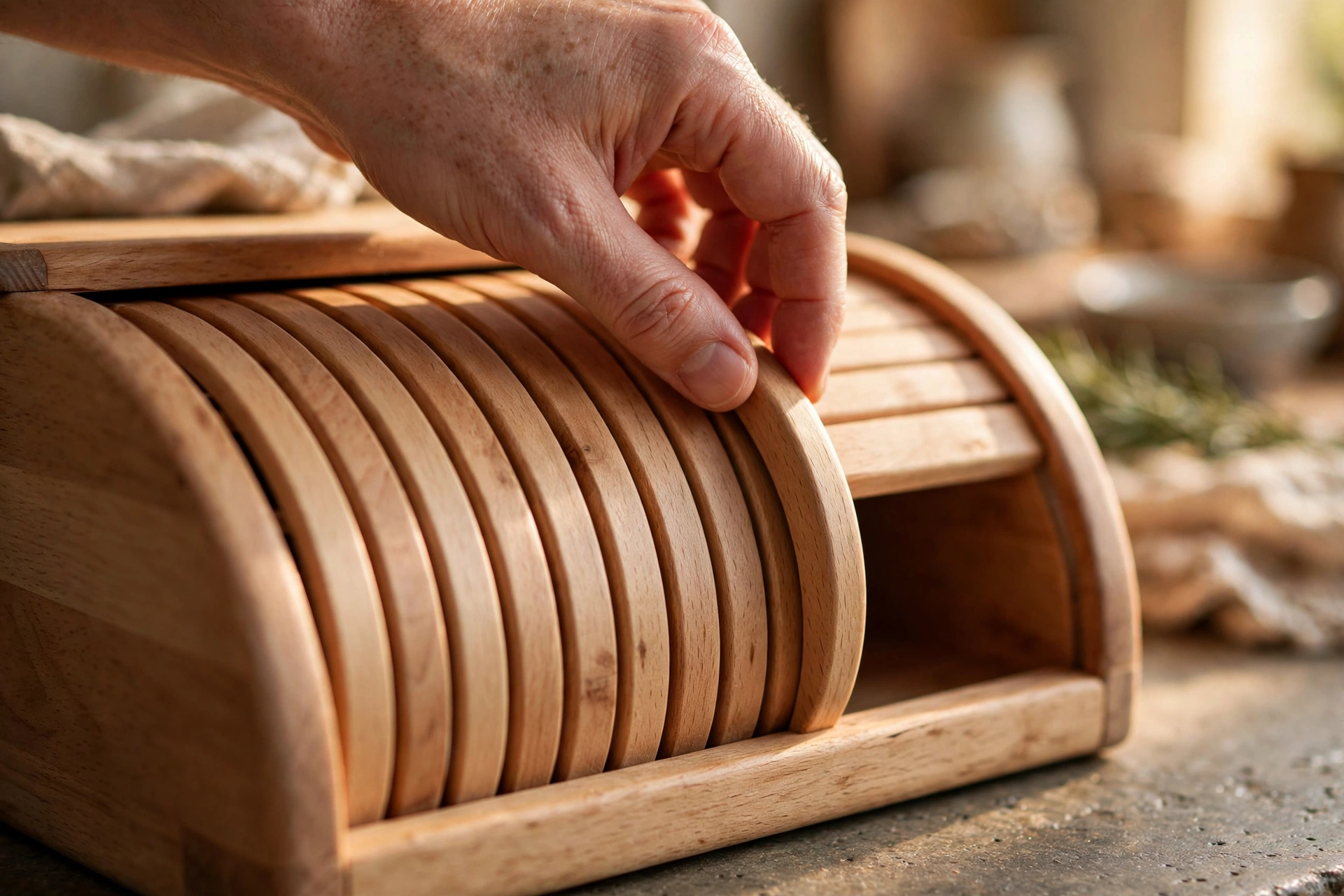
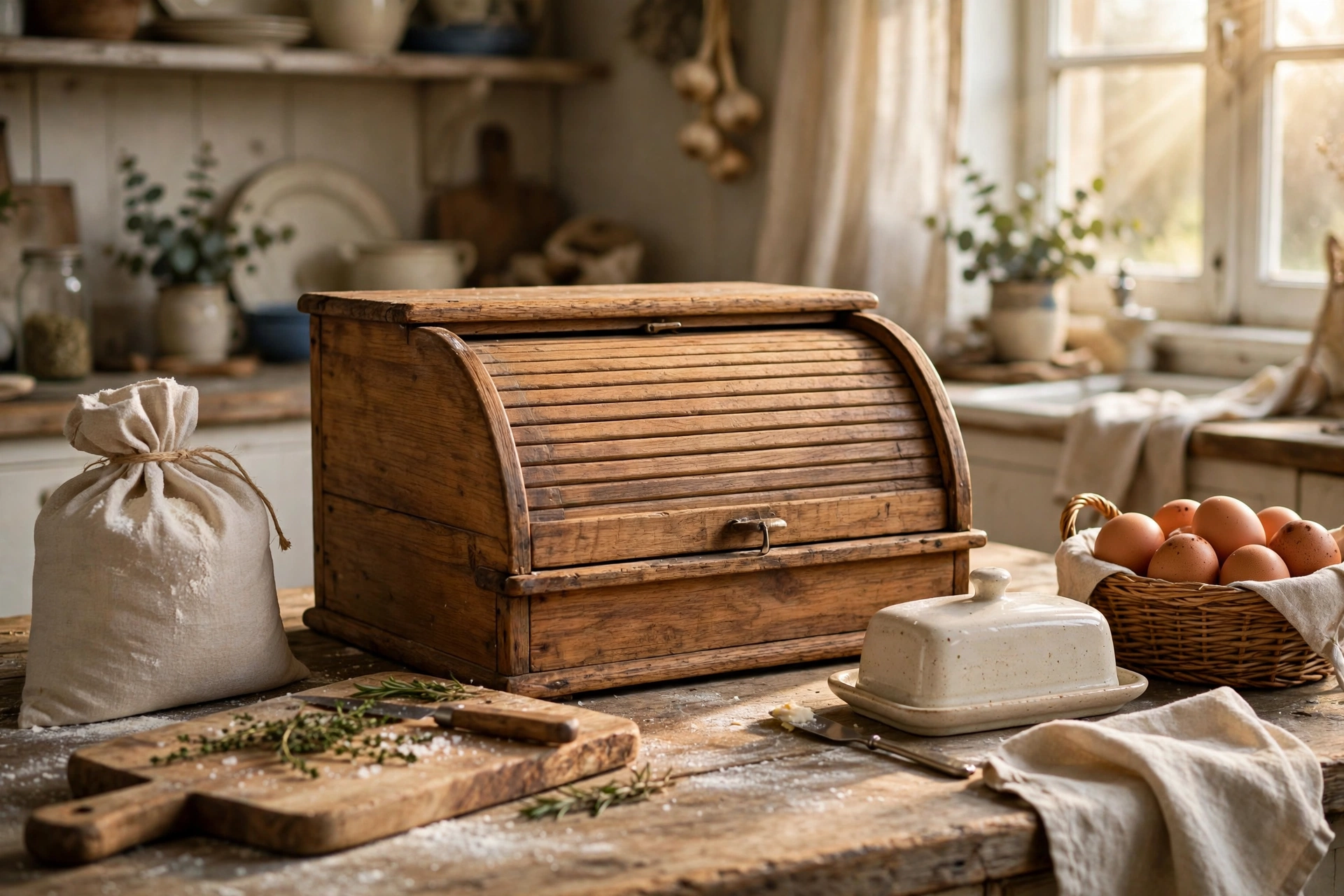
Roll-top is the classic. The lid is made of thin wooden slats that slide up and back into the box, like an old roll-top desk. It is satisfying to use, it never swings out and smacks your cabinets, and it looks gorgeous. The only downside is that the slats need to stay clean and dry to slide smoothly, so wipe up flour dust now and then.
Hinged lids open like a treasure chest. Simple, sturdy, and easy to clean inside. But they need clearance above the box, so measure the space under your cabinets before you commit.
Pull-down doors swing down and can double as a little shelf or cutting surface when open. Clever, but the hinges take more abuse, so build quality matters more here.
If you are short on vertical space, and most of us are, with cabinets hanging over the counter, the roll-top is usually the smartest pick. No lid to bang, no clearance math, just a smooth slide.
Why Beech Wood Beats Bamboo and Plastic
You will see bread boxes made from bamboo, acacia, pine, and beech. They all work, but beech has a few quiet advantages.
Beech is a dense, fine-grained hardwood. It does not have big open pores like oak, which means crumbs and moisture do not work their way deep into the wood. It is naturally resistant to warping, it takes a finish beautifully, and it has been the traditional choice for European kitchenware for centuries. There is a reason old German and French kitchens are full of beech: it lasts.
Bamboo is technically a grass, and while it is eco-friendly and affordable, it tends to be harder and more brittle, and cheaper bamboo boxes can develop splinters or cracks over time. Plastic boxes, meanwhile, have the same moisture-trapping problem as plastic bags, just in a box shape. They also look like a plastic box on your counter, which is nobody's idea of kitchen decor.
A solid beech bread box, finished with a food-safe lacquer or oil, can genuinely last decades. It ages well, picking up a warm patina instead of looking tired.
What to Look for Before You Buy One
Not all bread boxes are created equal, and since this is something you will use every single day, it is worth being picky.
Size first. Measure your counter space and think about what you actually buy. A standard box around 38 cm wide fits a couple of loaves or one big boule plus rolls. If you regularly buy baguettes, you need something longer, or you accept diagonal baguette storage, which honestly works fine.
Ventilation. Some boxes have small air holes in the back. This is a feature, not a flaw. A tiny bit of airflow prevents moisture buildup. That said, a well-made wooden box without holes still breathes through the wood itself, so do not panic if yours is solid.
Finish. Look for a food-safe finish, either a clear lacquer or a food-grade oil. Avoid anything with a strong chemical smell out of the box. If it smells like a hardware store, let it air out for a day or two before putting bread in it.
Craftsmanship. Check the joints and the roll-top mechanism if it has one. Handmade boxes from small workshops often beat mass-produced ones here, because a real person sanded that lid until it glides. Wobbly construction means gaps, and gaps mean your humidity control goes out the window.
Ease of cleaning. You will need to shake out crumbs regularly. A box with a flat, accessible interior is much easier to maintain than one with fiddly corners. Some people keep a small bench brush next to theirs, which is honestly a nice little ritual.
What Fits Inside (More Than You Think)
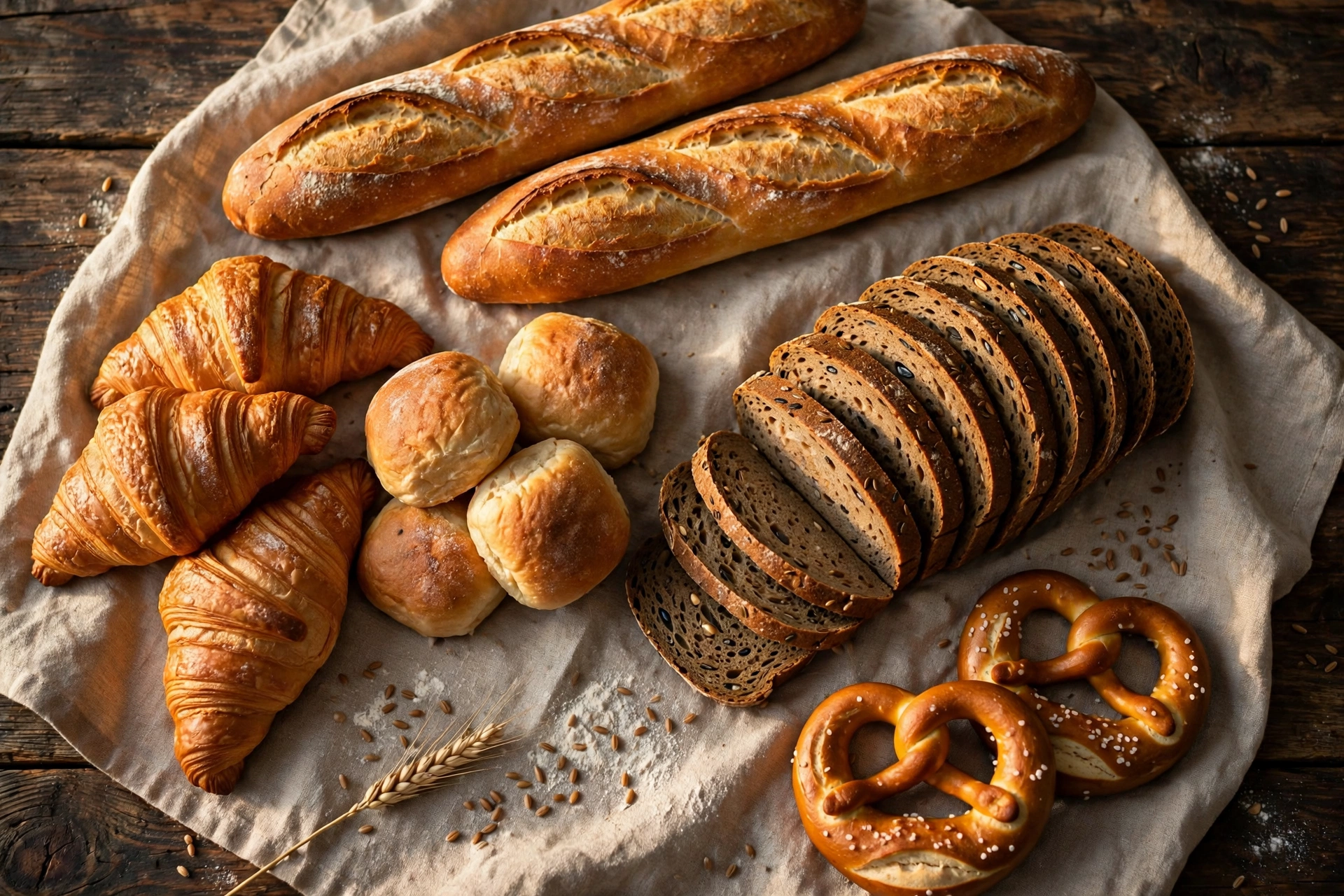
People hear "bread box" and picture one lonely loaf. In practice, a decent-sized box swallows a surprising amount of baked goods. Standard sandwich loaves, round boules, baguettes tucked diagonally, croissants, dinner rolls, muffins, bagels, even a small stack of tortillas. Pastries stay fresher too, which means your Saturday morning croissants might actually survive until Sunday.
One thing to skip: anything frosted or glazed that could smear, and anything that needs refrigeration. Your bread box is for room-temperature baked goods only. And give the box a quick crumb shake-out every few days. Old crumbs are where off smells start.
Taking Care of Your Bread Box (So It Lasts Decades)
Wooden bread boxes are low maintenance, but not no maintenance. The good news is that the whole routine takes about two minutes.
Shake or brush out crumbs every few days. Once a month, wipe the interior with a barely damp cloth and let it air dry completely with the lid open. Never soak it, never put it in the dishwasher, and keep it away from direct heat like the spot right next to your oven vent.
If the interior starts looking dry after a year or two, rub in a thin coat of food-grade mineral oil or beeswax conditioner, let it soak in overnight, and buff off the excess. That is the entire maintenance manual. Do that and your grandchildren will be storing bread in it.
The One I'd Put on My Own Counter
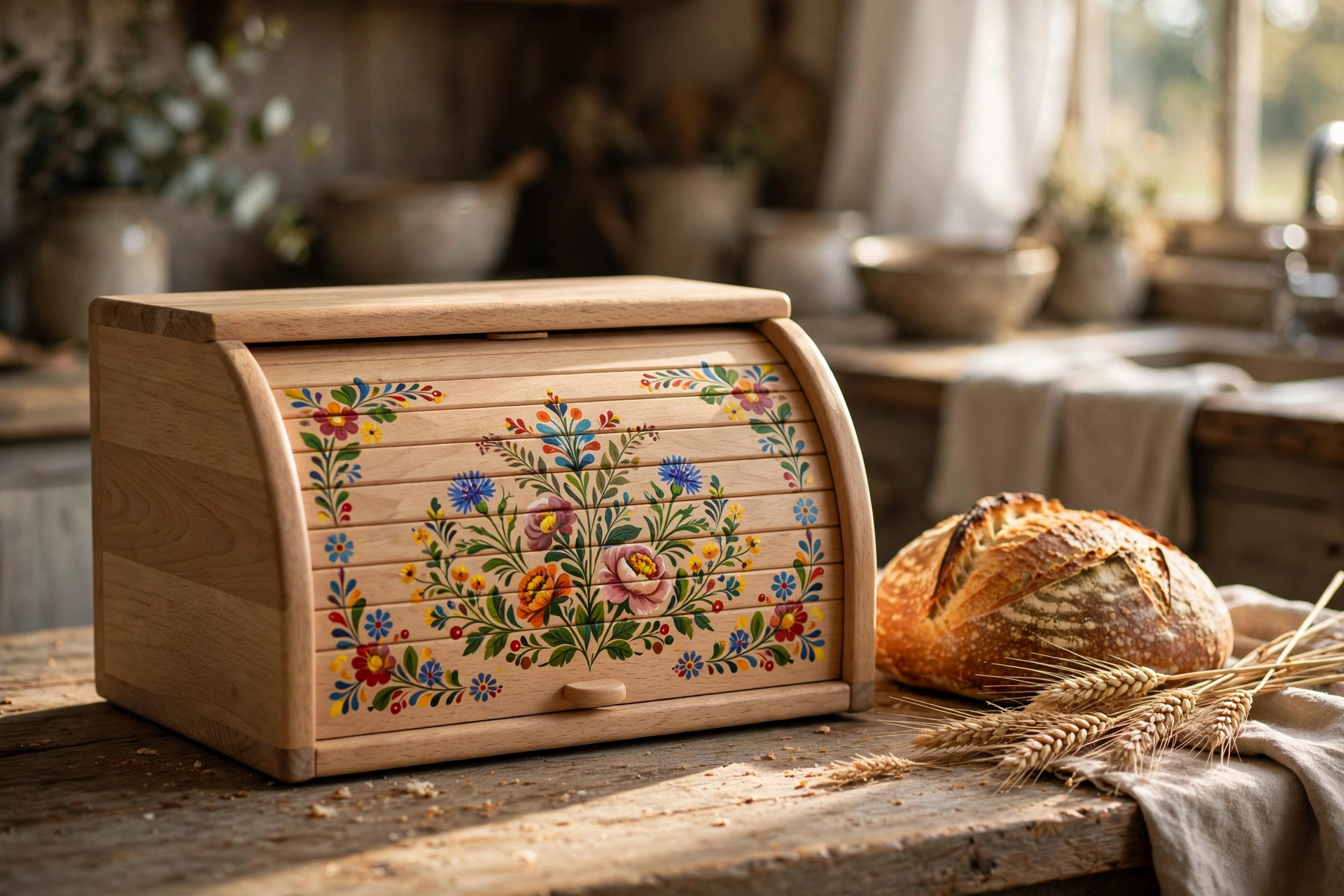
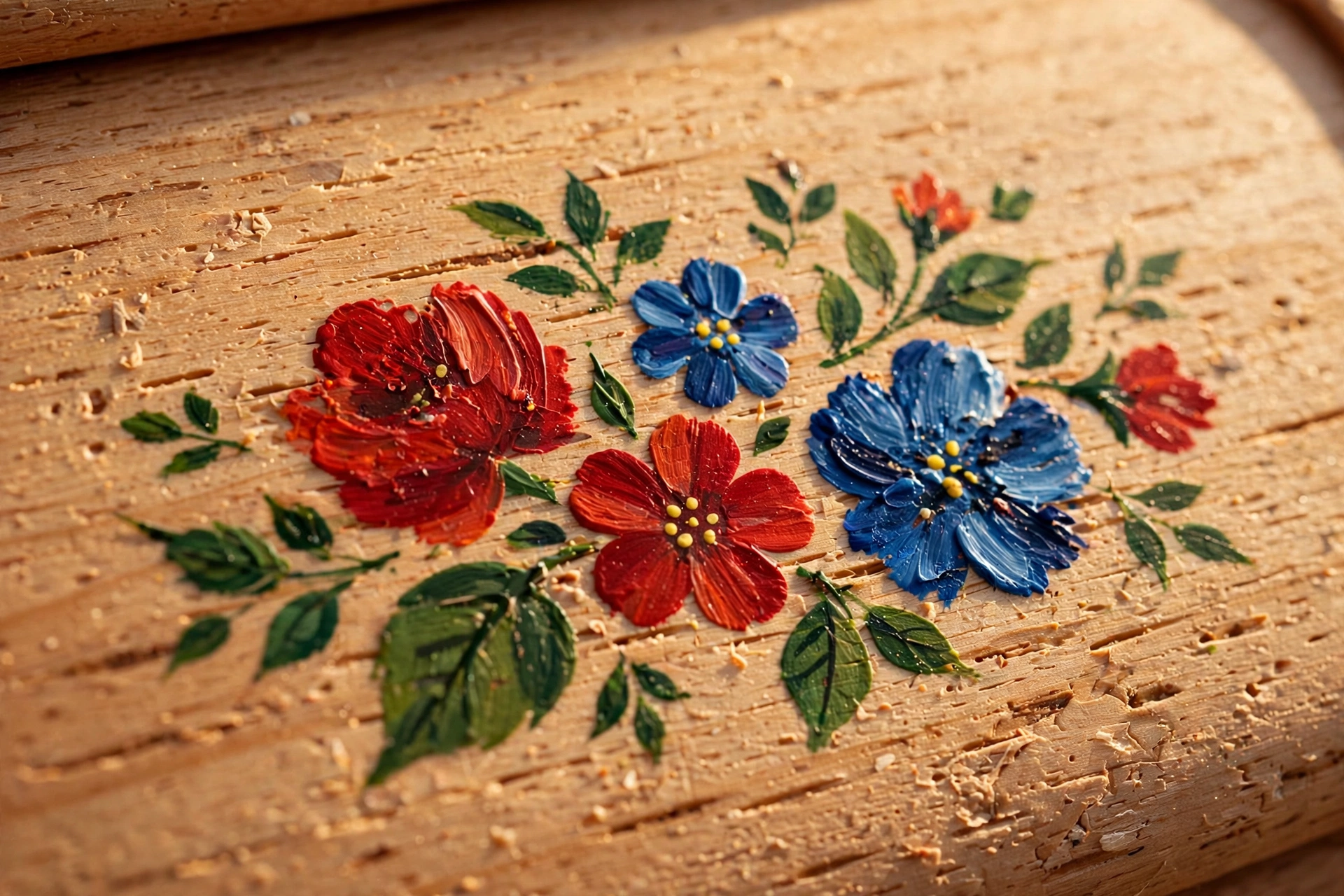
After digging through what is actually selling and getting loved right now, one box kept standing out: a handmade beech wood roll-top bread box with a hand-painted floral folk art design, made by a small workshop called TimberKitchenn on Etsy.
It is solid beech, not veneer, with a clear protective lacquer finish. The roll-top lid glides instead of sticking. At 38 cm wide, 27 cm deep, and 17 cm tall, it fits real loaves without dominating the counter. And the folk art florals make it look like something from a European farmhouse kitchen rather than a storage container.
The price is what really got my attention: it is currently $39.00 on a 40% off sale, which is genuinely good for a handmade solid wood piece. For comparison, mass-produced bread boxes of similar size often cost more and look like they belong in a break room.
Why this one, specifically? It checks every box from the buying guide above: the right wood, the right lid style for under-cabinet counters, a food-safe finish, and real craftsmanship. The floral design is a bonus that turns a functional object into something you actually enjoy looking at every morning.
You can find it here: Handmade Beech Wood Bread Box with Floral Folk Art on Etsy. Fair warning on handmade pieces: each one has its own grain pattern and slight variations, so yours will be one of a kind. That is the point.
It Doubles as Kitchen Decor (Honestly)
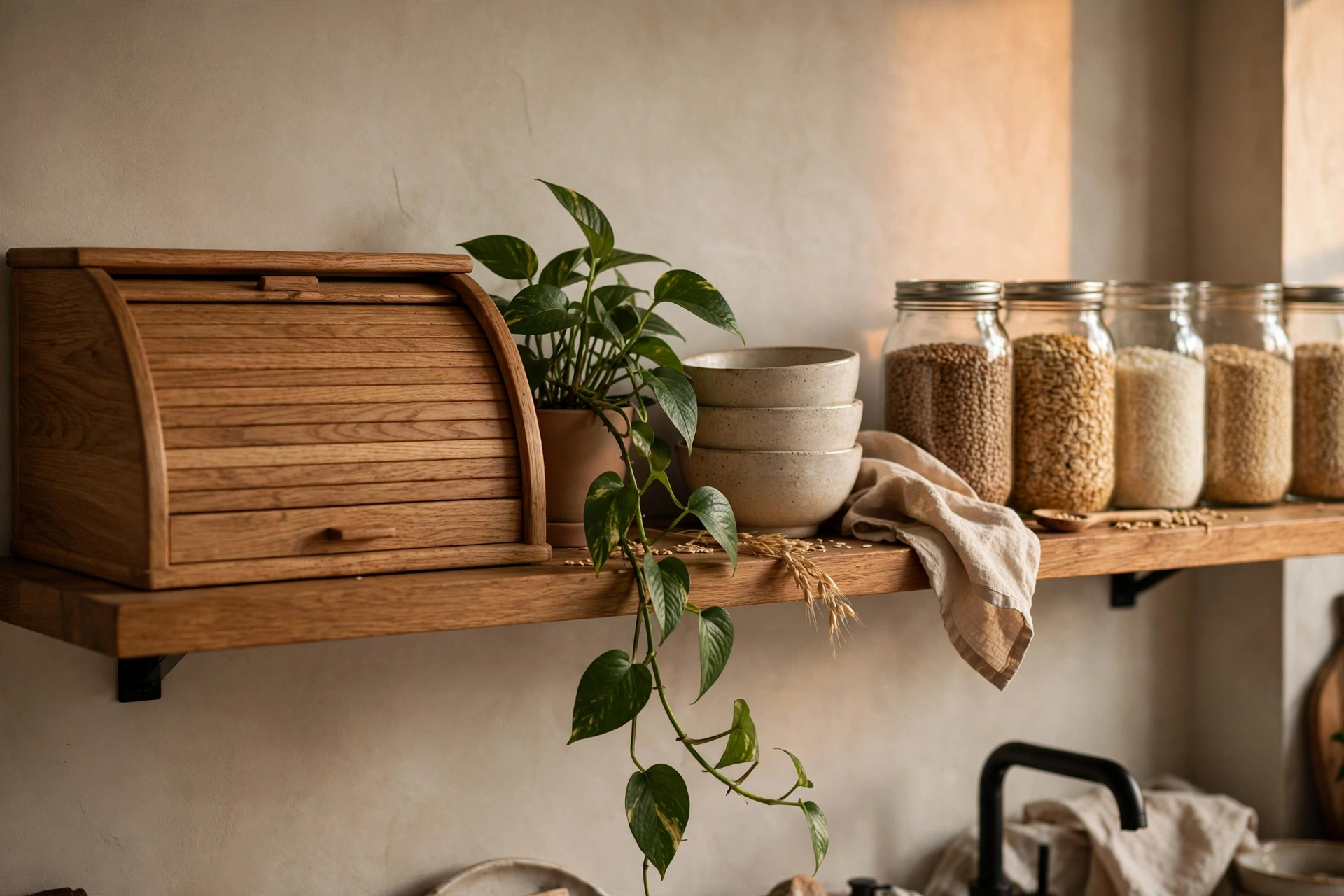
Here is the thing nobody puts in the product description: a beautiful bread box changes how your whole counter feels. Instead of a sad plastic bag slumped next to the toaster, you get a warm wooden object with real presence. It anchors the countertop. It makes the kitchen look intentional, like someone who bakes, or at least someone who appreciates people who bake.
If you are into the handmade wooden home aesthetic, by the way, this pairs beautifully with other wooden kitchen pieces. We have covered handmade wood and epoxy resin coasters that protect your coffee table in style, and a handmade wooden blanket ladder that tames throw blanket chaos in the living room. Same philosophy: natural materials, real craftsmanship, things that look better with age.
Quick Answers to Questions People Actually Ask
Does a bread box really keep bread fresh longer?
Yes. Compared to a plastic bag, bread in a wooden box typically stays good for three to five days, with the crust in much better shape. Compared to sitting out on the counter, the difference is even bigger. Food writers at Food52 have tested the options and found that breathable storage like a bread box hits the best balance for crust and crumb.
Can I put a warm loaf straight in?
Let it cool first. A warm loaf releases a lot of steam, and even a bread box has limits. Give it at least an hour on a cooling rack, then box it up.
What about sourdough?
Sourdough is the bread box's best friend. Its acidity already slows mold, and the box handles the moisture balance. A good sourdough can go five days or more and still toast beautifully.
Do I need to worry about mold in the box?
Only if you let crumbs pile up or put in bread that is already going off. A quick wipe-down now and then keeps everything fresh. If you live somewhere very humid, the ventilation holes matter more, and you might wipe the box down a bit more often.
Is it worth it if I mostly eat sliced sandwich bread?
Even store-bought sliced bread benefits, especially bakery sliced loaves without preservatives. But the real payoff is with crusty artisan bread, which is exactly the kind that suffers most in plastic.
Your Kitchen Deserves Better Than a Plastic Bag
Bread is one of the oldest foods humans make, and for most of history we stored it in wood, cloth, or ceramic. The plastic bag era is a blip, and your taste buds know it. A handmade wooden bread box is one of those rare purchases that is practical every single day, looks better than what it replaces, and quietly cuts down on food waste and plastic.
If you are redoing your kitchen vibe or just tired of throwing away half loaves, this is a small change with an outsized payoff. Your tomorrow-morning toast will thank you.
Want more handmade wooden finds for your home? Follow our Pinterest board for daily discoveries, or browse the full story collection here on thecavee.com. And if you try the bread box life, come back and tell us how long your sourdough lasted. We are genuinely curious.