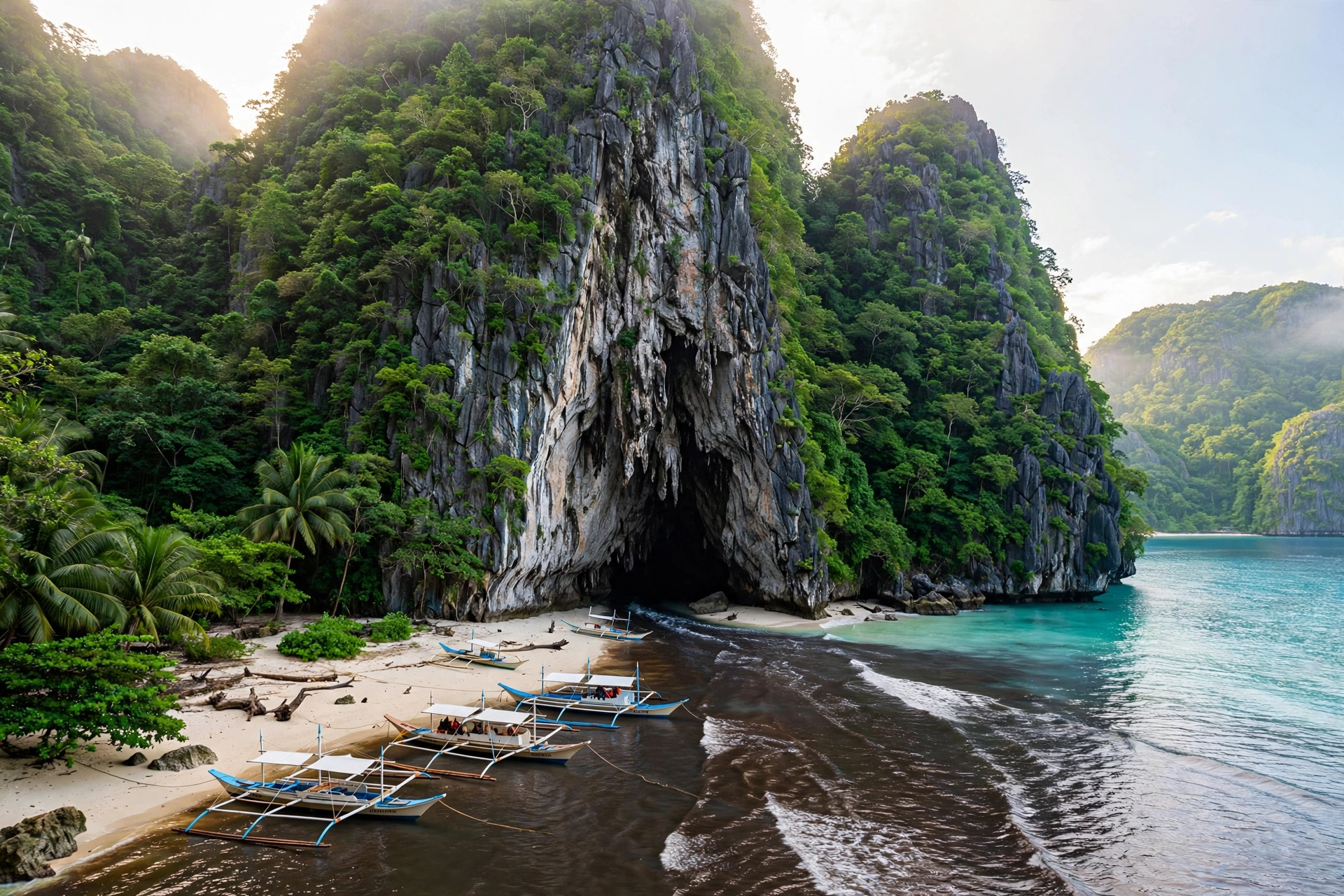
There is a river in the Philippines that does something no river is supposed to do. About halfway through its journey, it hits a mountain and instead of flowing around it, it flows straight into it. For 8.2 kilometers it runs in total darkness under a jungle-covered peak, then emerges blinking into daylight at a white beach, and empties itself into the sea.
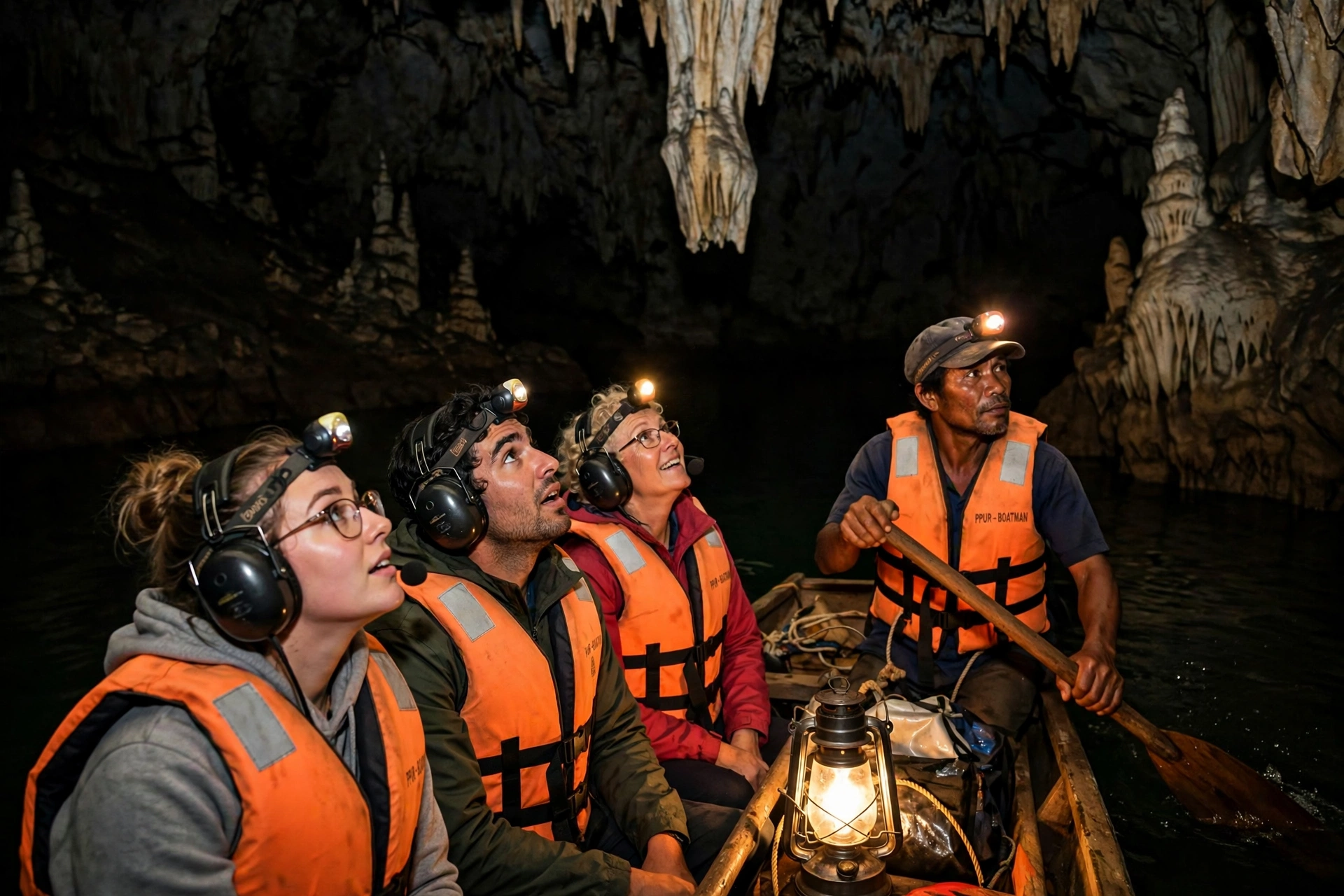
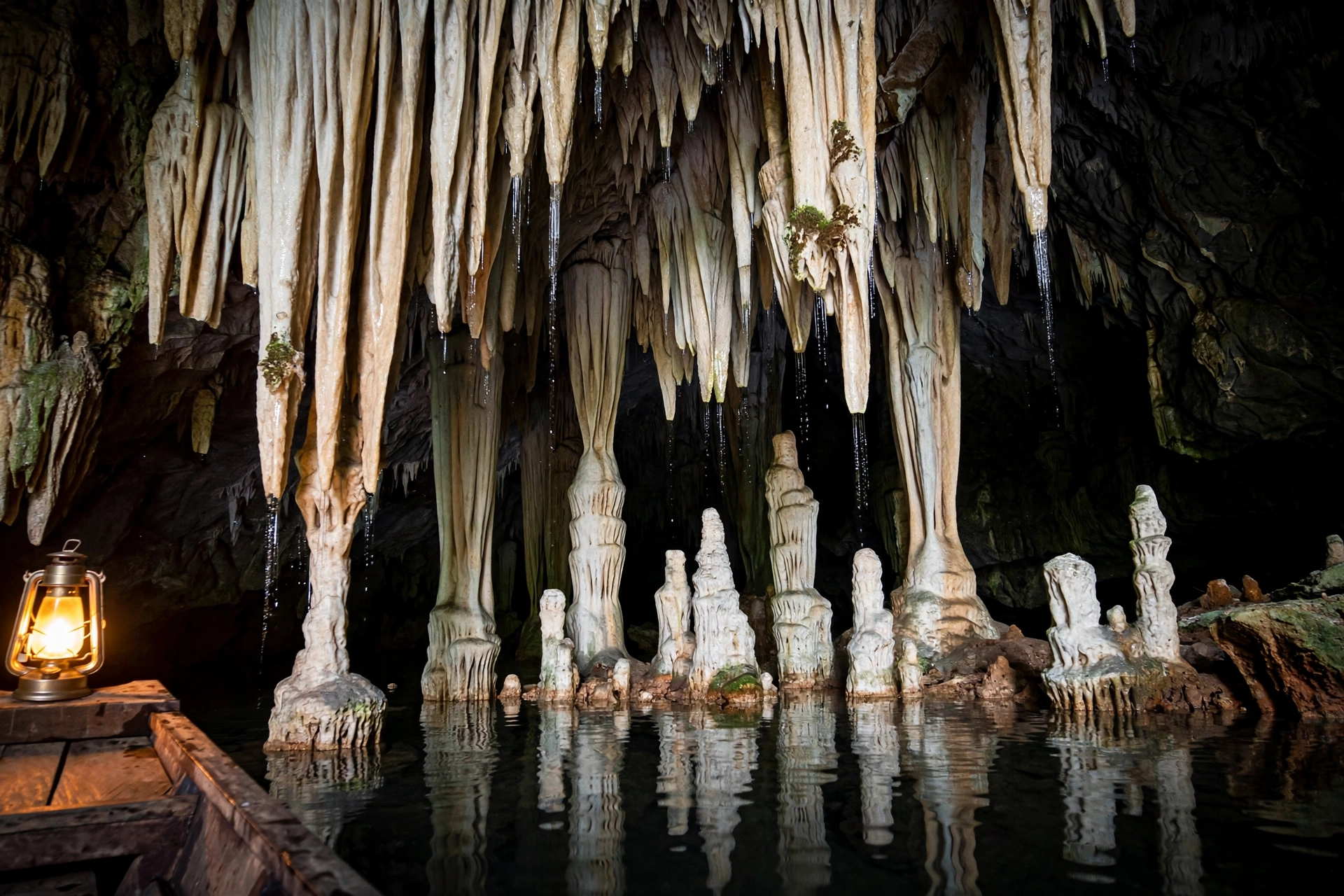
This is the Puerto Princesa Subterranean River in Palawan. It is a UNESCO World Heritage Site, it was voted one of the New 7 Wonders of Nature, and it might be the single most surreal boat ride you can take on this planet. You sit in a tiny paddle boat, wearing a headlamp and a slightly awkward audio headset, and drift through cathedral-sized chambers that took millions of years to carve. Bats flicker overhead. The boatman paddles in near silence. Every time his lamp sweeps across the walls, another wall of stone flowers and dripping columns appears out of the black.
I have been down a lot of caves. This one is different, and not just because of the geology. The real adventure here starts before you ever touch a boat, because getting inside is a small logistical puzzle that catches thousands of travelers off guard every year. Permits are capped, tours sell out, and the people who show up at the gate hoping to wing it usually leave disappointed. This guide fixes that. Everything below is current for 2026: what the river actually is, what the ride feels like, exactly how much it costs, the DIY route versus the tour route, and the mistakes to avoid.
What the Underground River Actually Is
Let us get the facts straight first, because the numbers are part of what makes this place so strange.
The river runs through the St. Paul Mountain Range inside the Puerto Princesa Subterranean River National Park, about 81 kilometers northwest of Puerto Princesa City. The cave itself stretches 8.2 kilometers, and 4.3 kilometers of it is navigable by boat. That navigable section is one of the longest underground rivers in the world that tourists can actually travel through. You do not hike this cave. You float it.
The guided paddle-boat ride lasts about 45 minutes to an hour. Your boatman does the paddling and the steering (the boats are small and the river is narrow), while you sit with an audio device that narrates the formations as you pass them. The chambers are enormous in places. Some are described as being as large as sports stadiums, with ceilings that vanish into darkness above the reach of any lamp. The most famous chamber is called the Cathedral, a vast echoing hall that genuinely feels like a place of worship, if your church were carved by water over millions of years and decorated with stone chandeliers.
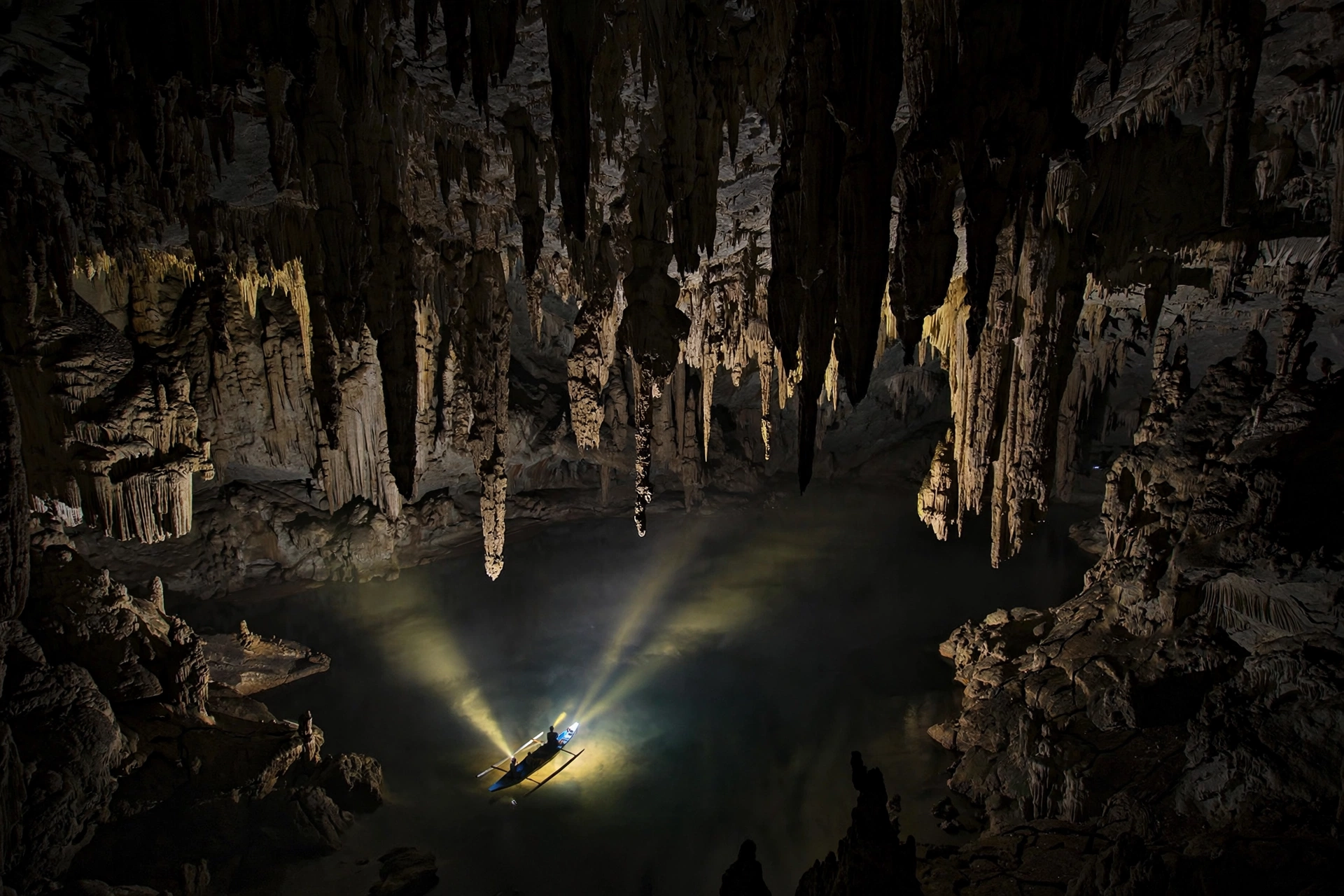
Here is the detail that gets me: the river is tidal. The lower stretches are brackish, a mix of fresh and salt water, because the sea pushes back into the cave. So you are floating on a river that is technically half ocean, inside a mountain, in a country that already has more islands than it can count. The upper cave, past the tourist turnaround point, holds chambers that explorers have mapped with names like Italian’s Chamber and are still studying today.
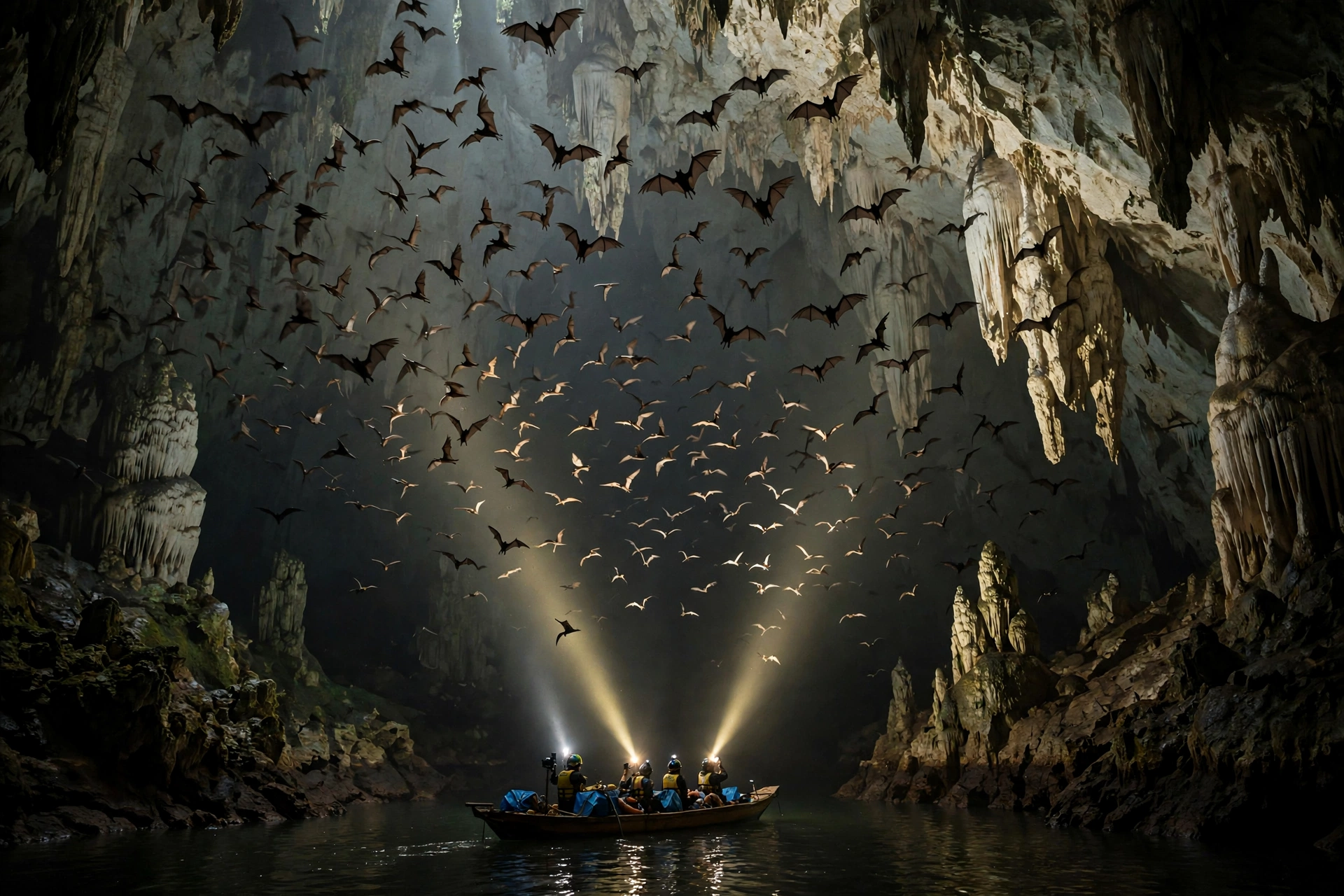
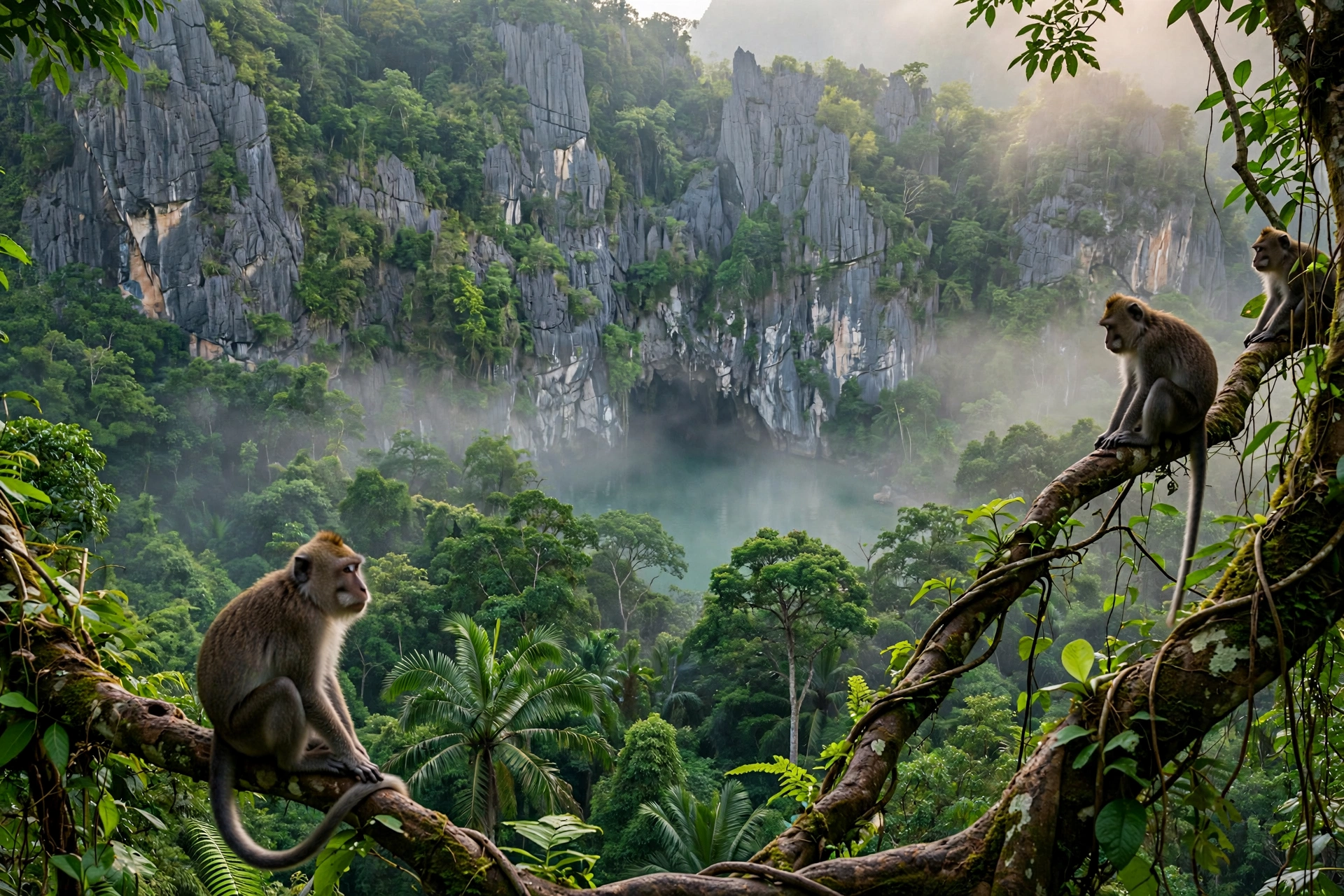
The wildlife is half the show. Thousands of bats and swiftlets live in the cave, and they pour out at dusk in long ribbons. Monitor lizards patrol the beach at the river mouth. Macaques hang around the jungle trails and will absolutely rob you of a sandwich if you give them the chance. The national park above the cave is old-growth forest, which is why the whole area earned UNESCO status, not just the river.
What the Boat Ride Actually Feels Like
Most travel writing about this place makes it sound like a theme park ride. It is not. The first minute inside the cave is genuinely disorienting in the best way. Your eyes have been in tropical sunlight, then the boat slips under the cliff and the light dies in about ten seconds. Your headlamp clicks on. The audio headset starts talking. And then your boatman, who has done this thousands of times, sweeps his spotlight across a wall and the whole cave suddenly has texture: curtains of flowstone, columns as thick as tree trunks, formations the guides have named after animals and saints.
The silence is the thing nobody warns you about. Once the boats spread out along the river, there are stretches where all you hear is water dripping off stalactites and the soft knock of the paddle. It is cold down there, too, a proper underground chill after the Philippine heat outside, and most people shiver for the first ten minutes until they adjust.
The bats are the moment you will remember longest. Somewhere around the middle of the ride, in one of the bigger chambers, the lamp catches movement overhead and suddenly there are hundreds of them, flickering in and out of the light. They do not bother anyone. They have been doing this for thousands of years and you are the novelty, not the other way around.
Fair warning: the audio commentary is charmingly low-budget and the jokes are gloriously corny. The formations have names like the Virgin Mary, the Mushroom, and various things that look like farm animals if you squint. Lean into it. It is part of the fun.
The Real Problem: Getting a Permit
Here is where the adventure starts, and where most people mess up.
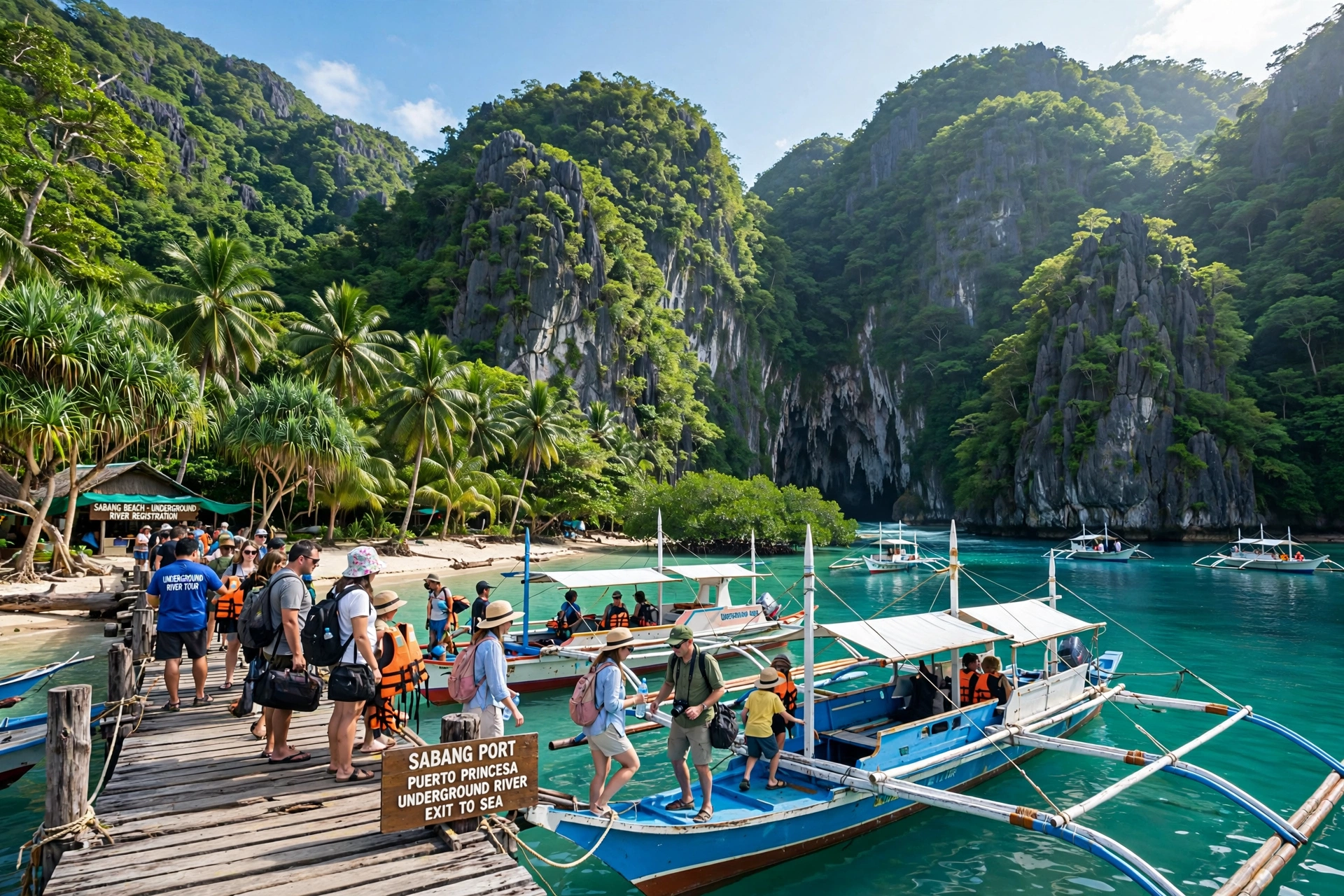
Access to the river is strictly controlled. The park caps the number of visitors per day, and every visitor needs a permit with their name on it, tied to a valid ID. In the dry season and on holidays, the day’s permits can be fully claimed days in advance. Walk-up visitors at the Sabang wharf get turned away regularly. This is the single biggest reason people miss the Underground River, and it is completely avoidable.
The fix is simple: sort out your permit at least 2 to 3 days before you plan to visit, longer in peak season (December to May and Philippine holidays). If you are booking a tour, the operator handles the permit as part of the package, which is honestly the main reason many travelers choose the tour route. If you are going DIY, you arrange the permit yourself through the city tourism office channels before heading to Sabang.
One more thing that trips people up: you need a valid ID that matches your permit. Passport for foreigners, government ID for locals. No ID, no entry, no exceptions. Bring the physical document, not a photo of it.
2026 Prices: Tour vs DIY, Honestly Compared
There are two ways to do the Underground River, and the price gap between them is big enough that it is worth doing the math.
The shared day tour (the easy option)
A standard shared day tour from Puerto Princesa City costs around PHP 2,400 per person in 2026, roughly $48, and some operators list it at $48 to $49. For that you get hotel pickup (usually 6:30 to 7:30 in the morning), the 1.5 to 2 hour van ride to Sabang, your permit, the boat transfers, the cave entry, the audio device, a licensed guide, and a buffet lunch. You pay the environmental fee separately, PHP 150 per person, which covers all your tours for your whole stay in Puerto Princesa, so keep the receipt.
Private tours scale steeply: operators quote anywhere from about PHP 9,000 per person for two people down to PHP 2,360 per person for a group of ten. There are also combo packages, like an Underground River tour plus the Sabang X zipline ride, listed around $59.
The DIY route (the cheap option)
If you sort your own transport and permits, the cave visit itself costs roughly PHP 1,085 per person, about $25. That breaks down to PHP 500 entrance, PHP 85 for the audio device, PHP 150 environmental fee, and about PHP 350 per person for the shared boat. You then arrange your own van or bus from Puerto Princesa City to Sabang (about 81 km, budget around 2 hours each way) and buy your own lunch.
So the tour costs you roughly double, and what you buy with that difference is: no permit stress, no transport logistics, and lunch handled. For first-time visitors and anyone short on time, the tour is the sane choice. The DIY route is genuinely easy though, and if you are already comfortable navigating Philippine transport, the savings are real.
When to Go
The Underground River runs year-round, but Palawan has a real dry season and a real rainy season, and they change the experience. The sweet spot is November to April, when seas are calm, the boat transfers are smooth, and the jungle trails are dry. December through February is peak season, which means guaranteed good weather and guaranteed permit competition. Book early.
The rainy season, roughly June to October, is when last-minute travelers sometimes get lucky with permits, because crowds thin out. But heavy rain can swell the river and cause same-day cancellations. If you visit in the wet months, build a buffer day into your Palawan itinerary so a cancelled trip can be rebooked.
Morning slots are the best. The first boats go in calm water with fewer people, and you are back in Sabang in time for lunch and an afternoon on the beach. The light at the river mouth in the morning is also the prettiest you will see all day.
What to Bring (and What to Leave)
This is a short list, because the cave does most of the work.
Wear light, quick-dry clothing and shoes you do not mind getting wet. The boat boarding involves wading through shallow water, and the cave drips constantly. A waterproof bag or dry bag for your phone and camera is non-negotiable; everything else stays in the van. Bring sun protection and insect repellent for the Sabang side of the day, a change of clothes for after, and cash for the environmental fee and small purchases, since card payments are unreliable out there.
Leave the tripod ambitions behind. It is pitch dark in the cave and you are in a moving boat, so photography is mostly a phone-and-high-ISO affair. Some people get great shots of the entrance and the beach, which are in full daylight. Inside, put the camera down for a while and just look. You will remember it better.
Beyond the Cave: Sabang and the National Park
One of the quiet mistakes travelers make is treating the Underground River as a half-day checkbox and rushing back to the city. Sabang deserves the afternoon.
The beach at Sabang is a proper tropical beach, calm and good for swimming, with the karst cliffs as a backdrop. The jungle trail from Sabang to the river mouth, the so-called Monkey Trail, takes about 20 minutes through old-growth forest and you will almost certainly meet macaques and monitor lizards along the way. There is also the Sabang X zipline, an 800-meter ride over the water that pairs naturally with the cave visit if you want a full adrenaline day.
If you have a second day, the national park has longer jungle treks and the nearby beaches north of Sabang are some of the least developed stretches of coast in Palawan. This whole corner of the island still feels like the Philippines did twenty years ago, which is increasingly rare and worth savoring.
Is It Safe?
Short answer: yes, very. This is not a spelunking expedition. You never leave the boat, you wear a life vest, the river is calm, and the boatmen navigate it daily in all conditions. The boats are small and stable, the water is shallow in most of the tourist section, and every trip is guided. Kids do this trip. Grandparents do this trip.
The honest risks are mundane: slippery rocks at the boarding area, the chill inside the cave if you are sensitive to cold, and the macaques, which are wild animals and should be treated like it. Do not feed them, do not pose for selfies with them, and keep your food sealed.
People with serious claustrophobia should know what they are signing up for: 45 minutes in a dark, enclosed space. Most mild cases are fine because the chambers are so large it rarely feels tight, but if enclosed spaces genuinely distress you, this is not the cave for you. There are plenty of above-ground wonders in Palawan instead.
How to Get There
Fly into Puerto Princesa International Airport, which has direct connections from Manila, Cebu, Clark, and a few international routes. From the city, Sabang is 81 kilometers by road, about 1.5 to 2 hours by van. Tours include the transfer. DIY travelers can take a jeepney or van from the San Jose terminal in Puerto Princesa City, or hire a private van.
Most people base themselves in Puerto Princesa City and do the river as a day trip. If you want a slower pace, there are beach resorts in Sabang itself, and waking up there means you can catch the first boats with almost no one around.
Why This Cave Belongs on Your List
There are bigger caves in the world. Son Doong in Vietnam could fit a city block inside it. There are prettier ones, arguably, and there are certainly wilder ones. But there is no other place on Earth where you can sit in a paddle boat and float for nearly an hour through a mountain, on a river that starts in a jungle and ends in the sea, past chambers that took nature millions of years to decorate.
It is also, quietly, one of the best-managed cave tourism operations in Asia. The permit caps keep the boats from turning the river into a traffic jam. The guides are local and knowledgeable. The park fees fund the protection of the forest above. Visiting it well, with a booked permit and a full day in Sabang, is one of those rare travel experiences that is exactly as good as its reputation says.
If you are building a Philippines itinerary, pair it with the cenotes of Mexico for a study in contrasts: two underground river systems on opposite sides of the planet, one sacred to the Maya, one guarded by Filipino boatmen. And if boat-accessed sea caves are your thing, Benagil in Portugal is the daylight mirror image of this dark river world.
Book the permit early, bring a dry bag, and let the boatman do the paddling. The mountain will do the rest.
Planning more underground adventures? Follow The Cavee on Pinterest for a new cave, expedition, or handcrafted find every single day, and read the full story behind every pin right here on thecavee.com.