Cavers Were Digging for a Longer Cave. What They Found Was a 50,000-Year-Old Woolly Rhino Skull
There is a special kind of stubbornness that only cavers have. They will spend years, sometimes decades, digging at a crack in the limestone because they are convinced the cave keeps going. Most of the time, the cave does not. Every once in a while, though, the ground gives them something better than another hundred metres of passage.
Early in 2025, a small digging team was working inside Quarter Way Up Hole, a short cave in Fairy Cave Quarry in Somerset’s Mendip Hills. They were not hunting for fossils. They were trying to make the cave longer, the way cavers always do, by clearing sediment and squeezing through gaps. What they pulled out of an unstable pile of boulders was the skull of a woolly rhinoceros, an animal that had been dead for roughly 50,000 years.
The story only broke into the news this week, but the recovery happened on February 9, 2025, and it is one of those finds that keeps on giving: a new window into Ice Age Britain, found by volunteers with shovels instead of professors with grants.
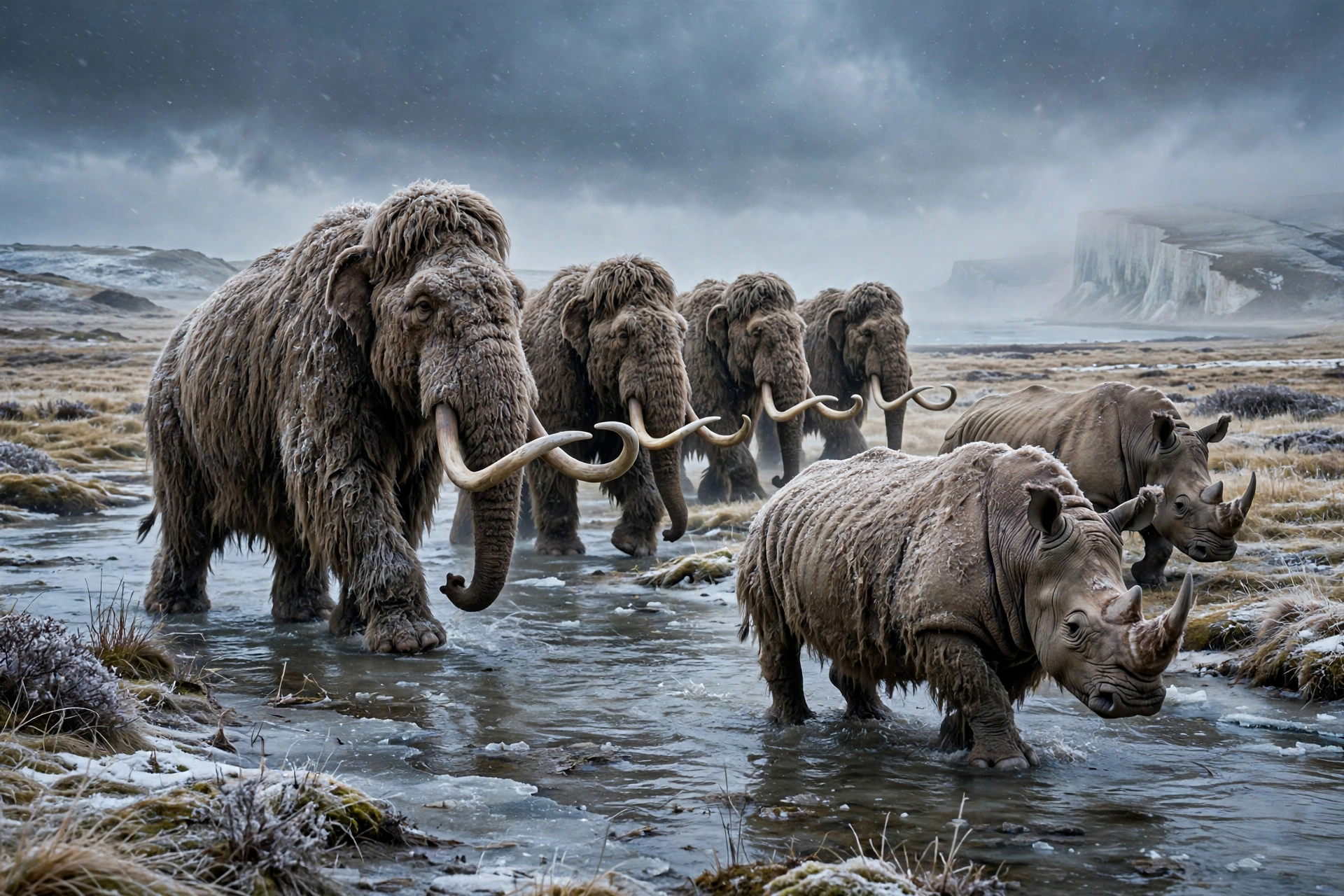
The dig that was never about fossils
Quarter Way Up Hole, known to cavers as QWUH, is not a famous cave. It is a modest little system in the Fairy Cave Quarry area, and a team of diggers had been chipping away at it to extend its known length. That is what cavers do. Give them a draught of air from a crack and they will dedicate their weekends to it.
Sometime in early 2025, the digging started turning up bones. Not the odd rabbit, but faunal remains that looked old and significant. To their credit, the diggers stopped and asked for proper advice instead of pocketing anything or bulldozing through. Archaeologists and palaeontologists got involved, and the little dig became a careful recovery operation.
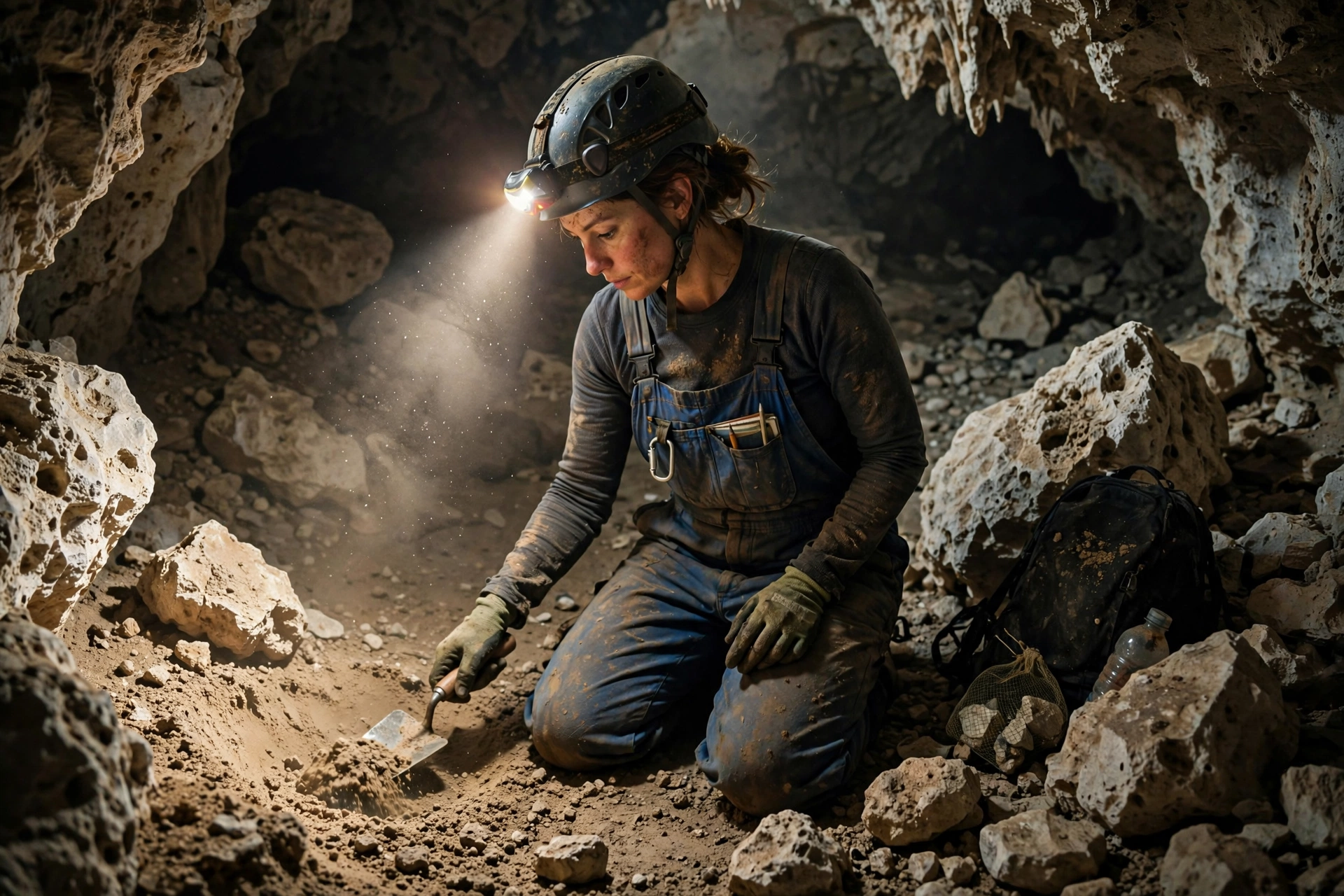
On February 9, 2025, they lifted out the prize: the skull of a woolly rhinoceros, Coelodonta antiquitatis, wedged into an unstable boulder choke in an especially vulnerable position. The team judged that leaving it in place was not an option, because the rocks around it could shift at any time. Recovery, they decided, was the only safe call.
And it was not alone. Along with the skull, the dig had already produced other partial skeletal elements: femora, humeri, pieces of the head. Together with the skull, they form what specialists describe as a substantial assemblage, a decent haul from one small hole in the Mendips.
What exactly came out of the rocks
The skull is estimated at around 50,000 years old, which places it deep in the Pleistocene, a time when much of northern Europe was locked in ice and southern Britain was cold steppe. The skull is remarkably well preserved, which suggests the animal was buried fairly quickly after death, probably in or near the cave, and then sealed away by sediment before scavengers or the weather could do their usual work.
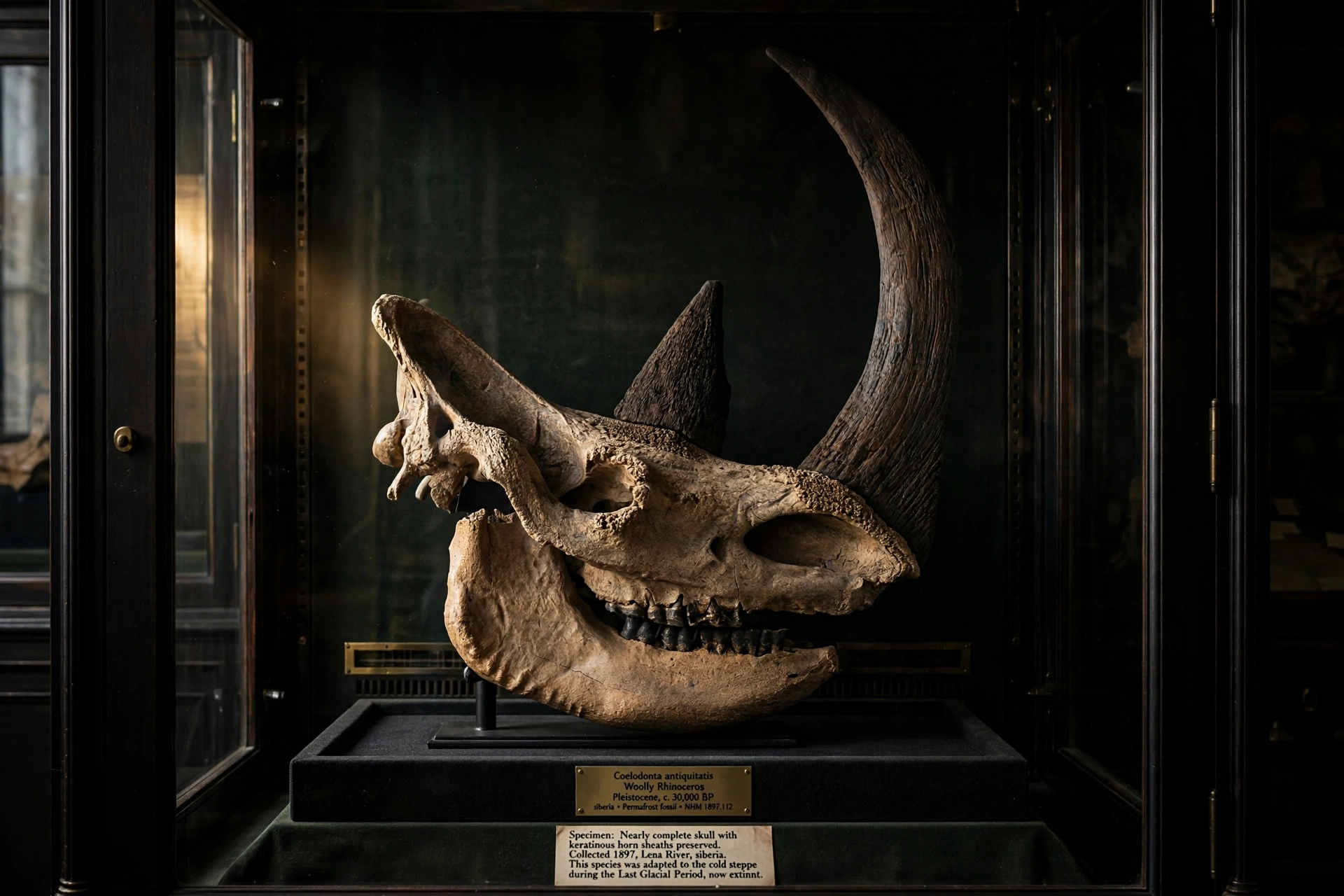
Researchers examining it will be looking at the usual detective clues: signs of injury or disease on the bone, butchery marks that might suggest early humans got to it, and whether the bones carry the gnaw marks of cave hyenas, which were also common in Mendip caves. They are also expected to attempt ancient DNA or collagen extraction for radiocarbon dating, which would pin down the age far more precisely and reveal genetic details about the rhino population that lived in Britain during the Ice Age.
Meet the beast behind the bones
It is hard to overstate what a woolly rhino actually was. These were not the grey, tropical animals you see in wildlife documentaries. Woolly rhinoceroses stood about two metres tall at the shoulder and could weigh up to three tonnes. They wore a thick double coat of shaggy fur, had short ears to minimise heat loss, and carried a broad, flattened horn that scientists believe they used like a snowplough, sweeping aside snow to get at the grass and low vegetation underneath.
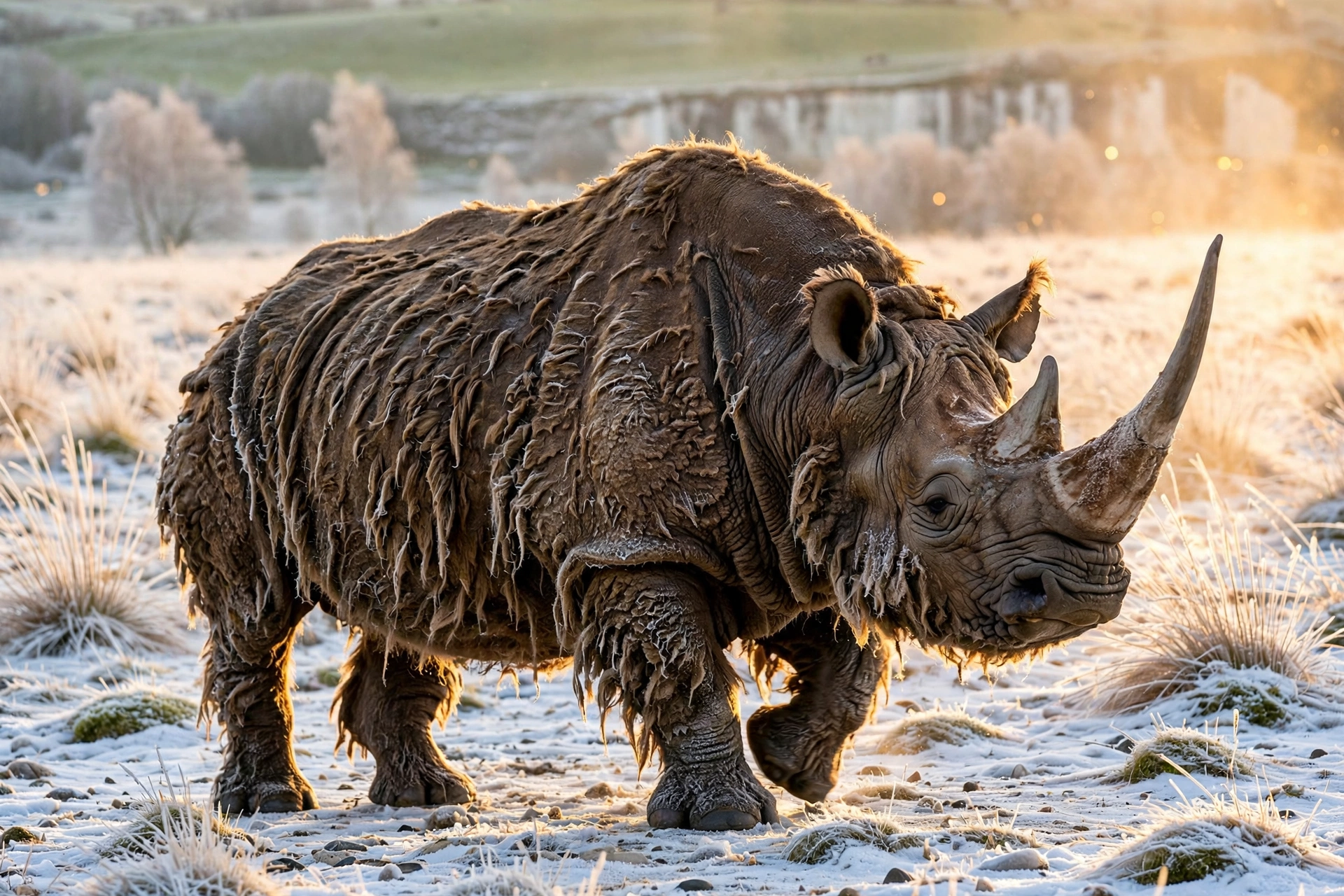
Their range was enormous, stretching from the British Isles right across the Eurasian steppe to Siberia. They were so iconic to the humans who shared their world that they ended up painted on cave walls: woolly rhinos feature prominently in the prehistoric art at Chauvet Cave in France, drawn by people who had watched them move across the tundra. If you want to see how Ice Age humans imagined their world, caves are still the best gallery we have.
Why this one skull actually matters
Woolly rhinos went extinct around 14,000 years ago, near the end of the last Ice Age. The usual suspects are climate warming, which shrank their cold steppe habitat, and hunting by early humans, which picked off the survivors. Every well-dated specimen helps scientists reconstruct where the animals lived, when they arrived in different regions, and how quickly they disappeared.
The Somerset skull is useful precisely because it is old and well preserved. Fifty thousand years ago is a murky stretch of Ice Age history, and Britain’s fossil record for that period is patchy. A skull from a limestone cave, sealed in sediment, is about as clean a data point as palaeontologists get. It is the kind of find that turns up in future papers on how megafauna populations shifted with the climate.
Why the Mendips keep handing over Ice Age treasure
Here is the thing about limestone caves: they are the best filing cabinets nature ever built. Animals fall in, die in, or get dragged in by predators, and the sediment seals them away for tens of thousands of years. The Mendip Hills are full of these traps, and cavers have been pulling bones out of them for generations.
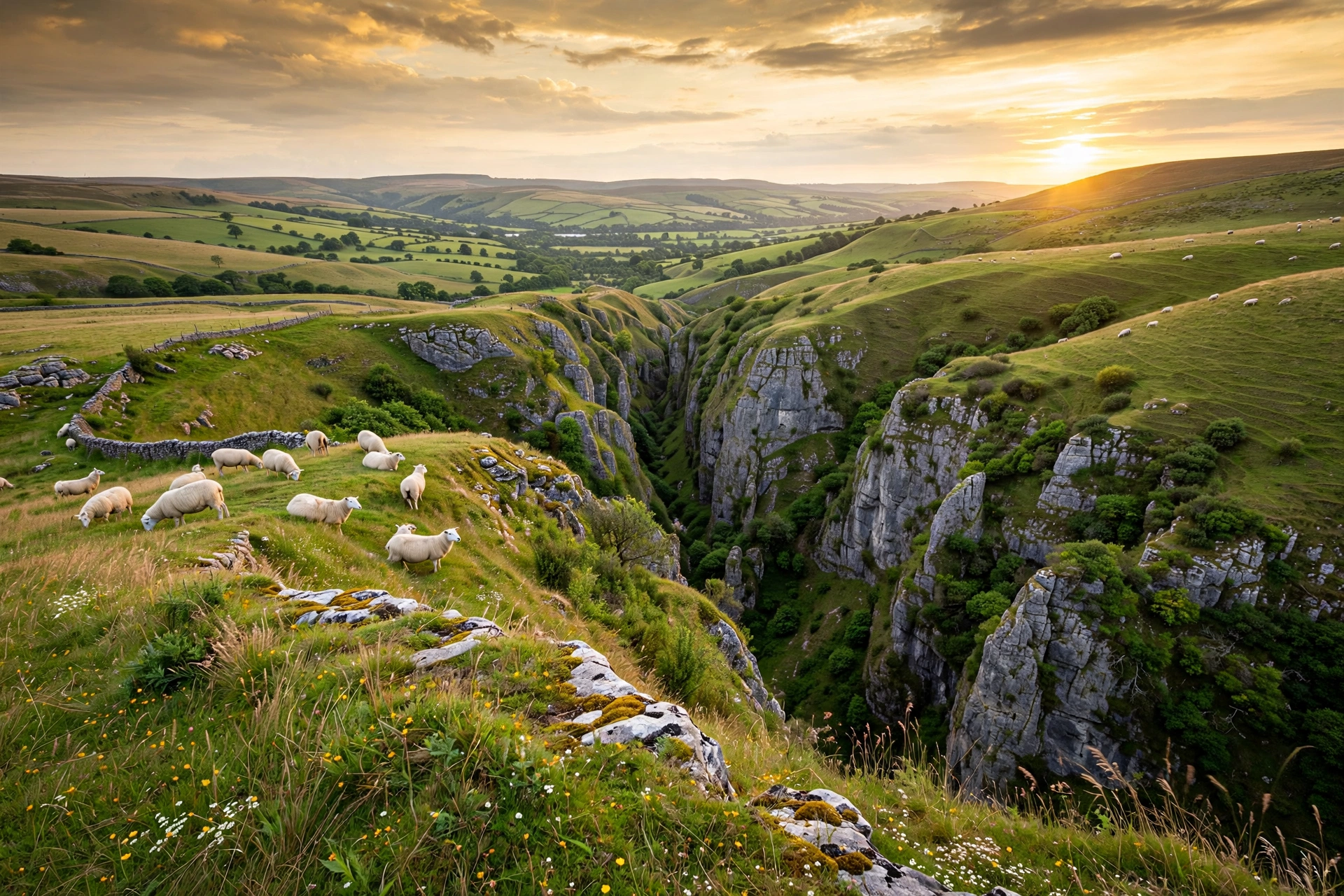
Bone deposits, both animal and human, turn up in Mendip caves all the time. Westbury Cave has produced an Early Pleistocene fossil record, including a hippopotamus tooth dated to somewhere between 1.5 and 1.07 million years ago, back when Britain was warm enough for hippos. And humans have been part of the story for a long while too: the earliest Neanderthal presence on Mendip, around 50,000 years ago, is known from stone tools found in caves like Wookey Hole and Uphill Quarry, essentially the same moment in time as our woolly rhino.
So this skull is not an isolated oddity. It is one more page from a book the Mendips have been writing for a million years, and cavers keep turning the pages.
The people who find this stuff are usually not scientists
I love this part of the story. The Quarter Way Up Hole find was made by volunteer diggers, people who spend their weekends underground for fun, and they did exactly the right thing when they realised what they had: they stopped and called in the experts. That restraint is why the skull survived intact instead of ending up as someone’s mantlepiece.
If you have ever wanted to be the person who finds something like this, here is the honest path. Join a caving club. Learn to dig, survey, and document. Get involved with regional projects like the ones run by Mendip’s geoarchaeology groups, who coordinate volunteer digs and make sure anything important gets recorded properly. Most major cave fossil finds in Britain started exactly this way: amateurs with patience, plus scientists with lab equipment.
And if you are visiting rather than digging, the rule is simple: look, photograph, and report. A bone in a show cave or a quarry face is worth more to science in place than in a bag. Take a photo, note the location, and tell the site staff. That is how ordinary visitors become part of discoveries too. For tips on capturing what you find underground, this cave photography guide covers how to get great shots without fancy gear.
How you can walk into these caves yourself
You do not need a shovel to experience the Mendips. The region has some of Britain’s best show caves, and they sit on top of the same limestone that preserved the woolly rhino.
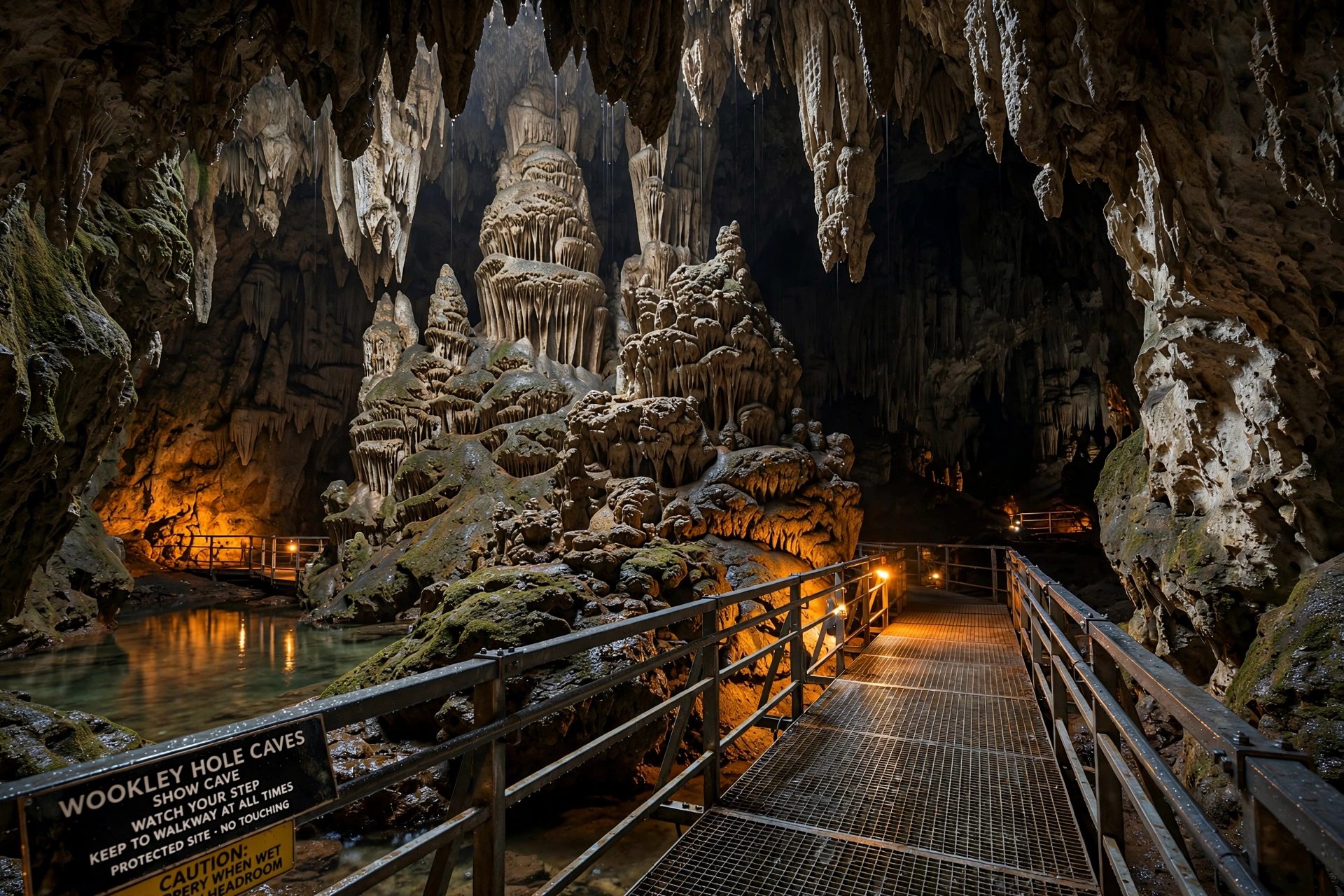
Cheddar Gorge’s caves are the obvious starting point: enormous chambers, cathedral-like stalactite formations, and the famous Cheddar Man, Britain’s oldest complete human skeleton, found in nearby Gough’s Cave. Wookey Hole, with its chambers and underground river, is where some of those 50,000-year-old Neanderthal tools were found. Both are easy day trips from Bristol or Bath.
If you want the real thing, the gritty volunteer experience, look up the caving clubs that operate on Mendip. They run beginner trips, and while nobody can promise you a woolly rhino skull, the Mendips have a habit of surprising people. Bring waterproofs, expect mud, and keep your eyes open. As the diggers at Quarter Way Up Hole learned, you never quite know what the next boulder is hiding.
What happened to the woolly rhinos
The woolly rhino’s story does not end with the Somerset skull; it ends, about 36,000 years later, with the whole species gone. Around 14,000 years ago, as the last Ice Age loosened its grip, the cold steppe that Coelodonta antiquitatis depended on started shrinking. Grasslands gave way to forests and wetlands. At the same time, early humans, now well established across Europe, were hunting megafauna hard. The combination proved fatal.
It was not a sudden vanishing. Different populations blinked out at different times, and researchers are still arguing about exactly how much blame belongs to climate and how much to hunters. That is why finds like the Mendip skull matter: each well-dated specimen is another data point in the map of where rhinos lived and when they disappeared. Scientists examining the skull will look for butchery marks or injury patterns that could tell us whether humans or predators played a role in this particular animal’s death, and genetic analysis could reveal how Britain’s Ice Age rhino population related to the ones in Siberia and mainland Europe.
There is a quiet irony in the extinction story, too. The same limestone caves that preserved the rhinos’ bones also preserved the cave art of the humans who watched them and hunted them. The Chauvet paintings in France show woolly rhinos with their shaggy coats and curved horns, drawn from life. The artists and their subjects are both gone, but the caves kept both records.
More Ice Age giants are still hiding in British caves
The Somerset rhino is part of a busy year for Ice Age discoveries in Britain. Not long ago, builders working on a new development in Devon stumbled onto a cave containing the remains of a whole Ice Age menagerie: the tusk and tooth of a woolly mammoth, a woolly rhino skull, an almost complete wolf skeleton, and partial remains of hyena, horse, reindeer, mountain hare, and red fox. Archaeologists dated the animals to roughly 30,000 to 60,000 years ago. A digger uncovered the cave system, and more than 200 clusters of bones have been found since.
Over in Wales, excavations beneath Pembroke Castle have revealed Wogan Cavern, a cave long dismissed as an emptied-out medieval cellar, but which turned out to be an extraordinary, nearly untouched prehistoric archive. Between 2021 and 2024, researchers found hippo bones dating back around 120,000 years to a warm interglacial period, plus teeth and bones of woolly mammoths, woolly rhinos, and reindeer, some showing butchery marks from prehistoric tools. There is even rare evidence of early Homo sapiens, alongside hints of even earlier Neanderthal occupation.
The pattern is hard to miss. Britain’s caves are still giving up their dead, and every year brings another headline. Flooded caves in Brazil recently yielded hundreds of bones from an underwater burial ground. Sealed chambers in Mexico are turning up species new to science. The underground is the least explored archive on the planet, and the finds are accelerating because better techniques, from ancient DNA to 3D scanning, let researchers read more from every bone.
Caves remember what the surface forgets
Fifty thousand years ago, a woolly rhino died in the Mendip Hills, and the limestone swallowed the evidence. Humans came and went, ice came and went, and the skull waited in the dark. Then a few stubborn cavers, digging for nothing more than a longer cave, pulled it back into the light.
That is what I keep coming back to with caves. The surface rewrites itself constantly, but underground, time stands still. Every cave is a time capsule, and we are still opening them. If stories like this one pull at your curiosity the way they pull at mine, follow along on Pinterest, where I pin the wildest cave discoveries, Ice Age finds, and underground adventures I write about here. The next woolly rhino is probably already waiting in the dark somewhere.