Most caves have a bottom. You go down, you hit the floor, you turn around. Bisaro Anima never got that memo. In October 2026, a 24-person expedition team returned to the mountain plateau north of Fernie, British Columbia, and pushed Canada’s deepest cave even deeper: 690 meters down, 10.5 kilometers of mapped passage, and a teal-blue underground lake at the very bottom that still refuses to end.
I’ve been following cave expeditions for years, and this one has a particular romance to it. The cave is named for a soldier who never came home. The entrance is only reachable by helicopter. The camps underground sit in perpetual cold and damp, and the only way to find out what’s around the next corner is to go there yourself. Here’s the full story of what happened under that mountain this October, and what it means for anyone who dreams of seeing the underworld firsthand.
What the October 2026 Expedition Actually Found
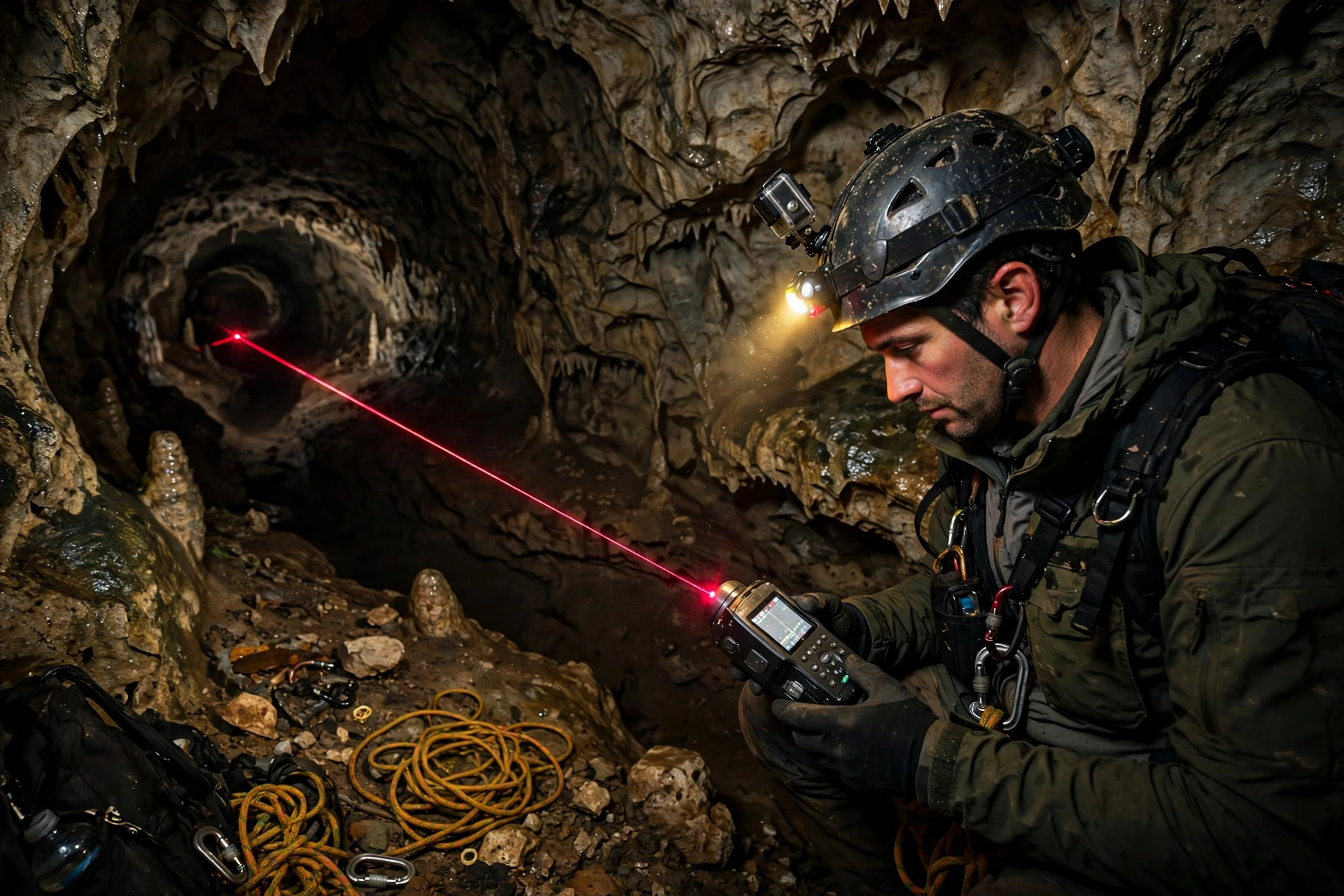
Let’s get the numbers out of the way first, because they matter. Preliminary results from the two-week expedition, which ran from late September into early October 2026 under the leadership of Golden, BC resident Katie Graham, put Bisaro Anima at 10.5 kilometers long and 690 meters deep. That’s deeper than the previously reported 682 meters, and it keeps the cave firmly in the title of Canada’s deepest known cave.
The 24-member team mapped approximately 1.1 kilometers of additional passages. That is a serious amount of new cave. They connected another entrance to the system, which is a bigger deal than it sounds, because more entrances mean safer access routes and entirely new ways to read the cave’s geology. And they extended the northern limit of the underground system, proving that the mountain is still hiding more.
Think about that for a second. This cave has been explored for more than a decade. Teams return year after year. And it still gives up over a kilometer of new passage in a single season. The earth under British Columbia is enormous, and we have barely scratched it.
Meet Dieppe: The Teal-Blue Lake at the Bottom of the World
Here’s the part that made my jaw drop. At a depth of about 655 meters, Bisaro Anima gives way to an underground lake called Dieppe. It’s a sump, which is caver-speak for a passage that goes underwater. The water is exceptionally clear, shockingly blue, and just above freezing.
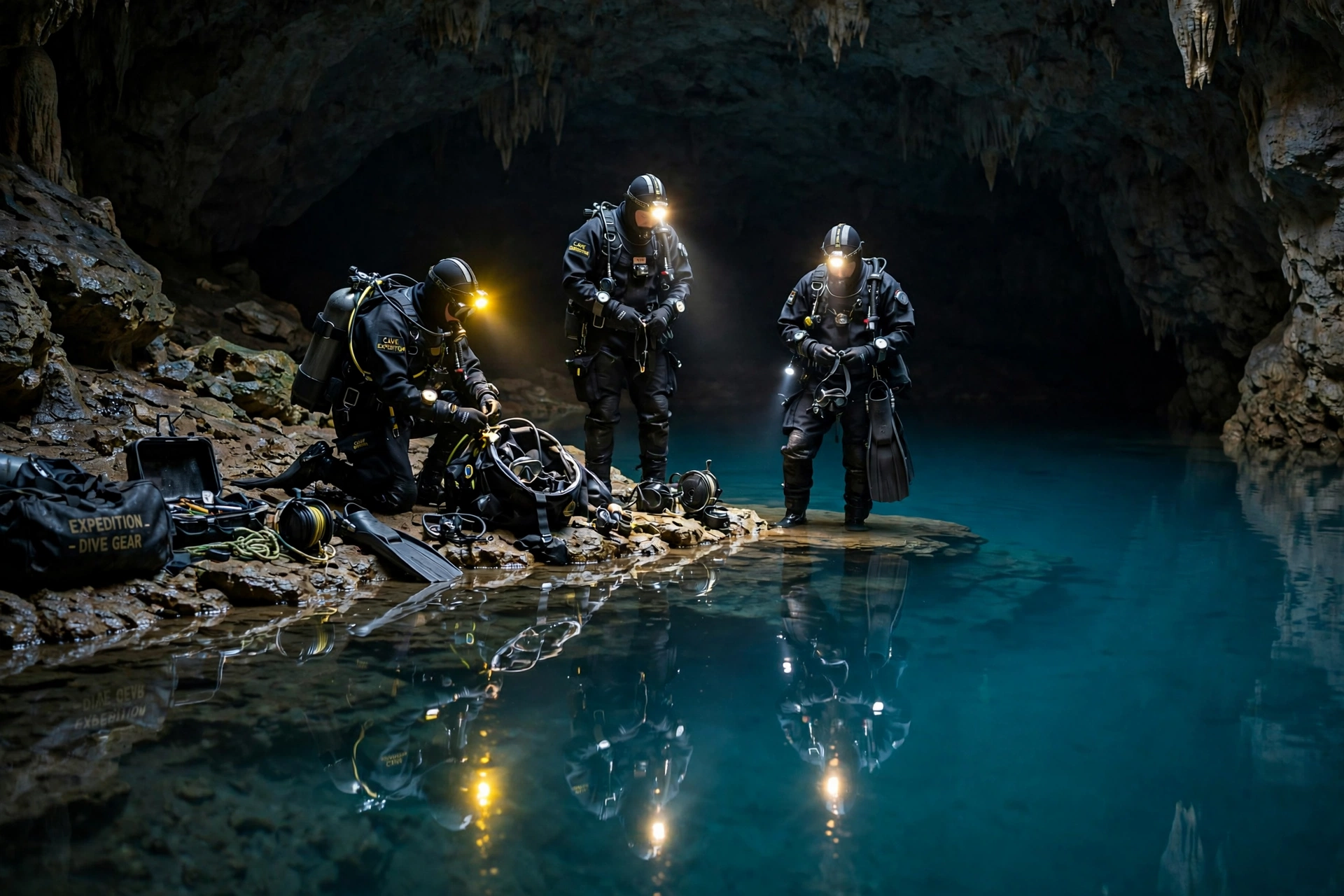
For this year’s expedition, Graham’s dive team hauled twelve bags of specialized diving equipment through the cave to reach that lake. Twelve bags. Through narrow, muddy passages, down vertical shafts, past underground camps, to a lake in the dark that almost nobody has ever seen. Graham put it perfectly: “Most of the crew had never seen the sump before. Their faces lit up with the beauty and intimidation of the teal blue lake.”
And here’s the kicker: the submerged passage continued beyond the divers’ turnaround point. They ran out of line, or time, or gas, but the cave didn’t run out. Dieppe has been dived before, and earlier dives spotted an underwater tube structure that might lead even deeper, plus a ledge just below the current depth record. This October, the team confirmed what everyone suspected: the bottom of Bisaro Anima is not the bottom. Not yet.
Graham’s description of the whole experience is worth quoting in full: “The task is daunting but exhilarating. Unraveling the mystery of what is around the corner? Why is the rock like that? It is a combination of time travel, geology field trip, climbing a mountain peak, and camping in the rain, all so we can dive to know the secrets the mountain is hiding.”
Where Even Is Bisaro Anima? The Hardest Address in Canada
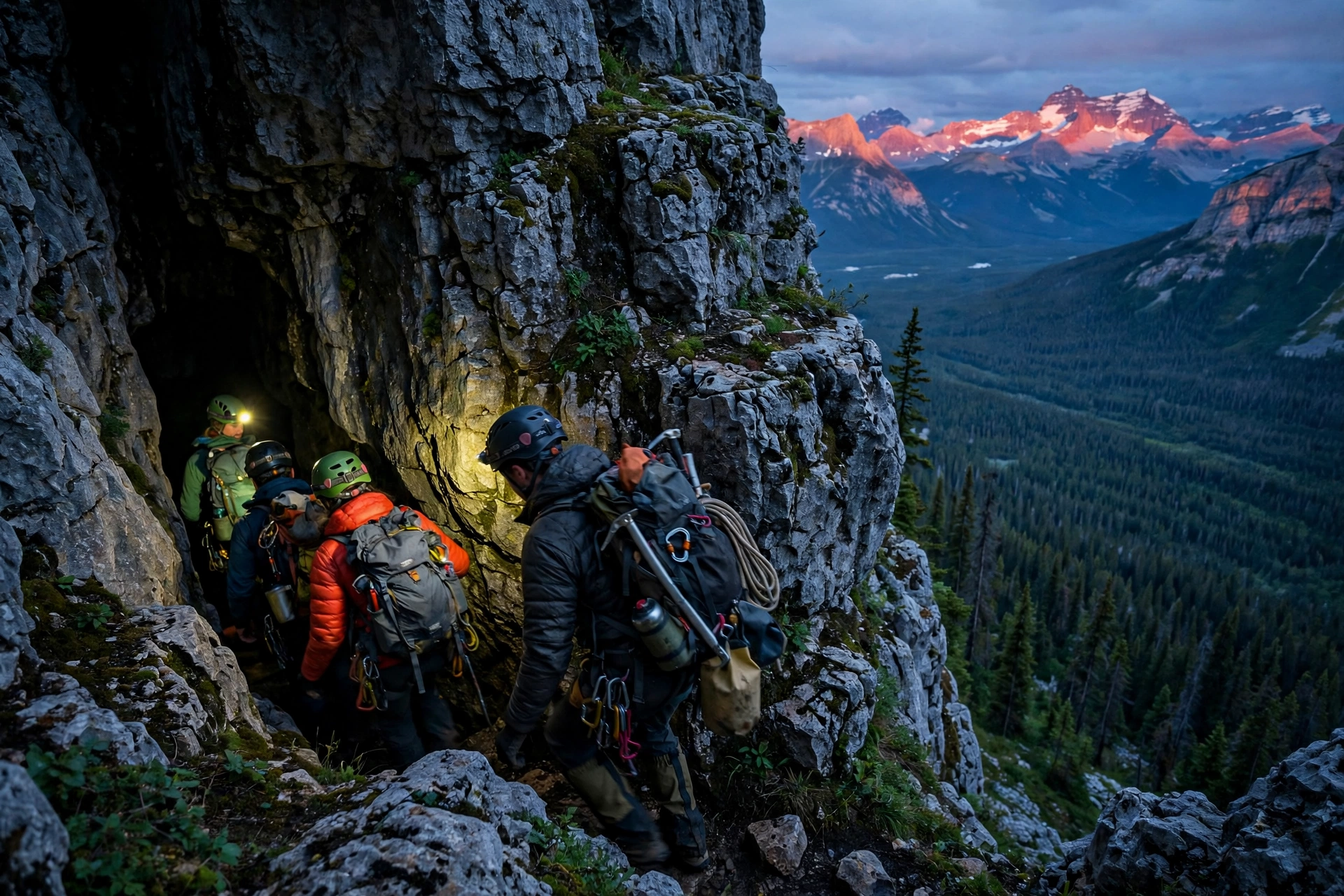
Bisaro Anima sits beneath a mountain plateau about 12 kilometers north of Fernie, a ski town in the Elk Valley of British Columbia. And I do mean beneath. There is no parking lot, no trailhead kiosk, no ticket booth. The entrance can only be safely reached by helicopter. The nearest hiking trail, the Three Sisters Trail, is on the far side of Elk Canyon.
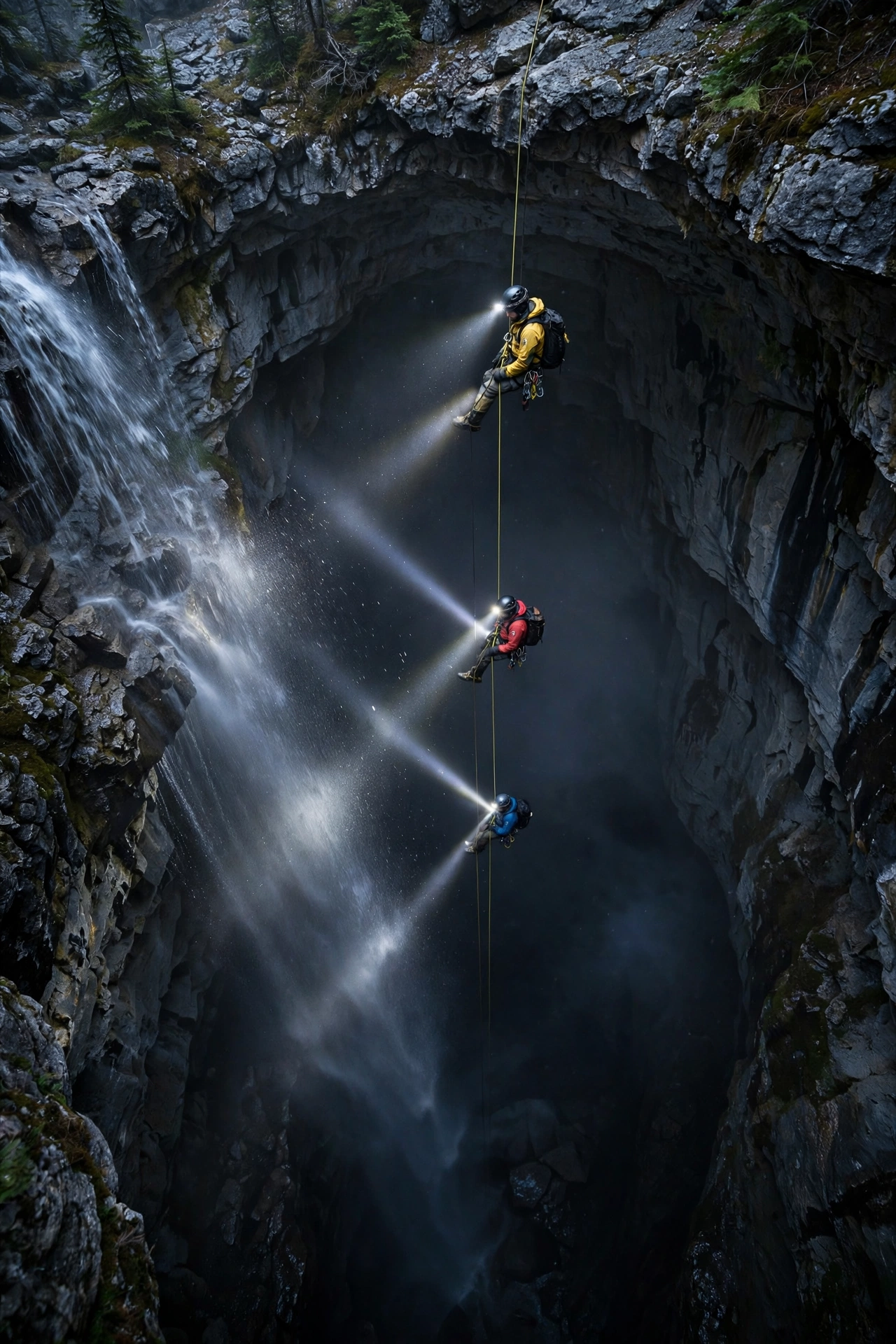
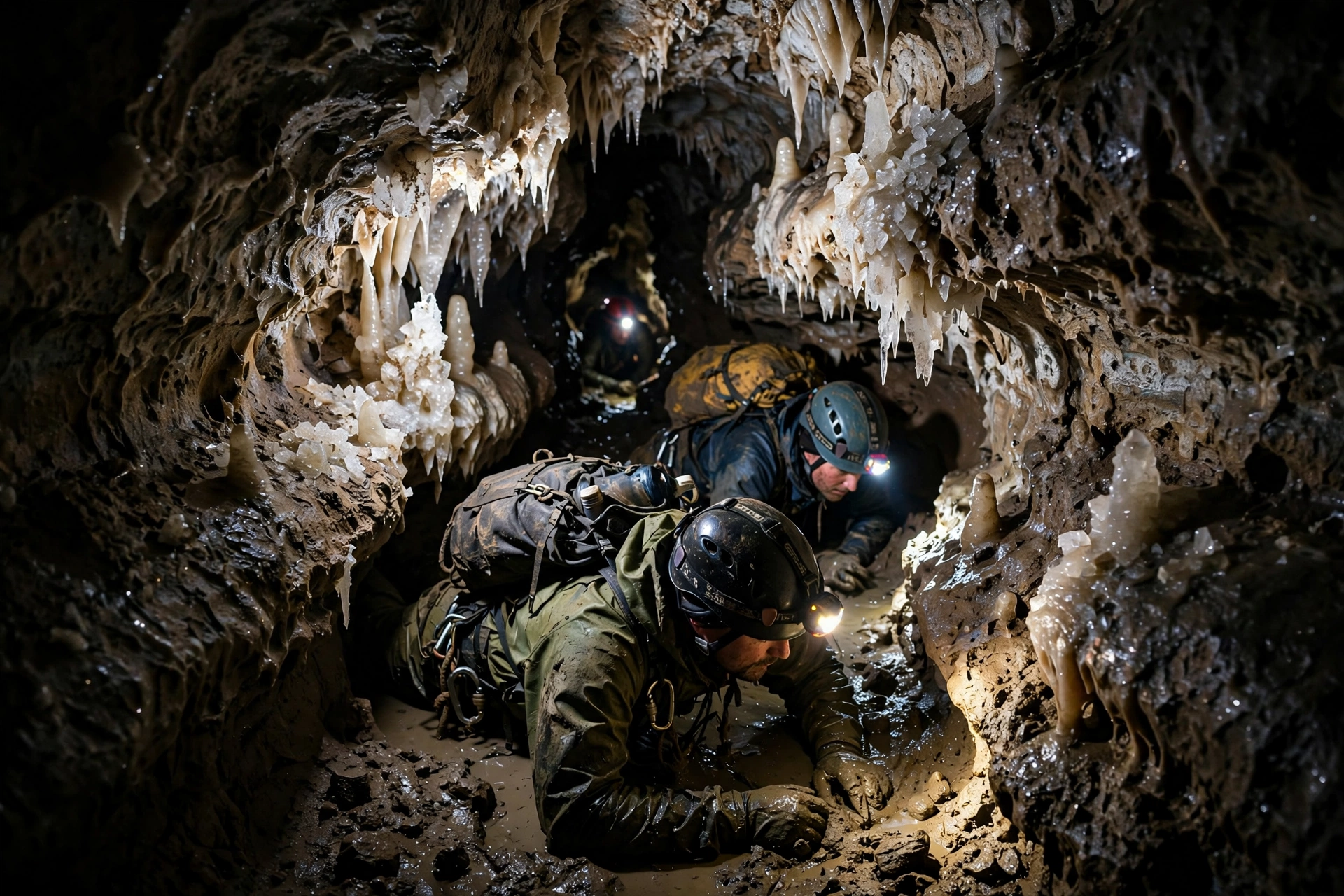
This is expedition caving, not tourist caving. Exploring it requires months of preparation: transporting equipment through narrow, muddy passages, descending vertical shafts on ropes, and establishing underground camps in cold, wet conditions. Expeditions usually go in autumn and winter, when drier conditions reduce runoff into the cave. Even then, the humidity and water mean cavers and their equipment are perpetually damp. Cavers sleep in hammocks, because the cave floor is uneven and, at one camp, there’s a genuine risk of rolling into a deep chasm in your sleep. Camp II, at 520 meters deep, is the deepest underground camp north of Mexico.
The dangers are real and unglamorous: falling rocks, deep canyons, narrow passages, steep drops, collapsing floors, and the potential for asphyxiation while diving. Christian Stenner, an expedition member and provincial coordinator of the Alberta/BC Cave Rescue Service, has warned that “the consequences of an injury in this environment are tremendous, due to the hazardous conditions and exceptional remoteness.”
The 24-Person Machine: How an Expedition Like This Actually Runs
Twenty-four people, two weeks, one mountain. An expedition like the October 2026 Bisaro push is a small military operation in all but name. Months before anyone ropes in, there’s equipment to stage, permits to sort, dive gas to blend, survey instruments to calibrate, and a surface camp to plan. Helicopters shuttle cavers and gear to the plateau, because there is no other way in. Underground, teams rotate through survey, photography, science, and support roles, sleeping in shifts in hammocks at Camp II, eating rehydrated meals in the cold, and hauling survey data back up to the surface.
The dive push is the most logistically brutal part. Twelve bags of dive gear don’t carry themselves down vertical shafts. Each cylinder, each reel of line, each drysuit goes down by hand, on ropes, in the dark, over days. And then the divers drop into water just above freezing, with the knowledge that nobody is coming down to help them quickly if something goes wrong. When Graham says the work is “daunting but exhilarating,” she’s describing a very specific kind of courage: the kind that plans for six months so it can spend forty minutes in a flooded tube nobody has ever seen.
The Numbers That Matter: 690 Meters, 10.5 Kilometers, One Bottomless Lake
To understand what 690 meters means, picture this: stack two of the world’s tallest buildings on top of each other and you’d still be short. The cave’s first discovery was only in 2012, when the Alberta Speleological Society entered it, and it took years of follow-up expeditions to confirm it as Canada’s deepest, overtaking Heavy Breather (also near Fernie, at 644 meters).
What I love about deep caves is how the numbers keep changing. 670 meters, then 682, now 690. Every expedition is a measurement correction as much as a discovery. The 2026 team extended the northern limit of the system and found that the underwater passage at the bottom continues past where divers have been able to go. Somewhere down there, beyond the turnaround point, is passage nobody has seen. That is about as close to genuine exploration as you can get in 2026.
The Soldier Behind the Name: Why a Cave Carries a Soul
This is the part of the story that stays with me. The cave is named after Private Torindo John Bisaro, a Fernie man who served with the Royal Highland Regiment of Canada and was killed in action during the Second World War. Mount Bisaro, the mountain the cave sits under, was already named for him. And “anima” is the Italian word for “soul,” a nod to Bisaro’s Italian heritage.
So the name means, roughly, “the soul of Bisaro.” A cave named for a young man from a mountain town who never came home from Normandy, holding the heart of an entire mountain range. The cavers who named its passages kept the theme: parts of the cave carry names like Vimy Ridge and Dieppe, after the battles where Canadians fought and fell. Dieppe, the teal-blue lake at the bottom of the cave, carries the name of one of the costliest days in Canadian military history.
That’s heavy, and the cavers know it. There’s something fitting about the deepest known cave in Canada honoring people who went into dark places for others. The Bisaro Plateau Caves Project has been exploring here for over a decade. In 2018, the expedition was named the Royal Canadian Geographical Society’s Expedition of the Year, and the award-winning documentary Subterranean, released in 2023, brought the cave’s story to a wider audience. If you want to see what this place looks like, that’s the film to watch.
Can You Visit Bisaro Anima? Here’s the Honest Answer
Okay, the problem-solving part. I know what you’re thinking: how do I get in there? And the honest answer is: you almost certainly can’t, and that’s okay.
There is no recreational caving in Bisaro Anima. The entrance is helicopter-only. Getting down involves two enormous vertical pitches on ropes that require serious technical skill and fitness. The teams that go in are organized expeditions, and joining one takes years of caving experience. This isn’t gatekeeping, it’s physics. The cave doesn’t care about your enthusiasm.
But here’s what you CAN do, and it’s genuinely good:
Visit Fernie and the Elk Valley. The town is a proper Rocky Mountain adventure hub: skiing, mountain biking, and some of the prettiest alpine scenery in Canada. Standing at the base of the mountains that hide Bisaro Anima, looking up at the plateau, is a thrill in its own right. The Three Sisters and the Elk Valley trails will give you the surface view of the same limestone that drops 690 meters below.
Go caving somewhere built for humans. If this story lit a fire in you, don’t start with the deepest cave in Canada. Start with a guided wild-cave tour, learn rope work, join your local caving club. The Alberta Speleological Society, which discovered Bisaro, is where a lot of these expeditions begin. Cave rescue teams like the Alberta/BC Cave Rescue Service run the safety side, and they always need trained volunteers.
Watch Subterranean (2023). The award-winning documentary follows the Bisaro expeditions and gives you the closest thing to being in the cave without freezing in a hammock 500 meters underground. It’s the best armchair version of this adventure that exists.
Follow the expeditions. The Bisaro Plateau Caves Project continues its work, and every season brings new numbers. The cave is still growing on the map. Being a fan of exploration is a legitimate hobby, and it’s free.
If you’re planning a Canadian Rockies adventure trip more broadly, our guides to the world’s most spectacular ice cave expeditions and the legendary Son Doong, the world’s largest cave, will give you plenty of fuel for the bucket list.
The Bottom Is Still Moving: What’s Next for Bisaro Anima
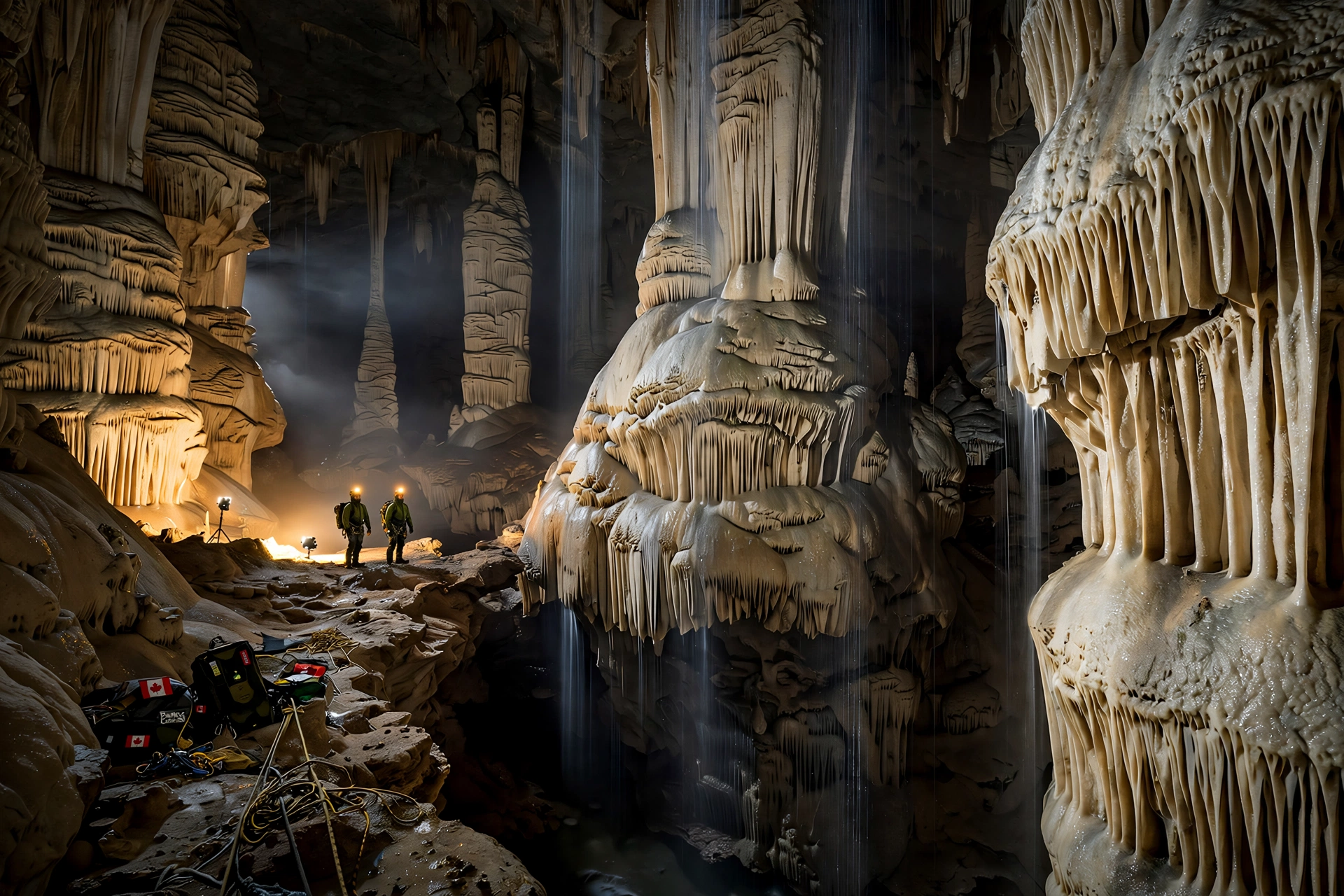
The most exciting line in the whole expedition report might be this one: the submerged passage at the bottom continued beyond the divers’ turnaround point. Further exploration will require a new strategy for getting enough diving equipment through the cave’s brutal passages. That’s not a defeat, it’s an invitation. The 2026 team proved the system is still open at the bottom, and future dives will need smarter logistics, maybe staged equipment caches, maybe new routes through the unexplored phreatic tubes that earlier expeditions spotted.
There’s also the other entrance the team connected this year. Every new entrance rewrites the cave’s plumbing diagram and opens possibilities nobody considered. Cavers have found that Bisaro’s passages keep giving: circular tube passages that reveal Ice Age climate clues, tiny cave-adapted creatures in the deep zones, and mineral deposits nobody has properly studied yet.
For perspective on how wild underground rescues and expeditions can get, read our guide to the Tham Luang cave in Thailand, where 13 boys were trapped 18 days in 2018, and our deep dive into Belize’s ATM Cave, where you can actually swim into the Maya underworld yourself on a guided tour.
Ten years of expeditions. 1.1 kilometers of new cave in a single season. A teal-blue lake at 655 meters that still hasn’t ended. Bisaro Anima is a reminder that the planet still has blank spots on the map, and that sometimes the most extraordinary adventures happen in total darkness, 690 meters under a quiet mountain in British Columbia.
Want more underground adventures? Follow The Cavee on Pinterest for daily cave discoveries, expedition stories, and adventure travel guides. And if this story got your heart racing, read the full expedition coverage at Fernie.com and WildBounds.
Pingback: Uzbekistan's 9 Mystery Caves Going Digital in 2026: Inside Boybuloq