Swim Into the Maya Underworld: Inside Belize’s ATM Cave, the Adventure Tour That Ruins Other Caves for You
Most cave tours go like this: you walk down some stairs, a guide points a flashlight at a rock that looks a bit like a dinosaur, everyone nods politely, and you leave. Actun Tunichil Muknal does not do that. The entrance is a black hole in a jungle cliff with a river pouring out of it, and the price of admission is a swim.
This is the ATM cave in western Belize, and National Geographic named it the number one sacred cave destination in the world. The Maya believed caves were doorways to Xibalba, the underworld, and more than a thousand years ago their priests walked deep into this one carrying pottery, obsidian, and sometimes people who never walked out. The pots are still there. The bones are still there. You will see them with your own eyes, in the dark, wearing a helmet, dripping wet.
I am not going to pretend this is a casual stop on your itinerary. It is a full day, it is physical, and it will probably be the best thing you do in Central America.
What the ATM Cave Actually Is
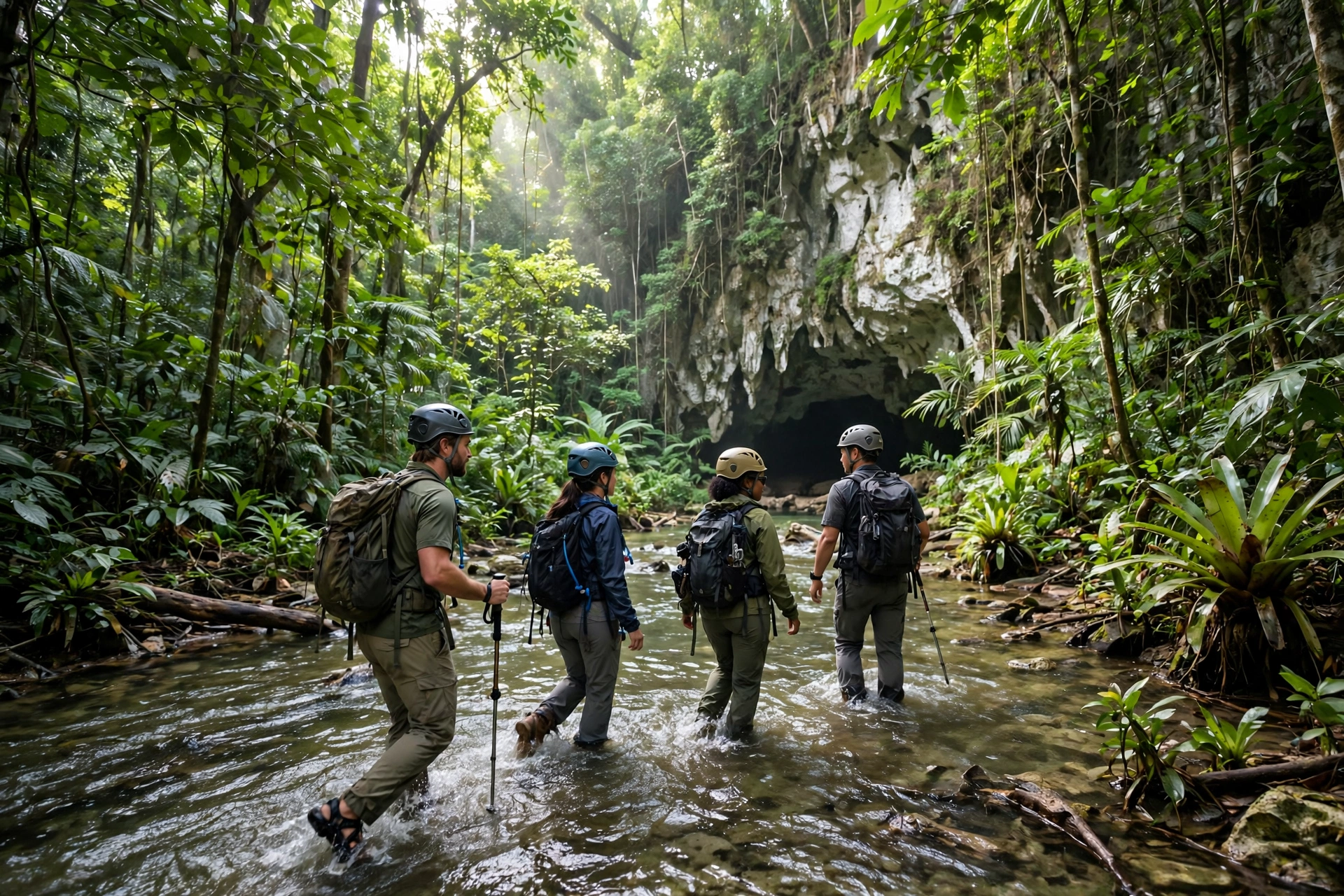
Actun Tunichil Muknal means “Cave of the Crystal Sepulchre” in Yucatec Maya. It sits inside the Tapir Mountain Nature Reserve, about a 45-minute drive on rough road from San Ignacio in the Cayo District, followed by a 45-minute jungle hike with three stream crossings.
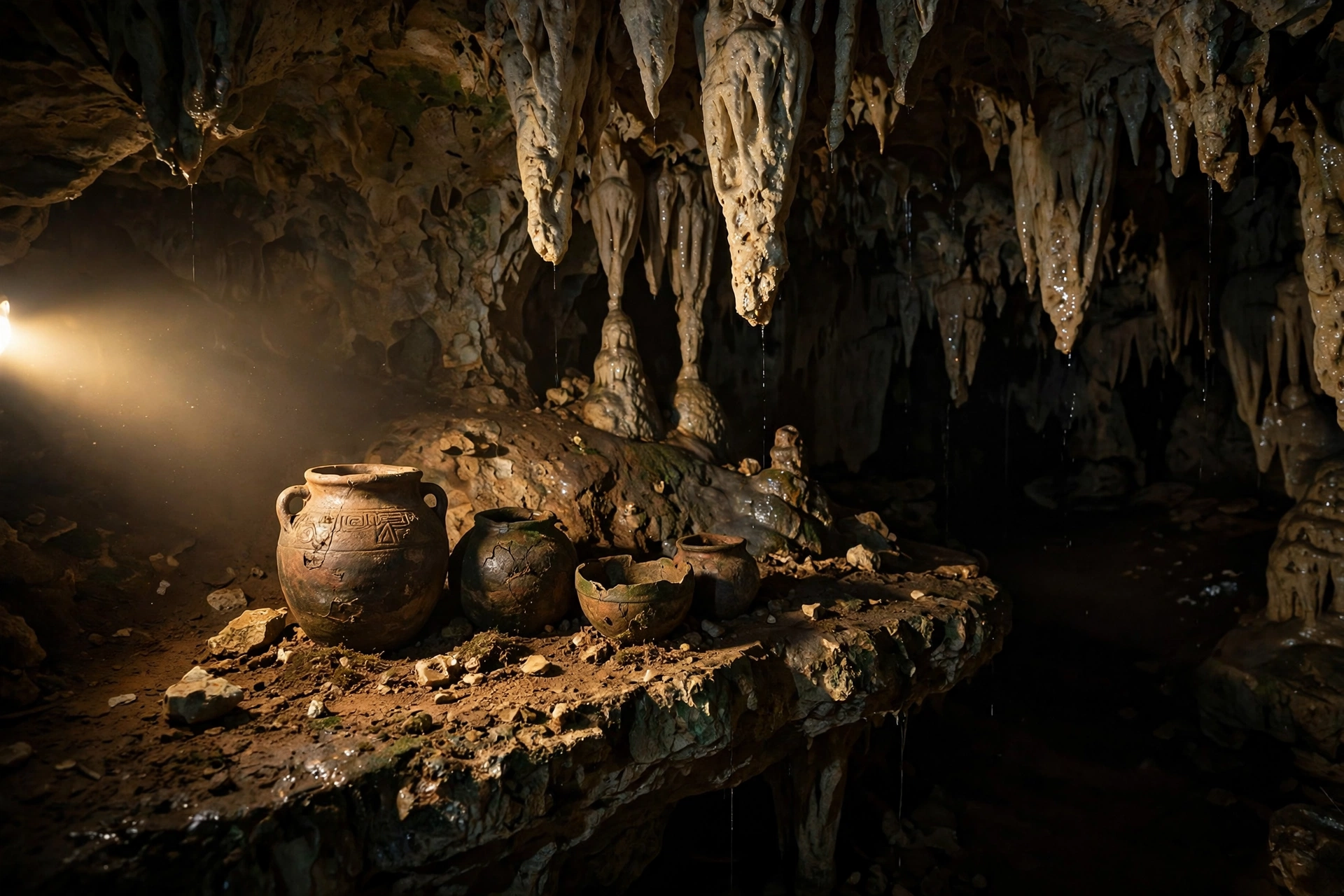
The cave was a ceremonial site during the Classic Maya period, roughly 300 to 600 AD. Archaeologists have catalogued hundreds of ceramic vessels and the remains of 14 people inside, most of them in the farthest chamber, a cathedral-like room about 350 meters long and 50 meters wide. The most famous is the Crystal Maiden: a teenager sacrificed over a thousand years ago whose bones have calcified over the centuries until they glitter like sugar crystals in your headlamp beam. Locals just call the whole place Xibalba.
Here is what makes it different from every ruin you will visit in Mexico or Guatemala: nothing was moved to a museum. The artifacts sit exactly where the Maya left them. You walk among them in your socks (more on that in a minute), inches away from thousand-year-old pots.
Why This Tour Wrecks Every Other Cave Tour for You
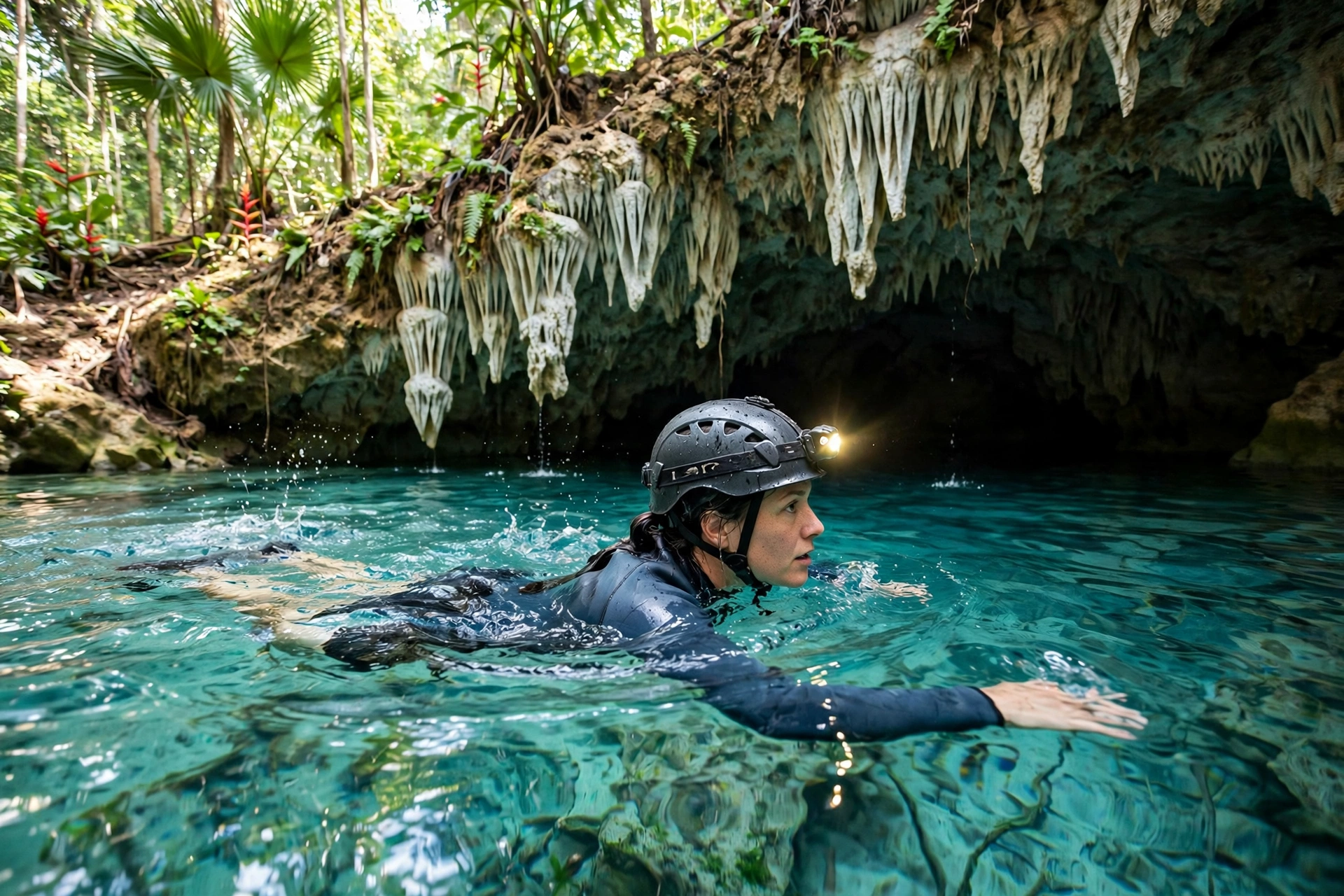
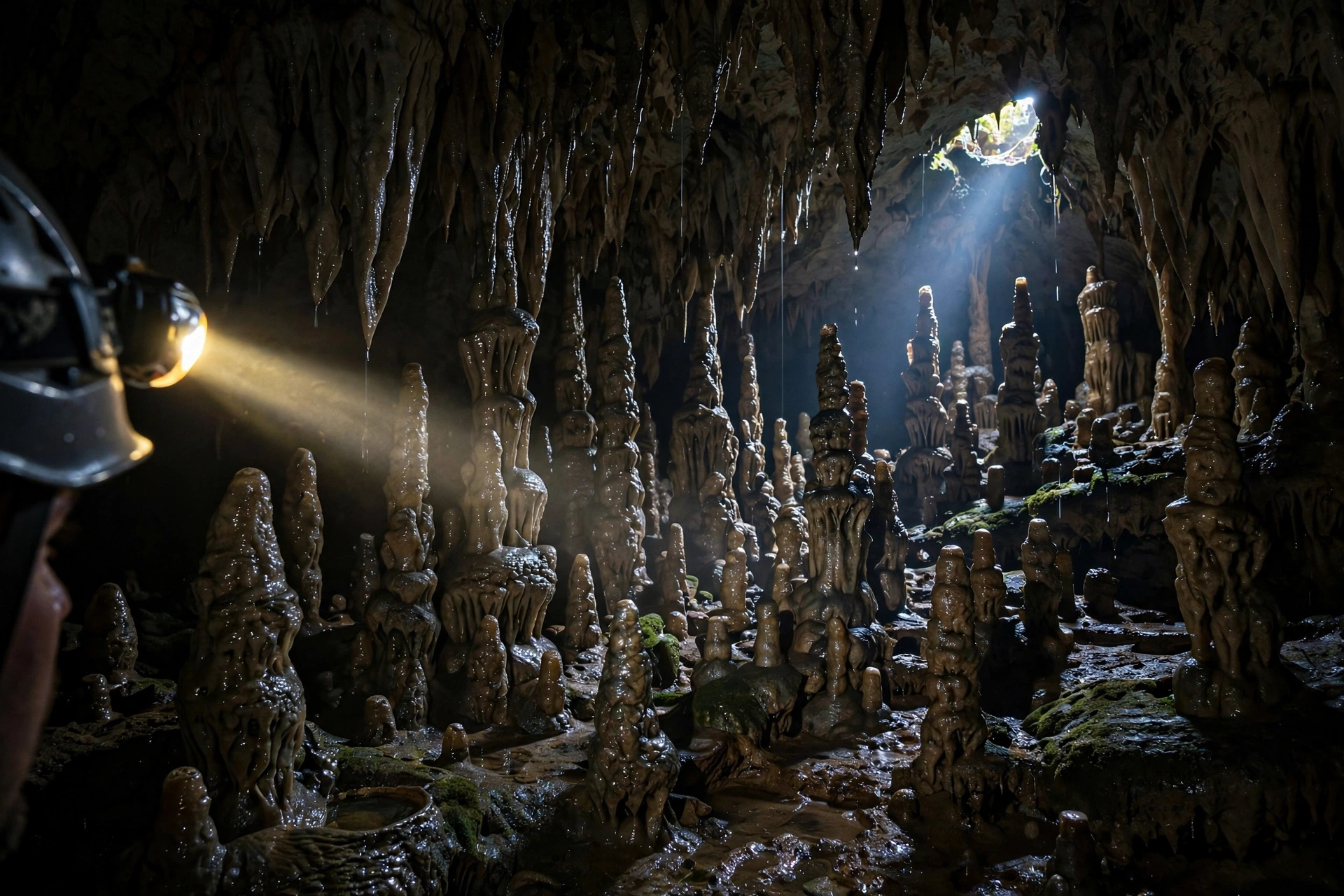
I have done the “pretty stalactites, please stay on the path” version in a few countries. Nothing prepared me for the first five minutes of ATM. You cross a spring-fed pool at the entrance, holding a fixed rope, and the water is cold enough to make you gasp. Then the cave closes over your head and you are wading through knee-deep water into actual darkness, your helmet lamp cutting a cone through the black, and your guide says, casually, “stay close, the current gets stronger.”
It is part swim, part hike, part climb. You scramble up boulders, haul yourself up a tall ladder with a rope, and squeeze through passages that were carved by a river still flowing through them. Your heart thumps the whole time. And then you reach the dry chambers and the mood flips completely: silent, ancient, reverent.
Cameras are strictly banned inside. That annoyed me at first. By the end I was grateful. Nobody was posing for selfies next to a sacrificial victim. You just look, quietly, and it sticks in your memory in a way photos never would.
The Full Day, Hour by Hour
The jungle hike in
Tours leave San Ignacio around 7:30 or 8 in the morning. After the drive on a bumpy dirt road (you cross part of the Mopan River, which is half the fun), the hike starts at the ranger post. Forty-five minutes through thick jungle, wading across three streams. You are already wet before the cave. That is normal. That is the point.
The entrance swim
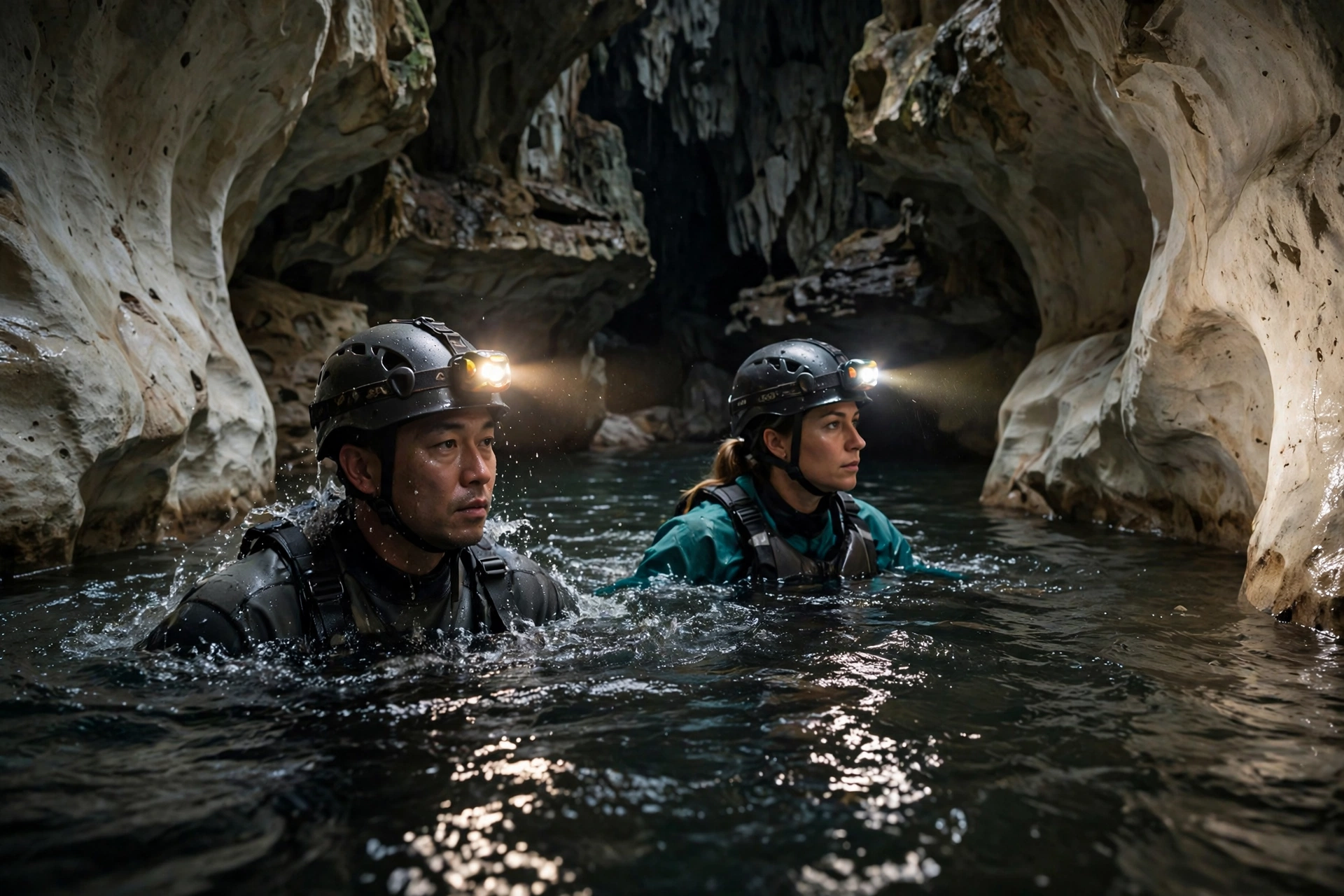
The cave mouth is a dark oval with a stream flowing out of it. You hold the fixed rope and swim maybe ten meters through the entrance pool. The water is cold and clear, and for one second your brain is going, “I am swimming INTO a mountain.” Yes. Yes, you are.
The wet miles
Inside, you wade through the subterranean river for a long stretch. Depth runs from ankle to chest depending on the season. Formations are everywhere: stalactites like organ pipes, flowstone that looks like frozen waterfalls. Your guide points out how the river is still carving the cave today, which is a strange thought when you are standing inside it.
The climb to the dry chambers
About halfway in, the route turns upward. You climb a rock ledge, then a tall ladder, and suddenly the water is gone and you are in dry passages. Shoes come off here: everyone wears socks to protect the artifacts from skin oils. It feels strange and respectful at the same time, padding around in your socks next to thousand-year-old pottery.
The Cathedral and the Crystal Maiden
The main chamber is enormous: 350 meters of ceremonial space. Broken pots sit embedded in the calcite floor exactly where they were smashed as offerings. And there she is, the Crystal Maiden, sparkling under your headlamp. Fourteen sets of human remains have been found in this cave. Standing in that silence, in your socks, on a wet limestone floor, you feel the weight of it in a way no museum display case ever delivers.
The way out and the picnic lunch
You retrace the route (the way back is faster because you know what is coming), hike out through the jungle, and most tours finish with a proper picnic lunch. You will eat like you have never eaten before. Trust me on that one.
What to Pack (and What to Leave Behind)
The problem most first-timers have is overthinking this. Here is the short version that actually works.
Wear: a swimsuit or quick-dry shorts and shirt, plus closed-toe shoes you do not mind destroying. Old sneakers or water shoes are perfect. Sandals are not allowed inside.
Bring: a change of dry clothes for after (leave them in the van), sunscreen and bug spray for the hike, and cash for tips. The guides carry dry bags for the essentials.
Do not bring: your camera. Cameras and recording devices are banned inside the cave, and the guides enforce it. This is one of the few places left on Earth where you will simply have to remember things with your brain. You will be fine.
Fitness note: the Belize Tourism Board is honest about this one: the tour is physically demanding. You will swim, wade against current, climb, and squeeze through tight spots. If you can handle a few hours of hiking and swimming, you can handle ATM. If stairs wind you, train a little first.
Booking Tips That Save You Money and Headaches
Book a licensed guide, full stop. The cave sits in a protected reserve and you cannot enter without one. San Ignacio is the hub, and most hotels in town can set you up with a daily departure. Expect a full day of 7 to 9 hours, with roughly 3 hours spent inside the cave itself.
Price reality: tours from San Ignacio typically run about $90 to $130 per person, and that usually covers transport, the guide, gear (helmet and headlamp), park fees, and lunch. Departures from farther away cost far more; a Placencia departure runs around $425 because of the long drive each way. If you can base yourself in San Ignacio, do it.
Timing matters too. Go in the dry season if you can. During the wet months, roughly June through August, heavy rain can flood the cave and tours get cancelled. In high season, book at least a few days ahead: group sizes are limited and it sells out.
Who Should Do This (and Who Should Sit It Out)
Do it if: you like your travel with a pulse. If the words “swim into a mountain” make you grin instead of flinch, this is your tour.
Think twice if: you are strongly claustrophobic, cannot swim, or have mobility issues. No shame in it. The cave is not going anywhere, with this one demands that your body cooperates.
Kids: many operators set a minimum age around 8 to 10. Check with your operator before you promise the little ones an underworld.
More Underground Wonders Worth Your Time
The Maya believed caves were portals to the underworld, and that belief shaped entire cities. If that worldview grabs you, read our deep dive into the cenotes of Mexico’s Yucatan, the sacred sinkholes where the same rituals played out aboveground.
Prefer your caves with a gentler glow? New Zealand’s Waitomo glowworm caves trade sacrificial chambers for a ceiling of living stars. Or go bigger: Son Doong in Vietnam is so large it has its own weather system.
Why Bother? The Problem This Solves
Here is the real reason to go. Most travel starts blurring together after a while: another temple, another viewpoint, another boat ride. The ATM cave is the opposite of blurry. A thousand years ago, people carried fire and fear deep into this mountain to speak to their gods, and you get to follow their exact footsteps, dripping and half-blind, until your headlamp catches something glittering on the cave floor.
You will remember this day in ten years. I would bet on it.
Planning a Belize trip? Save this guide to your “Cave Adventures” board and explore more underground wonders at thecavee.com. New cave pins drop on our Pinterest every day.
Official source: Belize Tourism Board on Actun Tunichil Muknal | Practical tour details: Wikitravel ATM Cave guide