There is a moment, about ten minutes into the boat ride, when the ceiling of the cave stops looking like a ceiling. You’re lying back in a small flat-bottomed boat, drifting on a dark river a hundred feet underground, and the guide has gone quiet. Actually, everyone has gone quiet, because that’s the rule. And above you, thousands of tiny blue-green lights bloom across the rock like someone spilled the Milky Way across it.
That is the Waitomo Glowworm Caves in New Zealand. Over 500,000 people a year come to float under that living sky, and honestly, even knowing it was coming, it got me. Let me tell you everything you need to know before you go: how this place came to be, the wild true story of the two men who found it, what glowworms actually are (the answer is weirder than you’d think), the step-by-step tour, the prices, the stuff nobody warns you about, and whether the crowds ruin it.
How 30 Million Years Built a Starlit Ceiling
Waitomo isn’t one cave. It’s a whole streamway system carved through limestone that started forming roughly 30 million years ago, when this part of New Zealand’s North Island sat under the sea. Shells, coral, and sediment piled up on the ocean floor and hardened into rock. Then the land lifted, rainwater (mildly acidic, because rain always is) seeped into cracks, and slowly, patiently, the water dissolved the limestone into caverns.
The cave you’re visiting today is part of a network that also includes Ruakuri Cave, Aranui Cave, and smaller systems like Lucky Strike and Tumutumu. An underground stream called the Waitomo Stream still runs through the whole thing. It enters the hill at one end, winds through the chambers, and exits at the other. You will literally ride that stream out of the mountain, in the dark, under a ceiling of insects.
The word “Waitomo” comes from the Maori words wai (water) and tomo (hole or shaft). The local Maori people knew about these caves for generations before any tourist ever showed up. That part matters, because the discovery story is one of the best in cave tourism.
A Chief, a Surveyor, and a Raft Made of Flax
In 1887, a local Maori chief named Tane Tinorau teamed up with an English surveyor, Fred Mace, to explore the cave properly. Their equipment was not fancy. They built a raft out of flax stems and poled it into the dark where the Waitomo Stream disappears underground, lighting their way with candles.
Picture that for a second. A candlelit raft, floating into a black hole in a hill, with no idea what was ahead. When they reached what is now called the Glowworm Grotto, they looked up and saw the ceiling twinkling. They must have thought they’d gone mad, or died, or both.
They came back again and again. Tane found the upper entrance that visitors use today, and by 1889, Tane and his wife Huti were charging visitors a small fee for guided tours. About 500 tourists showed up in those first two years. The New Zealand government eventually took over administration of the cave in 1906 (after some vandalism problems), and in 1910 they built the Waitomo Caves Hotel to handle the crowds. Then, in 1989, the land and the cave were returned to the descendants of Tane and Huti, who still share in the revenue and the management. Many of the guides working there today are part of that family line. That’s rare in tourism, and it’s worth knowing.
Wait, what exactly IS a glowworm?
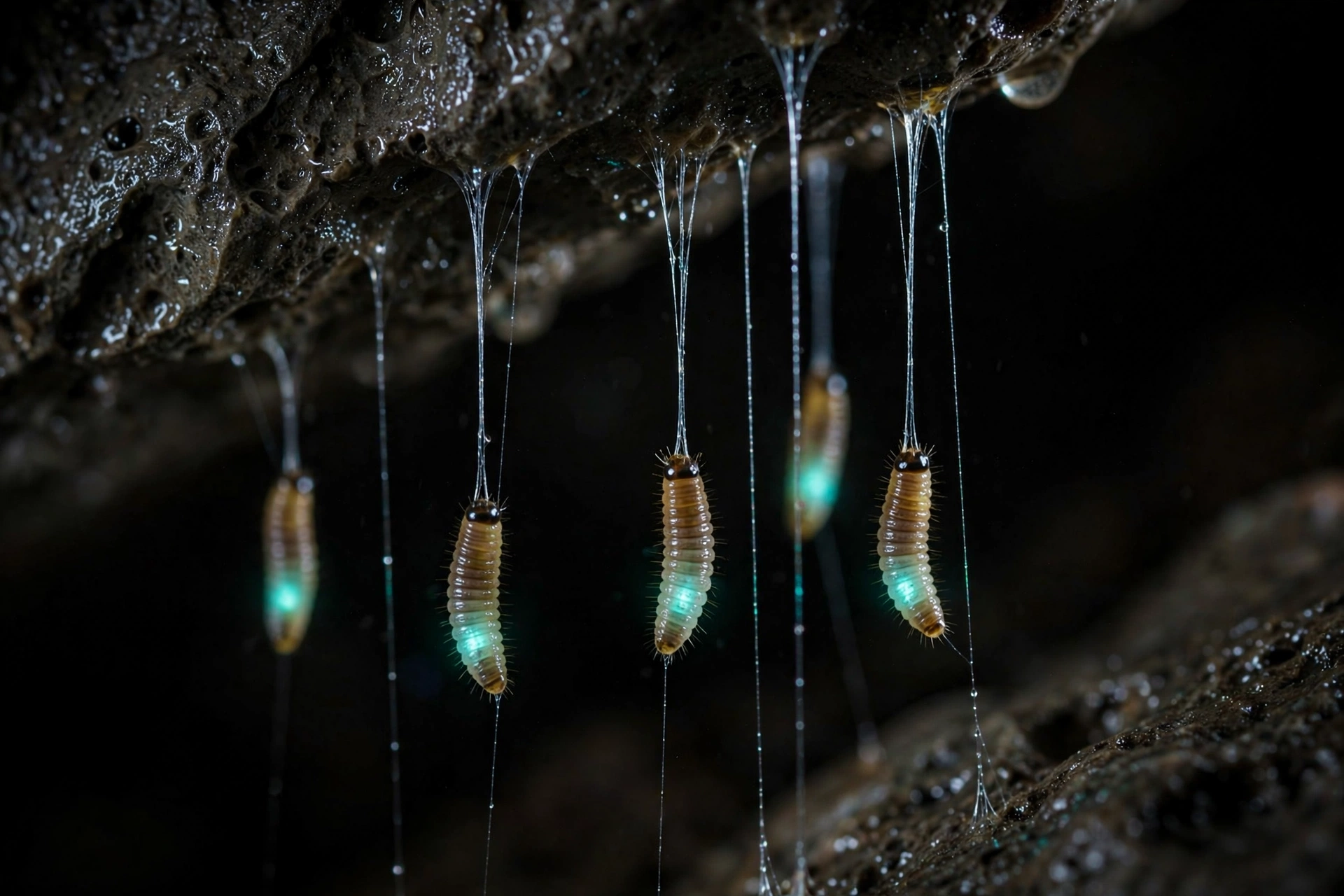
Here’s the twist: glowworms aren’t worms. They’re not even really “glows” in the way you think. The species in Waitomo is called Arachnocampa luminosa, and it’s found only in New Zealand. What you’re looking at is the larval stage of a fungus gnat, a fly about the size of a mosquito.
Each larva builds a little nest of mucous on the cave ceiling and hangs dozens of long, sticky silk threads below it, like a fisherman with a hundred lines. Then it turns on its light. The blue-green glow comes from a chemical reaction in its tail, and it serves two purposes: it attracts tiny flying insects straight into the sticky threads, and it makes the larva look poisonous enough that predators leave it alone. So the “starry sky” is actually a ceiling full of tiny predators running a lighting rig to catch dinner. Nature is metal like that.
The larvae glow for months, then pupate and hatch into adult gnats that live only a few days, lay eggs, and die. The adults don’t even have mouths. Think about that next time you see the photos.
The Tour, Step by Step
The classic Waitomo Glowworm Caves tour runs about 45 minutes. Here’s how it actually goes, chamber by chamber.
The upper level: Catacombs and the Banquet Chamber
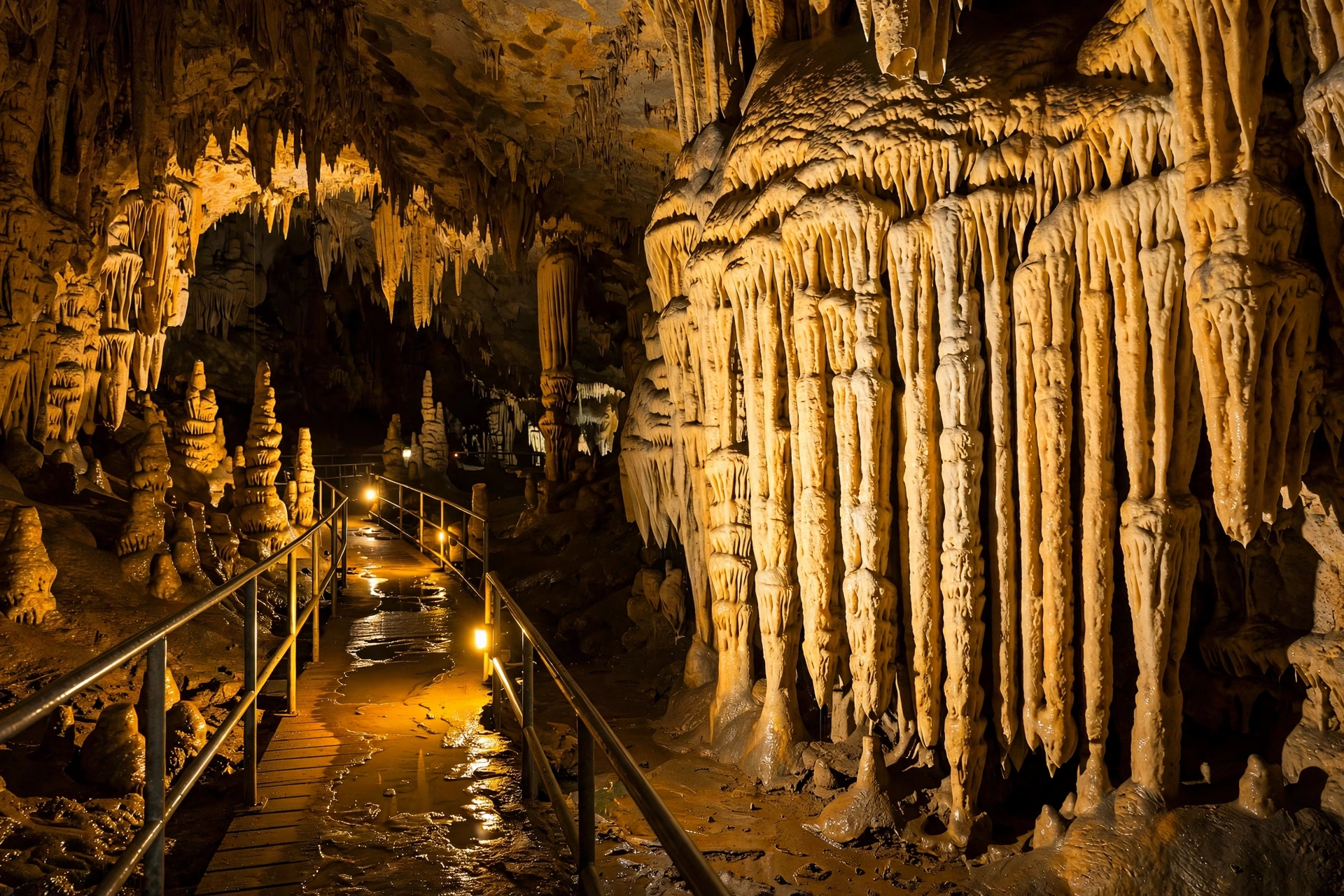
You enter at the top and descend through the first level, known as the Catacombs. This is the limestone-showcase part: stalactites, stalagmites, flowstone, and a formation called the Pipe Organ, which really does look like the pipes of a church organ frozen in rock. Your guide will talk geology, Maori history, and point out the Banquet Chamber, where early visitors apparently stopped to eat. There’s old smoke staining on the ceiling from their fires, which tells you everything about how casual 19th-century cave tourism was.
The Tomo shaft and the Cathedral
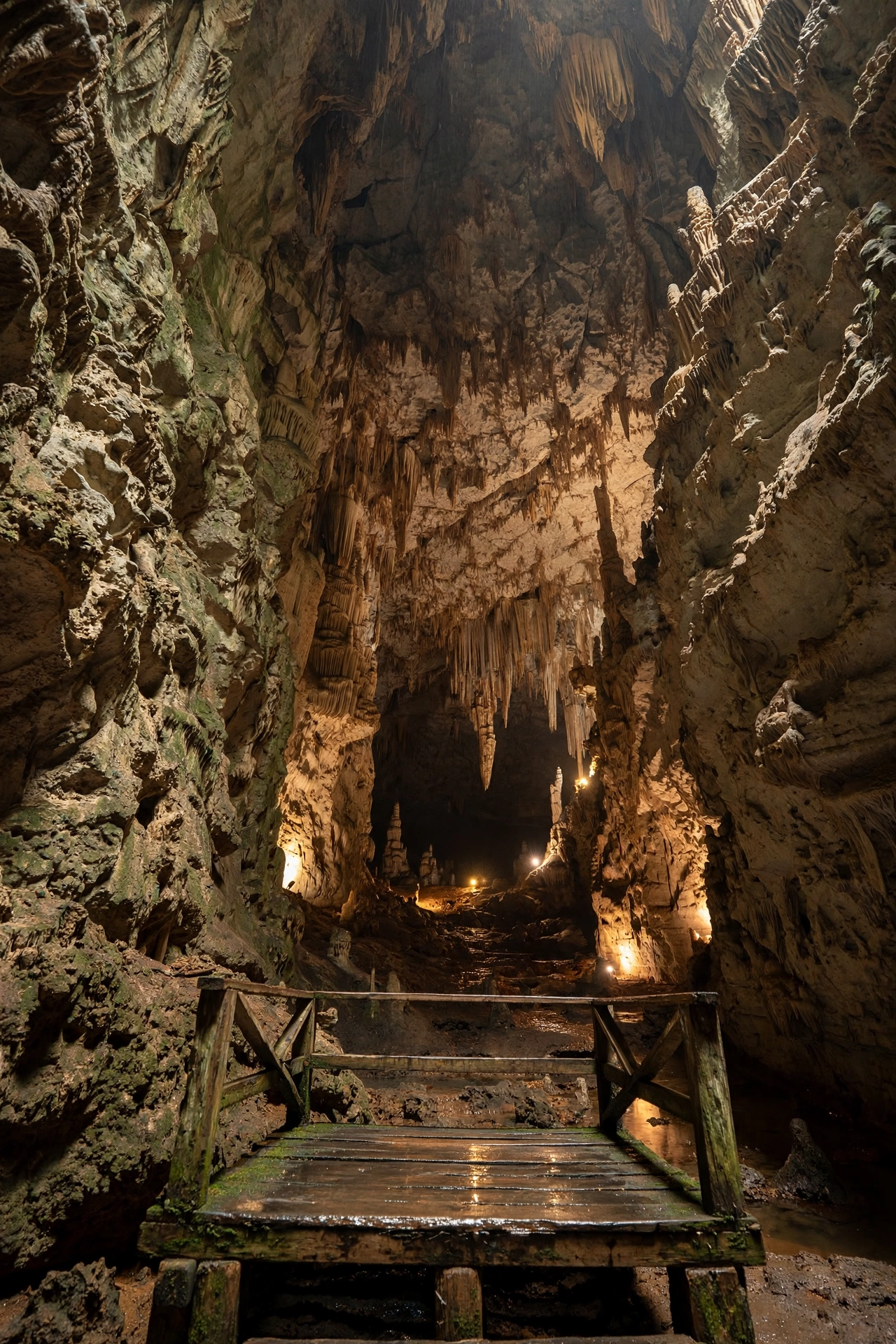
A 16-meter vertical shaft called the Tomo connects the levels. Then you reach the second level and the famous Cathedral, an enclosed chamber about 18 meters high with rough, uneven surfaces and fantastic acoustics. Famous singers and choirs, including Dame Kiri Te Kanawa, have performed here. On busy days, part of this area sometimes closes to the public because carbon monoxide from all those visitors can build up. That’s one of those facts that makes you go “oh,” and then appreciate the ventilation engineering.
The Glowworm Grotto: the boat ride
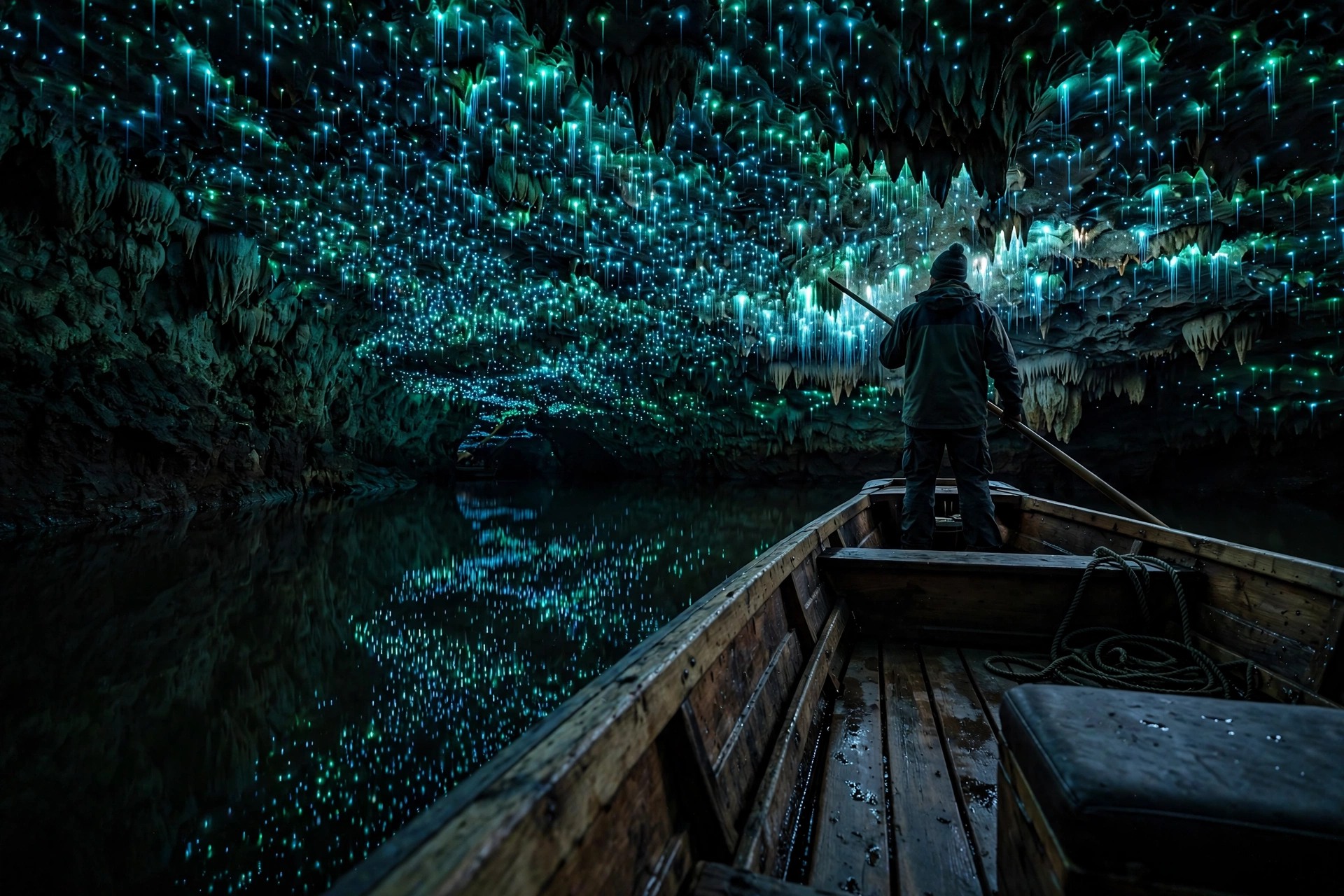
Then comes the main event. You board a small boat at the jetty, the guide pulls you onto the Waitomo Stream by hand (no motors, too loud, too smelly), and you drift into the Grotto in near-total darkness.
Two rules: no talking, no photos. The first time I heard the “no photos” rule I was annoyed, like everyone is. Then I sat in that boat for five minutes with a galaxy rippling on the ceiling and its reflection in the water, and I got it. Flashes would blind everyone and stress the glowworms. And honestly, no photo does it justice anyway. The grotto looks better in your memory than it ever would on your phone. The guides know this. That’s why they enforce it.
The boat ride ends at the lower entrance, where the stream exits the hill into daylight. You walk out blinking, and the green valley hits you like a reward.
Waitomo Is More Than One Cave
Most people do the classic 45-minute tour and leave. That’s a mistake, because the Waitomo system has a whole menu.
Black water rafting: the adventure version
If the gentle boat ride sounds too tame, Waitomo invented something for you. Black water rafting means floating through caves on inner tubes, in wetsuits, under glowworms, sometimes abseiling down waterfalls and leaping off underground cascades. The famous experiences run 3 to 5 hours and typically cost around $112 USD. You’ll get hot chocolate at the end, which after three hours in 14-degree cave water feels like a religious experience.
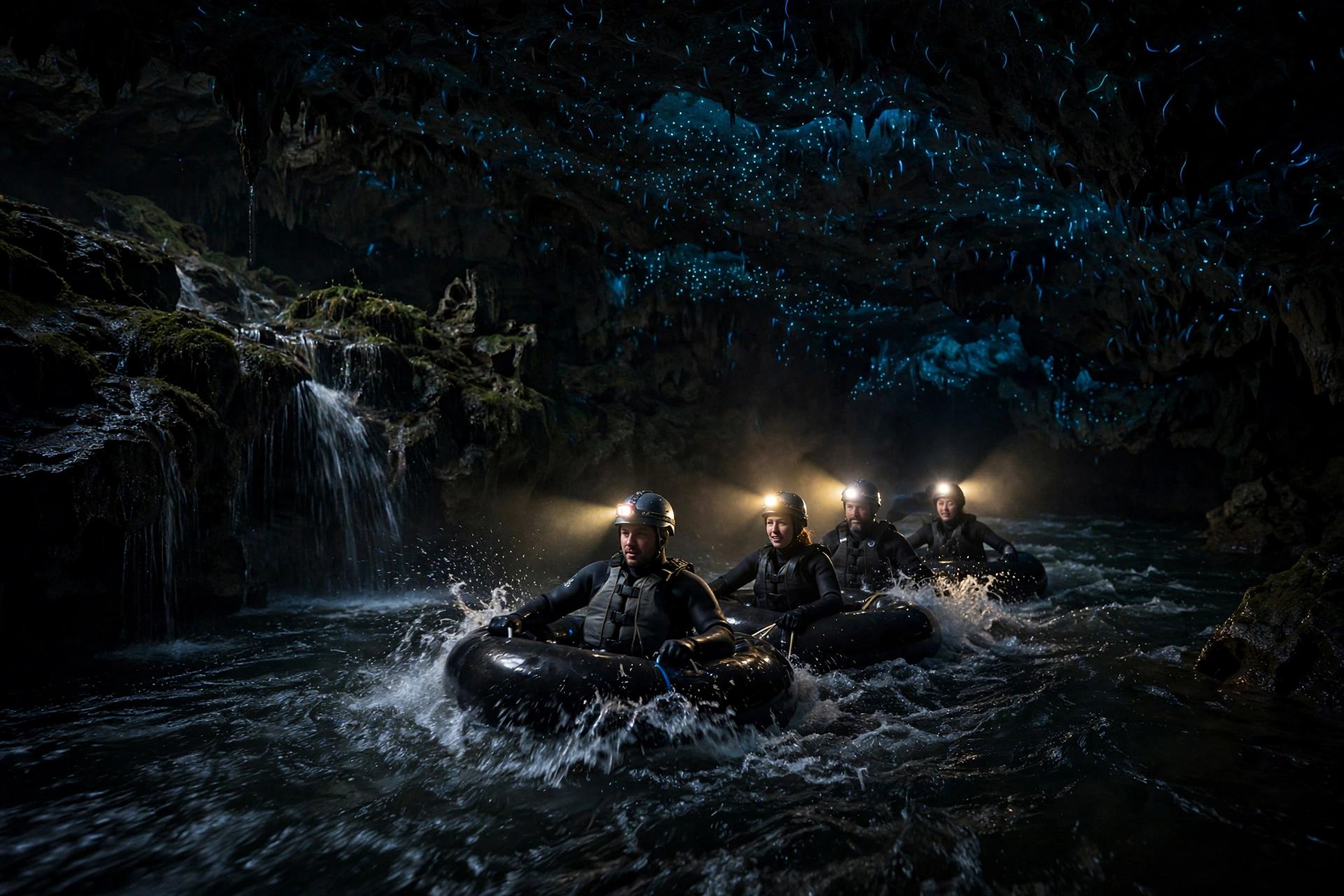
There are also serious expeditions. The Lost World tours go deeper, with abseils down 100-meter shafts into caverns most visitors never see. If you’ve done the classic tour and want the real caving fix, this is it.
Ruakuri and Aranui: the quieter siblings
Ruakuri Cave, also part of the system, has its own glowworm displays plus spiral entrances and is wheelchair accessible, which the main cave isn’t. Aranui Cave is smaller, quieter, and known for delicate formations. Doing a combo of Waitomo plus Ruakuri is one of the smartest moves a visitor can make, especially in peak season when the main cave gets packed.
Planning Your Visit (the Practical Stuff)
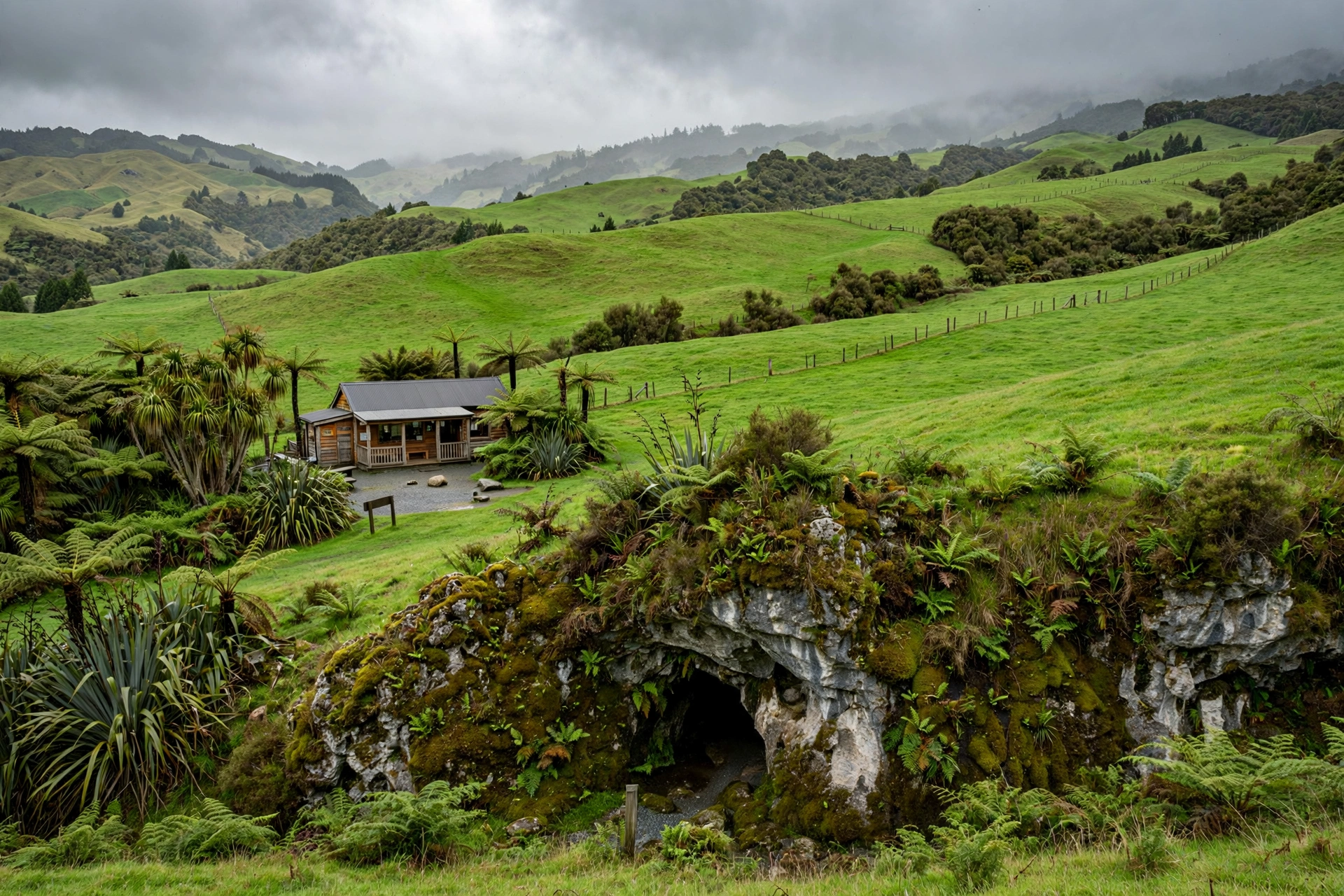
Getting there: Waitomo is about 2 hours south of Auckland by car, roughly a 3 to 4 hour drive from Rotorua. The drive itself is gorgeous, winding through green Waikato farmland. Shuttles and public buses exist but run less often, so most people rent a car or join a day tour from Auckland.
Hours and price: Tours run daily, roughly 9 AM to 5 PM (longer in summer). The classic boat tour costs around NZ$50 to NZ$51, roughly US$30. Black water rafting and combo tours cost more. Book online in advance, especially October through April, which is the peak window.
What to wear: The cave sits around 14°C (57°F) year-round. It’s damp. Wear closed-toe shoes with grip, because some paths are wet and slippery, and bring a light layer. The site is cashless.
The photo situation: Photography is strictly prohibited inside the main Glowworm Caves tour. This bothers some people, but here’s my take after thinking about it: this rule is the reason the place still feels magical with half a million visitors a year. And if you love cave photography, you can scratch that itch elsewhere. Read our guide on how to photograph a cave before your next cave trip, because most caves allow cameras and the techniques transfer.
The Honest Problems (and How to Beat Them)
Let’s be real. Half a million visitors a year means this place can feel like a conveyor belt in peak season. Here’s how to dodge the worst of it.
Problem 1: The crowds. The first tours of the day are quietest. Aim for the earliest slot, and visit on a weekday. Autumn (March to May) brings fewer visitors, and locals say you can sometimes catch glowworms swarming, when larvae descend on glowing threads to pupate. It’s a rare, beautiful thing.
Problem 2: It’s over fast. Forty-five minutes feels short for the price. Fix: combine the classic tour with Ruakuri Cave or a black water rafting trip. The combo turns a quick stop into a full day, and the contrast between the gentle grotto ride and the adrenaline of rafting is genuinely great.
Problem 3: No photos, and you will want photos. Accept it before you go. Tell your camera-obsessed travel buddy now, not at the entrance. The ban protects the glowworms and your experience. The memory is the souvenir.
Problem 4: It’s not “wild” caving. If you want raw adventure, the classic tour is a show cave, full stop. Handrails, paved paths, guides. That’s fine for what it is, but manage expectations. Real explorers should book the deeper Lost World or black water expeditions instead. If cave diving is more your speed, our piece on Mexico’s cenotes covers a very different kind of underground water adventure.
And if you’re wondering how Waitomo compares to the biggest underground systems on Earth, our guide to Son Doong, the world’s largest cave is the other end of the spectrum: multi-day expeditions through chambers big enough to hold city blocks.
Why This Cave Sticks With You
Here’s what I keep coming back to. Most famous caves impress you with size. Son Doong overwhelms you. The cenotes of Mexico stun you with blue water. Waitomo does something different: it puts you in a small boat, in the dark, under a ceiling of living lights that aren’t stars, and it shuts everyone up. Silence becomes part of the experience. You don’t get that in many tourist attractions. You definitely don’t get it in many caves.
A Maori chief and an English surveyor floated in on a flax raft with candles in 1887 and saw the same thing you’ll see. That’s 137 years of people going quiet in that boat. Go early, book ahead, respect the no-photo rule, and add the rafting if you’ve got the nerve.
Love caves as much as we do? Follow The Cavee on Pinterest for daily cave adventures, underground wonders, and travel inspiration, and read the full story with more photos right here on thecavee.com. Save this pin to your New Zealand bucket list board and share it with whoever you’re dragging to the glowworm grotto.
Sources: Waitomo Glowworm Cave on Wikipedia, Viator: Waitomo caving tours
Pingback: Eisriesenwelt: Inside the World's Largest Ice Cave in Austria (2026 Guide)