If I asked you to name the world’s top adrenaline destination, you’d probably say New Zealand before I’d even finished the sentence. Queenstown, bungee jumping, jet boats threading narrow canyons. The “adventure capital of the world” branding has owned that title for decades, and honestly, it earned it.
A new study just flipped the answer on its head, and I did not see it coming. Travel researchers at Casino Days put 16 adrenaline-inducing activities under the microscope, sorted them into four buckets (urban, outdoor, water, and snow adventures), factored in affordability, and scored the planet’s best adventure destinations. Brazil came out on top with an adrenaline score of 9.30 out of 10. Argentina followed at 8.90, then Spain at 8.79, France at 8.73, and Mexico at 8.59. New Zealand didn’t even crack the top five. Read that again if you need to. I did.
Why Brazil Wins: Let’s Talk Numbers.
Brazil’s outdoor adventure score was a near-perfect 9.80. Scores are abstract, so here is what that actually looks like on the ground.
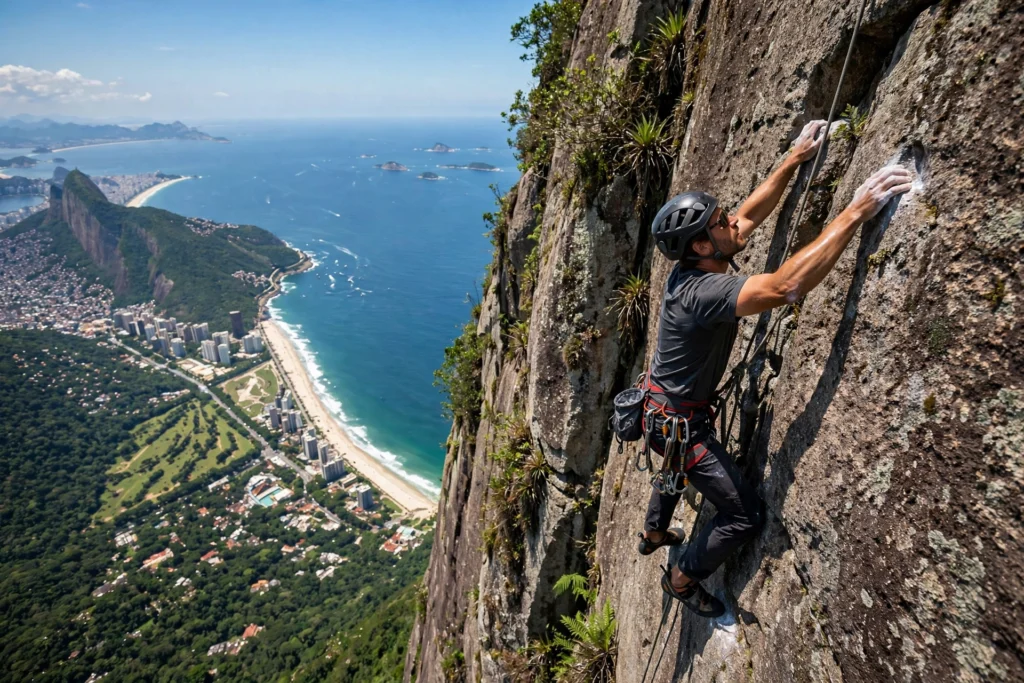
2,940 rock climbing trails. That is not a typo. From the granite domes around Rio to the sandstone towers of Chapada Diamantina, Brazil has more documented climbing routes than most countries have hiking trails. Beginners can top-rope with a guide for an afternoon. Serious climbers can spend a month and barely scratch the surface.
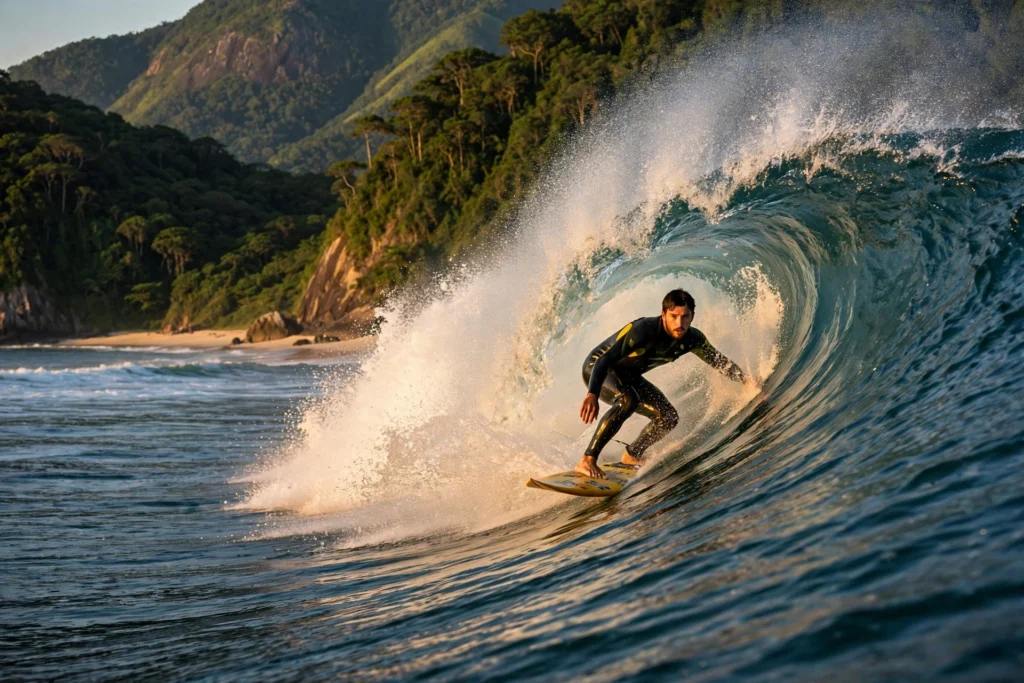
449 surf spots along a 7,400-kilometre coastline. Brazil’s surf culture runs generations deep. It produced multiple world champions, and the waves back it up, from the punchy beach breaks of Rio to the reef passes of the northeast. You can rent a board and grab a lesson on practically any beach with a lifeguard stand.
Then there is the wonderfully unserious side of the ranking. Brazil is home to 105 roller coasters, including the iconic wooden Montezum and Surreal at Beach Park in Ceará, which happens to be the tallest water roller coaster on the planet. Thrill math apparently counts, and Brazil did the math.
Add more than 3 million online mentions of hiking and mountain biking trails, and the picture gets clear. This is not one famous attraction carrying a country. It is depth, everywhere, in every direction.
And here is the part that should make every budget-conscious adventurer sit up straight. The average monthly cost of living for a single person in Brazil sits around $791. Your adrenaline budget stretches dramatically further there than in Queenstown or Chamonix, where a single heli-ski day can vaporize a month of savings. More on the money side later, because it matters more than most guides admit.
The Real Problem This Solves: Too Many Thrills, Zero Clarity.
Here is something nobody in adventure travel talks about honestly: choice paralysis. There are more “ultimate adrenaline destination” lists on the internet than any human could read in a lifetime, and they contradict each other constantly. One swears Patagonia changed their life. Another says Iceland or nothing. A third discovered somewhere you have never heard of and now treats it like a personality trait.
You either research for three months until the trip quietly dies, or you default to the same overcrowded bungee jump everyone posts on Instagram.
A data-backed ranking cuts straight through that noise. Sixteen measured activities. Four categories. One score. It gives you a place to start that is built on something sturdier than vibes.
What the Ranking Gets Right (and Where I’d Push Back).
Let me be straight with you, because blind trust in any ranking is how you end up disappointed.
What it gets right: variety wins. A country where you can surf in the morning, climb granite in the afternoon, and swim through a glowing cave river the next day is objectively a better adrenaline bet than a country with one famous jump and not much else. Brazil’s depth across categories is real, and the affordability factor is the honest multiplier nobody includes.
Where I’d push back: snow. Brazil is not winning any snow adventure category, and travelers who live for powder should weight that accordingly. Argentina beating Brazil on snow (8.75) tells you the ranking knows this too. Also, any study like this leans on what is measurable, and some of the best travel moments are gloriously unmeasurable. Treat the 9.30 as a compass, not a contract.
Rio de Janeiro: Run Off a Mountain (On Purpose).
The hang gliding launch at Pedra Bonita is one of those experiences that quietly rewires your brain. You run, yes, actually run, straight off a granite ramp 520 metres above the city. For about two seconds your legs are still doing the running motion in midair while your stomach files a formal complaint. Then the wing catches, Rio drops away beneath you, and your brain switches from panic to something close to disbelief.
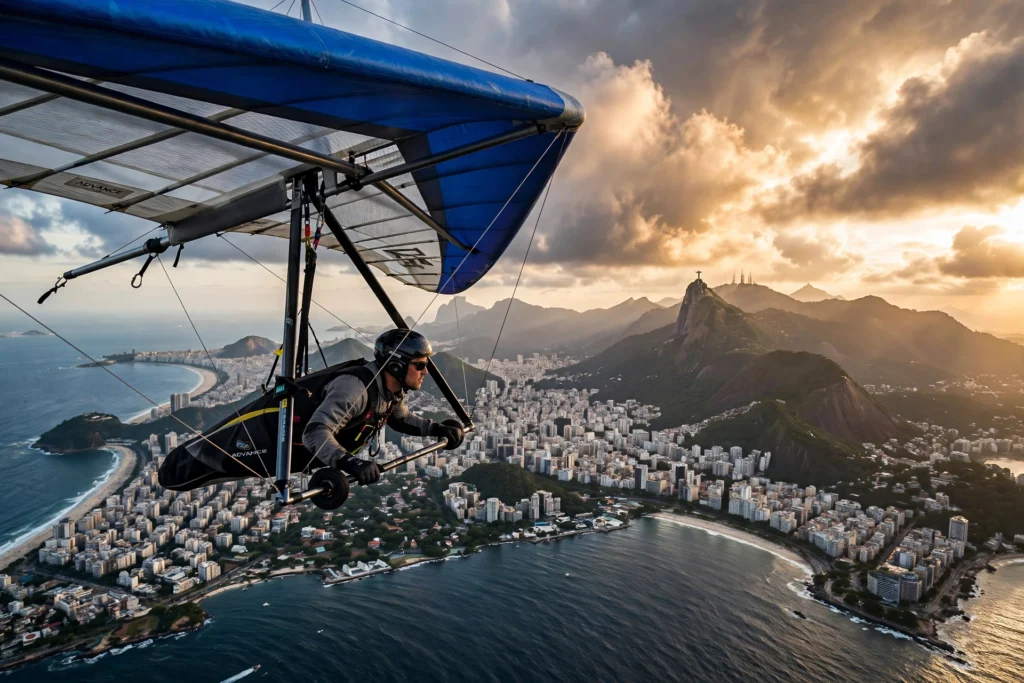
Below you: the favelas stacked like bright Lego bricks, Copacabana curving away, Sugarloaf Mountain doing its thing. Then Christ the Redeemer slides past your wingtip, close enough that you stop thinking in words for a while.
Tandem flights mean zero experience required. You need working legs, the ability to keep running when every instinct screams otherwise, and about fifteen minutes. Flights run 8 to 15 minutes depending on thermals, and most pilots stretch the ride when the air is good because they love it as much as you will.

Worth knowing: mornings usually bring calmer winds, so book the first slot of the day. You will often get glassy conditions and softer light for photos. Afternoon thermals mean longer flights but bumpier air. Pick your priority.
The money bit: tandem hang gliding in Rio typically runs a fraction of what a similar flight costs in Switzerland or New Zealand. This is the affordability multiplier in action.
Chapada Diamantina: Swim Through Glowing Underground Rivers.
This is the one that stopped me cold in the middle of my research, and I research this stuff for a living. Deep in Bahia state, the Chapada Diamantina plateau hides caves holding underground rivers so clear they genuinely do not look real in photographs. At Poço Azul, the Blue Pool, you float in water so transparent that your own shadow falls on the rocks 20 metres beneath you, while a single shaft of sunlight spears down from a ceiling opening like a scene from a film you assumed was CGI.
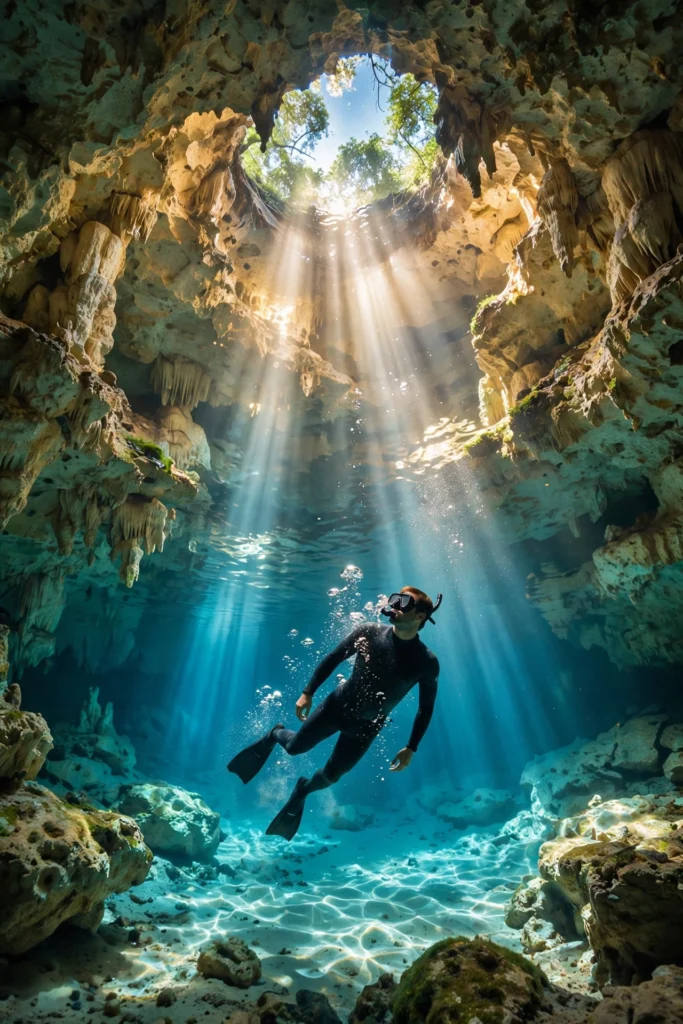
If Mexico’s cenotes ever grabbed you, those sacred sinkholes the Maya called gateways to the underworld, this is their Brazilian cousin, and I would argue it is even more surreal.
Snorkeling at Poço Azul is not about coral or fish. There is almost no marine life to look at, and that is entirely the point. It is about silence, light beams, and water so still that floating in it feels like flying. Bring an underwater camera if you have one. If you are new to shooting in dark, wet places, our cave photography guide walks through exactly how to handle the low light without owning fancy gear.
Gruta da Pratinha, nearby, offers a similar dream with a twist: you can snorkel the length of an underground river, flashlight in hand, watching the rock formations slide past overhead. Go with a local guide. The caves are protected, access is regulated, and the guides know exactly when the light beams hit, which is the whole show.
Lençóis Maranhenses: Sandboard a Desert That Isn’t a Desert.
Every year, rain fills the valleys between the white sand dunes of Lençóis Maranhenses with thousands of turquoise lagoons. Then, slowly, impossibly, they evaporate. For a few months you get the strangest landscape on Earth: a rippling white desert dotted with electric-blue swimming holes, as if someone dropped the Caribbean into the Sahara.
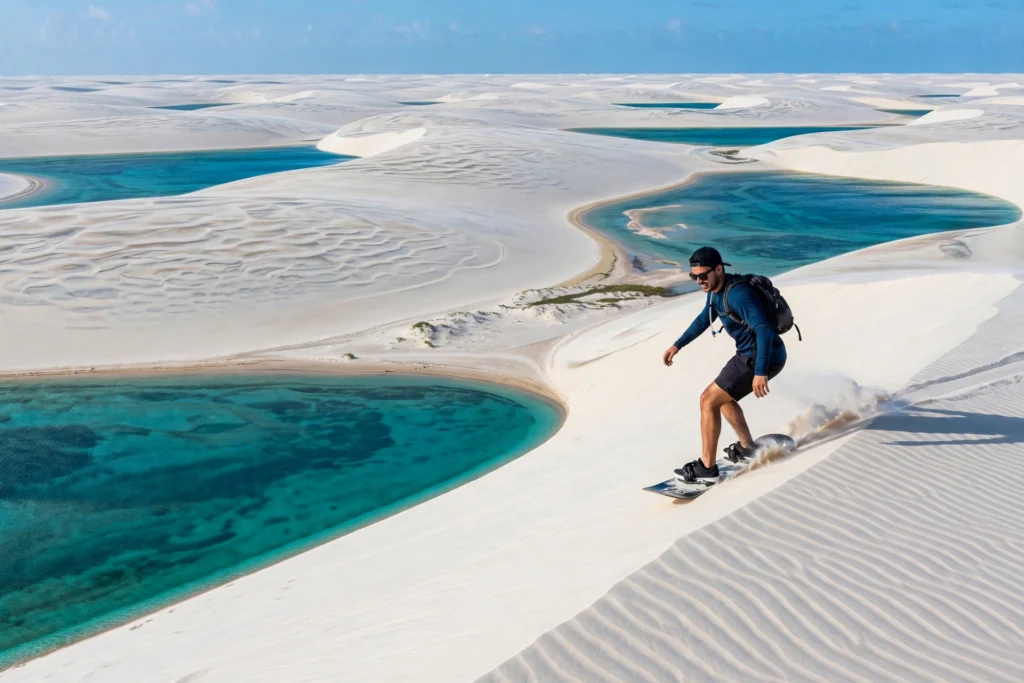
Sandboarding down the dunes is the obvious thrill, and it is genuinely fun, all wobbly legs and uncontrolled laughter. But the real move is slower: hike from dune to dune and dive into whichever lagoon looks bluest. Lagoa Azul and Lagoa Bonita are the famous ones. Go early, before the day-trip crowds arrive, and you may have a lagoon entirely to yourself.
Timing is everything here, and I mean everything. The lagoons are fullest from June to September. Show up in December and you will find magnificent, bone-dry sand. Check recent traveler photos, not just guidebooks, before you commit to dates.
Foz do Iguaçu: Take a Boat Into 1.5 Million Litres Per Second.
Niagara gets the fame. Iguaçu gets the volume. Up to 1.5 million litres of water per second thunder over nearly 300 individual falls straddling the Brazil-Argentina border. Standing at the Devil’s Throat viewpoint, the roar hits your chest before your brain catches up.
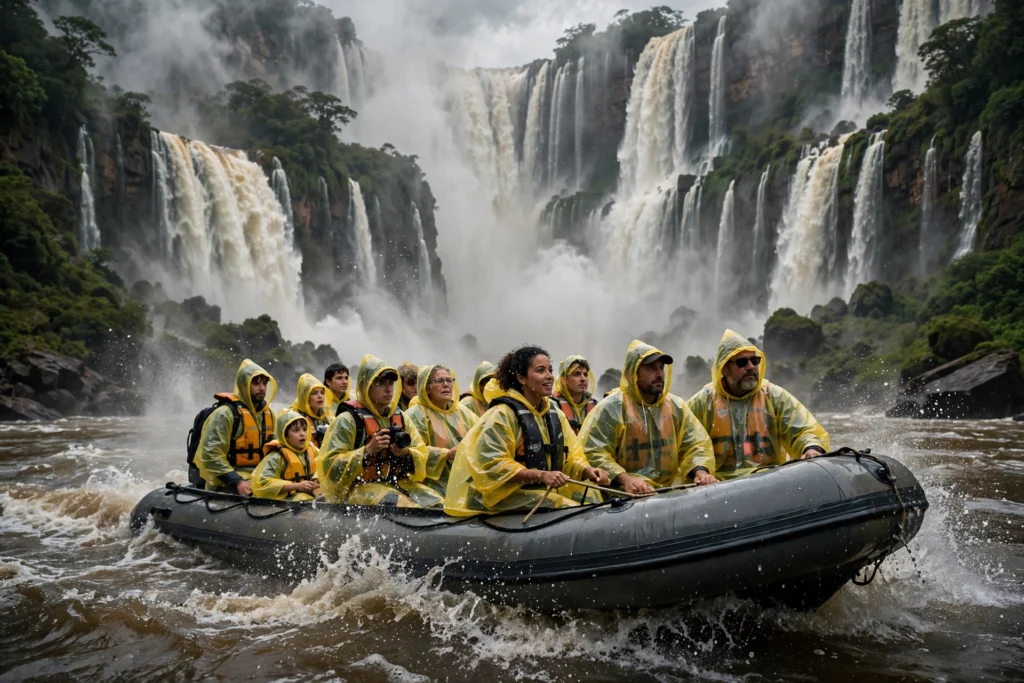
The boat rides take you directly into the spray at the base of the falls. Let me save you the suspense: you will get completely soaked. There is no version of this experience where you stay dry, no clever seating choice, no poncho technology that saves you. Embrace it. It is half the fun, and the photos of everyone shrieking are the ones you will actually keep.
Do both sides. Walk the Argentine side for the full panoramic circuits, upper and lower, then cross to the Brazilian side for the head-on Devil’s Throat viewpoint where the walkway ends practically inside the falls. Skipping either side is the classic rookie mistake, and the border crossing is straightforward with your passport.
The Amazon: The Wild Card Nobody Plans Properly.
Honest take: most Amazon trips underwhelm, and it is almost always the traveler’s fault. People book the Amazon like a beach holiday, three days in a lodge near Manaus, a guided walk, a nap in a hammock, home. Then they wonder what the fuss was about.
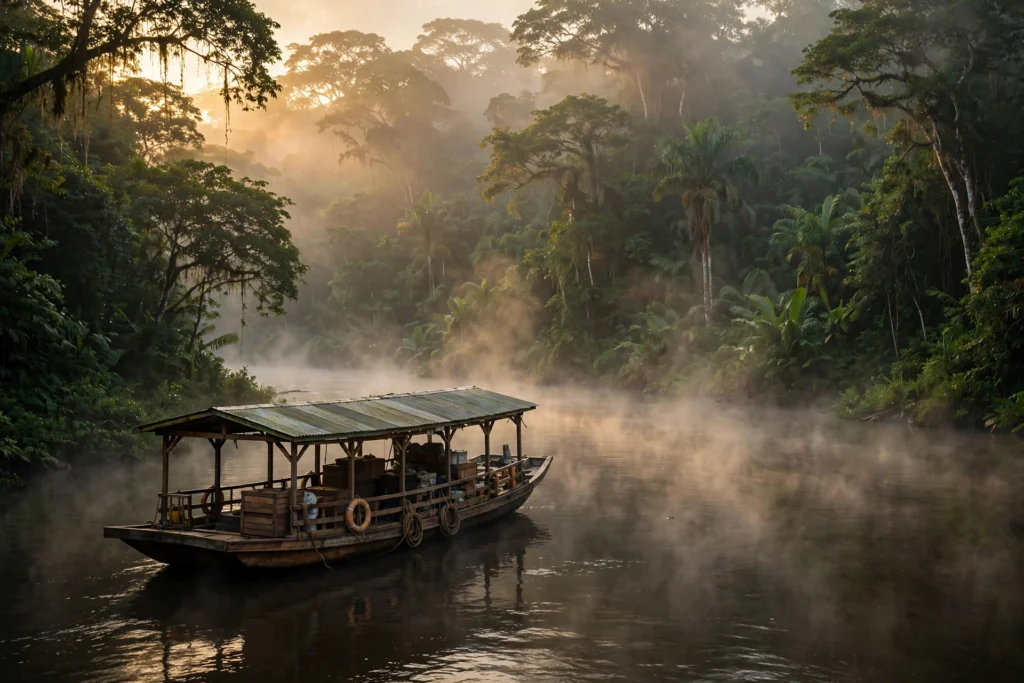
The Amazon rewards depth. Multi-day riverboat journeys where the boat becomes your hotel. Night safaris where the guide’s flashlight catches caiman eyes glowing red in the dark. Pink river dolphins surfacing at dawn while mist hangs over the water. This is not an adrenaline rush in the roller-coaster sense. It is the slower, deeper thrill of being somewhere genuinely wild, where your phone has no signal and the forest at night is louder than any city you have ever slept in.
If you go, go with an operator that takes you far from Manaus, and give it at least five days. The Amazon does not do quick impressions.
What It Actually Costs (No Sugarcoating).
Guides love saying “Brazil is affordable” and leaving it there. Here is the unvarnished version.
Excluding international flights, $80 to $120 per day covers genuinely comfortable mid-range travel: decent pousadas (family-run guesthouses, often charming), meals at local restaurants where the food is better than the tourist spots, domestic buses or budget flights between regions, and one paid thrill (hang gliding, guided cave snorkeling, boat tour) every couple of days.
Where the money goes: domestic flights between Rio, Salvador, São Luís, and Iguaçu are the big variable. Book them early and they are reasonable. Book them late and they will humble you.
Local tip: Brazil’s long-distance buses are excellent, cheap, and have seats that recline further than most business class. For overland legs, the bus is often the smart money.
Where people overspend: Rio’s tourist-zone restaurants, last-minute Iguaçu hotels in peak season, and overpriced “favela tours” run by outsiders. Eat where office workers eat. Book Iguaçu ahead. And if a favela tour interests you, book one actually run by residents.
Best months overall: April to September gives you the driest weather across most regions and the fullest lagoons in Lençóis. Carnival (February/March) is electric but doubles prices and crowds. Plan around it deliberately, not accidentally.
A Realistic 7-Day Thrill Itinerary.
If the ranking has you reaching for your calendar, here is a skeleton that actually works without requiring superhuman stamina:
Days 1 to 2, Rio: Land, recover, then hang gliding at Pedra Bonita on the morning of day 2. Afternoon surf lesson at Prainha. Sunset at Sugarloaf with an açaí in hand. You have earned it.
Days 3 to 4, Chapada Diamantina: Fly to Salvador, transfer to the town of Lençóis (yes, confusingly, a different Lençóis than the dunes). Day 3: Poço Azul and Gruta da Pratinha, the glowing underground rivers. Day 4: waterfall hikes through the plateau, swim in natural pools, sleep early.
Days 5 to 6, Lençóis Maranhenses: Fly to São Luís, drive to Barreirinhas. Two days of dune lagoons, sandboarding, and sunsets over the sand sea. This is the part of the trip you will talk about for years.
Day 7, Iguaçu: Fly in early, boat ride under the falls, Argentine side circuits if time allows, fly home hoarse, sunburned, and happy.
Is it rushed? A little. Does it hit five completely different worlds in a week? Absolutely. Add three days anywhere and it breathes easier, but this version works.
Bring a Camera. Seriously.
Brazil’s thrills are visual in a way that demands documentation. The light beam in Poço Azul. The scale of Iguaçu. Sunrise over the dunes. Most of it happens in tricky light, underground, in spray, or at dawn, which is exactly why we put together our cave photography guide. The low-light techniques in there apply far beyond caves. Your phone can handle more than you think if you know its limits.
The Bottom Line.
Brazil did not top this ranking by accident, and it did not win on a single famous attraction. It won on sheer, unreasonable variety. Nowhere else hands you world-class surf, 2,940 climbing trails, glowing underground rivers, a disappearing lagoon desert, and the most powerful waterfalls on Earth in a single trip, at prices that do not require refinancing your life.
New Zealand will always be the adventure capital in our hearts. The bungee cords, the jet boats, the Southern Alps at dawn. Nobody is taking that away. But the data has spoken. And the data says: go to Brazil.
Found this useful? Follow The Cavee on Pinterest for a daily dose of adventure, and keep exploring the underground wonders and wild corners of the planet right here on thecavee.com.
Pingback: Saudi Arabia Red Sea Adventure Guide 2026: New Resorts, Diving, Costs & Tips
Pingback: Ha Giang Loop 2026: The Ultimate Guide to Vietnam's Wildest Motorbike Adventure (New Rules, Real Costs)