The coastline that was a blank spot on every tourist map just woke up
For most of my traveling life, Saudi Arabia’s Red Sea coast was one of those places you simply didn’t go. Not because it wasn’t stunning. Because it was closed. The western shoreline of the kingdom, roughly 1,800 kilometers of it, sat behind a wall of “no tourists allowed” for decades, while divers in Egypt and Jordan dove the very same reef system from the other side of the water.
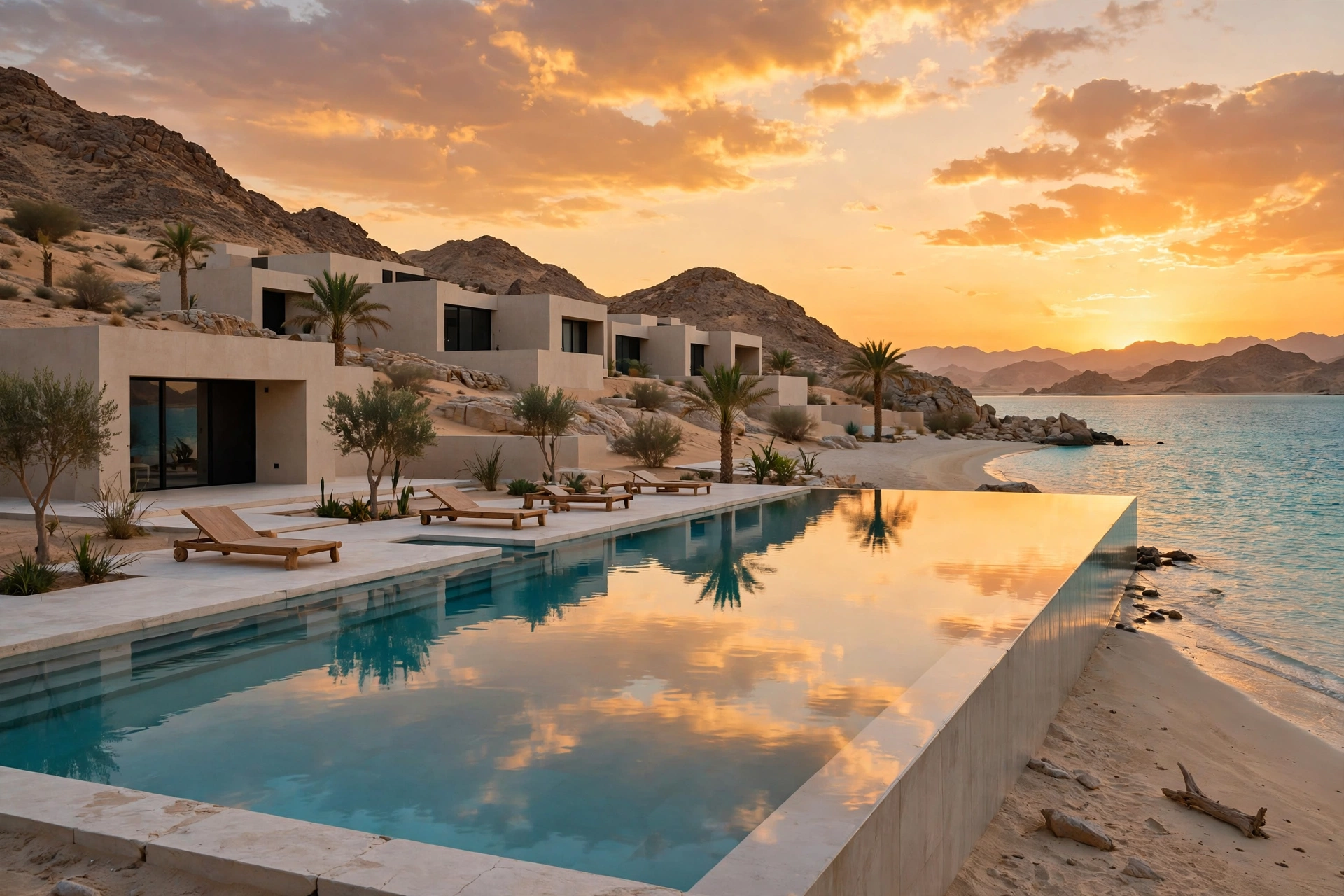
That wall came down with Vision 2030. And in 2026, the coast finally flipped from promise to reality. Let me give you the timeline, because it’s genuinely wild. In June 2026, the Four Seasons AMAALA opened at Triple Bay. July brought Six Senses. Rosewood followed in August. Equinox began welcoming guests in early September. And on September 7, 2026, Nammos, yes, the Mykonos beach club brand, opened its first-ever full-scale Middle East resort, the sixth resort at AMAALA in the span of about four months. Three more are scheduled to open in the coming months.
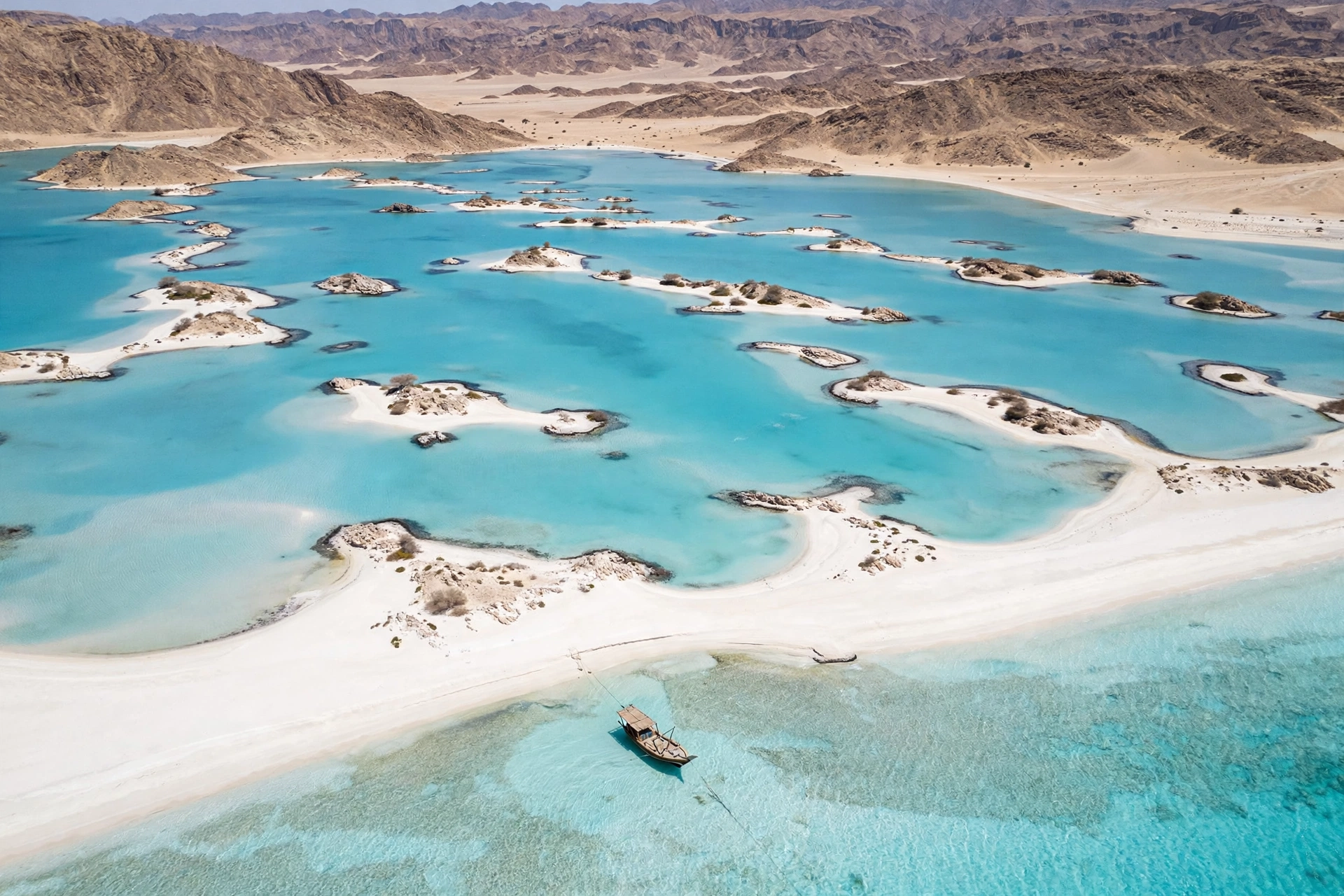
Meanwhile, a second mega destination was filling out at the same time. Shura Island, the gateway island of The Red Sea development, saw the 240-key Red Sea EDITION open on its one kilometer private beach in October 2025, followed by SLS and InterContinental later that year. In 2026, Miraval opened there on May 15 (the brand’s first property outside the US), and a Four Seasons with 149 rooms and 31 private residences opened on May 20.
I’ve been writing about adventure destinations for years, and I’ve never seen a coastline go from zero to this fast. It matters because what’s under the water here might be the single biggest thing in Red Sea diving in a generation: reefs that have barely been touched.
The reefs: possibly the last virgin coral system you can dive this easily
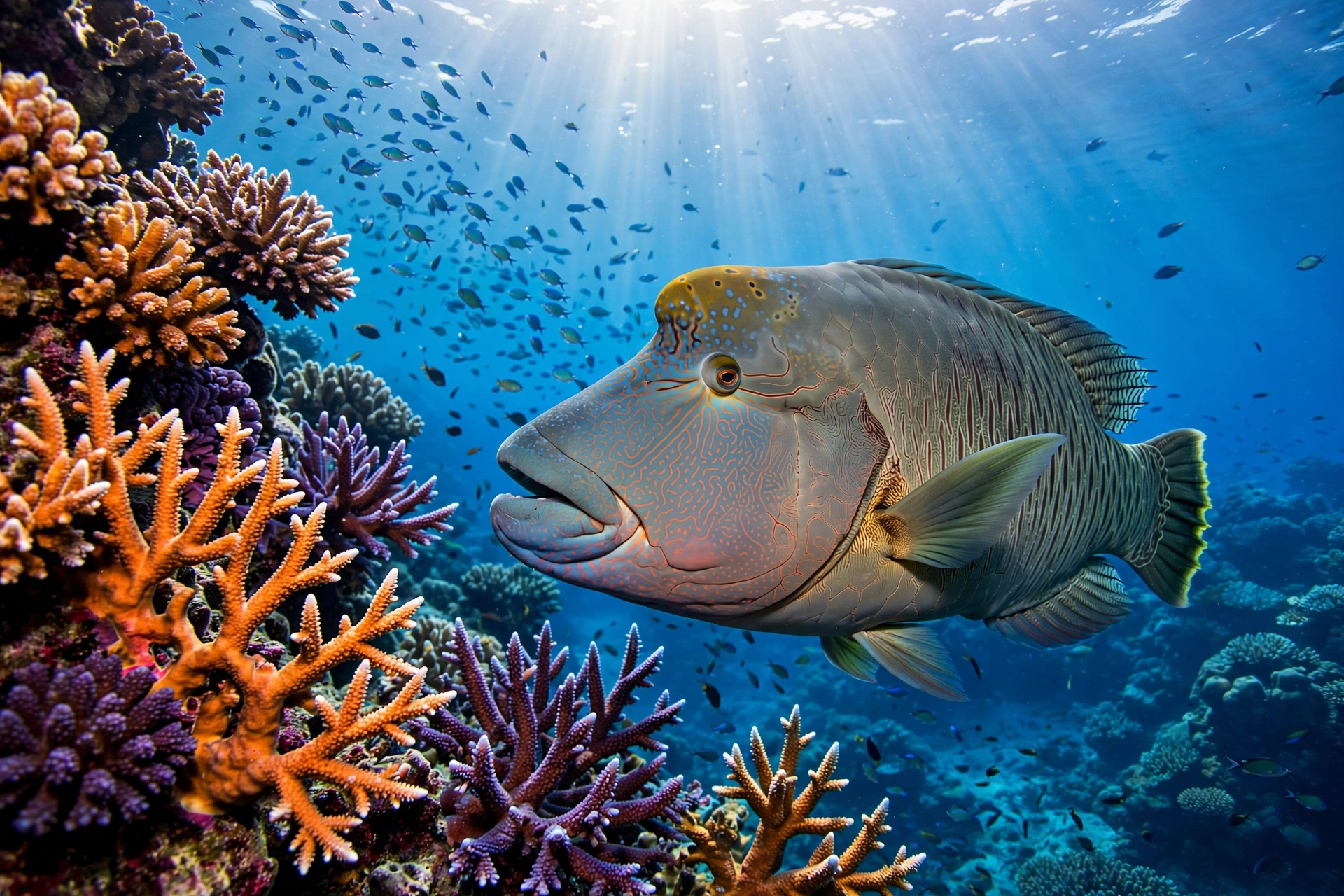
Here’s the part that should make every diver sit up. The Red Sea is one reef system, but the Saudi side spent decades with almost no diving tourism. The result is coral that most of the world has never laid fins on. Visibility regularly hits 30 meters. The water is warm enough to dive in a shorty for much of the year. And the variety is absurd: hard coral gardens, soft coral walls, fringing reefs, deep drop-offs, shipwrecks, whale sharks, dugongs.
A few specifics worth knowing:
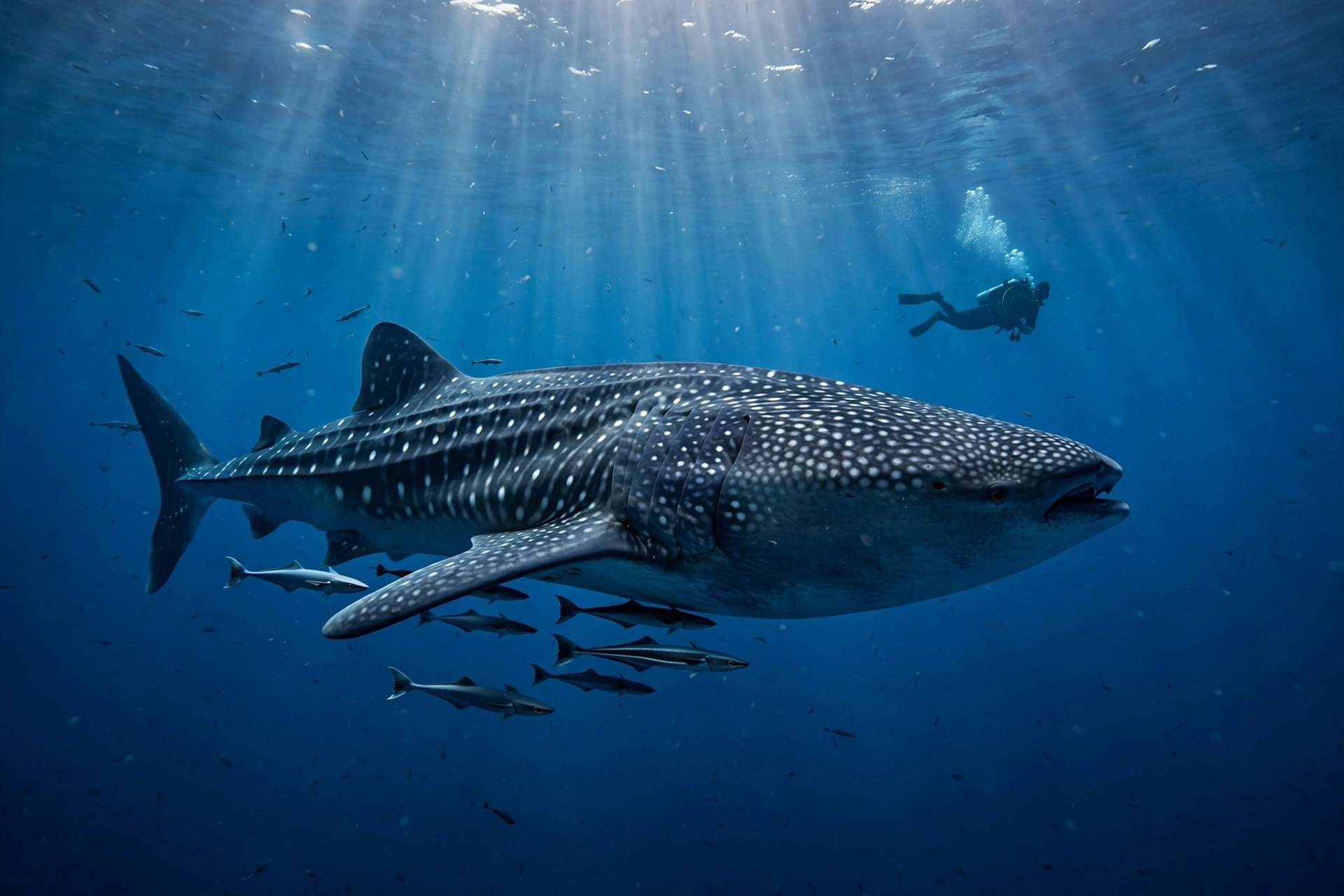
Bayada Island, nicknamed the “Maldives of Saudi Arabia,” is the classic beginner spot. Shallow, calm, ridiculous turquoise water. Cable Wreck and Chicken Wreck are the famous wreck dives near Jeddah. Jabal Al-Lith, further south, turns into whale shark central in spring. If swimming next to a bus-sized spotted giant is on your list, that’s your move.
What does it cost? Around Jeddah, intro dives run about 300 to 600 SAR per person with equipment included, and certified divers can get boat trips for roughly 350 to 500 SAR per dive. Multi-day packages with accommodation range from 1,500 to 3,000 SAR. The luxury liveaboard trips running the Farasan Banks, where the real wilderness diving happens, run 2,500 to 4,500 USD for a week all-inclusive.
The best diving months are March to May and September to November, when visibility peaks and water temperatures sit between 22 and 28 degrees Celsius. Summer diving is possible, but the surface heat can be brutal, which brings me to the honest part of this guide later on.
One note that surprised me: the EarthCheck Sustainable Destinations certification. The Red Sea is now the first destination in Saudi Arabia to hold it. The resorts are running coral and mangrove restoration programs, the AMAALA development is designed around renewable energy, and visitor numbers there are capped at 500,000 a year. Regenerative tourism is one of those phrases that usually means nothing. Here it at least has receipts attached.
Not a diver? Don’t close the tab yet
I get it. Not everyone wants to strap on a tank. The Red Sea coast has been built, very deliberately, as more than a dive destination.
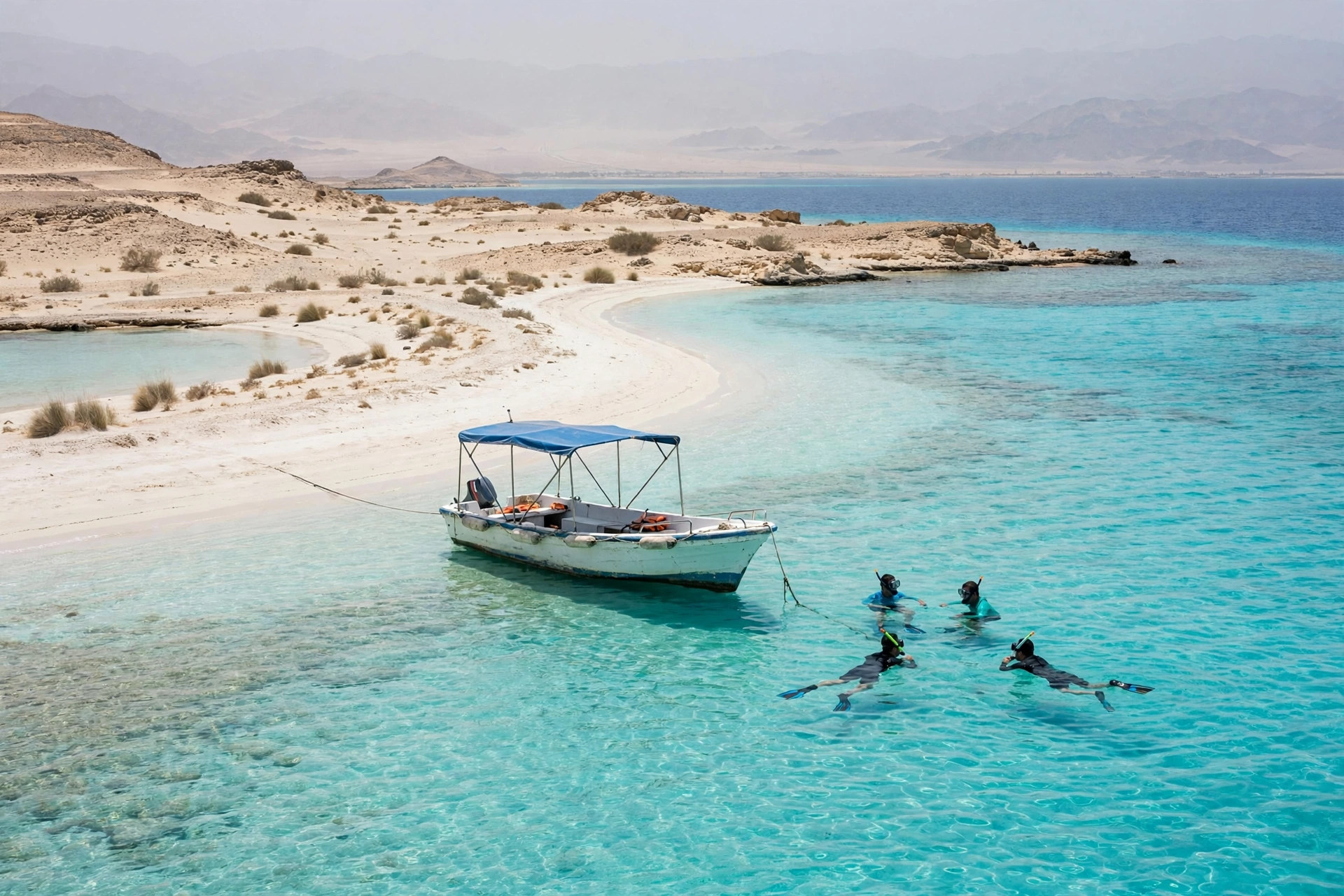
Snorkeling is the obvious first answer. Almost every dive operator runs snorkeling trips to the same coral reefs, and some of the shallowest, prettiest reef tops are better seen with a snorkel than on a deep dive. This is the family-friendly version of the Red Sea experience.
Island hopping is the second. The development spans an archipelago of more than 90 islands, many uninhabited, most never developed. Private boat charters run day trips with swim stops and beach picnics. It’s the kind of day where your biggest decision is which turquoise bay to anchor in.
Then there’s the stuff beyond the water. The coastline around AMAALA sits where the Hijaz Mountains meet the sea, so hiking and desert exploration are baked in, including trips around dormant volcanic fields. Archaeological sites along the coast are being opened with curated tours. And if you want something genuinely unusual, the Red Sea coast has mangrove forests that are being protected and turned into kayaking and conservation experiences. Coral and mangrove restoration is even something guests can participate in at some resorts.
When to go, and when to absolutely not
This matters more here than almost anywhere else I write about. Summer air temperatures on the Saudi Red Sea coast can push past 40 degrees, and inland toward the deserts they can hit 50. You can still dive in summer, but the surface intervals will test you.
The sweet spots are March to May and September to November. Water temperatures sit in the 22 to 28 degree range, visibility is at its best, and the whale shark season at Al-Lith overlaps with the spring window. Winter (December to February) is also pleasant for non-diving activities, with cooler air and warm-ish water.
If you’re planning around the northern lights style of “go when the season says go,” think of it this way: for the Saudi Red Sea, spring is the whale shark season, autumn is the everything-else season. Either one beats July, when even the poolside cocktails start sweating.
Getting there: easier than you’d expect
Red Sea International Airport (RSI) is the new gateway. During the Eid Al-Adha period in May 2026, it ran 80 inbound and outbound flights with more than 15,000 seats, and the schedule keeps expanding. You can also fly into Jeddah and transfer from there.
Visas are genuinely simple now. The tourist eVisa is applied for online and comes through in minutes. And since July 1, 2026, UK visitors get an Electronic Travel Authorisation that allows multiple entries and stays of up to 180 days. For most nationalities, the whole process takes less time than booking the flight.
Currency is the Saudi Riyal (SAR). For reference, 1 USD is about 3.75 SAR.
The honest downsides, because nothing is perfect
I’d be a bad guide if I sold you only the brochure version. So here’s the real talk.
It’s expensive. The AMAALA properties are ultra-luxury, full stop. Four Seasons, Six Senses, Rosewood, Nammos, these are not budget options. The Fairmont The Red Sea was set to open with rates from 395 USD a night, which tells you the tier this coast is playing in. You can dive out of Jeddah far more cheaply, but the new showcase coast is a luxury product.
Alcohol is not available. This won’t surprise anyone who’s done basic research on Saudi Arabia, but it surprises people who book luxury resorts expecting the full Maldives playbook. The resorts are positioned around wellness, diving, and marine experiences instead.
The social scene is still being built. Nammos is bringing some Mykonos energy to Triple Bay, but this is a destination that opened its doors months ago, not a mature party coast. If you want buzzing beach clubs, give it a year or two.
Summer heat is real. As mentioned, July and August surface temperatures can be punishing. Plan around the shoulder seasons.
A practical 4-day Red Sea adventure itinerary
If I were going this autumn with diving as the priority, here’s how I’d structure it:
Day 1: Land at Red Sea International, transfer to Shura Island. Afternoon checkout dive or snorkel session to shake off the flight. Sunset on the beach.
Day 2: Full diving day. Two tank boat dive in the morning, lunch, optional third dive or snorkel in the afternoon. Night dive if the operator offers one, Red Sea night dives are spectacular.
Day 3: Island hopping day. Boat charter to uninhabited islands, beach picnic, snorkeling stops, mangrove kayaking if available.
Day 4: Morning dive at a different site (ask the dive shop for their best wall or wreck). Afternoon: spa, golf at Shura Links (Saudi Arabia’s first 18-hole island golf course), or a desert excursion before departure.
If you’re not a diver, swap the dives for snorkeling trips and add a day trip to the coast’s archaeological sites. The structure holds either way.
What a Red Sea adventure trip actually costs
Two realistic budgets, based on verified 2026 figures:
The Jeddah diving trip (adventurer budget): Intro dives 300 to 600 SAR each, boat trips for certified divers 350 to 500 SAR per dive, multi-day dive packages with accommodation 1,500 to 3,000 SAR. Mid-range hotels in Jeddah, food, and transfers on top. You could do a solid four-day dive trip for well under 2,000 USD all in.
The AMAALA/Shura showcase trip (luxury budget): Expect 400 to 800+ USD a night for rooms at the new resorts, with dive trips and boat charters priced to match. A four-day trip here lands in the 4,000 to 7,000 USD range. The liveaboard option (Farasan Banks, week-long, all-inclusive) runs 2,500 to 4,500 USD per person, which is actually decent value for what it includes.
How the Red Sea stacks up against 2026’s other adventure hotspots
The adventure travel world is spoiled for choice right now. Brazil was just ranked the world’s top thrill-seeker destination in a 2026 Casino Days study (adrenaline score 9.30 out of 10, ahead of Argentina at 8.90), and if raw adrenaline variety is what you want, Brazil’s 2,940 rock climbing trails and 449 surf spots are hard to argue with. I wrote about that ranking recently, and it’s still the best single study of 2026 adventure demand.
Nepal made a move too: Upper Mustang’s permit rules changed in 2026, dropping the flat 500 USD fee for a pay-as-you-go 50 USD a day system and removing the two-trekker minimum, so solo travelers can finally visit the Forbidden Kingdom with a licensed guide. That’s the kind of policy shift that changes a destination overnight.
And if your idea of adventure leans cold rather than warm, Iceland’s ice cave season just reopened for 2026, with tours into the country’s blue crystal caves running through winter.
What makes the Saudi Red Sea different from all of those is the newness. Brazil’s trails, Nepal’s mountains, Iceland’s glaciers, these are known quantities. The Saudi Red Sea coast is a first-generation adventure destination. The reefs are virgin, the resorts are months old, and the whole coast is still figuring out what it wants to be. For travelers who collect “I was there before it got famous” stories, the window is open right now.
Packing checklist: what to actually bring
After all the planning talk, here’s the practical list. Reef-safe sunscreen (regular sunscreen damages coral, and some operators now ban it, this one matters). A 3mm wetsuit or at minimum a rash guard, the water is 22 to 28 degrees but long dive days chill you down. An underwater camera or a good waterproof phone case, because the visibility here wastes itself on bad photos. Motion sickness tablets if boat days are in your plan, the Red Sea is generally calm but open-water transfers can bounce.
For non-diving days: light breathable clothes, a wide-brim hat, and sunglasses that you actually like wearing. Modest swimwear is the smart move outside resort beaches; inside the resort properties, normal resort dress codes apply. An unlocked phone for a local SIM or eSIM, coverage along the coast is solid and you’ll want maps, translation, and your dive log app.
And one more thing I always pack for new coastlines: cash in small bills. Card acceptance is widespread at the resorts, but boat crews, guides, and beach vendors appreciate tips in cash.
The bottom line
Saudi Arabia built a new adventure coast in under a decade and opened its doors in 2026. Six resorts at AMAALA in four months, a full island destination at Shura, a dedicated international airport, visa processes measured in minutes, and some of the least-dived coral reefs in the world sitting right offshore. The honest math says it’s a luxury destination with a budget side door through Jeddah. The honest take says the reefs alone are worth the trip.
Book the shoulder season, bring reef-safe sunscreen, and go before the crowds figure out what opened.
Saw this on Pinterest? This is just the start. Follow The Cavee on Pinterest for weekly adventure guides, and read the full story on thecavee.com for more destinations like this one.
Pingback: Iraq Tourism 2026: Inside Babylon's Comeback