The World’s Scariest Hike Is 100 Meters of Wooden Planks Bolted to a Cliff
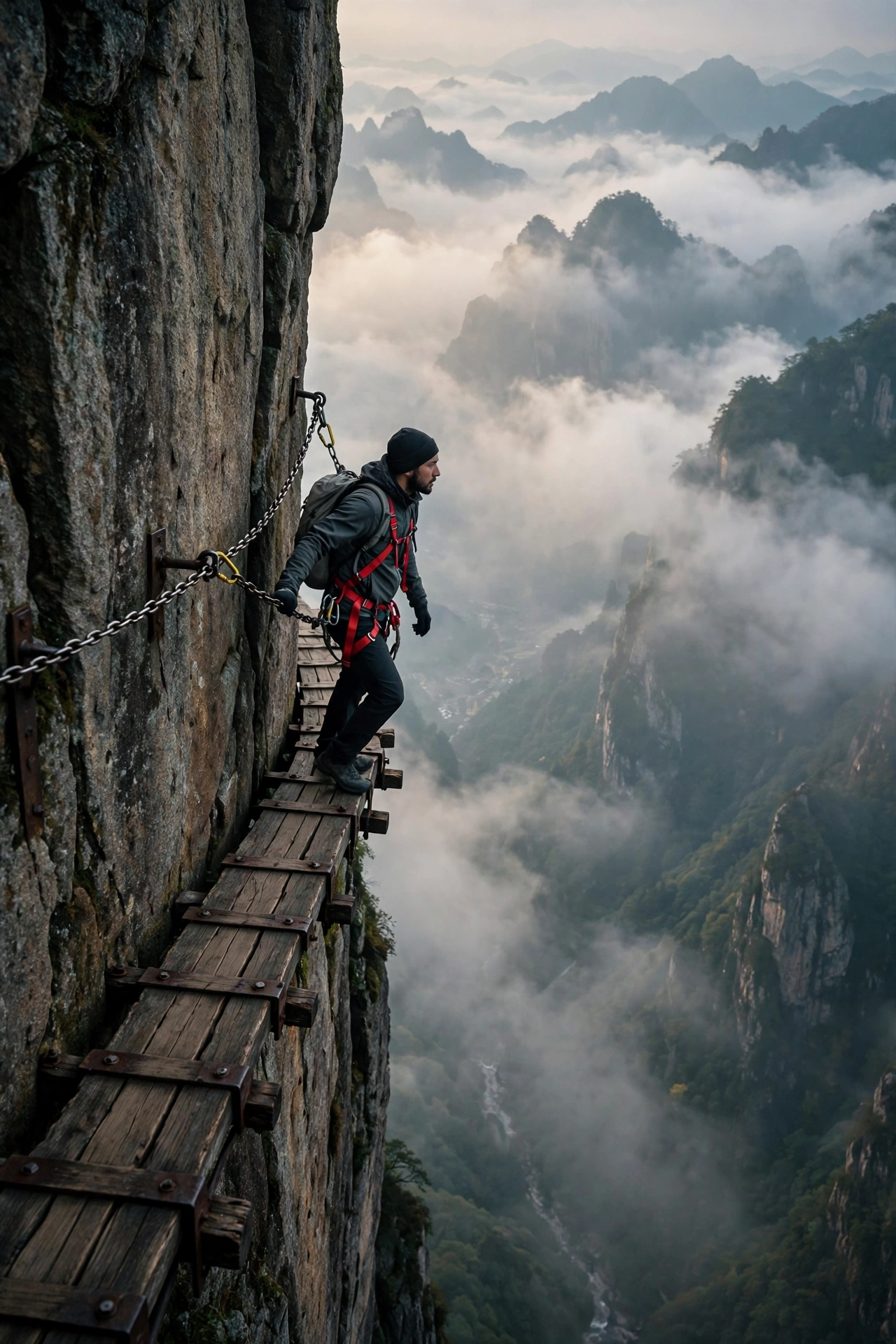
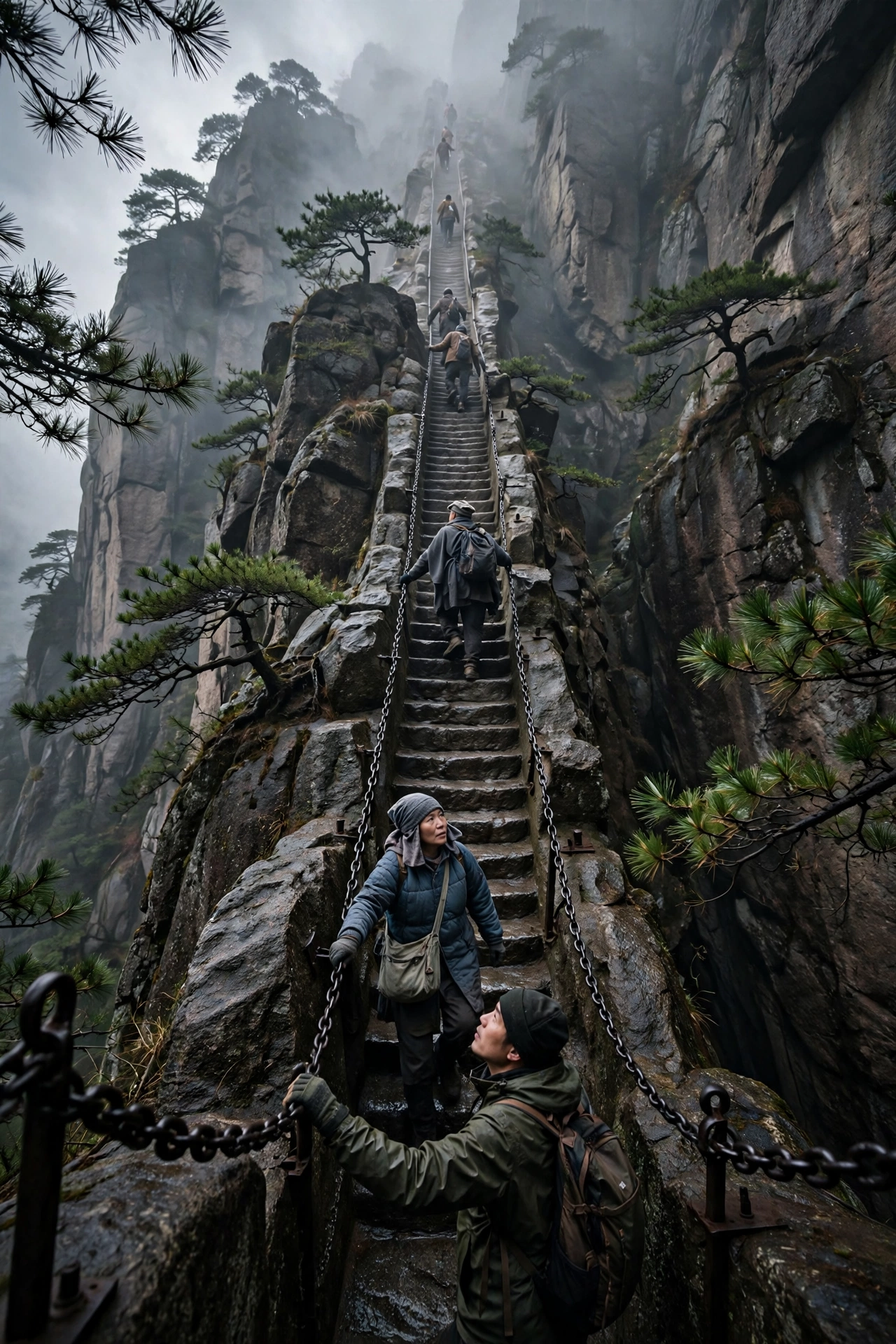
There’s a moment on Mount Huashan when the stone path simply ends. One step you’re on solid rock, gripping an iron chain like every other hiker on this sacred Chinese mountain. The next step, there is no rock. There is a wooden plank, about as wide as your foot is long, bolted into a vertical cliff face. Below it: nothing. Two thousand meters of nothing, fading into mist.
Welcome to the Chang Kong Zhan Dao, the Plank Walk in the Sky. Travel writers call it the most dangerous hiking trail in the world, and for once the hype isn’t lying. But here’s what the viral photos don’t tell you: thousands of ordinary tourists do this walk every week, the safety system is strict to the point of being annoying, and with the right preparation it might be the single most unforgettable hour of your travel life. This is the full 2026 guide: real prices, the booking rules nobody warns you about, and exactly how to survive it.
What Exactly Is the Huashan Plank Walk?
Mount Huashan sits in Shaanxi province, about 120 kilometers east of Xi’an, and it’s one of China’s Five Great Mountains. For over two thousand years it’s been a sacred Taoist site, covered in temples, shrines, and pilgrims. The mountain has five main peaks, and the tallest is the South Peak at 2,154.9 meters.
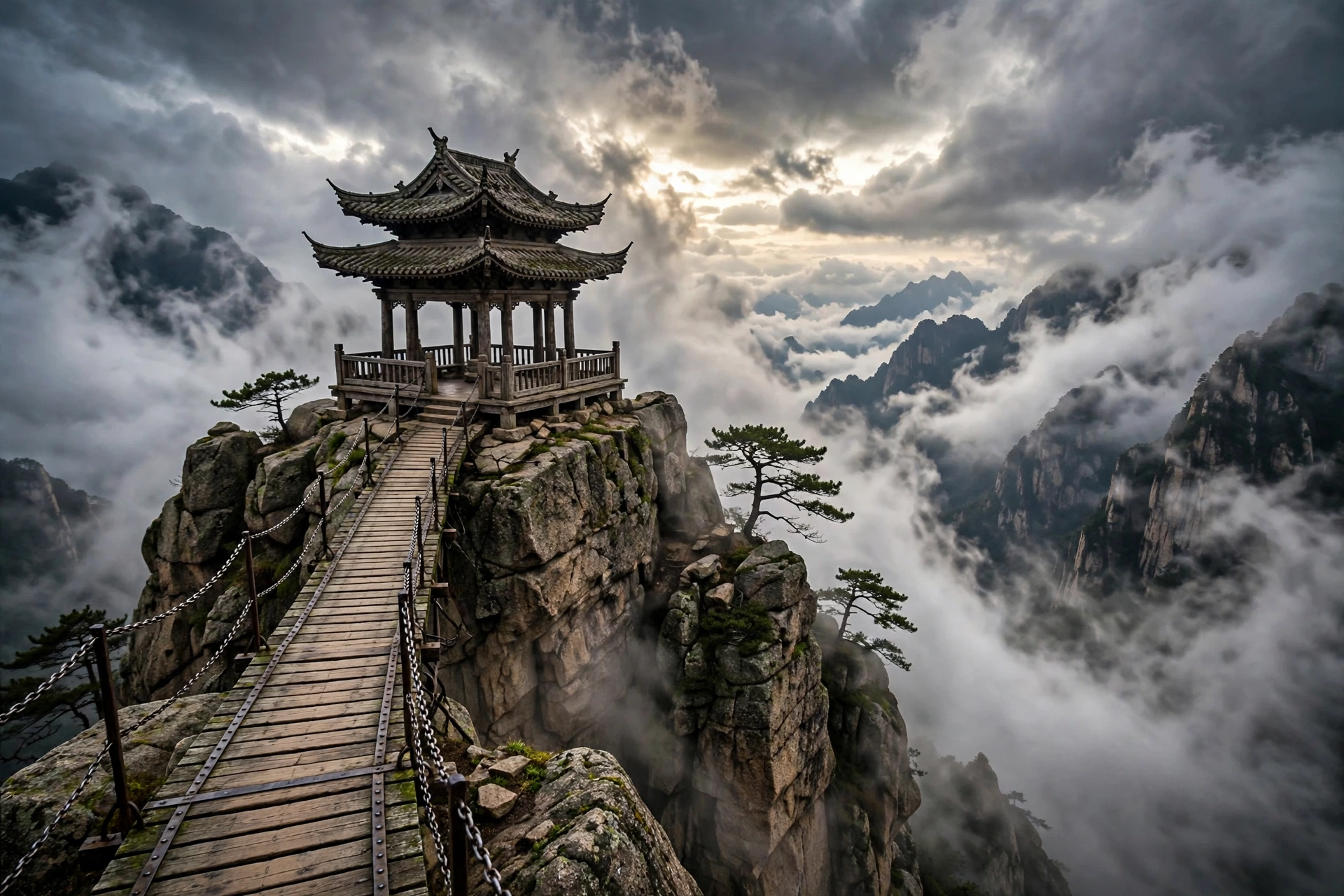
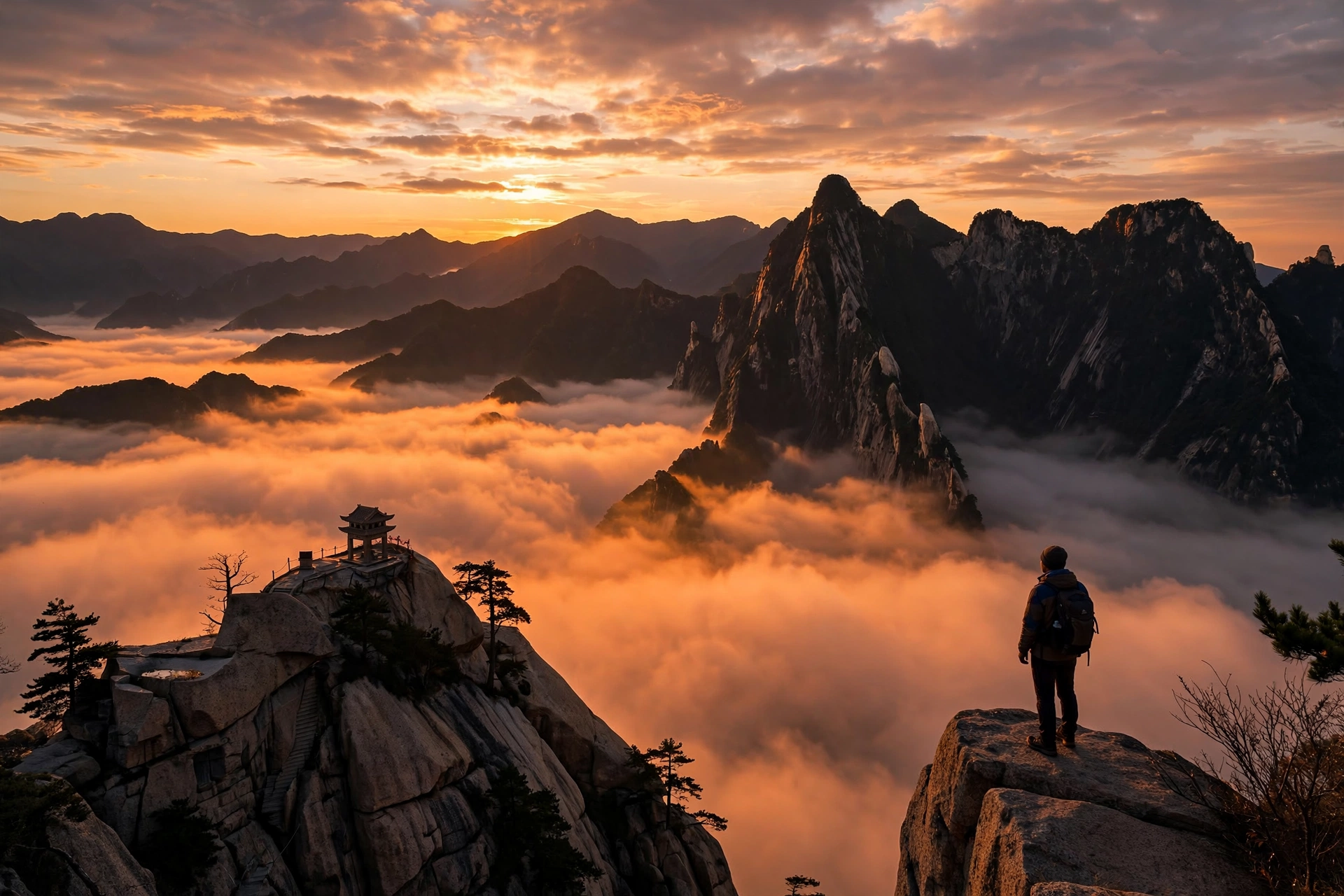
The plank walk hangs off that South Peak. It’s a traverse of roughly 100 meters where the “trail” is nothing more than wooden planks laid side by side and pinned into the cliff with iron staples. You shuffle along them sideways, facing the rock, clipped into a safety harness that’s tethered to an iron chain running the full length. At the far end sits a tiny structure called the Chess Pavilion, perched on a rock outcrop like something from a fantasy film. Then you turn around and come back the same way, because there’s no other way off.
The whole thing takes about 90 minutes round trip if you don’t count the queue. And the queue is the real boss fight here, but we’ll get to that.
The 700-Year-Old Story Behind the Planks
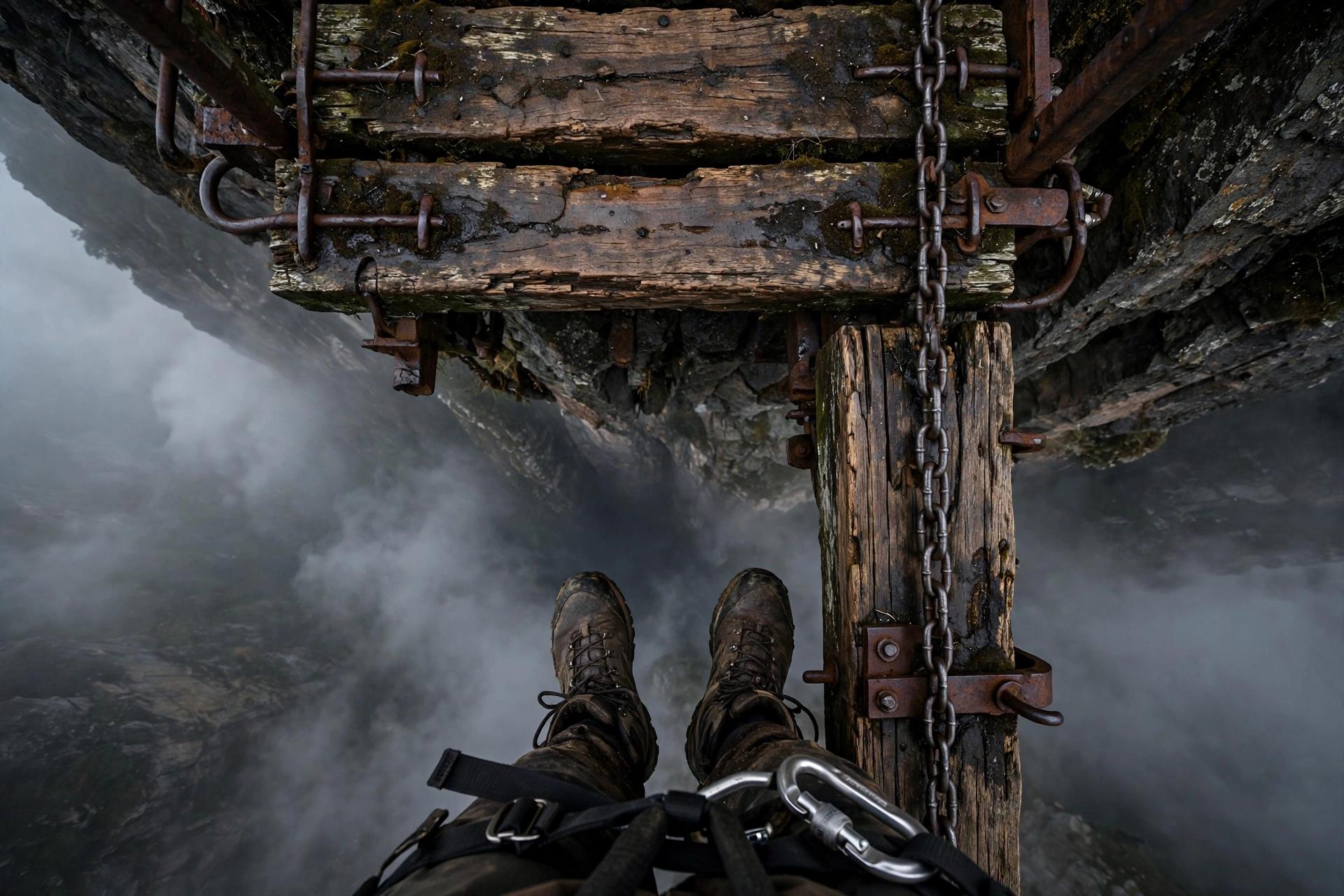
These planks weren’t built for tourists. The path dates back some 700 years, carved by Taoist hermits and monks who wanted to reach remote shrines that were otherwise unreachable. Imagine doing this without a harness, in robes, because your faith told you the mountain demanded it. The modern safety gear only arrived much later.
The little pavilion at the end carries the best legend on the mountain. According to local storytellers, the founding emperor of the Song Dynasty, Zhao Kuangyin, once played a game of chess here with the Taoist immortal Chen Tuan. The stakes: the mountain itself. The emperor lost. So if you ever wondered why a temple the size of a garden shed sits at the end of the world’s scariest walkway, now you know. An emperor gambled a mountain on a board game and lost.
Is the legend true? Probably not in the literal sense. Does it make the walk better? Absolutely.
Is It Actually Dangerous? An Honest Answer
Let’s be straight about this, because “world’s most dangerous hike” is a heavy label. The plank walk looks far more dangerous than it is for a prepared visitor, and is far more dangerous than it looks for a careless one.
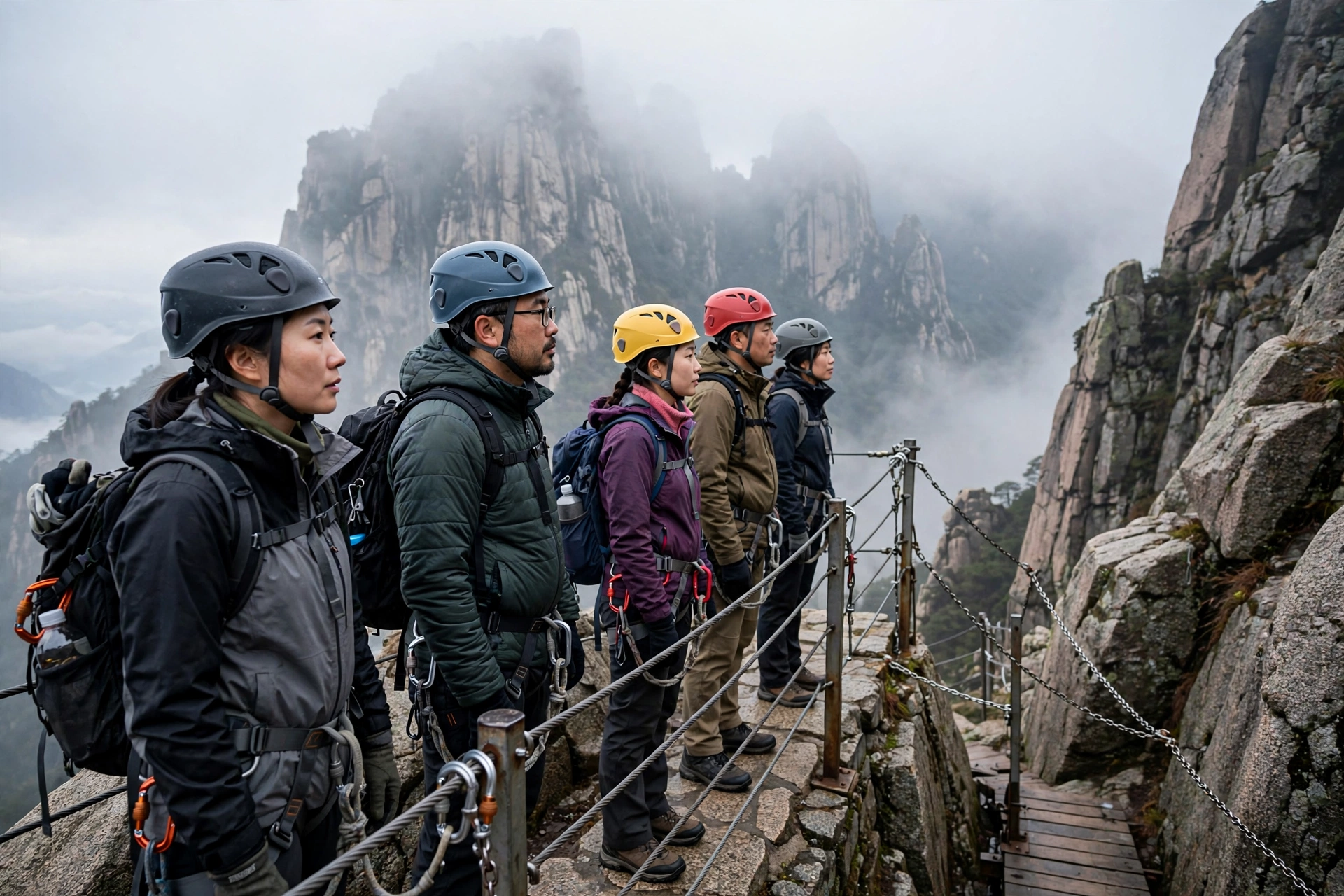
Here’s the reality. Every person on the planks wears a harness with two carabiners clipped to a fixed steel cable and chain system. You are physically attached to the mountain the entire time. The staff check your gear before you step on. The rules are strict: no going alone (you must book in groups of two or more), nobody under 150 centimeters tall, nobody over 55, no dresses, no high heels, and anyone with heart problems, high blood pressure, or a serious fear of heights is turned away.
What actually gets people into trouble is panic, rushing, and showing up unprepared. The planks are sturdy. The chains are solid. The danger is almost entirely psychological, which, to be fair, is still very real when you’re staring down two kilometers of air. If you can keep your breathing slow, keep three points of contact, and never look down until you choose to, you’ll be fine. Thousands of people do this every month. The mountain has been running this attraction for years with a safety record that keeps the crowds coming.
My honest take: if you’re reasonably fit, follow instructions, and respect the height, the plank walk is a controlled thrill, not a gamble. If you have any heart condition or you genuinely can’t function at heights, skip it without shame. The mountain has four other peaks full of incredible views that don’t require planks.
2026 Ticket Prices: What the Whole Day Really Costs
Nothing about Huashan is free, so budget properly. These are the 2026 prices for peak season (March to November). Winter (December to February) is cheaper across the board, roughly 30 to 40 percent off the entrance and cable cars.
- Mountain entrance ticket: 160 yuan (valid 48 hours)
- Mandatory shuttle bus: 40 yuan round trip
- West Peak cable car: 280 yuan round trip (140 one way), 20-minute ride, climbs 894 meters
- North Peak cable car: 150 yuan round trip (80 one way), 7 to 8 minute ride
- Plank walk harness rental: 30 yuan
- Food and water on the mountain: budget 80 to 150 yuan, prices roughly triple at altitude
A realistic day trip using the West Peak cable car runs about 640 to 770 yuan per person before food. The North Peak route is the budget option at roughly 510 to 640 yuan. Bring your own snacks and water and you’ll save real money, because a bottle of water that costs 2 yuan in town can cost 8 or more on the summit.
Student ID gets you half off the entrance ticket, which is worth knowing if it applies to you.
The Booking Game: How to Actually Get a Plank Walk Ticket
This is the part that ruins trips, so read carefully. The plank walk doesn’t just let anyone wander on. Tickets are released in limited time slots, about 30 per slot, and they sell out. In peak season the online release times are 6:30, 8:00, 10:00, 12:00, and 14:00, with check-in at 7:30, 9:30, 11:30, 13:30, and 15:30.
Practical tips that actually work:
- Book the earliest slot you can. Morning slots mean smaller crowds, better light for photos, and if the weather turns bad later, you’ve already done it.
- You can’t book solo. The rule requires groups of two or more, so pair up with a fellow traveler if you’re alone. Hostels in Xi’an are full of people heading to Huashan for exactly this reason.
- Show up early for your slot. If online ticket holders don’t arrive on time, their spots go to the standby queue, and the standby queue moves slowly. Don’t be the person watching their slot evaporate.
- Have a backup plan. If you miss your slot, queue at the ticket point anyway. No-shows happen constantly and standby tickets get released in cash for 30 yuan.
Expect to queue 1.5 to 3 hours at the plank walk entrance on busy days. Bring water, a charged phone, and patience. The queue itself has spectacular views, so it’s not dead time.
Getting There From Xi’an
Xi’an is the gateway city, and the logistics are easy. Take the high-speed train from Xi’an North station to Huashan North station. The ride is about 30 to 40 minutes and trains run constantly through the day. From Huashan North, free shuttle buses (lines 1 or 2) run to the tourist center, which is the entrance complex for the mountain.
From the tourist center, everything funnels through the mandatory shuttle buses to the cable car stations. The West Peak cableway is the newer, longer ride and drops you near the summit area, which is ideal if the plank walk is your main goal. The North Peak cableway is cheaper and closer to town, but you’ll hike uphill for hours to reach the South Peak from there. First-timers doing the plank walk should take the West Peak cable car and save their legs.
Total travel time from central Xi’an to the plank walk queue: roughly 3 to 4 hours if everything connects smoothly. Start early. Like, uncomfortably early.
The Route, Step by Step
Here’s how a plank walk day actually unfolds:
1. Tourist center to West Peak. Shuttle bus (about 40 minutes), then the 20-minute cable car ride. You’re now high on the mountain with the South Peak in reach.
2. Hike to the South Peak plank walk entrance. Follow the signs for the Chang Kong Zhan Dao. The walk between peaks involves stone steps, chain-assisted climbs, and views that keep stopping you. Budget a good hour or more, and don’t rush. Your legs will thank you later.
3. Gear up and queue. At the entrance you rent the harness (30 yuan), get clipped in by staff, and join the line. Use this time to watch how returners look: most are grinning like kids.
4. The traverse. About 100 meters out along the planks to the Chess Pavilion, then 100 meters back. Shuffle sideways, stay clipped, breathe. The first ten meters are the worst. After that your brain accepts the situation and it becomes weirdly peaceful.
5. The Chess Pavilion. Touch the little temple, take the photo, feel like a legend. This is the turnaround point and the emotional peak of the whole day.
6. The walk back and the descent. Coming back feels easier because you know what to expect. Then hike back toward the cable car, ideally timing it for sunset from the West Peak if your legs and schedule allow.
What to Wear and Bring (Don’t Skip This)
The mountain punishes bad preparation, so here’s the checklist:
- Shoes: proper hiking shoes or grippy sports shoes. This is non-negotiable. The stone steps are worn smooth by centuries of feet and get slippery.
- Clothes: layers. The base can be warm while the summit is windy and cold, even in summer. A light rain shell is smart year-round.
- Gloves: cheap work gloves or cycling gloves. You’ll be gripping iron chains all day and your hands will thank you.
- Water and food: at least 1.5 liters of water and real snacks. There are shops on the mountain but you’ll pay triple.
- Phone: fully charged, plus a power bank. You’ll take 300 photos and the cold drains batteries.
- Cash: small bills. Some mountain vendors and the standby plank walk queue still prefer cash.
- What NOT to bring: a big backpack (it throws your balance on narrow sections), dresses, skirts, or anything with heels. The plank walk staff will literally turn you away.
Best Time to Go
Peak season (March to November) has the best weather and the longest operating hours, but also the biggest crowds. If you can choose, aim for April, May, September, or October: mild temperatures, clearer skies, and thinner crowds than the summer crush.
Winter is dramatically cheaper and beautifully empty, with snow-dusted peaks that look unreal. But cable car hours shrink, some paths ice over, and the plank walk can close in bad weather. Check conditions before committing to a winter trip.
For the plank walk specifically, morning is king. The light is softer, the air is clearer before the afternoon haze builds, and the queues are shortest. An early slot also gives you a buffer if weather delays things.
Photography Tips for the Plank Walk
You’ll want photos, obviously. A few hard-won tips:
- Secure your phone. Use a wrist strap or a zippered pocket. Dropping a phone from the planks means it’s gone forever, and reaching for a falling phone is how accidents happen.
- Shoot on the way back. You’re calmer, you know the footholds, and the light is often better. The way out is for surviving; the way back is for photos.
- The Chess Pavilion is the money shot. Frame it with the void below and the peaks behind. Vertical format works beautifully here for phone wallpapers and Pinterest.
- Don’t block the line. Everyone behind you wants the same photo. Take your shots, then keep shuffling. The staff will hurry you along anyway.
If cave and mountain photography is your thing, the same principles apply underground. Our guide to photographing caves covers low-light shooting that transfers surprisingly well to misty dawn summits.
Who Should Skip the Plank Walk
Not everyone should do this, and that’s fine. Skip it if you have a heart condition, high blood pressure, or severe vertigo. Skip it if you’re over 55 or under 150 centimeters, because the staff will skip you anyway. Skip it in high winds, heavy rain, or ice unless the staff explicitly confirm it’s open and safe.
And here’s the one nobody says out loud: skip it if the idea makes you feel sick rather than excited. There’s a difference between healthy fear and genuine dread. Mount Huashan has five peaks of stunning temples, sunrise viewpoints, and cliffside trails that don’t involve planks. You’ll still have an incredible day.
A Sample One-Day Itinerary
6:00 – High-speed train from Xi’an North to Huashan North.
7:30 – Shuttle to the tourist center, buy entrance ticket, board the West Peak shuttle bus.
8:30 – West Peak cable car up. The 20-minute ride is a thrill on its own.
9:30 – Hike toward the South Peak, soaking in the ridge views.
11:00 – Plank walk slot. Gear up, queue, traverse, touch the Chess Pavilion, come back changed.
13:30 – Lunch at a summit restaurant. You’ve earned the overpriced noodles.
15:00 – Explore the East Peak and its famous sunrise platform (great even at midday).
17:30 – Sunset from the West Peak if energy allows, then cable car down.
19:30 – Shuttle back, train to Xi’an, collapse into bed.
It’s a long day, but it’s the kind of long day you talk about for years.
How Huashan Compares to Other Thrill Hikes
China is having a moment for heart-stopping mountain experiences. If Huashan leaves you hungry for more, the surreal quartzite pillars of Zhangjiajie National Forest Park, the real-life inspiration for Avatar’s floating mountains, deliver a different kind of vertical drama with its 430-meter glass bridge. And if high-altitude trekking is your thing, the restricted trails of Upper Mustang in Nepal, which just slashed its permit fees for 2026, offer remoteness that makes Huashan’s crowds feel like a distant memory.
But for pure, concentrated, plank-by-plank adrenaline, nothing touches Huashan. It’s not the highest, not the longest, and not the most remote. It’s just the one where the trail is a piece of wood bolted to a cliff, and that’s enough.
Quick Answers Before You Go
How long is the plank walk? About 100 meters each way, roughly 90 minutes round trip plus queue time.
How much does it cost? The harness rental is 30 yuan. The full day (entrance, shuttles, West Peak cable car) runs about 640 to 770 yuan per person in peak season.
Can I do it alone? No. Bookings require groups of two or more. Team up with a fellow traveler.
Is there an age limit? Yes. Over 55s can’t book, and children under 150 centimeters are not allowed.
Has anyone fallen? The mandatory harness and fixed-chain system makes falls extremely unlikely for anyone following the rules. Take the safety briefing seriously and you’ll be fine.
Do I need to book in advance? Strongly recommended. Only about 30 tickets are released per time slot and they sell out, especially on weekends and holidays.
Planning more adventures? Follow The Cavee on Pinterest for daily thrill guides, unreal destinations, and travel ideas worth the climb. Read Full Story on thecavee.com.