The World’s Largest Ice Cave Is in Austria, and It Closes November 1 (So Hurry)
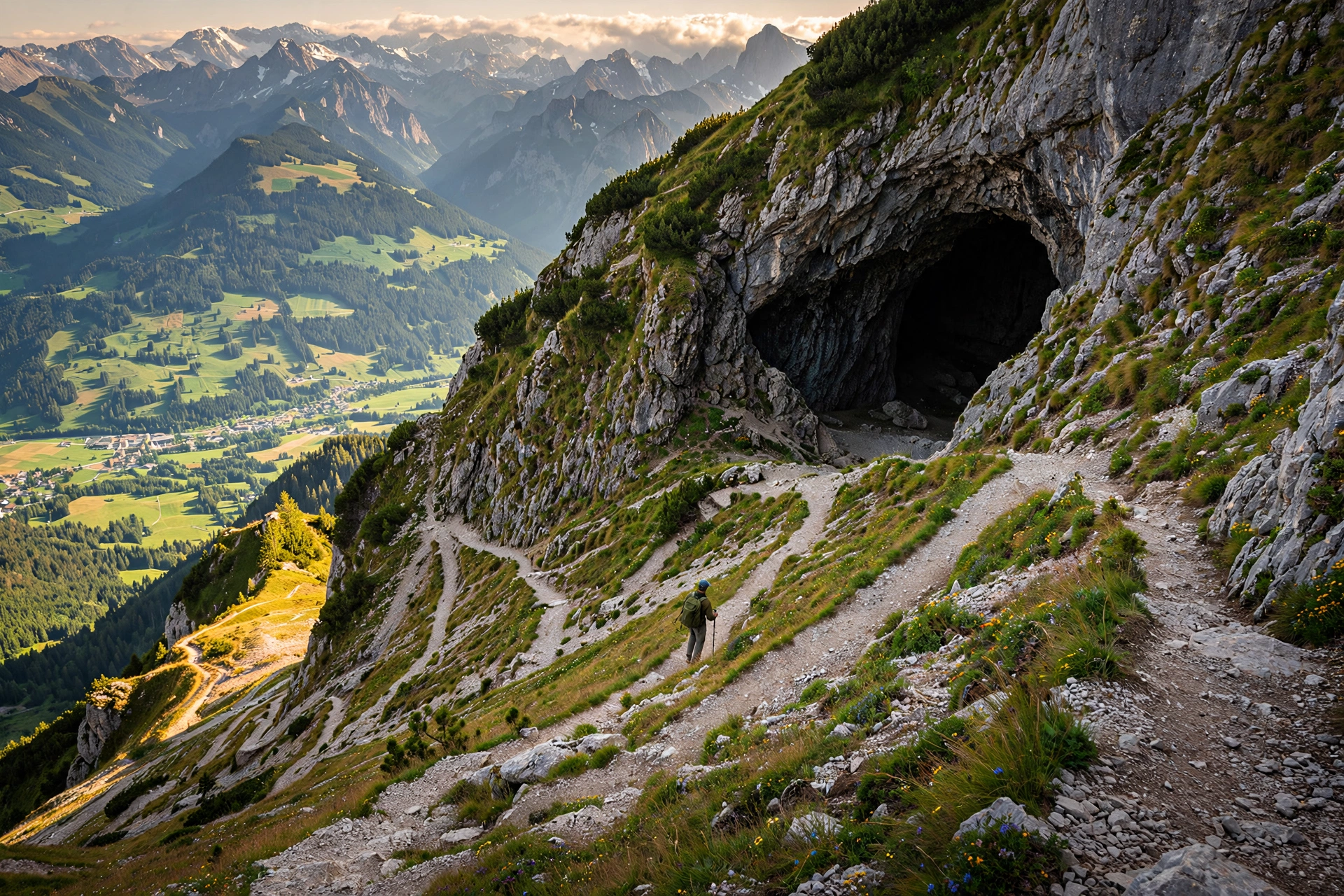
There is a moment, about twenty minutes into the walk, when the path bends around a slab of grey limestone and the mountain simply opens its mouth. A black hole, twenty meters wide, stares out of the rock face. Cold air pours out of it like water from a broken dam. It is August, it is thirty degrees in the valley below, and you are standing in front of winter.
That is Eisriesenwelt. It means “World of the Ice Giants” in German, and once you step inside, you understand why nobody ever tried to come up with a more creative name.
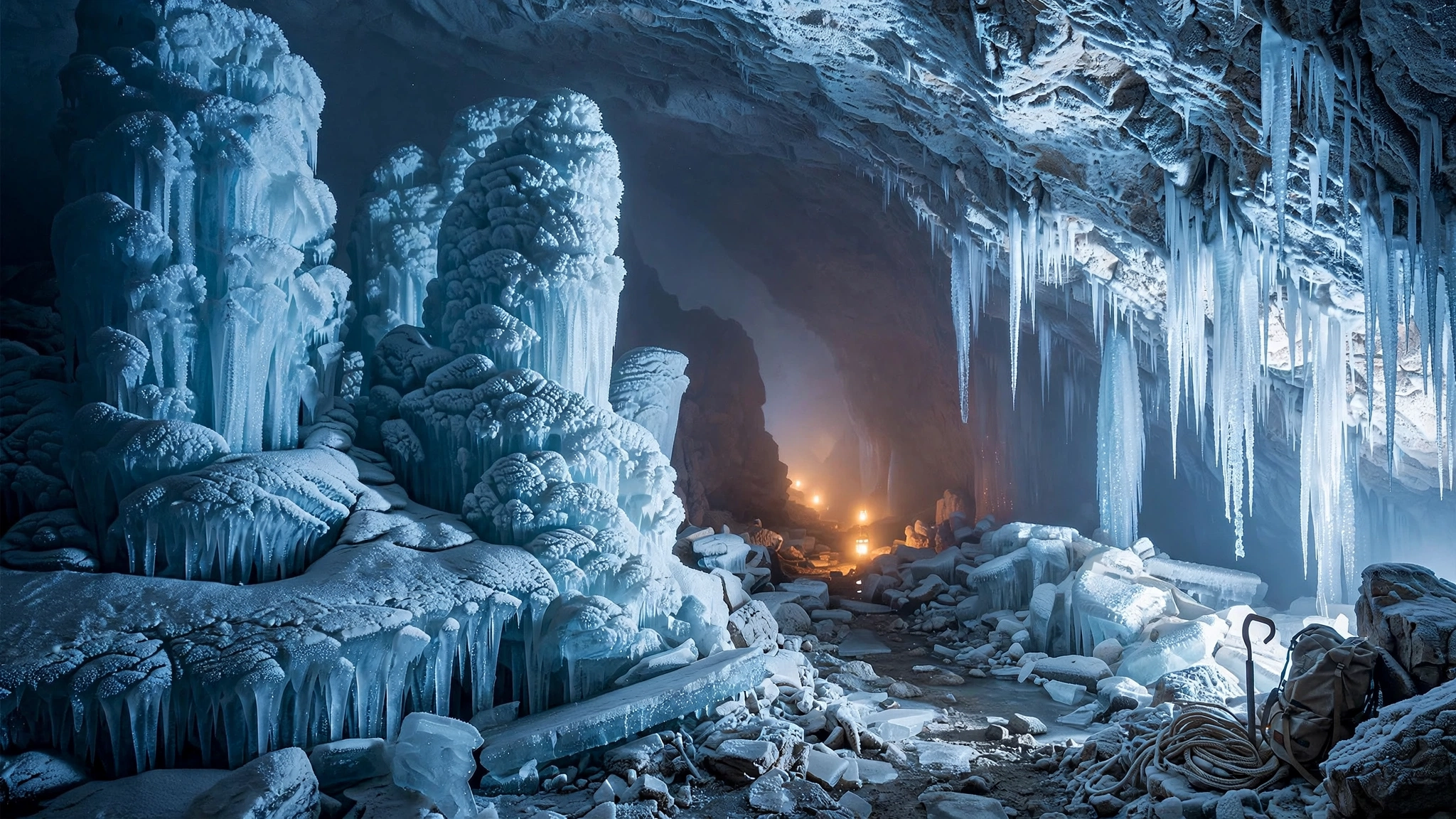
This is the largest ice cave on Earth. Not the largest ice cave in Austria, or in Europe. On Earth. Forty-two kilometers of limestone mountain hollowed out by an ancient river, and the first kilometer packed with ice formations so enormous they have their own names. And here is the part most people miss: the cave closes for winter on November 1. If you want to see it this year, you have weeks, not months.
What Eisriesenwelt Actually Is
Eisriesenwelt sits inside the Hochkogel mountain in the Tennengebirge range, about forty kilometers south of Salzburg, near the small town of Werfen. The whole system runs more than 42 kilometers, though only the first kilometer is open to visitors. The rest is raw limestone cave, the kind cavers dream about and the rest of us are better off reading about.
The cave was discovered in 1879 by a local naturalist named Anton Posselt, who walked in alone and must have wondered if he had lost his mind. It opened as a show cave in 1920, and today around 200,000 people a year make the climb up to see it. That is a lot of visitors for a cave you can only enter for half the year.
The ice itself is a weather trick. Eisriesenwelt is what geologists call a dynamic ice cave. In winter, freezing wind blows into the cave through the entrance and freezes every bit of snowmelt that has drained in. In summer, a cold wind blows the other way, out of the cave toward the entrance, and it keeps the whole frozen system from melting. The ice down there is thousands of years old and up to 25 meters thick in places. It rebuilds itself every winter. Nobody maintains it. The mountain does the work.
This Is Not a Normal Cave Tour
Most show caves on this planet have electric lighting, smooth paved paths, and handrails everywhere. Eisriesenwelt has none of that, and that is exactly the point.
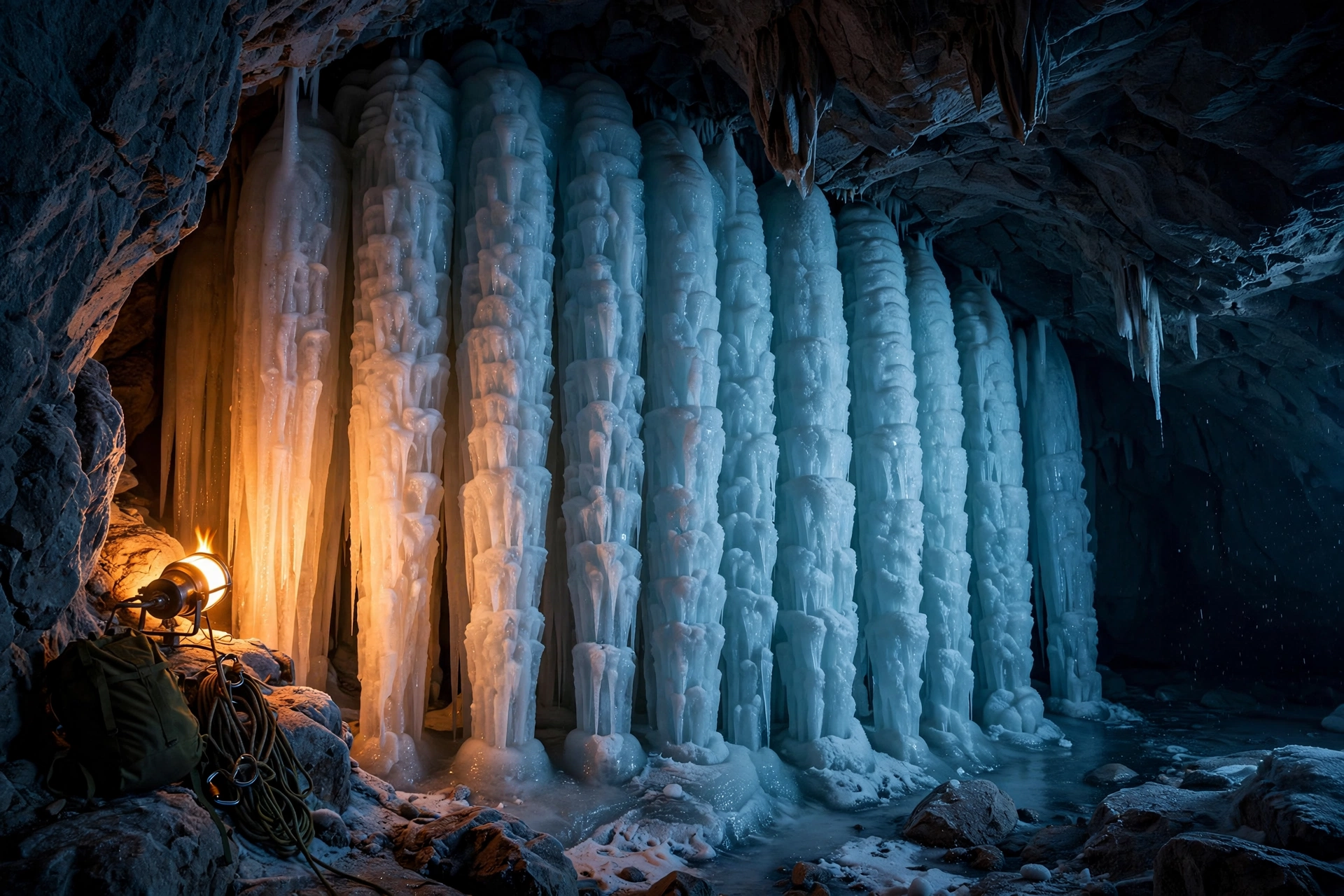
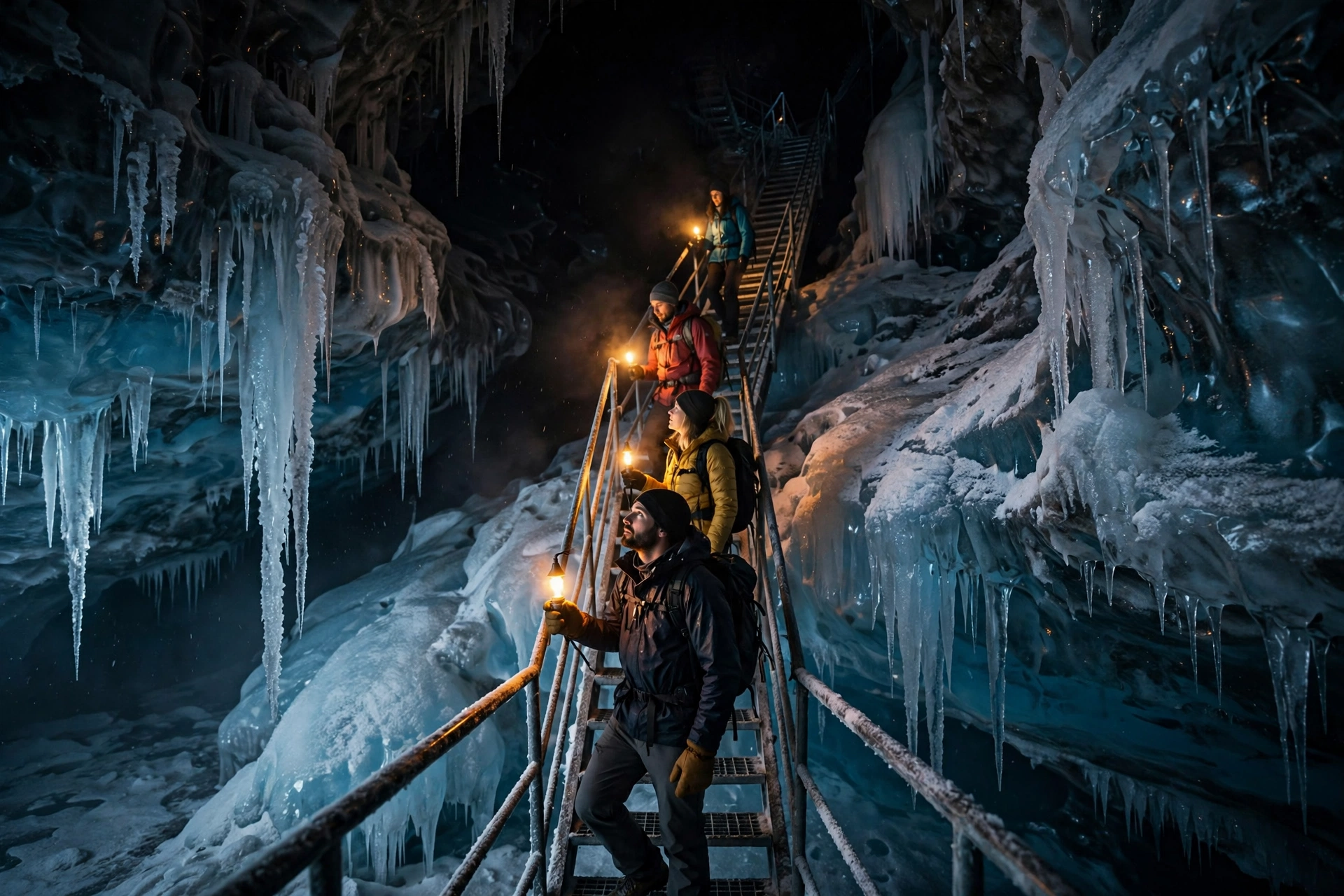
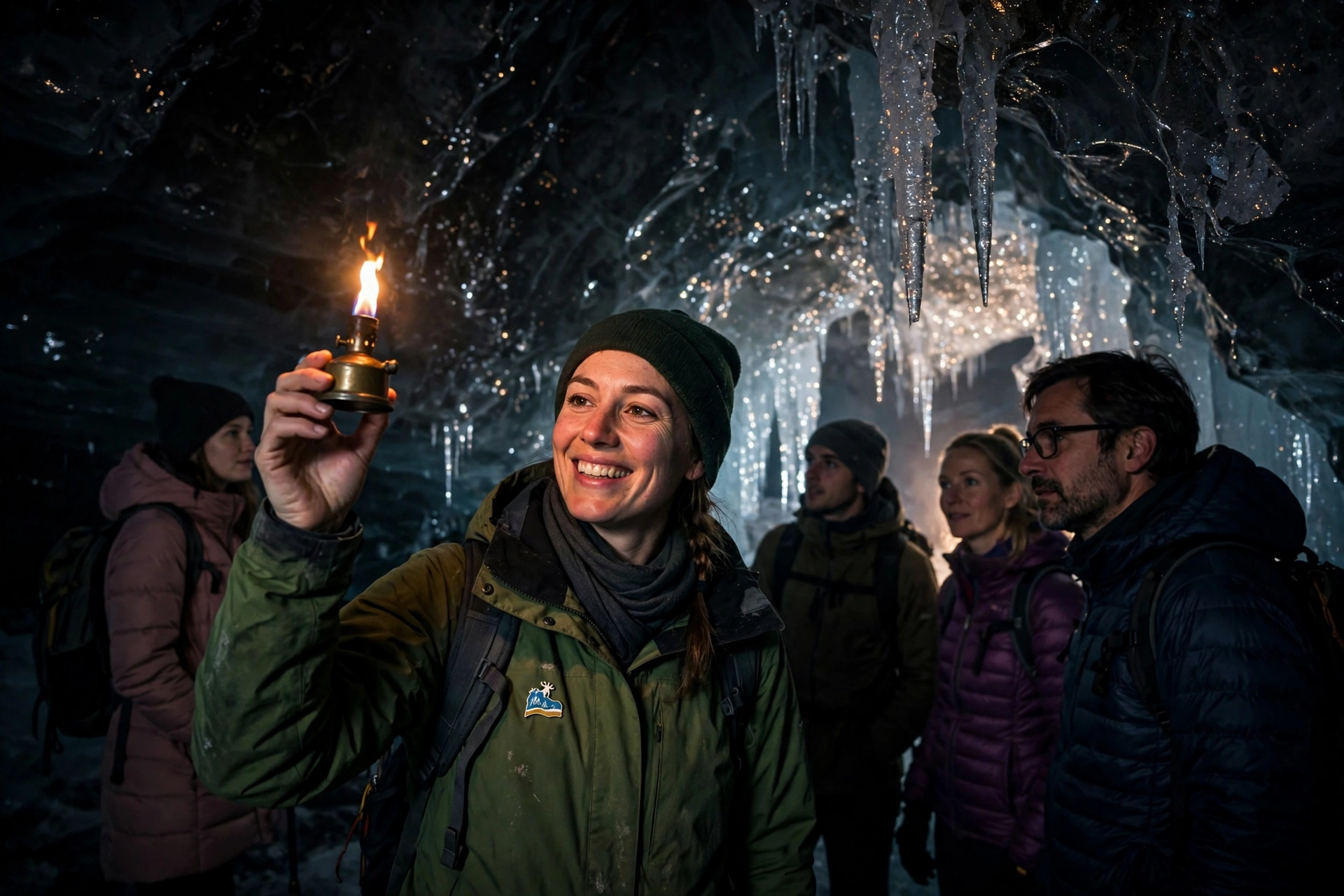
There is no electricity in the cave. None. Your tour group, usually fifteen to thirty people, walks in behind a guide who carries lamps, and then more lamps get handed out, roughly one carbide lamp for every four visitors. The cave is lit by flickering carbide and magnesium light, the same kind of light the first explorers carried in 1879. That is not a gimmick. That is how they do it, every single tour, and it turns the whole experience into something closer to a polar expedition than a tourist attraction.
One guide lights a magnesium ribbon and it burns with a harsh white glare, and for thirty seconds the ice formations around you go from ghostly blue to blinding silver. Then it fades, the lamps take over again, and the cave goes back to looking like the inside of a dream.
The guided tours run every half hour from 9:30 in the morning until 3 in the afternoon, with the last tour heading in at 3:45. There are English and German groups. You cannot wander off on your own. This is a mountain cave with ice, drops, and 1,400 steps, and the guides are not being dramatic about the rules.
The Formations You Will Actually See
The tour covers about one kilometer, and it climbs roughly 130 meters as it goes, which your legs will notice. Along the way you pass formations with names that sound like they belong in a saga.
Hymir Hall is the big one, a vast chamber of ice named after a frost giant from Norse myth. The ice walls here rise like frozen waterfalls caught mid crash. The Ice Gate is a narrow passage of blue-white ice that squeezes the whole group into single file. The Ice Organ is exactly what it sounds like, a row of towering vertical ice pipes, each one meters tall, standing side by side like the world’s coldest church instrument. And the Alexander von Mork Dome is a cathedral-sized chamber where the ice has been building for so long it looks carved.
The color is the thing nobody can describe properly until they see it. Thin sections of ice glow blue, the deep compressed blue you only get when air bubbles have been squeezed out over centuries. Thicker sections are white and grey. The lamp light catches edges and turns them gold. Photos do not do it justice, which is convenient, because you are not supposed to take them anyway. More on that later.
Getting There Without Regret
Eisriesenwelt is a day trip from Salzburg, and it is an easy one to get wrong if you do not plan the morning. Here is the honest version.
If you are driving, take the A10 south from Salzburg and follow the signs to Werfen, then to Eisriesenwelt. The road up from the village is narrow and climbs steeply, so take it slow. Park at the visitor center, which costs a few euros for the day, and buy your tickets at the info center. The ticket office opens at 8:30 in the morning.
If you are coming by train, ride to Werfen station from Salzburg, about a forty minute trip, then catch the local bus (line 670) that runs up to the Eisriesenwelt cable car station. It is a short ride. Check the bus schedule the night before, because it shifts with the season.
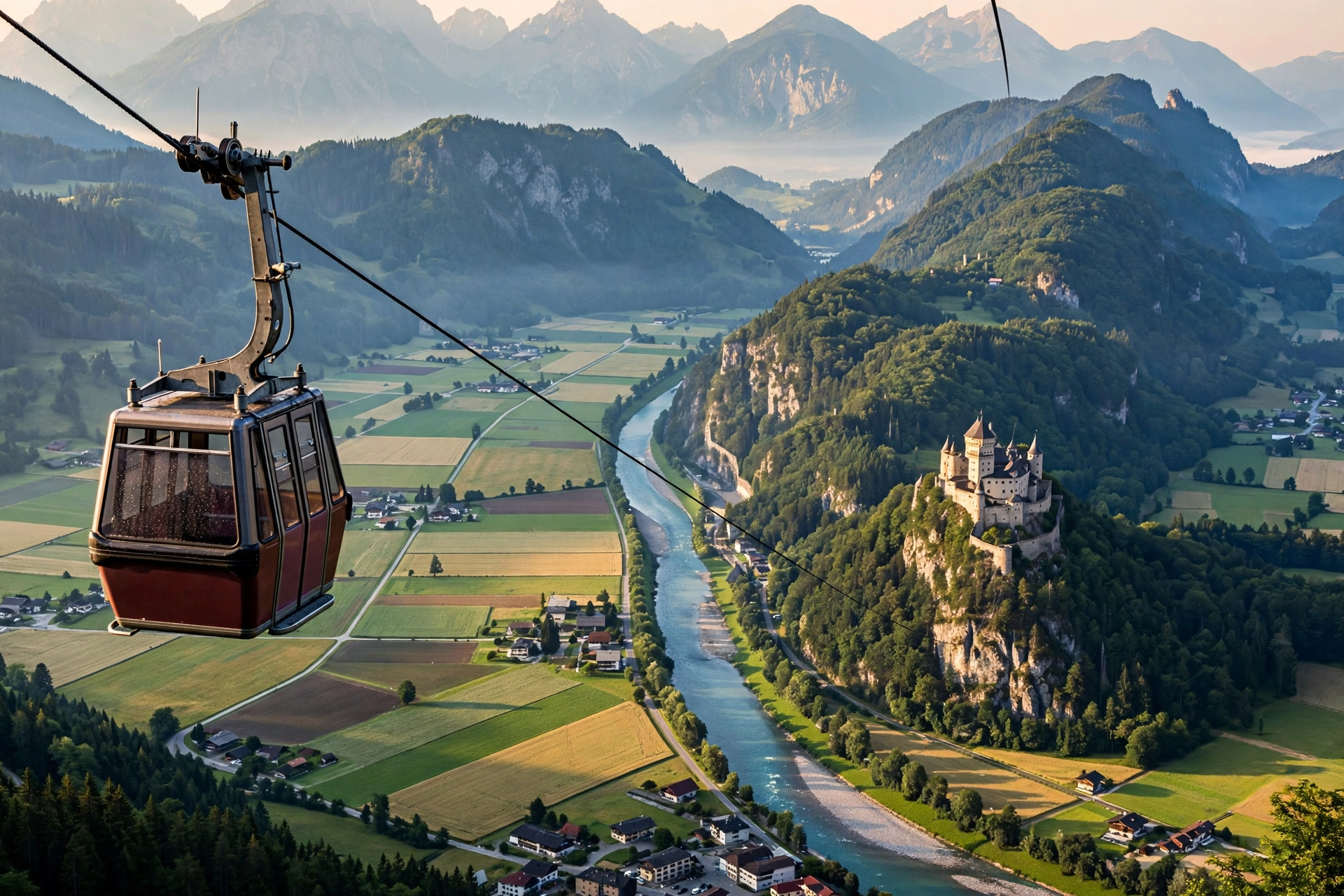
Now the part that matters. From the valley station, a cable car lifts you to around 1,600 meters, and the ride itself is worth the ticket, with the Salzach valley and Hohenwerfen Castle spread out below you. Then comes a twenty minute walk up a steep zigzag path to the cave entrance at about 1,665 meters. It is not a gentle stroll. People who skip breakfast regret it.
The Ticket Situation
You buy one combined ticket that covers the cave and the cable car, and current travel guides put it at around 24 euros for an adult. If you are the hiking type, you can skip the cable car and walk the whole way up, which takes about an hour and a half and saves you nothing but gives you the views. There is also a shuttle option some visitors use, and it costs extra, so ask at the ticket office before you assume anything is included.
Here is the problem most visitors run into. The cave is only open from May 1 to November 1. In 2026, that means you are reading this with roughly four weeks left in the season. The mountain closes the cave every winter, and not for maintenance. The entrance is sealed to preserve the cold. Snow buries the paths, avalanche risk climbs, and the daylight dies. When the ice giants close their doors, they mean it.
So if this is on your list, go this month. October visits are actually fantastic. The summer crowds thin out, the alpine air is sharp, and the cable car ride in autumn colors is something else.
The Climb Is Half the Adventure
Let us be blunt. This trip is physical. The twenty minute walk from the cable car to the entrance is steep. Then inside the cave you climb about 1,400 steps with a 130 meter elevation gain, in near freezing air, by lamplight. Your calves will file a complaint.
People of average fitness handle it fine, and the tour moves at a guided pace with stops. But if you have cardiovascular issues, talk to your doctor first, and if you have small children, know that the cave is genuinely not recommended for kids under five. It is cold, it is dark, the steps are real steps, and there is no shortcut back to the entrance once you are in. Older travelers do this tour every day in summer, so age alone is not the question. Stamina is.
The practical checklist: sturdy shoes with grip, because ice caves are wet in places. A warm jacket, hat, and gloves, even if it is thirty degrees in the valley. The temperature inside hovers right around freezing, sometimes a degree or two below. A thin base layer under the jacket makes the whole tour comfortable instead of a shivering endurance test.
Rules Nobody Warns You About
First, the tour is guided only. There is no self-guided option, no wandering ahead of the group, no lingering behind for “just one more minute.” The guides keep count, and they should.
Second, photography. This is the one that surprises people. Multiple travel guides report that photography is not allowed inside the cave on the tour. Policies can shift with the season, so ask your guide before you sneak the phone out. The honest advice: plan your cave memory to live in your head, and save the camera for the mountain outside, where the views are completely fair game.
Third, the lamps. You will be handed a carbide lamp, maybe shared between your group. Do not swing it, do not try to pocket it as a souvenir, and do not worry about it going out. The guides have been doing this for decades.
Fourth, the entrance draft. When the wind is moving, gusts at the cave mouth can hit hard. Hold onto hats, hold onto kids, and do not be the person who learns this the loud way.
Why October Might Be the Best Month to Go
Everyone crowds into Eisriesenwelt in July and August. That is fine, but October has a quiet case for being better.
The tours run with smaller groups, so the lamp light feels more personal and the guide has time for questions. The cable car queue is short. The valley below is turning gold and rust. And there is a psychological bonus: knowing the cave closes on November 1 makes the whole visit feel like you caught something rare. Which you did. Two hundred thousand people visit a year, but only a fraction of them get the autumn light on the walk up.
One more thing about timing. Morning tours are best. The ticket center opens at 8:30, the cable car starts running at 8:45, and the first cave tours head in at 9:30. Go early, and you get the mountain to yourself before the day trip buses arrive. An early tour also leaves your afternoon free for the second half of the perfect Werfen day.
Making a Day of It
Do not drive back to Salzburg right after the cave. You are already at 1,600 meters, and the mountain wants to feed you.
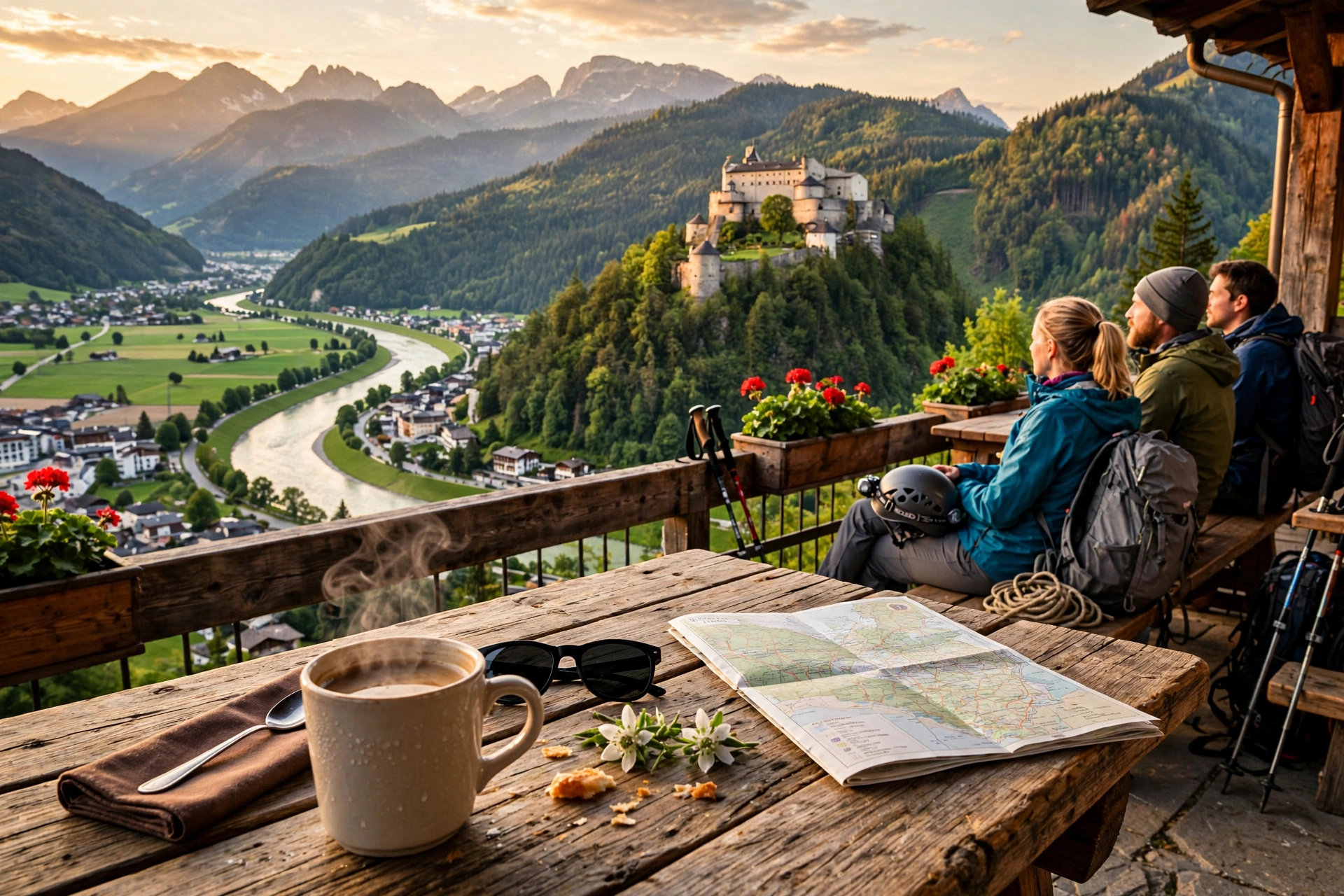
Right by the cable car top station sits the Dr. Oedl House, a mountain restaurant with a terrace that looks straight down the Salzach valley. After two hours of freezing air and staircases, a hot coffee or a bowl of soup up there tastes like a reward you actually earned. On a clear day you can see Hohenwerfen Castle on its hilltop below, the same castle you probably spotted from the cable car.
If you have the legs left, the castle itself is worth the detour on the way down. It is a medieval fortress with falconry shows and genuinely dramatic views, and here is a fun fact for the ride back: scenes from The Sound of Music were filmed around Werfen. You have been walking through movie scenery all day without knowing it.
The Honest Summary
Eisriesenwelt is not the easiest cave to visit. It is not the cheapest. It will make your legs ache and your fingers go numb if you forget gloves. But it is the largest ice cave in the world, lit the way it was lit in 1879, sitting in a mountain that rebuilds its own ice every winter, and it closes its doors on November 1.
Some places are worth the stairs. This is one of them.
Planning a cave trip? If underground worlds are your thing, read about Son Doong, the cave so big it has its own weather system, drift through New Zealand’s Waitomo glowworm caves, and learn how to photograph caves without fancy gear. For verified facts on Eisriesenwelt, see the Wikipedia entry on Eisriesenwelt and this first-hand visitor guide to the Werfen ice caves.
Follow The Cavee on Pinterest for more underground adventures, and read the full story on thecavee.com.