The Kākāpō Used to Fly: Inside New Zealand’s Moa Eggshell Cave, Where a Million-Year-Old Lost World Was Just Found
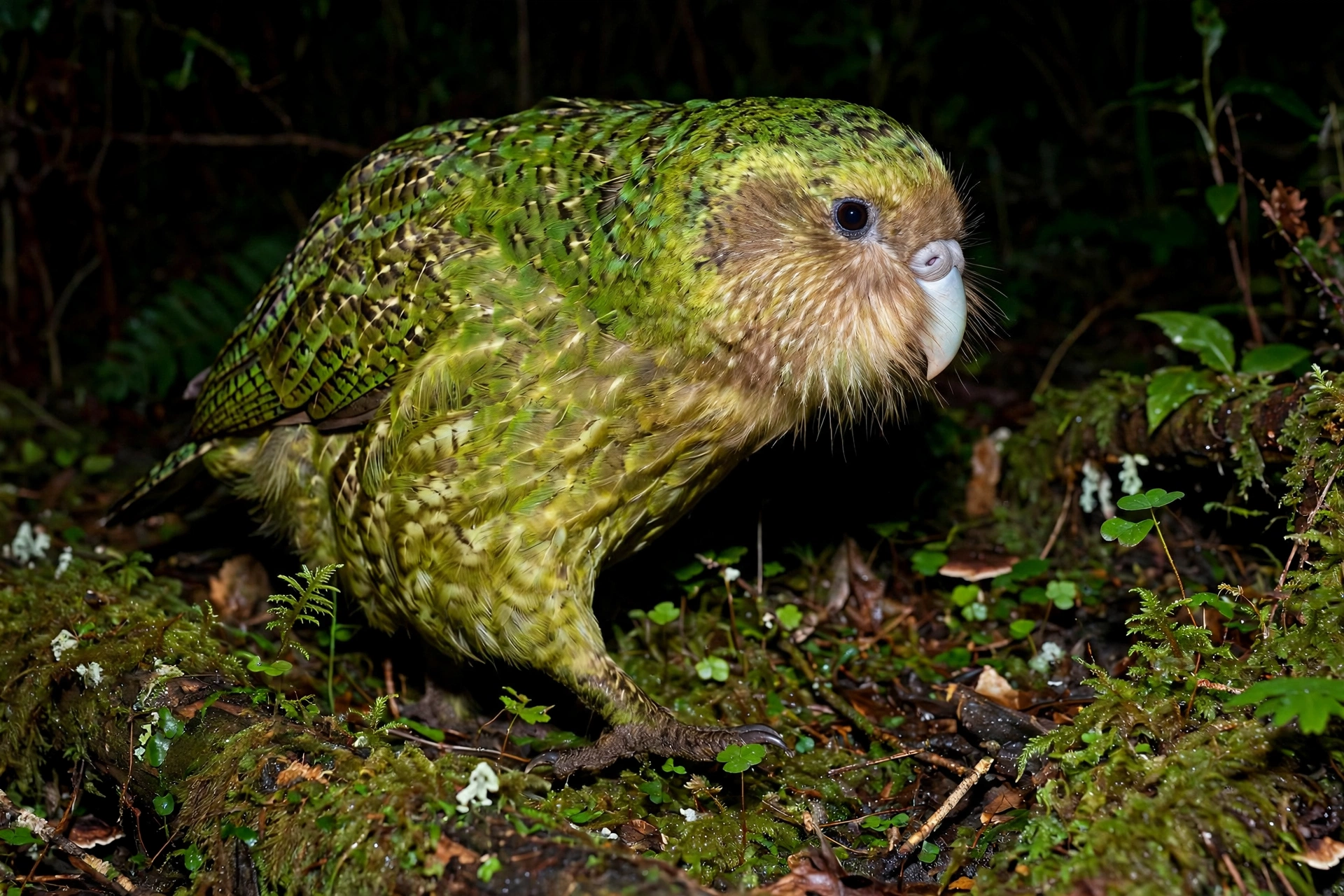
The kākāpō is the strangest parrot on Earth. It is flightless, nocturnal, the color of wet moss, and heavy enough that when one fell out of a tree during a BBC documentary shoot in 2009, it landed on zoologist Mark Carwardine’s head and tried, famously, to mate with him while Stephen Fry laughed in the background. Sirocco the kākāpō became an internet legend that day. But here is the part nobody expected: Sirocco’s ancestors could probably fly.
Scientists say so now because of bones pulled out of a cave in New Zealand’s North Island. The cave had been sitting there since the 1960s, ten minutes’ drive from one of the most famous cave systems in the world, and nobody thought to look properly inside it. When they finally did, in a 2026 study, they found a lost world sealed in volcanic ash for a million years. Twelve extinct bird species. Four extinct frogs. And a brand-new parrot species that may rewrite the story of the world’s most beloved flightless bird.
This is the story of Moa Eggshell Cave, the flying ancestor of the kākāpō, and why a million-year-old hole in the ground might help save a bird that is barely hanging on today.
The Cave Everybody Walked Past for 60 Years
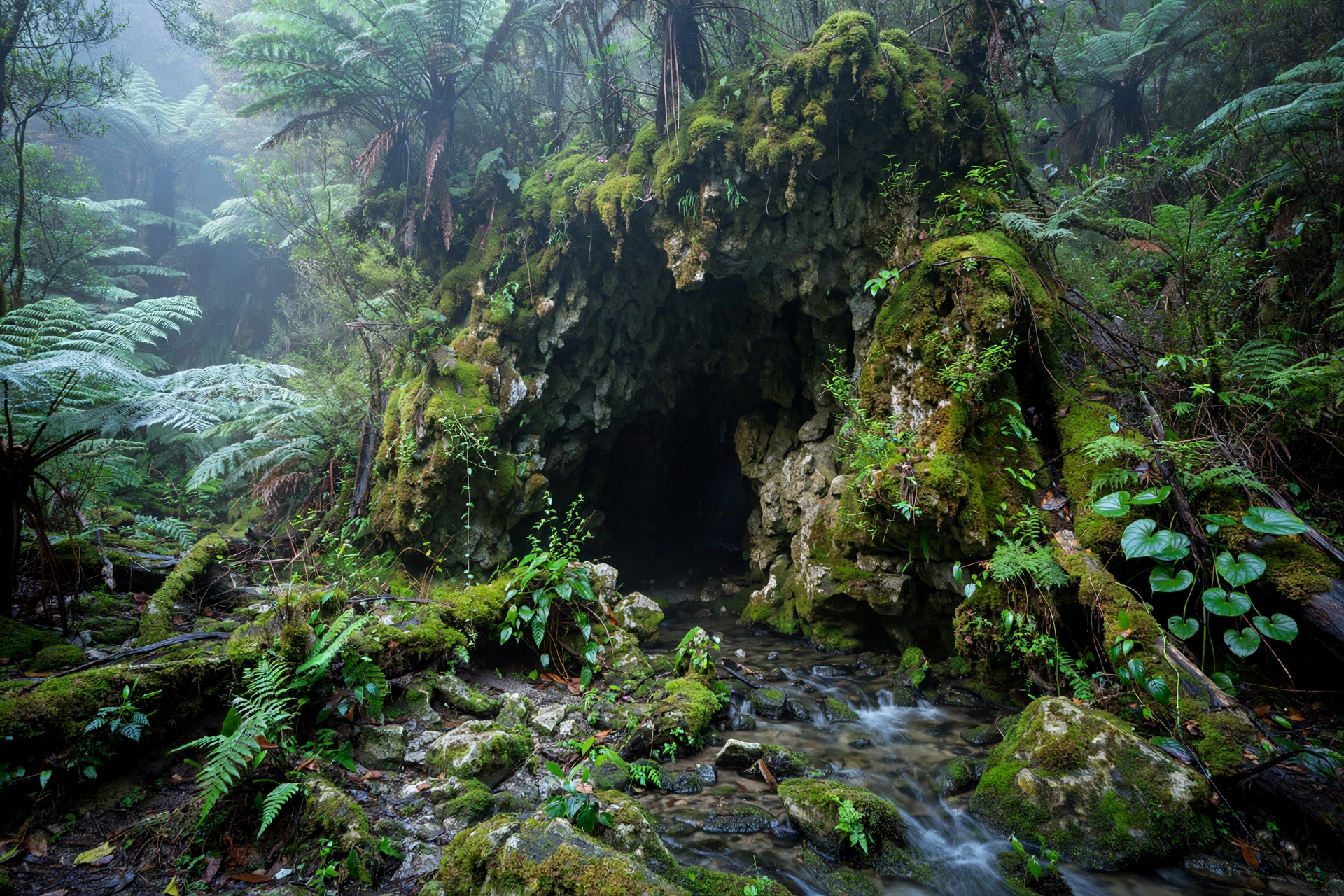
Moa Eggshell Cave sits on New Zealand’s North Island, not far from the Waitomo Caves. You know Waitomo even if you have never been to New Zealand: the boat ride through a grotto where the ceiling glitters with thousands of glowworms, like someone threw a handful of stars at the dark. Millions of visitors have floated under those glowworms over the decades. Almost none of them knew that a few valleys over, another cave was keeping a much older secret.
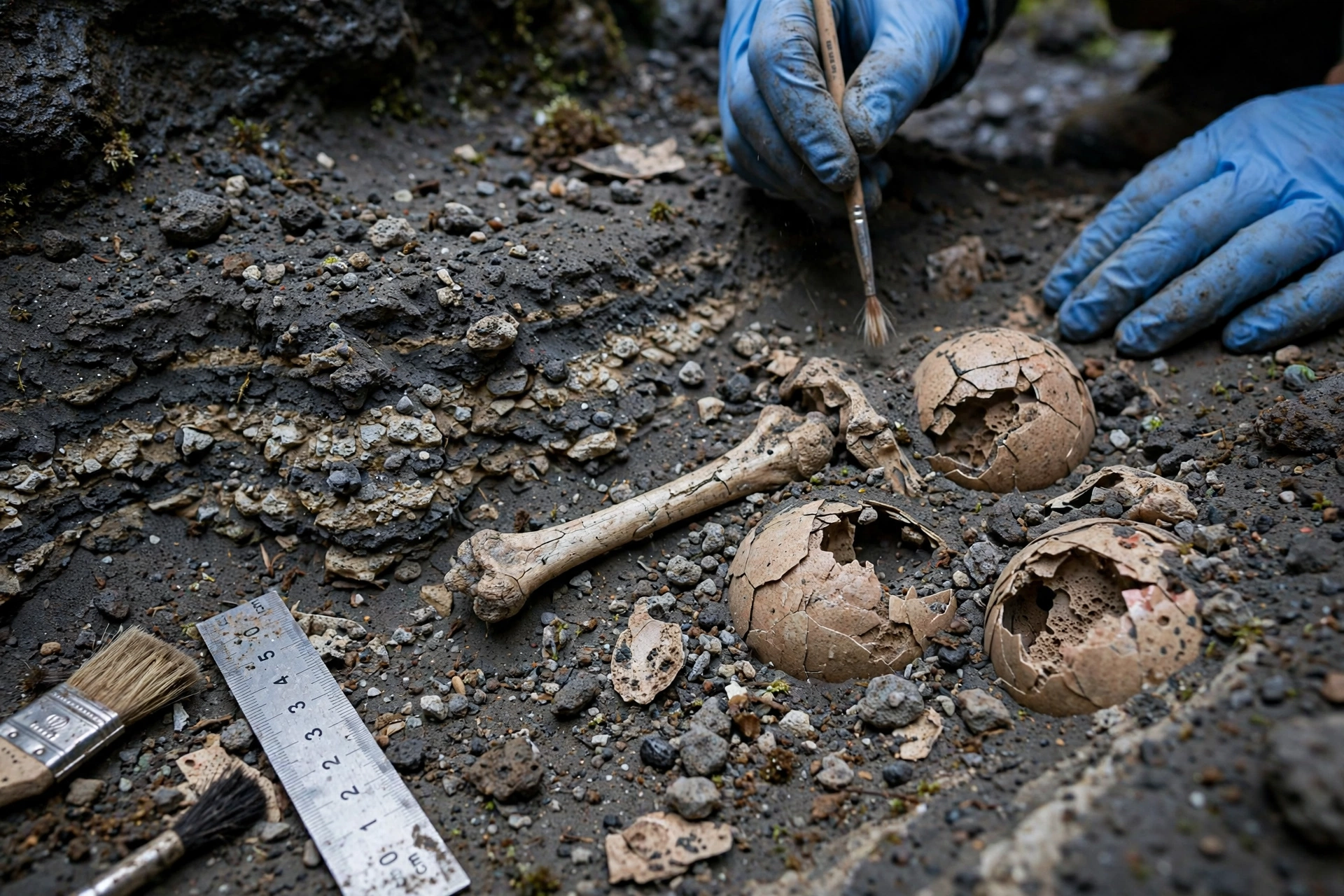
Cavers first found Moa Eggshell Cave in the 1960s. It got its name from fragments of moa eggshell scattered in its sediment. The moa, those giant flightless birds hunted to extinction centuries ago, laid eggs in and around the cave, and the shell fragments survived like scattered pottery shards. But the cave was small, unglamorous, and overshadowed by its famous neighbors. For decades it sat in the scientific equivalent of a waiting room: known, noted, ignored.
That changed when a team led by Associate Professor Trevor Worthy of Flinders University, with Paul Scofield, senior curator of natural history at Canterbury Museum, plus researchers from the University of Auckland and Victoria University of Wellington, started digging into its deeper sediment layers. What they pulled out became a paper in Alcheringa: An Australasian Journal of Palaeontology, and it is the kind of find paleontologists dream about.
Sealed in Ash for a Million Years
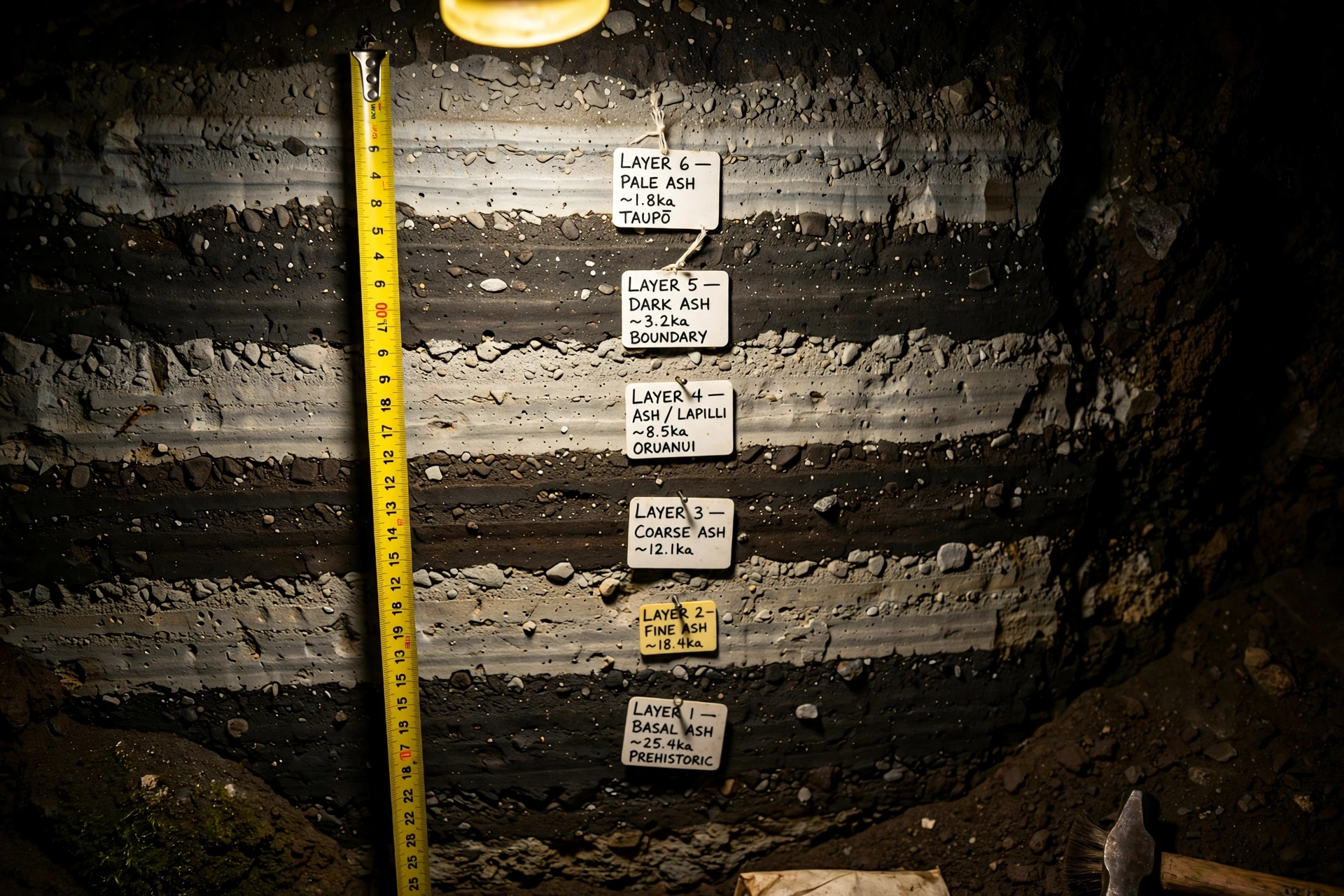
Here is what makes the site extraordinary. The fossils were not just lying around. They were sandwiched between two layers of volcanic ash, one laid down by the Ngaroma eruption 1.55 million years ago and one by the Kidnappers eruption 1 million years ago. Volcanoes, for all their destructive reputation, are excellent librarians. Ash buries everything fast, seals it off, and dates itself. The volcanologists on the team analyzed the ash and concluded the Kidnappers eruption was a monster event, one that likely buried most of the North Island in deep ash.
Between those two ash bookmarks lies the first Early Pleistocene vertebrate fauna ever found in a New Zealand cave. Read that again, because it matters: nobody had ever recovered a fossil assemblage this old, this complete, from a New Zealand cave before. The older ash layer’s presence inside the cave even suggests Moa Eggshell may be among the oldest caves on the island.
The haul: twelve extinct bird species and four extinct frog varieties, a whole community of animals that lived, died, and vanished in forests that no longer exist. Worthy described it as a newly recognized avifauna for New Zealand, evidence that the ancient forests were once home to a diverse group of birds that did not survive the next million years. Scofield went further. He called it a missing volume of New Zealand’s natural history, not a missing chapter. A whole volume.
Meet Strigops insulaborealis, the Parrot That (Probably) Could Fly
The star of the find is a new species of parrot: Strigops insulaborealis. The name places it in the same genus as the modern kākāpō, Strigops habroptila. In plain language, this is the kākāpō’s ancient relative, an ancestor of the lineage, separated by about a million years of evolution.
And here is the twist that made headlines around the world. The modern kākāpō has massive, muscular legs. It needs them. A flightless bird that weighs up to four kilograms and spends its nights climbing trees and waddling across forest floors needs serious leg power. Strigops insulaborealis had comparatively weak, slender legs. It was not built for a life on the ground.
The researchers’ conclusion, stated carefully, is that the ancient parrot may have been able to fly. A flying kākāpō. Somewhere between that bird and Sirocco, the lineage put down its wings and never picked them up again. The team is honest about the limits: more study is needed to confirm flight was actually possible. But the bone structure alone tells a different story of movement, and that reframes the evolutionary history of one of the most studied endangered birds in the world.
How Does a Bird Give Up Flight?
It sounds absurd until you think about what flight costs. Flying is one of the most energy-expensive things any animal does. Birds that do not need it, really do not need it, tend to stop paying the bill. New Zealand is the world capital of this phenomenon, because for millions of years it had almost no land predators. No mammals hunting from the ground, no hawks in the old forests. A bird that could walk everywhere, eat everything, and never get eaten had no reason to stay airborne.
The kākāpō took the deal further than almost any bird alive. It became the world’s heaviest parrot, nocturnal, with a keen sense of smell, which is bizarre for a bird, and a booming mating call that carries for kilometers through the night forest. Males clear little bowl-shaped arenas in the ground and boom from them for hours. It is an excellent system if nothing is hunting you. It is a terrible system the moment rats, stoats, and cats arrive on ships, which is exactly what happened.
That is the deeper story the cave is telling. Flightlessness did not evolve because the kākāpō was broken. It evolved because the kākāpō’s world was, for a very long time, safe. The fossils show that safety came and went in cycles, driven not by humans but by the land itself.
It Was Not Alone Down There
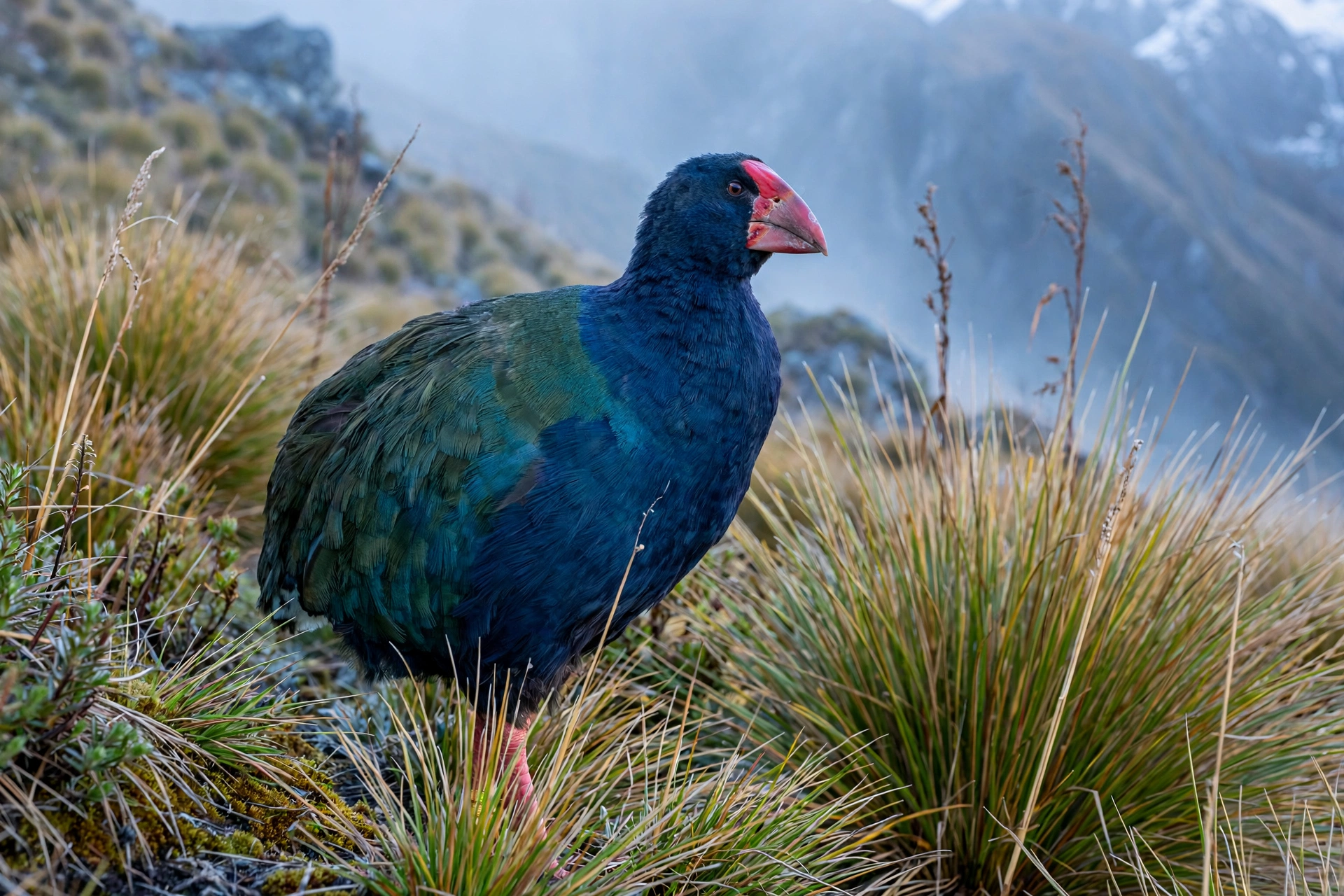
The flying parrot got the headlines, but the cave held more. Researchers also found the remains of an extinct ancestor of the takahē, another of New Zealand’s strange flightless birds, a big blue-green swamphen with a beak like a red traffic cone. The modern takahē was itself declared extinct in 1898, then dramatically rediscovered in 1948 in Fiordland’s Murchison Mountains, and now survives through intensive conservation. Finding its million-year-old ancestor in the same cave is like opening a family album that goes back further than anyone thought it could.
There was also an extinct pigeon, closely related to Australia’s bronzewing pigeons, a group never before known to have lived in New Zealand. Plus the four frog species. Put together, it is a snapshot of a North Island ecosystem from a time when the forests were different, the climate was shifting, and the birds were experimenting with forms of life that would not survive what came next.
Volcanoes Kept Hitting the Reset Button
For decades, the story of New Zealand’s extinct birds was told mostly as a human story. People arrived about 750 years ago, and the extinctions that followed were fast and brutal. That part is true. But the Moa Eggshell fossils prove the deeper pattern was set long before any human footprint.
Rapid climate shifts and catastrophic volcanic eruptions kept reshaping the landscape. Forests gave way to scrubland and back again. Bird populations that had adapted to one world woke up in another. Scofield’s explanation is blunt: the shifting forest and shrubland habitats forced a reset of the bird populations, and that reset became a major driver of evolutionary diversification across the North Island.
Worthy put the human chapter in perspective. For decades, he noted, the extinction of New Zealand’s birds was viewed primarily through the lens of human arrival. The cave proves that natural forces, super-volcanoes and dramatic climate swings, had already been sculpting the unique identity of New Zealand’s wildlife for over a million years. Humans finished a story the land had been writing for ages.
Why a Million-Year-Old Cave Matters for a Bird That Is Alive Today
Here is where the story stops being ancient history and becomes a problem to solve. The kākāpō is one of the most intensively managed wild animals on the planet. Fewer than 250 remain. Every bird has a name. Rangers know their personalities, their favorite trees, their breeding histories. The Kākāpō Recovery programme run by New Zealand’s Department of Conservation has pulled the species back from the edge more than once, using supplementary feeding, predator-free island sanctuaries, and, famously, cutting-edge genetic matchmaking to keep the gene pool healthy.
What the cave adds is the deep-time context conservationists need. If you know that the kākāpō lineage has already survived multiple rounds of volcanic catastrophe and climate upheaval, you understand its resilience differently. You also understand its vulnerability differently: the traits that made it a survivor for a million years, flightlessness, ground nesting, slow breeding, are exactly the traits that make introduced predators so devastating. Conservation is not just about protecting birds from rats. It is about protecting a million-year-old strategy that suddenly stopped working 750 years ago.
There is a practical lesson too. Fossil sites like Moa Eggshell show which habitats and which islands acted as refuges when the world changed fast. That is precisely the kind of knowledge that helps people choose where to put predator-free sanctuaries today, and which populations to prioritize when a cyclone or disease hits, as happened with the aspergillosis outbreak that struck kākāpō in recent years. The past is not a curiosity. It is a dataset.
How to See This World for Yourself
You cannot walk into Moa Eggshell Cave with a flashlight. It is a scientific site, not a tourist attraction, and its fossils belong in museums and laboratories. But you can stand very close to its world.
Start with the Waitomo Caves, minutes away. The Waitomo glowworm caves are the same limestone country, the same underground New Zealand, and the boat ride through the Glowworm Grotto is still one of the great cave experiences on Earth. When you are floating under those lights, remember that the rock around you has been keeping secrets for millions of years, and scientists are still finding new rooms in the story.
Then go see the bones. Canterbury Museum in Christchurch, where co-author Paul Scofield works, holds New Zealand’s great natural history collections, and fossil discoveries like this one eventually make their way into public galleries. Museums are where lost worlds become visible.
As for the living kākāpō: they survive on predator-free offshore islands under the care of the Kākāpō Recovery programme, and public access is tightly controlled to protect them. You probably will not meet Sirocco. But you can follow the birds by name through the programme’s updates, and symbolic adoptions help fund the rangers, the supplementary feeding, and the science. A million years of evolution, a bird that gave up flight, and a cave full of ash: the least we can do is keep the last chapter going.
If you love stories like this, where caves turn out to be time machines, you will want to see what else is coming out of the dark. Ancient markings keep surfacing in caves around the world, like the 15,000-year-old cave art found in Ireland, and the planet’s biggest underground systems still hide chambers no human has entered, as in Son Doong, the cave with its own weather. Follow The Cavee on Pinterest for a daily dose of the underground world, and read the full story here on thecavee.com.
Sources: the 2026 Worthy et al. study in Alcheringa; reporting via Daily Galaxy and Discover Magazine.