Scientists Just Found a Turquoise Viper and a Flying Snake in Cambodia’s Hidden Caves
Picture this. You crawl into a dark limestone cave in northwestern Cambodia, your headlamp cutting a small circle of light out of the black, and something turquoise stares back at you from a mossy rock. Nobody on Earth has ever seen it before. Not in a textbook, not in a zoo, not in another cave a hundred miles away. That is exactly what happened in Battambang province, and the full list of what the survey team found reads like something out of a fantasy novel: a turquoise pit viper, a flying snake, several brand new geckos, two micro-snails, and two millipedes, all new to science.
The discovery came out of a biodiversity survey that explored 64 caves across 10 hills between November 2023 and July 2025, and the report was published in March 2026. It was led by the UK conservation charity Fauna & Flora, working with Cambodia’s Ministry of Environment and field experts. And the most exciting part is not just the animals themselves. It is what they tell us about caves in general: that some of the most isolated places on the planet are quietly running evolution experiments we have barely begun to catalog.
If you love caves, strange animals, or the feeling that the world still has secrets left, this story is for you. Here is everything the survey found, why each hill produced different creatures, and what happens next.
The Survey: 64 Caves, 10 Hills, Almost Two Years Underground
First, some scale. Cambodia’s limestone caves stretch for thousands of miles, and most of them are largely unexplored. That is a strange thing to say in 2026, when satellites photograph every square meter of the planet’s surface, but caves do not work like that. A satellite cannot see inside a hill. A cave can sit a ten minute walk from a village and still hold species nobody has documented, simply because nobody with the right training has ever gone in and looked properly.
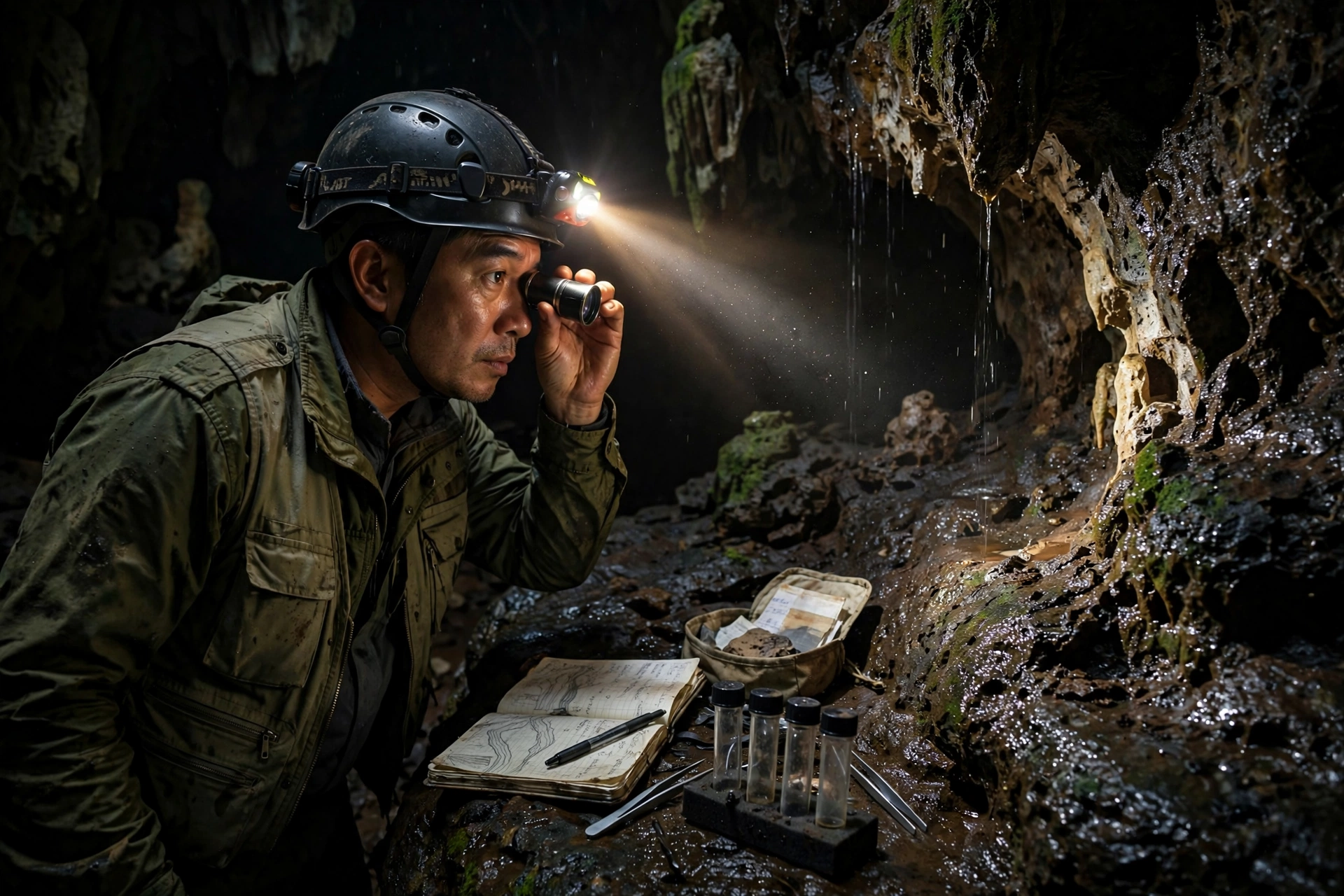
That is what this survey set out to fix in Battambang province. Over about 20 months, the team worked through 64 caves spread across 10 hills. That is slow, careful work. Cave surveying means squeezing through passages, documenting every animal, taking samples, and photographing everything in conditions where your light is the only light there is. It also means doing it without wrecking the place, because cave ecosystems are fragile in ways surface habitats are not. A footprint in the wrong spot can crush animals the size of a grain of rice, and a careless visit can change the temperature and humidity a cave has held steady for thousands of years.
The results were published in a report in March 2026, and they made headlines for good reason. The survey did not find one new species. It found a whole cast of them.
Meet the New Species
The Turquoise Pit Viper
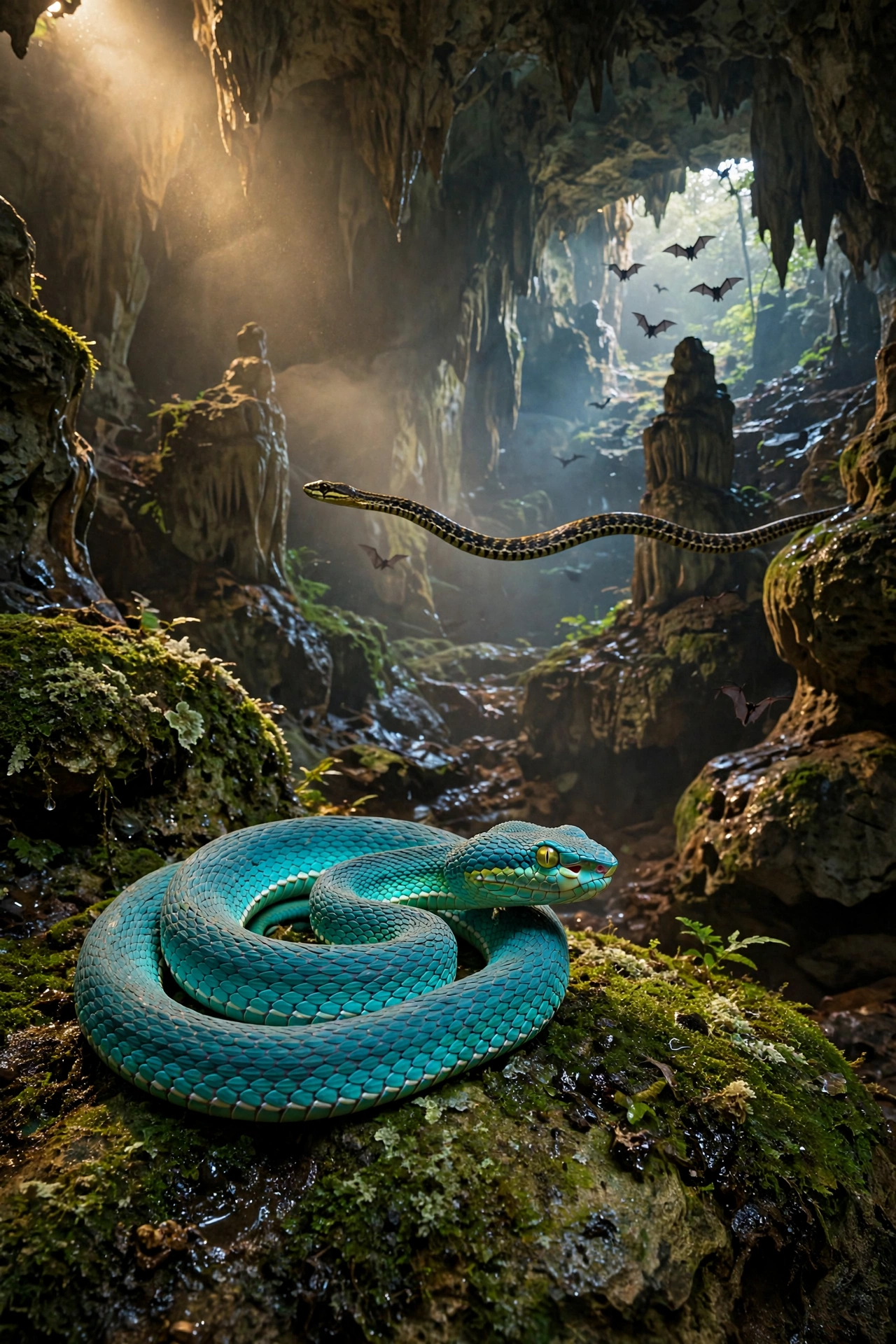
Let’s start with the star of the show. Pit vipers are venomous snakes that sense heat through special pits on their faces, which lets them hunt warm-blooded prey in total darkness. That alone makes them perfect cave animals. But this one is turquoise, a color that looks almost unreal against wet limestone, and it was completely unknown to science before this survey.
Here is the part that makes scientists grin: at the time the report was published, the turquoise pit viper was still being formally named and characterized. Naming a new species is not a quick job. It involves detailed measurements, DNA analysis, comparisons with every known relative, and a formal scientific description that other researchers can check. So the viper exists, it has been documented, and its official scientific name is still on its way. That is normal, and it is also a reminder of how fresh this discovery really is.
The Flying Snake
Then there is the flying snake, which deserves a small correction before it disappoints anyone: it does not actually fly. What it does is arguably cooler. Flying snakes flatten their bodies into a sort of wing shape, launch themselves from a branch, and glide through the air, steering with subtle movements of their ribs. In a cave landscape full of vertical rock faces and gaps between hills, that is a brilliant way to get around.
Finding a flying snake in these caves fits the pattern of the whole survey. These animals are adapted to a world of cliffs, drops, and enclosed spaces, and they have been evolving in isolation for a very long time. The survey documented the snake with photographs from the expedition, and like the viper, it represents a species new to science.
The Geckos, Snails, and Millipedes
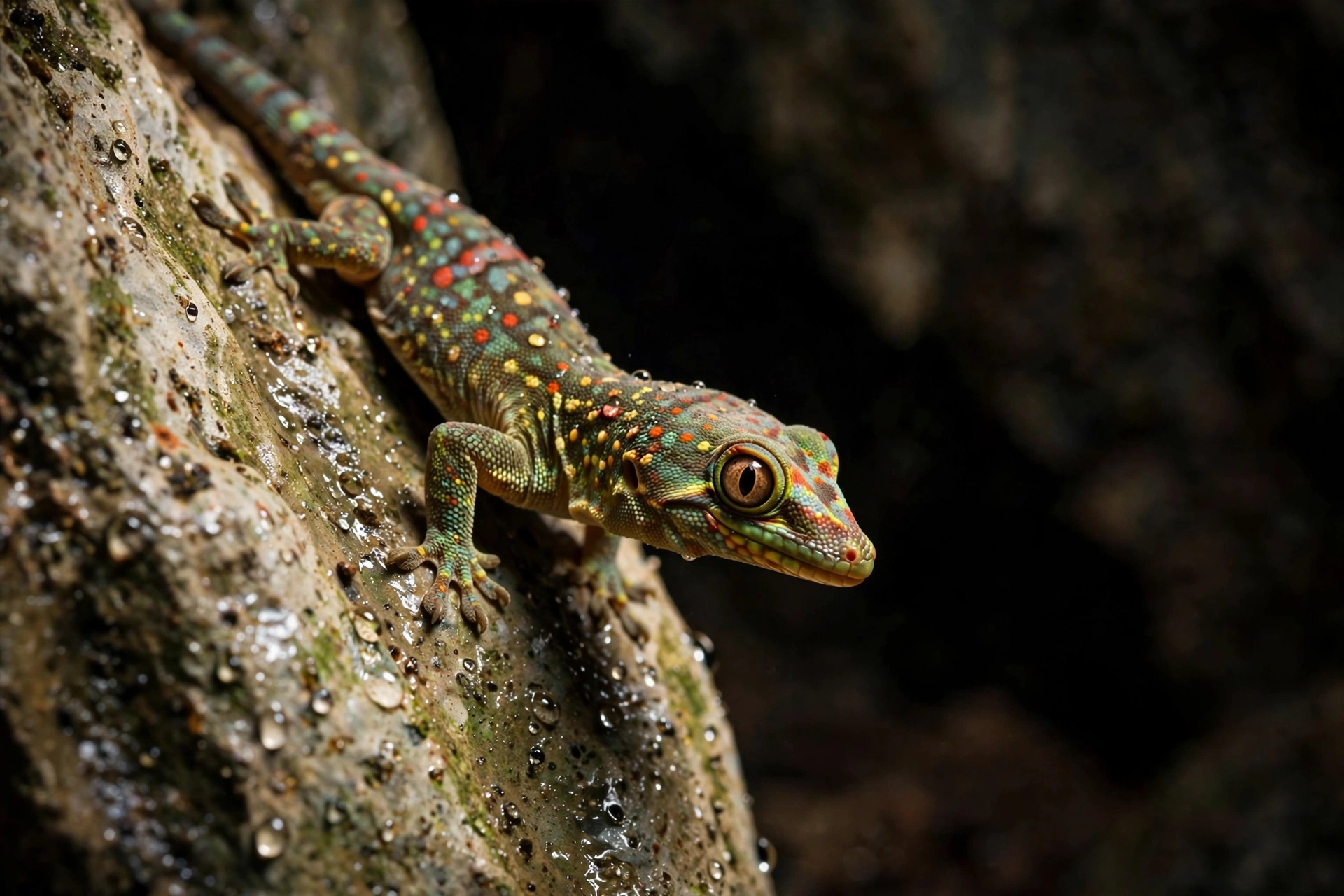
The smaller finds matter just as much, even if they will never get top billing. The survey found several new gecko species, and three of them were still being formally named when the report came out. Geckos are classic cave animals: they cling to vertical rock, hunt at night, and thrive in humid, sheltered spaces. A new gecko in a single cave system is exactly the kind of discovery that tells researchers a place has been isolated for a very long time.
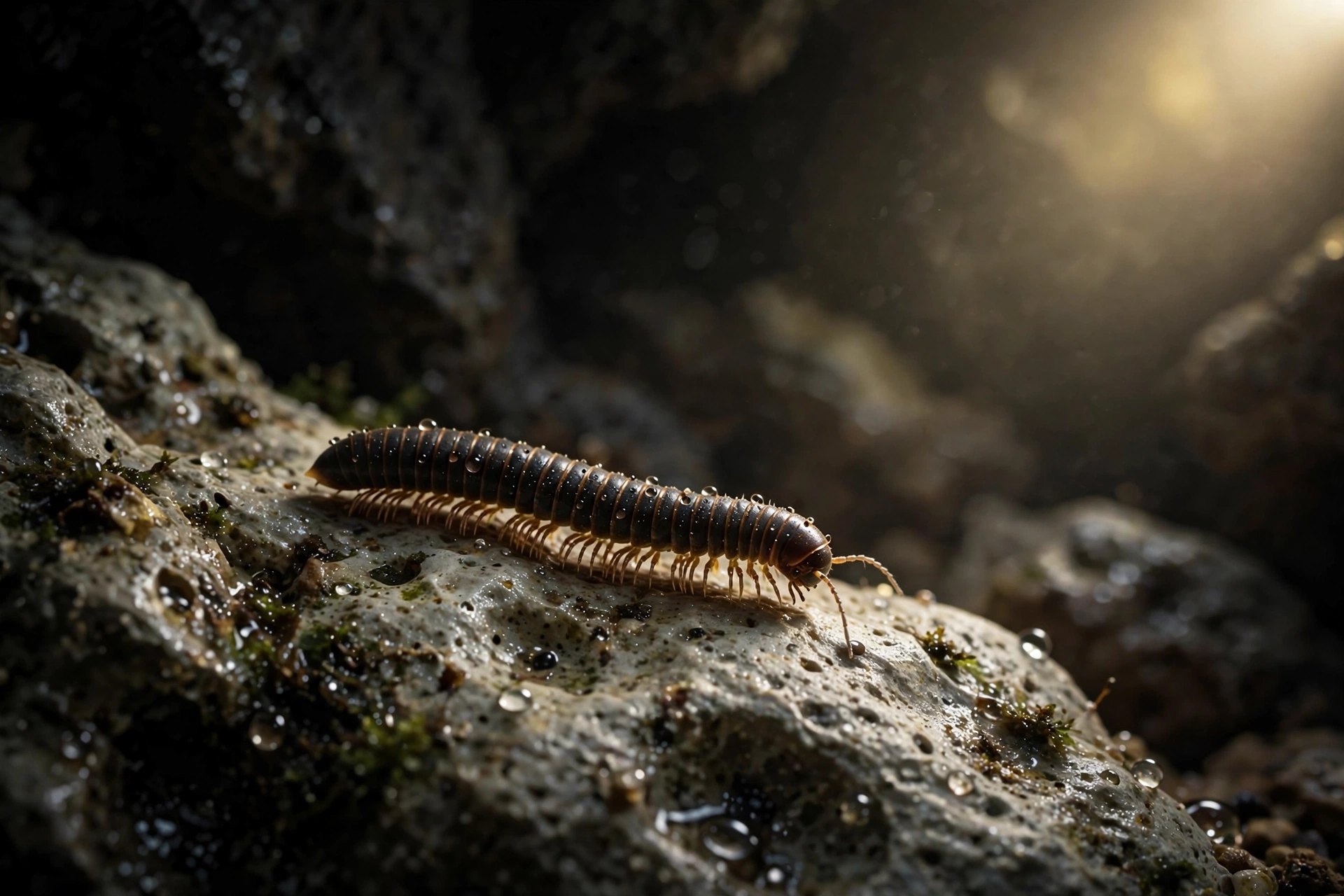
Then there are the tiny ones: two micro-snails and two millipedes, also new to science. It is easy to skip past these, but think about what a micro-snail means. These are animals measured in millimeters, living their entire lives in one cave system, eating, breeding, and evolving in a world the size of a few rooms. They cannot walk to the next hill. They cannot cross a valley. Their whole universe is one cave, and that is precisely why they turn out different from their cousins one hill over.
Why Every Hill Is Its Own World
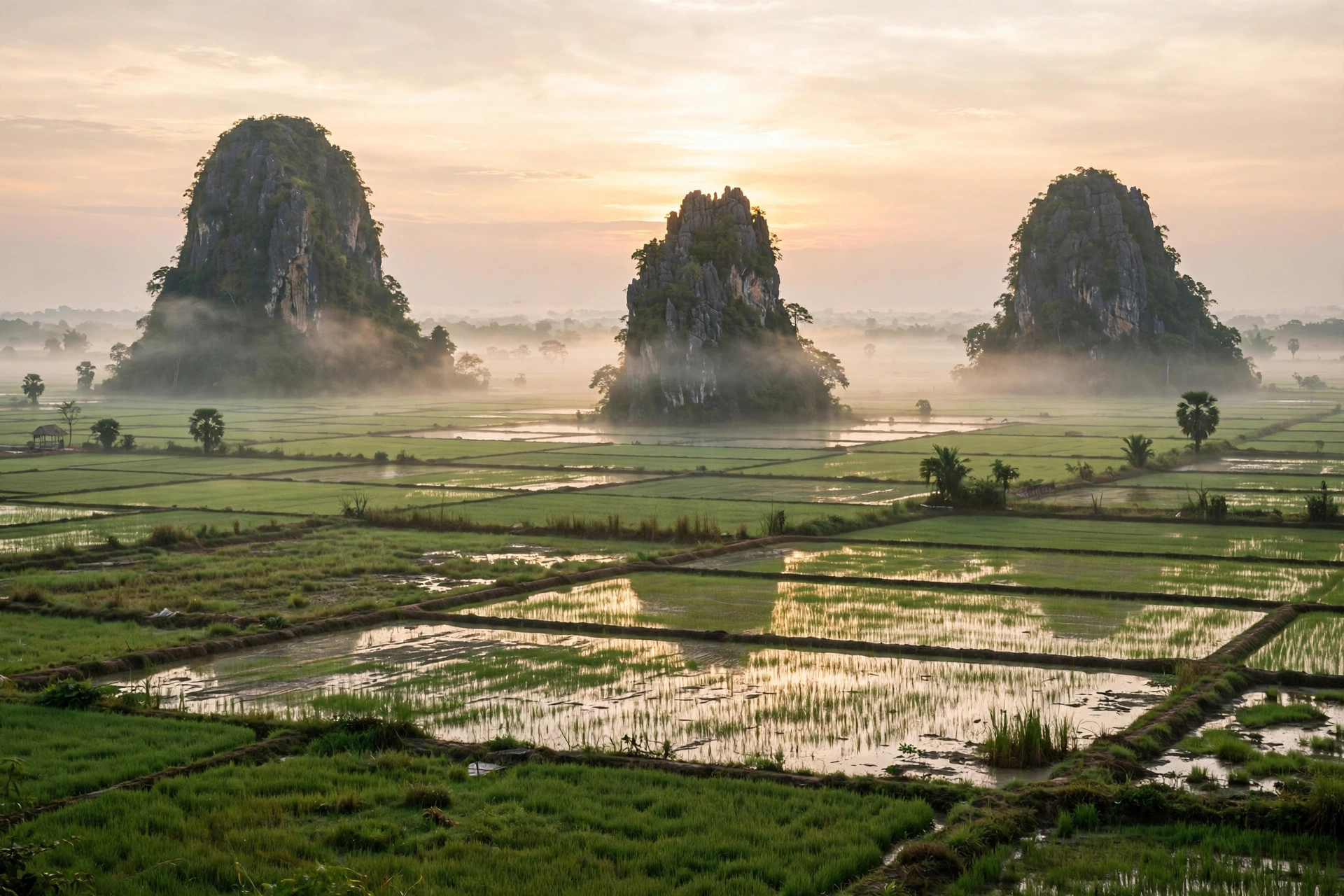
This is the idea that ties the whole discovery together, and it is the reason scientists are so excited. In Cambodia’s karst landscape, each hill and cave is isolated from the others. Karst is the term for a landscape created when rock breaks down over time, forming cave springs, sinking streams, and sinkholes. In Battambang, that process has left separate limestone hills standing in flat country, each one holding caves that have almost no connection to the caves in the next hill.
Evolutionary biologist Lee Grismer, a professor of biology at La Sierra University in California who supported the survey team, put it beautifully. He described each hill and cave as its own individual “island laboratory” of evolution, a vignette of biodiversity where nature performs the same experiment over and over again independently. The team goes to these separate places, analyzes the DNA of the species, and sees how the experiment has run. Some look alike, some look different, and by analyzing that, researchers can get an idea of what drives the way species evolve.
Think of it like this. Imagine ten identical kitchens, each sealed off from the others, each with a different cook working for thousands of years. You would not expect the same dish to come out of all ten. That is what is happening in Battambang’s caves, except the cooks are time, isolation, and the specific conditions of each cave: its humidity, its temperature, its food sources, its darkness. The result is a turquoise viper in one place, a unique gecko in another, and millipedes found nowhere else at all.
Why Caves Hide So Many Unknown Species
There is a simple reason cave discoveries like this keep happening, and it solves a puzzle a lot of readers have: how can we still be finding new animals in 2026? The answer is that caves are one of the last places on Earth where exploration is still genuinely difficult.
Forests can be surveyed from the air. Oceans can be mapped by sonar. But a cave has to be entered on foot, in the dark, often on your belly, by someone who knows what they are looking at. Most caves have never had that kind of visit. Cambodia’s caves are a perfect example: thousands of miles of limestone passages, most of them undocumented, sitting in a country whose cave life has barely been studied compared to its forests or temples.
That also means every proper survey has a good chance of finding something new. The Battambang team explored 64 caves and found new species across the board, from snakes down to snails. It is a safe bet that the next 64 caves would produce more, and that is exactly why this kind of work matters so much.
For context on how rich cave discoveries can get, our own coverage of giant cave systems shows the same pattern on a bigger scale: the world’s largest cave has its own weather system, and even well known caves keep surprising researchers. The 15,000-year-old cave art found in Ireland rewrote ideas about who reached the island first, and the flooded Cave of Bones in Brazil held hundreds of bones from animals and humans separated by thousands of years. Caves keep secrets because they are hard to explore, and that difficulty is also what protects them.
The Problem This Discovery Actually Solves
Here is the practical side, and it is the part most coverage skips. You cannot protect a species you do not know exists. That sounds obvious, but it is the central problem of cave conservation. If a limestone hill is quarried, a cave entrance is blocked, or a cave system is disturbed before anyone has surveyed it, the species inside can vanish without anyone ever knowing they were there. They do not get a funeral. They do not even get a name.
Surveys like the Battambang one are the fix. By documenting what lives in these caves, Fauna & Flora and Cambodia’s Ministry of Environment have created a baseline: a record of what exists, where it lives, and why it matters. That record is what future decisions can be based on. It tells conservationists which caves are most unique, which species are most at risk, and where protection would do the most good. It also gives the newly found species a path to formal scientific names, which is the first step toward legal protection in many systems.
There is a second, quieter benefit. Discoveries like a turquoise viper make people care. A report about cave invertebrates might not travel far, but a turquoise snake and a flying snake will. That attention is useful. It brings funding for more surveys, it brings tourists who want to see caves responsibly, and it gives local communities a reason to value the hills in their backyard as something more than rock. The challenge, as always, is turning that attention into protection rather than disturbance, and that starts with exactly this kind of careful, documented science.
Can You Visit Battambang’s Caves?
This is the question everyone asks after a story like this, so let’s be honest about it. Battambang province is a real, visitable part of Cambodia, and its caves are part of the region’s landscape. But the specific survey caves are research sites, not tourist attractions, and the animals in them are fragile, rare, and in some cases still unnamed. That means the right way to experience this story is not to go hunting for a turquoise viper yourself.
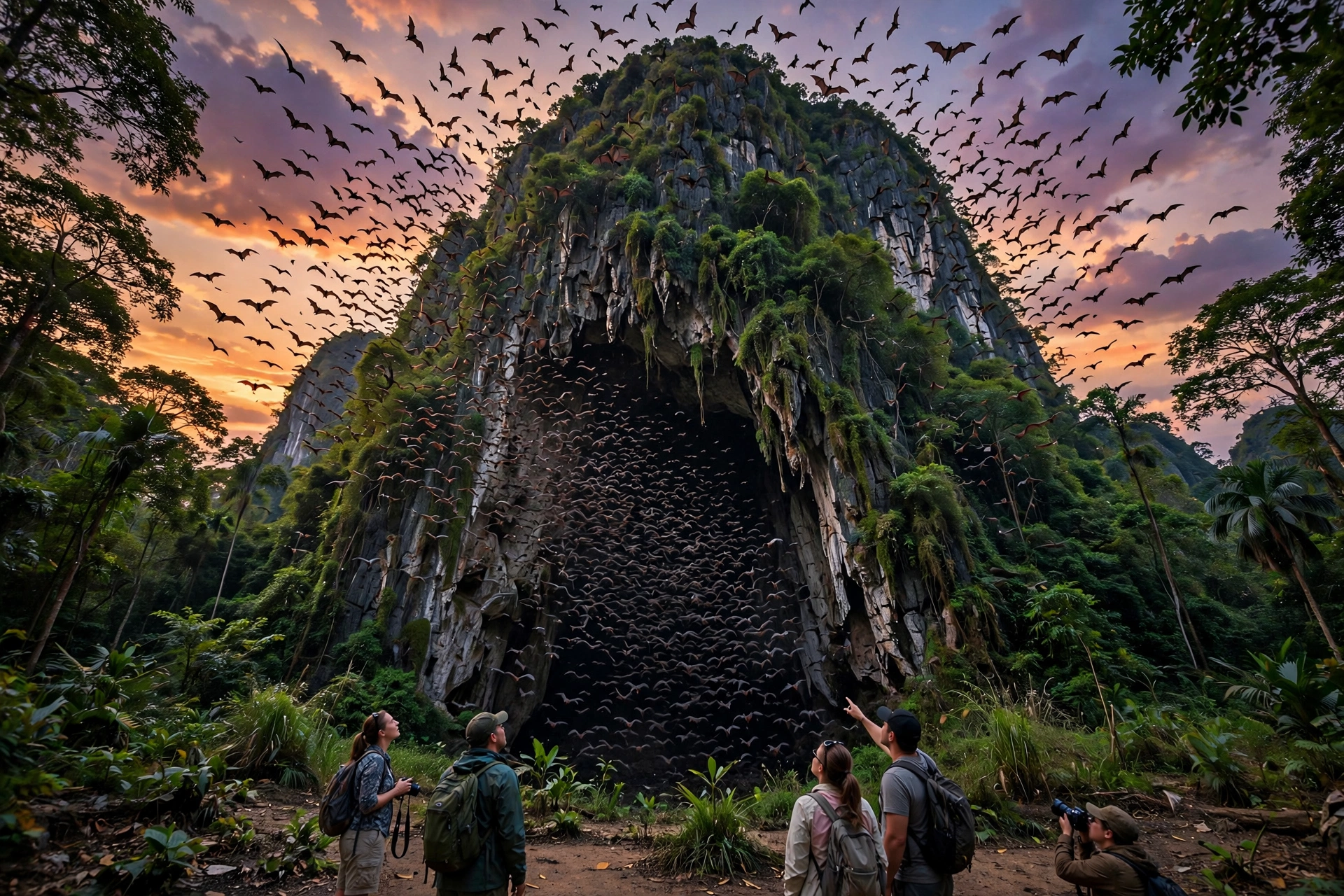
What you can do is visit Battambang’s cave country the responsible way. Go with a local guide who knows the area, stick to established paths and show caves, never touch cave wildlife, and keep your visit quiet and low impact. Cave animals, especially bats and small invertebrates, are easily stressed by light, noise, and handling. A good rule for any cave, anywhere in the world, is simple: take photos, leave nothing, and let the cave stay exactly as you found it.
If you do visit Cambodia, the broader cave landscape is worth your time. The karst hills themselves are spectacular, rising out of flat farmland like islands, and the region’s caves range from vast chambers to tight passages. Just remember that the most special thing about them is also the most fragile: the fact that each one has been evolving in isolation for an incredibly long time.
What Happens Next
The story is not over. The turquoise pit viper and three of the new geckos still need their formal scientific names, and that process takes time, DNA work, and peer review. Once named, they join the official record of life on Earth, and researchers can start asking deeper questions: how long have they been isolated, what are their closest relatives, and how did a snake end up turquoise in the first place?
Meanwhile, the survey’s approach is a model for what comes next in Cambodia and beyond. Sixty-four caves is a lot, but it is a fraction of what is out there. Every hill that has not been surveyed is a potential island laboratory with its own cast of unknown species. The Battambang results suggest that the more we look, the more we will find, and that caves deserve the same scientific attention that forests and reefs get.
For the full original reporting on this discovery, read the CNN coverage: Pit viper, flying snake and geckos among new species uncovered in Cambodian caves. It includes the expedition photographs and the researchers’ own words, and it is well worth your time.
The Takeaway
A turquoise viper, a flying snake, new geckos, micro-snails, and millipedes, all found in 64 caves across 10 hills in Battambang, all new to science, all living in their own isolated worlds. That is the kind of discovery that reminds you the planet is not finished surprising us. It also reminds you why caves matter: not just as adventures, but as living laboratories where evolution is still running experiments we have only just started to read.
Want more cave stories like this? Follow The Cavee on Pinterest for daily cave discoveries, wild expeditions, and underground wonders from around the world, and come back to thecavee.com for the full stories behind every pin. The next great cave discovery is probably already out there, waiting in the dark, and we will be here to tell you about it when it surfaces.