Seven Holes in the Roof, 30,000 Bats Below: Inside Bulgaria’s Devetashka Cave
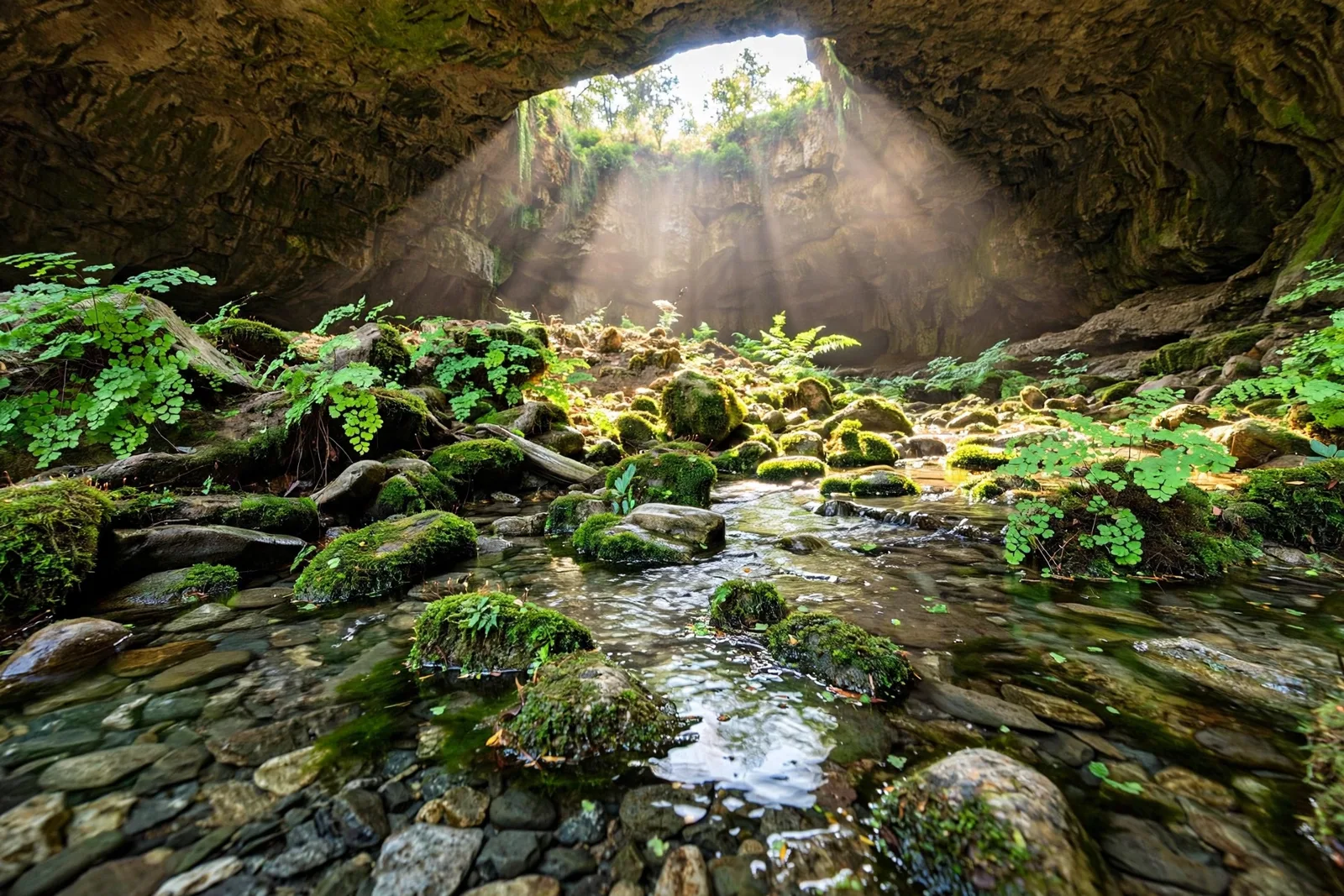
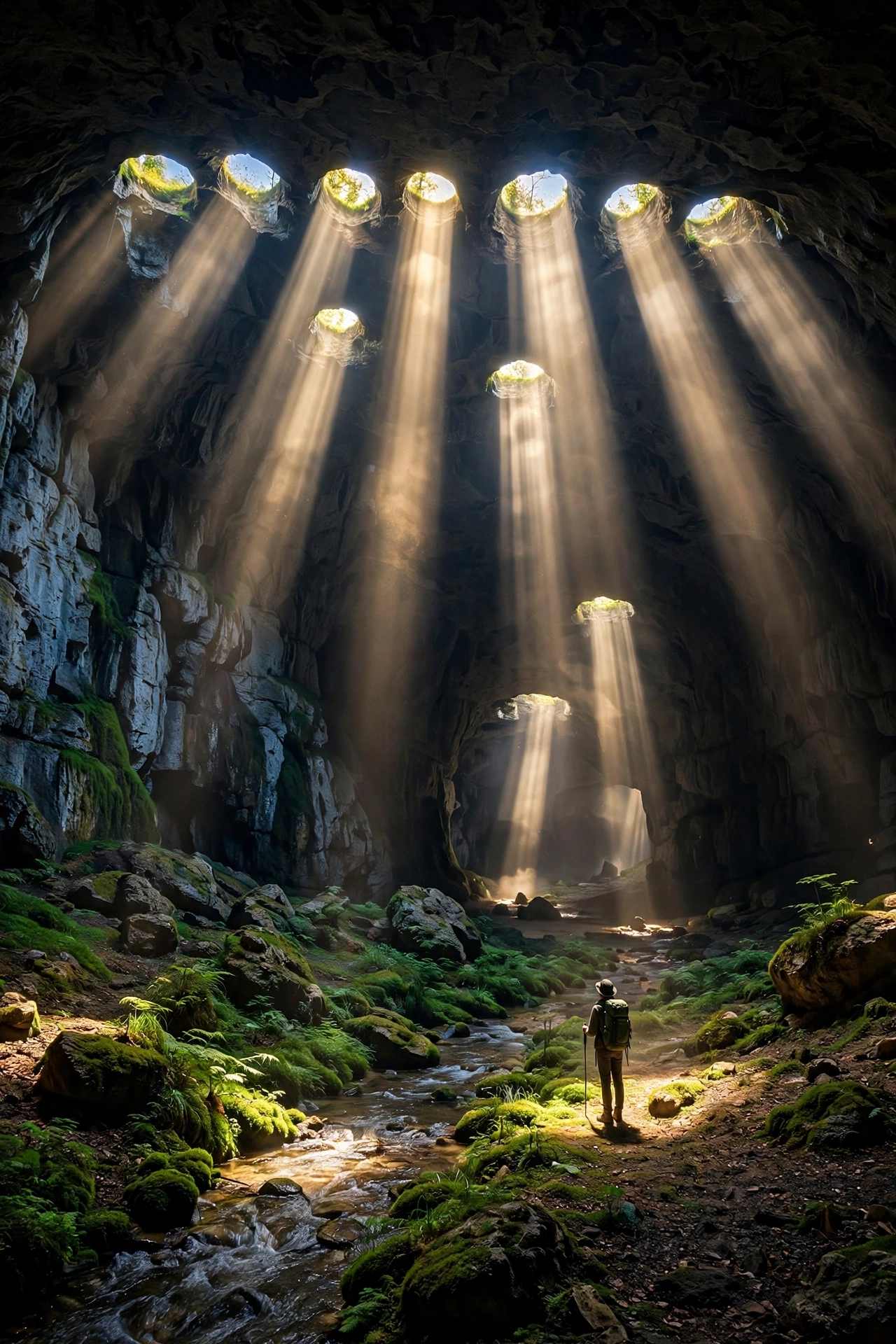
Most caves ask you to leave daylight behind. You duck through a low doorway, your eyes adjust to the dark, and a guide’s torch picks out one formation at a time. Devetashka Cave in Bulgaria does the opposite. You walk through an entrance 35 metres wide and 30 metres high, and the first thing you notice is the light. It falls in broad shafts from seven openings in the ceiling, lands on green moss and a shallow stream, and makes a hall the size of a cathedral feel almost like an open air room. It is strange, and it is beautiful, and it is the reason this cave sticks in your memory long after slicker show caves have blurred together.
I will be honest about why I rate it so highly. A lot of famous caves come with a hidden cost. You book weeks ahead, you queue in a damp tunnel, you shuffle past the good stuff in a crowd, and you leave feeling like you saw a cave through a keyhole. Devetashka solves that exact problem. The main hall is huge, the walk in is short and easy, you do not need to be a caver or a climber to enjoy it, and on a sunny day the light does most of the work for you. If you love caves but hate feeling herded, this is your cave.
What Devetashka Cave actually is
Devetashka Cave, also called Maarata or Oknata, sits near the village of Devetaki, about 15 kilometres northeast of Lovech in northern Bulgaria, on the east bank of the Osam River. It is a karst cave, carved over a very long time as water dissolved the limestone, and it runs about 2,442 metres in total. Most visitors only see the front part, and honestly, that front part is the show.
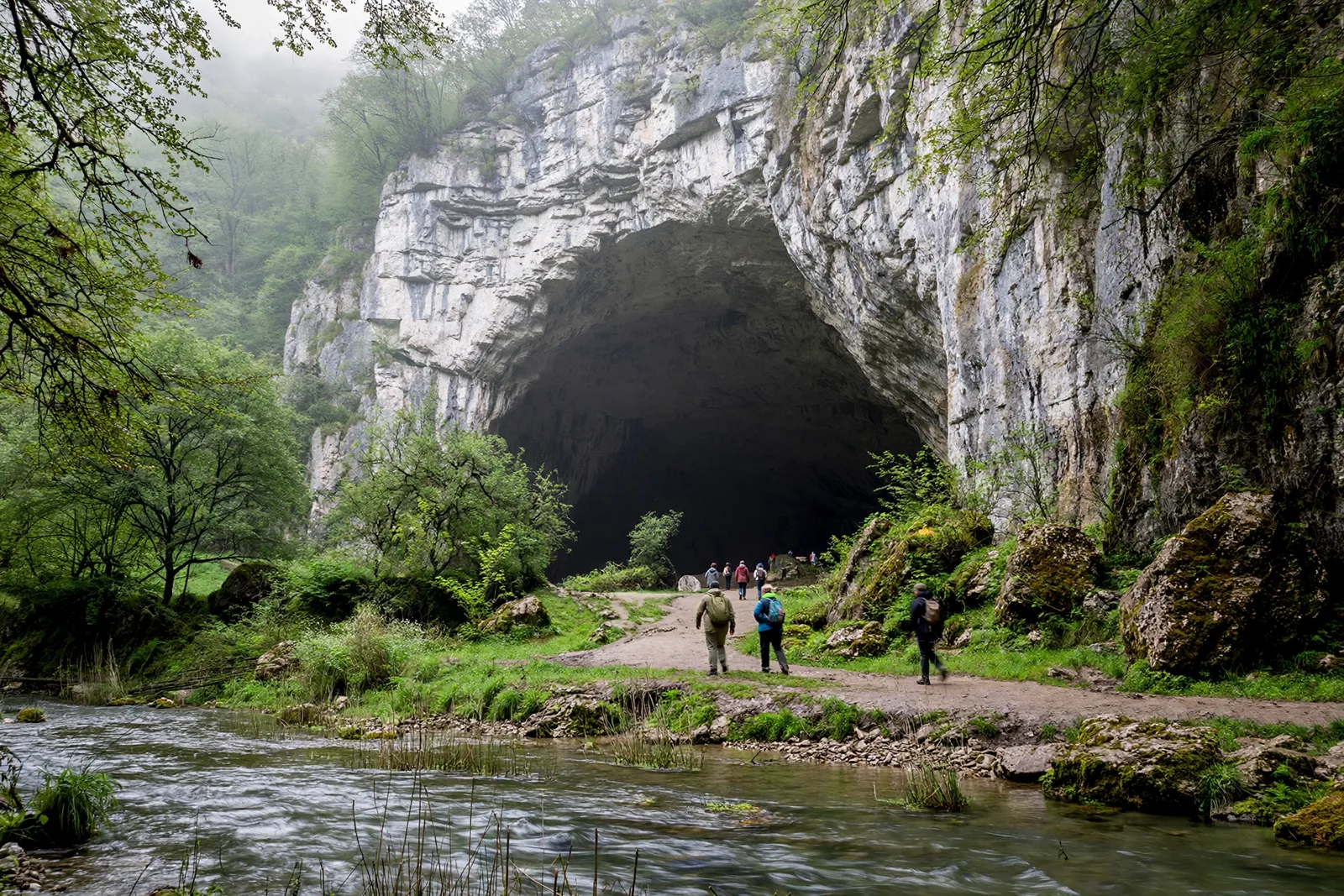
About 40 metres after the entrance, the cave opens into a hall covering 2,400 square metres. The ceiling there is 60 metres high in places, and in some spots it reaches up to 100 metres. That is the scale you need to hold in your head. You are not squeezing through a passage. You are standing in a room where a whole apartment block could fit, with daylight pouring in from above.
The locals call the ceiling openings Oknata, which means “the eyes”. Stand in the middle of the hall on a bright day and you will understand the name at once. Each opening frames a patch of sky. The light moves as the sun moves, so the hall never looks quite the same twice. Photographers love it for obvious reasons, but you do not need a camera to enjoy it. Just stand still for a minute and watch the light shift across the stone.
70,000 years of people sheltering in one cave
Devetashka was rediscovered in 1921, but people had been using it for tens of thousands of years before that. Excavations that began in the 1950s found almost continuous human occupation going back to the Middle Paleolithic, around 70,000 years ago. Later layers hold some of the richest Neolithic finds in Bulgaria, dating from roughly 6,000 to 4,000 BC. In plain language, families were cooking, sleeping, storing food and raising children in this hall while mammoths still walked the earth, and then again thousands of years later when farming was still a new idea.
It makes sense when you stand there. The entrance is enormous, the hall is dry in parts, there is running water nearby, and the climate inside is soft compared with a winter night outside. It was not a mystical hideout. It was a practical home, and a good one. The river branch that runs through the left side of the cave eventually joins the Osam, so fresh water was never far away.
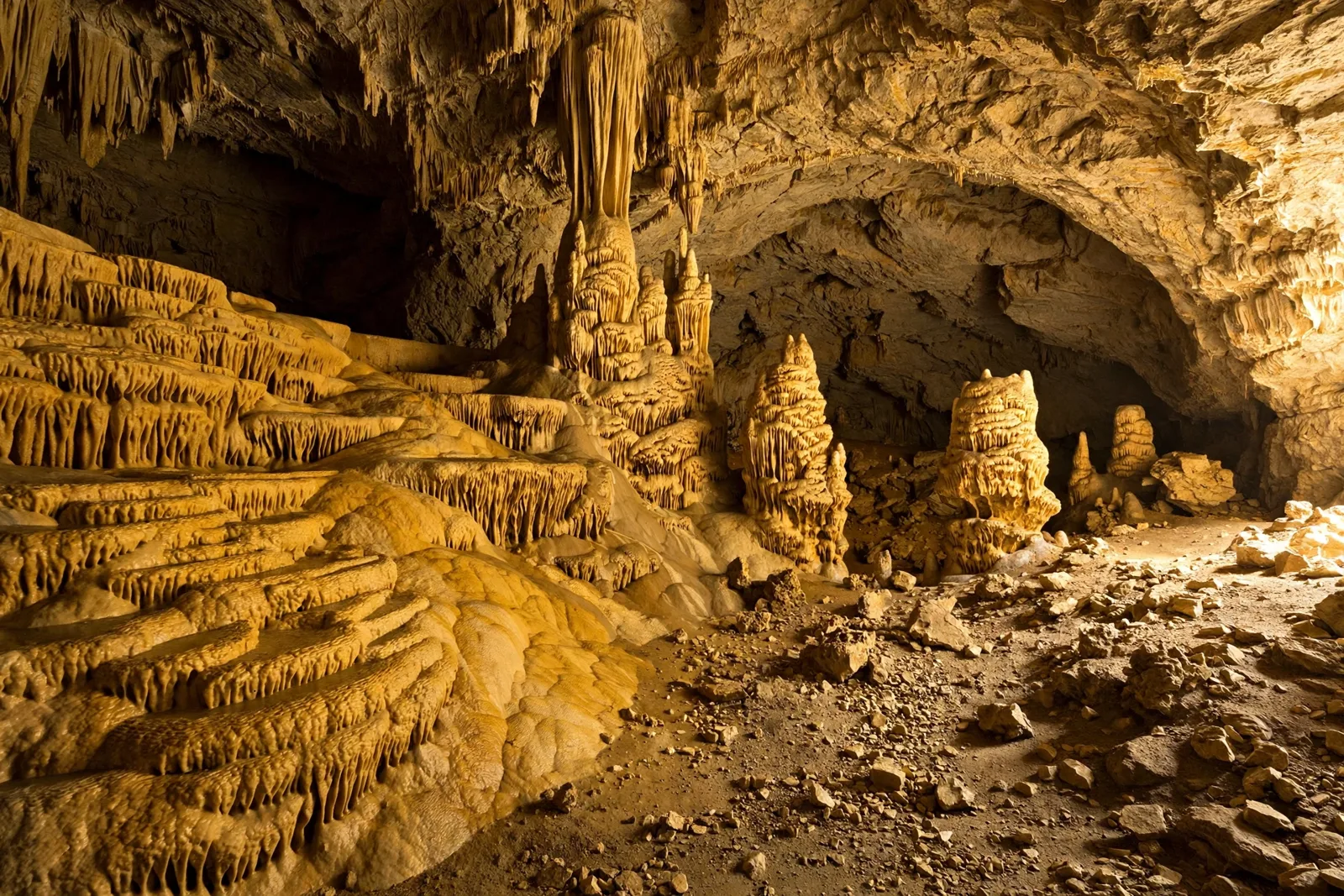
The cave has two branches once you get past the main hall. The left branch follows a small river, with miniature lakes and little waterfalls along the way. The right branch is warmer and drier, and it leads to chambers ending in a round hall known as the Altar. You will see stalactites, stalagmites, rivulets and natural domes throughout, but do not expect a long guided tunnel tour here. The deeper cave system is not a public walk, and the main hall is where the experience lives. That is worth knowing before you go, so you are not disappointed. Come for the light, the scale and the history, not for a two hour underground trek.
The army warehouse, the movie, and the bats that came back
Devetashka’s modern history is almost as strange as its ancient one. In the 1950s the Bulgarian army used the cave as a storage site for petroleum, and concrete bases that once held big oil tanks are still visible on the floor. It is a jarring sight at first, a reminder that even a place this old can be pulled into ordinary, unglamorous human use. Then, in 2011, the cave became a film set for The Expendables 2, and a bridge built for the production still stands nearby.
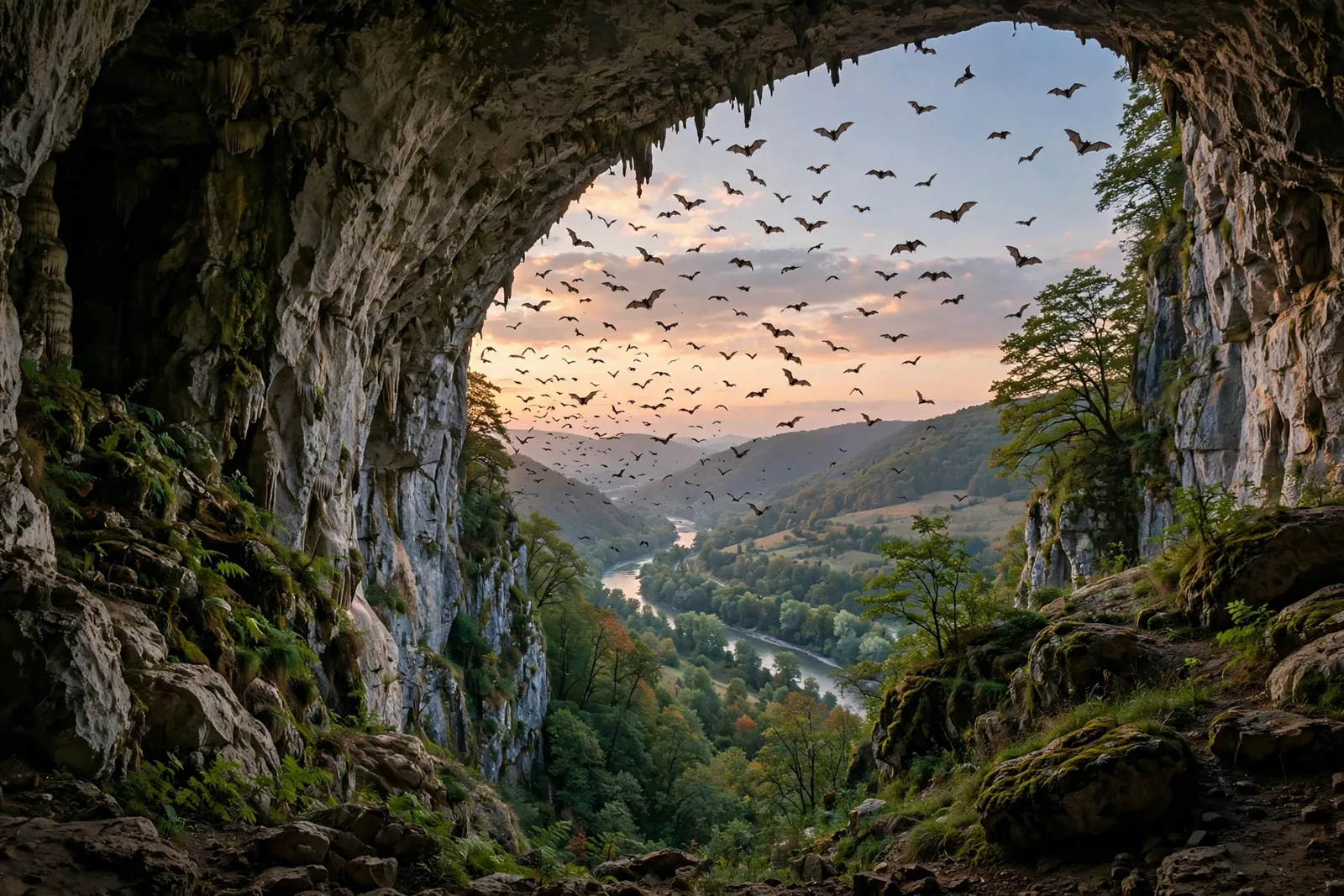
That filming caused real trouble. Environmentalists objected, Bulgaria’s Supreme Administrative Court later found the filming had breached environmental rules, and large numbers of bats were displaced. The good news is that by late 2012 most of the bats had returned. Today the cave is a protected natural landmark, declared as such in 1996, and it is home to nearly 30,000 bats from 15 species. That recovery story matters, because it explains the one rule every visitor needs to respect. The bats come first, and your visit fits around them, not the other way round.
The bats, the birds, and the June to July closure
Here is the most important practical fact in this whole guide. Devetashka closes completely from early June to the end of July, because that is the breeding season for the mammals that live in the cave. If you turn up in those weeks, you will find the gate shut, and no amount of pleading will open it. Plan around it. Late spring before the closure, or late summer and autumn after it, are much better bets.
Outside that closure, the wildlife is part of the visit. Around 30,000 bats roost here, and the wider area holds 82 bird species, 12 protected amphibian and reptile species, and 34 mammal species in total. You probably will not see bats swarming in daylight, and you should not try to. They are resting, and a quiet visitor is a good visitor. Keep your voice down, stay on the paths, do not touch formations or wildlife, and do not shine a bright light into dark corners where bats may be roosting. It sounds like common sense, and it is, but in a cave this open it is easy to forget you are standing in someone else’s nursery.
The green patches inside the hall are another surprise. Where sunlight reaches the floor, moss and small plants grow, which is rare in a cave and makes the place feel half indoors and half outdoors. It is also a good reminder of why the seven openings matter so much. Without them, this would be another dark hall. With them, it is a living room with a skylight the size of a house.
How to visit Devetashka Cave without the usual mistakes
Getting there is straightforward, and that is part of the appeal. The nearest bigger towns are Lovech and Veliko Tarnovo. From Lovech it is roughly 13 kilometres to Devetaki village, then about 2 kilometres to the cave. You have two simple options for the last stretch. You can follow a narrow path from the village along the Osam River, which is the prettier walk, or you can drive in via Road 301, then a 400 metre dirt road and a concrete bridge. Parking is near the entrance, and a small fee may apply, so carry a few leva in cash rather than assuming cards work everywhere out here.
Listings for the cave generally show hours of 8 am to 8 pm, but hours can vary by season, so check on the day before you set off. There are no online tickets to stress over, which is refreshing, but it also means you should not plan a tight itinerary around a timed entry that does not exist. Give yourself at least an hour at the cave, more if you like photography, and build in slack for the river path and the walk back.
Wear sturdy shoes. The floor can be uneven and slippery, especially near the stream, and the river path is not a city pavement. Bring a light layer even in summer, because cave air stays cool, and bring water. A phone camera is plenty here. The best shots come on a sunny day in late morning or early afternoon, when the light beams are strongest. Stand back, include a person for scale if you can, and let the hall do the talking. You do not need a flash, and in a bat cave, you should not use one on wildlife anyway.
Three mistakes trip people up. First, visiting in June or July and finding the cave closed. Second, expecting a deep cave adventure tour and being surprised that the public area is mainly the great hall. Third, rushing. Devetashka rewards a slow visit. Sit on a rock, watch the light move, listen to the stream, and let the size of the place sink in. If you race through in fifteen minutes, you will have seen it, but you will not have felt it.
Turn it into a proper day out
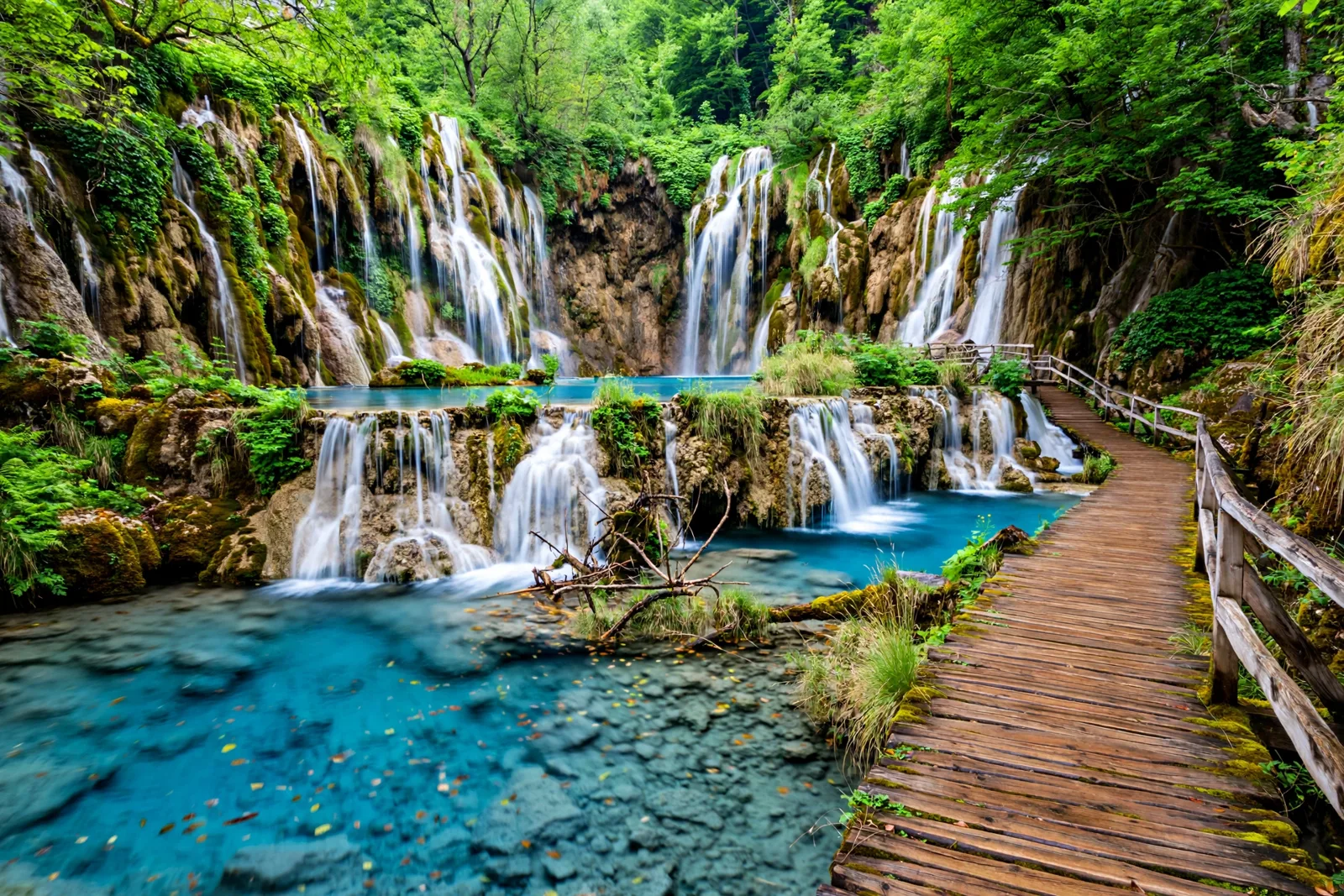
Devetashka pairs beautifully with two nearby stops, and this is where a good day turns into a great one. The Krushuna waterfalls are just a few kilometres away, a travertine cascade with turquoise pools that feels like the outdoor twin of the cave. Go to the cave first, then cool off at the falls, or do it the other way round if the light suits you better. Either order works.
The other classic pairing is Saeva Dupka, another Bulgarian cave not far away, which is a very different experience. Where Devetashka is vast and sunlit, Saeva Dupka is a compact, colourful show cave with dense stalactites, stalagmites and unusual formations, and a steady cool temperature. Seeing both in one day gives you a real sense of how varied Bulgarian caves can be, rather than a single postcard image.
Lovech itself is worth a wander too, before or after the cave. It is a smaller historic town, and it makes a calm base for this corner of Bulgaria, far from the crowds of the Black Sea resorts. If you are driving a wider Bulgaria route, Devetashka slots neatly between Veliko Tarnovo and the central Balkan towns, and it breaks up a long drive with something genuinely memorable.
Is Devetashka Cave worth it?
Yes, with one honest caveat. If your dream cave is a long, dark, guided journey deep underground with helmets and headlamps, this is not that cave. If your dream is to stand somewhere ancient, huge and quietly astonishing, without booking stress, crowds or claustrophobia, Devetashka is hard to beat. The seven eyes in the roof, the 70,000 years of human history, the stream running through the hall, and the knowledge that 30,000 bats call this place home, all add up to something that feels less like a tourist attraction and more like a place that has earned its quiet.
Go on a sunny day. Go outside June and July. Wear good shoes, keep your voice low, and give the light time to move. Bulgaria has plenty of beautiful places, but very few make you feel small in quite such a good way. Devetashka does, and that feeling is the reason to go.
Love caves like this? Follow The Cavee on Pinterest for more hidden cave guides, and read more cave adventures on thecavee.com. If Devetashka is on your list, save this guide and share it with the one person you would want standing next to you when the light comes through the roof.
Devetashka Cave: quick answers
Where is Devetashka Cave?
Near Devetaki village, about 15 kilometres northeast of Lovech in northern Bulgaria, on the east bank of the Osam River. It is about 2 kilometres from Devetaki village to the cave entrance.
When is Devetashka Cave closed?
The cave closes completely from early June to the end of July for the bat breeding season. Check hours before you travel, since seasonal hours can change.
How big is Devetashka Cave?
The cave is about 2,442 metres long in total. The entrance is 35 metres wide and 30 metres high, and the main hall covers 2,400 square metres with a ceiling up to 60 metres high, reaching 100 metres in places.
Do you need a guide for Devetashka Cave?
No guide is needed for the main public hall, which is a short, easy walk from the entrance. The deeper cave system is not open as a public tour, so come for the great hall, the light and the history.
What else is near Devetashka Cave?
The Krushuna waterfalls are a few kilometres away and make an ideal second stop, and Saeva Dupka cave offers a very different, colourful show cave experience nearby. Lovech is a good base for the area.
Read more cave adventures: the world’s largest cave in Vietnam, Iceland’s blue ice caves, and Portugal’s skylight sea cave at Benagil. For background facts, see Devetashka Cave on Wikipedia and the Devetashka Cave guide on Evendo.