Some caves greet you with dripstone and cool air. This one greeted the police with a room full of human skulls, and for a short, horrible moment in 2012, everyone involved thought they were looking at a modern crime.
They were not. The cave near Frontera Comalapa, in the southern Mexican state of Chiapas, held something far older and far stranger: at least 165 human skulls, arranged in a way that points to a ritual world most of us only half understand. Fourteen years after that first shocking discovery, Mexico’s National Institute of Anthropology and History, INAH, released a fresh analysis on October 28, 2026, and it quietly overturned one of the easiest assumptions about the site. The skulls did not belong mostly to men. They belonged, in almost equal numbers, to women and men, plus children. That single detail changes the whole story.
This is not a tourist cave you can just walk into, and I will be straight with you about that later. But as a cave story, it is one of the most gripping of 2026, because it starts with a mistake, it runs through a thousand years of Maya ritual life, and it ends, even now, with a question mark.
The day police walked into the wrong century
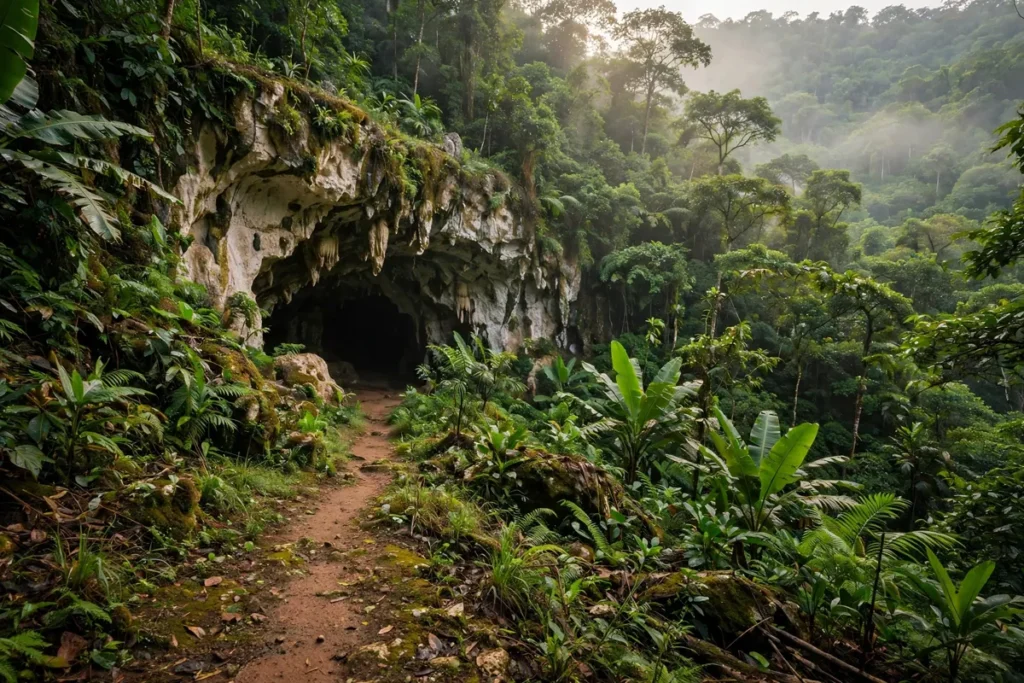
Picture the scene in 2012. Authorities in Chiapas, close to the Guatemalan border, get word about a remote cave filled with human bones. In a region where violent crime is a real and present fear, the first thought is not archaeology. It is a crime scene.
That reaction made complete sense at the time. The bones were inside a cave, out of sight, in a place most people would never stumble into by accident. Investigators removed the remains for forensic study and began, understandably, by asking who these people were and what had happened to them recently.
Then the science stepped in and rewrote the timeline. The remains were not recent at all. They were pre-Hispanic, dated to the Early Postclassic period, roughly AD 900 to 1200. The people in that cave had been dead for about a thousand years. The “crime scene” was, in fact, a ceremonial deposit from a Maya community that lived in Chiapas long before the Spanish arrived.
I love this part of the story because it is a perfect reminder of how caves work. They preserve things. Cool, dark, sheltered and often undisturbed, a cave can hold a secret for a millennium and then hand it back to us all at once, with no context and no warning label.
What INAH actually found: 165 skulls, counted twice
Let us get the numbers right, because the headlines have been a bit loose with them. According to the updated INAH analysis reported on October 28, 2026, the assemblage contains the skulls of at least 165 individuals, plus 51 long bones.
Of the 165 skulls, specialists classified 83 as female and 79 as male. Three were too fragmented to classify. Researchers also identified 15 infants among the 165. That is the headline finding, and it deserves a careful reading.
First, the counting was hard. The team did not have pelvic bones, which are normally the most reliable bones for estimating biological sex. Physical anthropologists Cristell Delesma Perez and Abigail Reyes Lopez therefore worked from cranial features, things like jaw angles and brow ridges. That method is standard, but it carries more uncertainty than a pelvic assessment, and honest reporting should say so.
Second, 83 versus 79 is not a landslide. It is a small numerical difference, not a dramatic female majority, and some careful coverage has said exactly that. What matters is not that women “won” by four. What matters is that women are present in almost equal numbers at all, in a context where many people would have assumed, without thinking, that a skull display must be mostly male warriors or captives.
Third, the assemblage includes children. Fifteen infant skulls sit alongside adult remains. That detail alone should stop any simple story about battlefield trophies in its tracks. Whatever happened in that cave involved whole communities, not just fighting men.
HeritageDaily’s October 28, 2026 report also notes cut marks on the bones of three individuals, and evidence of deliberate modification and repeated handling of some remains. Those are clues, not conclusions. They tell researchers that bodies were treated in particular ways after death, but they do not, on their own, prove how each person died.
What is a tzompantli, and why a cave changes everything
Researchers interpret the Frontera Comalapa site as a possible tzompantli, a Mesoamerican skull rack or skull display. If you have seen pictures of the great Huei Tzompantli at Tenochtitlan, the Aztec capital, you know the basic idea: skulls displayed on a rack or platform, often after sacrifice or ritual violence, as a public statement about death, power and the gods.
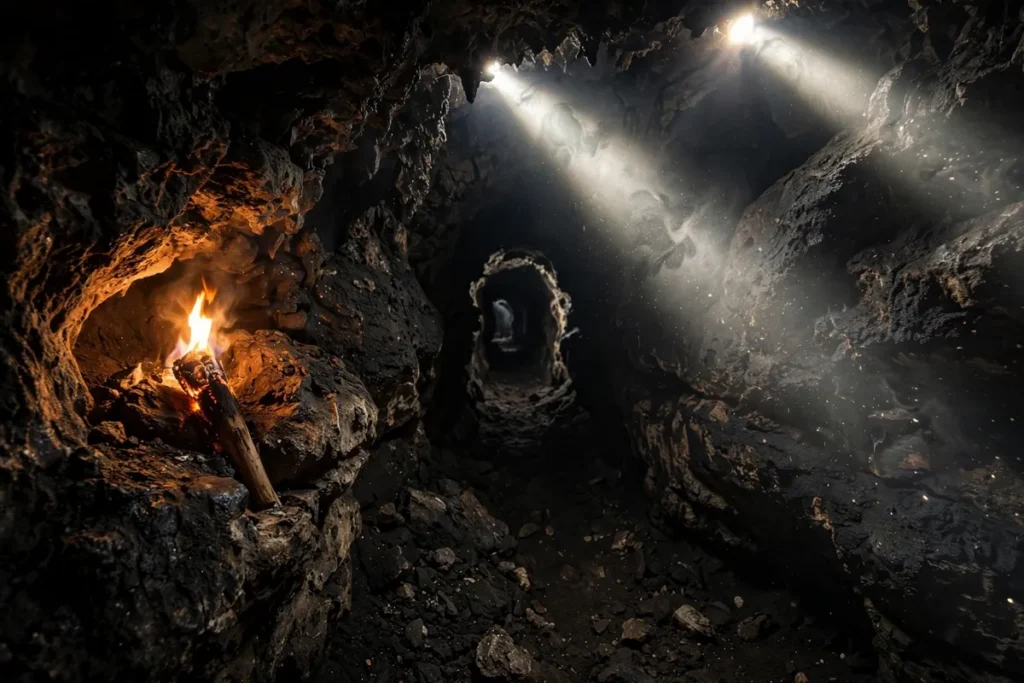
Here is where Chiapas breaks the pattern. The famous tzompantli examples sit in city plazas, in the open, where crowds could see them. This one sits inside a cave.
That matters for two reasons. A cave in Maya thought was not just a hole in a hill. It was an entrance to the underworld, a place where the earth opened and the world of ancestors, rain gods and spirits felt close enough to touch. Putting a skull display inside such a place turns a public monument into something more private, more sacred, and frankly more unsettling. You had to go into the dark to meet it.
It also matters for dating. The Frontera Comalapa remains, at roughly AD 900 to 1200, predate some of the best known later tzompantli displays. So this cave may be an earlier chapter in a long Mesoamerican tradition, not a copy of something from the Aztec capital. The tradition evolved, and Chiapas gives us a glimpse of an earlier, cave-bound version of it.
One more detail from the early investigations is worth keeping in mind. Researchers found evidence suggesting the skulls may have been rested on poles rather than threaded through them in the classic rack style. That is a small technical point, but it hints that local practice varied. There was no single, identical tzompantli kit used everywhere. Communities adapted the idea to their own place, their own cave, their own rituals.
The women at the center of the story
For a long time, the default picture of a skull rack was male. Warriors, captives, sacrificed enemies, all men, all displayed as proof of power. It is an easy picture to carry around, and it is probably wrong, or at least far too narrow.
INAH archaeologist Josuhe Lozada Toledo put it plainly in the new reporting: although the sample shows an apparent balance between the sexes, the osteological analysis allows researchers to re-evaluate the role of women in ancient rituals. In other words, the cave is forcing a rethink.
Think about what that rethink actually means. If women and children were part of this deposit, then the ritual was not only about war. It may have been about community, ancestry, fertility, rain, death itself, or all of those things tangled together. Women in Maya society held ritual roles that older histories often underplayed, and a cave full of their remains, treated with the same careful handling as the men’s, is a strong hint that their presence was deliberate and meaningful.
I want to be careful here, because it is easy to swing from one oversimplification to another. The new data does not prove that women ran the ritual, or that the deposit was peaceful, or that every person in the cave died the same way. It proves something more modest and more interesting: the old male-only story does not fit the bones. The real story was messier, more communal, and more human.
That is the kind of finding that makes cave archaeology so addictive. One careful count, 83 and 79, and a whole shelf of textbooks needs a footnote.
Torches, soot, and a possible pilgrimage
There is another clue that brings the cave to life, and it is wonderfully ordinary: soot on the ceiling.
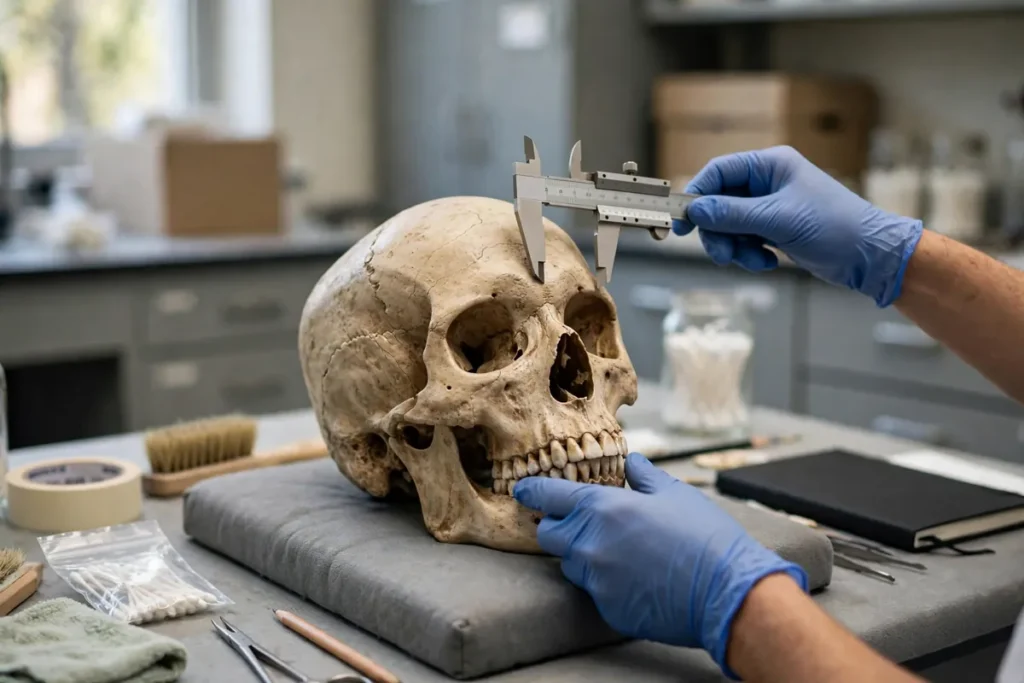
According to the INAH team, soot marks show that visitors entered the cave with torches and likely held ceremonies inside. Imagine that for a second. Not a single secret burial, sealed and forgotten, but a place people returned to, carrying fire into the dark, again and again.
That repeated use fits with an interpretation Mexico’s Secretary of Culture, Claudia Curiel de Icaza, has raised: the cave may have served as a pilgrimage and ritual center for surrounding Maya communities, possibly tied to requests for rain. In a farming world, rain was life or death, and a cave, with its dripping water and deep darkness, was a natural place to ask for it.
Again, let us keep the language honest. Pilgrimage and rain ceremonies are interpretations, not proven facts carved into the cave wall. The soot proves people went in with torches. The rest is the best reading researchers can offer from the bones, the arrangement, the landscape and what we know about Maya religion. It is a strong reading, but it is still a reading.
Still, I find the torch image hard to shake. A line of people, carrying flames down a passage, to a chamber where skulls waited in the dark. Whatever they believed, they believed it enough to walk into the earth to practice it.
What we still do not know, and why that is fine
It is tempting to want a clean ending: here is who died, here is why, here is the ritual, case closed. The Frontera Comalapa cave does not give us that, and good archaeology should not pretend otherwise.
We do not know, person by person, how each individual died. We do not know whether all 165 were sacrifice victims, or whether some died naturally and were later brought to the cave for ritual treatment. We do not know the exact sequence of ceremonies, or how long the cave was in use, or who, precisely, was allowed inside.
What we do know is solid and fascinating: a pre-Hispanic Maya community in Chiapas used a cave as a ritual space, deposited at least 165 skulls there over the Early Postclassic period, treated the remains in deliberate ways, and returned with torches to a place they clearly considered powerful. The remains are now kept in the Physical Anthropology Laboratory of the INAH Chiapas Center, where study continues.
That open-endedness is not a failure. It is the reason caves keep producing headlines decades after their discovery. A cave found in 2012 is still changing our understanding in 2026, because new techniques, new counts and new questions keep pulling fresh information out of the same dark room.
Can you visit the skull cave? The honest answer
Here is the practical part, and I am going to be blunt, because this is where curiosity can get people into trouble.
The Frontera Comalapa cave is not a tourist attraction, and you should not try to find it, enter it or look for remains yourself. It is an archaeological site, its remains have been removed for study, and wandering into unmarked caves in Chiapas is dangerous in ways that have nothing to do with ghosts. You can get lost, you can fall, you can disturb a protected site, and you can run into land access and safety issues near the border region. The cave solved a mystery for researchers. It does not need visitors.
So how do you scratch this itch properly? That is the problem this story actually solves for a traveler. You want the Maya underworld, the caves, the ritual world, without breaking the law or risking your neck. Here is the better route.
Start with the museums and official sites. INAH museums in Chiapas, including in Tuxtla Gutierrez, and the great Maya city of Palenque, give you the context this cave belongs to, with real artifacts, real explanations and guides who know what they are talking about. Palenque, with its temples and tombs, is the closest big, legal, breathtaking way to stand inside Maya sacred architecture.
Then, if caves are your thing, pick a cave that is actually open to visitors and go with a licensed guide. Mexico has superb show caves and cenote experiences where you can swim, walk and photograph in safety, and where your ticket money supports conservation instead of damaging a site. Our guide to Mexico’s sacred cenotes is a good place to start, because cenotes were also Maya portals to the underworld, and they are places you can genuinely visit.
Finally, read the research, not the rumors. The INAH findings, covered in detail by HeritageDaily and other specialist outlets, are far more interesting than any treasure hunter story. A thousand-year-old ritual, counted bone by bone, beats a made-up curse every time.
How this cave fits the wider Maya underworld
Frontera Comalapa does not stand alone. Across the Maya world, caves were places of burial, ritual, pilgrimage and art. Divers still find offerings in flooded cenotes in Yucatan. Painters left handprints and animals on cave walls in Europe and the Americas alike. Priests, families and whole communities treated the underground as a second landscape, as real as the fields above it.
That is why this Chiapas discovery connects so neatly to other cave stories we have covered. The cenotes of Mexico show the watery side of the same belief system, sinkholes the Maya called gateways to the underworld. The ancient cave art found in Ireland shows how caves preserved human marks across thousands of years on the other side of the world. And the sheer scale of systems like Son Doong in Vietnam reminds us how small, and how brave, a torchlit human looks inside the earth.
Frontera Comalapa adds a darker, more intimate chapter to that global story. Not a giant chamber you can fit a skyscraper in, but a small, dark room where a community kept its dead close, handled them with care, and came back with fire to remember them.
Why this story matters right now
Timing matters here. The INAH update landed on October 28, 2026, just two days before this article, and it landed in a week full of cave news. A 30,000-year-old genome from a French cave was published days earlier. Roman inscriptions were found 200 meters underground in Spain. The underground, it turns out, is having a very loud autumn.
But Frontera Comalapa stands out because it is not just about a new object or a new depth record. It is about people, counted one by one, and about a story we got wrong by assuming too much. That is the best kind of cave discovery: not a bigger hole, but a better understanding of the humans who went into one.
If you love caves, keep following this site. The next discovery is probably already sitting in a laboratory drawer, waiting for someone to count it properly. And if this story pulled you in, share it, save it, and come back for the next one. The dark has a lot left to tell us.
Read Full Story on thecavee.com, and follow The Cavee on Pinterest for a new cave story every day. Sources for the figures in this article: INAH’s October 28, 2026 analysis as reported by HeritageDaily and OpenChronicle.