The problem nobody talks about: the chair climb
Every home has that one shelf. You know the one. It is just high enough that you have to stretch, just out of reach enough that you end up dragging a dining chair across the kitchen, climbing up in socks, and hoping nobody walks in while you are balanced on the edge like a cartoon character. Kids have their own version of the problem. So do short adults, older pets, and anyone who has ever tried to change a light bulb while standing on a wobbly bar stool.
I have done the chair climb more times than I want to admit. It always feels fine until it does not. The chair slides a little. Your foot misses the rung. You grab the counter and laugh it off, but your heart is doing something else entirely. That is why a simple, solid step stool is one of those purchases that sounds boring and then quietly changes how your whole house works.
The one that caught my eye this week is a handmade wooden two-step stool on Etsy, and it is hard to argue with the basics. It is made from solid wood, made to order in the USA, and it is on sale right now for $67.50, down from $90. Only five were left when I checked. That combination of handmade quality, a price under $70, and a genuinely useful size is rare, and it is the reason this stool is tonight’s pick.
This is not a review of a stool I have owned for ten years. It is a practical guide to a real, currently listed product, what it actually solves, who it helps most, and what to check before you buy any step stool, handmade or not. If you have ever climbed on a chair to reach a shelf, keep reading. You will probably recognize yourself in the first section.
The problem nobody talks about: the chair climb (continued)
Here is the honest truth about climbing on chairs. Chairs were not built for standing. Their seats are narrow, their legs splay outward, and their rungs are exactly where your foot wants to slip. Add socks, a tile floor, or a child who wants to copy you, and you have a small accident waiting for a busy morning.
The problem shows up in more places than the kitchen. It is the top shelf of the pantry where the good snacks live. It is the bathroom cabinet above the sink. It is the closet shelf where winter blankets go in summer. It is the light fixture in the hallway and the plant on top of the bookshelf that only gets watered when someone remembers to fetch a chair.
A proper step stool fixes all of that in one move. You get a wide, flat place to stand, at a height that actually helps, in a piece of furniture that is meant to be stood on. That sounds obvious, but it is the difference between a house that works and a house where reaching anything feels like a small expedition.
It also changes who can do things for themselves. A child who can reach the sink can wash their own hands. A small dog who can climb onto the couch stops launching itself and hoping for the best. An older relative who visits does not have to ask for help with every high cupboard. Independence is the real product here. The stool is just the tool that delivers it.
What this stool actually is
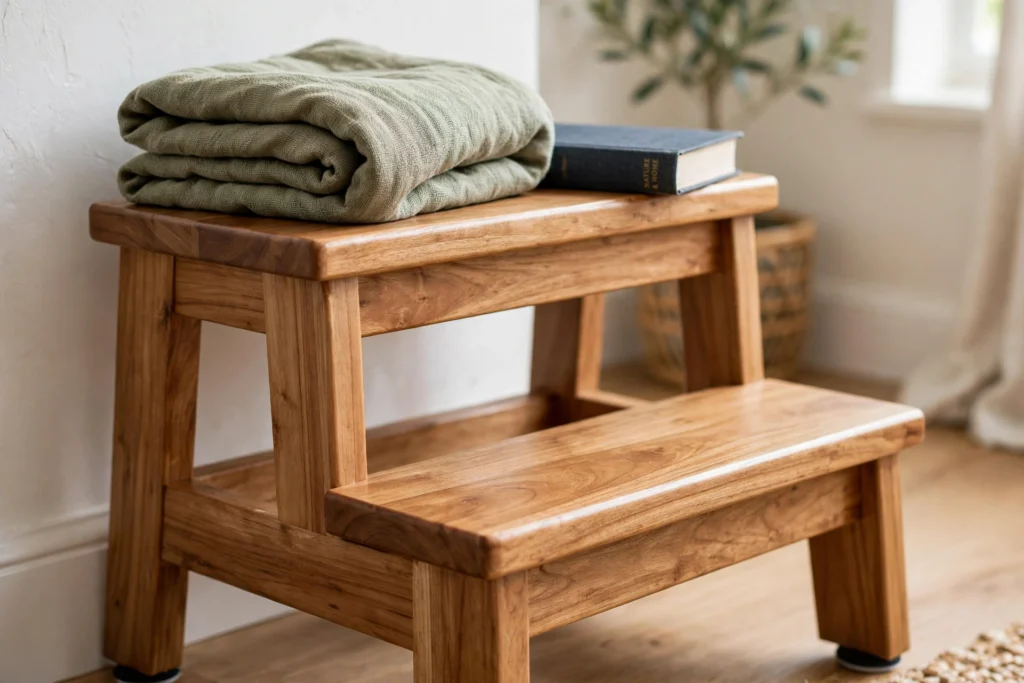
The stool is called the Handmade Wooden Two-Step Stool, Solid Wood Kitchen and Bathroom Step Stool, and it is sold by DandyAndyCo on Etsy. Each one is crafted from solid wood and made from scratch to order in the USA. The maker sands the wood multiple times until it feels smooth, treats it with pre-stain wood conditioner, and finishes stained versions with four coats of polyurethane for a durable, glossy, protective coat. Stools also come with nail-on, furniture-grade leg floor protectors, which is a small detail that matters a lot on hardwood floors.
The dimensions are refreshingly honest and compact: 8.5 inches high, 12 inches wide, and 14.5 inches deep. That is tall enough to make a real difference at a sink or a low shelf, but small enough to slide under a counter or tuck into a closet when you are done. It is not a ladder, and it is not trying to be. It is a two-step boost that lives where you need it.
Right now the listing shows $67.50 and up on a 25 percent off sale, with a regular price of $90, and a low stock note saying only five are left. Prices on handmade listings move with wood, finish, and options, so treat $67.50 as the starting price at the time of writing, not a forever promise. A bundle option was also listed at $105. If you want one, checking the listing sooner beats assuming the sale will still be there next week.
Handmade Wooden Two-Step Stool on Etsy: https://www.etsy.com/listing/4590763819/handmade-wooden-step-stool?utm_source=OpenGraph&utm_medium=PageTools&utm_campaign=Share
Why two steps beat one, and why solid wood beats plastic
One-step stools are fine for a tiny boost, but they often leave you still stretching. Two steps change the geometry. You step up once, steady yourself, then step up again to a standing height that actually puts your hands where they need to be. For a child at a bathroom sink, that second step is the difference between fingertips on the tap and hands comfortably under the water.
Solid wood brings its own advantages. It has weight, and weight is stability. A light plastic stool skitters across a tile floor when you step on it at an angle. A solid wood stool stays put, especially with floor protectors that grip instead of slide. Wood also ages well. It can be wiped, touched up, and kept for years, while cheap plastic tends to crack, yellow, and end up in a landfill.
There is also the look of the thing. A plastic stool screams utility closet. A sanded, stained wood stool can sit in a bathroom or kitchen without ruining the room. The maker even suggests using it as a decorative plant stand, which tells you something about how it is meant to look when it is not being stood on. Good tools should not have to hide.
In the kitchen: the room where it earns its keep
The kitchen is where most step stools prove themselves, usually within a day of arriving. Top pantry shelves stop being dead space. The spice jars you bought and forgot about become reachable. The mixing bowls on the high shelf, the serving platter you only use at holidays, the cereal boxes your kids swear they cannot reach, all of it comes back into daily use.
Kids benefit most here, and not just because they can finally reach the snacks. Cooking together gets easier when a child can stand at counter height safely and see what is happening in the bowl. Stirring, pouring, washing fruit, and helping with simple prep all become possible without someone holding them up or perching them on a chair. That independence builds confidence, and it makes the kitchen feel like a shared room instead of an adults only zone.
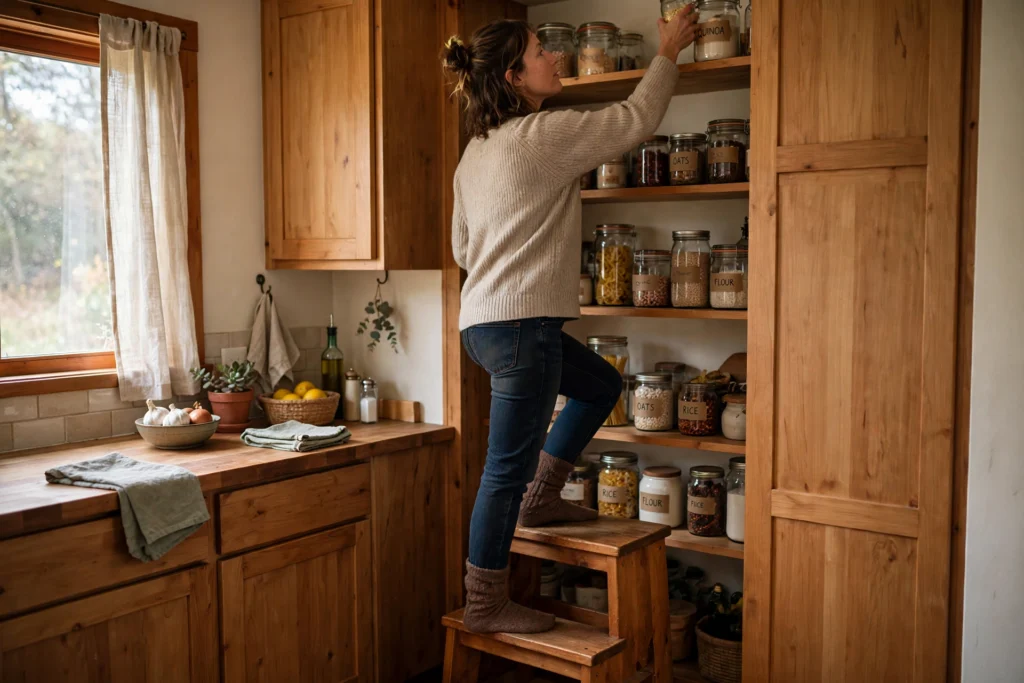
Safety still comes first, and a stool does not replace supervision. Keep the stool at the counter or the sink, never at the stove, and keep hot pans, knives, and cords well back from the edge. A good rule from kitchen safety guides is to set up everything before your child arrives, so you never have to turn your back mid task. For more on that approach, see this practical guide to keeping your kitchen safe for kids: https://www.purewow.com/home/how-to-keep-your-kitchen-safe-for-kids-raid
In the bathroom: small room, big difference
Bathrooms are the other place where a two-step stool quietly solves a daily frustration. Sinks are built for adults. Children stand on tiptoe, lean over the edge, and splash water everywhere trying to reach the tap. A stool that raises them by eight and a half inches turns that struggle into a normal hand wash.
It helps adults too. The medicine cabinet, the shelf above the mirror, the linen cupboard, all of those spots become reachable without climbing onto the edge of the bathtub, which is one of the least safe things people do in their own homes. And because this stool is compact, it fits in the gap beside the vanity or behind the door, instead of blocking the whole room.
For pets, grandparents, and shorter adults
The listing specifically mentions small or elderly pets, and that is not just cute marketing. Older dogs and cats often still want to be on the couch or the bed with you, but jumping hurts their joints. A low, wide, stable step gives them a dignified way up, without a ramp taking over the living room. Put the stool beside their favorite spot, guide them up once or twice with a treat, and most pets figure it out fast.
Shorter adults get the same benefit without the embarrassment of asking for help. Reaching the top of a bookshelf, changing a curtain, dusting a high frame, all of it becomes a one person job again. And for older visitors, a solid stool with two wide steps is far kinder than a chair, because they can hold a counter or a wall, step up slowly, and step down facing forward.
Small spaces love this stool
If you live in a small apartment, every object has to justify its footprint. A step stool that only does one job is a hard sell. This one earns its space in several ways. It slides under a counter. It fits in a closet. It doubles as a plant stand, a side table for a book and a cup of tea, or a display step for a favorite plant or photo frame.
That versatility is worth thinking about when you compare it to bulkier options. A folding ladder is taller, but it is also heavier, harder to store, and overkill for a sink or a pantry shelf. A single plastic step is smaller, but it is also less stable and less useful. The two-step wood stool sits in the sweet spot: big enough to help, small enough to keep.
It also fits the way handmade wooden pieces work in a home. Like the handmade wooden blanket ladder that turns throw blanket chaos into cozy storage, or the handmade wood and epoxy resin coasters that protect a coffee table while looking good doing it, a well made wood piece does its job and adds warmth at the same time. The same idea runs through the wooden recipe box comeback where a simple box keeps family recipes safe and looks like it belongs on the counter. Practical wood pieces age into the home instead of wearing it out.

What to check before you buy any step stool
Before you order this stool or any other, run through a short checklist. It will save you a return and a lot of annoyance.
First, measure the height you actually need. Stand where you will use the stool and see how much of a boost helps without making you duck under a cabinet or bump your head. Eight and a half inches is a good general boost for sinks and low shelves, but it will not turn a short adult into someone who can reach the very top of tall kitchen cabinets. For those, you need a proper ladder, not a stool.
Second, check the footprint. Measure the spot where the stool will live, not just where it will be used. Twelve inches wide by fourteen and a half inches deep is compact, but it still needs a home. Under a counter, beside a vanity, or in a pantry corner all work. Behind a door that needs to swing freely does not.
Third, think about who will use it most. Kids need wide, stable steps and a stool that does not slide. Pets need a low first step and a surface they can grip with paws. Adults reaching high shelves need a stool that feels solid under full body weight, with no wobble. If a listing does not mention weight, stability, or floor protection, ask the seller before you buy.
Fourth, look at the finish. In a bathroom or kitchen, a sealed finish matters. Four coats of polyurethane, like this stool has, is a good sign, because it resists splashes and wipes clean. An unfinished or lightly oiled stool looks beautiful, but it will need more care in a wet room.
Fifth, read the made to order note. Handmade pieces take time. This stool is made from scratch to order, so it will not ship the same day like a warehouse item. If you need it for a specific date, message the seller and ask about current turnaround before ordering, especially while stock is low.
How to care for it so it lasts for years
Wood care is simpler than people make it sound. Wipe the stool with a damp cloth for everyday dust and spills, then dry it. Avoid soaking it or leaving it standing in water. In a bathroom, that means wiping up splashes rather than letting them sit. In a kitchen, it means cleaning up flour and spills the same day, not a week later.
Every few months, check the floor protectors. They are nail-on pads, so they can wear down over time, especially on rough tile. Replacing a worn pad is a five minute job and it protects both your floors and the stool’s legs. If the finish starts to look dull in a high use spot, a light coat of furniture oil or a touch up recommended by the maker will bring it back.
Is it worth $67.50?
That depends on what you compare it to. A cheap plastic step costs less, sometimes a lot less. It also slides, cracks, and looks like something you would hide when guests come over. A full wooden ladder costs more and takes up more space. A custom furniture piece costs several times as much.
At $67.50 on sale, with solid wood, a made to order build, a sealed finish, and floor protectors included, this stool sits in a sensible middle. You are paying for materials and a maker’s time, not for a brand name or a warehouse markup. If you use it daily, and most households will, the cost per use drops to pennies within a few months.
The low stock note is worth taking seriously, but not as pressure. Handmade sellers make in small batches, and five left means the current batch is nearly gone, not that the product will vanish forever. If you like it, ordering sooner is simply practical. If you miss it, message the seller and ask when the next batch will be ready.
The bottom line
Most home problems are not dramatic. They are small, daily frictions: a shelf you cannot reach, a sink your child cannot use alone, a pet who wants up on the couch but should not jump, a plant on top of a bookshelf that slowly dies of thirst. A handmade wooden step stool does not look like a life changing purchase, but it quietly removes all of those frictions at once.
This DandyAndyCo two-step stool is a good example of the category done right. It is solid wood, compact, well finished, and priced fairly while it is on sale at $67.50. It helps kids reach the sink, helps adults reach the pantry, helps pets reach the couch, and it looks good enough to leave out in the room instead of hiding it away.
Stop climbing on chairs. Your ankles, your floors, and your dignity will all be grateful. Measure your space, check the listing for current stock and finish options, and give your home the small boost it has been missing.
Read Full Story on thecavee.com, and if this stool solves a problem in your house, share this guide with someone who is still balancing on a dining chair. They will thank you, probably from a much safer height.