Inside Croatia’s Blue Cave: The 15 Minute Glow That Makes a Whole Day at Sea Worth It
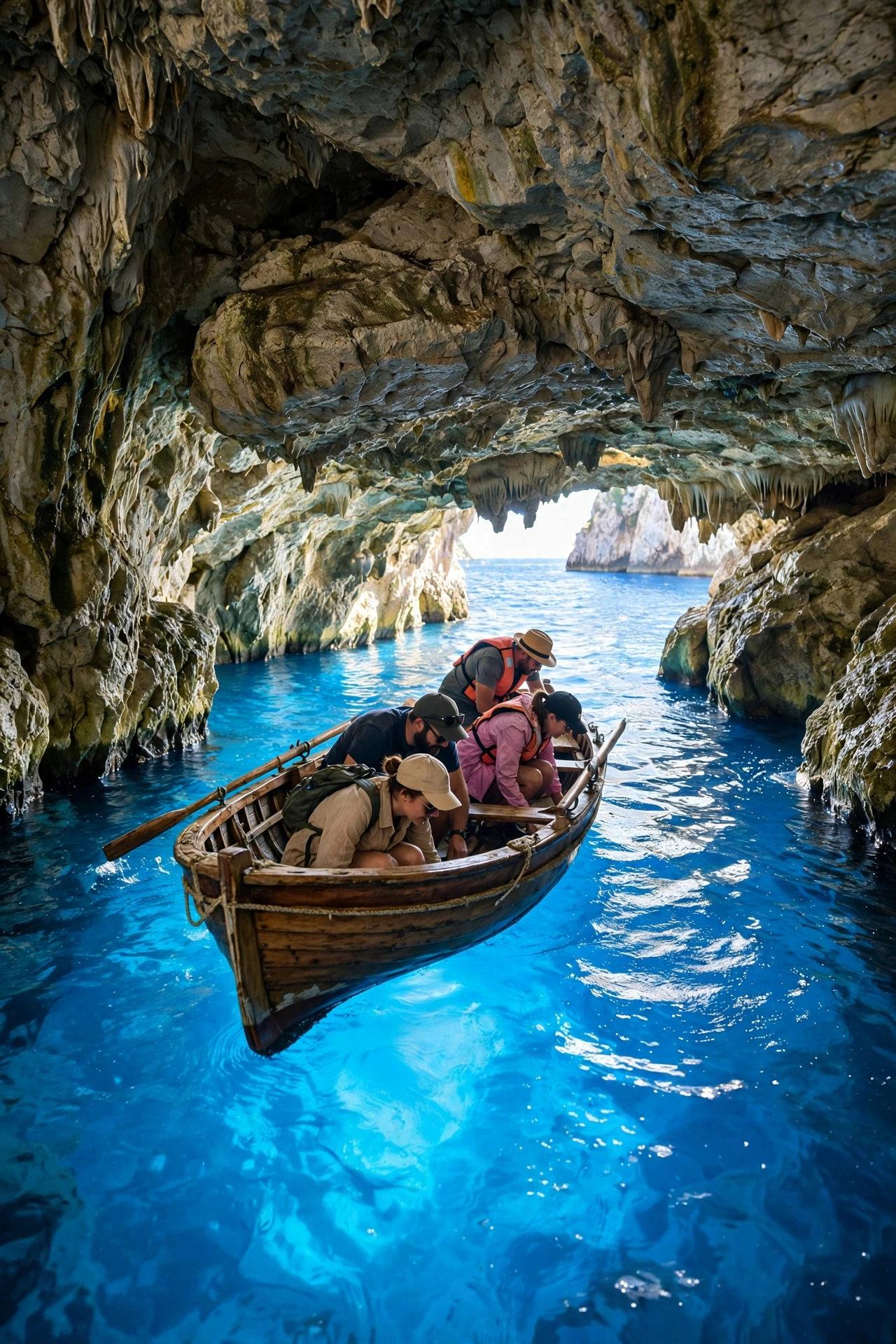
There is a moment, about ten seconds after your little boat ducks through the low doorway in the rock, when the whole cave seems to switch on. The water turns a blue so bright it looks fake. Your hands, if you dip them in, come out silver. Everyone on board goes quiet, then everyone talks at once. It lasts maybe ten to fifteen minutes. And honestly, it is worth every bumpy minute of the boat ride to get there.
That is the Blue Cave of Croatia, Modra spilja, on the tiny island of Bisevo off Vis in the Adriatic. It is not a big cave. It is not a long tour. It is one small room, lit from below by the sun, and it has been stopping visitors mid-sentence since the 1800s. This guide covers how the glow actually works, when to go, what it costs in 2026, how to get there from Split, Hvar or Vis, and the one problem no brochure can fix for you: the sea itself.
One quick warning before you start planning. Croatia has more than one blue cave, and Greece has its famous Blue Caves off Zakynthos too. This article is only about the one on Bisevo, the Modra spilja in the Vis archipelago. If a tour just says “blue cave” with no island name, ask which one. You do not want to book the wrong boat.
What makes the water glow blue?
It is not paint, it is not a light show, and nobody is shining a lamp under the water. The trick is geometry plus a very white floor.
The cave is about 24 metres long, 10 to 12 metres wide and up to 15 metres high. It has two openings. The one you use is tiny, only about 1.5 metres high and 2.5 metres wide, which is why only small official boats can get in and why you have to duck. The other opening is underwater, on the southern side. On a calm, sunny day, sunlight passes through that submerged gap, bounces off the white limestone seabed, and floods the chamber with blue light. The water inside is up to about 16 metres deep in places, and anything under the surface picks up a silvery sheen.
That is also why timing matters so much. The effect is strongest when the sun is high enough to hit the underwater opening at the right angle. Most guides put the sweet spot between 11am and noon, with a good window roughly from 10am to 2pm. Come too early and the cave is pretty but ordinary. Come on a cloudy day and the magic is muted. Come when the sea is rough and you may not get in at all.

A short history: from fishermen’s secret to a protected monument
Local fishermen knew about this cave for centuries. It was the wider world that arrived late. In 1884, the Austrian painter and naturalist Baron Eugen von Ransonnet described and painted it, and on his suggestion a small artificial entrance was cut so boats could enter. Before that, the only way in was to dive through the submerged opening. Think about that for a second. The cave we now visit in a rowboat was once a divers-only secret.
Ransonnet wrote that the light gave rocks and submerged objects a silvery blue hue, like a castle belonging to a sea god. He was not exaggerating much. The cave has been a protected geomorphological monument of nature since 1951. In 2019, the whole Vis archipelago, Vis, Bisevo, Sveti Andrija, Brusnik, Jabuka and Palagruza, gained UNESCO Global Geopark status, which puts the Blue Cave in a landscape recognised for its geology, not just its beauty.
A 2019 survey found 119 marine species inside the cave, five of them strictly protected. That is a useful reminder when you are tempted to complain about the rules. Swimming is banned, private boats cannot just drive in, and only the small official boats run the short transfer from the landing at Mezuporat. Those rules are not there to spoil your day. They are there so the cave is still glowing for the next boatload of visitors.
What the visit actually feels like
Most visitors do not arrive at Bisevo under their own power. You join a speedboat tour from Split, Hvar or Komiza on Vis, ride out across open water, then transfer to a small official boat at Bisevo. The transfer boat takes you through the low entrance, circles slowly inside the cave, and brings you back out. The whole cave visit is about ten to fifteen minutes.
Yes, that sounds short. It is short. But it is also intense in a way a long cave walk is not. You are sitting low in a small boat, close to the water, inside a dark rock room that is glowing from below. The boatman rows quietly. People whisper without being told to. Cameras come out, then go away again, because a photo never quite captures the colour your eyes are seeing.
Here is the practical part people forget: you will duck. The entrance is low. Keep your head down, keep your hands inside the boat, and do not stand up to get a better angle. The boatmen do this all day, every day, and they will tell you exactly when to lean. Listen to them. A bumped head is the fastest way to ruin a beautiful fifteen minutes.
Swimming inside the cave is strictly prohibited. If swimming in a blue cave is high on your list, pair this stop with the nearby Green Cave on Bisevo, where swimming is allowed, or with a swim stop at a beach or lagoon on the same island-hopping tour. Do not try to sneak a swim in the Blue Cave. You will be stopped, and rightly so.
How to get there: Split, Hvar or Vis?
From Split: the classic full day
A Blue Cave tour from Split is usually a ten hour speedboat day covering five islands: Bisevo, Vis, Budikovac, the Pakleni Islands and Hvar. Expect to leave around 8am, ride about 90 to 105 minutes of open sea to Bisevo, and arrive late morning, which is exactly when you want to be there. Prices vary by operator, but a recent 2026 listing puts a typical Split five island tour at about 140 euros per person, with the cave entrance fee paid separately on site. Lunch in Hvar is usually at your own expense.
The ride out is the longest open sea crossing on these tours, and it can be bumpy if there are waves. If you get seasick, this is the tour to take a tablet for, sit near the back, and look at the horizon. Do not skip breakfast, but keep it light. You will thank yourself halfway across the Adriatic.
From Hvar: shorter, and often cheaper
Tours from Hvar Town usually leave around 10:30am, after a 10am check-in, and run eight to ten hours. A standard route includes Stiniva Cove, the Blue Cave, the Blue Lagoon, the Green Cave and Palmizana. Recent 2026 guides put group tours from Hvar at about 80 to 100 euros per person in high season, again with the cave entrance paid separately. Private speedboats from Hvar start around 400 to 450 euros per group and give you a flexible departure time.
Hvar has one big advantage: it is closer to Bisevo than Split is. The crossing is still open sea, but it is shorter, and you get back to Hvar in time for dinner without feeling like you spent the whole day in transit.
From Vis and Komiza: the smartest option
If you can base yourself on Vis, do it. Komiza, the fishing town on the west side of Vis, is only about 4.5 nautical miles from Bisevo. Tours from Vis or Komiza run about three to four hours, cost roughly 50 to 70 euros per person in recent listings, and get you to the cave without the long Split crossing. You also get to see Komiza itself, which is worth a slow evening.
Vis is the island people fall in love with quietly. The result is a place that still feels like a working island: fishing boats, stone houses, vineyards, and beaches that are not trying too hard. If the Blue Cave is your excuse to visit Vis, let Vis be the real reward.
Tickets, season and the best time to go
The Blue Cave entrance fee is paid on site, in cash at the ticket point, and it is not included in most tour prices. In peak season, roughly 20 June to 10 September, recent 2026 listings put it at 24 euros per adult and 12 euros for children aged 6 to 10. In shoulder season, April to mid June and mid September to October, it drops to about 18 euros per adult and 9 euros for children. Prices are set by the local concession holder and can change from season to season, so treat these as a planning guide and check the current rate before you travel.
The cave is generally open from May to October, weather and sea conditions permitting, with visits roughly from 9am to 5pm. Some guides list daily hours of 8am to 6pm for the wider tour operation, but the cave itself only opens when the sea allows. Summer, June to September, gives you the most reliable sun and the strongest glow, but also the biggest crowds and the longest queues at the transfer boats. May, late September and early October are quieter, with softer light and a better chance of a relaxed visit, if the weather holds.
For the best chance of the full electric blue effect, aim for a sunny, calm day between 11am and noon. That is why Split tours leave so early and Hvar tours rush to Bisevo first. If your tour puts the Blue Cave last in the afternoon, ask why. You can still enjoy it, but you are not giving yourself the best odds.
The problem nobody can fix: waves close the cave
This is the part to plan around, because it catches people out every summer. Bisevo is exposed to all the winds of the Adriatic. When the southerly wind, the jugo, blows, or when waves build, the small transfer boats cannot safely pass through the low entrance. The concession closes the cave. There is no appeal, no bigger boat option, and no refund for the weather.
Good operators will reroute the day to other islands, beaches and caves. A bad day at the Blue Cave can still be a great day on Vis, Hvar and the Pakleni Islands. But if the Blue Cave is the one thing you came for, build in a backup day. Stay on Vis for two nights if you can, or pick a tour operator with a flexible rebooking policy. The sea decides on the day, and the sea does not read itineraries.
Check the forecast the night before and again in the morning. If the forecast mentions strong southerly wind or rough seas, have a plan B you actually like, not just a shrug.
What to do around Bisevo and Vis
Do not make the Blue Cave your only stop and then rush home. The Vis archipelago rewards slow days.
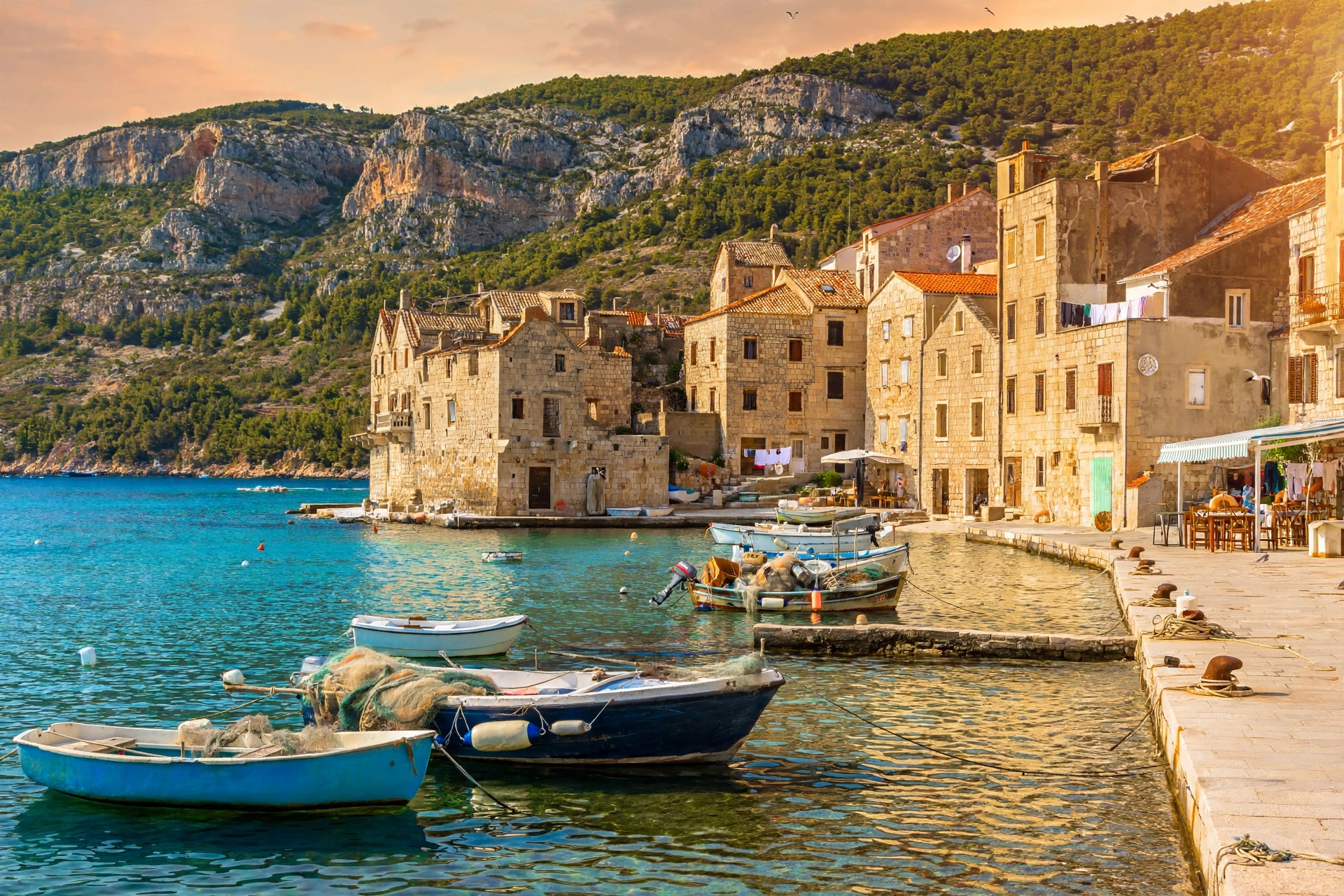
Start with the Green Cave, Zelena spilja, also on Bisevo. It is larger, greener, and you can swim there. Then head to Stiniva Cove on Vis, a narrow pebble beach tucked between high cliffs, best reached by boat. In Komiza, walk the waterfront in the late afternoon, when fishing boats come in and the town smells like grilled fish and salt. Try the local white wine, Vugava, and the red, Plavac Mali, if you drink wine. Vis Town, on the other side of the island, has a quieter harbour, Roman ruins and a good base for a second night.
If you like caves in general, this region is a good starting point for a longer cave habit. Portugal’s Benagil Cave, with its famous skylight, and Palawan’s underground river in the Philippines are very different kinds of sea and river caves, and comparing them shows how many ways water can carve rock. For a colder contrast, Iceland’s ice caves are a reminder that caves are not only made of limestone and salt water.
Practical checklist for Blue Cave day
Pack light, but pack right. Bring sun protection, a light jacket or windbreaker for the boat ride, and shoes you can walk in on wet stone. Wear a swimsuit under your clothes if your tour includes a swim stop, but remember you will not swim in the Blue Cave itself. Bring cash for the cave ticket, water, and something for motion sickness if open sea makes you queasy.
Book in advance in July and August. The transfer boats run in order, and queues build up by late morning.
Respect the cave. Do not touch the rock, do not try to swim, do not shout, and do not ask the boatman to stay longer than the rotation allows. Fifteen minutes sounds short until you realise how many boats are waiting behind you. Everyone deserves the same quiet glow.
Who should skip it, honestly?
Not every great sight suits every traveller, and it is better to know before you book. If rough open sea makes you seriously ill, the long Split crossing may not be worth it, even for the glow. Consider a shorter Komiza based tour, or skip the cave and enjoy Vis from land. If you cannot duck low or sit still in a small boat, the transfer may feel uncomfortable. If you only have a tight schedule and the forecast is bad, do not force it. The cave will still be there on a calmer day.
Families with older children usually love it. Younger children may find the boat transfer exciting or a little scary, depending on the child. There is no age rule in this guide that replaces your own judgement. If your child hates small boats and loud water, a beach day on Vis will make everyone happier.
Final thought: go for the glow, stay for the island
The Blue Cave is a small room with a big trick, and the trick works. Sunlight comes in under the water, bounces off white rock, and turns an ordinary sea cave electric blue for a few perfect minutes. It is one of those sights that sounds overhyped until you are sitting in the boat watching it happen.
Plan for the best time, budget for the ticket on top of the tour, build in a backup day for waves, and base yourself on Vis if you can. Then let the island do the rest. The glow will be the photo you show everyone. Vis will be the place you want to go back to.
Want more caves that actually live up to the hype? Follow The Cavee on Pinterest for new cave guides every day, and read our guides to Benagil Cave in Portugal, Palawan’s underground river and Iceland’s ice caves. For official visitor details on Bisevo, see the Blue Cave visitor page and the Vis Archipelago Geopark protected sites page. Read the full story on thecavee.com and save this guide for your Croatia trip.