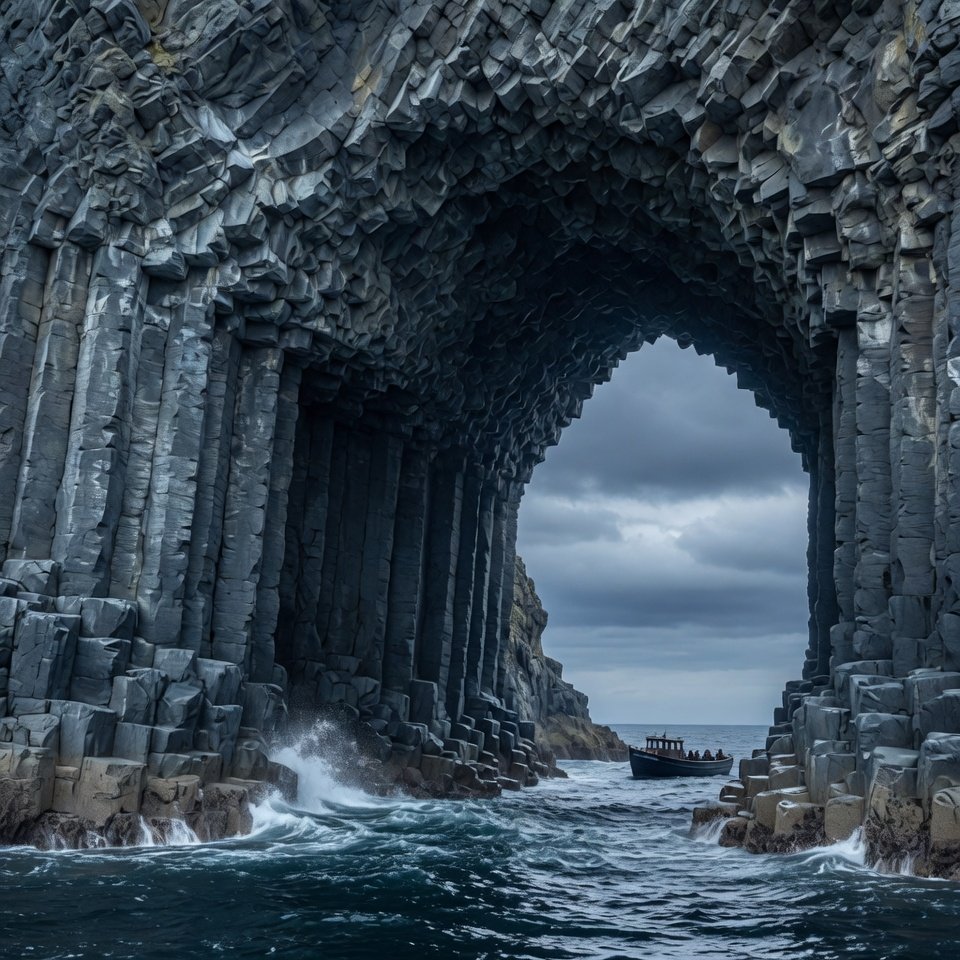
Off the rugged west coast of Scotland, in the wild waters of the Inner Hebrides, sits an island that almost nobody lived on and almost everybody who visited it never forgot. The Isle of Staffa is small, uninhabited, and shaped entirely from ancient lava that cooled into thousands of perfect hexagonal columns. At its heart lies Fingal’s Cave, a sea cave so strange and so acoustically alive that composers, poets, and queens have all made the journey just to stand inside it and listen.
The Gaelic name for the cave is Uamh-Binn, which translates to the melodious cave, or the cave of music. That name is not poetic exaggeration. The regular spacing of the basalt columns combined with the enclosed shape of the cave creates a natural echo chamber, where the sound of the Atlantic Ocean surging in and out produces a low, resonant hum unlike anything else in nature. Felix Mendelssohn visited in 1829 and was so struck by what he heard that he composed the Hebrides Overture, often simply called Fingal’s Cave, immediately after returning to the mainland.
The Problem Most Travelers Run Into
Fingal’s Cave shows up on countless Scotland bucket lists, but very few articles explain the practical side of actually getting there. Staffa is a remote, uninhabited island reachable only by boat, and landing is never guaranteed since it depends entirely on sea conditions on the day. Travelers often book a tour without realizing there are several departure points, wildly different trip lengths, and real limits on how much time you get on the island itself. This guide walks through exactly what to expect so you can plan a trip that actually delivers the experience you are picturing.
The Geology Behind the Magic
Around sixty million years ago, during a period of intense volcanic activity as the North Atlantic Ocean was forming, a massive flow of lava spread across what is now western Scotland. As that lava cooled slowly and evenly, it contracted and cracked into long, mostly six sided columns, the same geological process that created the Giant’s Causeway across the sea in Northern Ireland. Over millions of years, the sea attacked weaker points in the rock and hollowed out several caves along Staffa’s coastline, the largest and most famous being Fingal’s Cave.
The cave itself stretches roughly seventy meters deep into the island, with an entrance arch reaching around eighteen to twenty meters high. Inside, visitors are surrounded on all sides by towering hexagonal pillars stacked like the pipes of a giant organ, an image so striking that early visitors genuinely believed the cave had been built by giants rather than shaped by nature.
How to Actually Get There
Staffa has no ferry terminal, no dock town, and no permanent residents. The only way to reach it is by small boat tour, and several operators run trips from different points along the coast. The most common departure points are Fionnphort on the Isle of Mull and the nearby Isle of Iona, both of which offer boat rides to Staffa in around thirty to forty five minutes each way, depending on wind and tide. Return tickets from Fionnphort typically run around forty pounds, while longer trips departing from Tobermory on the north side of Mull cost more, often in the range of eighty five pounds, reflecting the longer sailing distance.
For travelers based in Oban on the Scottish mainland, full day tours are available that combine Staffa with visits to Mull and Iona in a single outing, though these trips involve significantly more travel time since you first take a ferry to Mull before boarding the boat to Staffa. If your schedule is tight, departing directly from Fionnphort or Iona is the faster and simpler option.
What Happens Once You Land
Landing on Staffa is never a certainty. Boats can only put visitors ashore when swell and tide conditions allow it safely, and on rougher days operators may only be able to cruise past the cave for viewing from the water rather than allowing passengers to step onto the island. When conditions cooperate, visitors disembark at a small jetty and walk along a natural causeway formed by the tops of the basalt columns themselves, now fitted with a handrail after recent safety improvements to the walkway. The walk to the cave entrance takes only a few minutes, though the uneven hexagonal surface underfoot means good footwear and careful steps are worth the effort.
Time actually spent on the island varies by tour, typically somewhere between forty five minutes and just over an hour, so it pays to check the specific itinerary before booking if seeing the cave properly rather than rushing through it matters to you. Once inside the cave mouth, many visitors simply stop and listen. The sound of waves compressing and releasing between the columns produces a genuinely eerie, musical quality that recordings rarely capture accurately.
Beyond the Cave Itself
Staffa is not only about the cave. The island and surrounding waters are part of a National Nature Reserve managed by the National Trust for Scotland, and the boat journey itself is often filled with wildlife sightings. Dolphins, porpoises, and minke whales are regularly spotted during the warmer months, and basking sharks occasionally appear in the same waters. Between April and July, nearby cliffs and grassy slopes host nesting puffins, making a combined Staffa and wildlife tour a popular choice for travelers who want more than just the geology.
For those seeking something more adventurous, a small number of specialist operators offer guided swimming or snorkeling trips directly into the mouth of Fingal’s Cave, allowing visitors to float at the entrance and look straight up through the basalt columns while observing marine life below the surface. This is a niche option better suited to confident swimmers comfortable in cold open water, but it offers a completely different perspective on the cave that standard boat tours cannot match.
Best Time to Visit
Late spring through summer, roughly April to August, offers the best combination of factors: calmer seas, longer daylight hours, and the chance to see puffins nesting on the island. Since all of the main caves at Staffa face southeast, morning light tends to produce the best visibility and photography conditions inside the cave itself. Outside of these months, sailings still operate but landing becomes less reliable due to rougher Atlantic conditions, so travelers visiting in autumn or winter should build flexibility into their itinerary in case a landing gets cancelled.
Why This Cave Still Matters
Long before scientists could explain columnar basalt, people who stood inside Fingal’s Cave believed they were witnessing something built by giants. Today we understand the geology, yet the experience of standing inside a sea cave built entirely of natural stone organ pipes, listening to the ocean compose its own music, has lost none of its power. Poets, composers, and queens once made the difficult journey west to hear it for themselves. The trip remains just as worthwhile now, and considerably easier to arrange.
For more real, verified adventure travel guides like this one, including remote islands, natural wonders, and detailed planning tips from destinations around the world, follow along and read the full story on thecavee.com.