Stop Tripping Over Shoes at the Door: This $202.50 Handmade Pine Shoe Bench Fixes Entryway Chaos
You know the scene. You walk in the door after a long day, arms full, and there it is again: a small mountain of shoes by the entrance. One sneaker on its side, a boot tipped over, someone’s trainers blocking the hallway like a tiny obstacle course. You kick a pair aside, you trip on another, and you promise yourself you will sort it out this weekend. Then the weekend comes, and the pile is somehow bigger.
I have lived with that pile. I have also lived without it, and I can tell you the difference is not just tidiness. It is calmer mornings, fewer arguments about missing shoes, and a hallway you can actually walk through in the dark without stubbing a toe. The fix is not a bigger basket or another plastic rack that wobbles. It is a proper bench with a job to do, and the one I keep coming back to is a handmade rustic shoe and boot rack bench made from solid pine.
This is not a review written from a product photo. It is a practical guide to why this specific bench works, who it suits, what to measure before you order, and how to keep it looking good for years. If your entryway is the busiest, messiest corner of your home, this might be the simplest upgrade you make all year.
The real problem is not the shoes, it is the lack of a landing spot
Most homes do not have a shoe problem. They have a landing problem. Shoes come off at the door because that is where people arrive, but there is nowhere sensible for them to go. So they end up on the floor, in a heap, or stuffed into a cupboard that nobody opens because it is already full.
A bench changes that habit in one move. You sit down, you take your shoes off, and they go straight into their slot. No bending over a low rack, no balancing on one foot while you hop toward the living room, no pile forming because putting shoes away takes an extra step. When the storage is right where you sit, tidy becomes the easy option, and easy is what actually sticks.
That is why a shoe bench beats a shoe rack for most families. A rack only stores. A bench stores and gives you a place to sit, which is the exact moment shoes come off. Parents with kids know this well. Ask a child to put shoes on a rack and you get a negotiation. Give them a bench to sit on and the shoes tend to land in the cubby underneath without a second thought.
Meet the bench: solid pine, divided storage, and room for tall boots
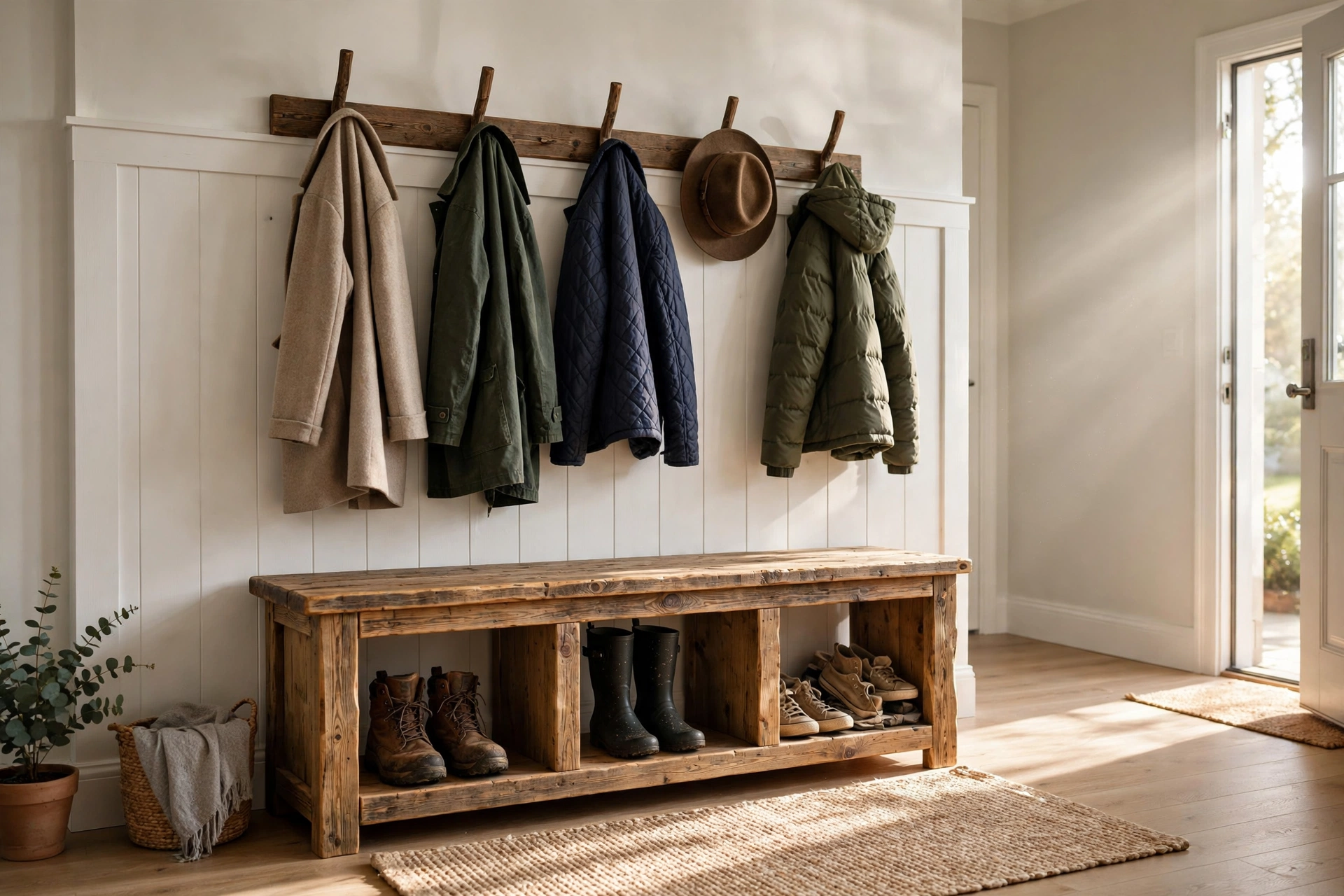
The bench at the center of this guide is the Rustic Shoe and Boot Rack Bench by FallingTreesBySki on Etsy. It is handmade to order from solid pine, built with a pocket hole design that hides the screws, and finished in your choice of Minwax stain with several coats of satin polyurethane. At the time of writing it was listed from $202.50 on sale, down from $225, with only 2 left and 7 shoppers with it in their carts, which tells you it moves steadily rather than sitting in a warehouse.
What makes it different from the flat benches you see everywhere is the divided layout. Regular shoes get their own sections, and tall boots and wellies get a taller space instead of being squashed sideways or left leaning against the wall. That one detail matters more than it sounds. Boots are the items that usually break a storage system, because they do not fit normal cubbies, so they end up on the floor anyway. Give boots a proper home and the whole hallway stays clear.
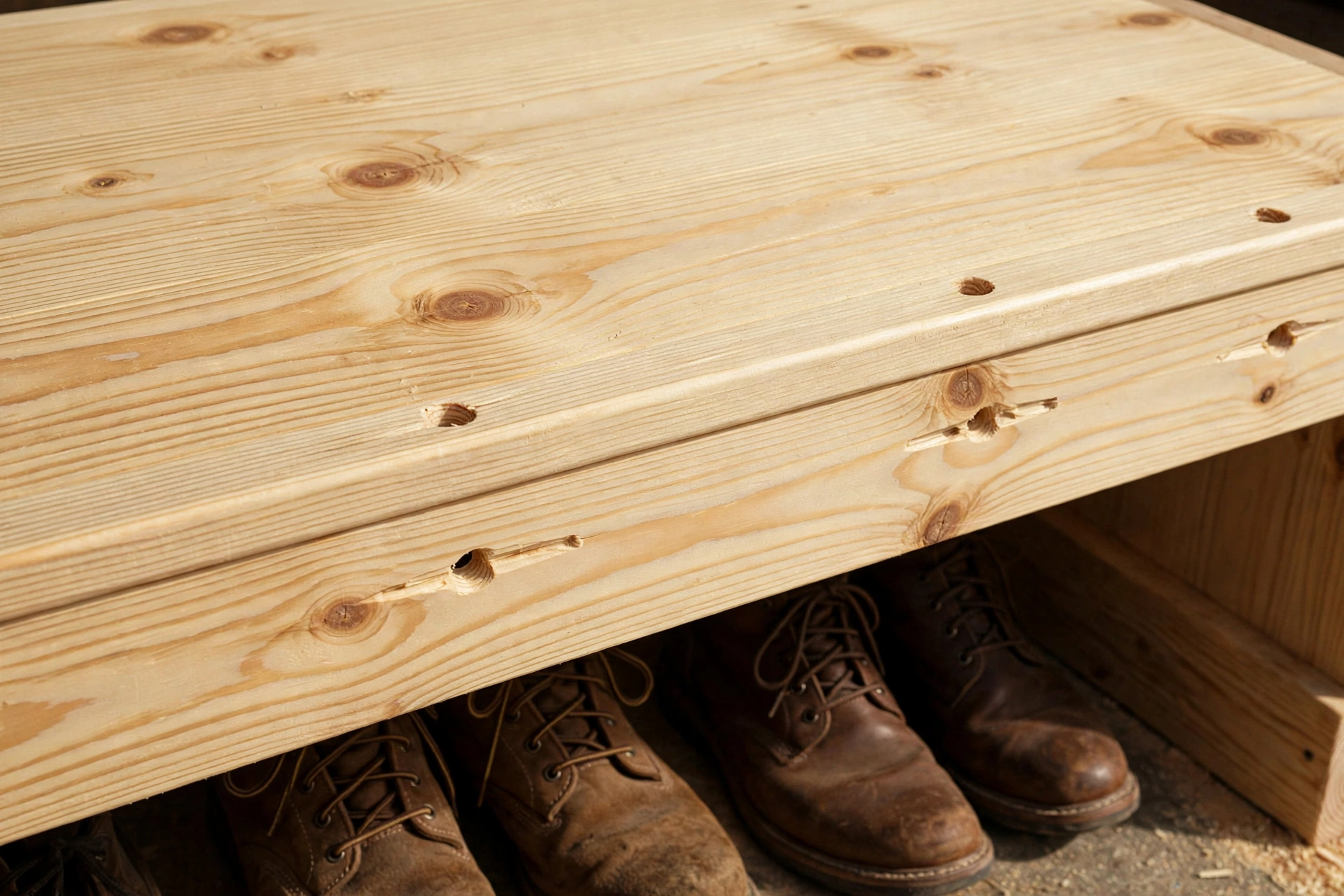
The top is sturdy enough to sit on while you lace up, which is the whole point. The bench pictured in the listing is finished in Provincial by Minwax, a warm mid brown that suits farmhouse, rustic, and fairly plain modern hallways alike. Because each bench is made to order, the grain and knots will be unique to yours. That is part of the charm of handmade wood, and also why you should expect small natural variations rather than a factory perfect match.
Why solid pine works for an entryway
Pine gets overlooked because it is not as fancy as walnut or oak, but for a hallway bench it is a smart choice. It is strong enough for daily sitting, light enough to move when you need to clean behind it, and it takes stain beautifully, so you can match it to your floors or your door trim without a huge price jump.
The pocket hole construction is worth noting too. No visible screws means no snagged socks, no scratched boot leather, and a cleaner look from across the room. The satin polyurethane coats protect against wet soles, muddy boots, and the occasional spilled coffee, which is exactly the kind of abuse an entryway bench has to survive.
There is also a sustainability angle that matters to a lot of buyers now. A solid wood bench that lasts ten years beats three plastic racks that crack, wobble, and end up in landfill. Buy once, buy well, and let the piece age with the house. Pine develops character over time, small marks and a deeper tone, and that patina suits a hallway far better than a shiny new plastic unit ever will.
Who this bench is actually for
Not every home needs a boot bench, so let us be honest about fit. This bench shines for families with two or more people sharing one entrance, for anyone with tall boots or wellies that never fit anywhere, for renters and homeowners with a narrow hallway who need storage that does not stick out too far, and for older adults or anyone who struggles to balance while putting shoes on standing up.
It also works surprisingly well as a mudroom starter piece. If you do not have a full mudroom, one bench plus a few wall hooks above it gives you most of the function for a fraction of the cost and disruption. Coats go up, shoes go under, bags go on the bench top for a minute while you find your keys, and suddenly the hallway feels intentional instead of chaotic.
It is less ideal if your entrance is a tiny nook with barely room to open the front door, or if you need closed storage to hide everything completely. This is open storage, which is great for grabbing shoes quickly but means you will see them. If visible shoes bother you, pair it with matching baskets in the cubbies, or look for a closed cabinet instead. For most people, though, seeing neat rows of shoes is a big improvement over seeing a pile.
Measure twice, order once: the sizing checklist
Before you order any bench, grab a tape measure and check five things. First, the wall length where it will sit, leaving a few inches on each side so the door can swing and you can walk past comfortably. Second, the depth, because a bench that sticks too far into a narrow hallway becomes a shin hazard. Third, the height of your tallest boots, so the tall section actually fits them. Fourth, the sitting height that feels comfortable for the shortest person in the house. Fifth, the route in, because a made to order bench still has to fit through your front door.
Custom widths and stain requests are welcome on this listing, according to the maker, so if your hallway is an awkward size, message the shop before ordering rather than settling for a near fit. A bench that fits your wall exactly looks built in, while one that is a few inches too long looks like an afterthought. Take the extra day to confirm measurements. It saves a return headache later.
Also think about flooring. On hard floors, felt pads under the legs protect against scratches and make the bench easier to slide out for cleaning. On carpet, a slightly wider base sits more stably. Neither is a dealbreaker, but both are the kind of small detail that makes daily use smoother.
How to style it so it looks intentional, not like a shoe dump
A bench full of shoes can still look good if you style the space around it with a little care. Start with a simple rule: one pair per person per section, and the pair you wear most often goes in the easiest spot. Rotate seasonal shoes out. Winter boots do not need to live in the hallway in July, and sandals do not need prime space in January.
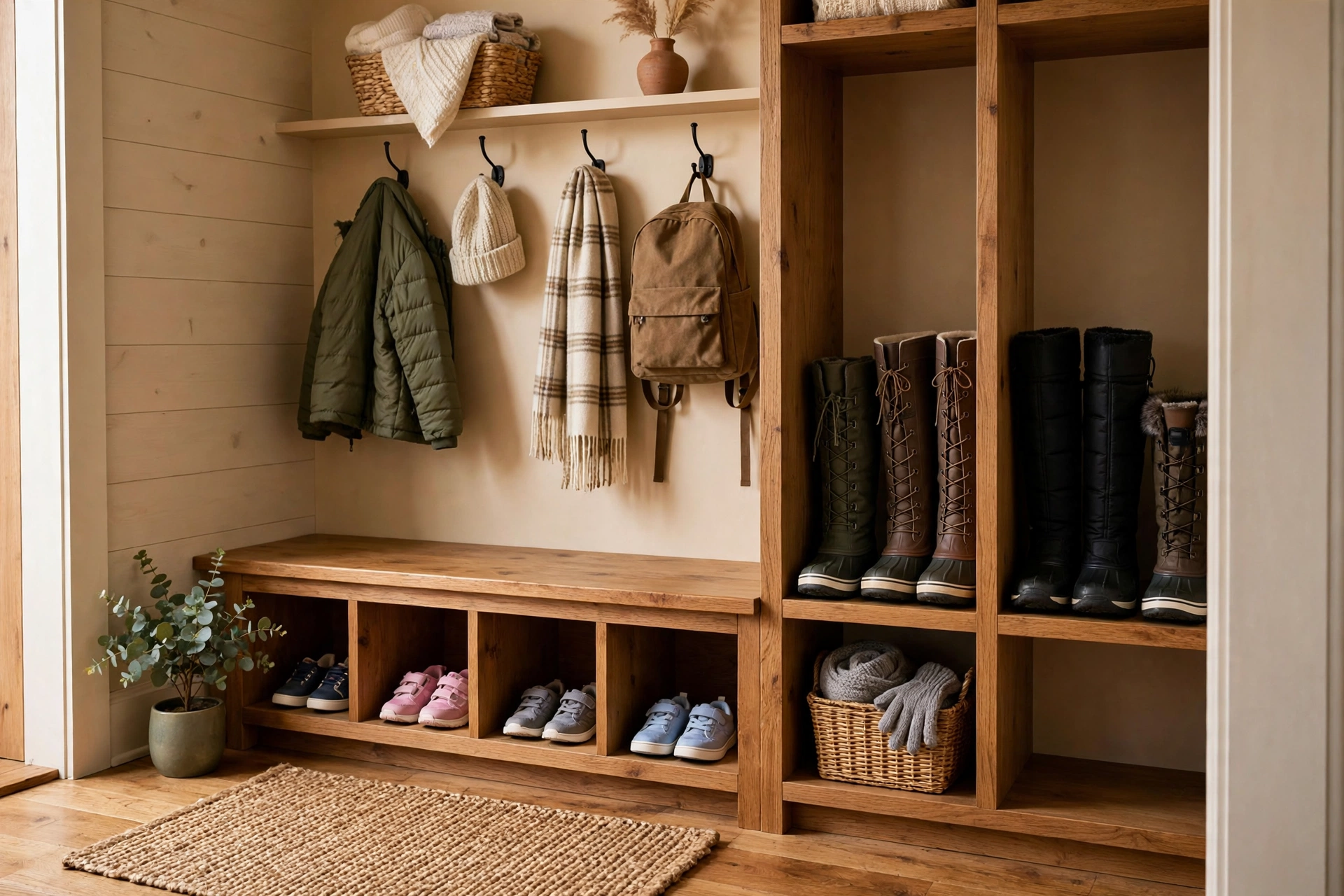
Above the bench, three or four sturdy wall hooks hold coats, a dog lead, and a tote bag without cluttering the bench top. A small tray or dish on one end of the bench catches keys, sunglasses, and loose change. A slim runner rug underneath defines the zone and catches dirt before it spreads into the rest of the house. None of this costs much, but together it turns a storage bench into an entryway system.
Color matters too. If your hallway is pale, the Provincial stain adds warmth. If your floors are dark, a lighter stain keeps the space from feeling heavy. Keep wall decor simple: one framed print or a small mirror above the hooks is enough. The bench is the workhorse here, let it do its job without competing decorations.
Daily habits that keep the bench working
Buying the bench is the easy part. Keeping it tidy takes about two minutes a day, and that is where most systems fail. The habit that works is simple: shoes go on the bench the moment they come off, not later, not after dinner, not tomorrow morning. When everyone follows the same rule, the bench stays clear and mornings get faster because nobody is hunting for a missing shoe under a pile.
Once a week, do a quick reset. Pull everything out, shake out dirt, wipe the bench top, and put back only what gets worn regularly. Outgrown kids shoes, single gloves, and that pair nobody has worn in months go to donation or storage. This five minute reset stops the slow creep back to chaos.
For muddy days, keep a small boot tray beside the tall section or an old towel on the bench top for wet boots to drip on. Wipe the satin finish with a damp cloth, dry it, and it will handle daily wear well. Avoid harsh cleaners, which can dull the polyurethane over time, and reapply a furniture oil or wax once a year if the finish starts looking dry.
What to compare before you buy
If you are shopping around, compare more than price. Check whether the bench is solid wood or veneer over particle board, because that decides how long it lasts under daily sitting. Check whether boots actually fit, not just shoes, because many benches claim boot storage but only fit ankle boots. Check whether it is made to order or mass produced, and read recent reviews for comments on sturdiness, finish quality, and delivery time.
Other handmade wooden storage pieces worth knowing about include bamboo two tier shoe racks for smaller budgets, wall mounted shoe organizers for very narrow halls, and reclaimed wood benches for a more rustic look. Each solves a slightly different problem. The pine bench here wins for families who need both sitting space and tall boot storage in one piece, at a mid range price, without a long wait for custom furniture.
Price context helps too. Mass produced benches often start cheaper, but they wobble, use thinner wood, and rarely offer custom sizes or stains. A handmade bench from $202.50 is not the cheapest option, but it is reasonable for solid pine, made to order construction, and a piece you will use several times a day for years. Divide that cost by the number of mornings it saves you from hunting for shoes, and it starts to look like a bargain.
Is it worth it? My honest take
Yes, with one condition: you have to use it as a system, not just as furniture. A bench alone will not fix a hallway if shoes still get kicked off by the door and left there. Pair it with the sit down habit, a weekly reset, and hooks above, and it genuinely changes how your entrance feels.
The strongest case for this specific bench is its divided boot section and solid pine build. Those two features solve the two most common failures of entryway storage: boots that do not fit, and benches that wobble or crack under daily use. The custom sizing and stain choice are a bonus, especially for awkward hallways.
If your hallway is tiny, measure carefully and consider a slimmer wall mounted option instead. If you want closed storage, add baskets or choose a cabinet. But if you have a normal sized entrance, a family, and a shoe pile that drives you mad, this is one of the simplest, most satisfying home fixes you can make before the holidays, when guests, coats, and extra shoes all arrive at once.
Final checklist before you order
Measure your wall, your tallest boots, and your doorway. Choose a stain that matches your floors. Message the maker about custom width if your hallway is unusual. Add felt pads, a boot tray, and wall hooks to your plan. And set the household rule on day one: shoes on the bench, every time, no exceptions for the first two weeks until it becomes habit.
Your future self, walking through a clear hallway with a coffee in hand and both shoes actually on your feet, will thank you.
Read more handmade wooden home ideas on thecavee.com: our guide to handmade wood and epoxy resin coasters (https://thecavee.com/handmade-wood-epoxy-resin-coasters/), the handmade wooden two step stool for hard to reach spots (https://thecavee.com/handmade-wooden-two-step-stool-home-guide/), and the handmade wooden blanket ladder for throw blanket chaos (https://thecavee.com/handmade-wooden-blanket-ladder-cozy-storage-decor/). For the featured bench, see the Rustic Shoe and Boot Rack Bench by FallingTreesBySki on Etsy (https://www.etsy.com/listing/4557597745/rustic-shoe-boot-rack-bench-custom?utm_source=OpenGraph&utm_medium=PageTools&utm_campaign=Share). Love the look of handmade wood in your home? Pin this idea and read the full story on thecavee.com (https://thecavee.com/).