The Cities That Hid Under Turkey for 3,000 Years: Inside Cappadocia’s Underground World
In 1963, a homeowner in the Turkish town of Derinkuyu was renovating his house. He knocked down a wall and found a passage behind it. He followed it down, and down, and down some more, until he realized his house was sitting on top of something no one alive had fully seen: an 18-level underground city deep enough, and big enough, to hide 20,000 people.
Let that sit for a second. While the rest of us were busy with the Space Race, an entire lost city was being found by accident in somebody’s living room.
Cappadocia gets famous for the wrong thing. Yes, the hot air balloons at sunrise are gorgeous. Yes, the fairy chimneys look like something from a movie. But the balloons are the postcard. The real story is underneath you, carved into the rock itself: a subterranean world that people built, lived in, hid in, and defended for thousands of years. And most tourists walk right past it.
This is the adventure most Cappadocia visitors completely miss. Let’s fix that.
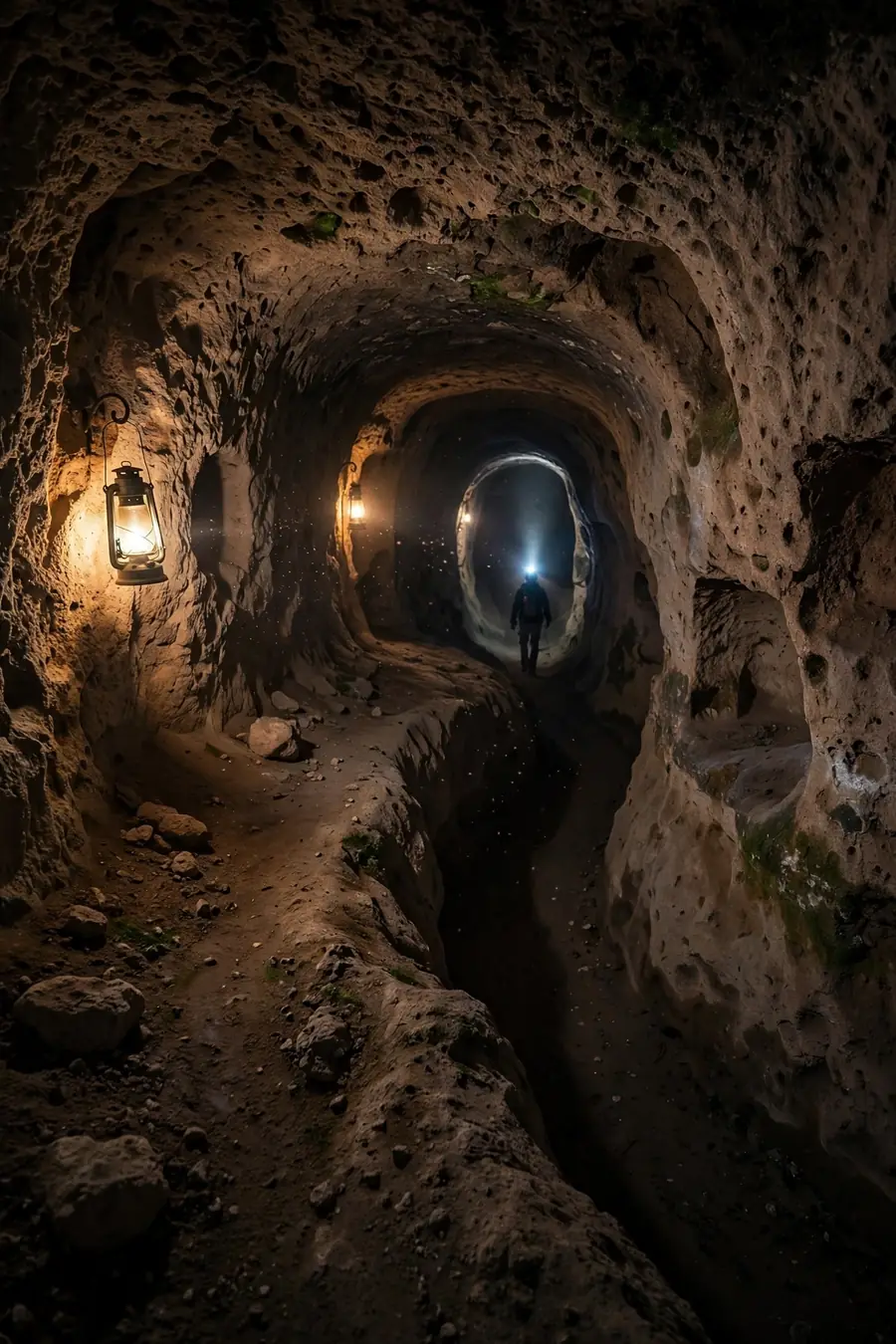
What These Underground Cities Actually Are
Cappadocia has somewhere between 25 and 36 documented underground cities, depending on who you ask and how recently someone’s basement has been inspected. Only a handful are open to visitors. The two that matter are Derinkuyu and Kaymakli, and they’re about as different as two underground cities can get.
Derinkuyu is the deepest. It drops roughly 85 meters (about 280 feet) into the earth, with 11 to 18 levels depending on the source, of which 8 are open to the public. At its peak, it could shelter an estimated 20,000 people, along with their livestock and food supplies. It is, quite genuinely, one of the most impressive feats of hand-dug engineering in human history.
Kaymakli is the widest by area. It has 8 levels, with 4 open to visitors, and could hold around 3,500 people. Where Derinkuyu goes deep, Kaymakli sprawls. It’s known for its enormous storage chambers and unusually large stables, the pantry and garage of the underground world.
They’re about 9 kilometers apart, and local legend says a tunnel connects them. Whether you believe the tunnel story or not (archaeologists are skeptical, locals are enthusiastic), both cities share the same wild origin story.
The rock here is volcanic tuff, sometimes called ignimbrite. It’s soft enough to carve with basic tools, but it hardens when exposed to air. Nature basically handed ancient engineers self-curing concrete. The Phrygians were probably the first to start digging around 800 to 700 BCE, and the Byzantines expanded everything dramatically during the 7th century, when Arab raids made living on the surface a genuinely bad idea. For centuries, when an army marched over the horizon, sentries blew horns, and entire towns would vanish underground in a matter of hours. They could stay down there for weeks.
Today the whole region sits on the UNESCO World Heritage List (since 1985), and both cities are open daily. Underground, the temperature holds at around 13°C (55°F) all year, which makes these places the coolest spot in Cappadocia in every sense, especially in August.
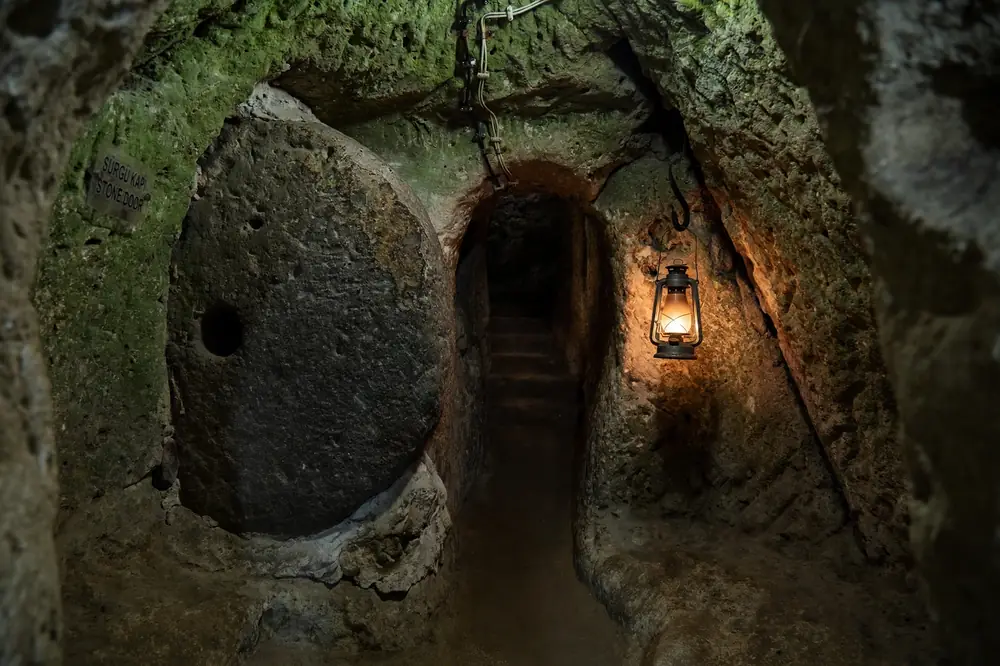
Derinkuyu: 85 Meters Straight Down Into History
Derinkuyu is the one that’ll make your jaw drop, if you can see it past the low ceilings. The descent starts innocently enough: you step through a modest doorway and the stairs just keep going.
The layout is pure survival engineering. The first level down has the stables, because animals went in first (smell management is the unglamorous genius of this place; the lower you went, the more important the people got, and the animals stayed near the top where their smell wouldn’t drift down). Below that: living quarters, kitchens, storage rooms, oil and wine presses, schools, chapels. The second floor even has a large room believed to be a missionary school.
The deepest accessible level holds a cruciform church carved directly from living rock. Standing in a church 85 meters underground, with the weight of the earth above you, does something to your perspective. You realize these people weren’t camping. They were living complete lives down here: worship, school, meals, work. Hiding was just the entry fee.
And then there are the doors. Each level could be sealed by massive circular stone doors, several hundred kilograms each, that could only be rolled shut from the inside. They even had holes through which defenders could jab spears at anyone trying to force their way through. Whoever built this thought of everything, including the worst day imaginable.
Practical note: give Derinkuyu 1.5 to 2 hours. The passages are wider here than at Kaymakli, but parts are still steep and narrow, and tour groups create bottlenecks at the tightest spots. Going early in the morning is the single best move you can make.
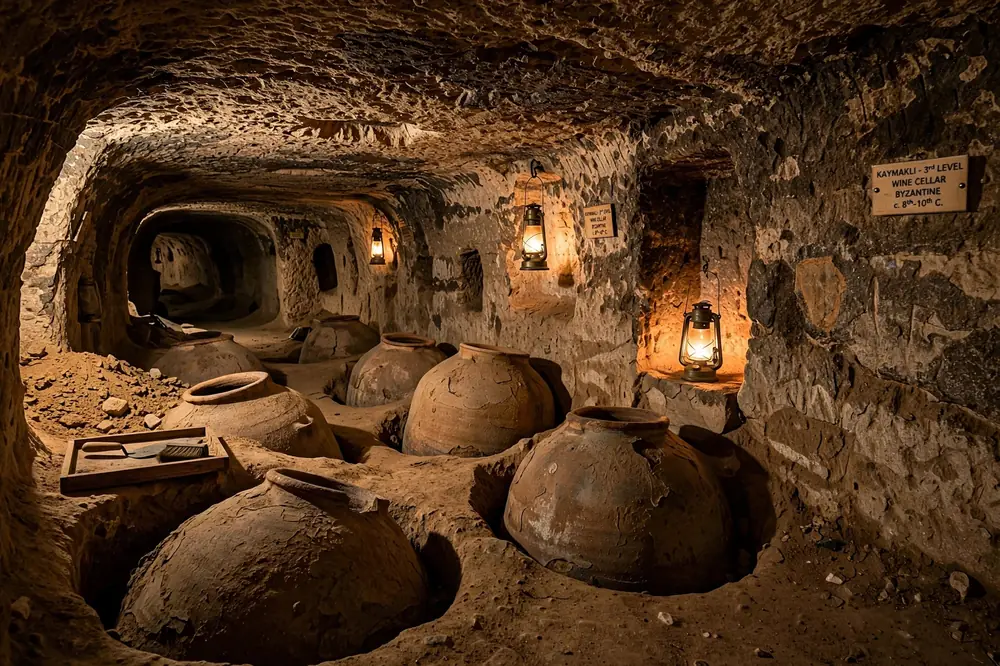
Kaymakli: The Sprawling Underground Town
If Derinkuyu is a skyscraper laid on its side and buried, Kaymakli is a suburb. Only 4 levels are open, reaching about 40 meters deep, but what it lacks in depth it makes up in everyday detail.
The first floor is a stable. The third floor is where the important stuff lives: the cellars, the winery, the kitchen. The storage chambers are enormous, carved to hold grain and supplies for months of siege. Walking through Kaymakli, you get less of a “wow, how deep” feeling and more of a “wait, people just… lived like this” feeling. It’s the difference between looking at a fortress and looking at someone’s neighborhood.
One thing to know honestly: Kaymakli’s passageways are narrower and lower than Derinkuyu’s. If you’re claustrophobic, Derinkuyu is the easier first experience. At Kaymakli, you’ll be crouching through sections whether you like it or not. I’ll cover the claustrophobia question properly in a minute, because it stops more people than it should, and most of them would have been fine.
Give Kaymakli 1 to 1.5 hours. The two cities together make a perfect half day, and most travelers pair them with the Green Tour, the classic 7-to-8-hour Cappadocia excursion that also covers Ihlara Valley and Selime Monastery.
Which Underground City Should You Visit? (The Honest Comparison)
If you only have time for one, here’s how to choose without regret: Derinkuyu goes deeper (85 m vs 40 m), opens more levels to visitors (8 vs 4), and could shelter far more people (20,000 vs 3,500). Kaymakli is wider and more sprawling, with huge storage chambers and stables. Derinkuyu’s passages are wider and more dramatic; Kaymakli’s are narrower and more intimate.
My honest take: do Derinkuyu first. It’s the deeper, more dramatic, more forgiving experience, and the discovery story (the guy renovating his house!) gives it a narrative pull that Kaymakli can’t match. Then, if you’ve got the time and the knees for it, do Kaymakli in the same half day. The Green Tour does exactly this, and it’s popular for a reason.
The Practical Stuff: Tickets, Tours, and What Nobody Tells You
Here’s everything you need to actually plan this:
- Entry fee: roughly 300 Turkish lira per city (about €13), as of 2026. Both are covered by the Türkiye Museum Pass and the Cappadocia Pass, so grab a pass if you’re visiting multiple sites.
- Hours: daily, 8:00 to 19:00, year round, winter included.
- Where they are: Kaymakli is about 26 km south of Göreme; Derinkuyu is another 10 km south of Kaymakli. Self-drive is easy, or the Green Tour handles transport.
- What to wear: the underground temperature is 13°C all year. Even in July, bring a light layer. The rock doesn’t care about your summer outfit.
- Footwear: the floors slope, undulate, and have craters. Wear shoes with grip, not sandals. This is non-negotiable if you value your ankles.
- Time of day: arrive at opening. Tour buses roll in from about 9:30 onward, and the narrow passages turn into traffic jams by late morning.
The claustrophobia question, answered honestly
A lot of people skip the underground cities because they’re scared of the tight spaces, and that’s a genuine loss. Here’s the honest version: the passages are low in places, and you will duck, crouch, and occasionally shuffle sideways. It’s uncomfortable in short bursts, but it’s not the trapped-in-a-coffin situation people imagine. The chambers themselves are surprisingly roomy, well-lit (modern lighting is installed throughout), and ventilated.
The trick that actually works: don’t look at the tight section ahead. Watch the person in front of you, keep moving, and count your steps. Short bursts of 10 to 20 seconds, then you pop out into a big chamber. Almost everyone who goes in nervous comes out saying it was easier than expected. If you’re severely claustrophobic, Derinkuyu’s wider passages are your best bet, and there’s no shame in a guided tour where someone else sets the pace.
The problem these cities solve for the modern traveler
Here’s the thing nobody says about Cappadocia: the balloon-and-fairy-chimney circuit can start to feel like a theme park. Same sunrise, same viewpoints, same Instagram poses. The underground cities solve the “I want the real Cappadocia” problem. They take about two hours, they cost almost nothing, and they’ll be the thing you talk about at dinner, not the balloon photo. Everyone has the balloon photo. Nobody’s dinner party has the underground church 85 meters down.
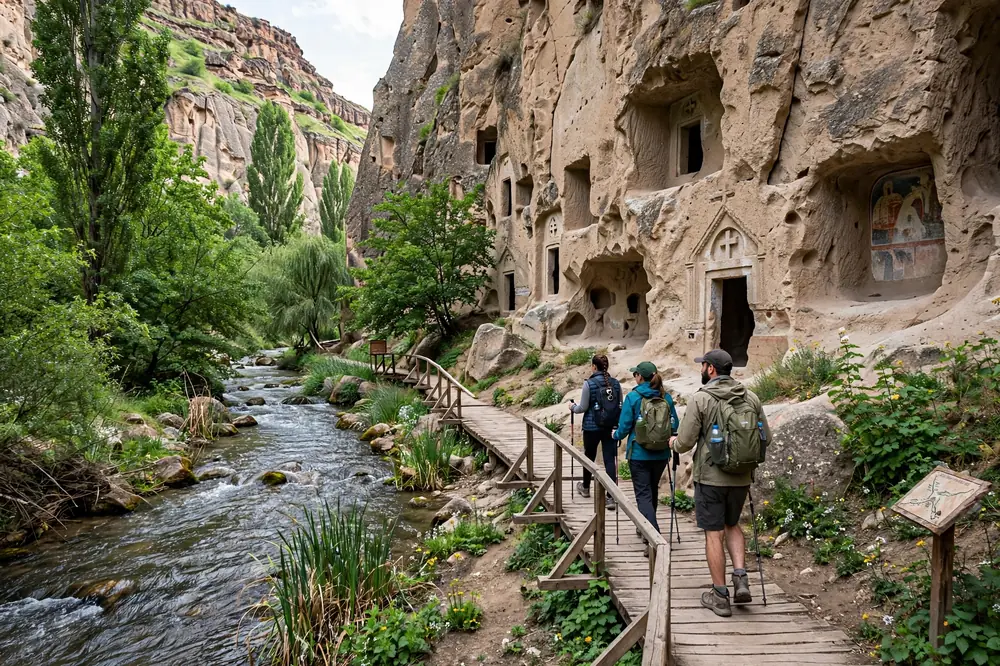
Make It a Full Day: The Green Tour Done Right
The smartest way to see the underground cities is as part of the classic Green Tour, and there’s a right way and a wrong way to do it.
The standard loop: Derinkuyu (or Kaymakli) in the morning, then the Ihlara Valley hike, lunch by the Melendiz river, and Selime Monastery in the afternoon. It’s 7 to 8 hours, door to door from Göreme, and it’s the best value sightseeing day in Cappadocia.
Ihlara Valley deserves more credit than it gets. It’s a 14-kilometer canyon with a river running through it, rock-cut churches tucked into the walls, and a hiking trail that’s genuinely pleasant instead of punishing. Most tours do a relaxed 3.5-kilometer section. After the underground cities, walking through a sunlit canyon feels like surfacing into a different century, which is fitting, because you sort of are.
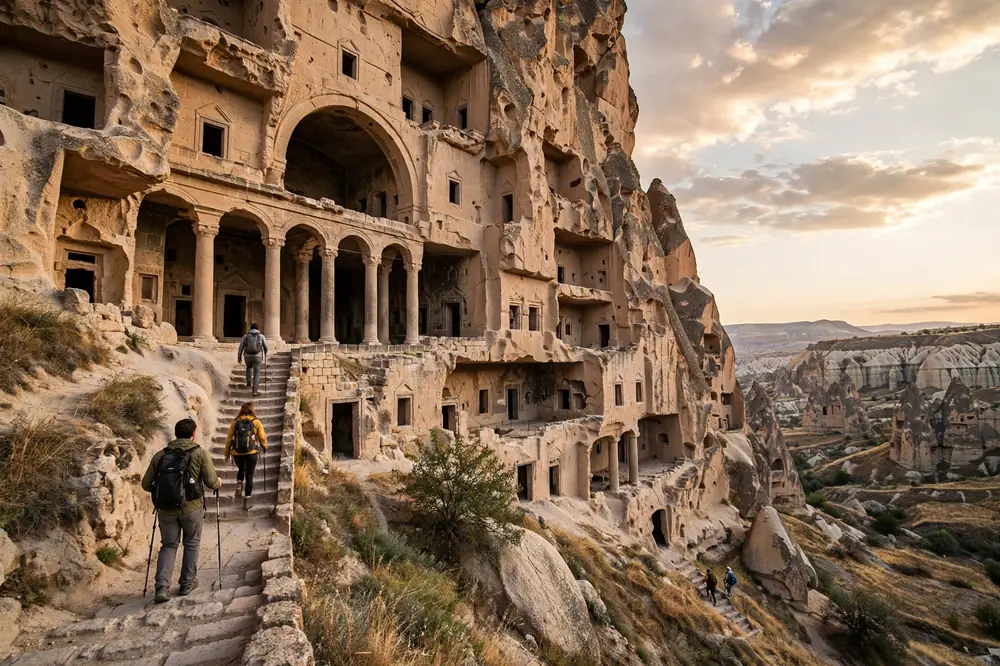
Selime Monastery is the exclamation point: a cathedral-sized complex carved into a towering cliff at the end of the valley. It served as a monastery, a fortress, and a caravanserai at different points in its life. The climb up is steep, but the view from the top, out over the canyon you just hiked, is the kind of thing that makes you quiet for a while.
A word of warning about tours: book with an operator that actually goes underground for a meaningful amount of time, not one that does a 20-minute photo stop. Check recent reviews. The difference between a good Green Tour and a bad one is about two hours of actual exploring.
Beyond the Underground: The Rest of Your Cappadocia Adventure
If you’ve come all this way, don’t stop at the cities. The underground world and the above-ground world are two halves of the same story, and the above-ground half is just as wild.
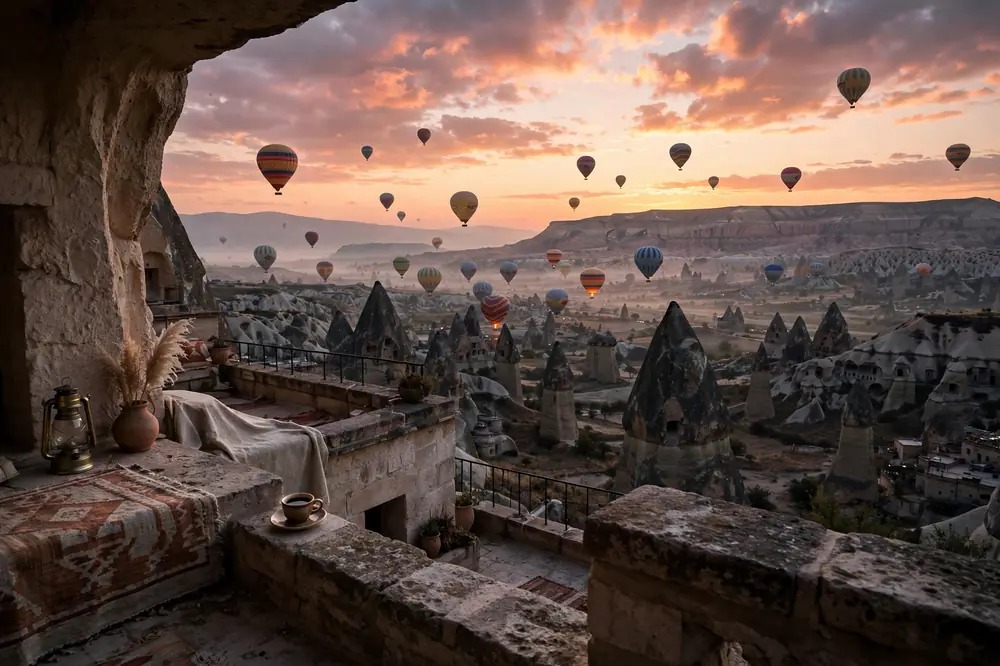
The balloon flight is touristy and expensive and completely worth it once. Seeing the valleys you walked through from 1,000 feet at dawn rewires your whole understanding of the landscape. Book the first flight of the morning, and book with an operator that has a strong safety record, not the cheapest one. This is not the activity to bargain-hunt.
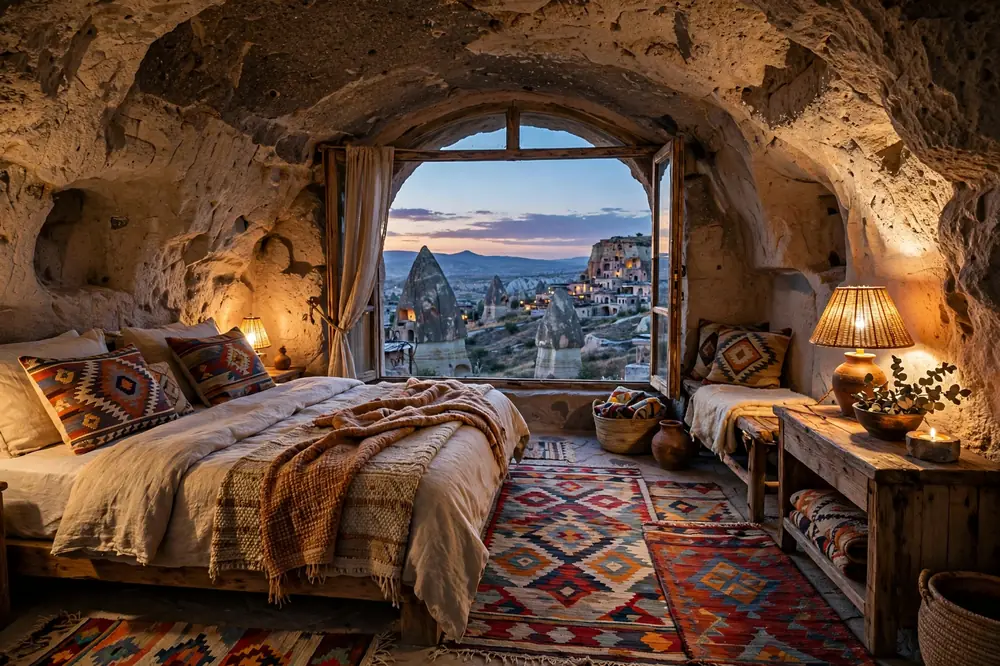
Stay in a cave hotel. I know, it sounds like a gimmick. It’s not. The same volcanic tuff that made the underground cities possible also makes for naturally insulated, cool-in-summer, warm-in-winter hotel rooms carved into the rock. Sleeping inside the geology you’ve been exploring all day is the perfect full circle. Many of them have terraces where you can watch the balloons launch at dawn without leaving your pajamas.
Hike the valleys. The Red and Rose Valleys at sunset are the classic, and they earn it. The rock turns actual shades of rose and crimson. Pigeon Valley connects Göreme to Uçhisar with dovecotes carved into the cliffs. These are free, uncrowded compared to the viewpoints, and the best way to understand what Cappadocia actually is: not a set of sights, but a landscape people have been living inside for millennia.
Photos Underground: Actually Getting the Shot
Underground photography is its own little puzzle. The cities are lit, but dimly, and flash photography is both bad manners and bad photography down here. Use your phone’s night mode or crank the ISO and lean against a wall. The stone door corridors at Derinkuyu make incredible leading-line shots. In Kaymakli, the pithoi (giant storage jars) half-buried in the floor are the money shot.
For the full technique on shooting in dark, tight, underground spaces without hauling a studio down there, the cave photography guide on this site goes deep on exactly this. It was written for caves, but everything in it applies to 85 meters of Byzantine engineering too.
When to Go, and the Crowd Problem
Cappadocia is a year-round destination, and the underground cities genuinely don’t care about the season (13°C, remember?). But the overall experience changes a lot:
- April to June and September to October are the sweet spot: mild weather, green valleys, balloon flights rarely canceled by wind.
- July and August are hot and crowded. The underground cities become everyone’s favorite escape, so arrive early.
- November to March is the insider’s season. Fewer crowds, snow on the fairy chimneys, cheaper cave hotels. Balloon flights get canceled more often, but the landscape in snow is unreal.
The crowd problem is real and getting worse. Cappadocia’s visitor numbers keep climbing. The fix is the same fix that works everywhere: go early, go on weekdays, and do the underground cities before the tour buses arrive. An 8:00 AM start at Derinkuyu is a fundamentally different experience from an 11:00 AM one.
Why This Beats the Postcard Version of Cappadocia
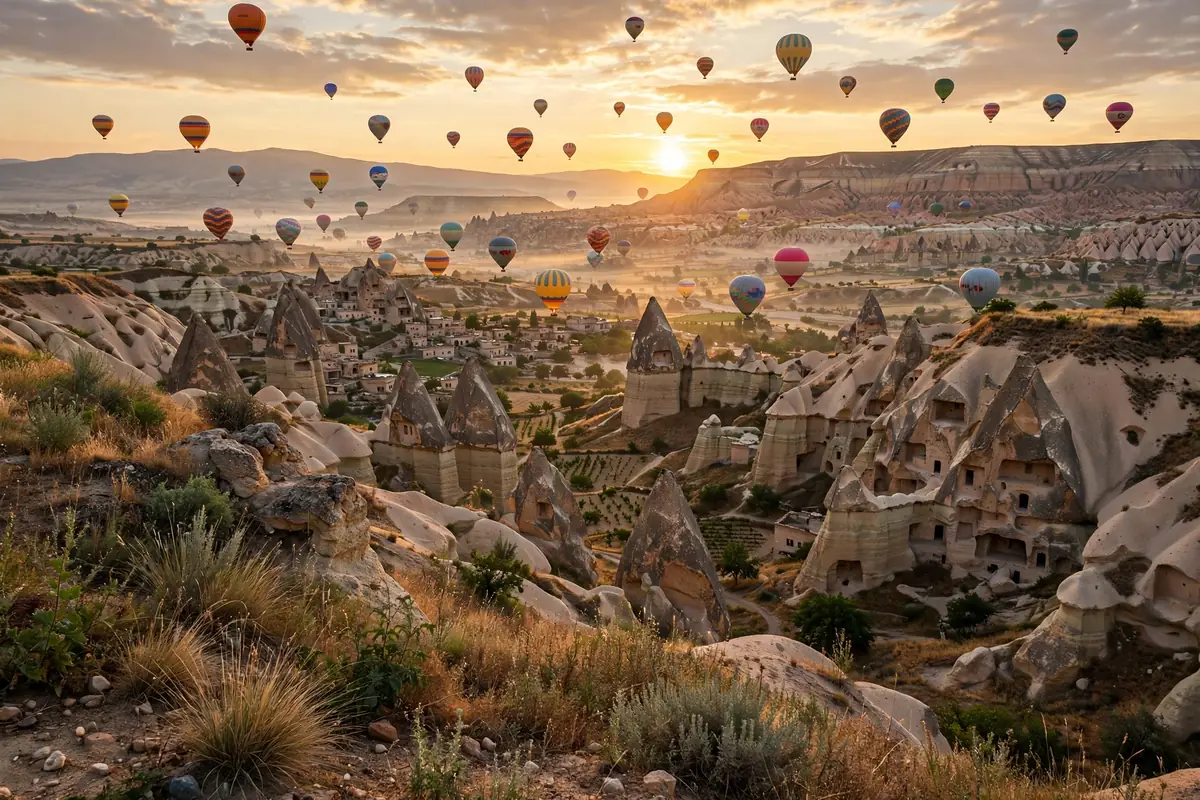
I’ll be honest with you: the balloon photos are beautiful, and I don’t blame anyone for wanting one. But Cappadocia’s deeper story is about people who looked at a landscape and decided to disappear into it. For three thousand years, through Phrygian, Persian, Roman, Byzantine, and Ottoman eras, people kept coming back to these tunnels when the world above got dangerous. The cities grew organically, generation after generation, each wave of builders adding their own level, their own church, their own wine press.
There’s something profoundly moving about standing in a kitchen carved 40 meters underground and realizing someone cooked dinner there while an army camped on the surface. It’s the most human story in all of travel: when things got bad, people went down, waited it out, and came back up. Every time.
Most travelers skim Cappadocia’s surface and fly home with the same photos as everyone else. The underground cities are your invitation to go deeper, literally and otherwise. Take it.
Planning your own underground adventure? Save this guide’s highlights on Pinterest and check out more cave adventures: descend into the world’s largest cave in Vietnam, dive the sacred sinkholes of the Maya in Mexico, or drift through New Zealand’s glowworm caves. The best adventures are always underneath.
Pingback: Upper Mustang Nepal 2026: New Permit Rules, Costs and Complete Travel Guide