Quick question. Where will you be on August 2, 2027, at 1:02 in the afternoon?
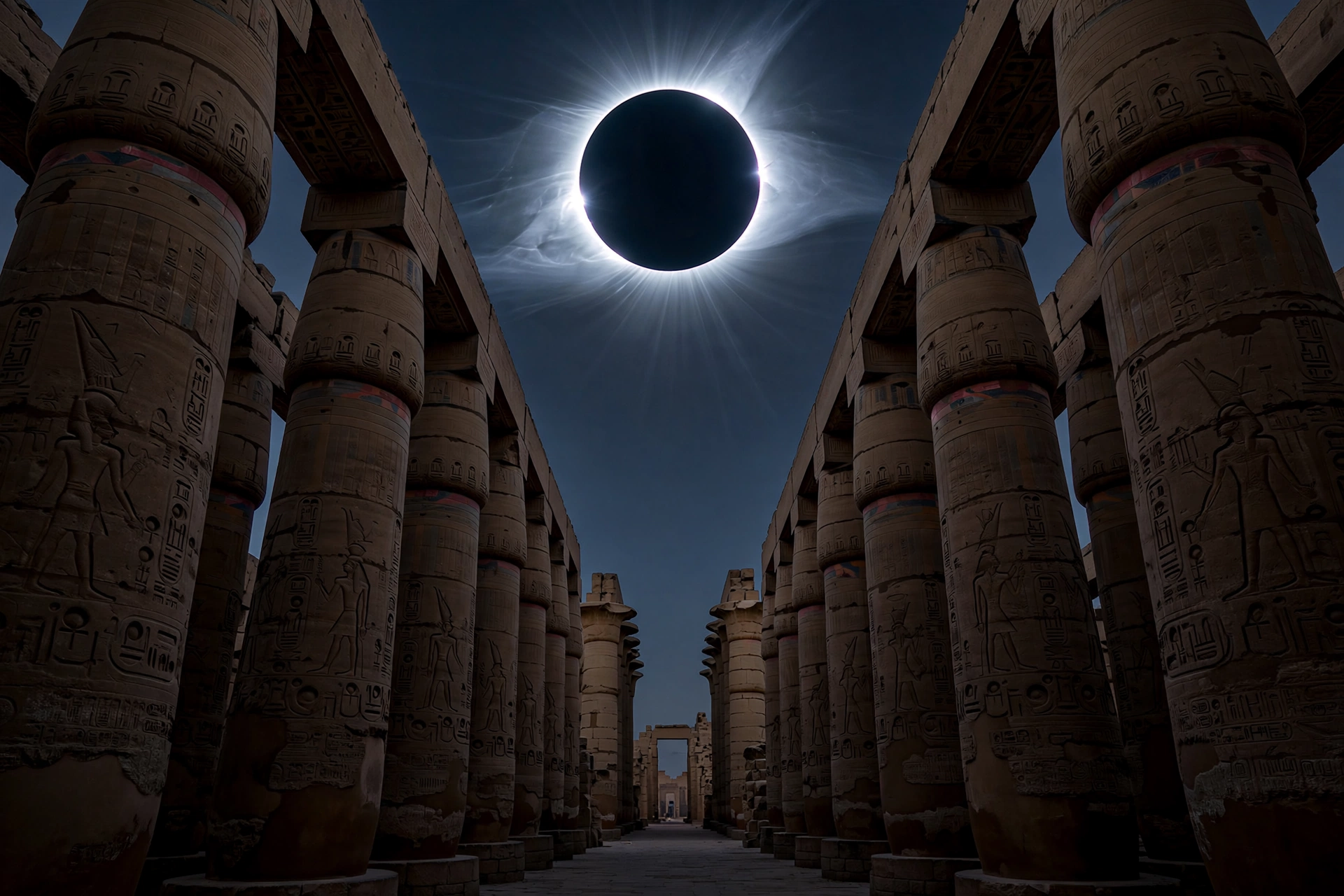
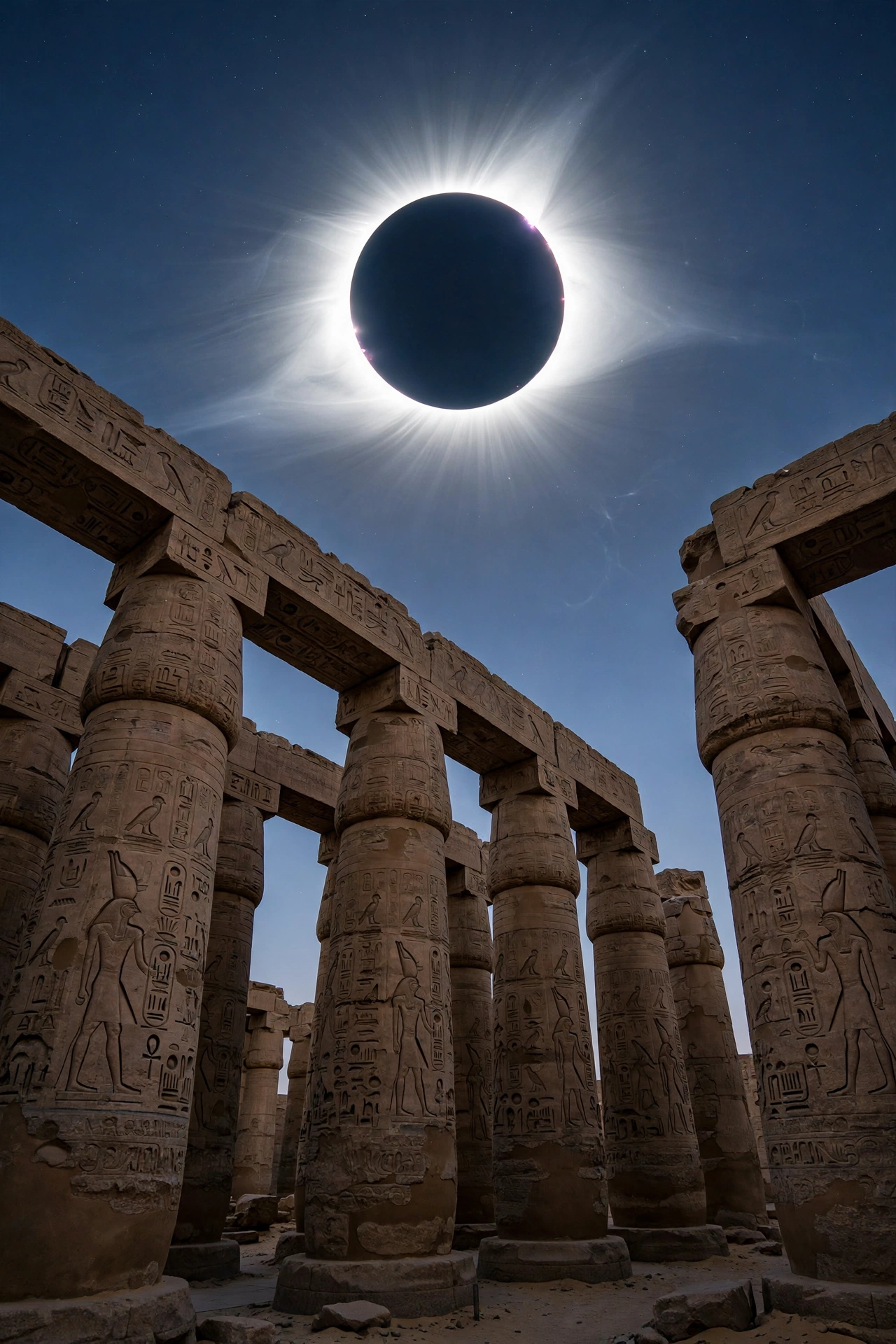
If the answer is “probably at my desk,” you might want to rethink that. Because at that exact moment, in the middle of a scorching Egyptian summer afternoon, the sky over Luxor is going to go completely dark. The temperature will drop. Birds will go quiet. And for six minutes and twenty-one seconds, a black sun ringed with silver fire will hang directly over temples that were already ancient when Cleopatra was born.
This is the big one. Astronomers are calling the August 2, 2027 total solar eclipse the longest of the century on land, and eclipse chasers have been circling this date for years. The path of totality sweeps across southern Spain, North Africa, and down through Egypt, Saudi Arabia, and Somalia. But if you ask the people who do this for a living, there is really only one place to be: Luxor, ancient Thebes, sitting almost dead center on the path.
There is a catch, though. Actually, there are three. The tours are already on sale and already filling up. August in Luxor is brutally hot. And a total eclipse is the kind of thing where one small planning mistake can ruin the whole trip. So let’s fix all of that right now.
Why this eclipse is different from every other one
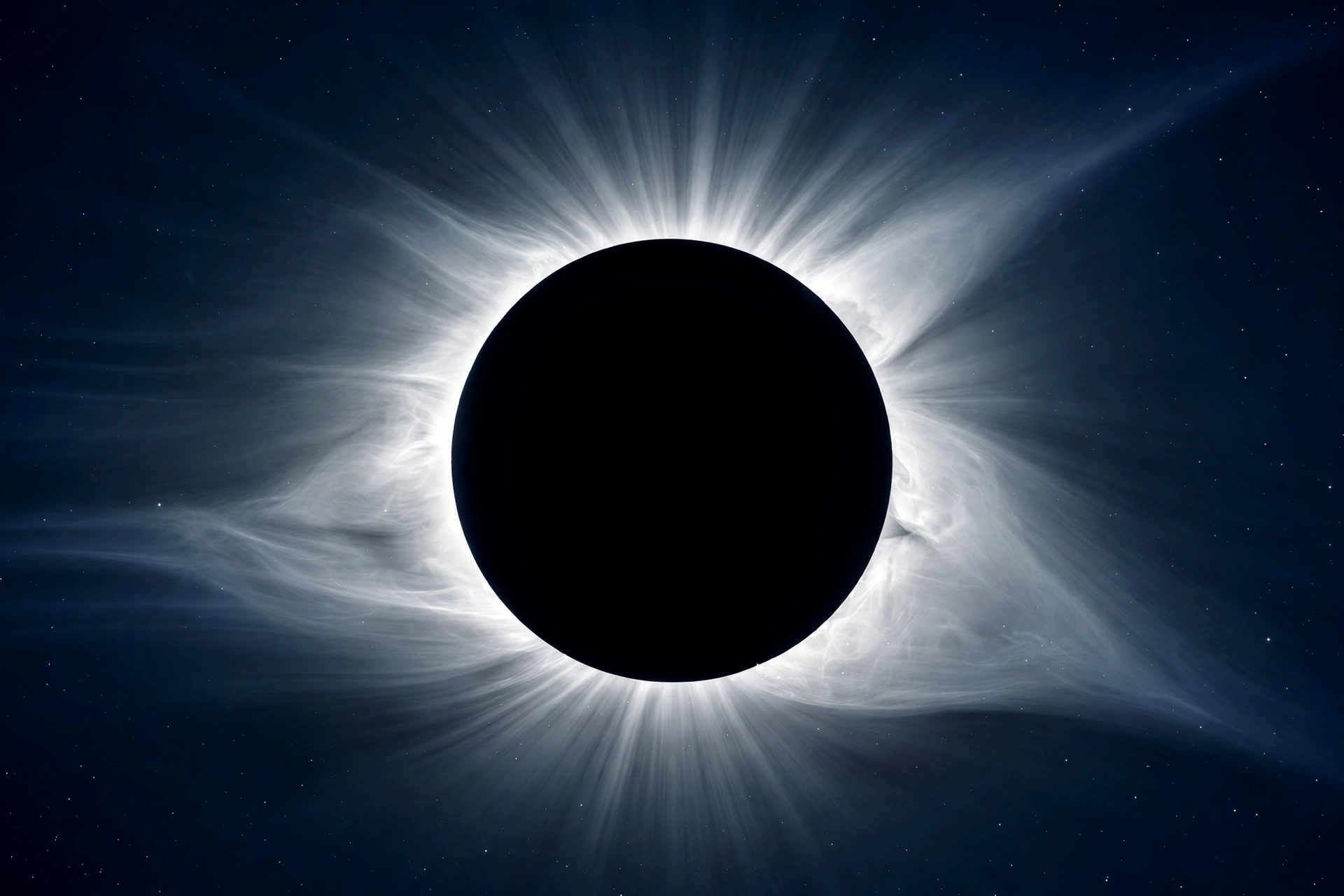
You have probably seen eclipse photos before. A partial eclipse, where the moon takes a bite out of the sun, is neat. A total eclipse is a completely different animal. When totality hits, the sky turns a deep twilight blue in the middle of the day, stars pop out, and the sun’s outer atmosphere, the corona, streams out in ghostly white tendrils. People who have seen one tend to get weirdly emotional about it. People who have seen several tend to spend serious money chasing the next one.
The 2027 eclipse is special for one simple reason: duration. In Luxor, totality runs from about 1:02 PM to 1:08 PM local time, six minutes and twenty-one seconds of darkness. That is an eternity by eclipse standards. Most total eclipses give you two or three minutes. The Planetary Society notes that this will be among the longest totalities anywhere on Earth for the next 87 years. Six-plus minutes means you can actually relax into it: watch the corona, look around at the 360-degree sunset on the horizon, take it in, instead of frantically checking your watch.
And then there is the setting. Luxor is not some random patch of desert on the centerline. It is an open-air museum. The Temple of Karnak, the Temple of Luxor, the Valley of the Kings across the river. You will be standing in the shadow of the moon in a city that has been continuously inhabited for over 4,000 years. When the sky goes dark over those columns, you are not just watching an eclipse. You are watching it the way a pharaoh’s priests might have watched one, with the same stone gods looking on.
The one problem nobody warns you about: August in Luxor
Let’s be honest about the elephant in the room. August in Luxor is punishing. Daytime highs regularly push past 40 degrees Celsius, and the sun at 1 PM is not messing around. Standing in an open viewing field for hours in that heat is genuinely uncomfortable, and for some people it is a health risk.
Here is the thing, though: totality itself fixes the worst of it. The moment the moon covers the sun, the temperature drops noticeably, sometimes by several degrees in minutes. Eclipse chasers call it the “eclipse wind.” But the hours before and after are still a furnace, so plan like it.
This is the practical part. Book accommodation with a pool or shaded courtyard and do not feel guilty about hiding in air conditioning until an hour before first contact. Bring more water than you think you need, then bring more. A wide-brim hat, a light-colored long-sleeve shirt, and a small personal fan are worth their weight in gold. And if you are traveling with older relatives or kids, seriously consider one of the organized tours (more on those below), because they handle shade, transport, and water logistics while you just show up.
The heat also shapes your week. Do your temple sightseeing at dawn. The Valley of the Kings opens early, and 6 AM among the tombs is magical anyway, cooler, quieter, better light for photos. Save your afternoons for the hotel pool and a nap. Your body will thank you on eclipse day.
Where to stand: Luxor vs everywhere else on the path
The path of totality on August 2, 2027 crosses a lot of interesting places. Southern Spain gets it. So do Morocco, Algeria, Tunisia, and Libya. After Egypt, the shadow continues over Saudi Arabia and Somalia. So why is everyone pointing at Luxor?
Three reasons. First, duration: Luxor sits very close to the centerline, so you get the full six-plus minutes. Move to the edge of the path and you lose precious seconds. Second, weather: early August in Upper Egypt is almost comically reliable. Cloud cover is about as likely as snow. Coastal Spain and North Africa carry real weather risk; Luxor basically does not. Third, the experience: nowhere else on the path lets you pair the longest eclipse of the century with 4,000 years of monuments.
Aswan is the backup pick, also in Egypt, also on the path, slightly shorter totality. If Luxor’s hotels are full or priced into orbit, check Aswan. But Luxor is the main event, and the big tour operators have already claimed their viewing sites there.
How to actually book it: tours, prices, and the DIY option
This is the part that surprises people. You cannot just wing a trip like this. Eclipse tourism is a real industry, and for the 2027 eclipse the machinery is already moving. Hotels in Luxor for early August 2027 are already being block-booked by tour companies. If you want the easy version, here is what is on the table.
Sirius Travel, a company that runs astronomy-focused expeditions, is offering several Luxor-based eclipse tours. Their 9-day itinerary (July 27 to August 4, 2027) starts at $7,410 per person double occupancy and includes Cairo, Aswan, Abu Simbel, a three-night luxury Nile cruise on a dahabiya, astronomer guides, an eclipse photography workshop, and the new Grand Egyptian Museum. Their 10-day version (July 30 to August 8) runs from $7,310 to $11,580 depending on the package, with a four-night Nile cruise from Luxor to Aswan. These are not budget trips, but they are genuinely all-inclusive: domestic flights, 5-star hotels, Egyptologist guides, the works.
Eclipse Traveler is running a Jordan and Egypt combo tour with reserved viewing spots in Luxor, astronomer-led, based at the Hilton Luxor, with an eclipse celebration planned for the evening of August 2. And if your budget is more “dreamer” than “spender,” the Planetary Society is running a sweepstakes for an Egypt eclipse expedition valued at around $26,000: ten days, Cairo to Abu Simbel, dedicated Nile cruise ship, astronomer guides. Somebody has to win it. Might as well be you.
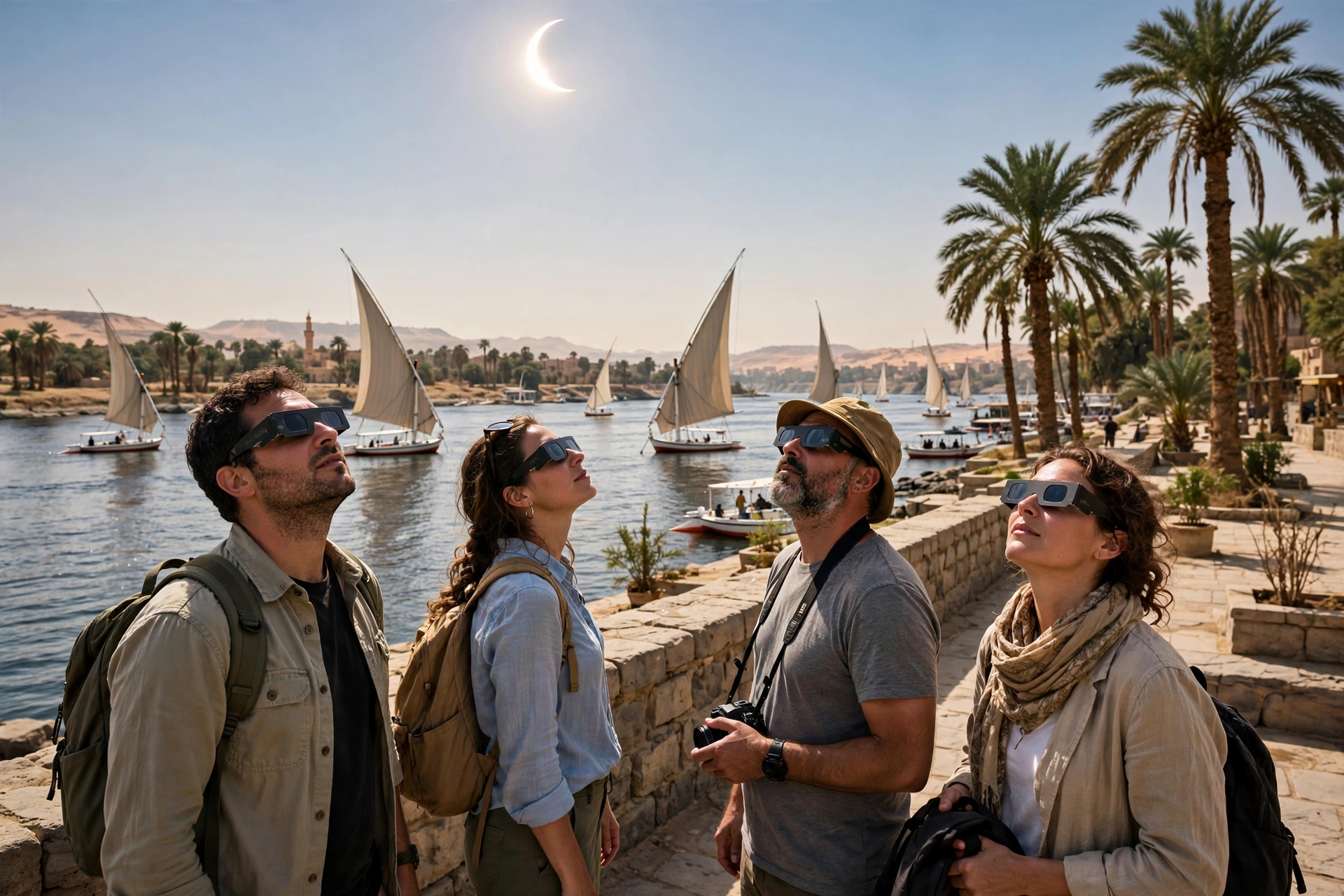
The DIY route is absolutely possible and much cheaper, but it takes discipline. You would book flights to Cairo, a domestic hop to Luxor, and a hotel in Luxor for at least July 31 to August 3. Book the hotel now, not in 2027, and make sure it has free cancellation. You do not need a tour to watch an eclipse; you need a clear view of the sky, certified eclipse glasses, and a spot away from tall buildings. The Luxor corniche along the Nile and the open areas near the temples will be packed with fellow chasers, which is honestly half the fun.
One warning about the DIY route: do not assume you can sort out a Nile cruise or a Valley of the Kings guide at the last minute that week. Everything with a fixed capacity sells out. Book the big-ticket items months ahead.
Eclipse day playbook: the timeline and what to actually do
Here is how August 2, 2027 unfolds in Luxor, in local time. The partial phase begins around 11:40 AM, when the moon first takes a bite out of the sun. Over the next hour and twenty minutes, the light gets stranger and stranger: sharper shadows, a weird silvery quality, the temperature sliding down. Totality hits at about 1:02 PM and lasts until roughly 1:08 PM. Then the partial phase reverses, and by about 2:26 PM it is over.
Your job during the partial phases is simple: wear your eclipse glasses whenever you look at the sun, and take them off only during totality. This is the single most important safety rule of the whole trip. Regular sunglasses do not count. You need glasses certified to the ISO 12312-2 international safety standard, and you need to buy them from a reputable seller, because counterfeit eclipse glasses are a real thing and they are dangerous. Buy early from a known astronomy vendor, not from a random marketplace listing two weeks before the event.
During totality itself, take the glasses off. Look at the corona with your naked eyes. This is the payoff, and it is safe only during those six minutes while the sun is fully covered. The second you see the first bead of sunlight reappearing (the “diamond ring”), glasses go back on.
Photography advice from people who have learned the hard way: do not spend totality fiddling with camera settings. If you want photos, set up a tripod and an interval timer during the partial phase, or just shoot a short video and enjoy the rest with your eyes. The photographers who get the best eclipse shots practice on the full moon for months beforehand. Your memory of the corona, honestly, will beat any photo you take.
One more thing to watch for: the weird stuff. In the minute before totality, look at the ground for “shadow bands,” rippling lines of light and dark that race across pale surfaces. Watch the horizon during totality for the 360-degree sunset effect. Listen to the birds go silent and the insects start up. These are the details people remember decades later.
Make it a week: what to do around the eclipse
Here is the secret the tour companies know: the eclipse is six minutes, but Egypt is a lifetime. If you are flying halfway around the world, build the trip properly.
Start in Cairo. The Grand Egyptian Museum, the GEM, is now open near the Giza pyramids, and it is the reason to add at least two full days in Cairo. Tutankhamun’s complete collection is finally displayed together for the first time. Then the pyramids themselves, the Sphinx, the Khan el-Khalili bazaar. Standard, essential, still overwhelming no matter how many photos you have seen.
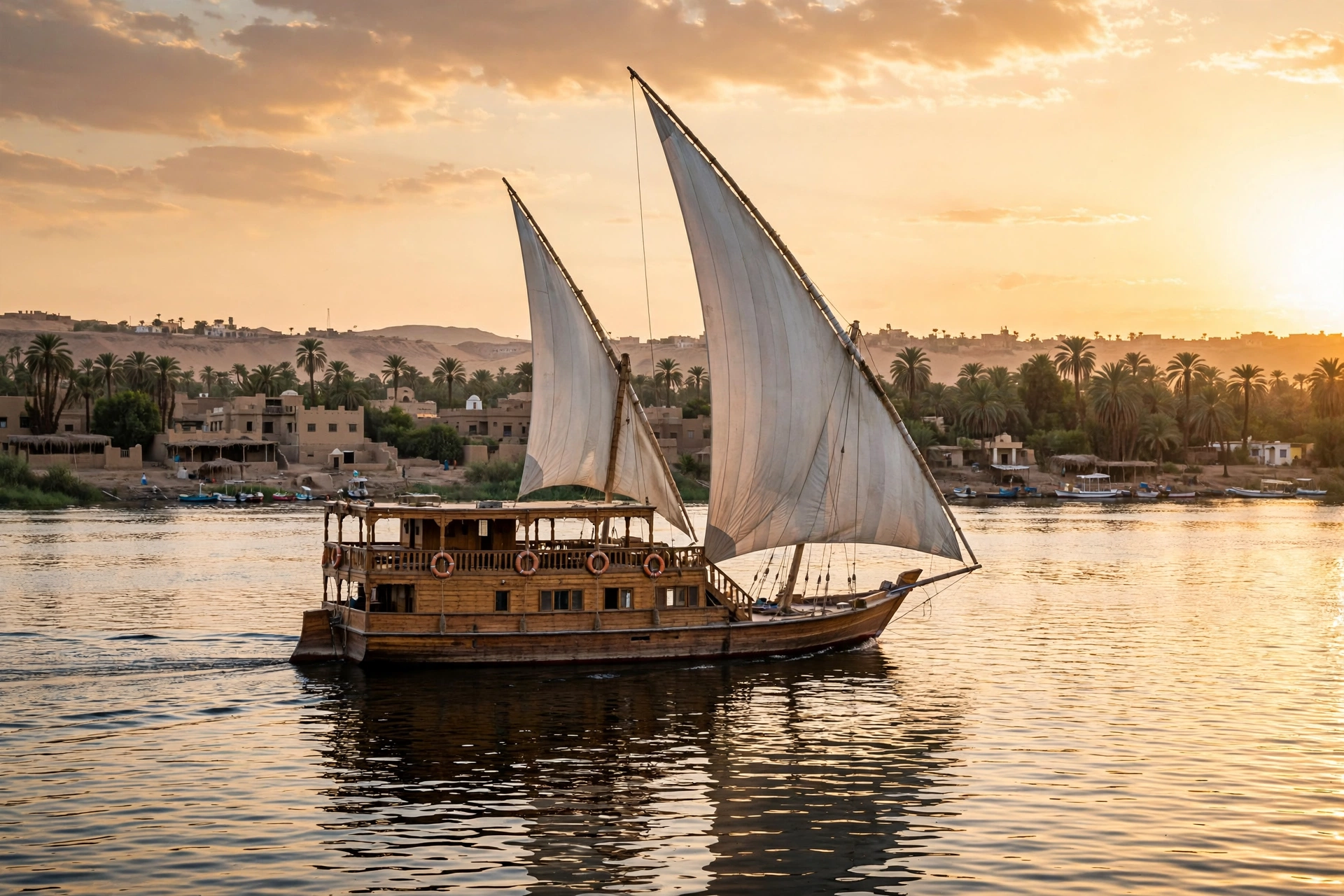
Then get yourself south. A Nile cruise between Luxor and Aswan is the classic move: three or four nights drifting past sugarcane fields and riverside villages, stopping at Edfu, Kom Ombo, and Philae. Book a dahabiya (a traditional sailboat) over a big cruise ship if you can; smaller groups, quieter decks, better stargazing.
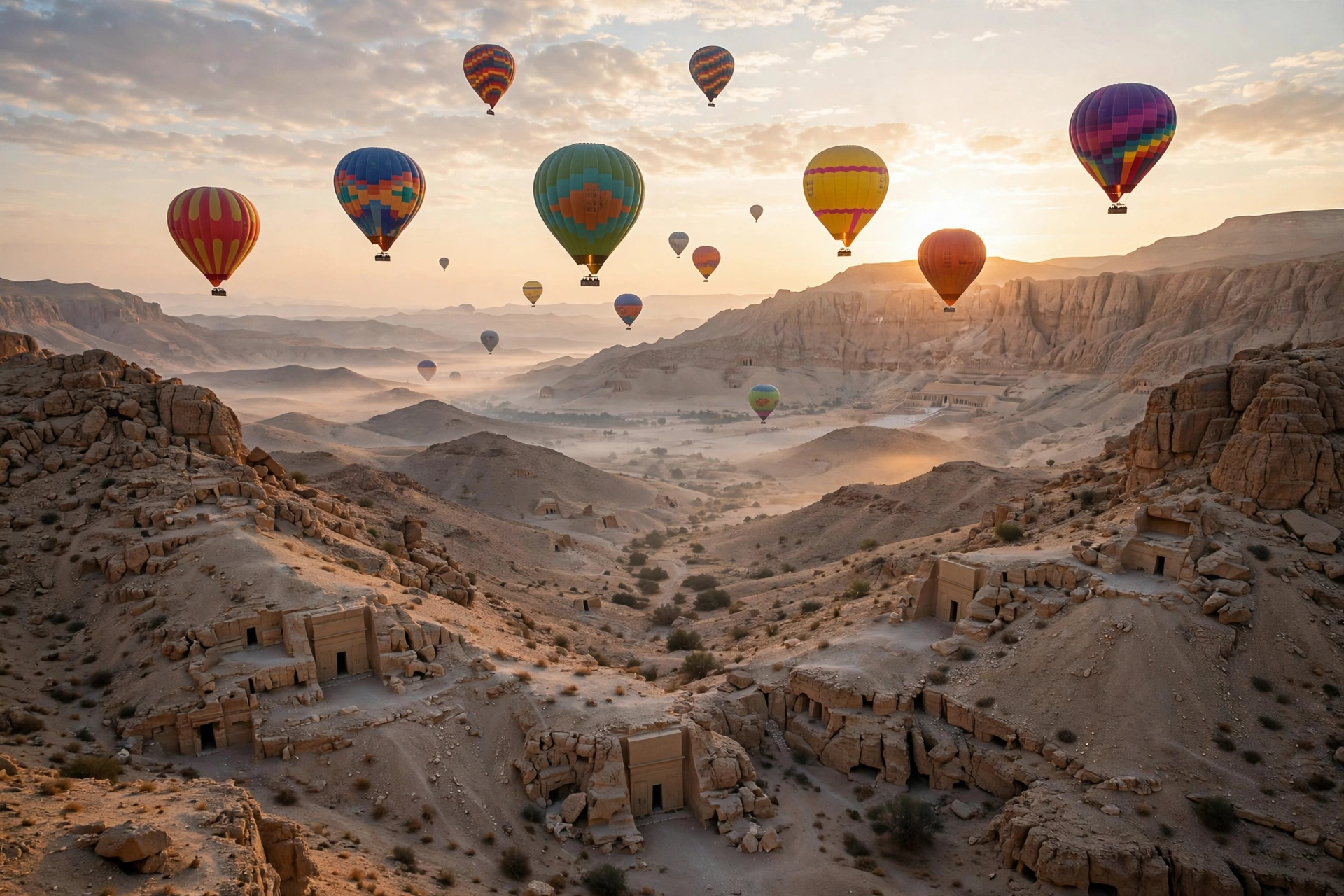
In Luxor itself, beyond eclipse day: Karnak at opening time, the Luxor Temple at night when it is floodlit, and the West Bank for the Valley of the Kings, the Temple of Hatshepsut, and the Colossi of Memnon. A dawn hot-air balloon ride over the West Bank is touristy and absolutely worth it.
And if you have the days, Abu Simbel is the long day trip from Aswan that everyone says is worth the 3 AM start. The four colossal statues of Ramesses II staring across Lake Nasser at sunrise is one of those sights that rearranges your brain a little.
The mistakes that ruin eclipse trips (learn from other people’s)
Every eclipse has its cautionary tales. The most common: arriving the day before. Flights get delayed, luggage gets lost, and eclipse week is not the time to discover your hotel overbooked. Arrive at least two days early. The second most common: fake eclipse glasses. If the price seems too good and the seller is unknown, do not risk your eyesight.
Third: over-scheduling eclipse day itself. Do not plan a morning temple tour that ends at noon with a cross-town taxi ride to your viewing spot. Eclipse day is a rest day with one appointment. Be at your viewing location, settled, hydrated, and relaxed at least ninety minutes before first contact. Fourth: forgetting that August 2027 is still more than a year and a half away from now, which feels like plenty of time, right up until the good tours sell out and the good hotels triple their prices. The people who saw the 2024 North American eclipse will tell you: the ones who booked early had the time of their lives, and the ones who waited ended up watching from a highway rest stop.
The bottom line
Six minutes and twenty-one seconds. That is what this is all about. Six minutes of midday darkness over the temples of ancient Thebes, the longest such show this century, in a place with near-guaranteed clear skies. It will not come again in your lifetime, at least not like this, not here.
Start with the glasses and the hotel. Everything else can be figured out. But start now, because the moon is not waiting, and neither are the tour companies.
Chasing the 2027 eclipse? Save this pin for your trip planning board and read the full guide with tour prices, the eclipse-day timeline, and booking tips on thecavee.com. And if eclipse chasing has you hooked on big adventures, check out our guides to Nepal’s forbidden Mustang kingdom, Saudi Arabia’s wild Red Sea coast, and the world’s top thrill-seeker destinations for 2026.
Tour details and prices in this guide were verified from operator listings in October 2026 and can change; check the operators directly before booking: Sirius Travel’s Luxor 2027 eclipse tours and the Planetary Society’s Egypt eclipse expedition sweepstakes.