The Rhinos Are Back: Kaziranga National Park Just Reopened for the 2026 Season
There is a very specific kind of impatience that only wildlife travelers know. You have waited months. The monsoon has come and gone. The tall grass is drying out, the animals are moving back into the open, and somewhere in Assam a park gate has finally swung open. Kaziranga National Park reopened on October 3, 2026, and if spotting a one-horned rhinoceros in the wild is on your list, this is genuinely the best moment of the year to start planning.
I have been watching this park’s seasons for years, and the reopening window is always the same story: the first few weeks have the thinnest crowds, the freshest grass, and animals that are still settling back into their dry-season routines. The catch is that bookings, permits, and safari slots fill up fast the moment word gets out. So here is everything you need to know, from the exact timings to which range to pick, so you do not learn it the expensive way.
What actually reopened on October 3
Let us be precise, because vague travel advice is what gets people stranded at a closed gate. Kaziranga National Park and Tiger Reserve officially reopened for the 2026-27 tourist season on Saturday, October 3, 2026. The reopening ceremony was held at the Kohora Range, with Assam’s Forest Minister Jayanta Malla Baruah in attendance.
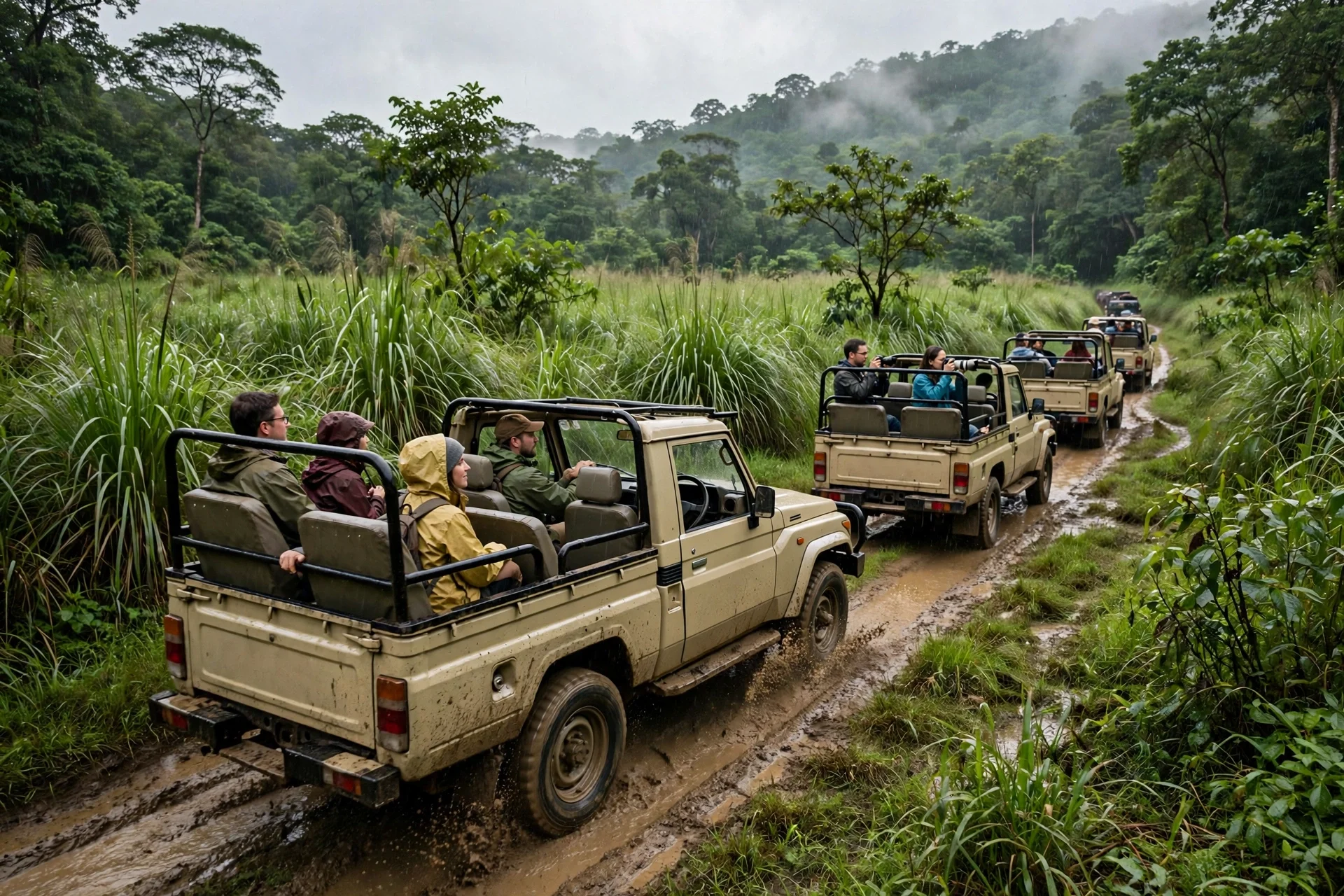
Here is the detail that matters most: only jeep safaris are running right now, and only in two ranges to start. The Central Range at Kohora and the Western Range at Bagori are open. The rest of the park’s ranges will reopen in phases as the season progresses, so do not assume you can drive the whole park yet. If you are planning around a specific range or experience, check the current status before you book anything non-refundable.
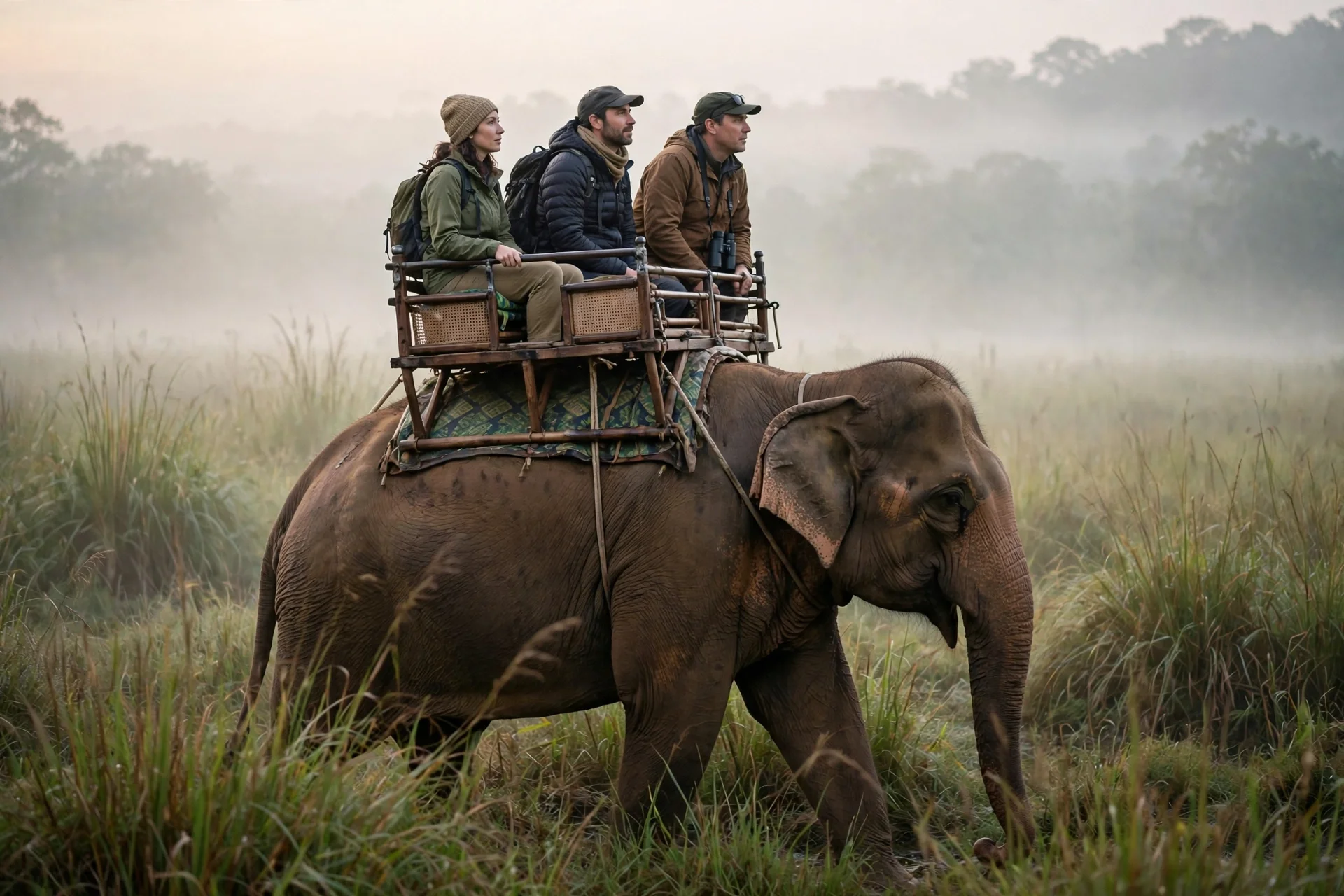
And here is the second detail worth knowing: elephant safaris are scheduled to resume on November 1. That is a big deal. The elephant-back safari at Kaziranga is one of the most atmospheric wildlife experiences in India, and people plan entire trips around it. If that is your thing, aim for November onward.
Why Kaziranga is not just another wildlife park
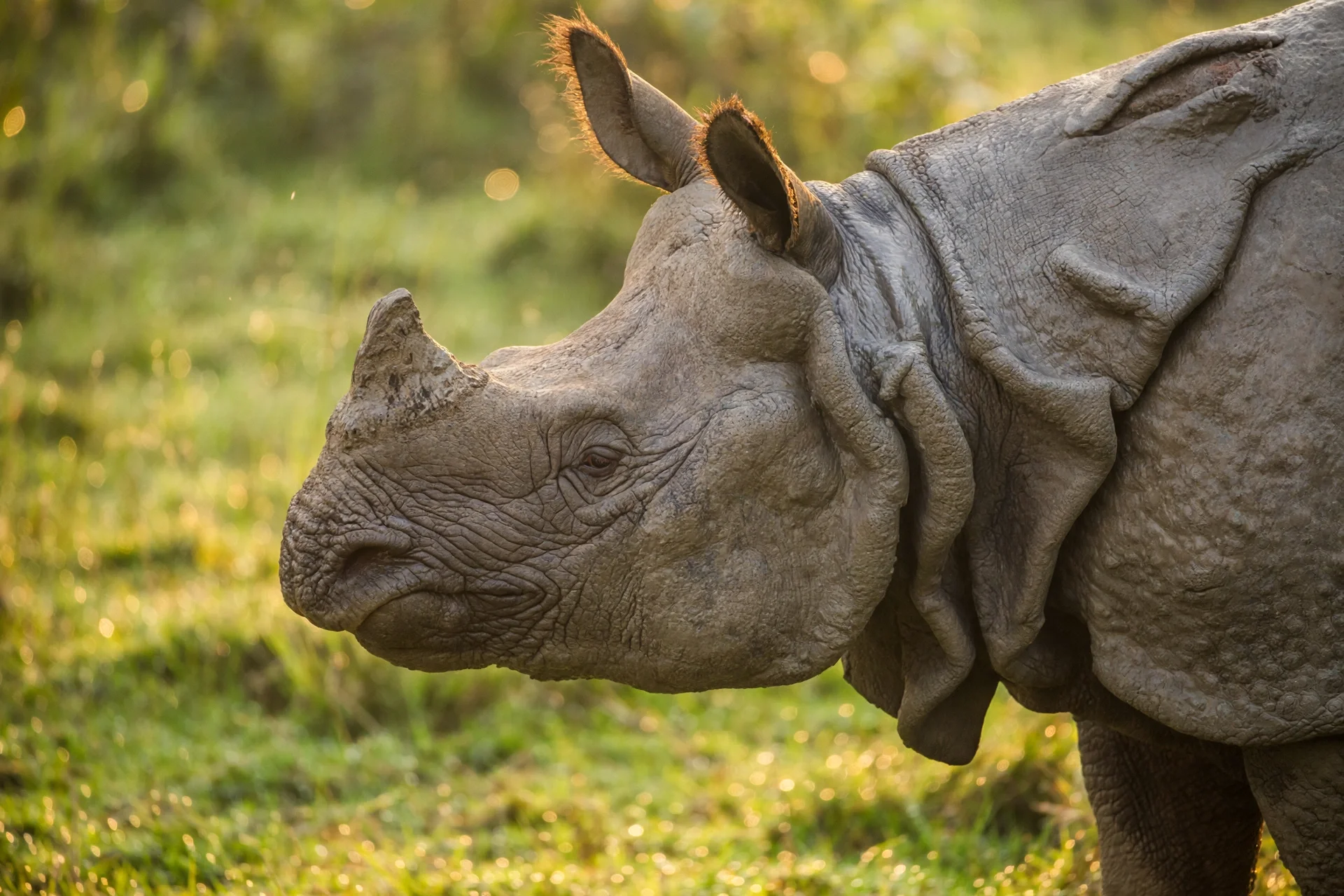
You have probably seen a rhinoceros in a zoo. It is a completely different animal when you are sitting in an open jeep and one walks out of grass taller than your vehicle, close enough that you hear its feet in the mud.
Kaziranga holds the world’s largest population of the greater one-horned rhinoceros, more than two-thirds of all the ones left on Earth. The park is spread across the floodplains of the Brahmaputra River in Assam, covering about 859 square kilometers of grassland, wetlands, and forest, and it has been a UNESCO World Heritage Site since 1985.
But the rhino, magnificent as it is, is only the headliner. Kaziranga is one of the rare places in India where you can realistically see the “big four” of the northeast in a single trip: one-horned rhinos, Asian elephants, wild water buffalo, and the swamp deer, plus tigers if the jungle decides to be generous. The birdlife is ridiculous too. Egrets, pelicans, and migratory flocks turn the wetlands into a spectacle that even non-birders end up photographing.
The floodplain setting is what makes it special. This is not dense forest where you squint at shadows. The landscape opens up. You see the animals in real space, doing real things, and that changes the whole feel of a safari.
Safari timings: how the day actually works
For the 2026-27 season, there are two jeep safari slots per day. These are entry windows, not the length of the ride, so read them carefully:
- Morning safari: entry between 7:30 am and 10:00 am. You must be out by noon.
- Afternoon safari: entry between 1:30 pm and 3:00 pm. You must be out by 5:00 pm.
The morning slot is the one experienced visitors fight over. Animals are most active in the first hours of daylight, the light is better for photography, and the grass is still wet with dew, which makes everything look cinematic. The first-light slots at Kohora and Bagori are already seeing high demand this season, so book early if you want them.
One practical warning: these entry windows are enforced. This is not a park where you can sweet-talk the gate guard into letting you linger. Plan your day so you are at the gate with time to spare, because a missed entry window is a missed safari.
Which range should you pick
This is the question I get most often, and the honest answer is that it depends on what you want.
Central Range (Kohora)
This is the classic Kaziranga experience and the heart of the park. Kohora is where the reopening ceremony happened, it has the densest concentration of sightings, and it is surrounded by the most accommodation options, including government and ATDC lodges. If this is your first visit, start here. It is also where you will find the famous Mihimukh and Kathpora tower viewpoints.
Western Range (Bagori)
Bagori is known for excellent rhino sightings and tends to feel slightly less crowded than Kohora in peak weeks. There are good private resorts clustered near this gate. Many repeat visitors actually prefer Bagori for the morning slot because the sighting odds are strong and the experience feels a touch wilder.
Eastern, Burapahar, and Northern ranges
These open in phases through the season. They are worth your time if you are staying more than two days, because each range has a slightly different landscape and the birdlife in some of the eastern wetlands is exceptional. Just confirm which ones are open before you build your itinerary around them.
My advice for a first-timer with two full days: do Kohora in the morning and Bagori in the afternoon, or vice versa. Two days gives you four safaris, which is the sweet spot for a first visit. One safari is a lottery ticket. Four safaris is a strategy.
The elephant safari question
Jeep safaris cover more ground. Elephant safaris get you closer. There is no single right answer, but if you can only do one, here is how I think about it.
The elephant safari at Kaziranga moves slowly through the tall grass at eye level with the landscape. You are not looking at animals from a track; you are in the grass with them. Rhinos that would keep their distance from a jeep engine will often ignore an elephant completely. Photographers love it because the vantage point is steady and high.
The downside is range. An elephant covers a fraction of what a jeep covers, so your species count will be lower. The smart move is to do both: jeeps for coverage, the elephant for the experience. Since elephant safaris resume November 1, anyone planning for mid-season can combine them easily.
Booking permits without the headache
Here is where trips quietly fall apart, so pay attention. Safari permits are issued through Assam’s official Sewa Setu system. You need to carry the original ID you used during booking. Not a photocopy, not a screenshot, the original.
Each jeep carries six visitors plus the driver and the guide. That means slots are genuinely limited, and during the first weeks of the season the morning slots at both Kohora and Bagori go quickly. Book your safari permits as early as the system allows, and book your stay near the range you want to enter, because that saves you a pre-dawn commute and improves your chances of making the morning entry window.
If you are traveling with a tour operator, confirm in writing that your permits are secured before you pay the balance. I have seen too many travelers discover at the gate that their “confirmed” safari was a verbal promise.
Getting there
The standard gateway is Guwahati. From Guwahati, it is roughly 240 to 250 kilometers to Kohora, about four and a half to five hours by road via NH27 and NH715, depending on your starting point and traffic.
Do the drive in daylight. The stretch of highway through the Kaziranga corridor passes through designated animal corridors, and there is sensor-linked enforcement on speeding in that section. Drive slow, stay alert, and treat it as part of the trip rather than a transfer to endure. You might spot your first wildlife from the highway.
There is a real convenience argument for staying near your chosen range. Government and ATDC lodges cluster around Kohora, and private resorts sit near Bagori. Picking accommodation minutes from your gate means you can reach the 7:30 am entry window without a 5 am alarm.
What you will see besides rhinos
It would be a shame to come all this way and only look for rhinos. Kaziranga’s supporting cast is genuinely world-class.
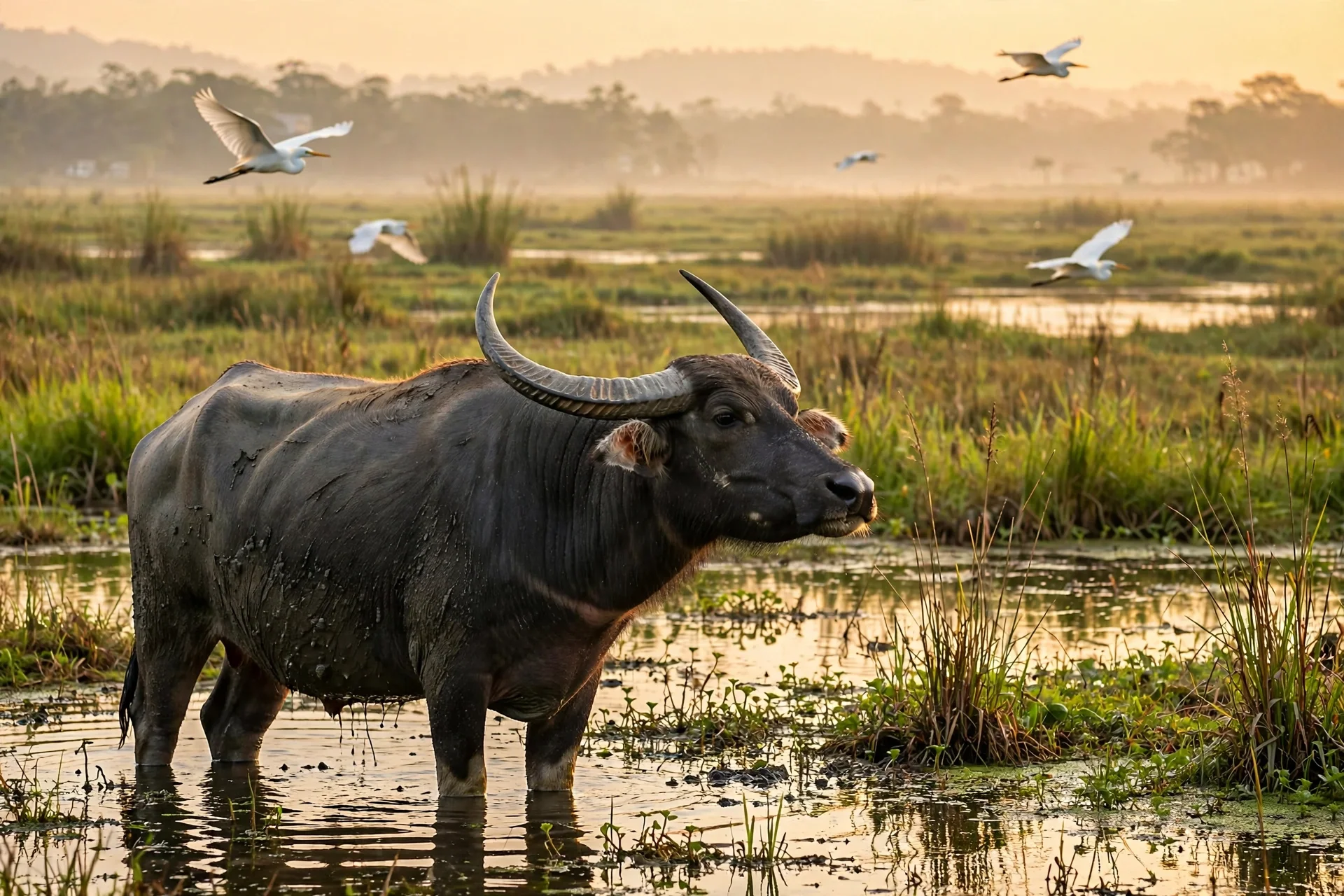
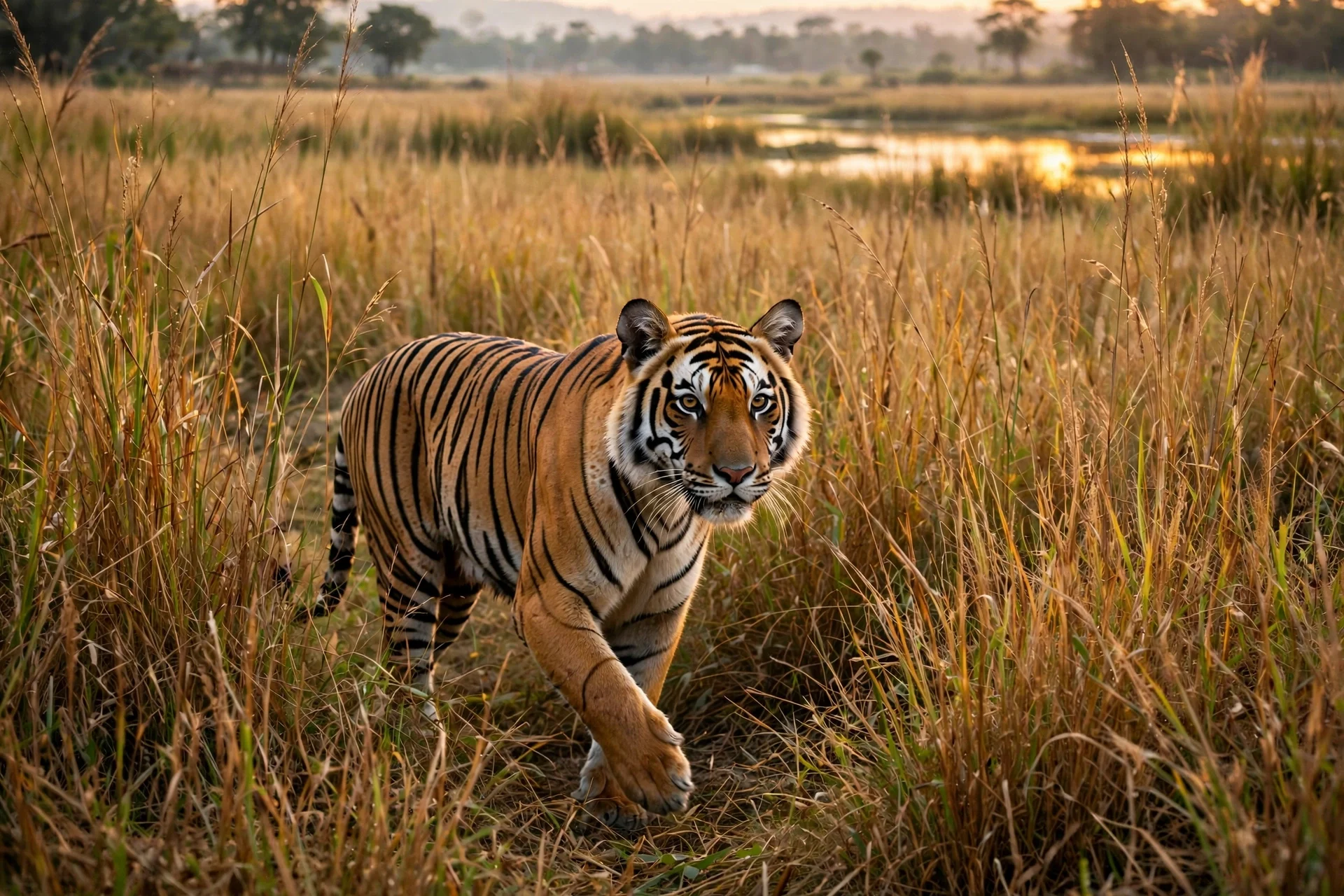
Asian elephants move through the park in herds, and October mornings often catch them crossing the grasslands in golden light. Wild water buffalo, massive and prehistoric-looking, wallow in the wetlands. The swamp deer, or barasingha, gather in the open grass in numbers that make you stop the jeep just to watch. Tigers are here too, though they are harder to spot than in central India’s forests, and that is fine. A tiger sighting should feel like a gift, not a guarantee.
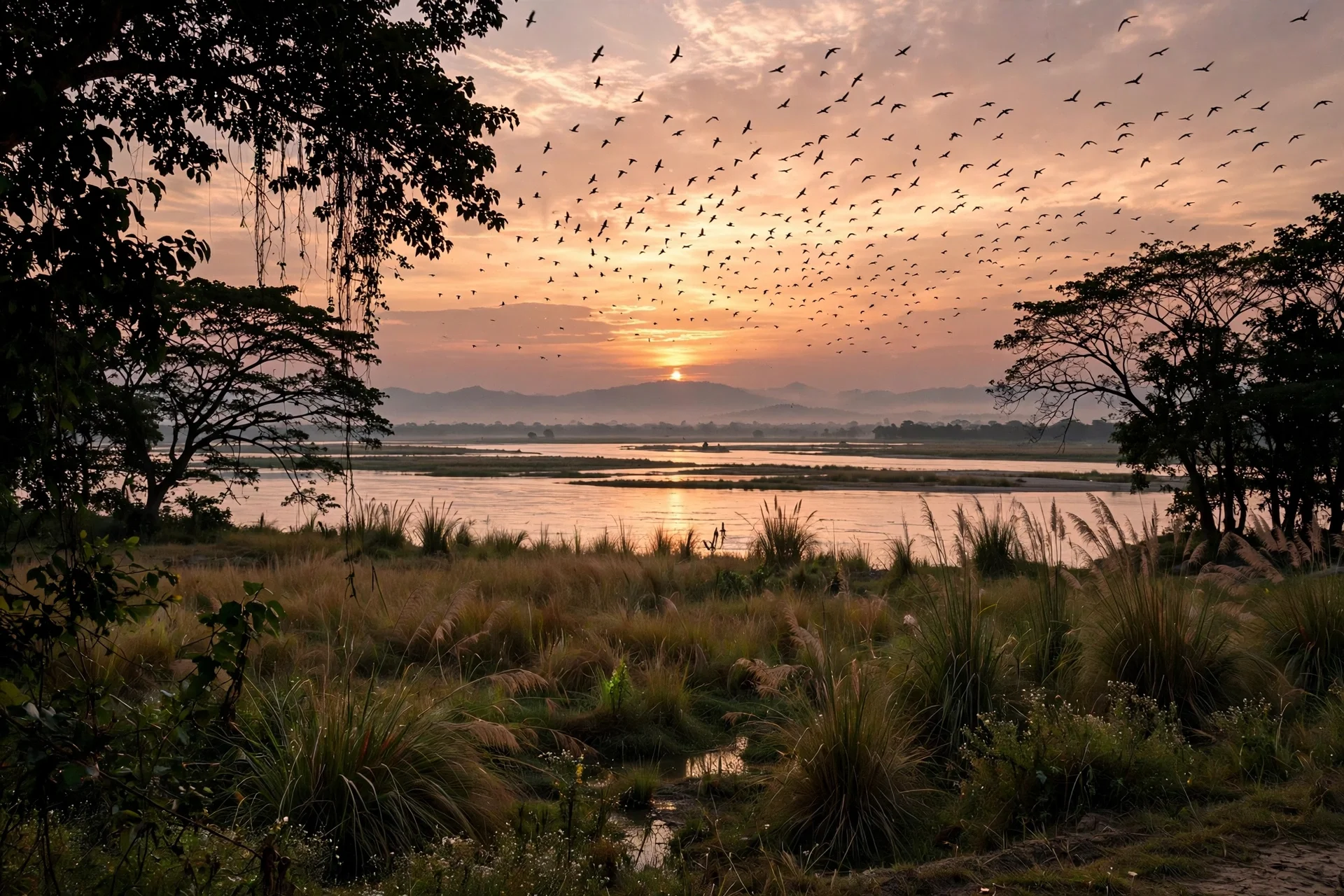
Then there are the birds. The wetlands fill with pelicans, adjutant storks, and egrets, and as the season deepens, migratory flocks arrive. If you are even slightly interested in birds, bring binoculars. You will thank yourself by the second hour.
Weather right now and what to pack
Early October is a transitional month. The monsoon has mostly retreated, but the season is still young. The early-October outlook for the Golaghat region calls for the occasional shower, so pack a light rain layer even if the forecast looks fine. Morning temperatures are pleasant, midday is warm, and the open jeep means you feel every bit of both.
Practical packing list that actually matters: a rain shell, sun protection, binoculars, a camera with a zoom lens if you have one, and dull-colored clothing. Bright colors do not help your sightings, and the dust on the tracks will punish white clothes anyway.
Costs and where to stay
Safari pricing varies by range and by whether you book through an operator or directly, and per-jeep rates differ across the park’s ranges, so treat any specific number you see online as a starting point and confirm with the official booking system or a reputable operator. What does not vary is the advice to book early in the season. October and November demand is real, and the best slots go first.
For stays, you have two honest options. The government and ATDC lodges around Kohora are well located and reasonably priced, and they put you minutes from the Central Range gate. The private resorts near Bagori and around Kohora offer more comfort and often package safaris with the room. Either way, proximity to your gate beats luxury when the morning entry window is 7:30 am.
Common mistakes first-timers make
Let me save you the usual ones.
Booking one safari. One slot is a coin flip. Two days and four safaris turn luck into probability.
Skipping the morning slot. The afternoon light is pretty, but the animals are not as active. If you can only do one, do the morning.
Not carrying the right ID. The permit system requires the original ID used at booking. This gets people turned away every season. Do not be that person.
Assuming all ranges are open. Reopening happens in phases. Confirm which ranges are running before you finalize plans.
Underestimating the drive. Guwahati to Kohora is five hours in good conditions. Do not schedule a morning safari on your arrival day.
A simple 3-day plan that works
If you want a plan you can copy, here it is. Day one: arrive in Guwahati, drive to Kohora in daylight, settle in, and do an afternoon safari in the Central Range to get your bearings. Day two: morning safari at Bagori, rest through the midday heat, afternoon safari back at Kohora. Day three: one more morning safari wherever your guide recommends based on the previous days’ sightings, then drive back to Guwahati.
That is five safaris across two ranges with a built-in buffer for weather and luck. It is the itinerary shape that experienced Kaziranga visitors keep coming back to.
Assam’s wider wildlife season is open too
Kaziranga is the headline, but it is not the whole story this month. Manas National Park reopened on October 2, and Pobitora Wildlife Sanctuary is scheduled to reopen on October 13. If you have more than a few days, pairing Kaziranga with Manas is one of the great wildlife combinations in India. Just remember that each park has its own permit system and its own timings, so do not assume one booking covers both.
Your turn
The 2026-27 season is officially underway, the grass is fresh, and the rhinos are out. If Kaziranga has been sitting on your list, this is the year to stop scrolling and start booking.
For more wildlife and adventure travel ideas, follow The Cavee on Pinterest, and if you want another kind of edge-of-the-world thrill, read our guide to swimming at the edge of Victoria Falls, our Ha Giang Loop motorbike adventure guide, or the Upper Mustang forbidden kingdom guide. Read the full story on thecavee.com.