Swimming at the Edge of the World’s Biggest Waterfall: The Complete Devil’s Pool Guide (2026)
There is a moment, and every person who has done Devil’s Pool remembers exactly where they were when it hit them, when you stop kicking, float forward through water that is suddenly moving faster than you expected, and realize there is absolutely nothing between you and a 100-meter drop except a rock lip you could step over and a guide holding your arm. Your heart is pounding so hard you can hear it. Below you, the Zambezi River throws itself off the edge of Africa.
That is Devil’s Pool. It is the most famous natural infinity pool on the planet, it sits right on the lip of Victoria Falls in Zambia, and it only opens for a few months a year. If you have ever seen that photo of someone lying at the edge of a waterfall like it is a bathtub, this is where it was taken. And right now, in October and November 2026, is literally the best window of the year to do it. The river is low, the water is warm, and the pool is open.
This guide covers everything you need: when to go, what it costs in 2026, how to book, the safety rules nobody sugarcoats, and how to stitch it together with a bungee jump and white-water rafting into the single wildest long weekend in Africa.
What Devil’s Pool Actually Is (And Why It Only Exists for Part of the Year)
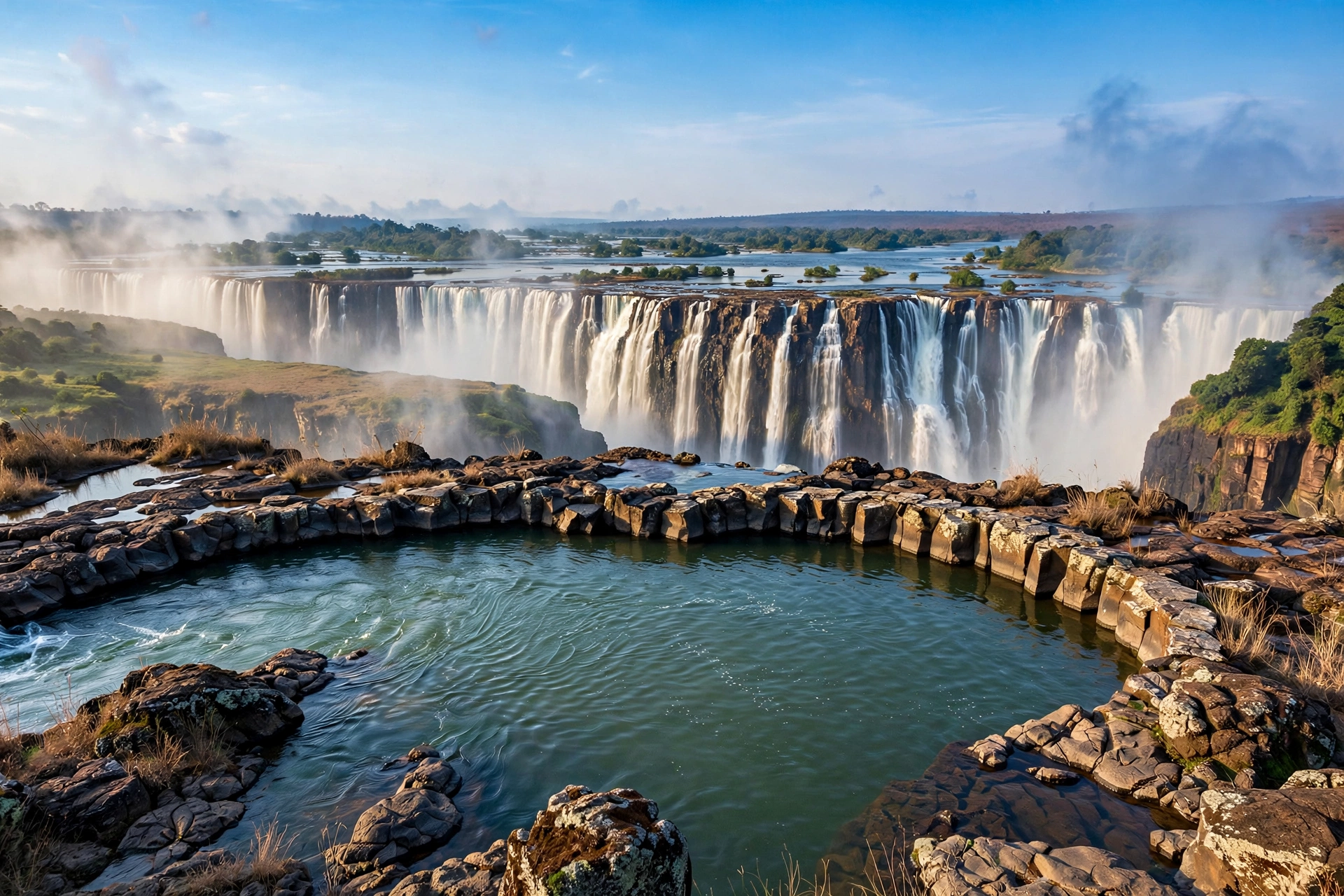
Devil’s Pool is not a built pool. Nobody carved it, nobody engineered it. It is a shallow natural rock basin right at the edge of Victoria Falls on the Zambian side, worn into the basalt by the Zambezi over thousands of years. During the dry season, when the river level drops far enough, a submerged rock wall just upstream slows the current and forms a calm eddy. You can lie in that eddy, in knee-to-waist-deep water, and peer over the lip as the entire river thunders past you on both sides.
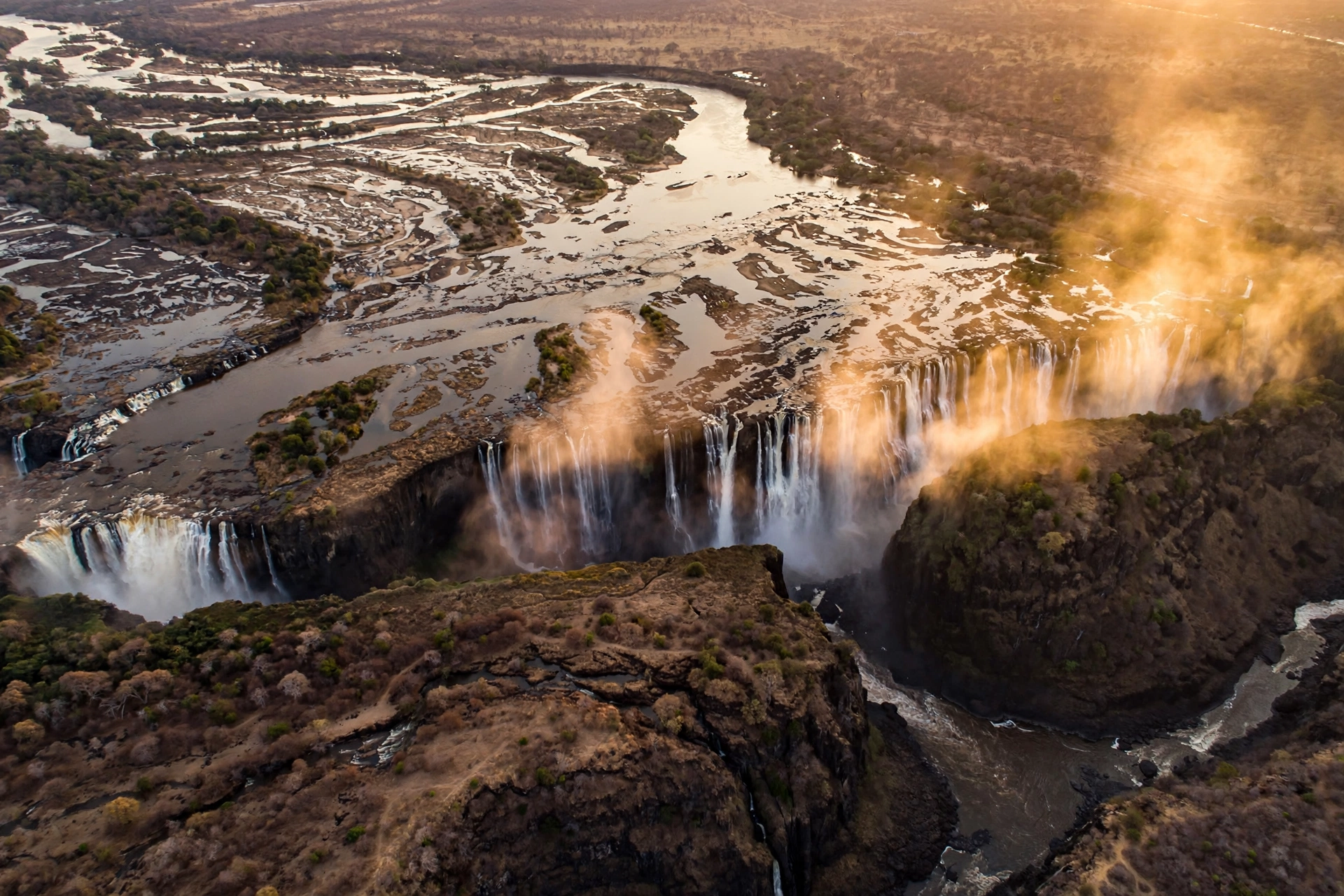
It sits on Livingstone Island, a small island at the very crest of the falls that is only accessible by boat from the Zambian side. That island is famous in its own right: it is where David Livingstone first set eyes on the falls in 1855 and named them after Queen Victoria. So the trip starts with a boat ride to the exact spot where the falls entered European history, which is a nice detail to have in your pocket when you are telling the story later.
The crucial thing to understand is that the pool is seasonal. It only operates roughly from mid-August to mid-January, and even inside that window everything depends on the river. When the Zambezi is running high, usually February through July, the current over the lip is far too strong and the pool simply does not exist as a swimmable thing. Guides shut it down. October and November are the sweet spot: the river is at its lowest, the water is clear and warm, and the famous edge photo is at its most dramatic because you can get closer to the lip than at any other time of year.
The Experience, Step by Step
You cannot just walk up to Devil’s Pool. Access is controlled, and that is a good thing. Here is how a typical visit works.
Everything runs through guided tours operated from the Zambian side, most famously the Livingstone Island tours run by Tongabezi. You meet at the Royal Livingstone Hotel launch site, get a safety briefing that is admirably blunt, and take a short boat ride out to Livingstone Island. The island itself is worth the trip: you walk across it to the edge of the falls, where the water is roaring past just meters away, and you get a front-row view of the main cataract that most visitors on the Zimbabwe side never see.
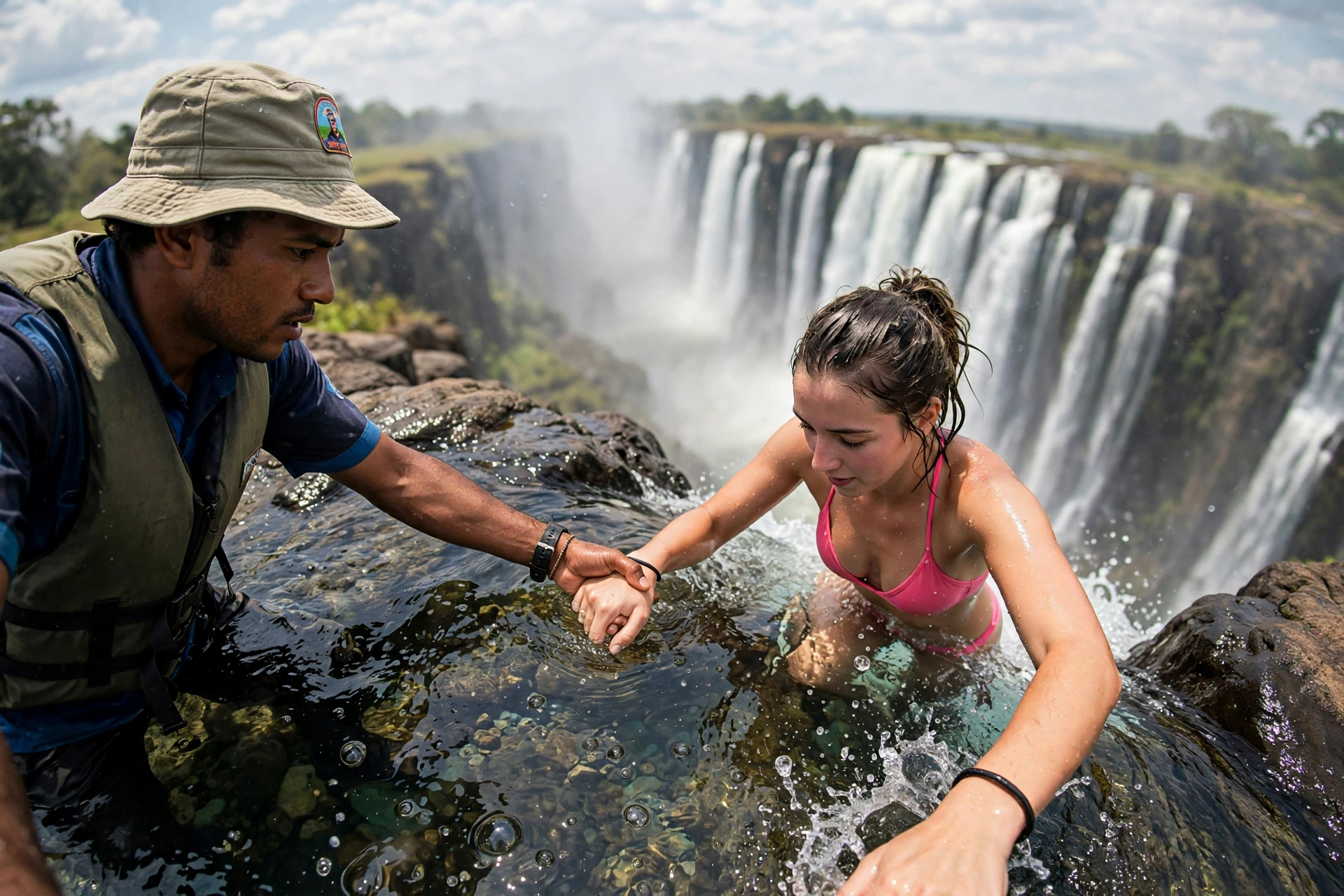
Then comes the swim. You wade in with a guide, swimming or walking a short channel across to the pool itself. The guides are professionals who do this hundreds of times a season, and they stay with you the entire time. They will literally hold onto you at the edge if you want the full photo. Here is the part that surprises people: the famous rock lip is real. You can feel it with your feet and your hands, a rounded underwater barrier that keeps the pool calm while the river rages a meter away. It feels improbable. It looks improbable in photos. It is also, per every operator and every travel report, genuinely safe when you follow the guide’s instructions, which boil down to: do not stand up, do not go past the lip, and do what the guide says.
How long do you get? The swim itself is short, maybe 20 to 30 minutes of actual pool time depending on the tour, and honestly that is enough. Adrenaline is exhausting. Most people come out of the water grinning like idiots, and the guides are happy to take the photos for you, which solves the “how do I take a picture while lying at the edge of a waterfall” problem neatly.
2026 Prices and How to Book
Let us talk money, because this is the question everyone asks second, right after “is it safe?” Devil’s Pool visits are sold as Livingstone Island tour packages, and the 2026 pricelist from Tongabezi breaks down like this:
- Breakfast tour: $110 per person
- Lunch tour: $175 per person
- High Tea tour: $150 per person
Those prices include the boat transfer, the guided island walk, the Devil’s Pool swim, and the meal. Park fees are on top, so budget a bit extra. The lunch tour is the most expensive because it includes a full island lunch; the breakfast tour is the classic budget pick and the morning light is arguably the best for photos anyway.
Booking ahead is essential in October and November. This is peak season, slots are limited, and the morning tours sell out first. Book directly through the operator or through a reputable Livingstone-based agent. If you are staying at a lodge in Livingstone, the front desk can usually sort it in one conversation. One practical tip: the breakfast tour leaves early, and the river mist is thickest in the morning, so bring a dry bag for your phone even though the guides will handle photography.
Safety: The Question Everyone Asks, Answered Honestly
Is Devil’s Pool dangerous? Let us be straight about this, because the photos make it look like madness and the internet has opinions.
The honest answer: it is an adventure activity with real risk that is managed very professionally. The rock lip is a genuine physical barrier. The guides are trained, experienced, and they never leave your side. The water level is monitored constantly, and if the current is too strong, the swim does not happen. That is the whole reason for the seasonal window. Operators have been running these swims for years with an excellent safety record, and the structure of the tour, small groups, mandatory guides, controlled access, is designed around keeping it that way.
That said, this is not for everyone, and it is okay to admit that. You need to be a reasonably confident swimmer. If you have a fear of heights, the edge will not be fun for you, it will just be terror, and there are a hundred other incredible ways to experience Victoria Falls. There are age and fitness requirements, and you should check them when booking. Pregnant travelers and anyone with certain medical conditions should sit this one out and enjoy the island tour instead, which is still spectacular.
The single most important safety rule is also the simplest: never, ever try to reach the pool on your own. Every few years there is a story about someone who tried it unguided, and those stories do not end well. The guided system exists for a reason. Use it.
Zambia vs Zimbabwe: Which Side Should You Stay On?
Victoria Falls straddles the Zambia-Zimbabwe border, and travelers argue about the sides endlessly. Here is the practical version for a Devil’s Pool trip.
Devil’s Pool is only accessible from the Zambian side, full stop. You need to be in Livingstone, Zambia, to do the swim. If you are staying on the Zimbabwe side in Victoria Falls town, you can cross the border for the day, but that adds border queues and visa considerations to your morning, so most people doing Devil’s Pool simply base themselves in Livingstone.
The classic split: Zambia for the adventure activities (Devil’s Pool, the island, microlight flights over the falls) and Zimbabwe for the classic panoramic views (about 75 percent of the falls’ face is visible from the Zimbabwe side, and the viewpoints there are unmatched). If you have two days, do both. The border crossing is straightforward, and seeing the falls from both countries is genuinely worth it. Many travelers stay in Livingstone, do Devil’s Pool in the morning, then cross to the Zimbabwe side in the afternoon for the viewpoints at sunset.
Building the Full Victoria Falls Thrill Circuit
Here is where the trip planning gets fun. Devil’s Pool is the headline, but Victoria Falls is one of the great adventure capitals of Africa, and you can stack a genuinely ridiculous long weekend if you plan it right.
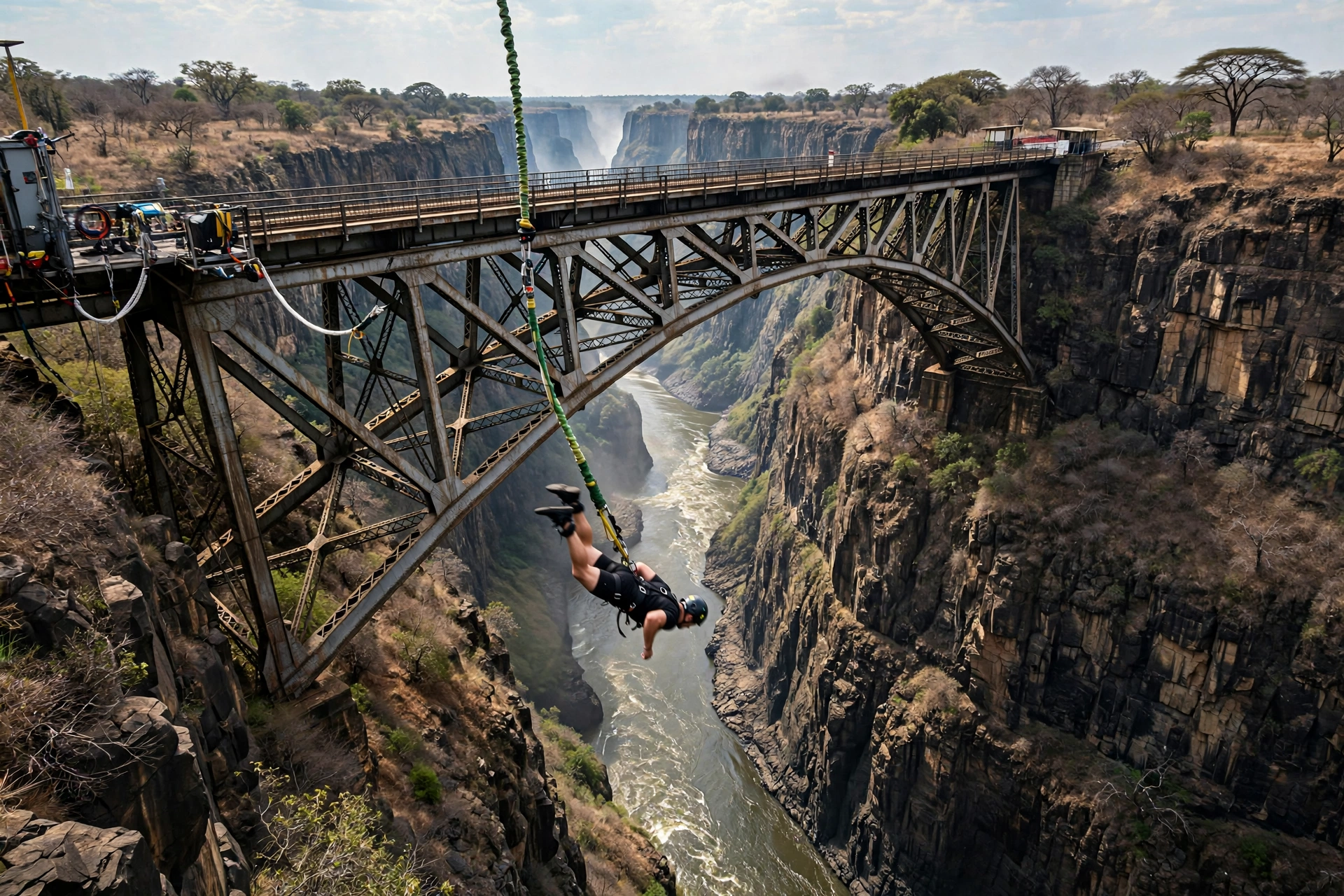
The bungee jump. From the Victoria Falls Bridge, 111 meters over the Batoka Gorge, with the spray of the falls in the distance. It is one of the most famous bungee jumps in the world, operated on the Zimbabwe side. If Devil’s Pool is the “look how close I am to the edge” photo, the bungee is the “I actually threw myself off something” story. Doing both in one trip is the classic Victoria Falls one-two punch.
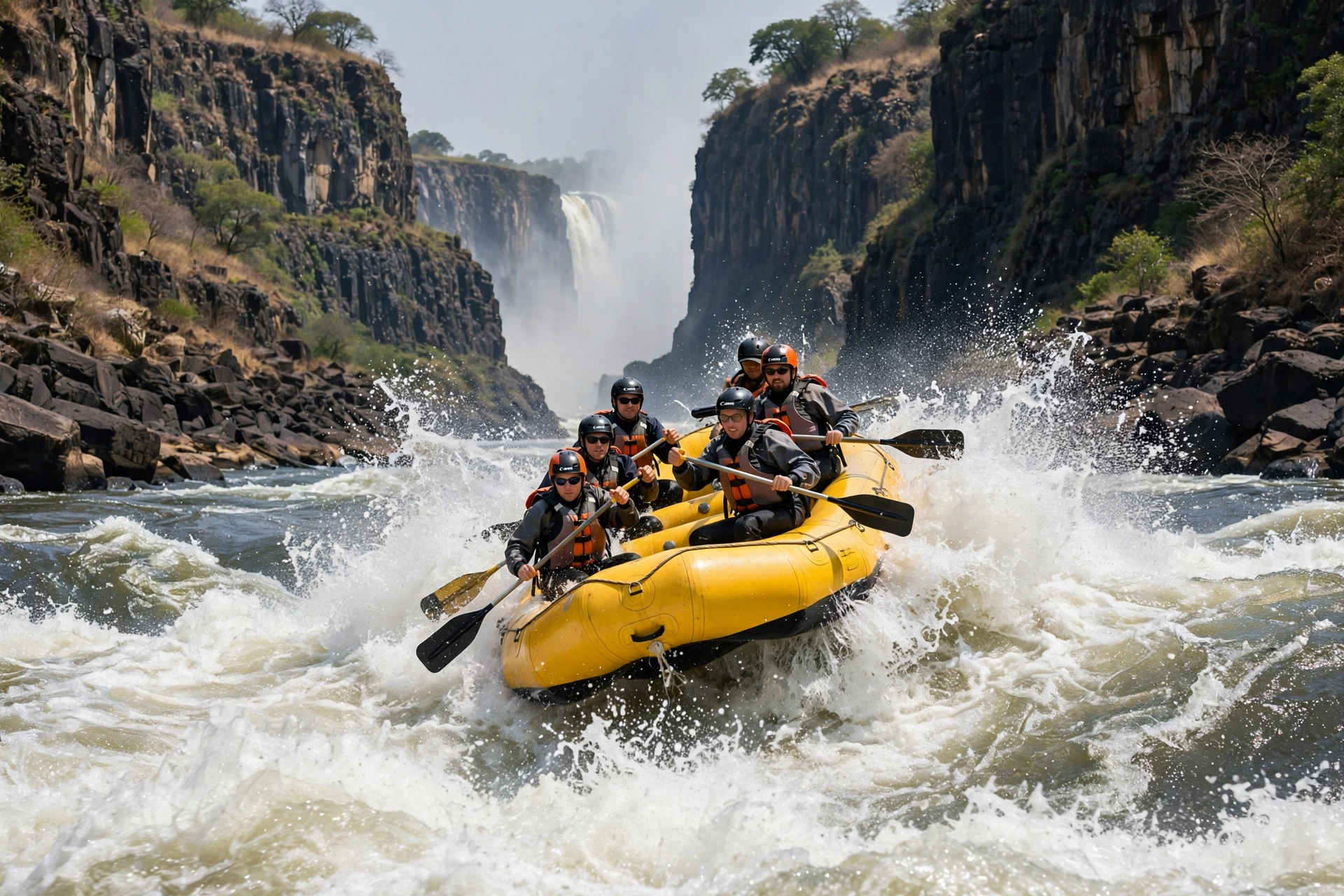
White-water rafting. The Zambezi below the falls runs some of the best commercially rafted rapids on Earth, including stretches rated Grade 5. Day trips and multi-day expeditions launch from both sides. Here is the neat seasonal logic: the same low water that opens Devil’s Pool also makes for the best rafting conditions. October and November are prime for both. If you are already in Livingstone for the pool, adding a rafting day is the easiest upgrade you will ever make to a trip.
The gorge swing and zipline. If the full bungee feels like too much, the gorge swing off the same bridge gives you the freefall rush with a slightly gentler arc, and the zipline across the gorge is pure fun with the best views of the three. Both run from the bridge area and take under an hour.
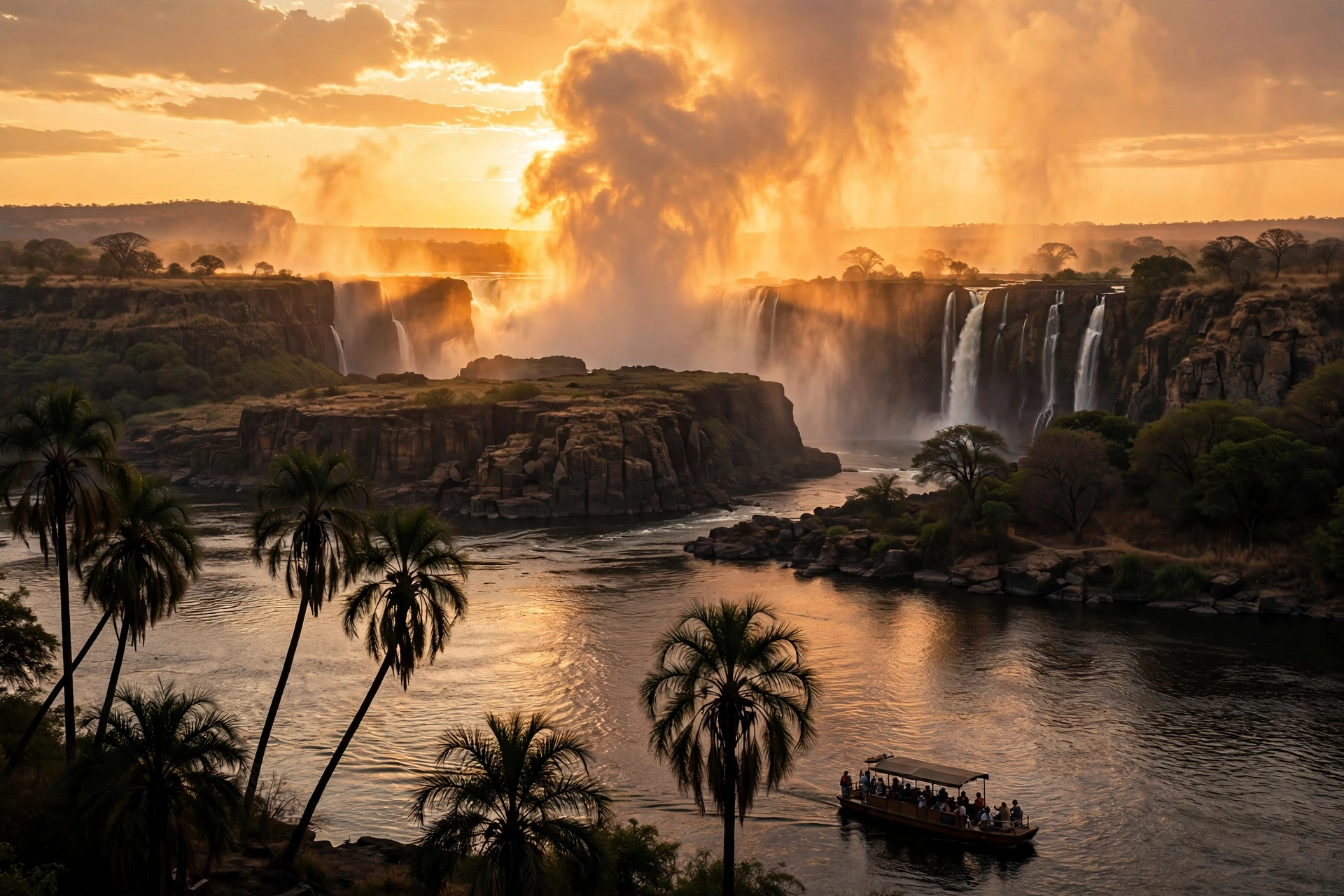
The sunset cruise. After all that adrenaline, the classic wind-down is a sunset cruise on the upper Zambezi: elephants on the banks, hippos in the water, the sky going orange behind the falls’ mist plume. It is the calmest, most beautiful two hours in the whole itinerary, and a good reminder that the river you were swimming at the edge of is also just a gorgeous place to float.
When NOT to Go
This section matters as much as the rest, because the number one way people ruin a Devil’s Pool trip is by showing up in the wrong month.
From roughly February to July, the Zambezi is in flood. The falls are at their most thunderous and spectacular, the mist plume is visible from kilometers away, and Devil’s Pool is closed. There is no negotiation here; the current over the lip is lethal and the operators will not run the swim. If someone offers you an “unofficial” swim during high water, walk away.
The shoulder months, August and January, are maybes. The pool sometimes opens in mid-to-late August and sometimes runs into early January, but it depends entirely on that season’s river levels. If you are planning specifically for Devil’s Pool, October and November are the months to lock in. The river is at its lowest, the weather is warm, and you get the added bonus of peak rafting season running in parallel.
What to Pack
You do not need much, but the right small things make the day dramatically better:
- Swimwear under your clothes. There are changing facilities, but arriving ready saves time.
- A dry bag or waterproof phone pouch. The guides take photos, but you will want your own shots too, and everything gets wet.
- Water shoes or sandals with grip. The rocks are slippery. This is not the place for flip-flops.
- Sunscreen and a hat for the island walk. The Zambian sun at the falls is no joke, and there is little shade on the island.
- Cash or card for park fees and tips. The guides earn their tips. Tip them.
- A change of clothes in a waterproof bag. You will be damp for hours otherwise.
Is It Worth It? An Honest Take
At $110 to $175 plus park fees, Devil’s Pool is not cheap for a half-day activity. So is it worth it?
Here is my honest answer: if you are already going to Victoria Falls, yes, without hesitation. The falls are one of the Seven Natural Wonders of the World, and most visitors see them from viewpoints behind railings. Devil’s Pool is the only way to be IN the falls, at the edge, feeling the scale of the place in your body instead of just your eyes. It is the difference between visiting a wonder and touching it. People remember it for the rest of their lives; they forget the zipline they did the same afternoon.
If you are flying to Zambia ONLY for Devil’s Pool, that is a harder call, and it depends on your budget and your bucket list. But here is the thing: nobody flies to Zambia only for Devil’s Pool, because once you are there, the bungee, the rafting, the sunset cruise, and the falls themselves make it one of the best-value adventure weekends on the planet. The pool is the excuse. The trip is the reward.
And the timing could not be better. October and November 2026 are open right now. The river is low, the water is warm, the guides are in peak-season form, and that photo at the edge of the world is waiting.
Found this useful? Follow The Cavee on Pinterest for more bucket-list adventure guides, and share this with the one friend who would absolutely lie down at the edge of a waterfall.
Planning more thrills? Read our guide to Son Doong, the world’s largest cave, our Iceland ice cave season guide for another perfectly-timed adventure, and Zhangjiajie, home of the world’s scariest glass bridge. For independent Devil’s Pool logistics, see Rove.me’s Devil’s Pool guide and Adventures of Lil Nicki’s firsthand account.