Your Phone Speaker Sounds Like a Tin Can? This Handmade Walnut Stand Fixes It With Zero Electricity
Let me guess how your kitchen sounds at dinner time. Your phone is propped against the fruit bowl, playing a recipe video at full volume, and it still sounds like the chef is shouting at you from inside a shoebox. Or maybe it is bedtime and your podcast sounds thin and far away, so you keep nudging the volume up until the phone starts buzzing against the nightstand.
I have lived that exact scene more times than I want to admit. And I had honestly made peace with it, because the alternative was buying yet another Bluetooth speaker, which means yet another thing to charge, pair, update, and eventually throw in a drawer when the battery dies for good.
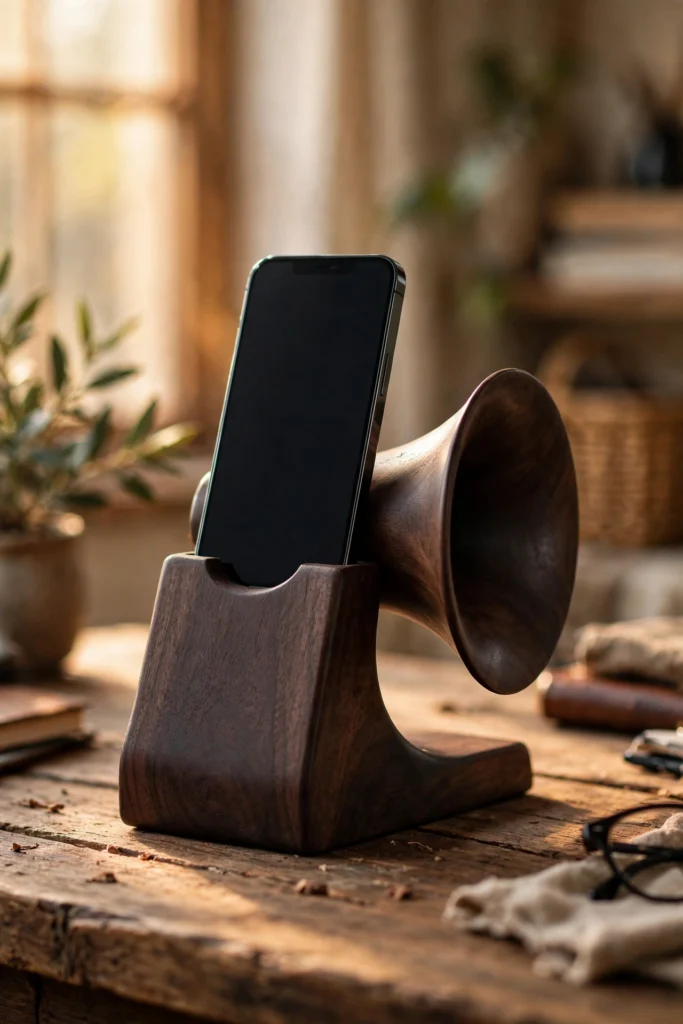
Then I stumbled onto something that stopped me mid-scroll: a chunk of black walnut, turned by hand on a lathe, that makes your phone louder. No battery. No Bluetooth. No app. You just slide your phone into the slot and physics does the rest. It is called the Handmade Black Walnut Phone Speaker Stand, an acoustic amplifier made by an Etsy woodturner called PrettyGoodWoodturnin, and it recently went so viral that the maker is now backed up with orders. There are only 4 left in stock as I write this, and it is sitting in more than 20 carts.
At $174 and up, this is not an impulse buy. So the real question is simple: does a carved piece of wood actually make your phone sound better, or is this just a very pretty paperweight? I dug into how it works, what it is made of, and who it is really for. Here is the full story.
What Is This Thing, Exactly?
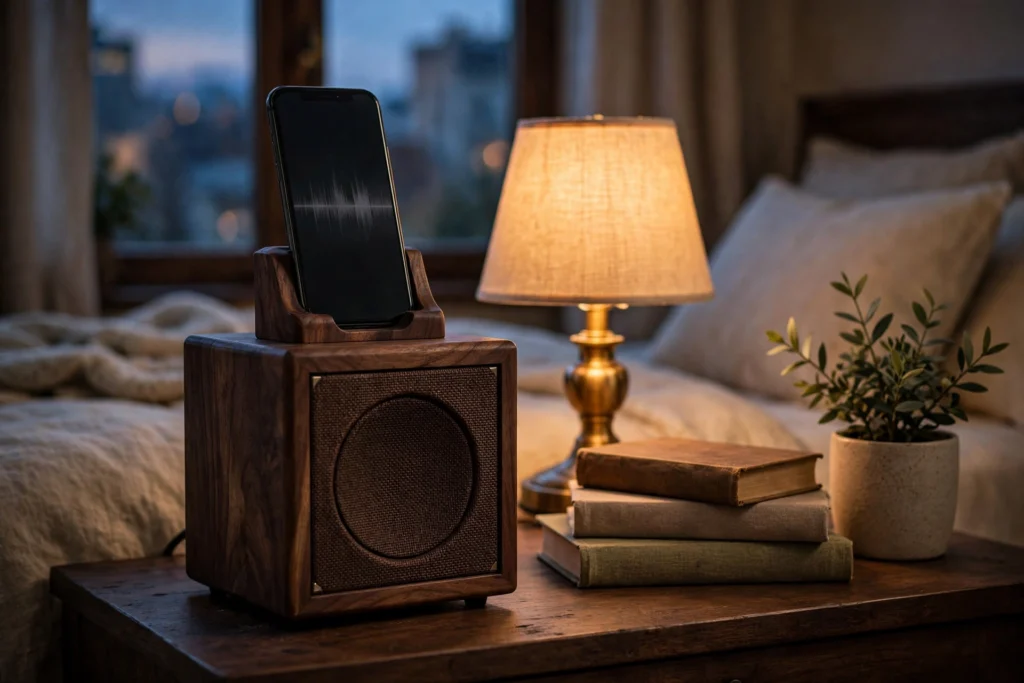
Picture a small sculpture of dark, swirling walnut wood, roughly the size of a coffee mug, with a slot carved across the top and a curved channel running through the body. That channel is the whole trick. You slide your phone into the slot, speaker-end down, and the sound that would normally fire straight into your tabletop gets caught by the channel and projected forward, toward you.
The listing calls it an acoustic amplifier, and that is not marketing fluff. It is the same principle behind the old gramophone horns, just shrunk down and carved into walnut. There is nothing electronic inside. Nothing to charge, nothing to pair, nothing that can break in a software update. It works the day it arrives and it will work in twenty years.
PrettyGoodWoodturnin makes each one by hand, which explains the price and the wait. This is turned wood, not molded plastic, so every piece has its own grain pattern. The shop currently holds a perfect 5 out of 5 star rating, and the listing notes say the maker got buried under orders after a video of the stand went viral. That part I believe instantly. This is exactly the kind of object the internet loves: simple, beautiful, and slightly unbelievable until you see it work.
How Does a Block of Wood Make Your Phone Louder?
Okay, quick physics detour, and I promise to keep it painless. Your phone’s speaker is tiny, maybe the size of a fingernail, and it points downward or sideways depending on how you hold the phone. When the phone lies flat on a table, a lot of that sound just bounces off the table and dies. When you cup your hand behind the phone, it suddenly sounds louder. You have probably done this without thinking about it.
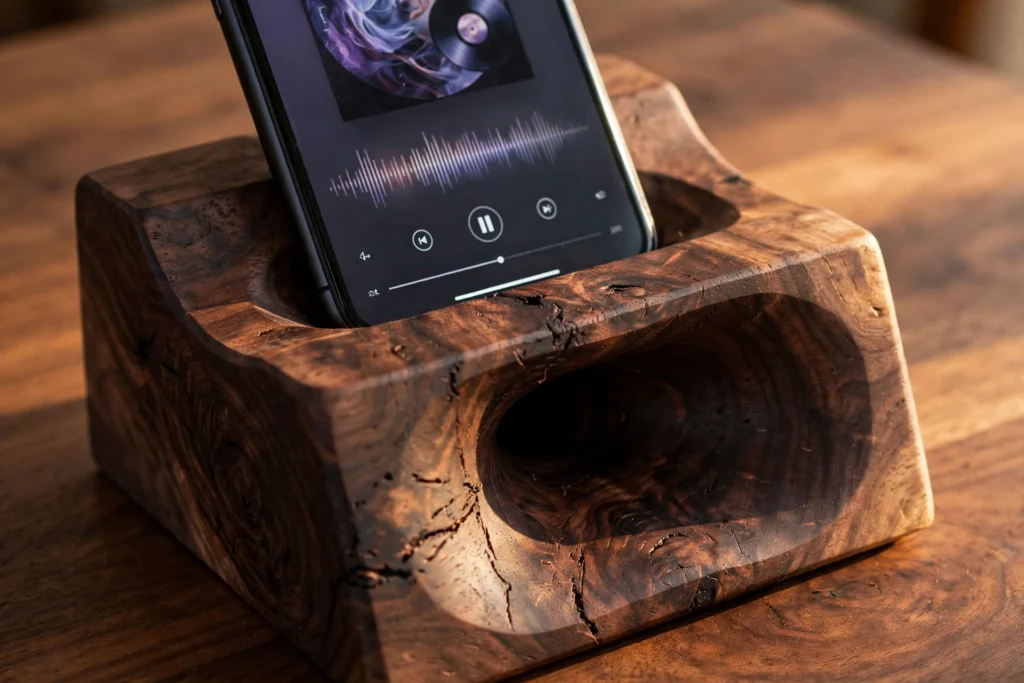
This stand is basically a permanent, beautiful version of your cupped hand. The carved channel acts as a waveguide. Sound waves from the phone’s speaker enter the channel, get funneled and focused instead of scattering everywhere, and exit toward the listener in a tighter, more directional beam. The result is sound that is noticeably louder and, just as importantly, fuller. The thin, harsh edge that makes phone speakers tiring to listen to gets rounded off.
Will it replace a real speaker? Of course not. A $174 carved walnut stand is not going to out-bass a proper Bluetooth speaker. But that was never the point. The point is that your everyday listening, the podcast while you cook, the video call on your desk, the music while you get ready in the morning, suddenly sounds like it is coming from a real device instead of a crackling toy. And it does that without a single watt of electricity, which still feels a little bit like magic to me.
The Craftsmanship: Why Black Walnut?
Here is where my inner wood nerd takes over, because the material choice here is not an accident. Black walnut is one of the most loved hardwoods in American woodworking, and for good reason. It is dense, which matters for sound (denser wood reflects sound waves cleanly instead of absorbing them), it turns beautifully on a lathe, and the grain is genuinely gorgeous: deep chocolate browns with lighter streaks that look different on every single piece.

It is also not cheap wood. Walnut costs several times what pine or poplar costs, and turning a hollow acoustic channel through a solid block without cracking it takes real skill. That is a big part of what you are paying for with the $174 price tag: the material, the labor, and the fact that no two stands are identical. If you have ever held a mass-produced plastic phone dock, you know the difference immediately. One feels like a product. The other feels like an object someone made.
This is the same reason I keep coming back to handmade wooden pieces on this site. A few months back I wrote about handmade wood and epoxy resin coasters that people were buying instead of the ten-dollar store packs, and the logic was identical: you touch the thing every day, so it might as well be beautiful. A phone stand you use ten times a day qualifies even more.
What Problem Does It Actually Solve?
Every good product solves a real annoyance, so let us be honest about which annoyances this one actually fixes.
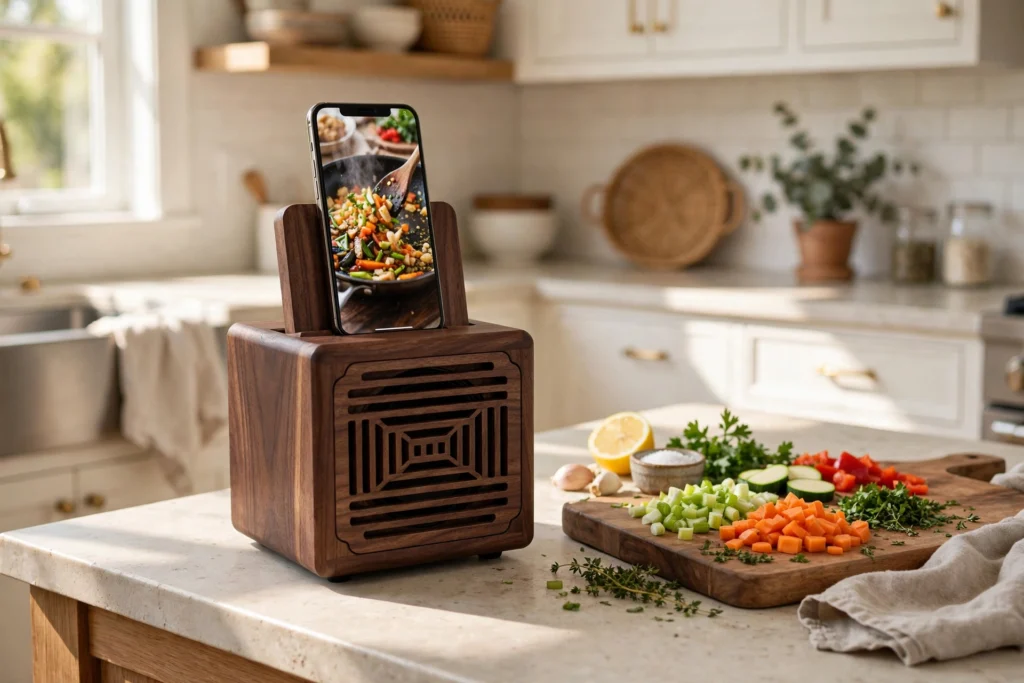
The kitchen problem. You are cooking with messy hands and your phone is playing a recipe at full volume across the room. It sounds terrible and you cannot hear the steps. Drop the phone in the walnut stand on the counter and the sound projects toward you instead of into the cutting board. This is the use case that sold me. If you have ever smeared tomato sauce across your screen trying to crank the volume with your knuckle, you understand.
The bedside problem. Falling asleep to a podcast or an audiobook is lovely until the phone slides off the pillow and starts buzzing against the mattress. The stand holds the phone upright and aimed at you, so you can keep the volume lower and still hear every word. Lower volume at night is also just kinder to whoever is sleeping next to you.
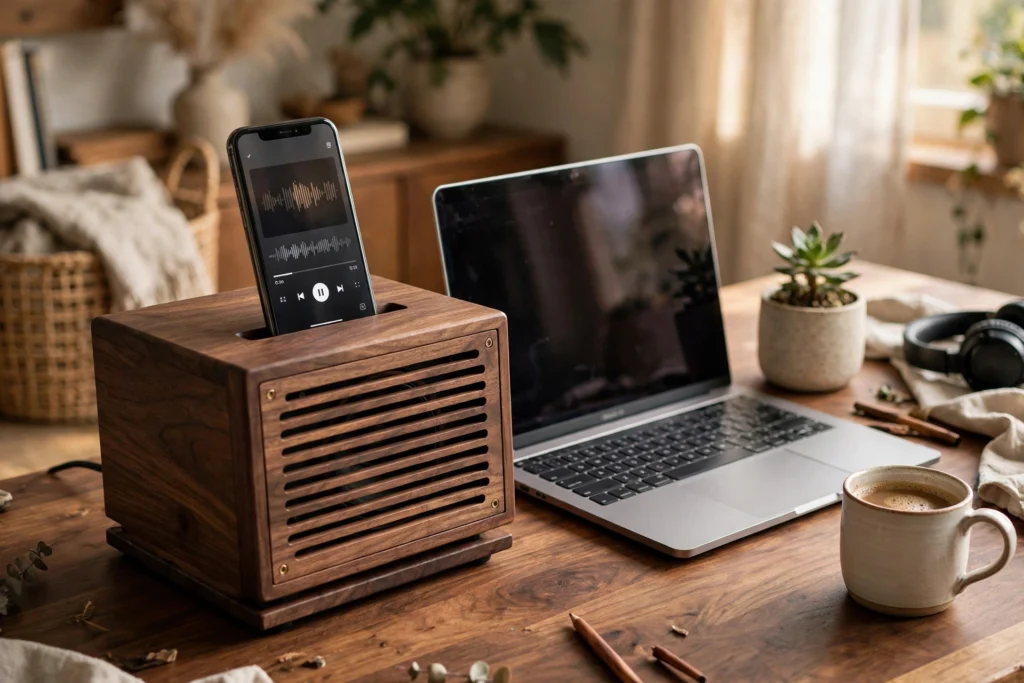
The desk problem. Video calls on speakerphone sound awful when the phone is lying flat. Half your voice goes into the desk. Standing the phone up in the amplifier aims both the mic and the speaker in a much better direction. It is a small thing that makes you sound noticeably clearer on calls, which your coworkers will appreciate more than they will ever tell you.
The “one more charger” problem. This is the one I keep coming back to. My nightstand already has a cable nest that looks like a bird built it. The idea of a speaker that never needs charging, never needs a firmware update, and never shows up as “device not found” in my Bluetooth menu is genuinely appealing. Sometimes the best technology is no technology.
And yes, it solves the decor problem too. Most tech accessories are black plastic rectangles that you hide when guests come over. This is a turned walnut sculpture you leave out on purpose. It belongs in the same conversation as the handmade wooden blanket ladder I covered recently: functional objects that happen to make a room look better just by existing in it.
The Viral Moment: 20+ Carts and a Backed-Up Woodshop
Let us talk about the social proof, because it is unusually strong here. The listing shows a perfect 5-star rating, more than 20 carts currently holding the item, and only 4 units left. The seller’s own note says they are backed up with orders because of a recent viral video. That combination, high demand plus tiny handmade supply, is exactly why handmade marketplaces exist.
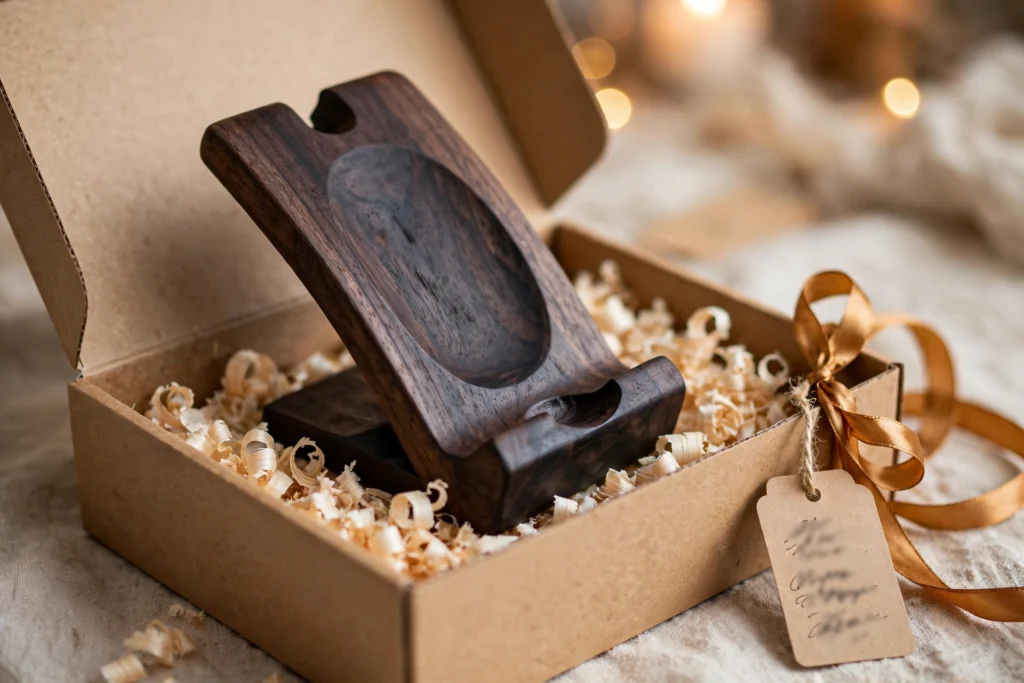
It also tells you something important about timing. Handmade pieces like this do not sit in a warehouse. When a woodturner gets backed up, the wait gets longer and the price rarely goes down. If this is going on your holiday gift list (and honestly, it is a killer gift, more on that below), earlier is better than later. Four units left is not a marketing trick when one person makes them all by hand. It is just arithmetic.
Specs at a Glance
Here is everything the listing confirms, with nothing invented:
- Product: Handmade Black Walnut Phone Speaker Stand, acoustic amplifier
- Maker: PrettyGoodWoodturnin, on Etsy
- Price: from $174.00
- Rating: 5 out of 5 stars
- Availability: only 4 left, in 20+ carts at the time of writing
- Material: solid black walnut, hand-turned
- Power: none needed, fully passive acoustic design
- Link: the Etsy listing
One honest caveat: the listing does not publish exact dimensions or a full compatibility chart, so if your phone wears a particularly chunky rugged case, it is worth messaging the seller before ordering. Most standard phones and slim cases fit the slot fine, but a quick message costs nothing and handmade sellers are usually happy to confirm.
Who Should Buy It (and Who Should Skip It)
I promised an honest take, so here it is.
Buy it if you listen to your phone out loud every day, podcasts, calls, music, videos, and you are tired of the thin sound. Buy it if your desk or nightstand could use one beautiful object instead of three ugly ones. Buy it if you are shopping for someone who has everything, because I guarantee they do not have a hand-turned walnut acoustic amplifier. It is the rare gift that is both surprising and genuinely useful, which is the hardest combination in gift-giving. For more giftable wooden pieces in the same spirit, the book-shaped acacia cutting board set I reviewed is another one people keep buying for the “wait, what is that” reaction.
Skip it if you are mainly after room-filling party volume, because physics has limits and a passive wooden channel will not replace a real powered speaker. Skip it if $174 is more than you want to spend on a phone accessory, which is completely fair. And skip it if you need something this week, because a backed-up solo woodturner is not Amazon Prime.
For everyone in between, this sits in that sweet spot where a daily-use object earns its keep. You will use it more than the fancy headphones gathering dust in your drawer. I am fairly confident about that.
How to Get the Best Sound Out of It
A few practical tips, learned from how these passive amplifiers actually behave:
Point the channel at yourself. The sound exits the carved opening in one direction. Aim that opening where you sit, not at the wall. It sounds obvious, but half the “it did not work” complaints about passive amplifiers come from people aiming them backwards.
Hard surfaces help. The stand performs best on a solid table or counter. On a soft bed or couch cushion, some of the projected sound gets absorbed. For bed use, the nightstand is the right spot, not the pillow.
Keep the slot clean. Dust and crumbs in the channel will muffle the sound over time. A quick wipe every couple of weeks keeps it performing like new. Wood likes a little care: keep it out of standing water and direct blazing sun, the same as any fine wooden object.
Try it with speakerphone calls. This is the sleeper use case. The stand aims your phone’s mic upward and the speaker toward you, and callers consistently sound clearer. If you take a lot of hands-free calls while working, this alone might justify it.
Where to Buy and What It Costs
The stand is sold by PrettyGoodWoodturnin on Etsy, starting at $174.00. At the time I checked, the listing showed a 5-star rating, only 4 units left, and more than 20 carts. Given the seller’s note about being backed up after the viral video, I would not count on those four lasting long. Here is the listing: Handmade Black Walnut Phone Speaker Stand on Etsy.
As with any handmade marketplace purchase, check the estimated shipping time on the listing before you order, especially if it is a gift with a deadline. Solo makers ship when the piece is done, not when the algorithm says so.
The Verdict
I started this piece skeptical, because “wooden block makes phone louder” sounds like the setup to a joke. I ended it wanting one for my own kitchen counter. The physics is real and old, the craftsmanship is the kind you can feel in your hands, and the problem it solves is one nearly all of us live with daily. At $174 it is a considered purchase, not a whim, but it is also the rare gadget that will never need a charger, never go obsolete, and never look ugly on your desk.

Sometimes the smartest upgrade is not the newest technology. Sometimes it is a 300-year-old idea, carved into walnut, by someone who really knows their lathe.
Love handmade wooden finds like this? Follow The Cavee on Pinterest for a daily dose of handcrafted decor, wooden gift ideas, and the stories behind them. This walnut speaker stand is pinned there now, along with dozens of other pieces worth a look. See you there.