For three years, my garden had a plastic bird feeder. You know the kind. Bright green, hollow-looking, bought on a whim at a hardware store. It hung from a shepherd’s hook and, in theory, it was supposed to turn my backyard into some kind of songbird sanctuary. In practice, the squirrels destroyed it within a season, the seed clumped into a soggy brick every time it rained, and honestly it looked like a fast-food wrapper stuck to a tree. The birds visited less and less. I stopped refilling it. It became one of those garden objects you quietly ignore.
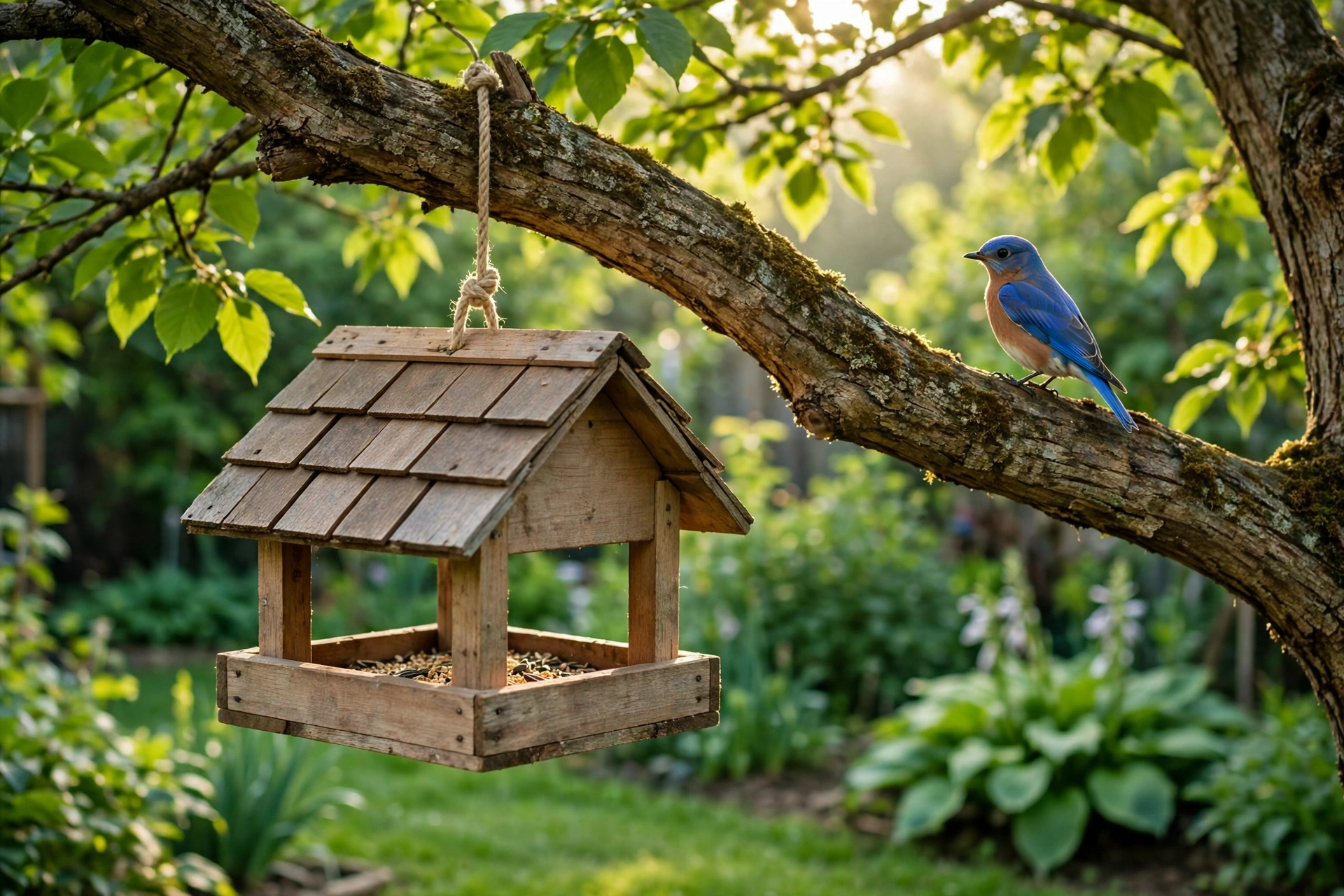
Then last month I saw something at a friend’s place that made me rethink the whole thing. It was a wooden bird feeder, not the little pine box from a craft fair, but a proper little house of a thing with a cedar shingle roof, a real perch, and the warm look of something built by a person who actually cares about wood. Her garden was full of finches and chickadees. Mine was full of regret. So I went looking for one of my own, and I found a listing that I think is the best handmade wooden bird feeder you can buy right now without spending a fortune. It costs $75, it’s handmade in small batches by an Etsy shop called tinybirdhomes, and it’s genuinely one of those rare pieces where every detail was thought through.
This article is the full breakdown: what it is, why wood beats plastic (not just for looks), the exact specs, how to hang it so birds actually show up, what to put in it, and how to keep it clean so you don’t accidentally harm the birds you’re trying to help. Let’s get into it.
The Real Problem With Cheap Bird Feeders
Most bird feeders sold today are built to a price, not to a purpose. Thin plastic cracks in its first winter. Metal perches rust. The seed port is a tiny hole that clogs. The roof, if there is one, is a flat disc of painted tin that funnels rain straight into the seed compartment. Then the seed gets wet, ferments, grows mold, and you get a feeder that actively makes birds sick. A moldy feeder is worse than no feeder at all. Cornell Lab of Ornithology, which has studied backyard feeding for decades, is blunt about this: dirty feeders spread diseases like salmonellosis and avian conjunctivitis between visiting birds. The fix is cleaning, yes, but it’s also starting with a feeder that was designed to drain, dry, and be taken apart and scrubbed.
Then there’s the looks problem, which matters more than birdwatchers like to admit. A bird feeder is one of the most visible things in your garden. If it looks cheap, your whole garden looks cheaper. I have walked through genuinely beautiful backyards where the one plastic feeder hanging from the oak tree ruined the entire vibe. Wood ages gracefully. Plastic just fades into chalk.
The Find: A $75 Handmade Wooden Bird Feeder That Gets Everything Right
The feeder I’m writing about is the Handmade Wooden Bird Feeder with Perch from tinybirdhomes on Etsy, listed at $75.00. It carries Etsy’s “Rare find” badge, which Etsy only hands out to items that are genuinely unusual on the marketplace, not mass-produced stock. The shop makes it in cedar and pine, it’s about 12 inches tall, and it holds roughly one quart of seed, which is the sweet spot for a backyard feeder: enough that you’re not refilling it daily, not so much that seed goes stale.
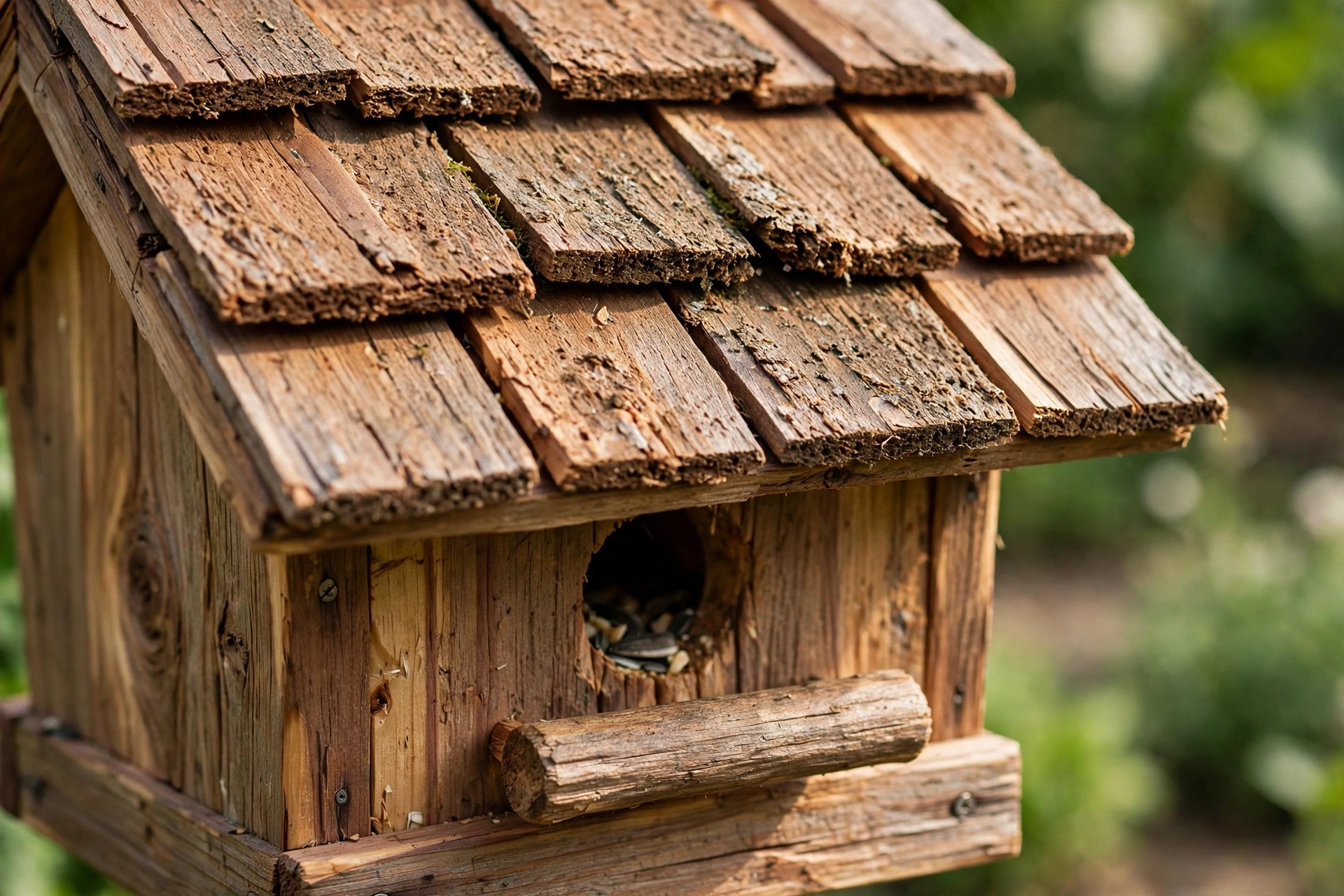
What caught my eye first was the roof. Real cedar shingles, laid like a tiny cabin roof, not a glued-on slab. This matters because a real pitched shingle roof sheds rain instead of pooling it, which keeps the seed dry. The walls have an exterior paint finish for weather protection, while the interior is treated with beeswax, a food-safe way to protect wood from moisture that you don’t see on cheap feeders. And the perch is built in, not an afterthought dowel wedged through the side. It looks like a little guest house for birds, and honestly it’s the kind of object that guests in your garden will ask about.
Why Wood Beats Plastic Every Single Time
Let’s talk about this properly, because “wood looks nicer” is true but undersells it. Cedar is naturally rot-resistant. Pine is light and strong. Both insulate better than plastic, which means seed stays closer to a stable temperature instead of baking in the sun and freezing at night. Rapid temperature swings cause condensation inside plastic feeders, and condensation means mold. Wood breathes. It’s why old birdhouses are almost always wood, and why the serious bird people I know would never hang a plastic feeder.
There’s also the longevity math. A $75 wooden feeder that lasts eight to ten years costs you less per year than the $15 plastic one you replace every spring. And the handmade part matters here: mass-produced wooden feeders from big-box stores are usually softwood stapled together with a coat of thin stain. This one has a beeswax-treated interior and an exterior-grade finish, which is the difference between a feeder that weathers to a nice silver-gray and one that falls apart.
And yes, the looks. I won’t pretend it doesn’t matter. A handcrafted wooden feeder hanging from a branch photographs beautifully (your garden Instagram will thank you), and it turns birdwatching from a hobby into something you do every morning with your coffee because the thing itself is pleasant to look at.
What $75 Actually Buys You: The Full Specs
Here’s everything the listing promises, and why each detail matters in practice:
Materials: cedar and pine. Cedar for weather-exposed parts (roof, frame), pine for the body. This is the standard recipe for quality outdoor wooden goods, because cedar’s natural oils resist insects and rot without chemical treatment.
Size: 12 inches tall, holds about 1 quart of seed. That’s roughly a week of feeding for a normal backyard. Smaller than a hopper the size of a mailbox, bigger than the dinky window feeders. The right size.
Cedar shingle roof. Real shingles, pitched, shedding water. This is the feature most $75 feeders skip.
Built-in wooden perch. Birds need somewhere to sit and eat. Many cheap feeders make them cling to a mesh wall. A proper perch means birds land, eat comfortably, and stay longer, which means you actually get to watch them.
Exterior paint finish. Sealed against rain and UV outside, so the wood won’t gray out in one season.
Beeswax-treated interior. This is the detail that sold me. Beeswax protects the seed chamber from moisture while staying non-toxic for birds. Cheap feeders either leave the interior raw (soaks up moisture and rots) or use varnish (can flake into the seed). Beeswax is the gold standard, and you usually only find it on handmade pieces.
Where to Hang It (This Is the Part Most People Get Wrong)
You can buy the best feeder in the world and get zero birds if you hang it in the wrong spot. Birds are picky for good reasons: they need to eat, but they also need to not be eaten. Here’s the placement advice that actually works:
Hang it near cover, not in the open. A feeder dangling in the middle of an empty lawn is an exposed perch, and small birds won’t trust it. Within about ten feet of a tree, shrub, or hedge is ideal: close enough to dart into cover when a hawk passes, far enough that a squirrel can’t leap onto it from a branch. The ten-foot rule is the real one. Closer than five feet and squirrels will treat it as a trampoline landing pad.
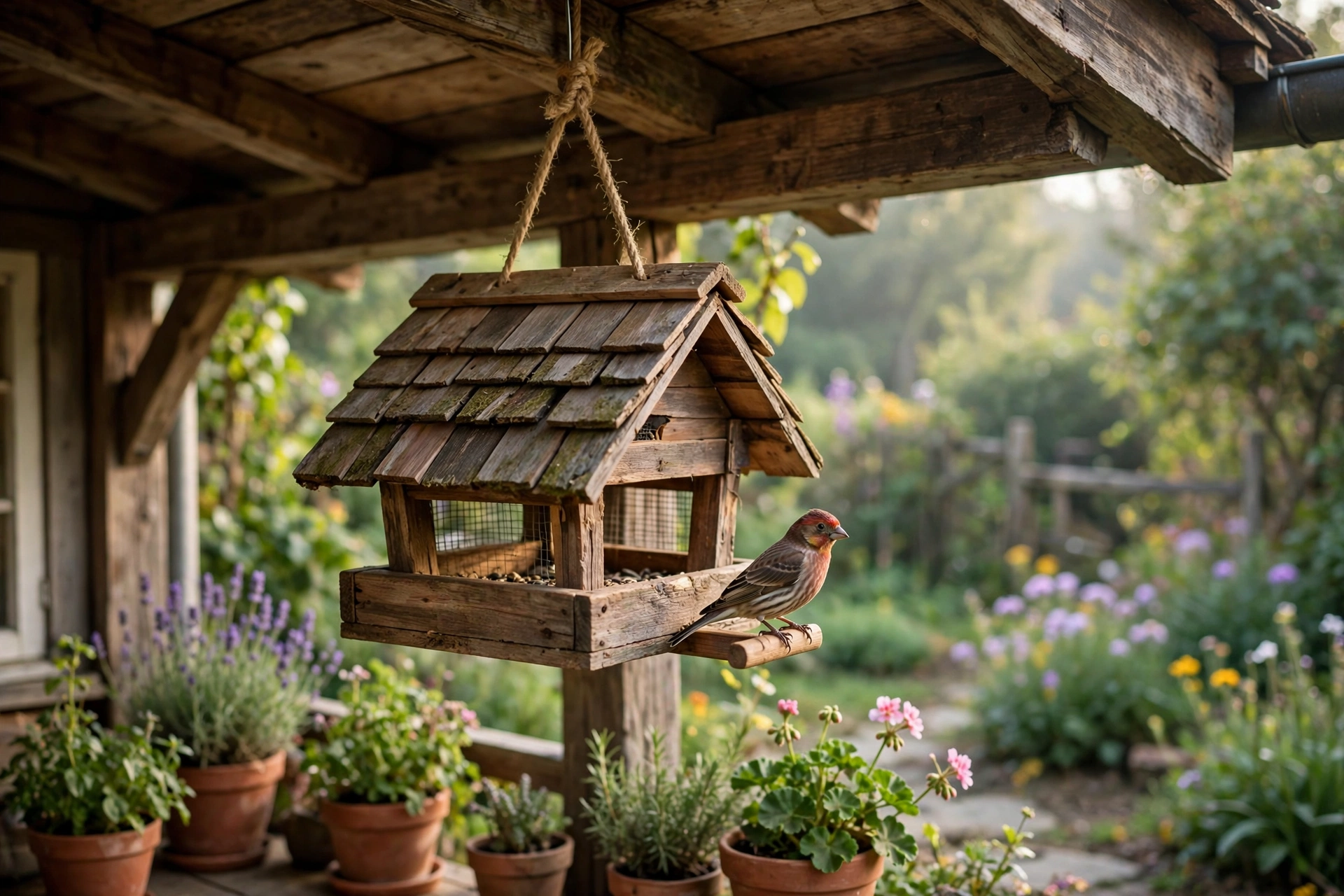
Height matters too. Five to six feet off the ground is the comfortable zone for most songbirds and for you, because you need to reach it to refill and clean. The tinybirdhomes feeder hangs by its own sturdy mount, so a strong branch or a shepherd’s hook both work.
Face it toward your house if you can. Sounds obvious, but a feeder you can see from your kitchen window is a feeder you will actually maintain. The prettiest feeder in the world does nothing if it’s behind the shed where you forget about it. Put it where your morning coffee happens.
What to Put In It (and What to Avoid)
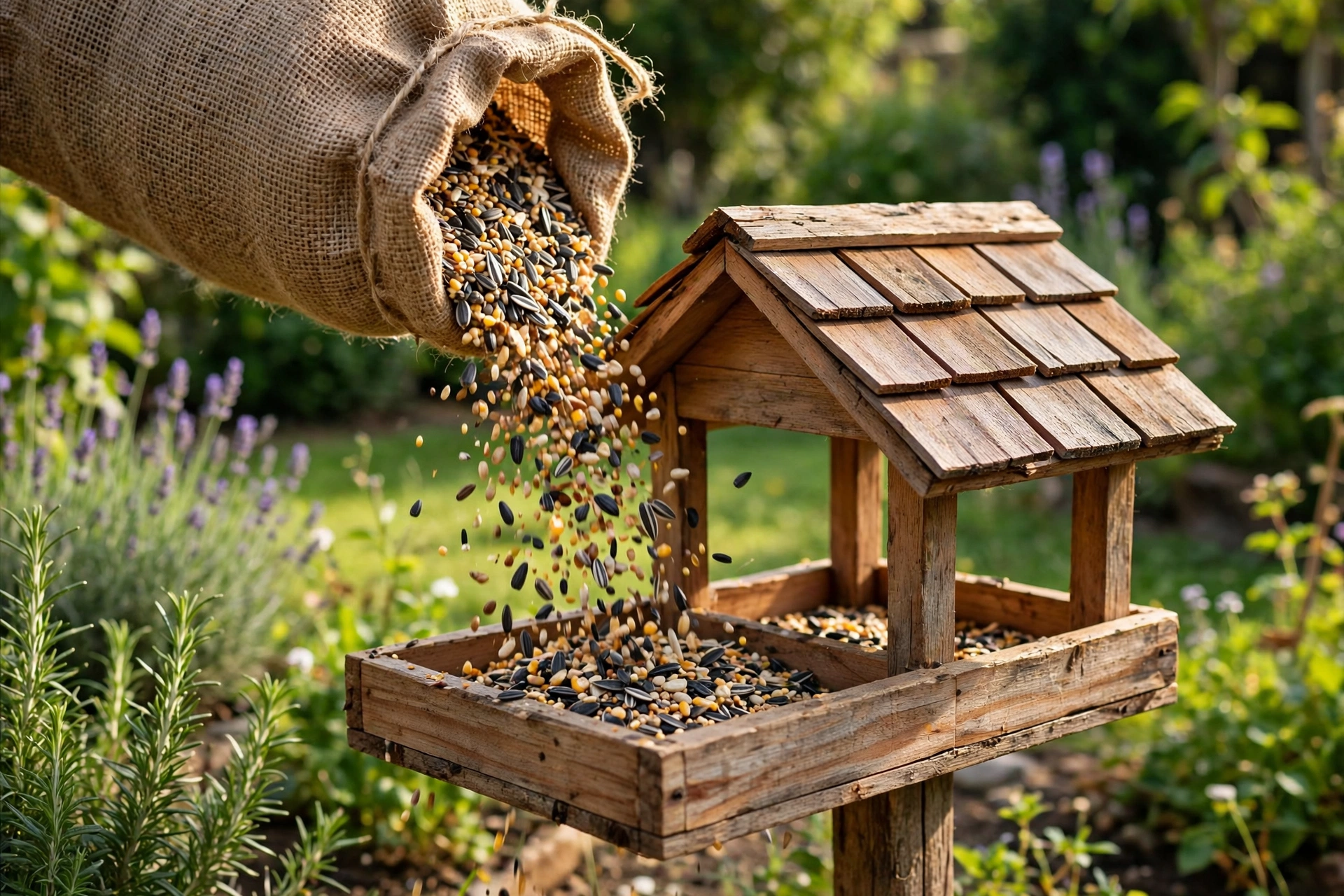
Black oil sunflower seed is the universal answer. Almost every backyard songbird eats it: chickadees, finches, nuthatches, titmice, cardinals. It has a thin shell and high oil content, which is bird food engineering at its finest. If you want to keep it simple, fill the whole feeder with black oil sunflower seed and you’re done. A one-quart feeder holds a satisfying amount, and you won’t be refilling every other day.
What to avoid: the cheap “wild bird seed mix” bags that are mostly milo, wheat, and cracked corn. Birds pick through them, fling the filler onto the ground, and you end up with a sprouting millet patch under your feeder and a layer of rejected husks on your patio. It’s false economy. Buy the good seed. It costs more per bag and less per month because none of it gets wasted.
Suet is the winter upgrade. If your winters get cold, a suet cage on the side (or a second feeder) will bring woodpeckers and nuthatches that seed alone won’t. Not essential, but a nice add once you’re hooked.
Cleaning: The Part That Keeps Birds Alive
I’m going to be direct about this, because it’s the unglamorous core of responsible feeding. A feeder that never gets cleaned becomes a disease hub. The Audubon society and Cornell both recommend cleaning feeders every two weeks, and weekly during warm wet weather when mold grows fast. It takes ten minutes. Dump old seed, scrub with a weak bleach solution (one part bleach to nine parts water), rinse thoroughly, and let it dry completely in the sun before refilling.
This is where a handmade wooden feeder actually earns its keep again. Cheap plastic feeders often can’t be taken apart, so you’re scrubbing blind through a tiny port. A well-built wooden feeder comes apart for cleaning, and the beeswax interior means gunk doesn’t soak into the wood the way it does with raw pine. Letting it dry in full sun also re-melts and resets the beeswax coating slightly. Dry it properly and refill, and your feeder can honestly last a decade.
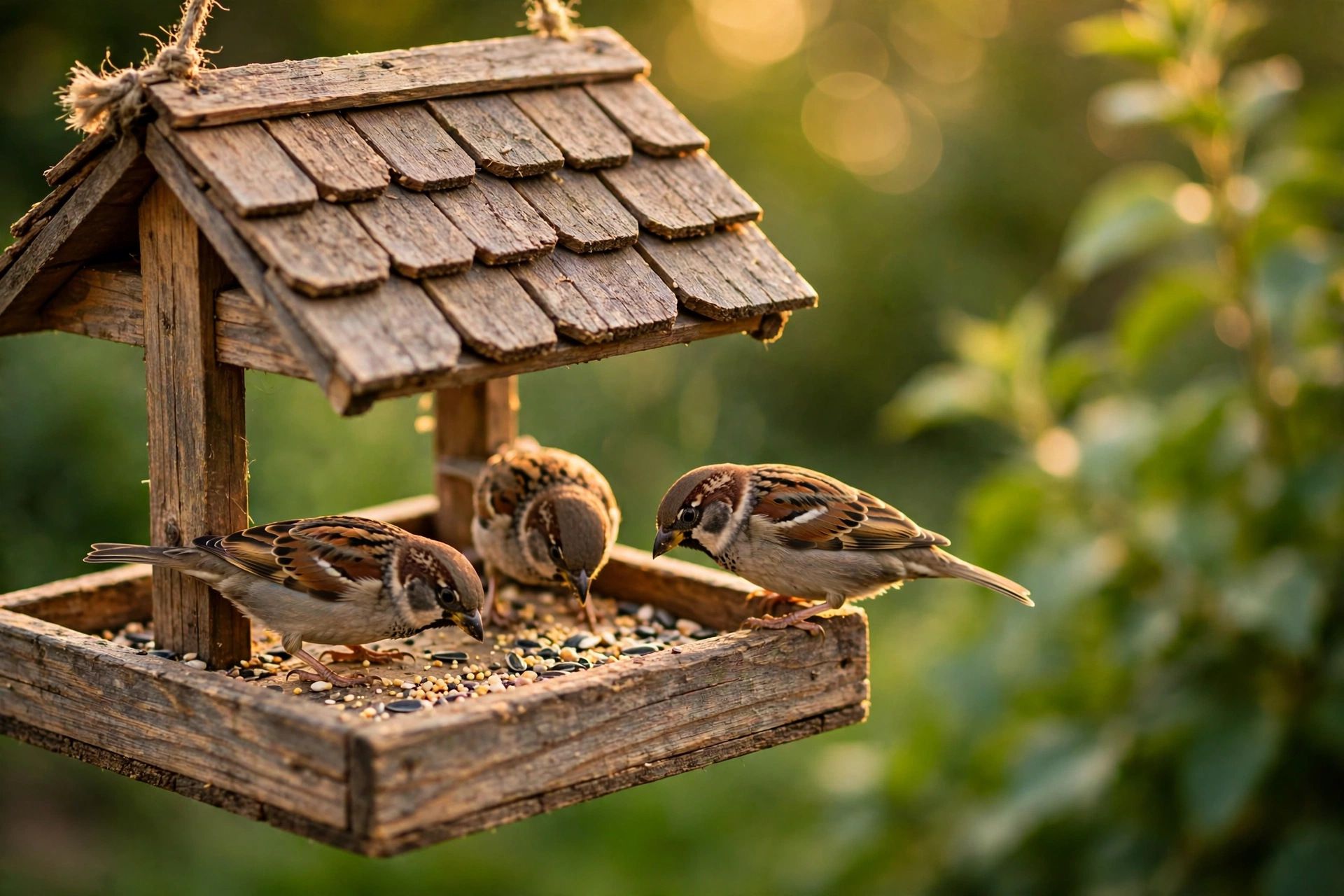
Also rake up hulls and droppings under the feeder regularly. Ground-feeding birds like sparrows and juncos eat down there, and that’s where the bacteria concentrates. A quick rake is all it takes.
Who This Feeder Is For (and Who Should Skip It)
This is for you if: you have a garden or a balcony with a railing hook, you like the idea of watching birds without leaving the house, you care about how things look in your outdoor space, and you want to buy once and keep it for years. It’s a genuinely lovely gift for a bird-loving parent or friend, too. At $75 it’s not an impulse buy, but it’s squarely in the “nice gift” range, and the Rare Find badge means you won’t see it in five other gardens.
Skip it if: you live somewhere with a serious bear problem (bears will destroy any feeder, wood or otherwise), your balcony faces a highway with no nearby cover for birds, or you honestly won’t clean it. An uncleaned wooden feeder is just as bad as an uncleaned plastic one. No judgment, just buy a nice houseplant instead.
One more honest note: squirrels. No feeder is truly squirrel-proof, and this one isn’t marketed as such. A baffle above it on the hanger and the ten-foot rule for branch distance will handle most squirrel situations. If your squirrels are the Navy-SEAL type, add a spinning baffle and accept the arms race.
The Craftsmanship Angle (Why Handmade Matters Here)
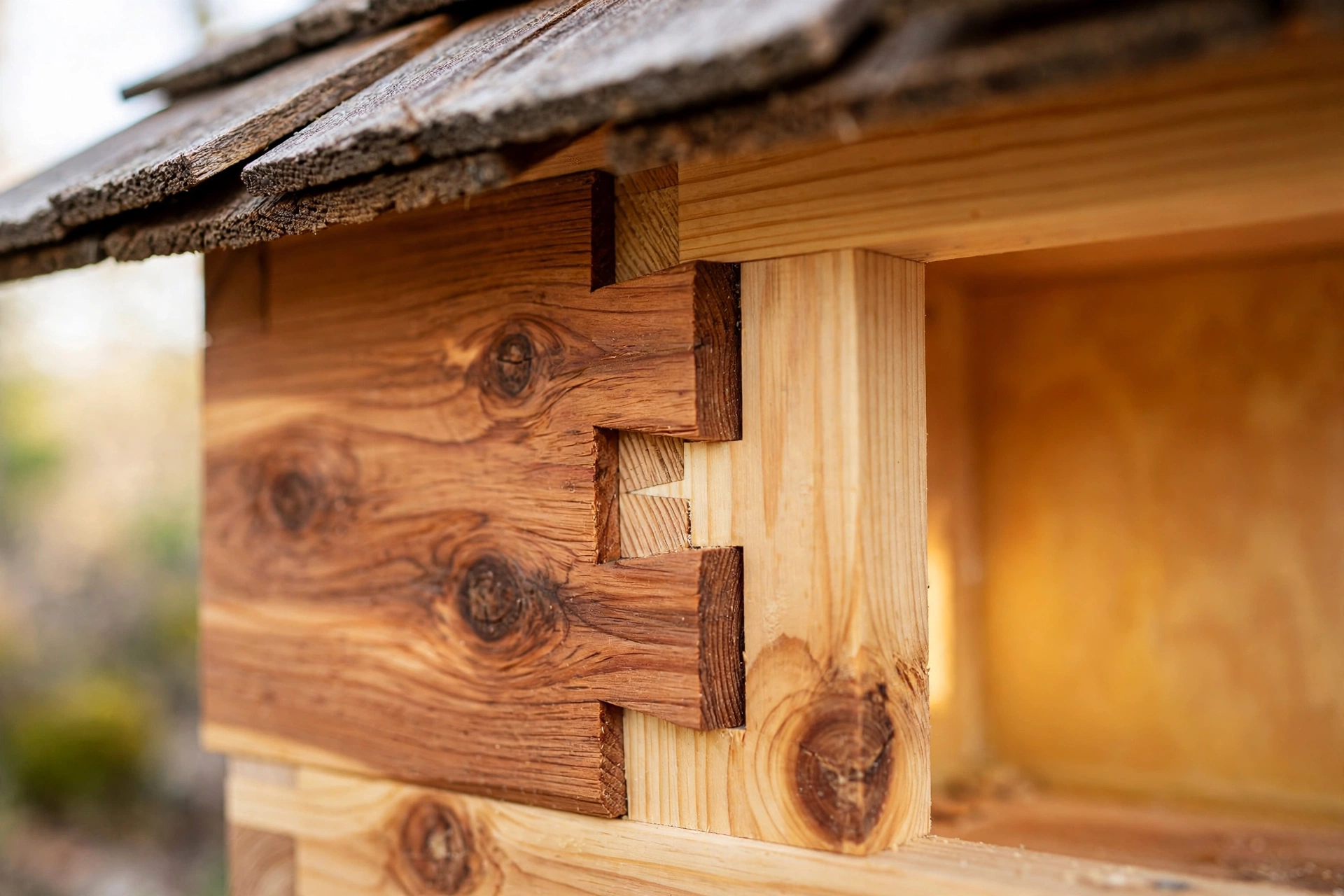
I write about handmade wooden items regularly, from wooden coasters to blanket ladders to floating shelves, and I keep coming back to the same truth: for outdoor goods, the maker’s hand matters more than indoors. A machine can stamp out a feeder body, but getting the roof pitch right, fitting the shingles so they actually overlap, treating the interior with beeswax instead of slapping on a coat of whatever’s cheap, these are human decisions. tinybirdhomes is a small shop, not a factory, and the piece reflects that. The joints are tight, the proportions look like a miniature cabin instead of a box with a lid, and the whole thing has that warm, slightly irregular quality that tells you a person made it.
There’s also something quietly good about buying a garden object from a small maker instead of a warehouse. Seventy-five dollars at a small shop pays for someone’s actual craft. The same seventy-five at a big-box store mostly pays for a shipping container.
Quick Setup Checklist
If you decide to get one, here’s the ten-minute setup that gives you the best first week:
1. Pick your spot first: within ten feet of cover, five to six feet high, visible from your kitchen or favorite window.
2. Fill it with black oil sunflower seed only, for the first two weeks. Skip the mixes until your regulars show up.
3. Be patient. It can take birds two to three weeks to find and trust a new feeder. This is normal. Don’t move it around; let them learn the location.
4. Put a shallow dish of water nearby if you can. Water brings more birds than any seed ever will, especially in summer.
5. Mark your calendar for a cleaning every two weeks. Future you, and the birds, will be glad.
Where to Find It
The feeder is listed on Etsy by the shop tinybirdhomes: the Handmade Wooden Bird Feeder with Perch, $75.00, with the Rare Find badge. Cedar and pine construction, about 12 inches tall, roughly a quart of seed capacity, cedar shingle roof, built-in perch, exterior paint finish, beeswax-treated interior. At the time of writing it was in stock, but small-batch handmade pieces like this can sell out between restocks, so if the listing shows low stock, don’t wait too long.
If you’re furnishing your home with handmade wooden pieces in general, you might also like my guides to handmade wood and epoxy resin coasters, the handmade wooden blanket ladder that fixes throw blanket chaos, and these black solid wood floating shelves. For more wooden garden and home inspiration, follow along on Pinterest where I pin every handmade find, and if this guide helped you, share it with a friend whose garden needs birds.
Sources and further reading: the tinybirdhomes Etsy listing (price and specs verified October 2026), plus feeder hygiene guidance from the Cornell Lab of Ornithology and the National Audubon Society, both of which publish excellent free guides on safe backyard feeding.