Halloween Was Born in This Tiny Irish Cave: Inside Oweynagat, Ireland’s Gate to Hell
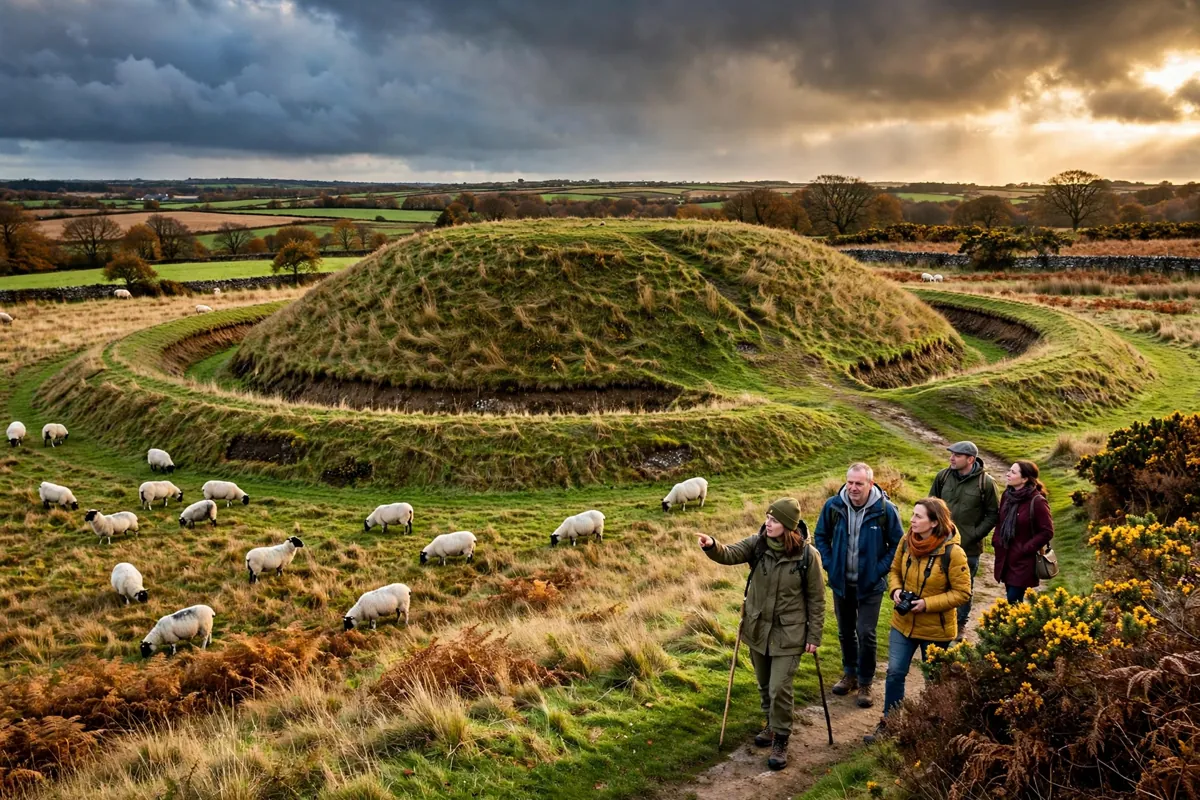
There is a field in County Roscommon where sheep graze over a secret. From the road, it looks like nothing at all. A green mound, a stone wall, a narrow lane that ends before you expect it to. Then your guide stops, points at a slit in the earth, and tells you that this is where Halloween began.
That slit is Oweynagat. Pronounced “Oen-na-gat”, it means Cave of the Cats. The ancient Celts believed it was a doorway to the Otherworld, a place where demons, war goddesses, and strange beasts could slip into our world. Christian scribes later gave it a blunter name: Ireland’s Gate to Hell.
I have visited a lot of caves that promise wonder and deliver a nice walk and a gift shop. Oweynagat is different. It is small, muddy, a little unnerving, and completely wrapped up in a story that is still alive. Every year, on the nights around October 31, people come here not for a haunted house, but for the real thing: the place where Samhain, the Celtic festival that became Halloween, was born.
And right now is the perfect time to know about it. The Origins of Samhain cave tour at Rathcroghan runs through the Halloween season in 2026, with guided visits to Oweynagat itself. If you have ever wondered where Halloween actually came from, beyond plastic pumpkins and costume shops, this is the answer, and you can stand in it.
A slit in a field, and a very big idea
Oweynagat does not look like a tourist attraction, and that is part of its power. The entrance is easy to miss. It sits on a single lane cul-de-sac near Tulsk, in the middle of farmland, and it looks at first glance like an old stone structure. In reality, it is a natural cave that people widened and used for thousands of years.
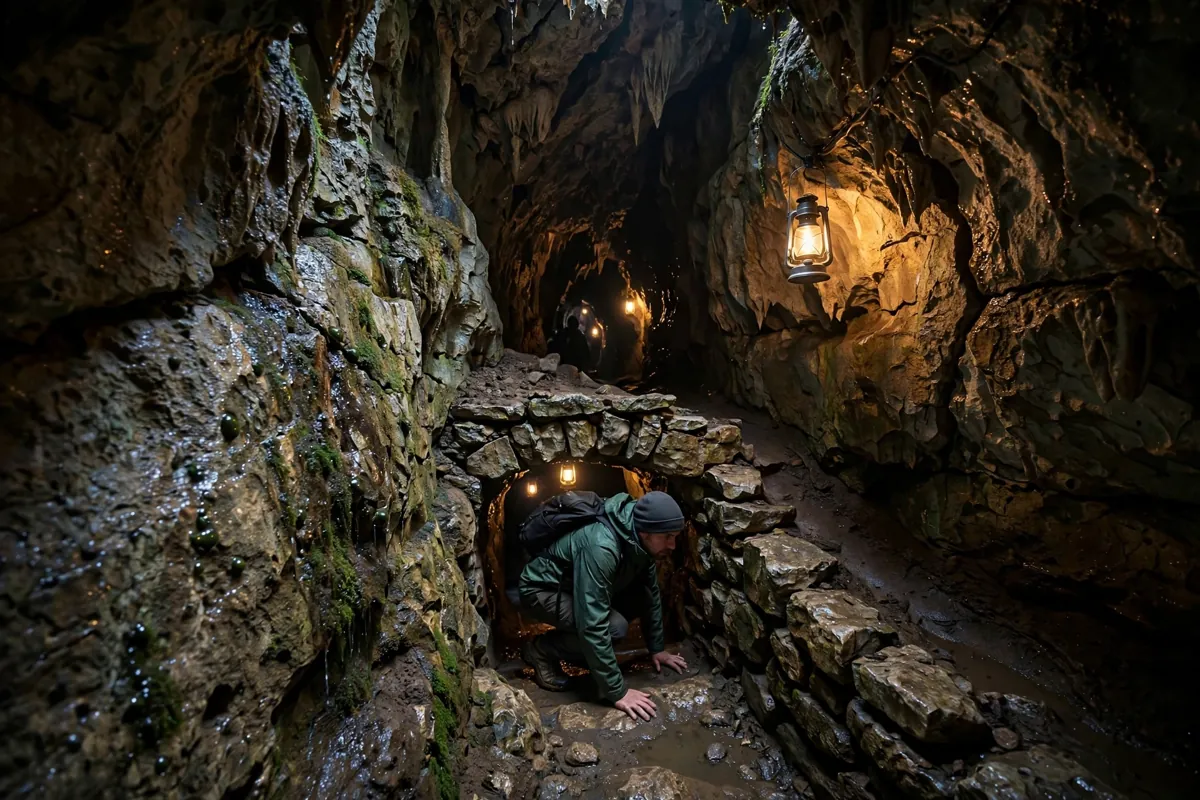
Step closer and the story changes fast. The cave is lined with ogham stones, early Irish writing carved into stone, and it leads down into a limestone chamber. Guides describe it as a double underground passage that opens into a natural chamber with solid limestone walls. It is not a show cave with colored lights and paved walkways. It is tight, damp, and dark in the way that old places are dark.
That modesty is the point. The Celts did not need a cathedral to believe in the Otherworld. They needed a threshold, a place where the world felt thin. Oweynagat gave them one. When you crouch through that entrance, you are not just entering a cave. You are entering an idea that shaped a holiday celebrated by hundreds of millions of people today.
What Samhain actually was (and was not)
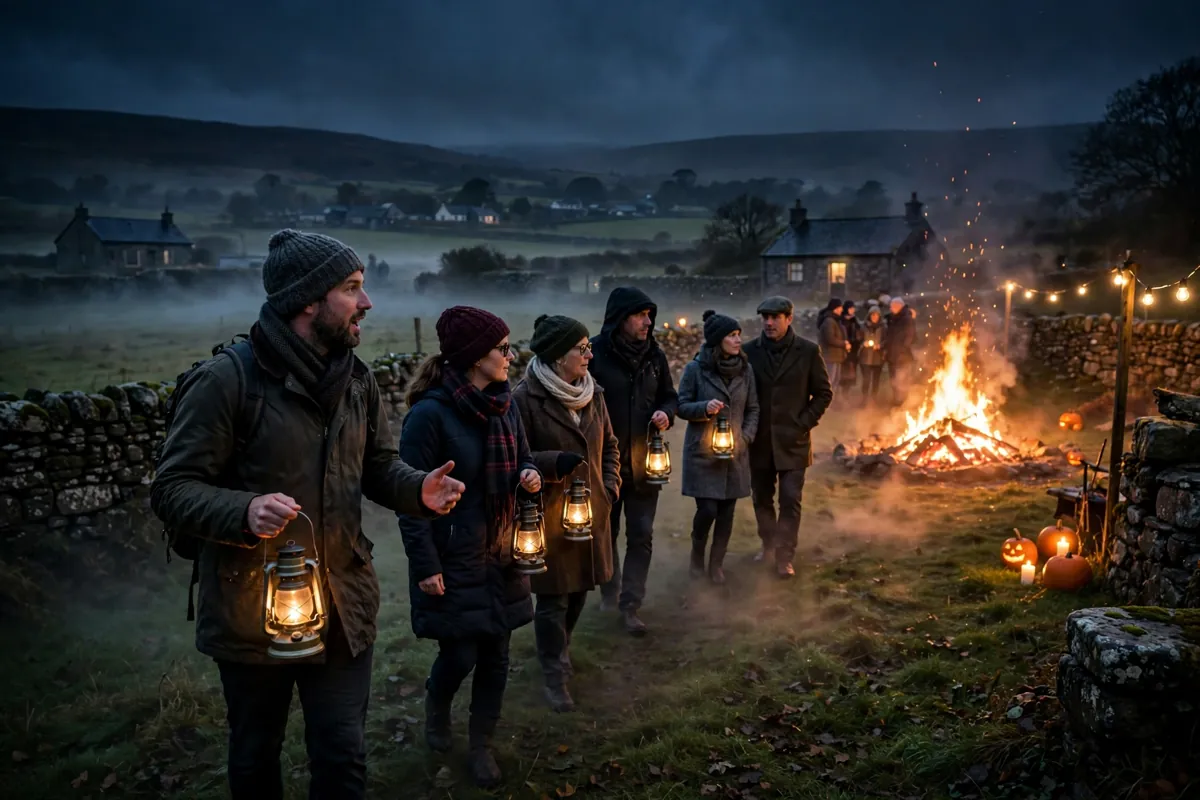
Samhain, pronounced “Sow-in”, was the Celtic New Year festival. It marked the end of the harvest and the start of winter, a hinge point in the pastoral year when one season ended and another began. For the people who gathered at Rathcroghan, it was a time for feasting, trading, arranging marriages, settling disputes, and making offerings.
It was also, in their belief, a dangerous night. The wall between the living world and the Otherworld disappeared. A host of fearsome beasts was said to emerge from Oweynagat to ravage the landscape and prepare it for winter. Animals were sacrificed at the great mound nearby, at a mighty pagan temple, in an attempt to keep those forces at bay.
None of this was a children’s party. It was serious, communal, and a little frightening, because winter itself was frightening. Food had to last, animals had to survive, and the dark months ahead were uncertain. Samhain gave people a ritual for that uncertainty, a way to face the dark together.
Centuries later, Irish immigrants carried that tradition to the United States in the 1800s, especially during the famine years. There, it mixed with other customs and slowly turned into the Halloween we know now: costumes, sweets, ghost stories, and a night of playful fright. The sugar came later. The cave came first.
The Morrigan, Nera, and the beasts of the Otherworld
If you go on a Rathcroghan tour, you will hear names that sound like they belong in a novel. The Morrigan, goddess of war, is said to live in Oweynagat. Ravens, birds of the battlefield, are part of her story, and the cave’s connection to war and fate runs deep in Irish literature.
Then there is Nera, the warrior in the old tale who saw a ghostly army emerge from the cave on Samhain night. He followed it, was captured by the Otherworld, and never returned in the same way. Guides love that story, because it captures exactly what Samhain felt like: one step too far, and you were in another world.
Other tales speak of three-headed creatures, saffron-colored birds, and cats with strange powers, which may be part of why the cave is called Cave of the Cats. Do not expect a guide to present these as literal history. They present them as what they are: stories that people told, for centuries, to explain a place that felt genuinely strange.
That is what makes Oweynagat so compelling for a modern traveler. You do not have to believe in demons to feel the atmosphere. You just have to stand in a small, dark passage, in a quiet field, and imagine a whole kingdom gathering here on the coldest, darkest night of the year, listening for something to emerge.
Rathcroghan: it is not just one cave
Oweynagat is the star, but it sits inside a much bigger landscape. Rathcroghan, also called Cruachan Ai, covers about 6.5 square kilometres and holds more than 240 archaeological sites. There are burial mounds, ring forts, standing stones, linear earthworks, and an Iron Age ritual sanctuary. Some of the oldest monuments here date back about 5,500 years.
At the heart of it is Rathcroghan Mound, a large Iron Age mound about 89 metres across, once topped with wooden ramparts. Visitors can climb to the top for wide views over the Roscommon countryside. On a clear day, guides say you can see as far as Croagh Patrick. Even on a cloudy day, the view gives you a sense of why this place mattered: it was high, visible, and central, a meeting place for a kingdom.
Rathcroghan was the traditional capital of Connacht, one of the ancient kingdoms of Ireland, and it features heavily in the Tain Bo Cuailnge, the Cattle Raid of Cooley, Ireland’s great epic. Queen Medb, the fearsome Iron Age warrior queen, is Rathcroghan’s most famous resident in story. The visitor centre in Tulsk tells her story through 35 artefacts, interactive displays, and a model of her throne.
Ireland is now pushing for UNESCO World Heritage status for Rathcroghan, as one of the Royal Sites of Ireland. It is described as the oldest and largest unexcavated royal site in Europe, which is a remarkable claim, and also a reason to visit now, while it still feels quiet and uncrowded.
If you love cave stories with a deeper history, you will also enjoy our guide to Ireland’s 15,000-year-old cave art and the lost land bridge, which shows just how old Ireland’s underground story really is. And if glowworms are more your style, Waitomo’s glowworm caves in New Zealand offer a completely different kind of underground magic.
Visiting in 2026: the Origins of Samhain tour
Here is the practical part, and it matters, because Oweynagat is not a place you can just wander into on your own. The cave sits on private land, and independent access is generally not permitted. The normal way in is with a guide, through the Rathcroghan Visitor Centre.
For Halloween 2026, the centre runs its special Origins of Samhain tour, a guided visit to Oweynagat focused on the cave’s Samhain story. Listings for the 2026 Halloween season put the tour dates as October 27 to November 6 on selected dates, for older children and teenagers rather than small children. The Roscommon Halloween guide lists the Origins of Samhain tour specifically for November 2 to 6, at 12pm and 2pm, lasting 1.5 hours, suitable for families ages 5 and up, priced at 19.08 euros per person, with booking through rathcroghan.ie.
That small difference in dates is worth noting, because it tells you something useful: this is a seasonal, limited tour, not a year-round walk-in. Dates and times can vary by day, and places fill up around Halloween. Check the Rathcroghan site before you travel, and book ahead if you can. Do not drive to Tulsk hoping to slip into the cave on your own. You will likely be disappointed, and you may be trespassing on private land.
The standard Rathcroghan guided tour, outside the Samhain special, lasts about 2.5 hours and visits the mound and Oweynagat, weather permitting, with cave entry typically in the summer months. Reported prices for the standard site and exhibition tour are around 20 euros for adults, with lower rates for seniors, students, children, and groups. The exhibition alone is reported at around 6 euros for adults. Prices change, so treat these as a planning guide, not a guarantee, and confirm at booking.
What should you wear? This is not a place for white trainers. Guides advise weatherproof clothing and sturdy shoes, because the terrain is uneven and the cave entry can be wet and muddy. Bring a light jacket even if the day looks fine, and be ready for a short drive from the visitor centre to the cave itself, about 4 kilometres. Some tours use a bus, others use personal vehicles. Follow your guide’s instructions on parking, because you will be parking near private farmland.
What it is actually like inside
Let me be honest, because this is the question everyone asks. Oweynagat is not big. It is not a cathedral cave like Son Doong, and it is not a river cave you boat through. It is a small, atmospheric passage, and that intimacy is what makes it intense.
You descend past the ogham-lined entrance into a limestone cavern below. The light is low, the rock is damp, and the space feels enclosed. Visitors often describe it as a trip highlight, but also as a place that demands respect. If you are strongly claustrophobic, this may not be the cave for you. If you are nervous but curious, a good guide makes all the difference, because they set the pace, explain what you are seeing, and keep the group together.
There are also practical safety notes that have appeared in visitor reports, including mentions of possible high carbon dioxide levels in the cave. That is another reason to go only with a guide, and to follow the visitor centre’s advice on the day. Do not try to explore beyond the guided route, and do not enter if a guide says conditions are not suitable.
Photography inside is a different matter. In a small, dark cave, with a group, your phone will struggle. Take a few photos at the entrance, where the light is better, and then put the phone away and listen. The story is the souvenir here, not a perfect shot.
The problem Oweynagat solves for Halloween travelers
Here is a problem many travelers have in late October. Halloween in big cities has become crowded, commercial, and oddly generic. You pay a lot for a haunted house, queue for an hour, and come away with photos that look like everyone else’s.
Oweynagat solves that in a completely different way. It gives you origin, not imitation. Instead of a fake haunted house, you get the real cave where a real festival began. Instead of a crowd, you get a small guided group in a quiet field. Instead of a plastic pumpkin, you get a 5,500-year-old landscape, a warrior queen, a war goddess, and a story you can actually retell at dinner.
It also solves a second problem: what to do in Ireland beyond Dublin and the Cliffs of Moher. Roscommon is not on most first-time itineraries, and that is exactly why it works. A day at Rathcroghan, with a stop in Tulsk, a walk up the mound, a visit to the museum, and lunch at the Tain Cafe at the visitor centre, feels like a discovery, not a checklist item.
Pair it with other Irish cave and coast days, and you have a trip that feels personal. If you are planning a winter cave trip more broadly, our Iceland ice cave guide for 2026-2027 is a good next read for the colder, bluer side of underground travel.
How to plan your trip, step by step
Start at the Rathcroghan Visitor Centre in Tulsk, Castlerea, County Roscommon, postcode F45 HH51. That is your base for tickets, maps, and advice. The centre’s museum explains the landscape, the artefacts, and the literature, and it is worth an hour on its own, especially if you are not familiar with the Tain.
Book the Origins of Samhain tour if you are traveling around Halloween, and book early. If those dates do not fit, ask about the standard guided tour, which also visits Oweynagat when conditions allow. If you are traveling outside the main season, check whether cave entry is available at all, because it is weather dependent.
Getting there: Tulsk is rural, and public transport is limited. A car is the practical option for most visitors. From Dublin, it is a drive west into Roscommon, and the final approach is on narrow lanes. Download directions before you go, because mobile signal can be patchy in the countryside.
Stay nearby if you can. Castlerea and Roscommon town offer places to stay, and a night in the area lets you visit without rushing. If you are doing a wider Ireland trip, Rathcroghan pairs well with a day in County Sligo or Galway, both within reasonable driving distance.
Bring layers, waterproofs, sturdy shoes, water, and a small torch, even though your guide will have lighting. Leave large bags in the car. And bring cash or card for the cafe and gift shop, which sells books and souvenirs that actually relate to the site, not generic Halloween merchandise.
What to do after the cave
Do not rush off. Walk up Rathcroghan Mound and take in the landscape. Look for the other monuments on the trail map: ring forts, standing stones, burial mounds. Each one is a piece of the same story, a landscape that people used, fought over, and worshipped in for thousands of years.
Visit Tulsk Abbey, a 15th-century Dominican priory nearby, and ask at the visitor centre about the Oenach Cruachain collection and the Gortnacrannagh Idol replica. These details sound small, but they add up to a picture of Iron Age life that is domestic and brutal, ritual and everyday, all at once.
And if you are in Ireland for Halloween itself, look at the wider Roscommon Halloween guide. The county leans into its Samhain heritage, and Rathcroghan is the anchor, not a side show. That is rare, and it is worth supporting with a visit, a ticket, and a respectful walk.
Is Oweynagat worth it?
Yes, with one honest caveat. If you want a big, spectacular, easy cave with a train ride and a light show, this is not that cave. You will be disappointed if you arrive expecting Postojna or Carlsbad.
If you want a cave that means something, a cave that changed a holiday, a cave where a guide can stand in a field and make 2,000 years feel close, then Oweynagat is extraordinary. It is small in size and huge in story, and that contrast is exactly why it sticks with people.
Halloween did not start in a shop. It started in a field, in a cave, on a cold night when people believed the world could open up and let something through. Oweynagat is still there. The slit in the earth is still there. And for a few nights each October, guides still lead small groups down into it, to tell the story where it happened.
That is a trip worth making, not just for Halloween, but for anyone who loves caves, history, or a good story told in the place where it began. Read the full story, plan your visit, and if you go, tell us what it felt like to stand at Ireland’s Gate to Hell. And if you found this guide through Pinterest, follow The Cavee there for more cave stories like this one. Read Full Story on thecavee.com, and share it with someone who thinks Halloween is just about candy.