Strasbourg in November: Europe’s Oldest Christmas Market Opens Soon, and the Quiet Weeks Before It Are the Best Time to Go
There is a specific kind of tired that only a big European Christmas market can give you. You arrive full of excitement, you fight your way to a stall for mulled wine, you lose your friends in a crowd at a crossroads, and by 7pm you are wondering why you thought this was a good idea. Strasbourg can do that to you too, if you go at the wrong time. Go at the right time, and it is something else entirely: cold air, warm spices, church bells, and streets that actually feel like the postcards.
I am writing this in early November for a reason. The Strasbourg Christmas Market for 2026 runs from 26 November to 24 December 2026, according to multiple 2026 guides and the Eurostar market page. That gives you about three weeks right now to plan properly, book a sensible hotel, and avoid the exact mistakes that turn a lovely trip into a queue with a view.
Here is the honest version. Strasbourg is not a secret. It is called the Capital of Christmas, its market dates back to 1570, and it is France’s oldest Christmas market. Hundreds of wooden chalets spread across the old centre, around the cathedral and Place Broglie, Place Kleber and Petite France. On a Saturday night in mid December it will be packed. In late November, on a weekday, it is a different city. That gap, between the opening buzz and the December crush, is the whole trick of this guide.
First, get the dates right, because blogs disagree
If you search for Strasbourg market dates you will find small differences. Most 2026 guides agree on 26 November to 24 December 2026. A few road trip itineraries list 27 November as the opening day, which is the first Friday, and that is probably where the confusion comes from. The safest way to read it is this: plan to arrive from 27 November onward if you want every chalet open and in full swing, and treat 26 November as opening day with afternoon opening hours.
Typical hours are 11:30am to 9pm, with an earlier close at 6pm on Christmas Eve, 24 December. Opening day often starts at 2pm. Weekend evenings run later in some guides, to 10pm. Markets close on Christmas Eve rather than running into the New Year, unlike some German markets, so do not plan a post Christmas market trip and expect the chalets to still be there.
Before you book anything non refundable, check the official site at noel.strasbourg.eu. Dates and hours can shift, and the official site is the one source that matters when a blog and a booking disagree.
What you actually get in Strasbourg
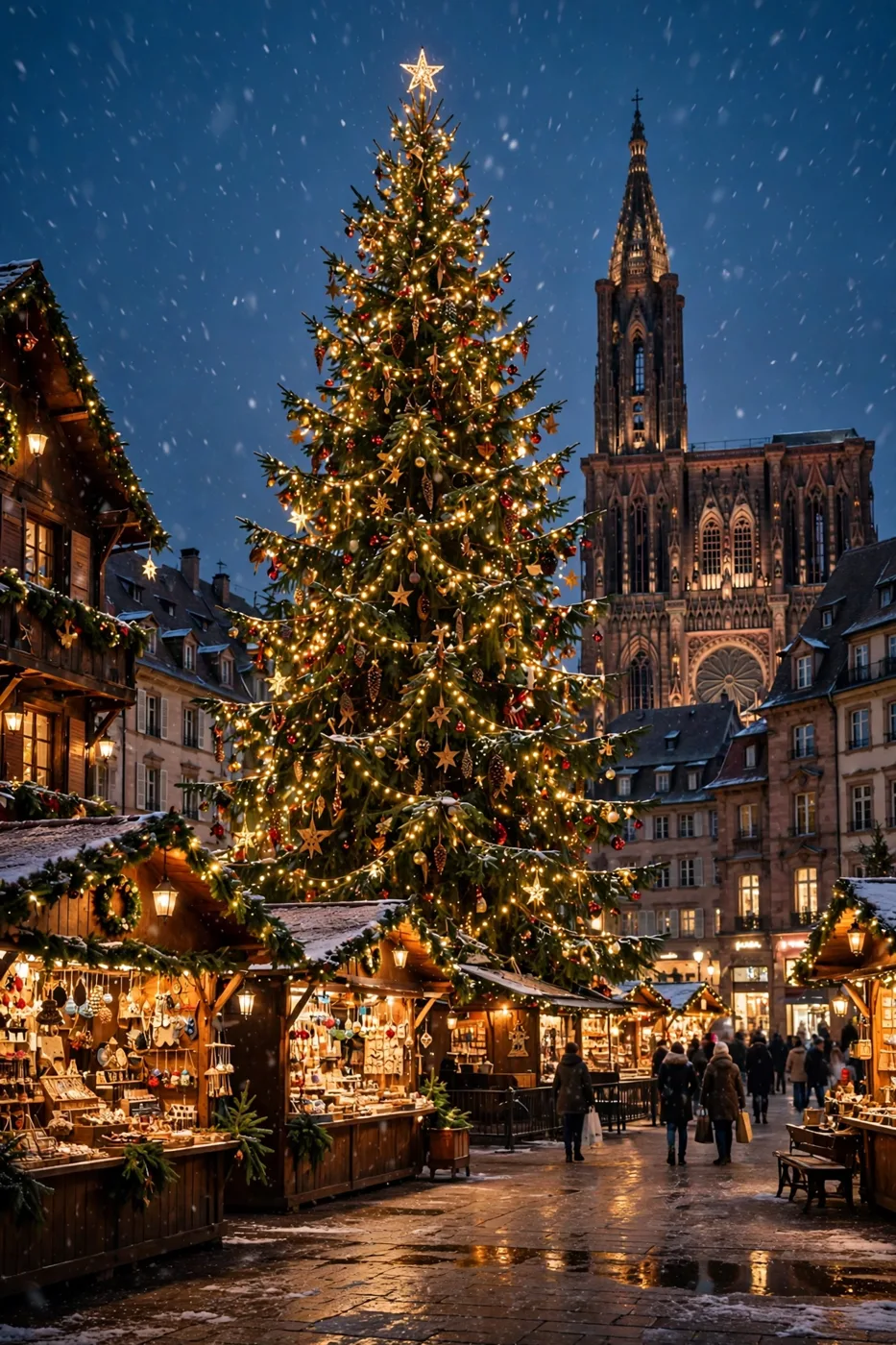
The heart of it is the Christkindelsmarik at Place Broglie, the original market, plus markets around the cathedral, Place Kleber, Place du Chateau, Place Benjamin Zix and the lanes of Petite France. The big tree at Place Kleber is the photo everyone takes, and yes, it is worth seeing in person. It is tall, it is lit properly, and at dusk it pulls the whole square together.
What I like more, though, is the small stuff. Vin chaud, the local mulled wine, costs around 3 euros according to a 2026 mulled wine survey of European markets. Bredele, the small Alsatian butter biscuits, come in more shapes than you can reasonably try in one trip. Try a few, buy a bag for the train, and move on. The food stalls do tarte flambee, sausages, spiced bread and hot chocolate that actually tastes like chocolate, not like sweetened milk.
Shopping here works best if you go in with a rule: buy one thing you cannot get at home, and one thing you will actually use. Hand painted ornaments, wooden toys and local pottery travel well. The tenth snow globe does not. If you are buying for other people, the smaller markets away from the cathedral tend to be calmer and the sellers have more time to talk.
The crowd problem, solved without waking at dawn
Everyone tells you to go early. That advice is fine, but it is incomplete. Strasbourg in December is busy at three distinct times: weekend evenings, the hour after the lights come on, and any Saturday. If you want the market without the crush, do this instead.
Go on a weekday, Tuesday to Thursday if you can. Arrive at the market around 11:30am when stalls open, eat lunch early, then walk Petite France and the cathedral quarter in the afternoon while the market crowds build. Come back for lights and one glass of vin chaud in the early evening, then leave before the peak crush. You get the atmosphere without spending your evening stuck behind a tour group.
Stay on Grande Ile, the island old centre, if your budget allows it, because you can walk everywhere and duck back to your hotel when you need a break. If Grande Ile is too expensive, stay near the train station or across the river and walk in. Driving on Grande Ile is strictly limited during market hours, so a car is more trouble than help in the centre. Park outside, use the tram, and walk.
One more practical point. Strasbourg is cold in late November and December, but it is not Arctic cold. Dress for standing around outside: warm shoes with grip, a proper coat, gloves you can actually hold a cup in, and a scarf. The people who look miserable at Christmas markets are almost always the people in fashionable shoes on wet cobbles.
A simple 3 day plan that actually works
Day 1: Strasbourg old town, slowly
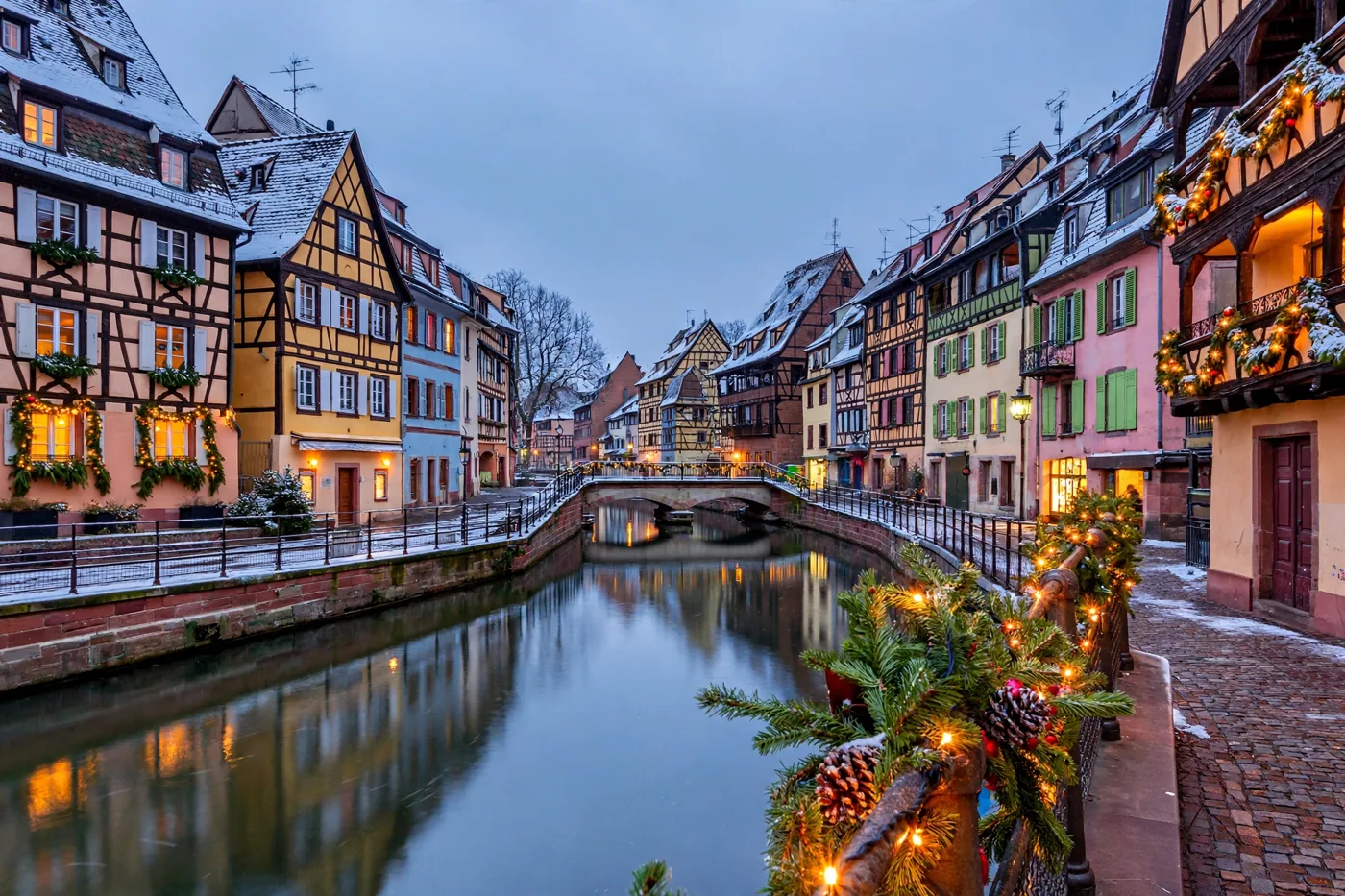
Start at the cathedral. It is enormous, it is pinkish sandstone, and it dominates the square in a way photos never quite capture. Walk around it, go inside if the queue is short, then wander into Petite France. This is the postcard quarter: half timbered houses, canals, small bridges, and lanes that smell like bakeries in the morning.
Have lunch away from the main market squares. A side street restaurant will be cheaper, quieter and usually better. In the afternoon, do the market properly: Place Broglie first for the traditional stalls, then Place Kleber for the tree, then one or two smaller squares. Stop when you stop enjoying it. That is not a failure, that is good trip planning.
Day 2: Colmar, Eguisheim and Riquewihr
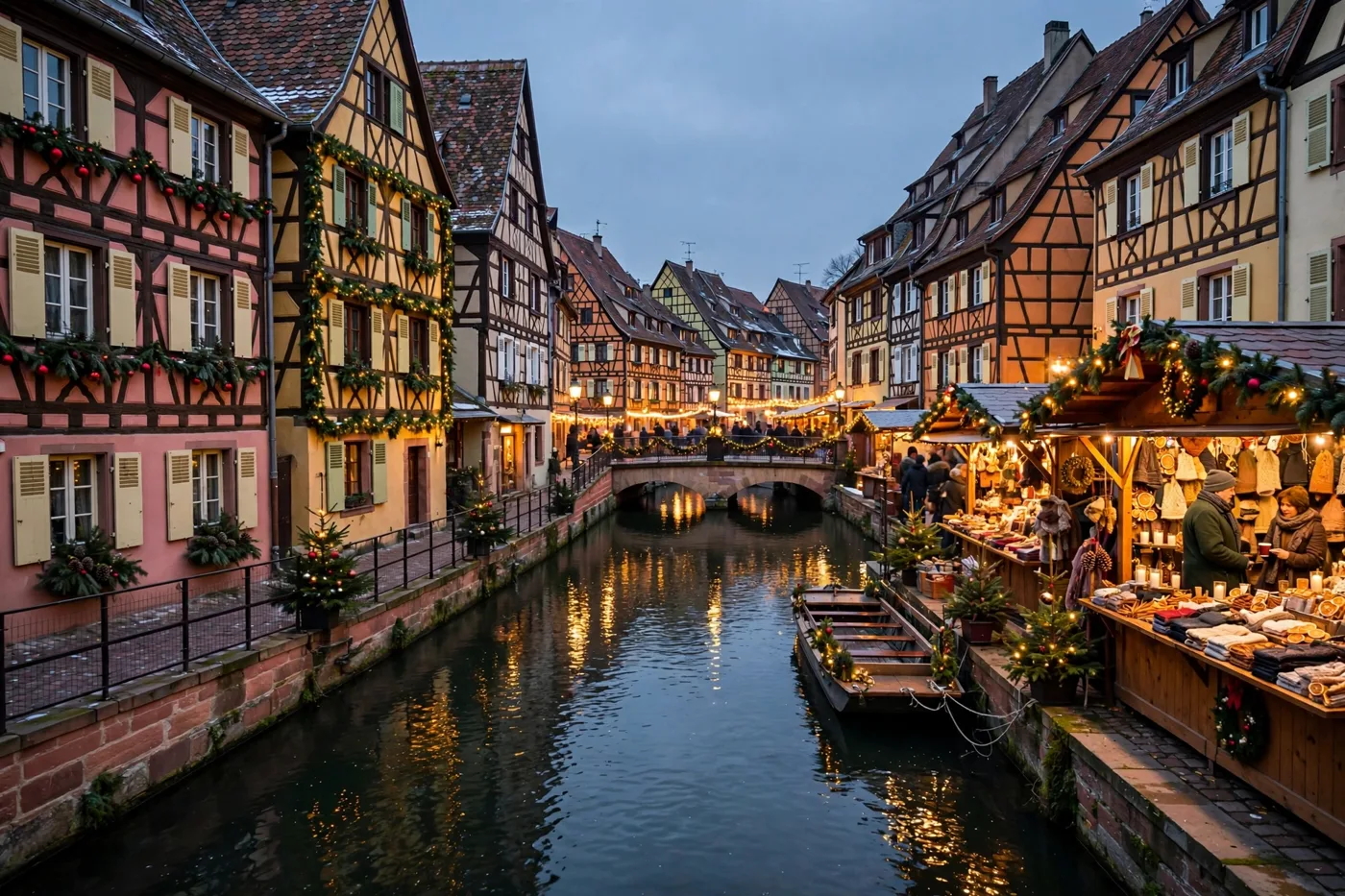
This is the day that turns a market trip into a real Alsace trip. Colmar is about 70 minutes south by train, and its old town, with the Little Venice canals and colourful houses, is even more photogenic than Strasbourg. Its Christmas markets run from around 23 November to 29 December in 2026 guides, so the timing lines up well.
Eguisheim, just a short ride from Colmar, is one of the prettiest villages in France, all concentric lanes and flower boxes, and its market runs from 27 November to 30 December in road trip guides. Riquewihr is smaller, walled, and very walkable. You do not need all three in one day if you hate rushing. Pick Colmar plus one village, and do it properly.
If you have a car, the Alsace Wine Route between these villages is lovely even in winter, with vineyards on one side and the Vosges mountains on the other. If you do not have a car, trains and small group day trips from Strasbourg cover Colmar and the villages, and that is honestly less stressful than parking in a medieval village in December.
Day 3: A castle, a mountain view, or just more market
Haut Koenigsbourg Castle sits above the Alsace plain and gives you a proper panoramic view on a clear winter day. It is a 12th century castle, rebuilt in the early 1900s, and it feels like a film set in the best way. Combine it with a village stop on the way back, or keep day three for a slower Strasbourg morning: a bakery breakfast, a museum, a canal walk, and a last market wander for gifts.
For walkers, the Vosges mountains behind Alsace offer marked trails and rounded summits called ballons. A winter walk here is not a summer hike. Check conditions, go with a local guide if you are unsure, and do not head into the high Vosges in bad weather just for a photo. The low villages and vineyard paths give you most of the beauty with far less risk.
What it costs, in plain numbers
Entry to the markets themselves is free. That is the good news. The costs are travel, hotel and food, and December prices rise fast. A weekday stay in late November is usually noticeably cheaper than the same room on a December weekend, and that alone can pay for your train to Colmar.
Budget roughly like this. Vin chaud around 3 euros a cup, often with a small deposit for the cup. Street food and a tarte flambee will be cheaper than a sit down restaurant, but a proper Alsatian lunch, choucroute or a hearty stew, is worth paying for at least once. It is filling, warming food, made for this weather.
Hotels on Grande Ile book out first, especially for December weekends. If you are reading this in early November and want a December weekend, book now and pick a refundable rate if you can. If you can travel on weekdays, you have more choice and better prices, and you will enjoy the market more. That is not a coincidence.
Getting there without a headache
Strasbourg has a main train station with direct TGV links to Paris in under two hours, plus connections to Germany and Switzerland. Flying into Strasbourg airport is possible, but many travellers fly to Basel, Baden Baden or Frankfurt and take the train in. Compare total door to door time, not just flight time, because a cheap flight plus a long transfer is not actually cheap.
Once you are there, walk and use the tram. The centre is compact, the trams are frequent, and the best discoveries in Strasbourg happen on foot, down a lane you did not plan to take. Keep your phone charged for maps, but do not spend the whole trip looking at it. The cathedral is very hard to miss.
Who this trip is really for
Strasbourg in November suits couples who want a festive weekend without flying to the other side of Europe, families who want markets plus villages their kids will actually remember, and food lovers who care more about a good tarte flambee than a theme park version of Christmas. It is less suited to anyone who hates crowds and can only travel on a December Saturday, or anyone who wants beach weather. This is a coat, scarf and hot drink trip, and it is proud of it.
If you love winter adventure with more snow and fewer cities, our Iceland ice cave guide covers a very different kind of cold, with blue ice and glacier tours. If you want a long, wild road trip instead, the Ha Giang Loop in Vietnam is the opposite end of the adventure scale. And if underground worlds are your thing, Cappadocia’s underground cities show what people built when winter, or invaders, forced them below ground.
Final checklist before you book
Pick weekday dates if you can, ideally the last week of November or the first week of December. Book a refundable hotel on or near Grande Ile. Check the official market site for 2026 hours before you go. Pack warm shoes, not just warm clothes. Plan one Alsace village day, not five rushed stops. And leave one evening free with no plan at all, because Strasbourg at dusk, with the lights coming on over the canals, is the moment you will actually remember.
For official market information, see the Eurostar Strasbourg Christmas Market page and the Earth Trekkers Strasbourg and Colmar guide: Eurostar Strasbourg Christmas Market and Earth Trekkers Strasbourg and Colmar markets.
Strasbourg does not need you to love Christmas to enjoy it. It just needs you to give it a weekday, a warm coat, and a little patience. Do that, and the Capital of Christmas earns its name. Go on a packed Saturday with no plan, and you will mostly remember the queues. The choice, happily, is yours to make before you book.
Planning a winter trip? Read the full story on thecavee.com and share this guide with someone who needs a festive break that is actually enjoyable. Follow us on Pinterest for more winter travel ideas, and tell us in the comments: Strasbourg, Colmar, or a quiet village in between?