Tourists Walked Past It for 70 Years. Then Someone Finally Saw the 26,000-Year-Old Art on the Walls
Picture this. You are walking through a show cave in Spain, one of those friendly guided tours with a wooden walkway and a guide pointing out stalactites. Families have done this exact walk for about seventy years. School groups, day trippers from Barcelona, grandparents with grandkids. Thousands and thousands of people, all staring at the same rock walls.
And all of them missed it.
Right there on the walls, hidden among the scratches and the modern graffiti and the natural cracks in the rock, were 280 engravings carved by Ice Age hands. Horses. A bear. Deer. Wild cattle. Dozens of abstract patterns, loops and lines. Some of them are roughly 26,000 years old. They sat there in plain sight while the modern world walked past, and nobody saw them until an archaeologist stopped, looked properly, and realized what he was actually looking at.
This is the story of Cova de la Font Major, the cave under a small Catalan town that turned out to be hiding one of the biggest Palaeolithic art finds in recent memory. And yes, you can go and see the cave yourself. There is just one catch, which I will get to.
The cave everyone thought they knew
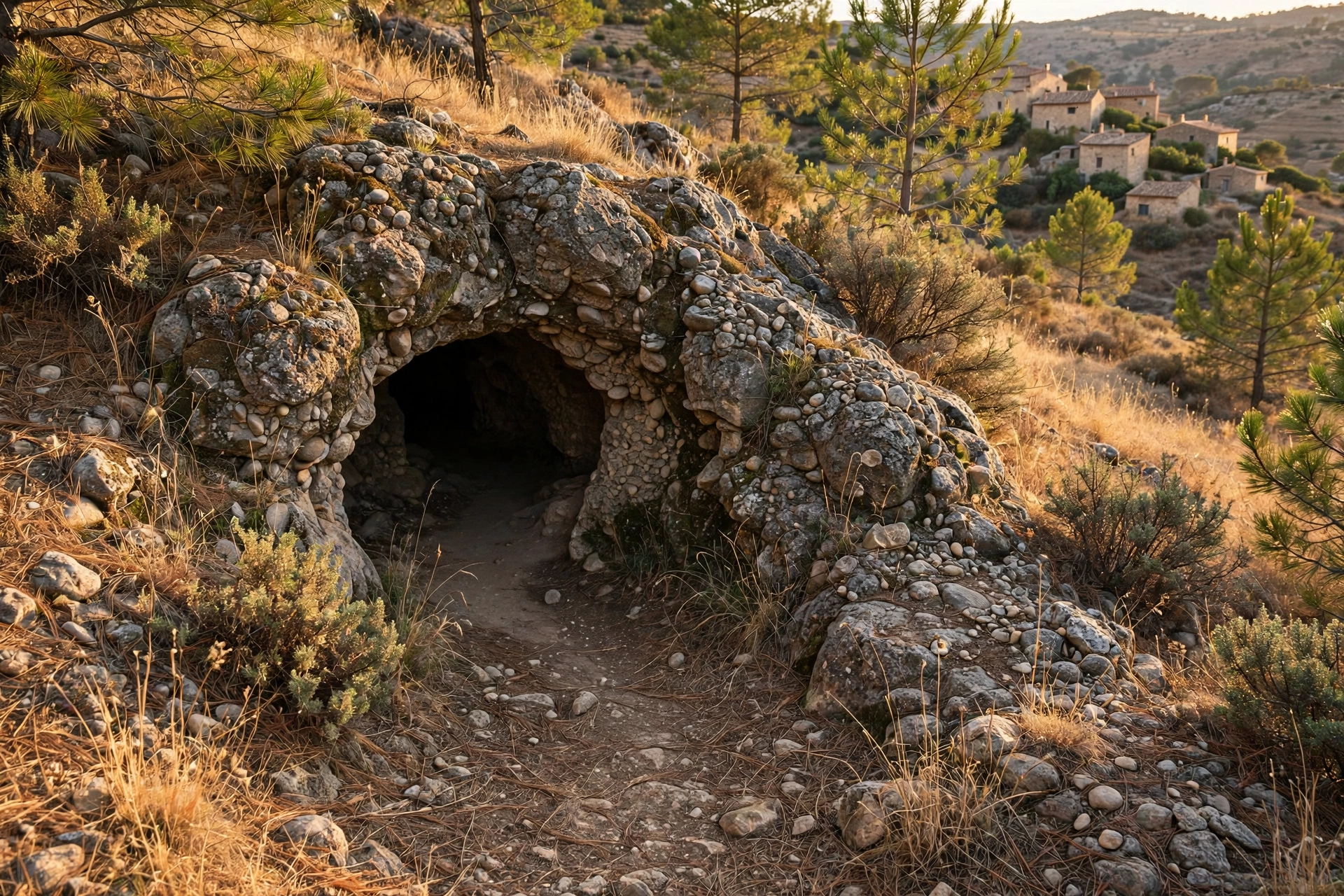
Cova de la Font Major sits underneath l’Espluga de Francoli, a small town in the province of Tarragona, Catalonia, about 100 kilometres southwest of Barcelona and 42 kilometres north of Tarragona. The cave was first documented in 1853, and it is the source of the Francoli river, which bubbles up from a spring inside the mountain and runs out through the cave mouth.
It is a big system, more than 3.5 kilometres of galleries carved through conglomerate rock, which makes it one of the longest caves of its kind in the world. People have been visiting it for a very long time. The cave has been open to the public for around seven decades, and a museum was built into the site in the 1990s. The guided tour takes you about 500 metres into the mountain, past an underground river, through halls with names like the Sala del Pou de Biela, and it lasts around 75 minutes.
Here is the thing, though. The cave was never just a tourist attraction. Archaeologists have known for decades that people lived in and around it for thousands of years. Excavations found traces of human presence going back tens of thousands of years. The cave was a shelter, a home, a landmark. And yet, for all that attention, the art on its walls went completely unnoticed. That is the part that still blows my mind.
What was hiding in plain sight
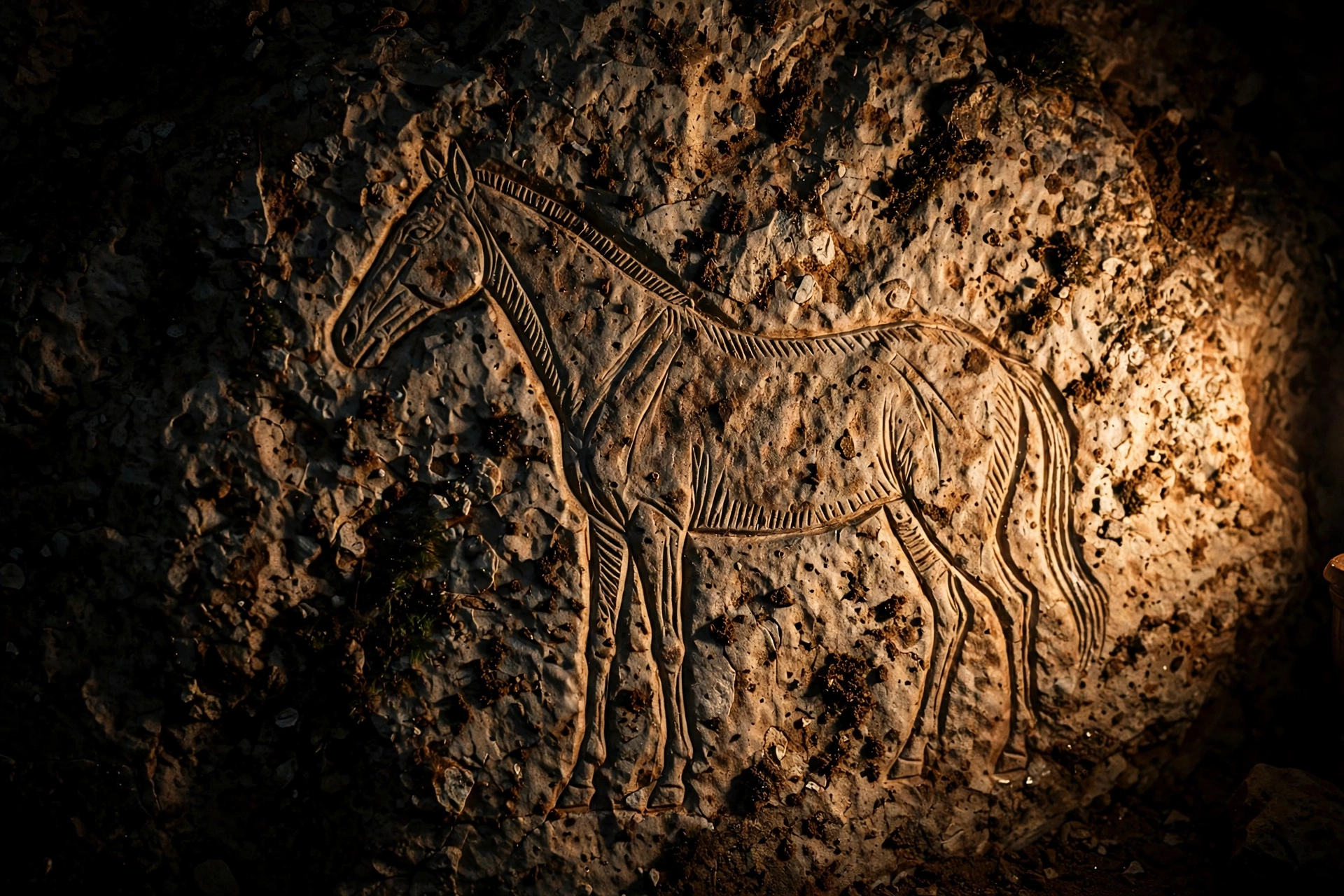
The engravings are not paintings. There is no red ochre horse staring back at you in bright colour. These are thin lines cut into the rock surface, shallow grooves made by a stone tool scraping across limestone. In the dim light of a cave, with a torch beam moving past, they look like nothing. Scratches. Damage. The kind of marks you would walk straight past, and that is exactly what everyone did.
When researchers finally catalogued them properly, the numbers were staggering. There are 280 engraved motifs spread across five sections of the cave. Fifty-five of them are animals. Horses dominate the count, but there is also a bear, deer, and early types of wild cattle. The rest are abstract: lines, loops, patterns that might have meant something specific to the people who made them, or might just have been decoration, or doodles, or something we will never fully understand.
A few of the engravings even show signs of animation, the kind of trick where the same animal is carved in slightly different positions so it seems to move when the light flickers across it. Think about that for a second. Someone, 26,000 years ago, standing in the dark with a flickering lamp, carving a horse that appears to run when the flame moves. That is not primitive. That is an artist thinking about how their work would be seen.
The day someone finally looked properly
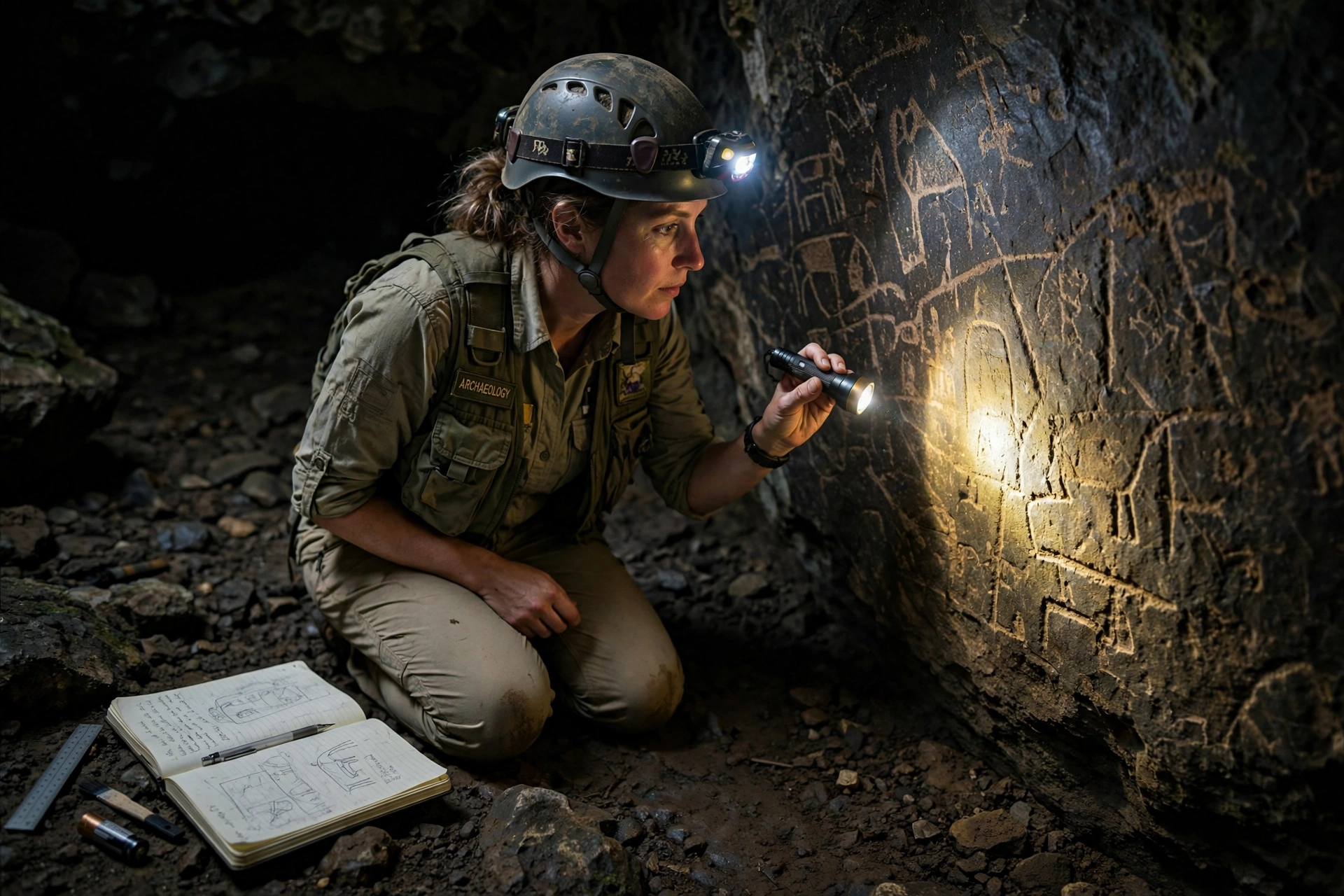
The discovery happened on October 30, 2019, during a planned excavation inside the cave. Josep Maria Verges Bosch, an archaeologist at the Catalan Institute of Human Paleoecology and Social Evolution, known as IPHES-CERCA, was working in a section of the cave called Gatoneres de Cal Palletes when he spotted engravings mixed in with more modern graffiti on the walls.
It is worth pausing on that detail, because it explains everything about why the art stayed hidden for so long. The walls of Font Major are covered in marks. Visitors have been scratching their names into the rock for generations. The engravings were camouflaged by centuries of human scribbling, sitting in the middle of the mess, invisible precisely because the wall looked busy. Verges was not looking for art. He was excavating. But he knew what to look for, and once he saw the first few lines, he kept looking, and the cave kept giving.
Over the following years, Verges and his colleague Miriam Salas-Altes, also at IPHES-CERCA, documented the whole collection: 280 motifs, 55 animals, five sections of the cave. Their study was published in the journal Antiquity on November 5, 2026, and within a day the story was covered by Nature and by Smithsonian Magazine. Seven years from first sighting to publication, and then the whole world knew within 24 hours.
How old is the art, really?
Here is where I need to be honest with you, because the honest answer is more interesting than a neat number. The engravings themselves have not been directly dated. You cannot carbon date a scratch in rock. What the researchers could date was the context around the art, and that context is solid.
Radiocarbon dating on bits of charcoal found inside one engraved groove, beside which a small flint bladelet was also recovered, put the age at roughly 26,000 years. Wider evidence from the cave shows human presence in the inner galleries between about 40,800 and 25,850 years ago. Some tour operators describe the sanctuary as 37,000 years old, which sits inside that range. The researchers attribute the engravings to the Upper Palaeolithic, and the charcoal date gives us the headline figure: around 26,000 years old, give or take the usual scientific caution.
That uncertainty does not make the find smaller. It makes it real. Archaeology rarely hands you a clean date on a plate, and the team has been careful about what they claim. What they can say with confidence is that people were carving animals into these walls during the last Ice Age, tens of thousands of years before the cave became a tourist attraction, and that the art sat there unrecognized through the entire modern history of the site.
Why this rewrites Catalonia’s prehistory
Before Font Major, Catalonia was almost a blank spot on the map of European Ice Age art. The region was thought to have almost no Palaeolithic cave art at all. Researchers knew of only two possible examples in the whole of Catalonia. Two. In a region full of caves.
Font Major changes that completely. With 55 animal figures, it is now the third-largest known Palaeolithic cave art assemblage on the Mediterranean side of the Iberian Peninsula. Only two sites beat it: Ardales and La Pileta, both in Andalusia in southern Spain. Ardales is famous for red ochre painted on stalagmites that dates back more than 64,800 years, so far back that it was almost certainly made by Neanderthals, not modern humans. La Pileta holds paintings more than 25,000 years old. Font Major now belongs in that company, which is extraordinary for a cave that spent seventy years as a family day out.
It also raises an obvious question. If a cave this well visited could hide 280 engravings for this long, what else is sitting on the walls of other show caves, unnoticed, waiting for someone to look at it properly? Archaeologists are already talking about re-examining other Catalan caves with fresh eyes. The Font Major discovery did not just add a site to the map. It changed how people look at the map.
If you love this kind of story, where ancient art turns up in the last place you would expect, you will enjoy our piece on the 15,000-year-old cave art found in Ireland, where AI helped flag caves that humans had walked past for generations. Same pattern, different island.

Can you actually visit it? Yes, with one catch
Here is the practical part, and it matters, because this is the question everyone asks first. Can you go and see the engravings?
The short answer is: you can visit the cave, but you cannot see the original engravings in person. The engraved gallery is closed to the public, and it should be. The carvings are shallow lines in soft rock, and 26,000 years of survival is a miracle that a few thousand hands touching the walls would end very quickly. The site is protected, and the engraved sections are reserved for professional archaeologists.
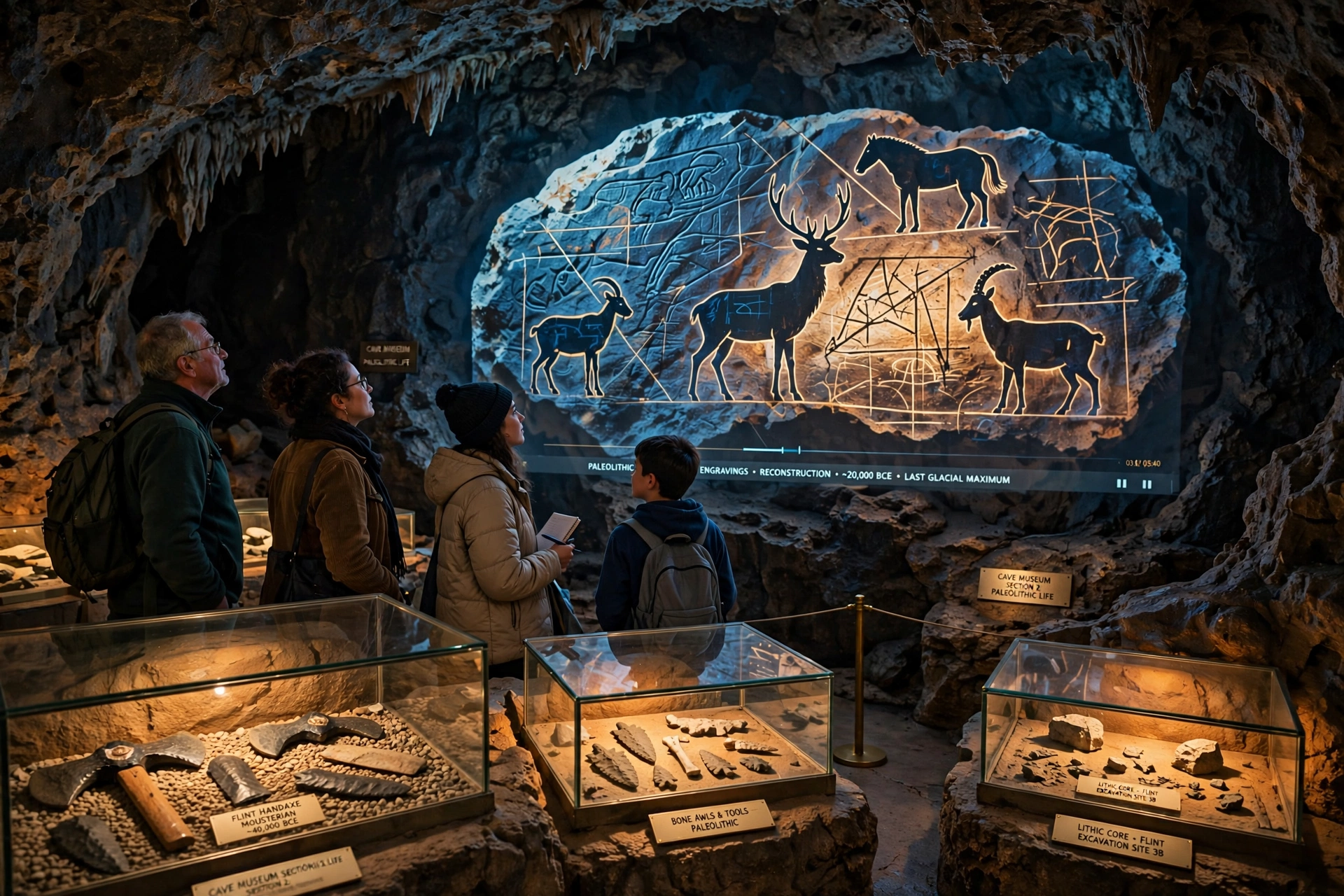
What you can see is the cave itself, which is genuinely worth the trip, plus an audiovisual recreation of the artworks inside the museum section. The guided tour runs about 500 metres through the cave and takes around 75 minutes, following the underground river to the first syphon. Along the way the guides explain the geology of the cave and the long story of human presence inside it, from Ice Age hunters to medieval visitors to the archaeologists working there now. The museum part explains the Stone Age in a way that is actually engaging, not a dusty display case and a yawn.
Tickets are reasonable. Adults pay 8.50 euros, children aged 5 to 14 pay 5.50 euros, and visitors 65 and over pay 7.65 euros. Children under 5 go free. The cave is open Tuesday to Sunday, 10:30 to 13:30 and 16:00 to 18:00, with longer summer hours in August. One honest warning from recent visitors: the tours are mainly in Catalan or Spanish, and English speakers get an audio guide, which some people found hard to hear over the guide speaking. Bring patience, and maybe a little Spanish.
Getting there is easy. The cave is right in the town of l’Espluga de Francoli, on Avinguda Catalunya, and the town is an easy drive or train ride from Tarragona, or about an hour and a half from Barcelona. If you are planning a Costa Dorada trip, this slots neatly into a day that also includes the medieval town of Montblanc, three kilometres away, and the Museu Terra, one of Catalonia’s leading ethnology museums, which sits in the same town.
The adventure route, for people who want more than a walkway
If a guided walk sounds too gentle, Font Major has a second option, and it is a proper one. The Ruta d’Aventura, or adventure route, is a four-hour caving trip through about 900 metres of the cave, following the underground river and the narrower galleries that the regular tour never reaches. You wade, you scramble, you get wet. It is real speleology, with a guide, and the minimum age is eight.
This is the closest most of us will ever get to the world the engravers lived in. Same river, same rock, same dark. The engraved gallery itself stays off limits even on this route, which is as it should be, but the experience of moving through the cave the way its first visitors did, with a lamp and your hands on the rock, is the point. Book ahead, because it runs by appointment and group sizes are small.

How to see a cave like an archaeologist
The Font Major story has a lesson in it that goes beyond one cave, and it is a useful one if you visit caves at all. Archaeologists do not see better than the rest of us. They look slower. Verges spotted the engravings because he was working in the cave, taking his time, looking at the walls the way you look at a page you are actually reading, not skimming.
Next time you are on a cave tour, try it. Stop walking for a minute. Let your eyes adjust. Look at the wall, not the formations the guide is pointing at, and let the light rake across the surface from the side instead of straight on. Shallow carvings only show up in raking light, which is why they stayed invisible under the cave’s regular lighting for decades. You probably will not find a 26,000-year-old horse. But you will see the cave differently, and that is half the pleasure of going underground in the first place.
And if you do spot something odd, a line that looks deliberate, a shape that repeats, say something. Take a photo, note where you are, and tell the guide or the site staff. The worst that happens is they tell you it is a scratch. The best that happens is you become a footnote in the next paper.
If you want to get better at seeing caves before you go, our guide on how to photograph a cave covers the same trick from the other side: working with low light, raking light, and the dark in a way that actually shows what is there.
Planning your trip
Font Major works best as a half-day trip. Go in the morning, take the guided tour, spend time in the museum section, then have lunch in the town and walk the old streets of Montblanc in the afternoon. If you are based in Barcelona, it is a straightforward day trip by car, and the drive through the Conca de Barbera wine country is half the pleasure. Tarragona, with its Roman ruins, is even closer.
A few practical notes. Book the adventure route well ahead, especially in summer. The regular tour runs on a schedule, roughly every 45 minutes to an hour on open days, but it is a small site and busy weekends fill up. Wear proper shoes, the cave floor is wet in places, and bring a light layer, because the cave stays cool year-round. And check the current hours before you go, because they shift between summer and winter.
One more thing worth knowing before you go. The Francoli river that runs through the cave is the same river that gives the town its water and its name. You are walking through the source of a river, under a town, in a cave that people have used for tens of thousands of years. That is a strange and wonderful thing to do on a Tuesday morning.
The art was never lost. We just stopped looking.
There is something quietly humbling about the Font Major story. The engravings were never buried. They were never sealed behind a rockfall or hidden in a chamber nobody could reach. They were on the walls of a public cave, in a town, with a museum, a ticket desk, and a gift shop. Seventy years of visitors walked past them. The art was not lost. We just stopped looking closely enough to see it.
That is what makes this discovery feel different from most archaeology news. It is not a story about a remote jungle or a sealed tomb. It is a story about paying attention, and about what happens when someone finally does. The cave is still there, under the same small town, waiting. Go and look at it properly.
Want more stories like this, of hidden caves and ancient art found in the last place anyone expected? Follow The Cavee on Pinterest, where we post a new cave story every day, and read about Son Doong, the largest cave on Earth, which hides its own jungle and weather system underground. The full story of Font Major is right here on thecavee.com, and the pin for this story is waiting for you on our Pinterest board.
