Your Counter Is Covered in Crumbs Every Morning. This $59.99 Handmade Bread Board Fixes It in One Slice
Here is a scene you probably know too well. You slice a beautiful loaf of sourdough for breakfast, and within thirty seconds your counter looks like a crime scene. Crumbs everywhere. On the cutting board, sure, but also on the floor, in the drawer gap, stuck to your sleeve, and somehow inside the toaster two feet away. You wipe it down, you sweep, and by lunch there are still crumbs finding their way into places crumbs have no business being.
I bake a lot of bread at home, and I have tried every fix short of slicing over the sink like a criminal. Paper towels under the board. A rimmed baking sheet. A dedicated crumb brush that I lost within a week. Nothing really worked, because the problem was never my technique. The problem was the board. A flat board has nowhere for crumbs to go except outward, and outward means your whole kitchen.
Then I found a handmade bread board that treats crumbs as a design problem instead of a fact of life. It costs $59.99 on Etsy, it comes with its own matching knife, and it has quietly become the most used thing in my kitchen. This is the full story: what it is, how it works, who it suits, and the honest downsides nobody mentions in the listing.
The crumb problem nobody talks about
Fresh bread is crumbly by nature, and crusty bread is the worst offender of all. A good sourdough has a shattering crust, which is exactly what makes it delicious and exactly what makes it messy. Every cut sends a spray of crumbs in every direction. On a normal flat board, those crumbs have two choices: pile up where you are cutting, or scatter.
They scatter. They get into the grooves of your countertop. They fall on the floor and get tracked through the house. If you have kids or pets, the crumbs become a whole second breakfast that nobody asked for. And if you slice bread every morning, like I do, you are wiping the same counter three times a day and still finding crumbs at dinner.
It sounds like a small thing, and honestly it is a small thing. But small things you deal with every single day add up. The kitchen is the room you use most, and a daily annoyance in the most used room is worth fixing properly. A five dollar plastic board does not fix it. A bigger flat board does not fix it either, because bigger just means a larger area for crumbs to spread across. What fixes it is a board built around one simple idea: give the crumbs somewhere to fall.
Meet the board: a slotted top, a hidden tray, and a matching knife
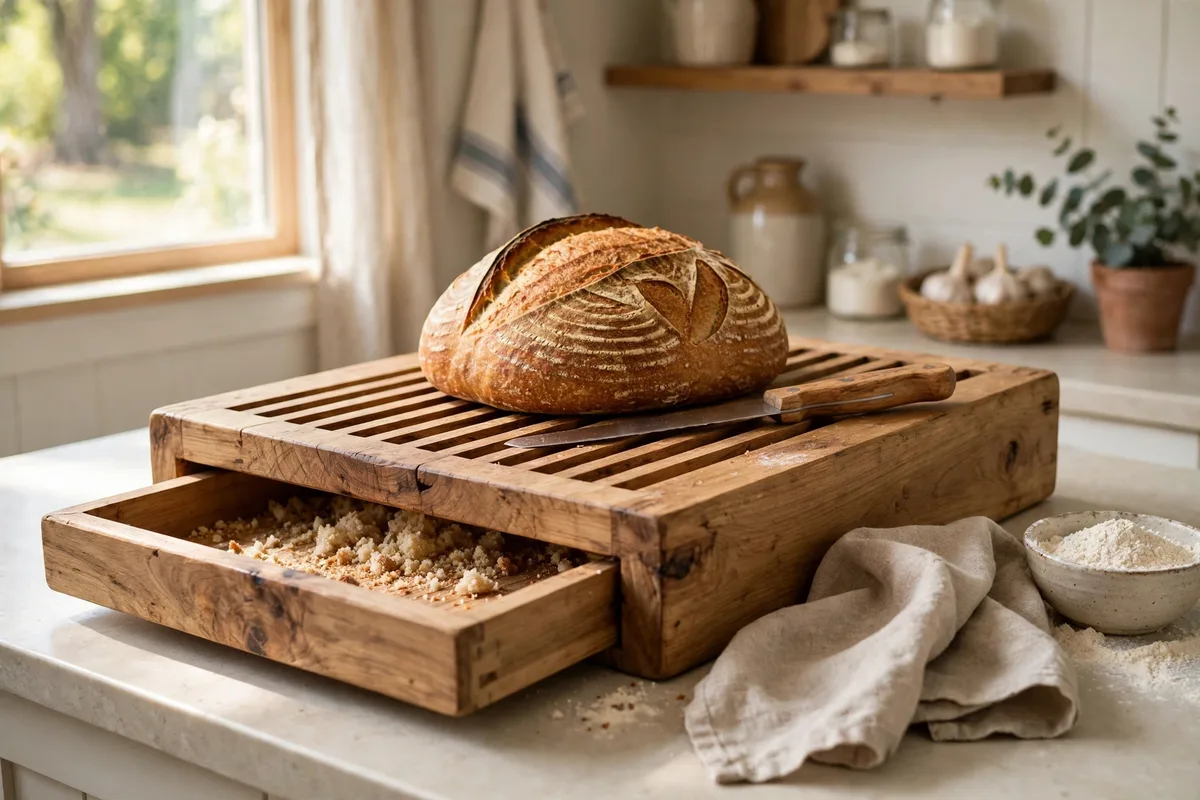
The board comes from SpencerWoodCreations, a small woodworking shop on Etsy and a Star Seller with a perfect 5 out of 5 star rating. The listing is called Handmade Bread Board with Crumb Tray and Knife, and the name tells you almost everything. It is a wooden serving set built around one clever trick.
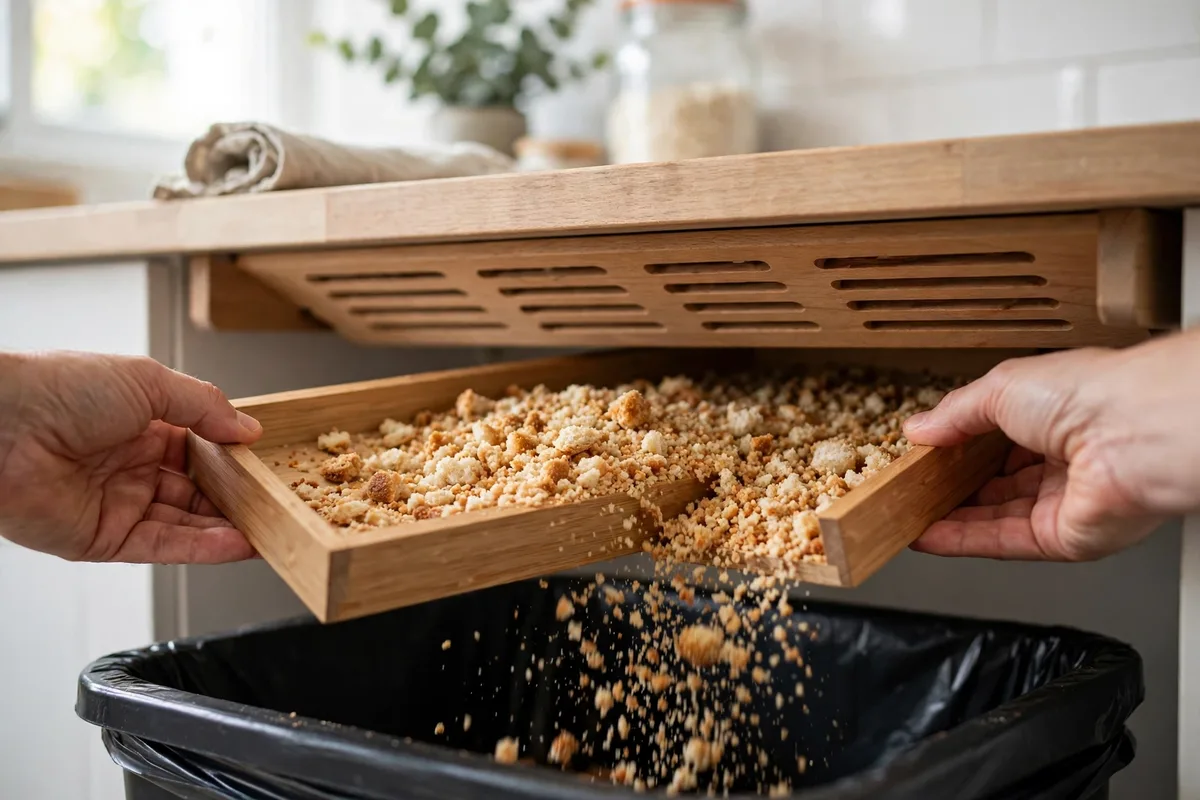
The top board is slotted. Narrow gaps run across the surface, and when you slice, the crumbs drop straight through the slots instead of spraying across your counter. Underneath sits a removable crumb tray that catches everything. When you are done, you slide the tray out, tip the crumbs in the bin, and slide it back. The whole cleanup takes about ten seconds, and your counter stays more or less exactly as it was before you started.
The set includes a matching bread knife with a wooden handle, so the whole thing looks like it belongs together on your counter instead of like a random collection of kitchen tools. The board is made from cherry, white oak, and maple, finished with tung oil, which gives it that warm, food-safe glow that makes handmade wood look expensive without trying too hard. At the time of writing it costs $59.99, with only 6 left in stock and one already sitting in somebody’s cart.
What I like most is that nothing about it is complicated. There are no moving parts, no batteries, no app, no assembly. It is a board with slots and a tray. The cleverness is in how obvious the solution feels once you see it, which is usually the sign of a genuinely good design.
How the crumb tray actually works
Let me walk you through a normal morning with this board, because the details are where it earns its keep.
You put the loaf on the slotted top and start slicing. The crumbs fall through the slots into the tray below instead of bouncing across the counter. The slots are wide enough for crumbs but narrow enough that the loaf sits steady, and the board itself is heavy enough that it does not slide around while you saw through a tough crust. When you finish, you lift the loaf and the slices off, slide the tray out from underneath, and empty it. That is the whole routine.
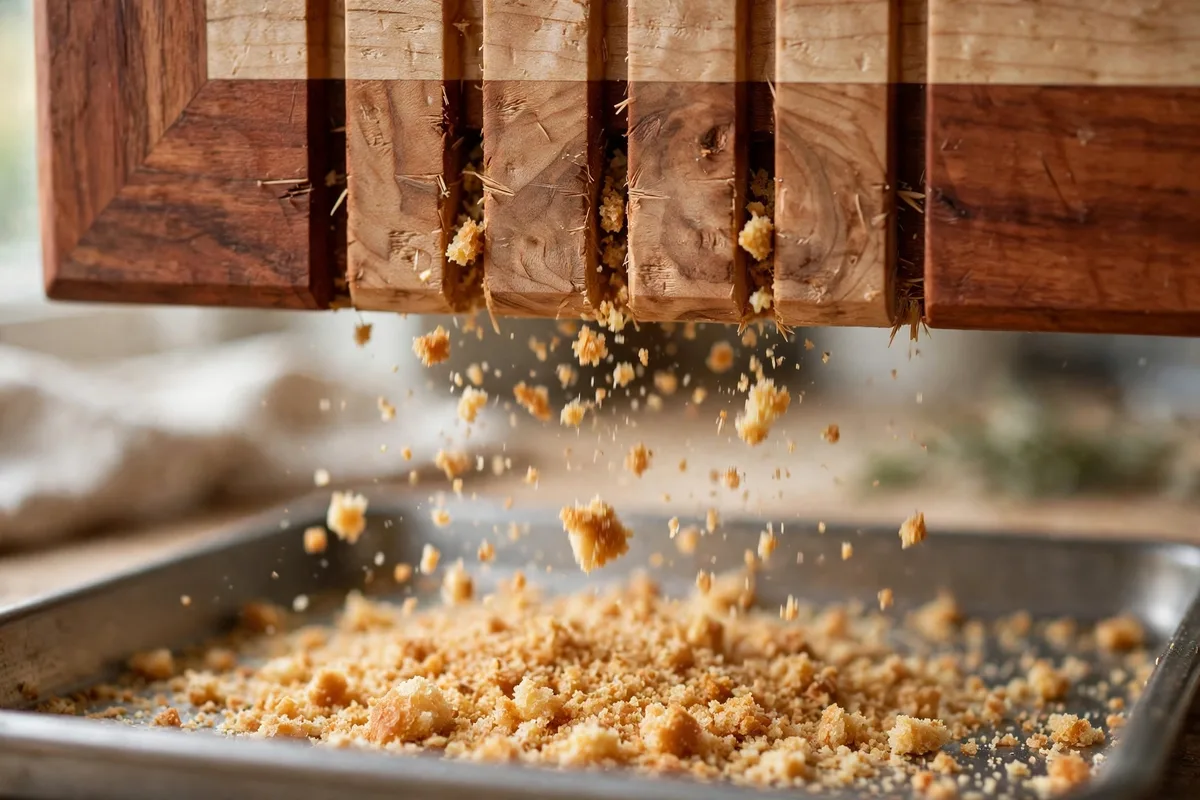
The tray is the part I underestimated. I assumed it would be fiddly, or that crumbs would jam in the corners, or that I would forget to empty it and end up with a tray full of stale crumbs a week later. In practice, sliding it out is as easy as pulling out a drawer, and because you can see the crumbs sitting in it, you actually remember to empty it. It takes less time than wiping the counter used to, and the counter stays clean enough that I only wipe it once, at the end, out of habit rather than necessity.
One honest note: the tray does not catch one hundred percent of the crumbs. A few escape at the edges, especially if you slice aggressively or your loaf is very dry. But we are talking about a handful of crumbs versus the usual explosion. The difference is dramatic enough that the first time I used it, I actually stopped mid-slice and laughed, because the counter was still clean.
The knife matters more than you think
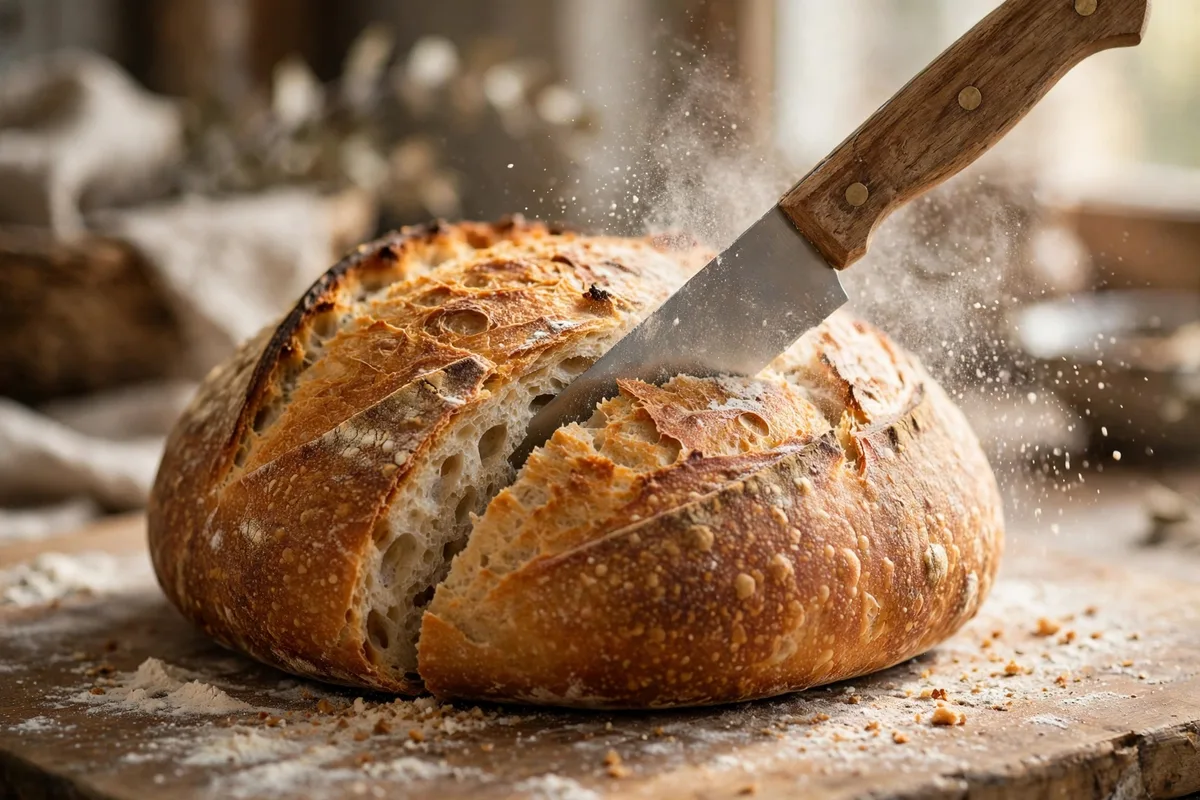
Most bread boards come alone, and you end up using whatever knife you already own. That is fine, but a knife that matches the board is one of those small pleasures that makes the whole set feel considered rather than thrown together.
The matching knife has a wooden handle that echoes the board, and it is sized for the job, long enough to get through a wide sourdough loaf in one pass instead of sawing back and forth. A single clean pass means fewer crumbs in the first place, which is half the battle. The listing is clear about care: hand-wash the knife only, and wipe or hand-wash the board and tray. No dishwasher, ever, which is standard for anything made of real wood and finished with oil.
If you already own a bread knife you love, you might not care about the included one. That is fair. But if you are buying this as a gift, or you are setting up a first kitchen, having the complete set in one box is genuinely convenient. It also looks wonderful sitting on the counter, which matters more than any of us like to admit. Kitchen tools you leave out get used. Kitchen tools you hide in a drawer get forgotten.
Three woods, one board: cherry, white oak, and maple
The board is made from three woods: cherry, white oak, and maple. That is not just decoration, though it certainly looks good. Each wood brings something different, and the combination is part of why the board feels solid and looks warm.
Cherry darkens beautifully with age and has a rich, reddish tone that deepens over the years. White oak is tough and dense, the workhorse of the three, and it resists moisture better than most woods, which matters for something that lives in a kitchen. Maple is pale and fine-grained, and it gives the board its lighter stripes and contrast. Put together with a tung oil finish, the result is a board that looks like a piece of furniture rather than a kitchen gadget.
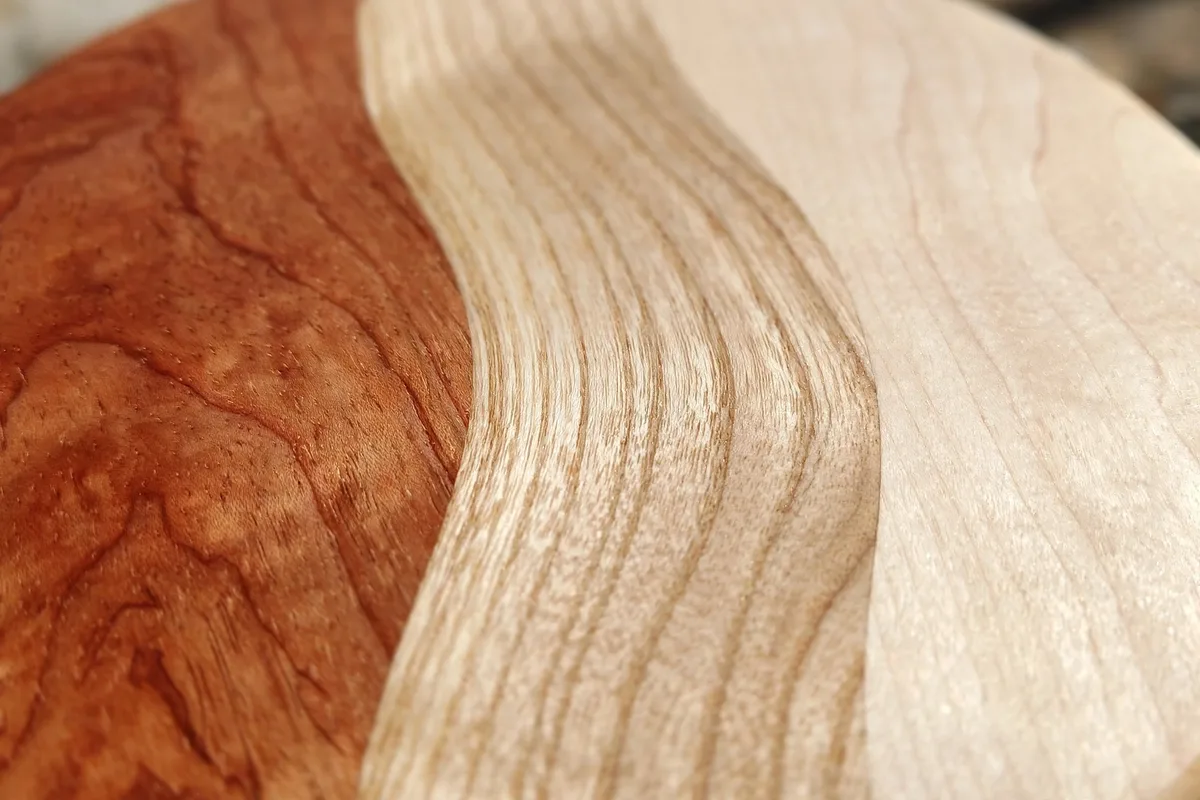
The finish matters too. Tung oil is food-safe, it soaks into the wood instead of sitting on top like a plastic coating, and it can be refreshed at home with a light coat every few months. That is the kind of maintenance that sounds like a chore until you do it once and realize it takes five minutes and makes the board look brand new. If you have ever owned a cheap bamboo board that went grey and fuzzy after a year, you know the difference a real oil finish makes.
Because it is handmade in a small shop, no two boards are exactly alike. The grain pattern on yours will be yours alone. That is either a selling point or a shrug, depending on your personality, but for a piece you will look at every morning, I think it counts for something.
More than a slicer: it doubles as a serving board
Here is the part that surprised me. Once the bread is sliced, the board does not have to go back in the cupboard. Lift off the slotted top, or just use the whole thing as it is, and it becomes a serving board.
It works beautifully for a dinner party spread: sliced sourdough down the middle, a couple of cheese wedges, some grapes, a small dish of olive oil for dipping. The warm wood makes everything on it look better, and because it is already on the table, people help themselves instead of waiting to be served. I have also used it for breakfast in bed duty, carrying toast and jam and coffee in one trip instead of three, and for a cheese night where the board was the entire centerpiece.
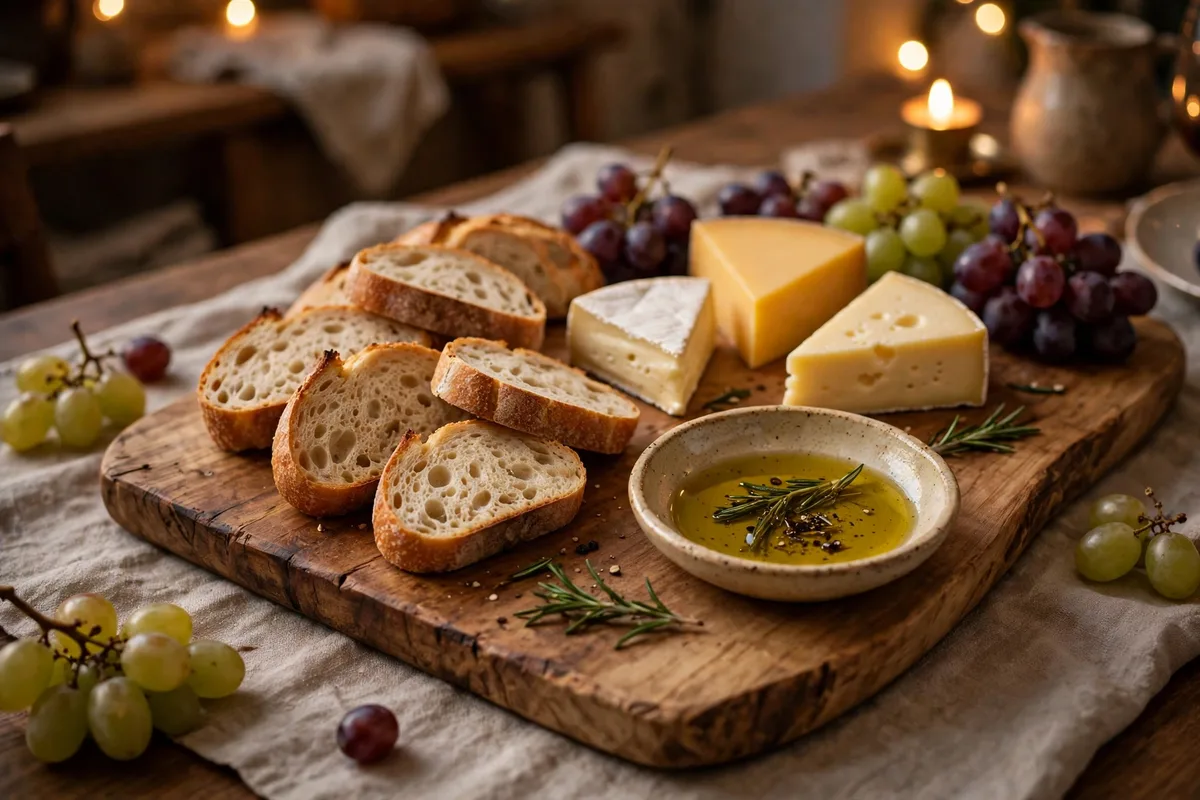
This is where the board earns its price. A single-use gadget at $59.99 is a hard sell. A slicer, a serving board, and a centerpiece in one piece of handmade wood is a much easier one. It also means the board lives on your counter or your table instead of buried in a cupboard, which is the real test of whether a kitchen purchase was worth it. The things you use every day should be the things you can see.
If you like the idea of wooden pieces that pull double duty in the kitchen, you will probably also enjoy our guide to a handmade wooden cookbook stand that keeps recipes at eye level while you cook, and our look at a personalized engraved rolling pin that prints patterns into cookie dough in a single roll.
Who should buy it, and who should skip it
This board is at its best for a few specific people. If you bake your own bread, or you buy a proper crusty loaf from a bakery every week, you will notice the difference on day one. If you make sourdough, you already know the crumb situation, and this is the fix you have been circling around. If you host dinners, or you like the idea of one beautiful wooden piece that handles both slicing and serving, it fits right in.
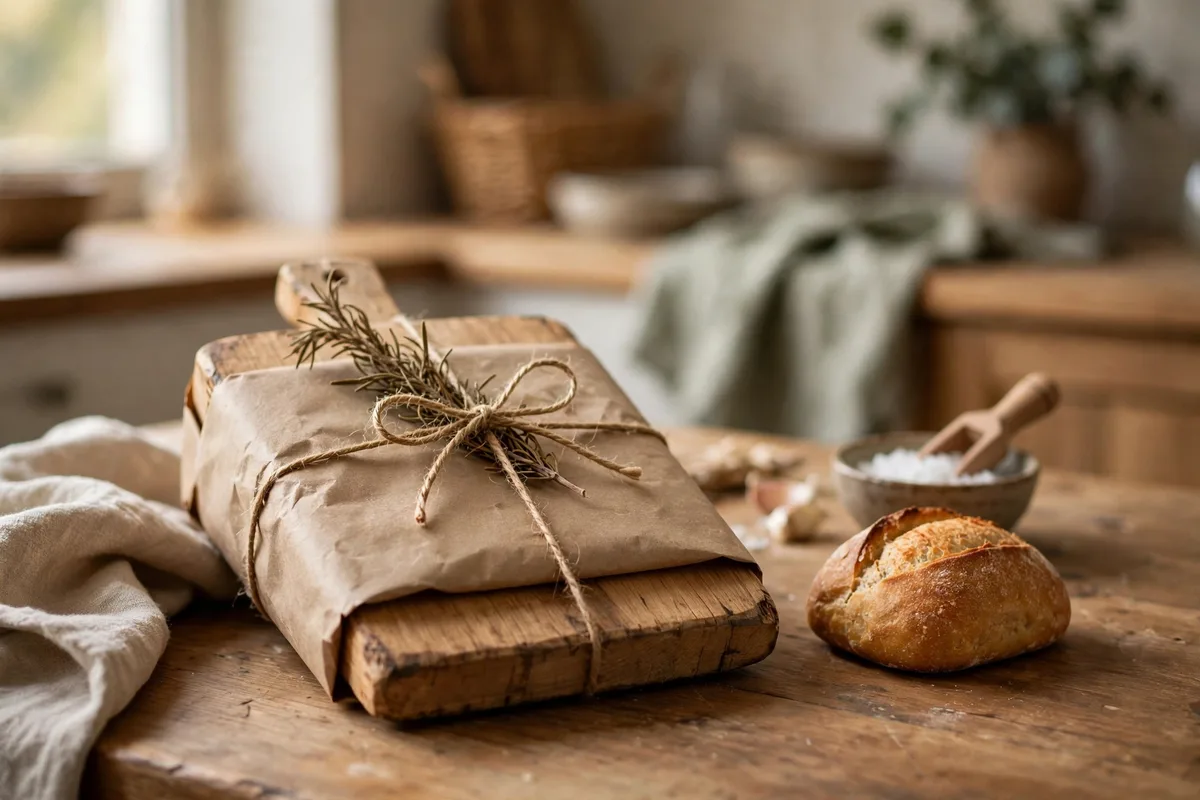
It also makes a genuinely good gift. Housewarming, host gift, wedding gift, Christmas gift for the baker in your life: it is useful, it is beautiful, and it is the kind of thing people rarely buy for themselves but love receiving. The fact that it arrives as a complete set, board plus tray plus knife, makes it feel gift-ready in a way a lone board never would. Wrap it in kraft paper with some twine and a sprig of rosemary and you are done.
Who should skip it? If you mostly eat sliced sandwich bread from a bag, this is overkill. The crumbs from soft sandwich bread are minimal, and a regular board will do. If you hate hand-washing anything, be honest with yourself, because this board needs hand washing and the occasional oiling, and a board you resent maintaining is a board that ends up in the back of a cupboard. And if your kitchen is very small, measure your counter first, because a board with a tray underneath takes up real space and deserves a permanent spot.
How to care for it so it lasts for years
Wooden boards last decades when you treat them right, and they die young when you do not. The rules here are simple and worth following.
Hand-wash the board and tray with warm water and a little mild soap, then dry them right away. Never soak them, and never put them in the dishwasher, because prolonged water exposure swells the wood, loosens joints, and strips the oil finish. The knife is hand-wash only as well. Every few months, or whenever the wood starts looking dry and pale, rub in a thin coat of food-safe mineral oil or tung oil, let it soak in overnight, and wipe off the excess in the morning. That is the entire maintenance routine. Five minutes, a few times a year, and the board will outlast most of the appliances in your kitchen.
One more tip: keep it out of direct, harsh sunlight for long stretches, and do not store it flat against a damp surface. Wood likes air circulation. A board that stands on its edge or lives on the counter with air around it will stay flat and true. A board left sitting in a puddle will warp, and no amount of oil fixes a warped board.
The honest downsides
I like this board a lot, but it is not perfect, and you should know the trade-offs before you buy.
First, the price. At $59.99, it costs ten times what a basic plastic cutting board costs. You are paying for handmade work, three hardwoods, a matching knife, and a design that solves a real problem. I think it is fair value, but if your budget is tight, it is a luxury, not a necessity.
Second, the maintenance. Hand washing, drying, occasional oiling. If you are the kind of person who puts everything in the dishwasher without thinking, this board will punish that habit. It needs about two minutes of care after each use, which is nothing, but it is not zero.
Third, availability. Only 6 were left when I checked, and one was already in a cart. Small shops make things in small batches, so if you want this exact board, do not sit on it for a month. The listing could sell out, and the next batch might look slightly different, because handmade pieces always do.
Finally, the crumb tray is not magic. It catches the vast majority of crumbs, but a few still escape, especially with very dry loaves. If you expect a surgically clean counter, you will still need a quick wipe. What you will not need is the full sweep-and-mop routine that slicing a sourdough used to demand.
Where to get it
The board is available on Etsy from SpencerWoodCreations, a Star Seller with a perfect 5 out of 5 star rating. The listing is Handmade Bread Board with Crumb Tray and Knife, priced at $59.99 at the time of writing, with only 6 left in stock. If the listing shows sold out when you check, it is worth messaging the shop, because small makers often restock in batches or take custom orders.
If you are still deciding, here is the short version. If you slice real bread most days, and you are tired of crumbs on your counter, your floor, and your clothes, this board solves the exact problem you have, in a way that looks beautiful and lasts for years. It is handmade, it is fairly priced for what it is, and it comes with everything you need in one box.
And if you want more ideas for wooden pieces that make a kitchen work harder and look better, have a look at our guide to book-shaped acacia cutting boards, the funniest-looking kitchen hit of the year. For more handmade wood finds, follow us on Pinterest, where we share a new piece every day. Read Full Story on thecavee.com, and if you try the board, tell us how it held up in your kitchen.