Four days ago, Thailand’s most famous dive archipelago unlocked its gates. On 15 October 2026, the Similan Islands reopened for the 2026-27 season, and 1,409 people showed up on day one: 1,359 day-trippers and 50 divers, according to the park’s own count. That’s a big number for a place you can only reach by boat, and it tells you everything about how hungry travelers are for this corner of the Andaman Sea.
But here’s what those Instagram reels won’t tell you. The park that reopened this month isn’t the park people remember. The rules got stricter, the fines got real, and the paperwork changed. Travelers get fined, turned away, or quietly short-changed every single season because they plan the trip like it’s 2015. This guide is the fix: everything verified for the 2026-27 season, including the stuff most guides get wrong.
Why the Similans vanish every year (and why people still get it wrong)
Nine granite islands run north to south about 70 kilometers off the coast of Phang Nga province. The name comes from a Yawi (Malay) word for “nine.” The park was declared back in 1982, and every year since, the whole thing shuts down for the southwest monsoon. Closed 16 May to 14 October. Open 15 October to 15 May. Every year. The Department of National Parks (DNP) states it plainly, and the park’s news service repeated those dates in August 2026.
And yet plenty of websites still say the park opens on 1 October or 1 November. Neither is correct. This matters because people build entire Thailand itineraries around a Similan day trip and book flights for early October, then discover the islands are legally off-limits. Worse, some operators happily sell you a “Similan trip” during the closed season. What they’re selling is something else, or something illegal, because after the park closes, visiting the Similans by any means is not allowed, not on a group boat, not on a private one. Dive centers shift to Phi Phi, Racha and Koh Khai instead. Nice places, but not the same water clarity or coral.
If the Similans are the main reason for your Thailand trip, plan for the season, not the hype. November through April is when the seas are calmest and visibility is best. The first weeks of the season, right now, can be mixed: a late burst of monsoon swell in late October can cancel or shorten trips. Smart move: build one spare day into your plans, the way you’d pack an extra battery for a long hike.
What’s new for 2026-27: the rules that can actually cost you money
This is the section to read twice. The park is serious about conservation this season, and the penalties are not symbolic.
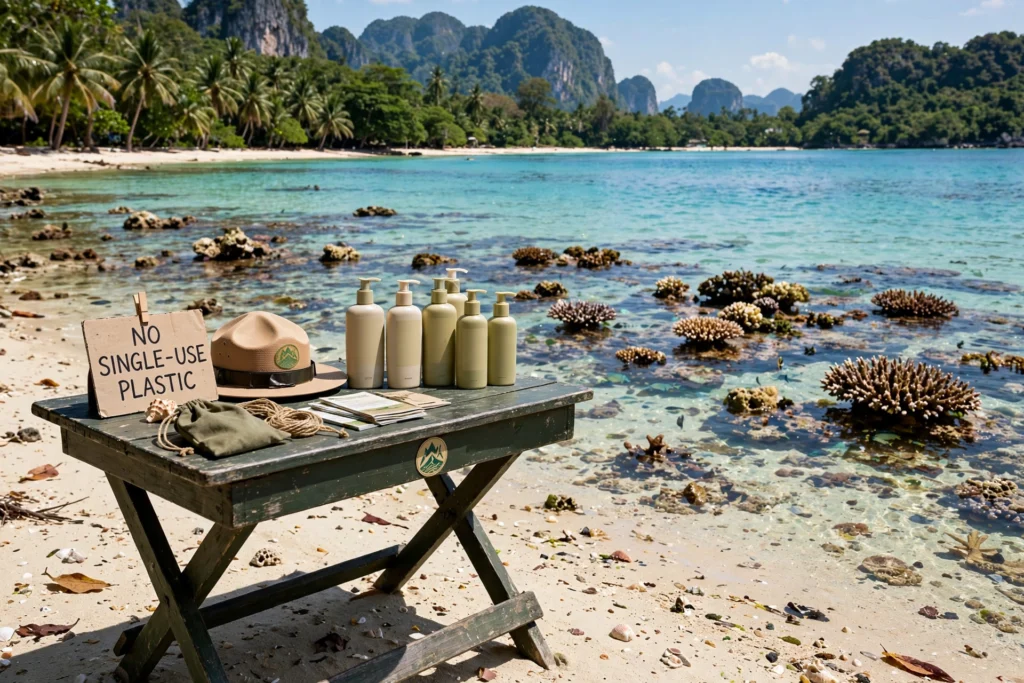
Your sunscreen can get you fined. Thailand bans sunscreen containing oxybenzone, octinoxate, 4-MBC and butylparaben in its marine parks. The fine can go up to 100,000 THB. That’s not a scare tactic from a tour brochure, it’s the law. Park officials are actively pushing coral-safe sunscreen and checking. Buy a reef-safe bottle before you fly (they’re easier to find and cheaper at home than at the pier) and read the ingredients list. If you can’t pronounce half of it, put it back.
No single-use plastic. Bring a refillable water bottle. Tour boats will usually have water for refills, but a plastic bottle in your daypack is a small thing that causes big headaches at a ranger checkpoint.
No overnight stays, still. This surprises people every year. Overnight stays on the islands have been banned since 2018. No tents, no bungalows, no resorts, no exceptions. The park is day-use only now. The closest beds are on the mainland at Khao Lak, or on a liveaboard dive boat. If someone offers you a “camping on the Similans” package, walk away.
E-tickets are compulsory. The DNP runs an e-ticket system for its marine parks, and every visitor needs one. Foreign visitors register with a passport number, so bring your passport (or at least a photo of it on your phone). It’s one more queue you skip if you’re prepared.
Numbers are capped. After reopening, the park sets a daily visitor cap each season so one busy high season doesn’t undo five months of reef recovery. Opening day’s 1,409 visitors tells you the cap is being used, not ignored. Book ahead, especially around Christmas and New Year.
Two islands you’ll never see. Islands 1 to 3 are a turtle-nesting reserve, closed to visitors entirely. And Koh Tachai, north of the main group, has been closed since 2016 to let its reefs recover, with no reopening announced. If an itinerary lists Tachai, treat it as a red flag about the operator.
The real costs in 2026: no surprises
Let’s talk money, because the Similans are not the cheapest day trip in Thailand and the pricing confuses people.
The national park fee is 500 baht for foreign adults and 250 baht for children aged 3 to 14. Thai nationals pay 100 baht. Here’s the catch that bites travelers: most day-trip tours already include the fee in the price. Check before you pay it twice at the pier.
Day trips themselves depend on where you start and what boat you take. From Khao Lak, the smart base, a standard speedboat day trip runs around 2,999 to 3,300 baht per adult on current season promotions (regular prices sit around 3,700 to 4,000). Premium speed catamarans, smoother and more stable, run roughly 3,399 to 4,600 baht. From Phuket or Krabi, expect more, both in money and in hours on the road, since you’re driving 90 minutes just to reach the pier.
What a decent tour includes: round-trip hotel transfers, breakfast at the pier, lunch on the beach, snorkeling gear, and the park fee. What it should never include: Ko Tachai, an overnight stay, or a departure during the closed season.
For context on why the park bothers with all this: in the 2025-26 season, the Similans logged over 400,000 visitors and 215 million baht in revenue, with more than 90 percent of visitors coming from abroad. This is one of Thailand’s most valuable marine parks. The rules exist because the asset is real.
Getting there: the logistics nobody explains clearly
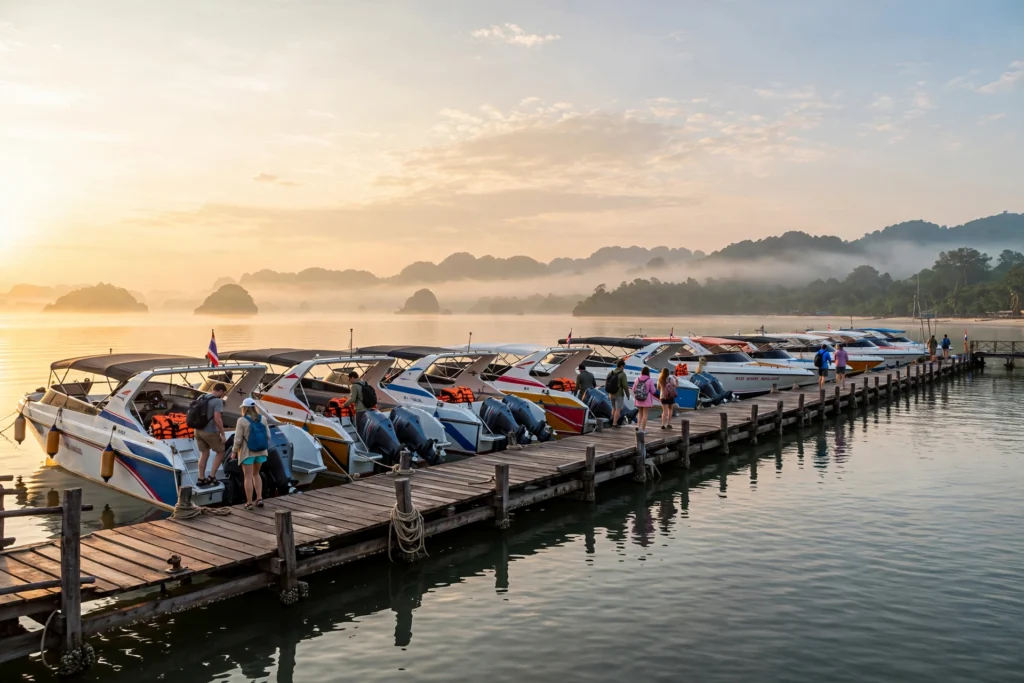
Almost everyone reaches the Similans on a day trip from Thap Lamu pier in Thai Mueang district, Phang Nga, about 70 kilometers from the islands. The crossing takes around 90 minutes by speedboat. Khao Lak is the obvious base: it’s close to the pier, the transfers are short, and the whole day feels relaxed instead of frantic.
Phuket works too, but do the math first. The islands sit about 120 kilometers northwest of Phuket, so from somewhere like Patong you’re looking at a 90-minute drive to the pier before the boat even starts. That’s a long day with an early pickup. If you’re staying in Phuket anyway, pick a late-morning catamaran departure if you can, your body will thank you.
Divers have a third option: liveaboards. Three-to-five-day dive boats run from Khao Lak and Phuket, and they’re how serious divers do the Similans, hitting Richelieu Rock and the deeper sites at dawn before the day boats arrive. If diving is the whole point of your trip, a liveaboard is worth the splurge.
One more practical note from the reopening weeks: the season’s first sailings are the most exposed to weather. Boats can be cancelled on rough days, and the park’s daily window governs when landings and snorkel stops actually happen, so those very-early or very-late departures some boats advertise are mostly time spent crossing. Book the trip for the middle of your stay, not the first day, and keep one buffer day. Your future self, watching the sea turn gray on what was supposed to be THE day, will be grateful.
The islands worth your day: Donald Duck Bay, Sail Rock and Ko Miang
Day trips typically land on two islands and snorkel around others in between. Here’s how to spend your hours.
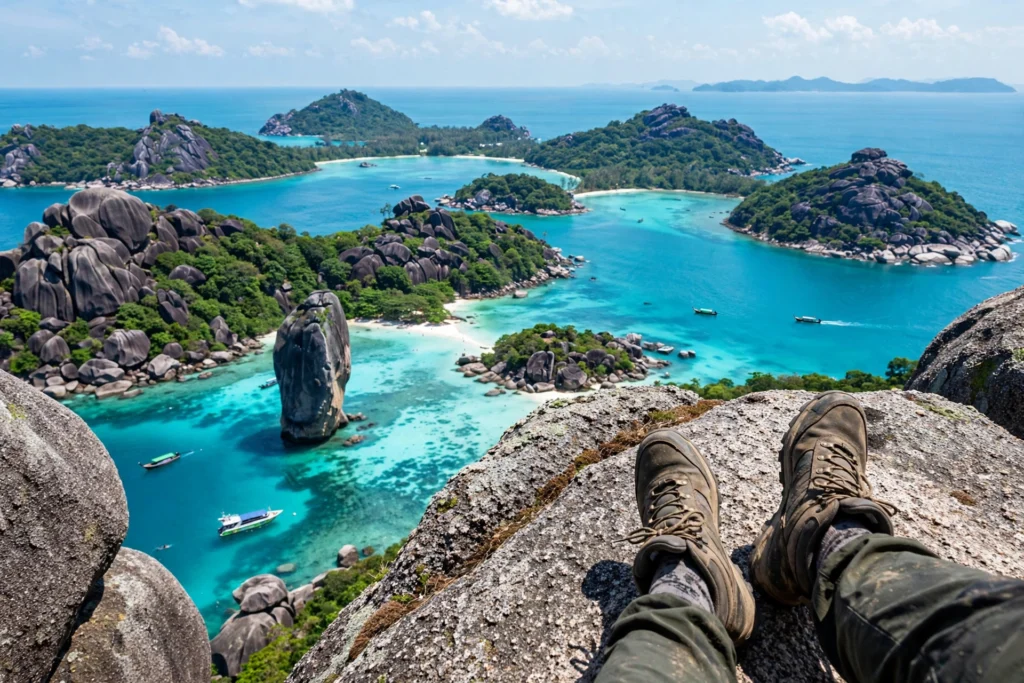
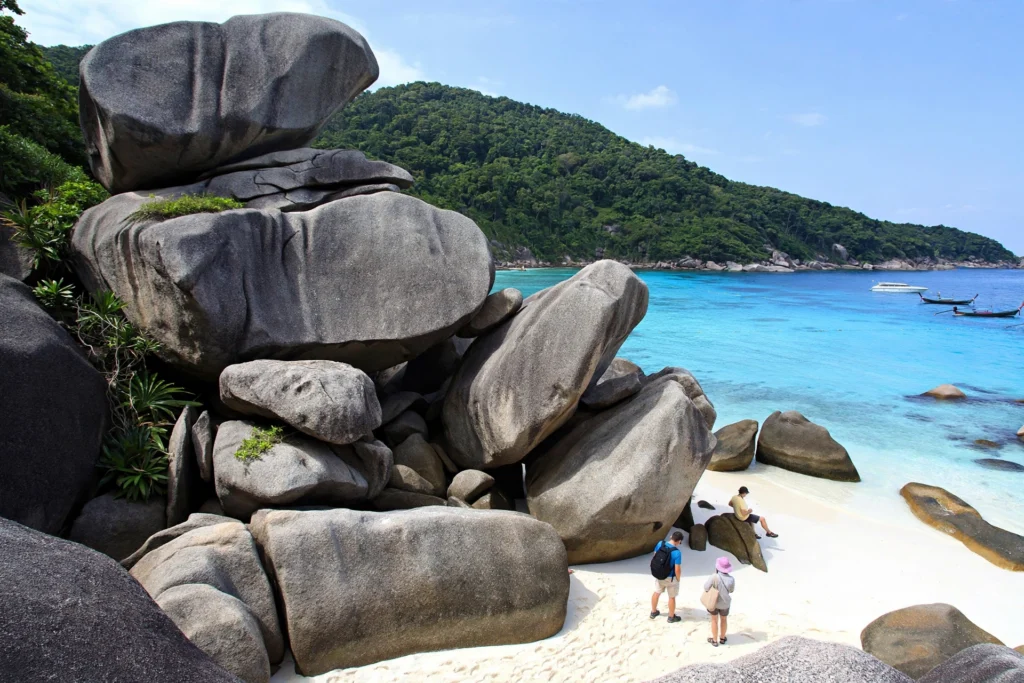
Ko Similan (island 8) is the headliner. This is where you find Sail Rock, the park’s landmark: a giant balanced boulder with a short trail leading up to a viewpoint with a sweeping panorama over the bay. It’s only about a 150-meter trail, but wear real shoes, the granite is smooth and the climb is steeper than the photos suggest. Right below it is Donald Duck Bay, named for a rock formation that looks like the cartoon character’s head, ringed by those massive smooth boulders the Similans are famous for. This is the postcard beach, and it’s where your featured-photo selfies happen.
Ko Miang (island 4) is the quieter stop, with Princess Beach and Honeymoon Beach and the visitor facilities. Lunch usually happens here. It’s also the better snorkeling-from-the-beach option if you want a lazy hour in shallow water.
Underwater: why divers fly across the world for this
Above water, the Similans are beautiful. Underwater, they’re the reason dive magazines keep putting Thailand on their covers. The coral gardens around the islands are dense and healthy after five months of rest, and the visibility in season is the kind of thing divers describe with hand gestures.
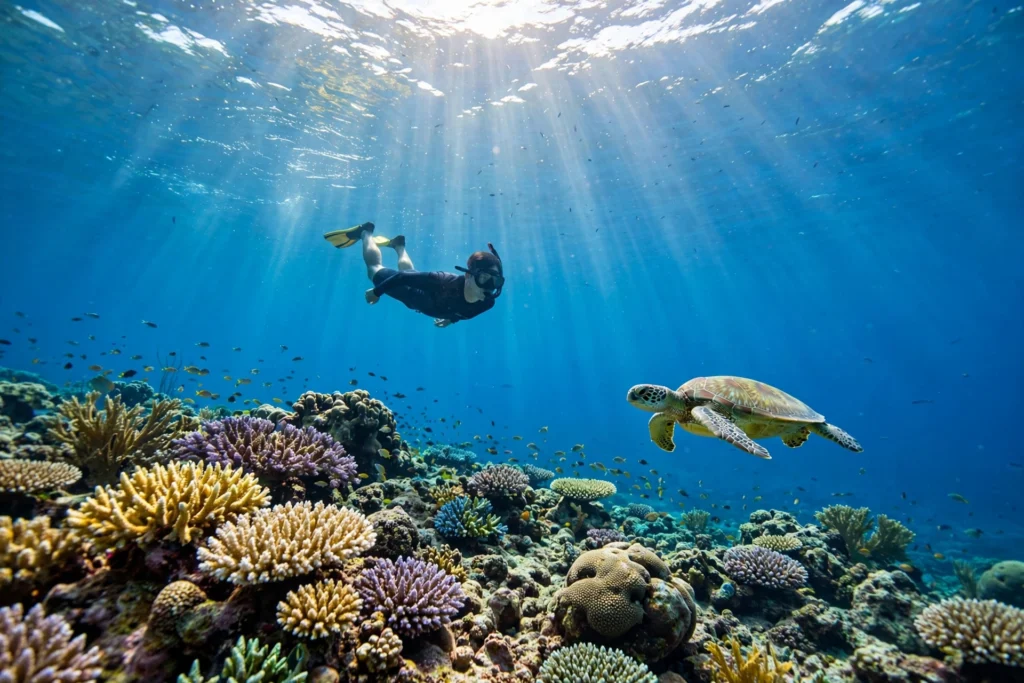
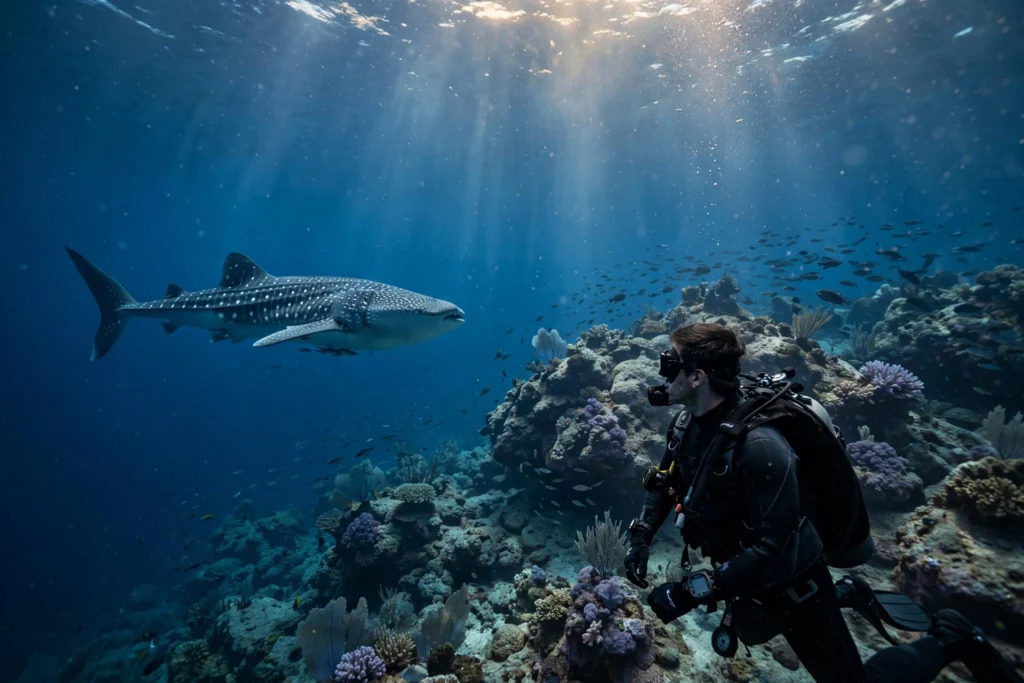
The big names: Richelieu Rock, a submerged pinnacle northeast of the main group, is regularly called one of the best dive sites in the world, famous for whale shark encounters. Mantas cruise the deeper sites. Sea turtles are common enough that snorkelers see them too, gliding over the shallows while you float above.
You don’t need to be a technical diver to enjoy it. Snorkelers get the turtles, the coral gardens and the ridiculous visibility. Certified divers get the pinnacles and the pelagics. Everyone gets the same turquoise water.
What the Similans are NOT (set your expectations)
One last honest note, because disappointment is the other thing travelers complain about. The Similans are a national park, not a resort. There are no beach bars, no shops, no ATMs, and no shade where you haven’t brought it yourself. Lunch is a buffet under a roof on Ko Miang, not a beach club. If your idea of a perfect beach day involves a cocktail menu, you’ll be happier at Patong. If your idea involves water so clear you can count the fish from the surface, granite boulders older than the tourism industry, and a reef that got five months of peace to heal, this is the best day trip Thailand has. Know which traveler you are before you book.
Your 2026-27 Similan checklist
If you take nothing else from this guide, take this list. It’s the difference between a perfect day and an expensive lesson.
- Time it right. Season is 15 Oct to 15 May. Book the trip for November to April for the calmest seas, and put it mid-trip with a buffer day, not on arrival day.
- Base yourself in Khao Lak if the Similans are the priority. Shorter transfers, earlier arrival, calmer morning.
- Buy reef-safe sunscreen before you fly. Check the label for oxybenzone, octinoxate, 4-MBC and butylparaben. The fine for the wrong bottle can hit 100,000 THB.
- Bring your passport details for the compulsory DNP e-ticket, and bring cash in small notes, the e-ticket rollout is phased and cash still rules at the piers.
- Confirm the park fee is included in your tour price so you don’t pay 500 baht twice.
- Vet the itinerary. If it lists Ko Tachai or an overnight stay, the operator either doesn’t know the rules or doesn’t care. Either way, book elsewhere.
- Seasickness-prone? Take the catamaran. The twin-hull ride is steadier than a speedboat, and 90 minutes each way is a long time to feel green.
The Similans reward the prepared traveler. Show up with the right sunscreen, the right ticket, and the right expectations, and you get one of the finest day trips in Southeast Asia: granite boulders, empty-feeling beaches, and water so clear it looks edited. Show up unprepared and you get a fine, a missed boat, or a very long day. The choice, as always, is made before you leave the hotel.
Love planning adventures like this? Follow our Pinterest for daily inspiration and read the full story on thecavee.com. And if big marine adventures are your thing, don’t miss our guide to diving Saudi Arabia’s Red Sea coast, our breakdown of Nepal’s game-changing new trekking permit rules, and Iceland’s 2026 ice cave season guide. For official season dates and fees, see the detailed Similan guide at visit-thailand.org.