Your Blankets Are Taking Over the House. This $67 Wooden Storage Chest Ends the Pile for Good
It starts with one throw on the sofa. Then a second one lands on the armchair. By December there is a fleece on the floor, a knit draped over the banister, and a quilt folded into a sad little lump on the spare chair that nobody sits in anymore because the blankets got there first. You do not have too many blankets. You have nowhere to put them.
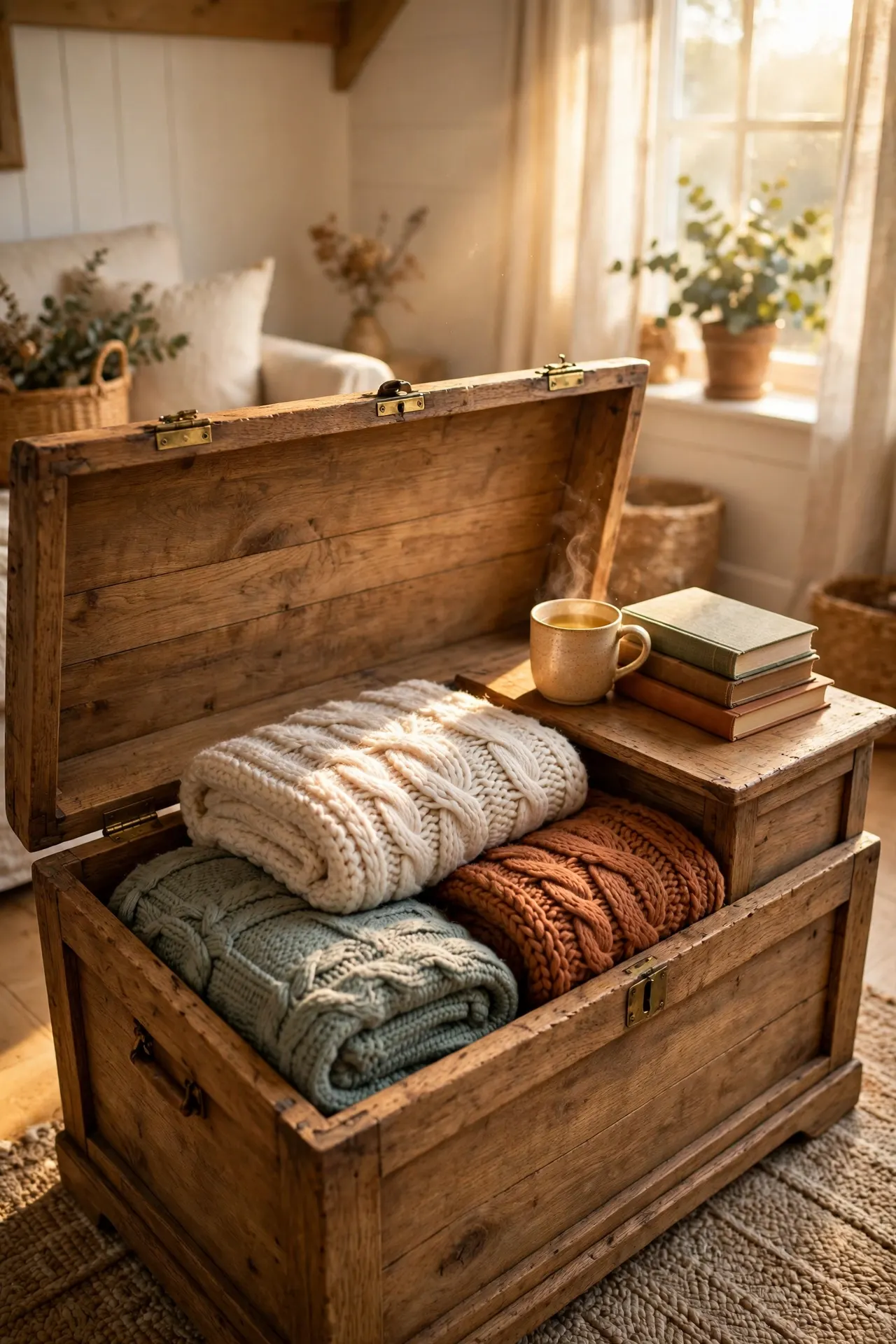
A wooden blanket chest fixed it in one afternoon. Not a plastic bin, not another basket, a proper chest with a lid that stays open while you load it, a top strong enough to sit on, and enough room inside to swallow the whole winter pile in one go.
The blanket pile is a storage problem, not a blanket problem
Here is the thing nobody tells you about throws. One blanket takes up almost no space. Five of them take up a room. Folded blankets are soft, springy, and awkward, and they refuse to stack neatly on an open shelf. Put them in a basket and they bulge over the rim. Drape them over furniture and your living room starts to look like a laundry line that gave up.
A chest solves this because it gives soft things a hard boundary. The lid closes, the pile disappears, and the room looks like a room again. Blankets live where people actually are, in the living room and at the foot of the bed, not in a linen cupboard two rooms away, and a chest puts the storage exactly there.
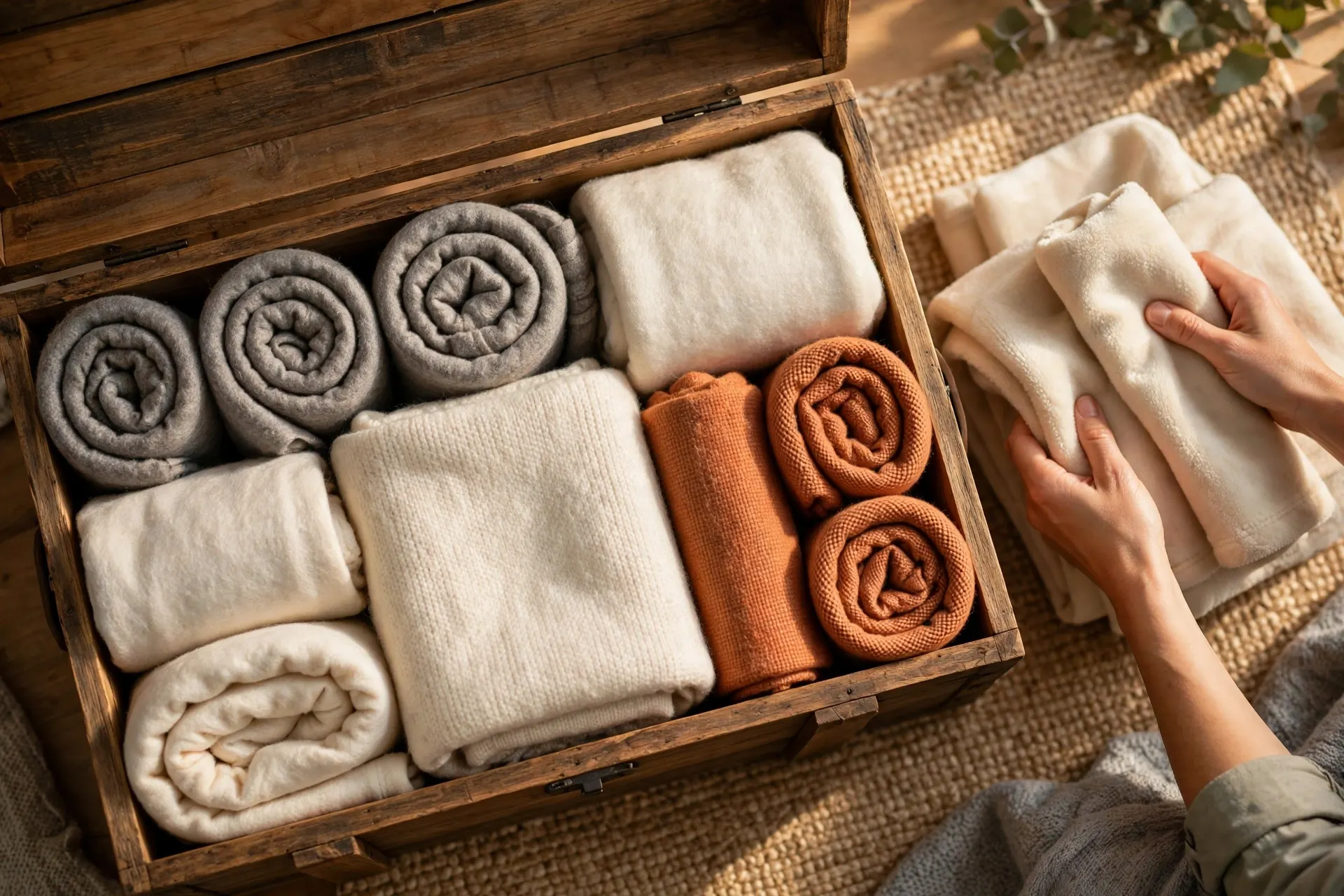
Why a wooden chest beats a basket every time
Baskets look lovely in photos. In real life they have three flaws. They have no lid, so dust settles on the top blanket. They have no structure, so a full basket leans and spills. And they cannot hold weight, so you cannot sit on them or set a tray of tea on top.
A wooden chest fixes all three. The lid keeps dust and pet hair off your clean blankets. The rigid box holds its shape no matter how much you stuff inside. And a decent chest is rated as a seat, which means it earns its floor space twice over. The best ones hold 300 pounds on the lid, which is two adults sitting down to put their shoes on.
What to check before you buy one
Not every chest is worth the floor space. Here is the short checklist I used, and the order that actually matters.
1. The hinges decide everything
This is the detail people skip, and it is the one they regret. Cheap chests have plain hinges, which means the lid either slams shut on your fingers or needs one hand held on it while you load blankets with the other. Look for safety hinges or support hinges that hold the lid open at any angle. Two of them, not one.
2. Measure the wall, then the blankets
A chest around 39 inches wide fits most walls, the foot of a queen bed, and the space under a window without eating the walkway. Go up to 47 inches only if you have a long empty wall and genuinely king sized bedding to store. The depth matters too. About 15 to 16 inches deep is the sweet spot. Deeper than that and you end up digging for the blanket at the bottom.
3. Check the seat rating
If the chest is going in an entryway or at the foot of the bed, people will sit on it. A seat rating of 300 pounds is the standard for a good chest, and the best ones go up to 330. If the listing does not give a number, it probably is not built to be sat on.
4. Know what the wood really is
There is honest particleboard and dishonest particleboard. The good budget chests say so plainly and back it up with a strong seat rating. The ones to avoid hide it behind words like wood finish or wood effect. Solid wood costs more, lasts longer, and can be refinished, but a well built engineered wood chest at the right price is a perfectly good buy. Just know which one you are paying for.
5. Cedar lining is worth paying for
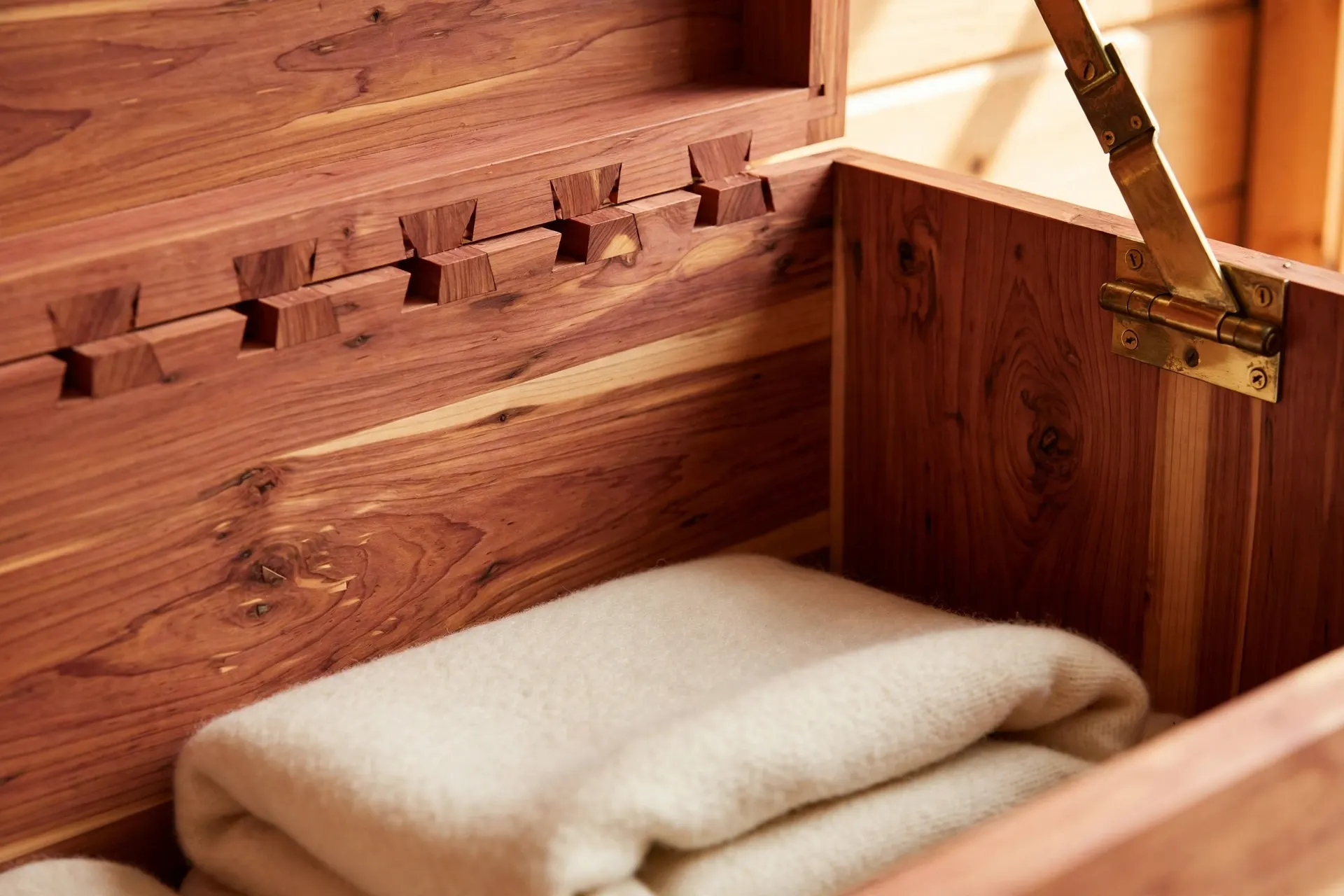
If you store wool blankets, quilts, or anything you only use in winter, cedar lining is the feature that pays for itself. It protects against moths without chemicals, and it keeps the inside smelling fresh through months of storage. Cedar oils repel moths and pull moisture out of the air, so blankets come out smelling like a forest instead of a basement. Our cedar keepsake chest guide covers the same wood in a smaller box, and the same logic applies here at full size.
The best pick for most homes: the VASAGLE 39.4 inch chest, about $67
After reading three independent 2026 roundups that each spent months living with a dozen chests, the same name kept coming out on top. The VASAGLE storage chest is the best overall pick at Lilyfield Furniture, where it scored 9.3 out of 10, and at Scenic Valley Wood Products, where it scored 94 out of 100. That kind of agreement across testers is rare, and it is worth paying attention to.
The numbers explain why. It measures 39.4 inches wide, 15.7 inches deep, and 18.3 inches high, which is the size that fits most rooms. Two support hinges hold the lid open at any angle, so you can load it with both arms full of bedding. The seat is rated for 300 pounds and the inside compartment for 132 pounds of contents, which is plenty for a queen comforter set plus throws.
The honest catch is the material. Under the paint it is particleboard, not solid wood. The testers say so plainly and still recommend it, because the hinges and the ratings are honest and the price is about $67 at the time of writing. It was $64 during Amazon Prime Day, down from $86, so prices do move around. Treat the price as a snapshot, not a promise, and check the listing before you buy.
What you get for that money is a chest that solves the actual problem. The lid stays open while you load it. The seat holds an adult. A folded king quilt fits without being refolded. For a first chest, a guest room blanket box, or a bench at the foot of a bed, this is the one to start with.
If you want real wood, this is the handmade route
The VASAGLE is the sensible buy. But some people want a chest their grandchildren will fight over, and that means solid wood, real joinery, and a price that reflects it.
The most accessible handmade option I found is the Mini Flat Top Blanket Chest from Amish Traditions. It starts at $349 in oak, with custom sizes available, and every chest is built to order by Amish craftsmen in the USA. A cedar bottom with a lock comes as standard, which is exactly the combination you want for storing wool through the summer.
One step up the ladder, Etsy has a vintage cedar chest bench from NanAndPopsAttic, a Star Seller, listed at $525. It measures 49 inches long and 18 inches deep, with a cedar lined interior, a rich dark wood finish, and a cushioned seat on top. The lift up top opens to storage made for blankets, quilts, and sweaters, and the seat is about 19.5 inches high, which is proper sitting height. It is vintage, so there is only one of them, and the cushioned seat has a few spots that would be easy to recover in a fabric to match your home.
At the top end, Amish made blanket chests from Countryside Amish Furniture start at $900 for the Muskogee Blanket Chest and run to $1,250 for the Josie Farmhouse Cedar Chest. These are heirloom pieces, custom wood and finish, built to order, and priced like furniture that will outlive its owner. A survey of Etsy first page listings in November 2026 put handmade wooden blanket chests between $225 and $750, with a median around $390, so the Amish shops sit above the typical handmade price and the VASAGLE sits far below it.
Where to put it
A chest is only useful if it lives where the blankets are used. Our handmade wooden blanket ladder handles the one or two throws you reach for every day, and the chest takes care of the rest of the pile. These are the four spots that work best, and each one changes what size you should buy.
At the foot of the bed. The classic spot. A 39 inch chest fits a queen bed without blocking the walkway, and it holds the extra quilt and the spare pillows that otherwise end up on the floor every night. Measure the bed width first. A chest wider than the bed looks wrong and trips people in the dark.
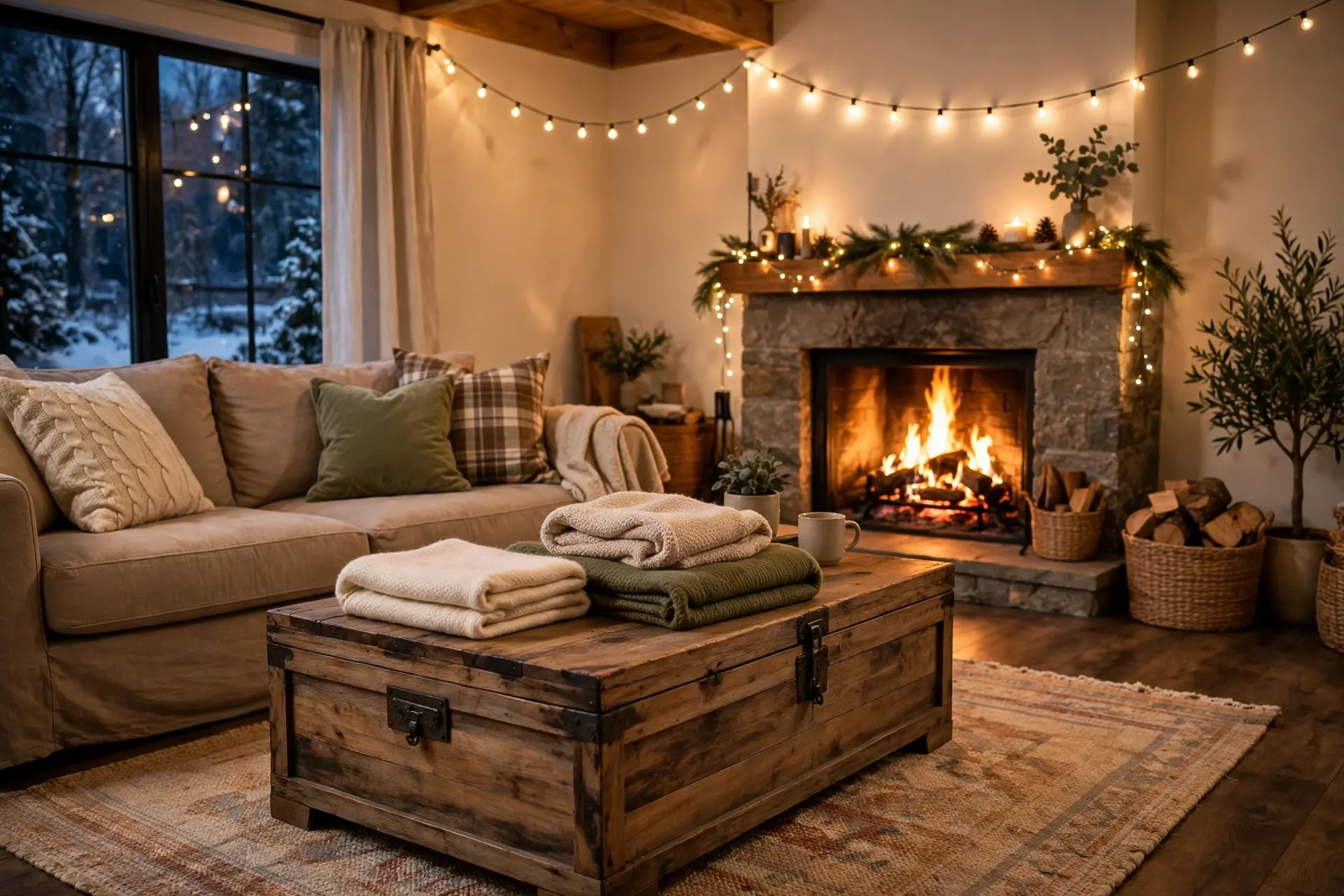
In the living room as a coffee table. A low chest in front of the sofa holds the throws within arm’s reach and gives you a surface for mugs and books. This is where the seat rating stops mattering and the finish starts mattering, because you look at it all day.
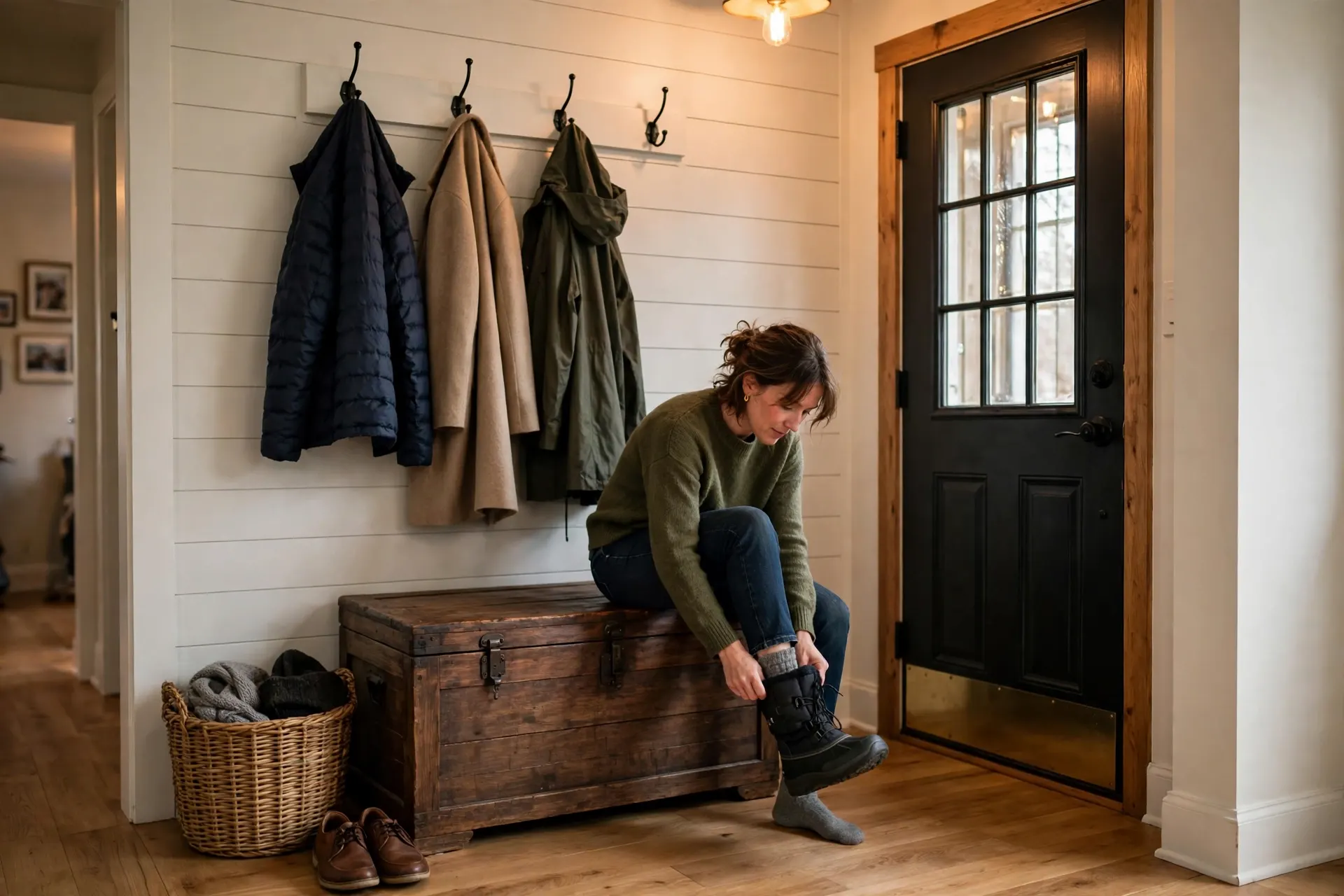
In the entryway as a bench. This is the hardest working spot in the house. The chest holds winter hats, scarves, and the dog’s towels, and the lid is the seat you use to pull boots on. Here the 300 pound seat rating is not optional, it is the whole point.
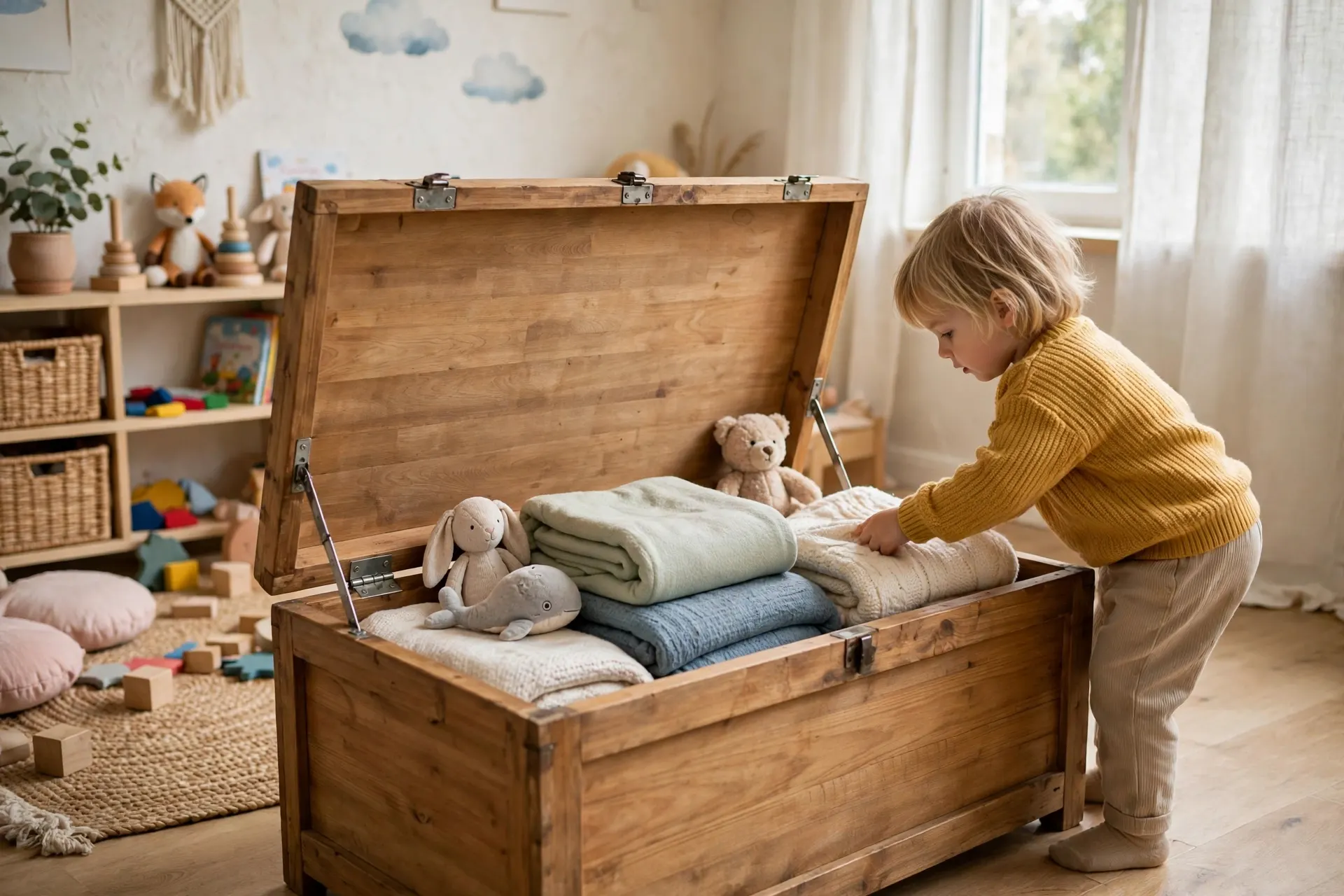
In the playroom or kids room. A chest with safety hinges is the only storage I would trust with small children, because the lid cannot slam on little fingers. Toys go in during the day, blankets go in at night, and the room resets in about ninety seconds.
How to fit twice as many blankets inside
Most people underfill their chest by half because they fold blankets the way they fold laundry, flat and loose. Blankets are not laundry. They are soft, compressible, and happy to be rolled.
Roll heavy quilts instead of folding them. A rolled quilt takes up about a third less space and does not develop crease lines. Stack the rolls upright like books on a shelf and you can see every blanket at a glance instead of digging through a pile. Put the ones you use daily on top and the heavy winter quilts at the bottom.
Vacuum bags work for the out of season pile, but never store a damp blanket in a sealed bag. Dry first, always, or the smell will teach you that lesson once and you will never forget it.
Finally, tuck a cedar sachet or a lavender bag between the layers. It costs almost nothing, it keeps moths away, and opening the chest in November to a smell like a forest instead of a cupboard is a small joy that never gets old.
Kids, pets and the lid
If there are small children in the house, the hinge question stops being a nice to have and becomes the whole decision. The VASAGLE uses two hydraulic dampers that stop the lid from slamming, which means a toddler can open and close it without risking pinched fingers. The HOOBRO budget pick and the DINZI 47 inch chest both use safety hinges that hold the lid at any angle for the same reason.
Test the lid before you commit if you possibly can. Open it halfway and let go. A good hinge holds it exactly where you left it. A bad one drops it. If you are buying online, search the reviews for the word hinge. People complain about bad hinges more than any other single feature, and they are right to. And if your dog chews corners, spend the extra money on real wood. Solid wood survives that. Particleboard does not.
What it costs, honestly
Here is the range as it stands in late November 2026, based on live listings and the 2026 roundups.
About $65 to $80: the budget tier. The VASAGLE 39.4 inch chest at about $67 is the best of this group, and the VASAGLE boho rattan look bench at $79.99 is the same idea with a woven finish. The HOOBRO storage bench is the cheapest of the tested picks and still fits two king comforters. Expect engineered wood, flat pack assembly, and honest ratings.
About $225 to $750: the handmade tier. This is the Etsy range for handmade wooden blanket chests, median around $390. The Amish Traditions mini flat top at $349 sits at the bottom of this band, and the vintage cedar chest bench at $525 sits in the middle of it.
$900 and up: the heirloom tier. Amish made chests built to order, custom wood and finish, cedar lined, priced like furniture that gets handed down. Buy this tier once, cry once, and never buy another chest.
The right tier depends on the job. A guest room that needs a blanket box twice a year does not need a $900 chest. A living room centerpiece that you will sit on every day probably does not deserve a $67 one. Match the chest to the room and you will not regret the money either way.
Who should skip it
A chest is not for everyone. If your home is a small flat with no spare wall and no foot of bed to speak of, a chest will crowd you out and you will resent it within a week. Under bed storage boxes or vacuum bags are the better answer there.
If you move house every year, skip the heavy solid wood chest too. A 47 inch chest weighs over 40 pounds empty, and nobody enjoys carrying one down three flights of stairs. Buy the light flat pack one, or wait until you settle.
And if your blanket pile is really a laundry problem, a chest will only hide it. Wash the blankets, fold them once, and then decide if you still need the storage.
The bottom line
The pile on your sofa is not a character flaw. It is a storage gap, and a wooden blanket chest is the simplest fix I have found for it. One box, one lid, and the whole winter pile disappears behind a piece of furniture that also gives you somewhere to sit.
Start with the VASAGLE at about $67 if you want the problem solved this week. Spend $349 on the handmade Amish chest if you want solid wood and a cedar bottom. Go vintage on Etsy at $525 if you want a cedar lined bench with a story already in the grain. Any of the three ends the pile. The only wrong choice is buying a fourth basket and hoping this time is different.
For more on the roundups behind these picks, the Lilyfield 2026 blanket chest guide tested twelve chests over eight months, and the vintage cedar bench is listed on Etsy. If your home already leans handmade, our handmade wood and epoxy resin coasters are the small wooden upgrade that started this whole series.
Blankets taking over your house too? Pin this guide to your home organization or farmhouse decor board on Pinterest and send it to the person whose side of the sofa looks like yours. Then come back to thecavee.com for more handmade wooden finds, cave adventures, and travel guides that make your home and your holidays a little more interesting.