Christmas Carols 76 Metres Underground: Inside Dudley Canal Caverns and the Singing Cavern
Most Christmas plans look the same by now. Another market, another mulled wine, another crowd shuffling past the same wooden huts. Dudley has a different idea. On 15 and 16 December 2026, a choir is going to stand in a limestone cavern 76 metres below the streets of the Black Country and sing carols while you listen from a narrowboat floating on black water. It is called Carols in the Caverns, and it might be the strangest and loveliest Christmas night out in England this year.
I have been writing about caves for years now, and I thought I had seen every way a cave can surprise you. A boat ride through a flooded tunnel, with a choir waiting at the end of it, was not on my list. Dudley Canal Caverns is not really a natural cave at all, which is exactly what makes it interesting. It is a man-made underworld, dug out by hand over two centuries, and it still smells faintly of the Industrial Revolution.
What actually happens at Carols in the Caverns

The event runs on just two nights, Monday 15 and Tuesday 16 December 2026, with boats leaving at 6pm and 7pm. Tickets are 18 pounds a person, and there are only two departures a night, so this is not the kind of thing you can decide to do on the day. Book ahead or miss it.
Your boat glides through the historic Dudley Tunnel and into the caverns, with twinkling lights along the way and your skipper telling stories as you go. Then you arrive at the Singing Cavern, where Vintage Voices, the Dudley Canal and Caverns choir, performs a 40-minute set of Christmas classics. You can join in with the carols. The whole experience lasts about an hour.
Children under one sit on a parent or guardian’s lap. Older children are welcome, and honestly, this is the kind of thing children remember for years. A normal concert hall fades from memory. A choir singing in a cave does not.
The setting does half the work. The cavern is huge, the rock swallows sound and throws it back softened, and candlelight does things to limestone that no stage lighting can copy. If you have ever listened to music in a church and thought the building itself was singing along, multiply that feeling by ten.
The Singing Cavern, and why it sings
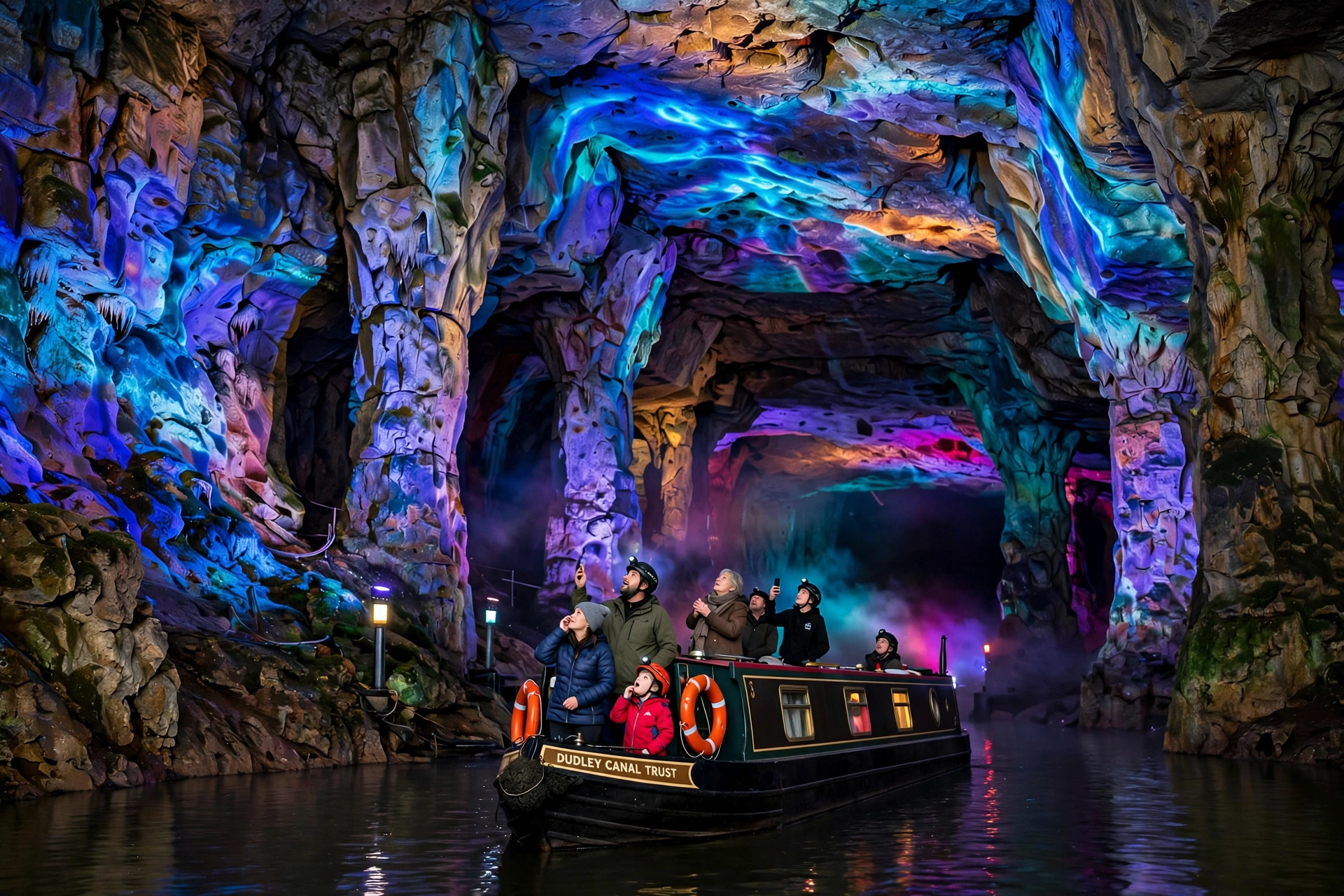
The Singing Cavern is one of the old limestone mines under Castle Hill in Dudley. It gets its name from the acoustics. The chamber is big enough that sound hangs in the air, and the curved rock walls bounce it around in a way that makes a small choir sound far larger than it is.
It opened to the public in 1985, but its history goes much further back. The mines here fed the furnaces of the Industrial Revolution, and the men who worked them spent their days by candlelight in cold draughts, hacking limestone out of the hill. The caverns run on three levels, separated by floors of rock only about three metres thick. Stand in the Singing Cavern and there are two more worlds of empty chambers above and below you.
The Victorians knew this place was special. In 1839, the geologist Sir Roderick Murchison gave a lecture on geology to 15,000 people in a neighbouring chamber called the Dark Cavern. Think about that for a second. Fifteen thousand people, underground, in 1839, listening to a lecture about rocks, with gas lamps flaring along a balustrade and fireworks going off at the end. The Dark Cavern is closed to visitors now because it is not safe, but the Singing Cavern carries on the tradition in a gentler way.
A tunnel dug by hand, and the men who walked boats through it
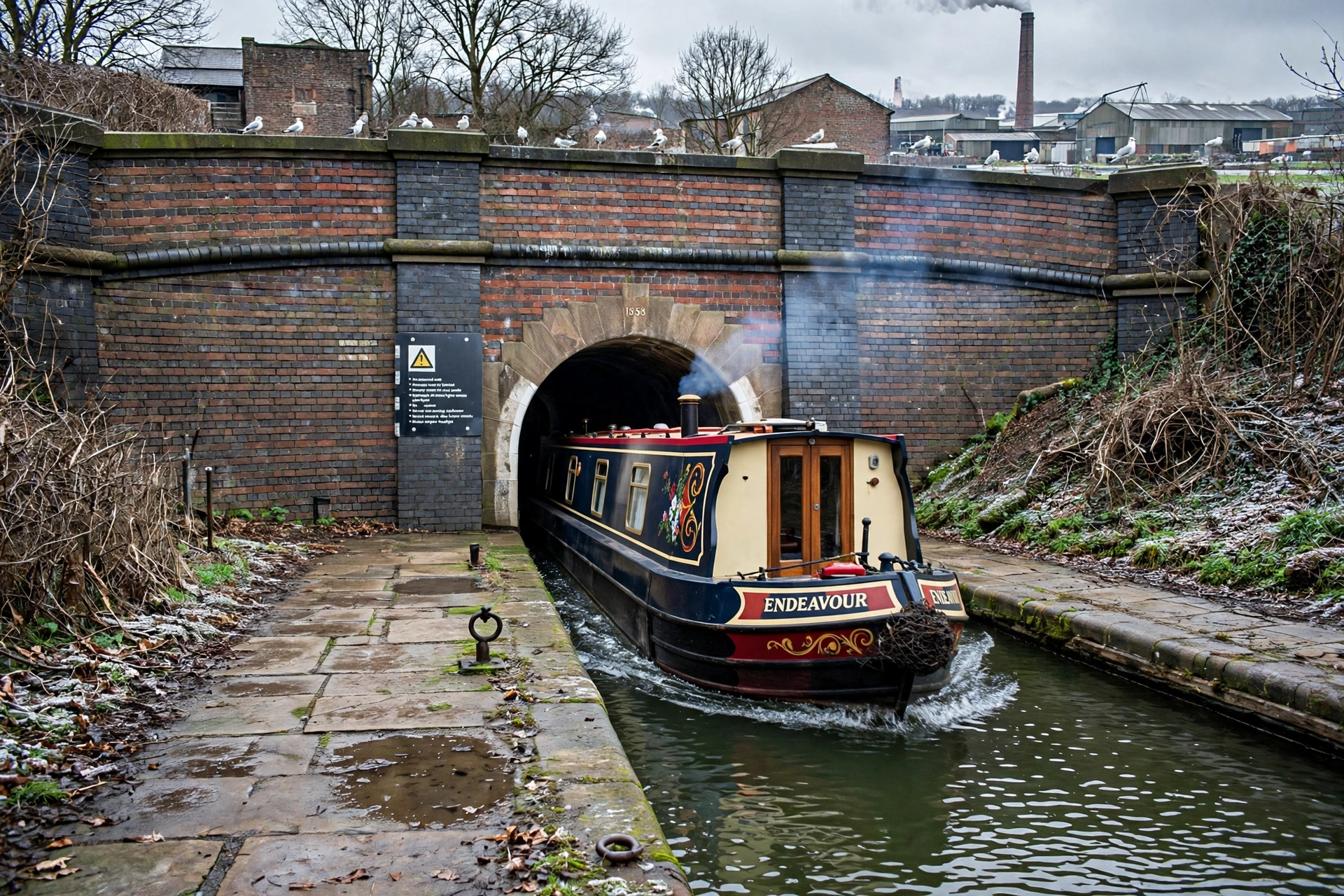
To reach the caverns you travel through the Dudley Tunnel, and the tunnel has a story worth knowing before you go. An Act of Parliament authorised it on 4 July 1785. Work started under John Pinkerton and Adam Lees, with Thomas Dadford assisting, and the tunnel opened for business on 15 October 1792.
It is 3,172 yards long, about 2,900 metres, and it is still the second longest canal tunnel on the British canal network. The headroom was only 5 feet 9 inches and the width at the waterline just 8 feet 5 inches. Boats could not pass each other inside, so traffic ran to a timetable, in convoys, like trains.
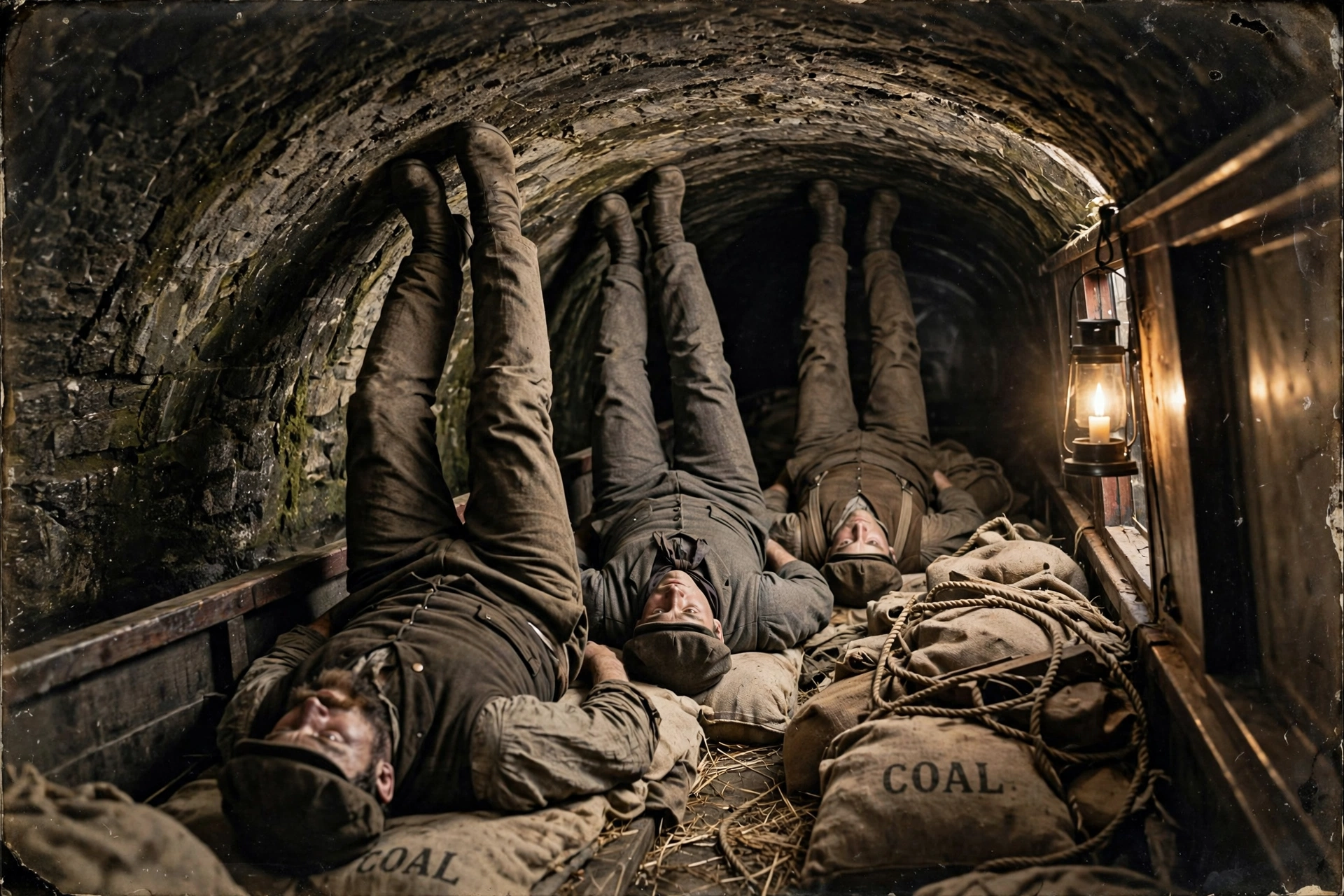
Here is the part that always gets me. The tunnel had no towpath, so the boats were moved by legging. A boatman lay on his back on the roof of the boat and walked his feet along the tunnel ceiling to push the boat forward. In the dark. For nearly two miles. The limestone boats were about 30 feet long and carried around 10 tons of stone, and men moved them with their legs and their backs.
By 1853, a record 41,000 boats passed through in a single year. The tunnel was that busy. Then the trade faded, the tunnel closed in 1962, and British Rail wanted to seal the entrance for good. A group of volunteers refused to let it happen. They formed a preservation society in 1963, became the Dudley Canal Trust in 1970, and restored the waterway until it reopened at Easter 1973, when almost 14,000 visitors turned up. An electrically powered passenger boat arrived in 1975, and the charity that runs it today, the Dudley Canal and Tunnel Trust, still takes visitors through on skipper-led trips with light and sound shows.
When you sit in that boat now, you are floating through a rescue story as much as a tunnel.
The rock under your feet is 428 million years old
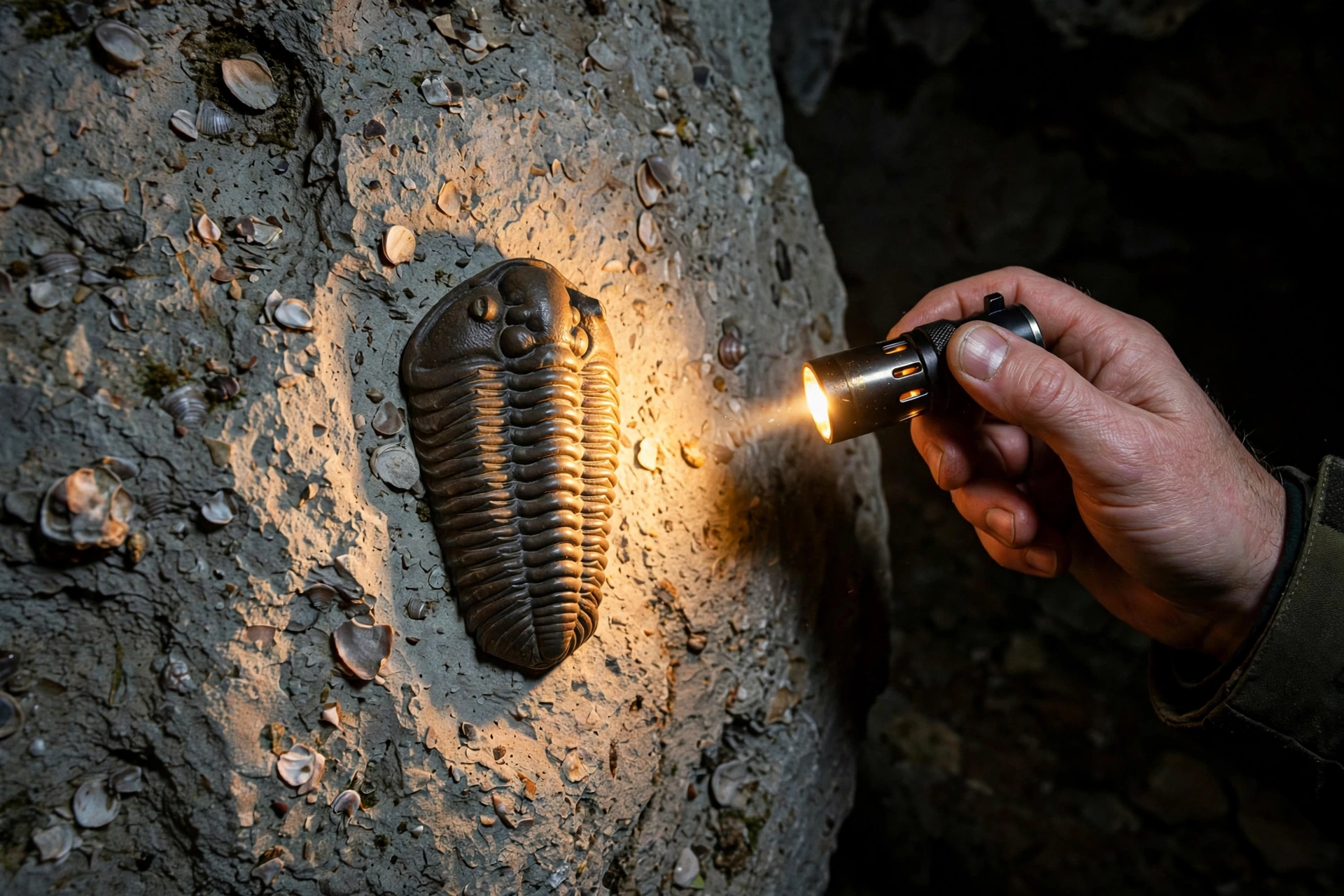
Here is the detail that turns a pleasant boat trip into something genuinely mind-bending. The limestone around you formed about 428 million years ago, in a warm tropical sea south of the equator. The rock has spent the time since drifting across the planet to end up under Dudley.
Look closely at the walls and you can see fossils in them. The most famous is the Dudley Bug, a trilobite called Calymene blumenbachii, found by quarrymen hacking limestone out of Wren’s Nest. It is so tied to this place that it sits on Dudley’s municipal coat of arms, one of only two fossils in British heraldry. The other is Whitby’s ammonite.
The limestone was not just pretty. It was the fuel of the Industrial Revolution here. It went into the furnaces that Abraham Darby, born at Wren’s Nest in 1678, made famous when he perfected the blast furnace using coke. The mines under Castle Hill fed that whole machine. When the choir sings in December, they will be singing in the hollowed-out heart of the place where modern industry began.
The regular boat trip, if you miss the carols
If the two carol nights sell out, and they probably will, the normal trip is still worth the journey. The Underground Experience is a 45-minute skipper-led boat trip through the 250-year-old tunnels, caverns and basins, with light and sound shows along the way. Adults pay 14 pounds.
There is also a 90-minute Behind the Scenes Tour on Thursdays, Saturdays and Sundays at 10am, which includes a walk around the Singing Cavern itself. If you have toddlers, the 20-minute Tunnel Tots trips run on Wednesdays and Fridays at 10am for 2 pounds 50.
The visitor building is called The Portal, and it was opened by the Princess Royal in 2016. It has a cafe and a gift shop, which matters more than it sounds on a cold December evening when you come back up into the daylight and want to sit down with something hot.
Planning your visit without ruining it
First, book online in advance. The boats are small, the carol nights have only four departures in total across the two days, and this event will sell out. The address is 501 Birmingham New Road, Dudley, West Midlands DY1 4SB, right by the Black Country Living Museum, so you can easily pair the two in one day.
Second, bring a warm jacket. The caverns stay cool all year round, whatever the weather is doing outside, and you will be sitting still on a boat for an hour. Layers are your friend. Sensible shoes help too, because the surfaces underground are uneven and there are low ceilings in places.
Third, know the practical bits. One of the boats has a platform lift and can take one electric wheelchair or up to two manual wheelchairs, but you must book in advance and wheelchair users need to be accompanied by a carer. The trip includes darkness, flashing lights and loud audio, so if that bothers you, ear defenders can be borrowed and quiet boat sessions run at selected events.
Fourth, get there early. The boat leaves on time, and the tunnel does not wait. Arriving with ten minutes to spare means you can look at the Portal, get your bearings and settle in, instead of sprinting down the towpath.
Finally, put your phone away for at least part of it. Take your photos, of course, the light show is made for them, but the best part of this trip is the stretch in the middle where the lights drop, the water goes quiet, and you realise you are floating through a hole in a 428-million-year-old reef while someone sings. No photo catches that.
Why this beats another Christmas market
Let us be honest about the problem. Christmas has become a loop. The same markets, the same stalls, the same mulled wine, and by the second weekend in December everyone is a little bit tired of it. Families want something the children will actually remember. Couples want a date night that is not just another restaurant. And everyone wants one evening in December that feels like Christmas rather than Christmas shopping.
Dudley solves that problem in a way a market never can. It is indoors, so the weather does not matter. It lasts an hour, so small children do not get bored and adults do not get cold. It is genuinely different from anything else on the Christmas calendar, and it costs 18 pounds, which is less than most theatre tickets and a lot less than a day at a theme park.
It also works as a gift. If you are stuck for what to buy someone who has everything, a pair of tickets to hear carols sung in a cave is a better present than another scented candle. Experiences stick. Objects gather dust.
If you like this, you will like these too
Dudley is not the only cave that sings. Fingal’s Cave on the Scottish island of Staffa is a sea cave made of basalt columns, and its acoustics inspired Mendelssohn to write the Hebrides Overture after he visited in 1829. Read our guide to Fingal’s Cave, Scotland’s singing cave, and you will see why musicians keep coming back to caves.
If it is the underground boat ride that appeals to you, the caves of the French Jura offer a different kind of subterranean journey, and our guide to Iceland’s ice caves covers what happens when the cave itself is made of frozen blue light. And if you want the biggest cave of all, nothing beats Son Doong in Vietnam, the largest cave on Earth, with its own weather system inside.
But start with Dudley. It is closer than you think, cheaper than you expect, and on two nights in December it will be the most Christmassy room in England, even though it is 76 metres underground and has no roof at all.
Planning a Christmas trip underground? Pin this guide to your Christmas or UK travel board on Pinterest and share it with the person you want to take with you. Then head over to thecavee.com for more caves, underground adventures and places that make you feel small in the best possible way. And if you go to the carols, tell us what it was like. We want to know if the Singing Cavern lived up to its name.