What the Lost Land Bridge Project Actually Found
Let’s start with the facts, because the headlines have been doing a lot of heavy lifting. The project is called the Lost Land Bridge Project, coordinated by Dr George Nash at Liverpool University. Its big idea was bold from the start: during the last Ice Age, when sea levels were dramatically lower, a land connection may have existed between southwest Wales and southeast Ireland, and the first Irish settlers could have walked it.
To test that idea, the team did something no one had tried before in Irish archaeology. They built a computer model, effectively a predictive AI, trained on the known characteristics of decorated cave sites in South Wales: the geology, the aspect, the elevation, the distance from ancient shorelines, the kind of rock that takes and keeps engravings. Then they pointed it at southwest Ireland and asked: where would caves like the Welsh ones be?
The model flagged 28 candidate caves. The team went out and looked. In eight of them, they found prehistoric markings. That’s a hit rate that would make any prospector jealous, and it suggests the model wasn’t just lucky. It had learned something real about where Ice Age artists chose to work.
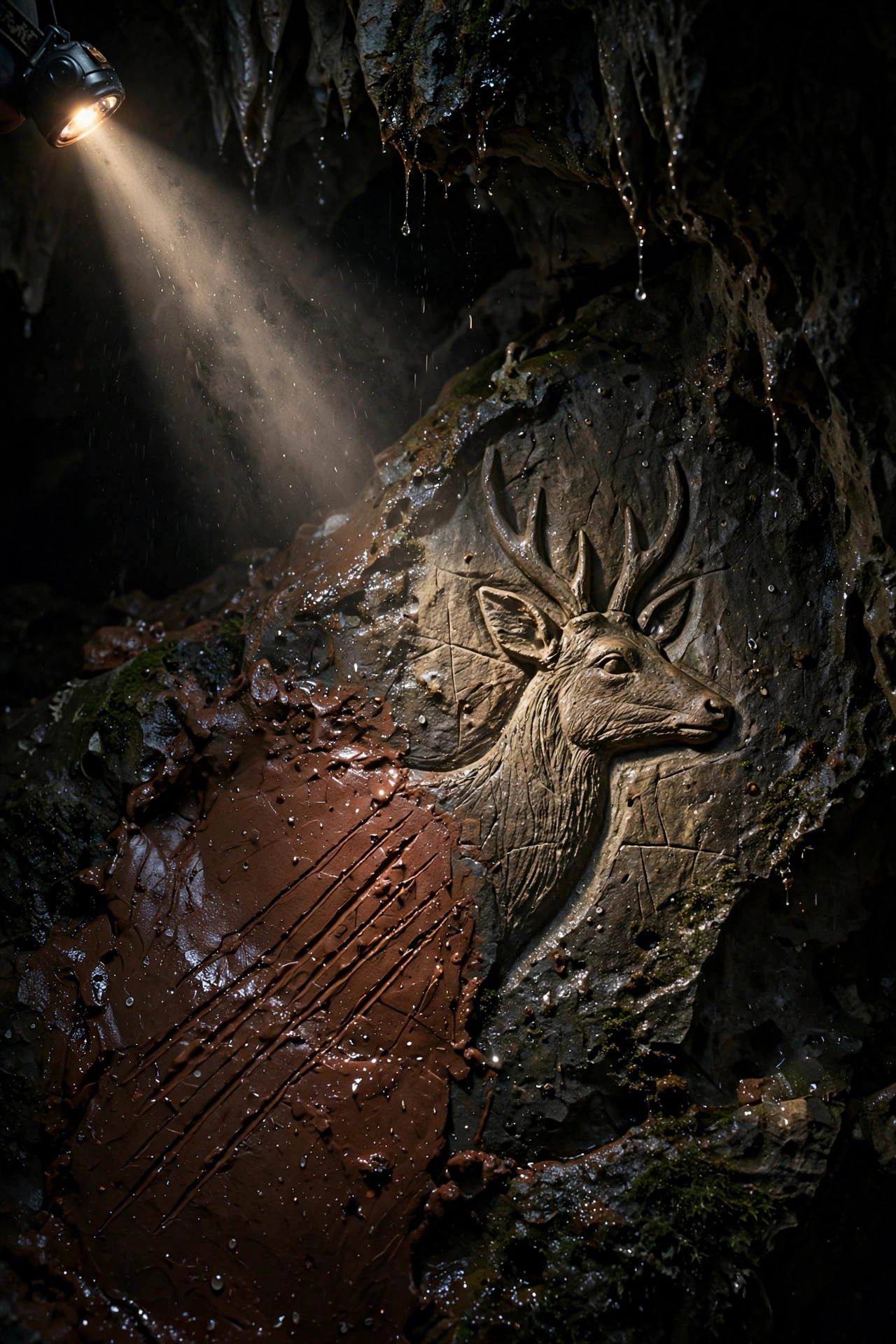
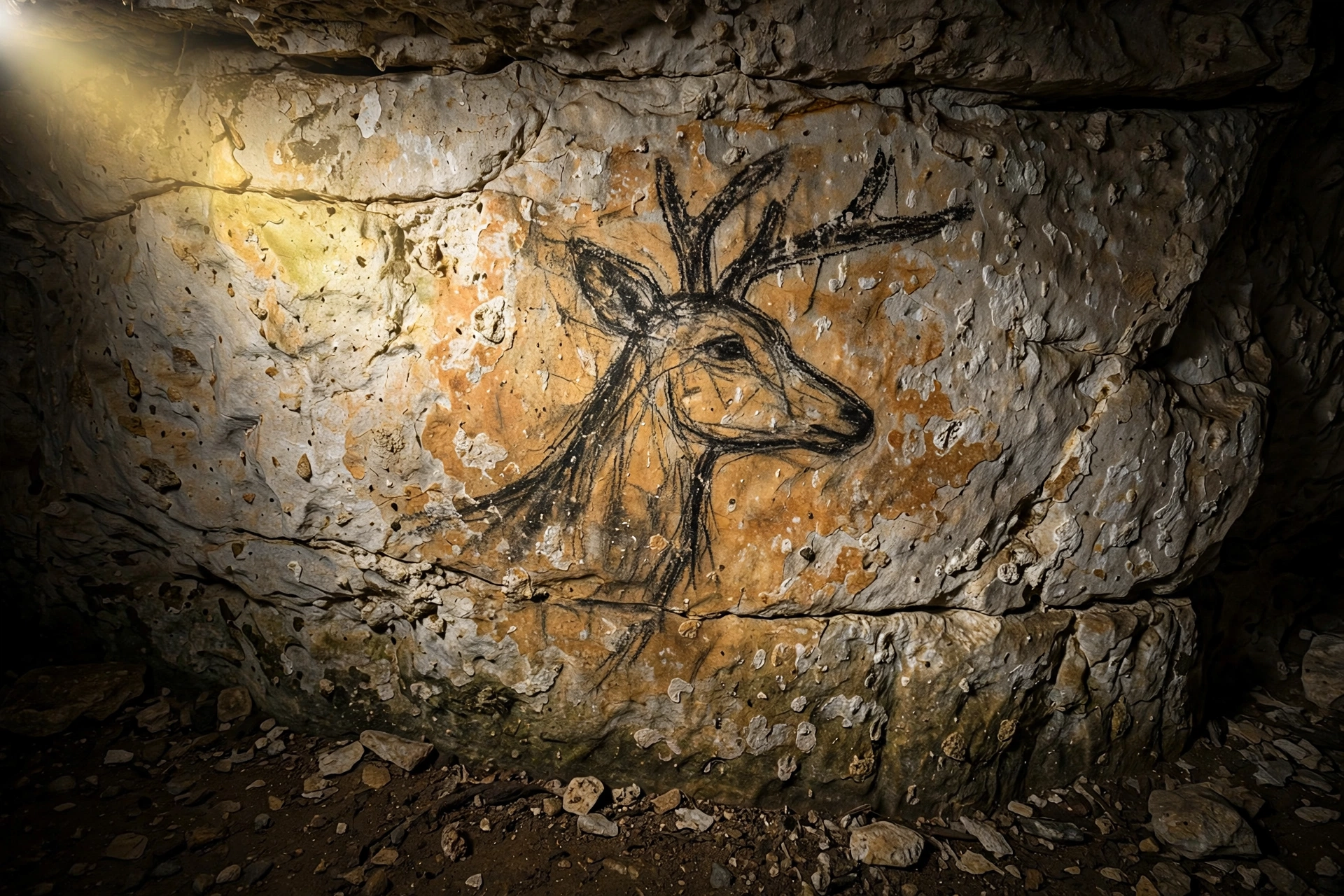
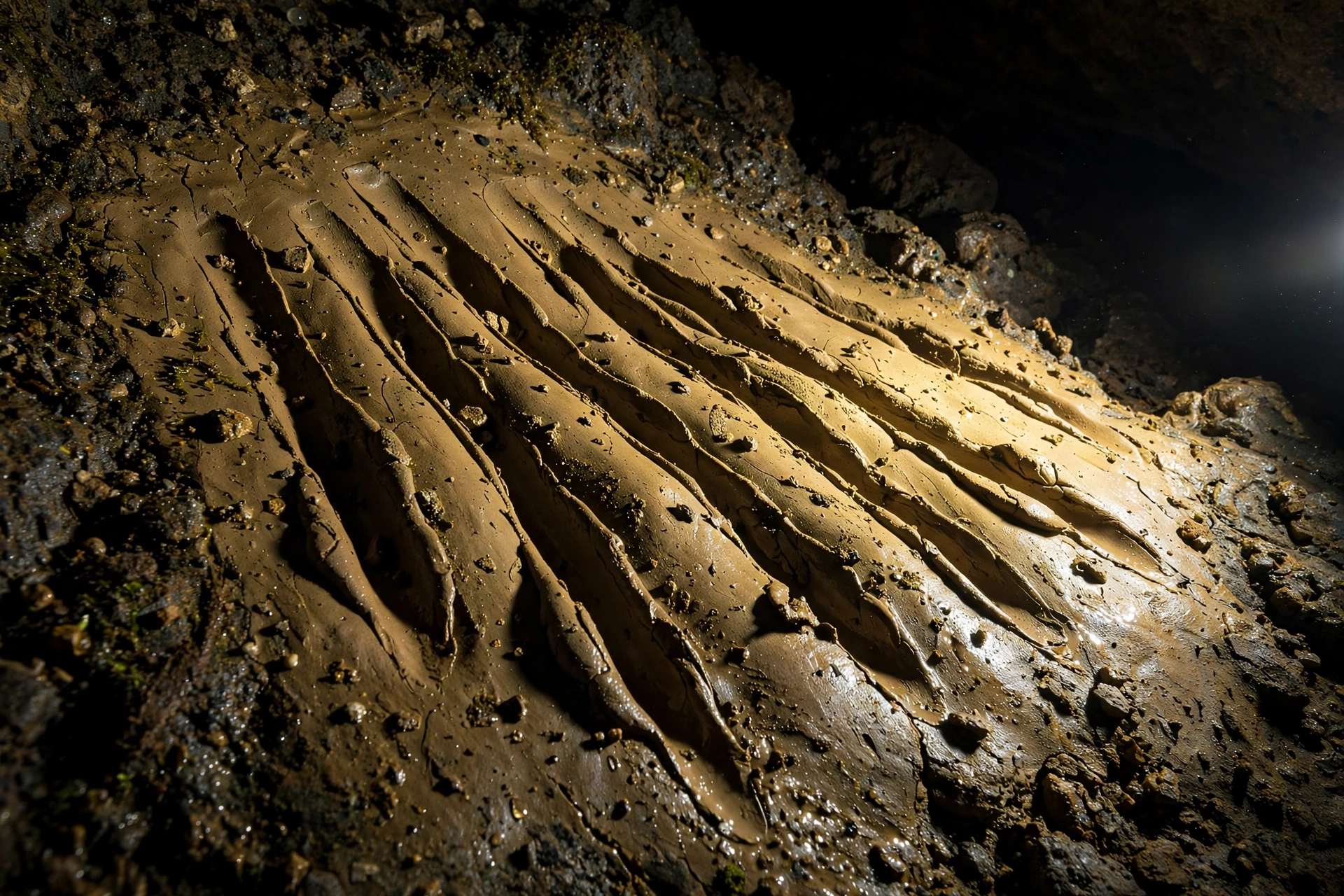
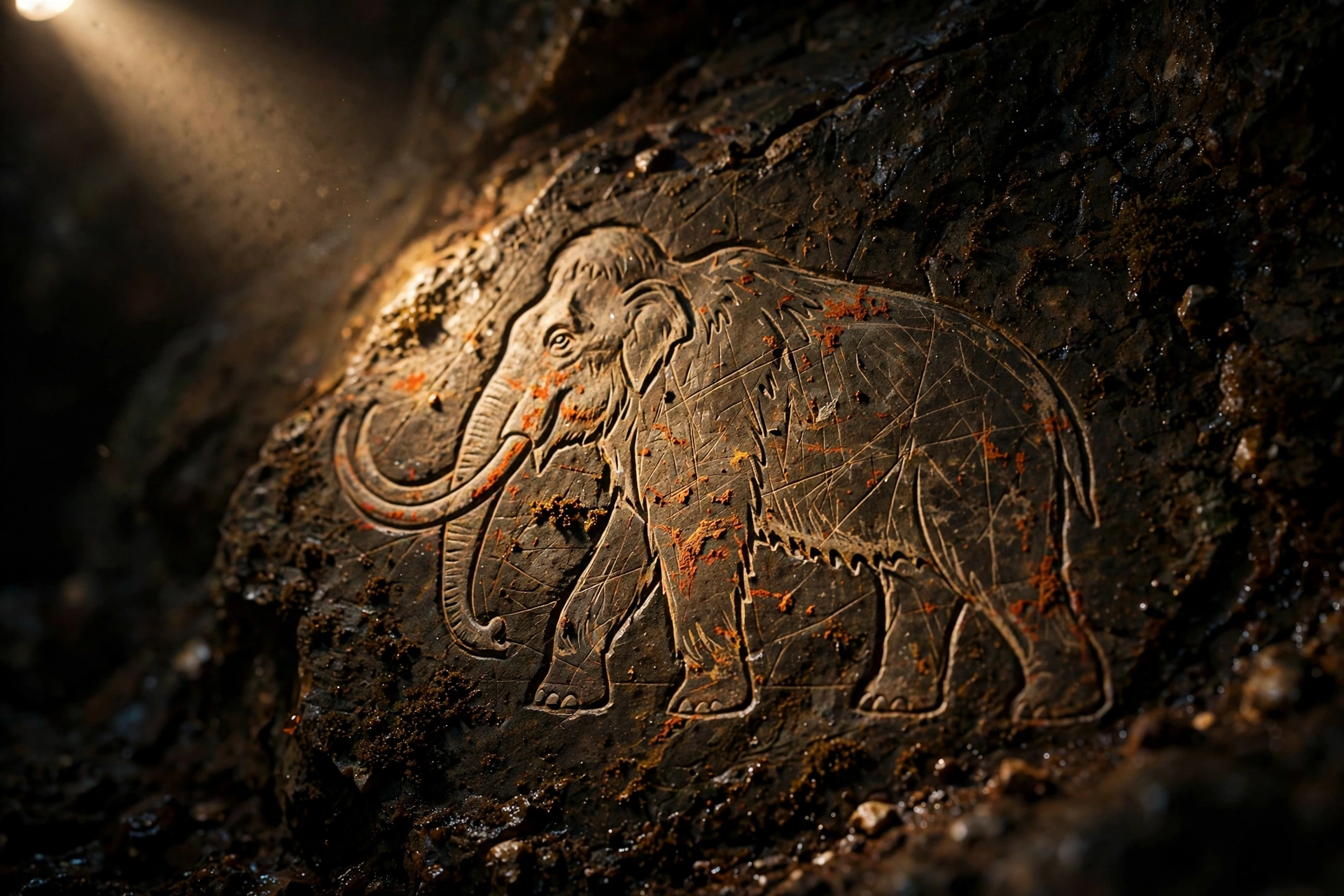
What they found inside those eight caves reads like a greatest-hits album of Upper Palaeolithic art. There are engravings scratched into the rock. There are paintings in ochre and charcoal. There are “finger flutings,” those eerie parallel grooves made by dragging fingertips through soft, wet clay on cave walls, a kind of art that is unmistakably and intimately human. Among the recognizable images: a deer head, and a depiction of a mammoth. Mammoths in Ireland. Let that sink in.
For as long as archaeology textbooks have been printed, Ireland was the odd one out. France had Lascaux. Spain had Altamira. Britain had its decorated caves in Wales and Somerset. And Ireland? Ireland had almost nothing. The official story was simple: nobody was painting on Irish cave walls 15,000 years ago, because as far as anyone knew, nobody was even in Ireland that early. That story just broke. On September 7, 2026, the team announced these findings, and if their reading of the evidence holds, the first humans in Ireland arrived roughly 5,000 years earlier than previously believed.
Finger Flutings, Ochre, and a Mammoth: Reading 15,000-Year-Old Art
You might wonder how anyone looks at some scratches on a cave wall and says “15,000 years old.” It’s a fair question, and the honest answer has two parts. The first is style. Upper Palaeolithic cave art across Europe follows recognizable conventions: the way animals are outlined, the use of the rock’s natural shape, the layering of ochre washes under charcoal lines. The Irish finds look like they belong to that tradition, and the team believes they date to around 15,000 years ago based on stylistic and contextual evidence.
The second part is the caveat, and it’s important. As far as the published reporting goes, that age is the team’s informed belief, not yet a lab-verified date. Radiocarbon dating of charcoal pigments or uranium-series dating of calcite layers over the art would turn belief into proof, and that work is presumably coming. Good science is patient. But even as a provisional reading, the claim is explosive, because it doesn’t just add a few paintings to the map. It potentially moves the arrival of humans in Ireland back by five millennia.
The finger flutings deserve a moment of their own. These are among the most moving things in all of archaeology. Somebody, 15,000 years ago, pressed their fingers into wet clay on a cave wall and dragged them down, making soft parallel lines. You can practically feel the gesture. Archaeologists have even been able to tell, in other caves, whether the flutings were made by adults or children, by men or women, from the width of the fingers. The Irish flutings haven’t been analyzed to that level yet, but the mere fact that they exist in Ireland at all is a small miracle of preservation.
The Lost Land Bridge: Walking From Wales to Ireland
Here’s where the story gets properly cinematic. The project isn’t just about cave art. It’s about how people got to Ireland in the first place, and the answer may involve a country that no longer exists.
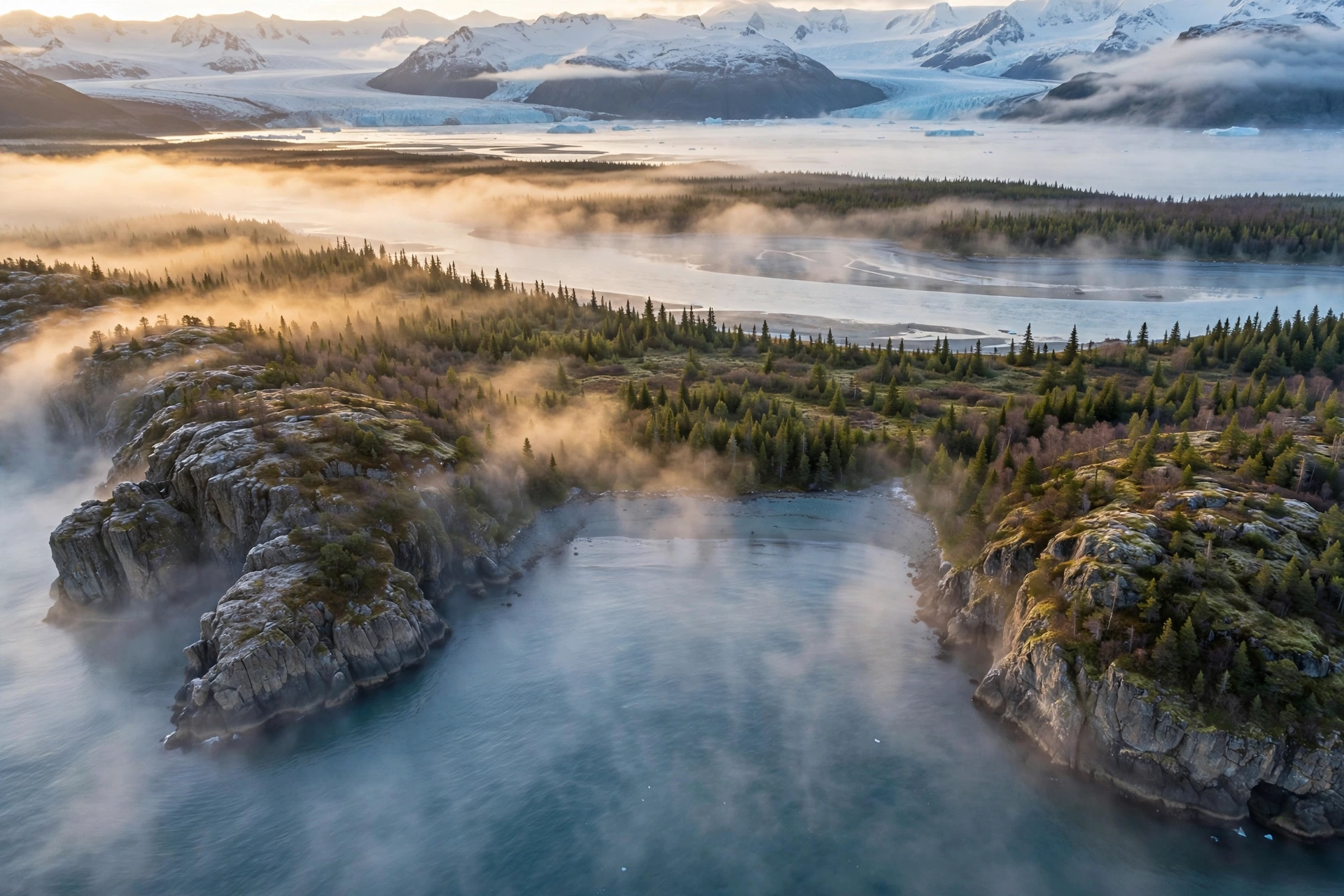
During the last Ice Age, sea levels were so much lower that the geography of northwest Europe looked nothing like today’s maps. The team’s reconstruction proposes a forested plateau stretching roughly 46 miles (76 km) from Pembrokeshire in southwest Wales to Rosslare in southeast Ireland. Coast to coast, dry land. Not a narrow causeway you sprint across, but a broad, wooded plain where herds of deer (and yes, mammoths) could roam, and where human hunters could follow them, camp by camp, generation by generation, until one day the sea was behind them and a new island lay ahead.
This isn’t as wild as it sounds. Doggerland, the drowned plain that once connected Britain to continental Europe, is now mainstream archaeology. The idea of a smaller Irish Sea land bridge fits the same pattern. What makes it thrilling is the specificity: the model didn’t just say “there might have been a bridge.” It said “if people crossed here, they’d have used caves like the ones in South Wales,” and then it found the caves, and the caves had art.
Why Everyone Thought Ireland Had No Cave Art
The mystery isn’t just what was found. It’s why nobody found it sooner. Ireland has been crawled over by antiquarians, archaeologists, cavers, and curious farmers for centuries. How do you miss 15,000-year-old art in eight caves?
Part of the answer is that nobody was looking in the right places, because nobody expected to find anything. Irish prehistory’s timeline simply didn’t have room for Upper Palaeolithic cave painters. The oldest generally accepted evidence of humans in Ireland was much later, in the Mesolithic, around 10,000 to 12,000 years ago. If you believe no one was there 15,000 years ago, you don’t date ambiguous markings to 15,000 years ago. You file them under “probably natural” or “probably recent” and move on. Expectation shapes discovery more than we’d like to admit.
The other part of the answer is the caves themselves. Ireland’s limestone country is riddled with caves, but the decorated ones may be small, remote, or just unglamorous from the outside. A computer model doesn’t have expectations. It just has variables. That’s the quiet revolution here: AI in archaeology isn’t about robots digging trenches. It’s about asking “where would we have missed things?” and getting an answer that’s better than a hunch.
A Quick Reality Check Before We Get Carried Away
I want to be straight with you, because this story is exciting enough without overselling it. Here’s what we know, what we believe, and what we don’t know yet.
What we know: a credible university-led team, reported by the BBC, found prehistoric-style markings in eight southwest Irish caves flagged by a predictive model. The markings include engravings, ochre and charcoal paintings, finger flutings, a deer head, and a mammoth depiction. The exact cave locations are being withheld, which is standard practice to protect fragile sites from souvenir hunters and Instagram crowds.
What the team believes: the art is roughly 15,000 years old, which would push the first human presence in Ireland back about 5,000 years and support the lost land bridge hypothesis.
What we don’t know yet: the lab dates. Until radiocarbon or uranium-series results are published, 15,000 years is an expert estimate, not a measurement. It could be refined up or down. Science at this stage is a strong hypothesis with extraordinary supporting evidence, not a closed case. That’s not a weakness. That’s how discovery works.
Can You Visit These Caves? The Honest Answer
Here’s the part that might sting a little: no, you can’t visit the eight caves. Not yet, and maybe not ever. The team is withholding the exact locations to protect the art, and they’re right to do it. Cave paintings are absurdly fragile. A few hundred visitors breathing in a small chamber can change the humidity enough to grow mold on 15,000-year-old pigment. Lascaux in France was closed to the public for exactly this reason, and the Irish sites are far less studied and far more vulnerable.
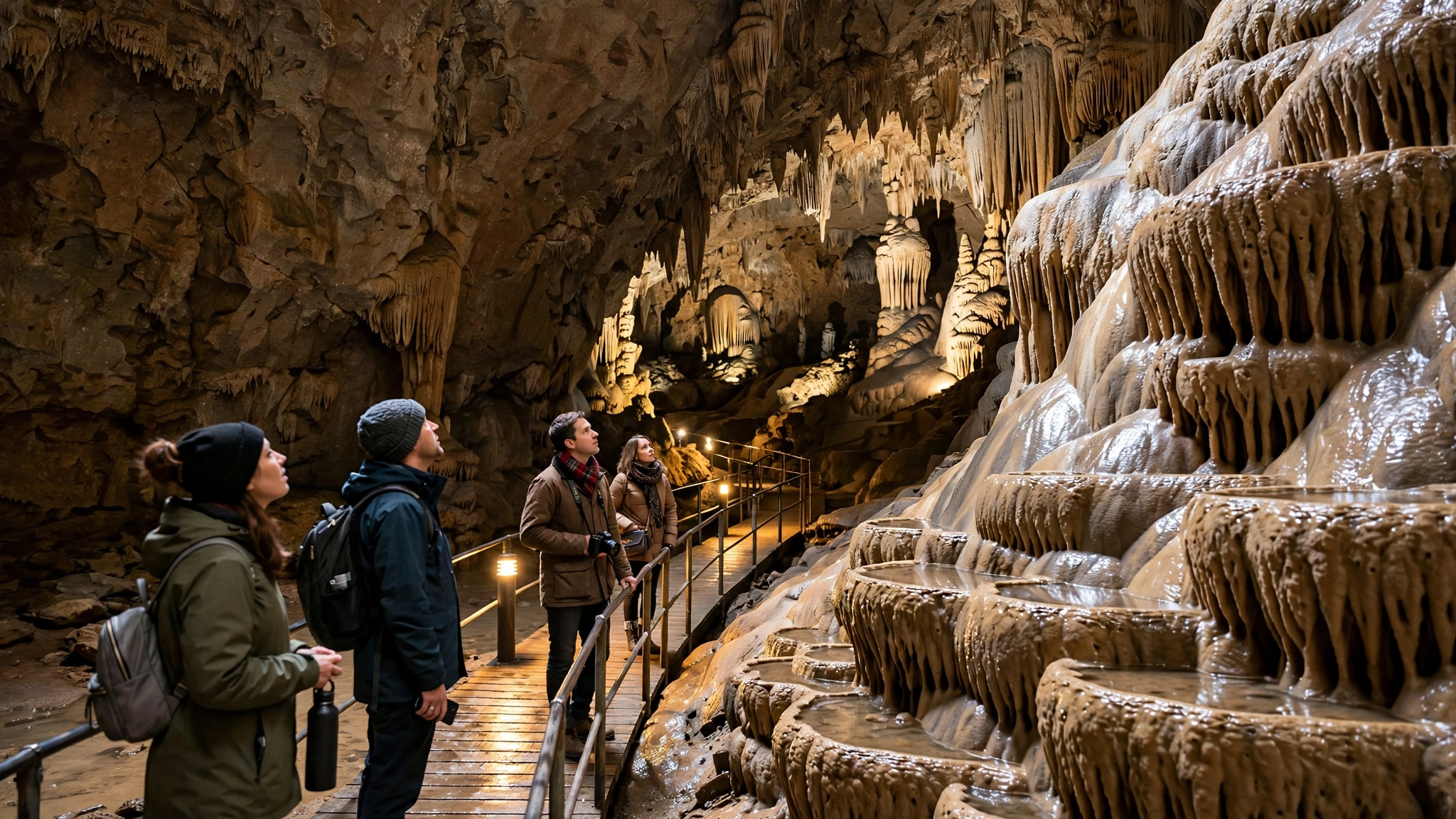
But here’s the good news, and it’s genuinely good: Ireland is packed with spectacular caves you CAN visit, and the new discovery makes visiting them feel completely different. You’re no longer just touring a pretty cave. You’re walking through a landscape where Ice Age artists worked, in a country whose deep history just got rewritten.
The Irish Caves You Can Actually Explore in 2026
Aillwee Cave, County Clare
The superstar of Irish show caves, and my top pick if you only visit one. Aillwee sits in the heart of the Burren, that strange and beautiful limestone wilderness, and the guided tour takes you through chambers of stalactites, an underground waterfall, and a cavern where the bones of extinct brown bears were found. Yes, bears. In Ireland. Tours run daily, and in summer you should book ahead because the midday slots fill up.
Dunmore Cave, County Kilkenny
Dunmore is the moody one. It’s a show cave with a dark past: Viking records describe a massacre here in the year 928, and human remains found in the cave may be connected to it. The formations are gorgeous, all calcite curtains and delicate straws, but it’s the weight of history that gets you. This is the cave that feels closest to the world of the new discovery.
Marble Arch Caves, County Fermanagh
Just across the border in Northern Ireland, the Marble Arch Caves are a UNESCO Global Geopark showpiece. The tour starts with a boat ride on an underground river, which is about as magical as cave tourism gets, then continues on foot through vast chambers.
Crag Cave, County Kerry
Smaller, quieter, and very much in the southwest, not far from where the new discoveries were made. Crag Cave was only found in 1983, which tells you something about how much is still hidden down there.
What to know before you go
Irish show caves are well-run and family-friendly, but a little preparation goes a long way. Wear shoes with real grip, because cave floors are wet and the walkways, while safe, can be slippery. Bring a light jacket even in August; caves sit around 10 to 12 degrees Celsius year-round. Leave the tripod at home unless you’ve checked the photography policy. And book the first tour of the day if you can. Caves are at their most atmospheric when your group is small and the only sounds are dripping water and your own footsteps.
What This Changes About Irish Prehistory
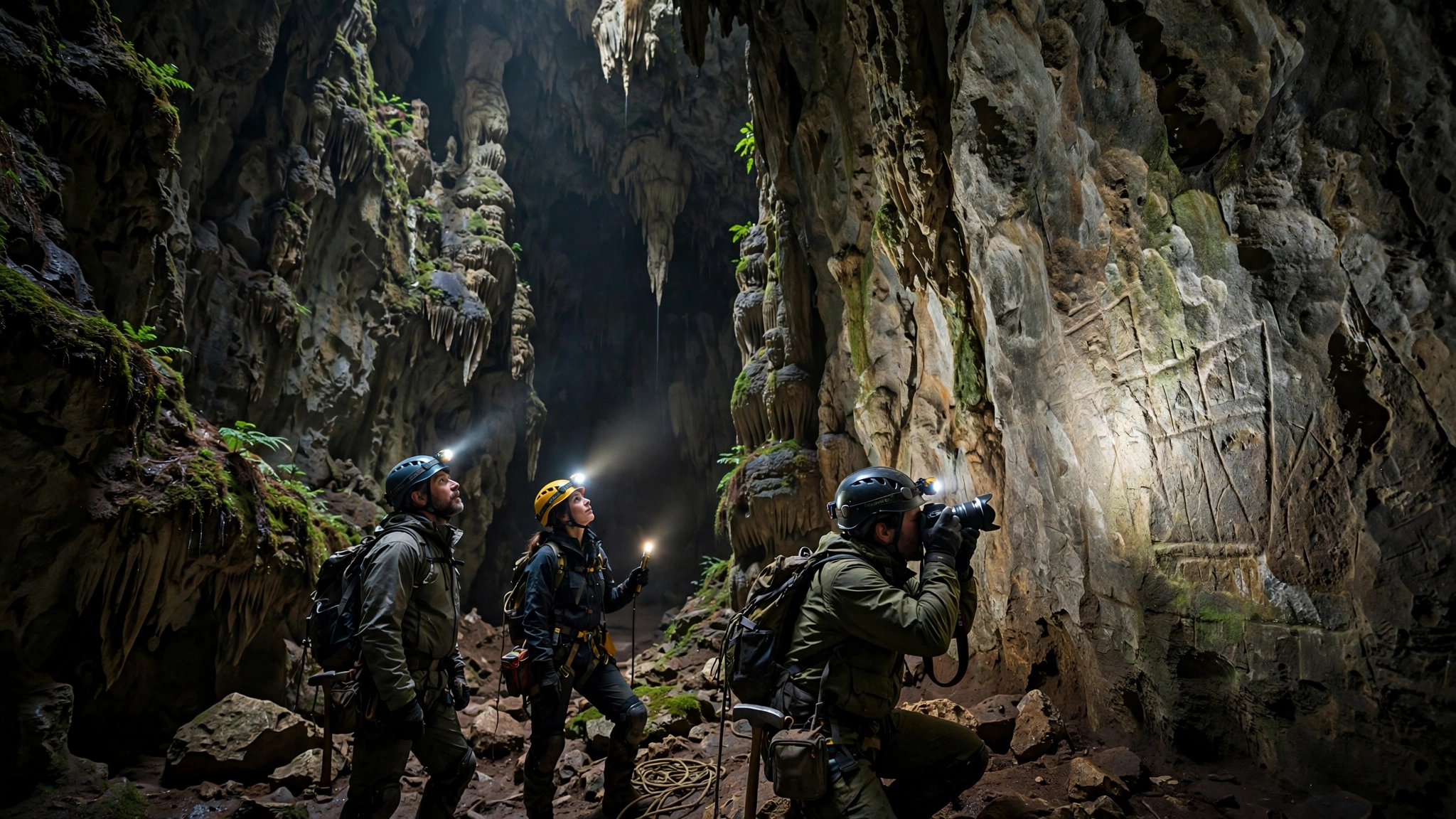
Zoom out for a second, because the cave art is the headline but the implications are the real story. If humans were in Ireland 15,000 years ago, a whole chain of assumptions needs re-examination. The island’s post-glacial recolonization by plants and animals gets a new cast member. The genetic story of the Irish population gains a deeper prologue. And the lost land bridge, if confirmed by further work, becomes one of the great drowned landscapes of European prehistory, up there with Doggerland.
It also changes the map of Palaeolithic art itself. The great decorated caves cluster in France and Spain, with outliers scattered across Europe. Ireland was a blank spot, and blank spots on maps are either genuinely empty or just unsearched. This discovery strongly suggests the latter, which raises an irresistible question: where else haven’t we looked properly? The predictive-model approach that found these caves could be pointed at Scotland, at Wales itself, at anywhere the geology is right and the assumptions are old. We may be at the start of a decade of rediscovery, with AI as the divining rod.
For travelers, the takeaway is simpler and more romantic. Ireland’s story just got 5,000 years deeper. The green fields and ancient ring forts you see on every tour were already old. Now they’re the recent chapters of a much longer book, one that starts in torch-lit caves with the smell of ochre and wet clay.
How to Plan Your Own Irish Cave Trip
If this story has put Ireland on your list, here’s how to do it right. Base yourself in the west: Galway or Ennis gives you easy reach of Aillwee Cave and the Burren, some of the finest walking country in Ireland. Give the Burren a full day, not just the cave; the limestone pavement, the wildflowers growing out of bare rock, the whole alien landscape is part of the experience. Pair it with Dunmore Cave on a Kilkenny day trip from Dublin, an easy train ride, and you’ll have seen two completely different moods of Irish underground.
Time your visit for late spring or early autumn. Summer brings the crowds and the booked-out tour slots; winter brings shorter opening hours and the occasional weather closure. May and September are the sweet spots: long days, smaller groups, and the countryside at its best.
The Story Isn’t Over
The Lost Land Bridge Project is still working. More dating, more analysis, possibly more caves. The eight sites found so far came from 28 candidates, which means there are twenty more to check, and the model can always be pointed at new ground. If even one more decorated cave turns up, the case for an Irish Palaeolithic gets stronger. If the lab dates come back at 15,000 years, textbooks get rewritten.
I’ll be watching this one closely, and I’ll update this guide as new results come in. For now, add Ireland’s caves to your list, not just for the formations (though they’re world-class) but for what they represent: proof that the human story is always bigger, older, and stranger than the last edition of the textbook said.
Want more underground wonders? Start with Son Doong, the world’s largest cave and its own weather system, then dive into Mexico’s sacred cenotes, the Maya gateways to the underworld. And if glowworms are more your speed, New Zealand’s Waitomo caves put a galaxy on the ceiling. For daily cave discoveries and expedition photos, follow along on our Pinterest, where every story starts as a pin.
Sources: BBC News reporting on the Lost Land Bridge Project announcement (September 7, 2026); Heritage Daily coverage of the engravings and paintings; Dr George Nash, Liverpool University. The ~15,000-year age reflects the research team’s stylistic and contextual assessment; laboratory dating results are pending.