2.2 Kilometres Straight Down: Inside Veryovkina, the Deepest Cave on Earth
There is a hole in a mountain in the Caucasus that goes down 2,209 metres. That is deeper than six Eiffel Towers stacked on top of each other, more than one and a half Ben Nevises, and it keeps going past the point where your mind can picture depth at all. It is called Veryovkina Cave, and according to the Guinness World Records it is the deepest cave on planet Earth.
Nobody goes down there for fun. Reaching the bottom takes about four days of rope work through waterfalls and vertical shafts, in water that barely rises above freezing, in darkness so complete that cavers say their brains start inventing light that isn’t there. In 2018 a storm on the surface nearly drowned the whole expedition team at the bottom. Two years later, a man who went down alone never came back up.
This is the story of the bottom of the world. And a warning about why it stays that way.
Where on Earth is the bottom of the world?
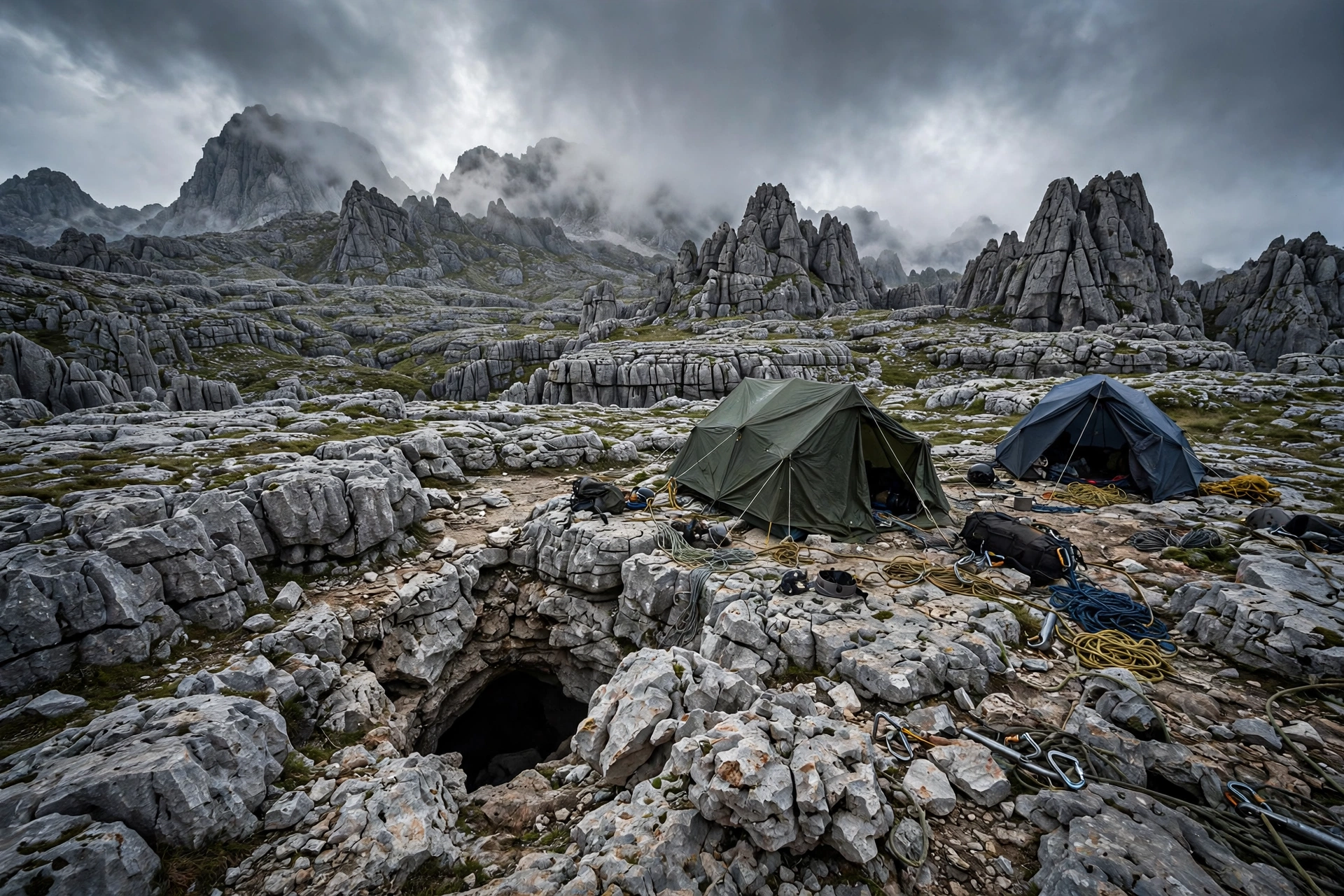
Veryovkina sits in the Arabika Massif, part of the Gagra range in the Western Caucasus, not far from the Black Sea coast. The region is Abkhazia, a breakaway territory of Georgia, which matters a lot if you ever dream of visiting (more on that later).
From the surface there is nothing dramatic to see. The entrance is a modest opening in a rugged limestone plateau. The Arabika is one of the great karst landscapes on Earth: a mountain made mostly of limestone laid down in the Upper Jurassic and Lower Cretaceous, roughly 160 to 100 million years ago. For millions of years, rainwater has been dissolving that limestone, carving shafts and galleries downward. The whole massif is Swiss cheese, and Veryovkina is its deepest hole.
Soviet speleologists first poked into the cave in 1968. For decades it was just another deep pit. Teams would push a few hundred metres down, hit something ugly, and leave. Nobody suspected it went anywhere special.
How deep is “deep”? The record, the re-measurements, and the rival next door
Here is where it gets properly nerdy, in the best way.
Veryovkina’s depth has been measured, re-measured, and argued over like a sports record. In February 2018, the Russian Perovo Speleo Team reached the bottom of a flooded passage called Captain Nemo’s Last Stand and set the depth at 2,212 metres. In August 2023, an underwater drone surveyed the siphon and the number crept up to 2,223 metres. Then in August 2024, cavers did something clever: they traced the stream at the bottom of the cave to a surface spring at Blue Lake, and used a high-precision GNSS receiver to measure the height difference between entrance and bottom directly. That gave 2,209 metres, the most precise figure yet.
Whichever number you use, Guinness still credits Veryovkina as the world’s deepest known cave.
There is, however, a rival living next door. Krubera Cave sits in the same mountain range, and a 2024 expedition estimated its depth at 2,224 metres once you count its underwater section. If that figure holds, Krubera would edge past Veryovkina. For now it hasn’t been accepted as the official record, so Veryovkina keeps the crown. The whole argument is deliciously on-brand for this corner of the Caucasus: the four deepest caves in the world, Krubera, Veryovkina, Sarma (1,830 m), and Snezhnaya (1,760 m), are all in Abkhazia. One small mountain range holds the entire podium.
For scale: the surveyed length of Veryovkina is 17.5 kilometres of passages, most of them vertical. It is the second cave in history to pass the two-kilometre depth mark, and still the deepest you can reach without diving equipment. (For a different kind of superlative, our piece on Son Doong, the world’s largest cave, covers the other end of the underground spectrum.)
From a forgotten hole to the world record
The modern story of Veryovkina is really the story of one caving club: the Perovo Speleo Team from Moscow, led by Pavel Demidov.
Demidov and his team started working the cave seriously in the 2010s. In August 2017 they hit 2,204 metres and took the world depth record from Krubera. In February 2018 a small team of four pushed to the very bottom of the Captain Nemo siphon: 2,212 metres. Final answer, or so they thought.
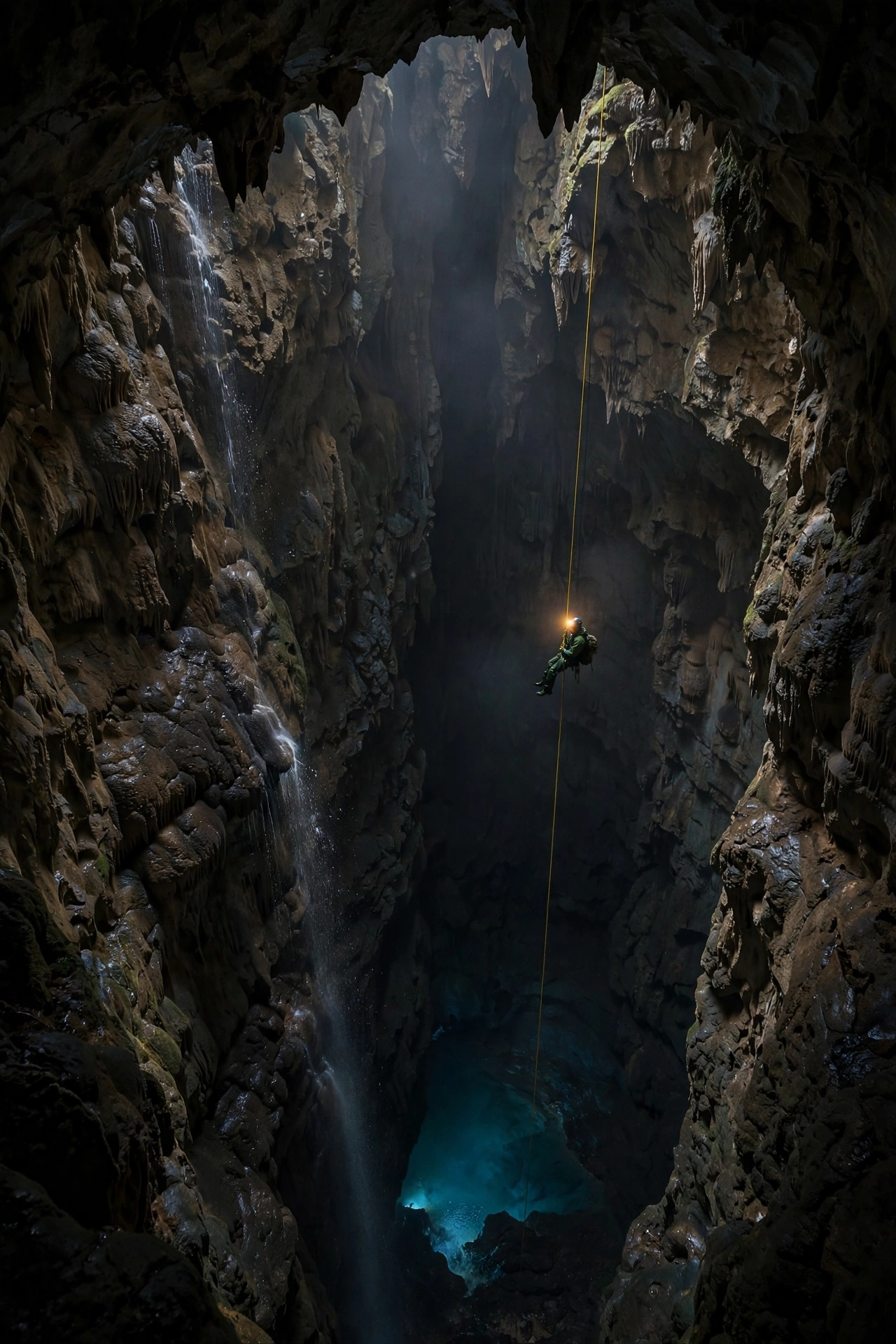
What makes the achievement wild is the logistics. This isn’t a walk. It’s a vertical expedition: kilometres of rope, rebelays, traverses over drops you can’t see the bottom of, all of it rigged, checked, and re-checked. Everything the team needs for days underground goes down on their backs.
What four days of descent actually feels like
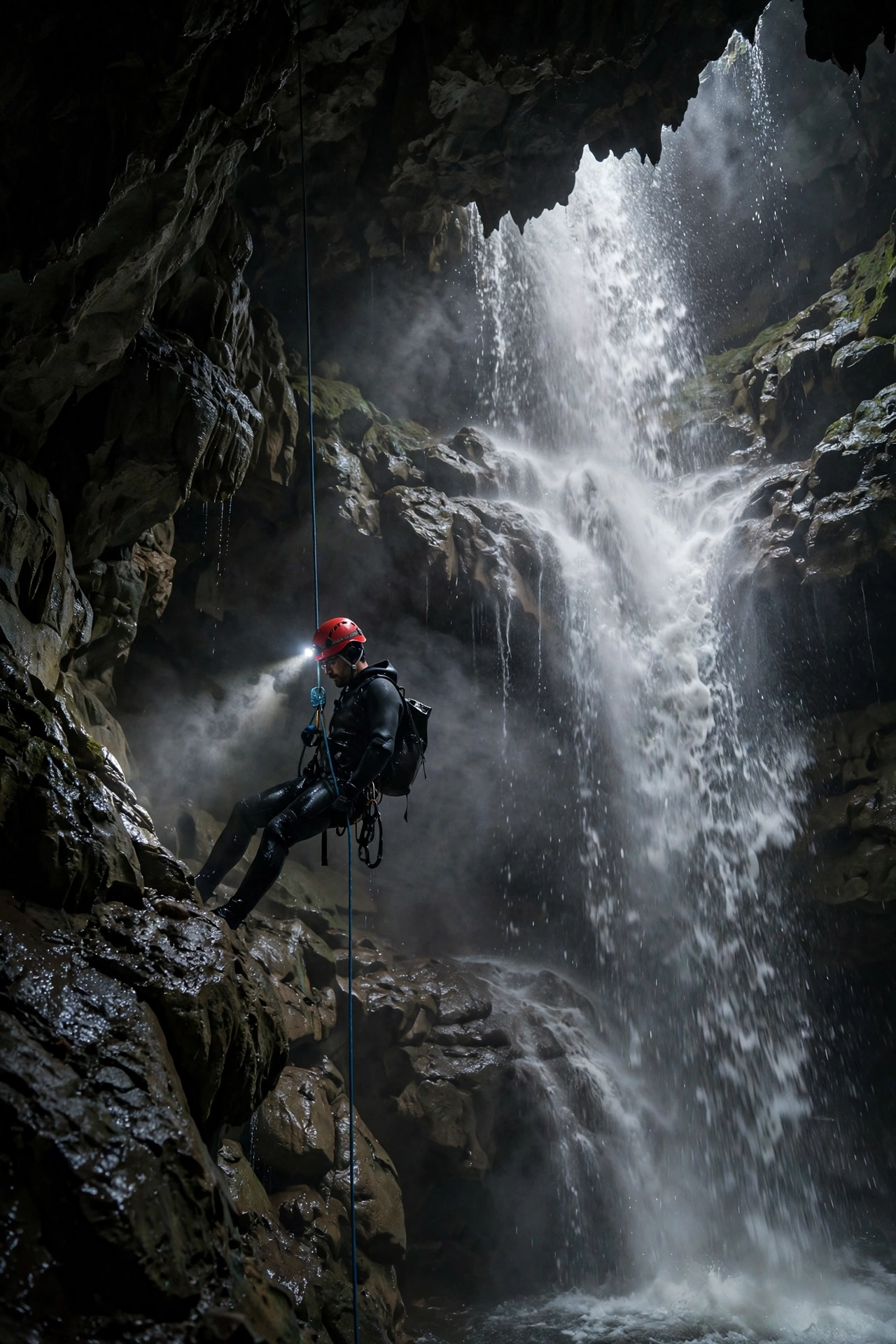
Getting to the bottom of Veryovkina takes around four days of continuous caving. Going down is the easy part; gravity helps. Coming back up is the real punishment, because every single metre of rope has to be climbed against gravity with mechanical ascenders, in water that sits at 3 to 4 degrees Celsius, with 100 percent humidity. Cavers describe the lower sections as climbing up inside a cold shower that never stops.
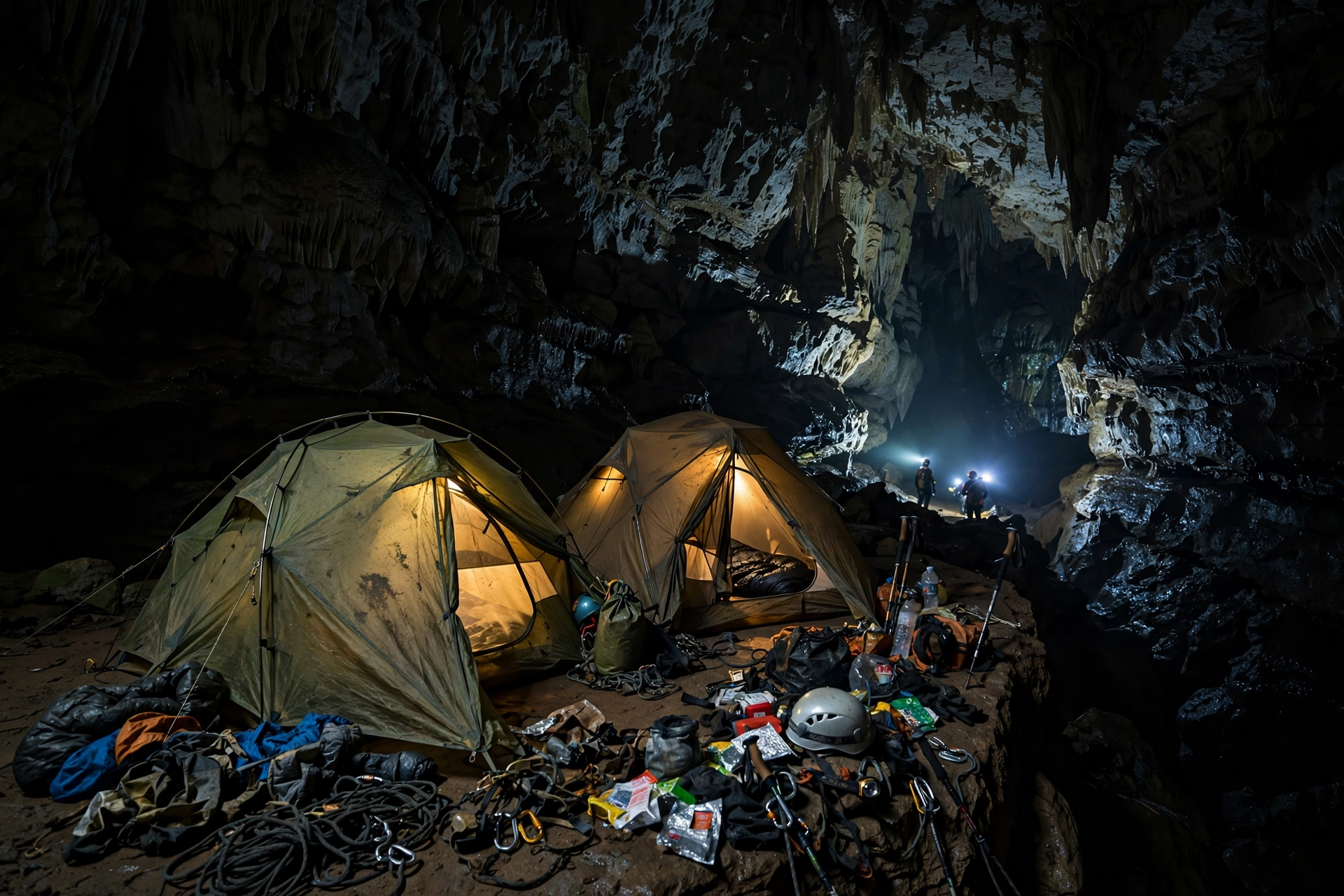
The expedition sets up a chain of numbered camps at depth: small platforms of flat ground where tents get pitched on rock ledges two kilometres underground. Imagine zipping your tent shut at minus 2,000 metres, listening to water roar somewhere below you in the dark, knowing the surface is a four-day climb away.
And the darkness does strange things. Multiple accounts describe cavers’ brains hallucinating light in the deepest chambers, phantom glows that aren’t there. Your visual system, starved of input for days, starts inventing its own. It is one of the few places on Earth where you can watch your own mind malfunction from sensory deprivation alone.
The flood that almost buried the 2018 expedition
In September 2018, Demidov led a team back to the bottom, this time with two English cave photographers, Robbie Shone and Jeff Wade, shooting for National Geographic. The plan was simple: photograph the deepest cave on Earth properly, for the first time.
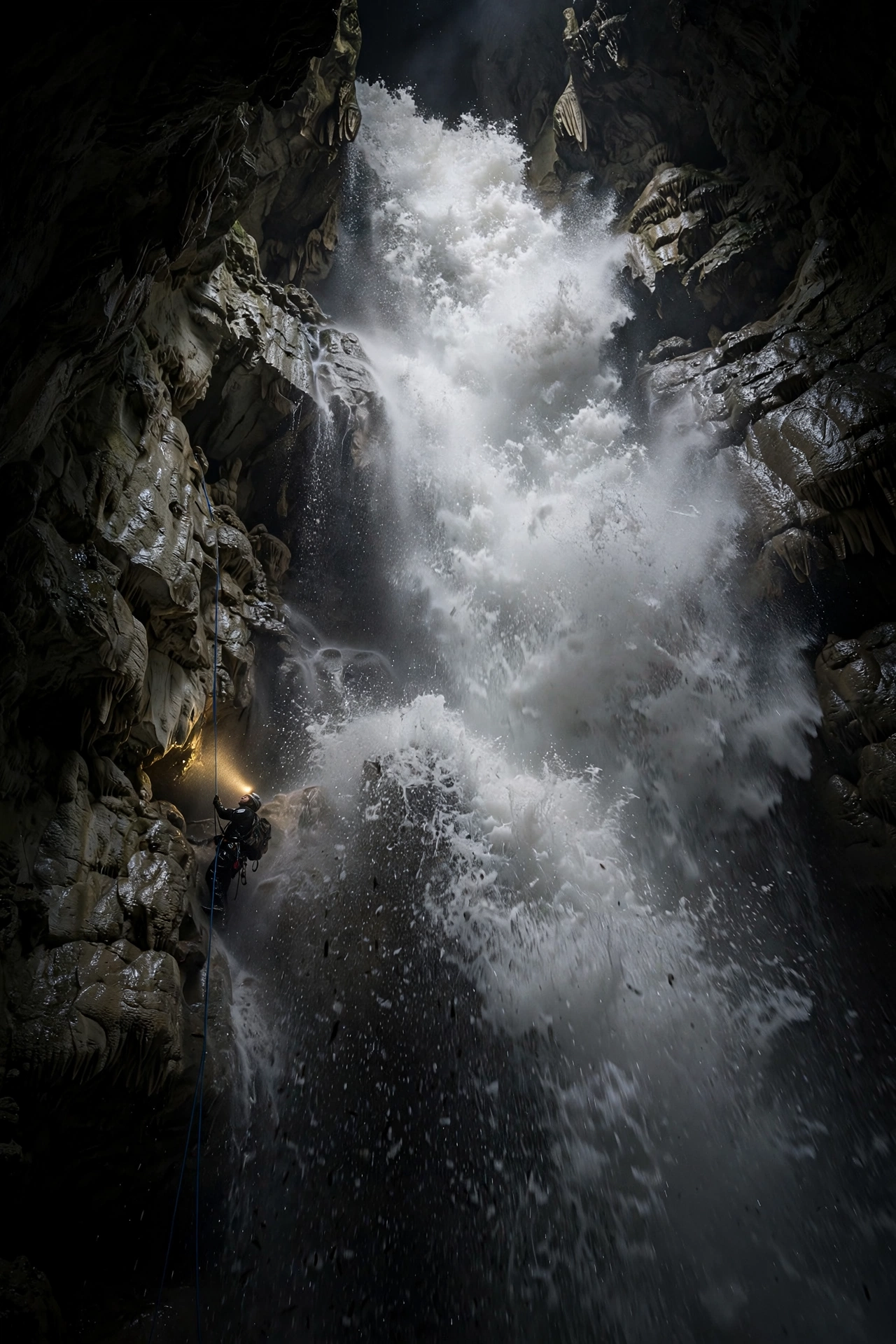
On day seven, everything went wrong at once. A storm on the surface, rain the team hadn’t properly accounted for, sent a flood pulse down into the cave. In deep caves a flood pulse is a wall of water that arrives with almost no warning. The Russians had assumed Veryovkina only flooded in winter. They were wrong.
Team members higher up got a warning down the cave’s wired telephone line: water was coming, and it would reach the bottom camp in about half an hour. What arrived sounded, in one account, like a freight train. Thousands of litres of water hammered down the vertical shafts. Shone and Wade had to climb ropes directly through a deluge that felt like a fire hose, tucking their chins into their helmets to keep tiny pockets of air. Demidov swam through a swirling vortex in pitch darkness to reach an ascent line.
The flood lasted nearly 20 hours. The escape took more than 16 continuous hours of climbing. Everyone survived. Shone’s camera equipment was destroyed (Demidov later went back down and fished the ruined camera out of the water with an extended tripod). Despite the chaos, the expedition still mapped new passages and collected cave invertebrates for scientists. Shone later called the cave “the pinnacle of human endeavor in the caving world.”
It was also a lesson the whole caving world absorbed: in Veryovkina, the weather on the surface can kill you two kilometres underground.
The man who went down alone
Two years later, the cave claimed a life anyway.
In November 2020, Sergei Kozeev, a 37-year-old outdoorsman from Sochi, left home without telling his family where he was going. He descended into Veryovkina alone, without permission and without the full kit the cave demands. He spent about a week at the permanent camp at minus 600 metres, then pushed deeper, down to around minus 1,100 metres, roughly halfway to the bottom.
Going down, gravity does the work. Coming back up through the perpetually wet lower sections requires foot stirrups, and Kozeev hadn’t brought any. He got stuck on the rope, unable to climb, in 3 to 4 degree water, in total darkness. He died of hypothermia.
His body wasn’t found until August 2021, when a Perovo team descending the cave came across it. Recovering him took a complex, multi-team retrieval operation. He had been down there for nine months.
I tell this story not for drama but because it is the single most important thing to understand about Veryovkina: the cave punishes exactly the mistakes that look small on the surface. Solo caving in a system like this, skipping one piece of gear, not telling anyone your plan, these are the decisions that don’t get second chances. If you take one practical lesson from this article, let it be the caver’s rulebook: never go underground alone, never enter without proper training and the right equipment, always check the weather, and always make sure someone on the surface knows where you are and when to raise the alarm. (If photographing caves is more your speed than descending into them, our guide to cave photography covers how to shoot underground without risking your life.)
Science at the bottom of the world
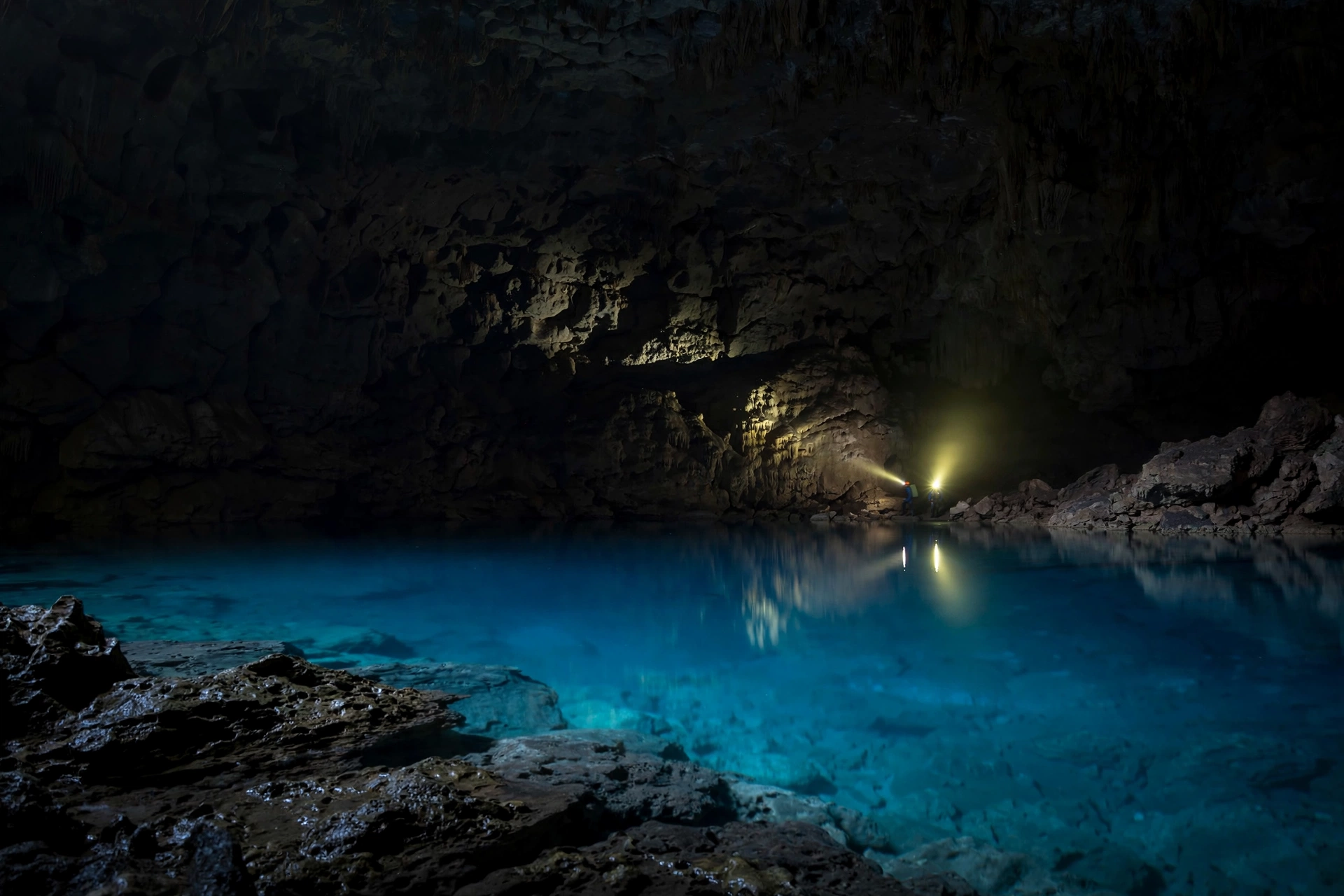
For all its danger, Veryovkina is a scientific goldmine. The bottom of the cave holds a still, turquoise siphon lake, Captain Nemo’s Last Stand, the single deepest point any human can reach without diving gear. Around it, in the mud and the water, lives a community of organisms almost nobody has studied.
In February 2026, researchers published the first serious survey of the cave’s bacterial diversity, sampling sediments from 300 metres all the way down to 2,204 metres. They found distinct ecological zones: different bacterial communities in the wet clays near the top, the mid-depths, and the dry deep substrates, dominated by groups like Proteobacteria, Acidobacteria, and Actinobacteria. Places that look sterile are running entire ecosystems on chemistry and time.
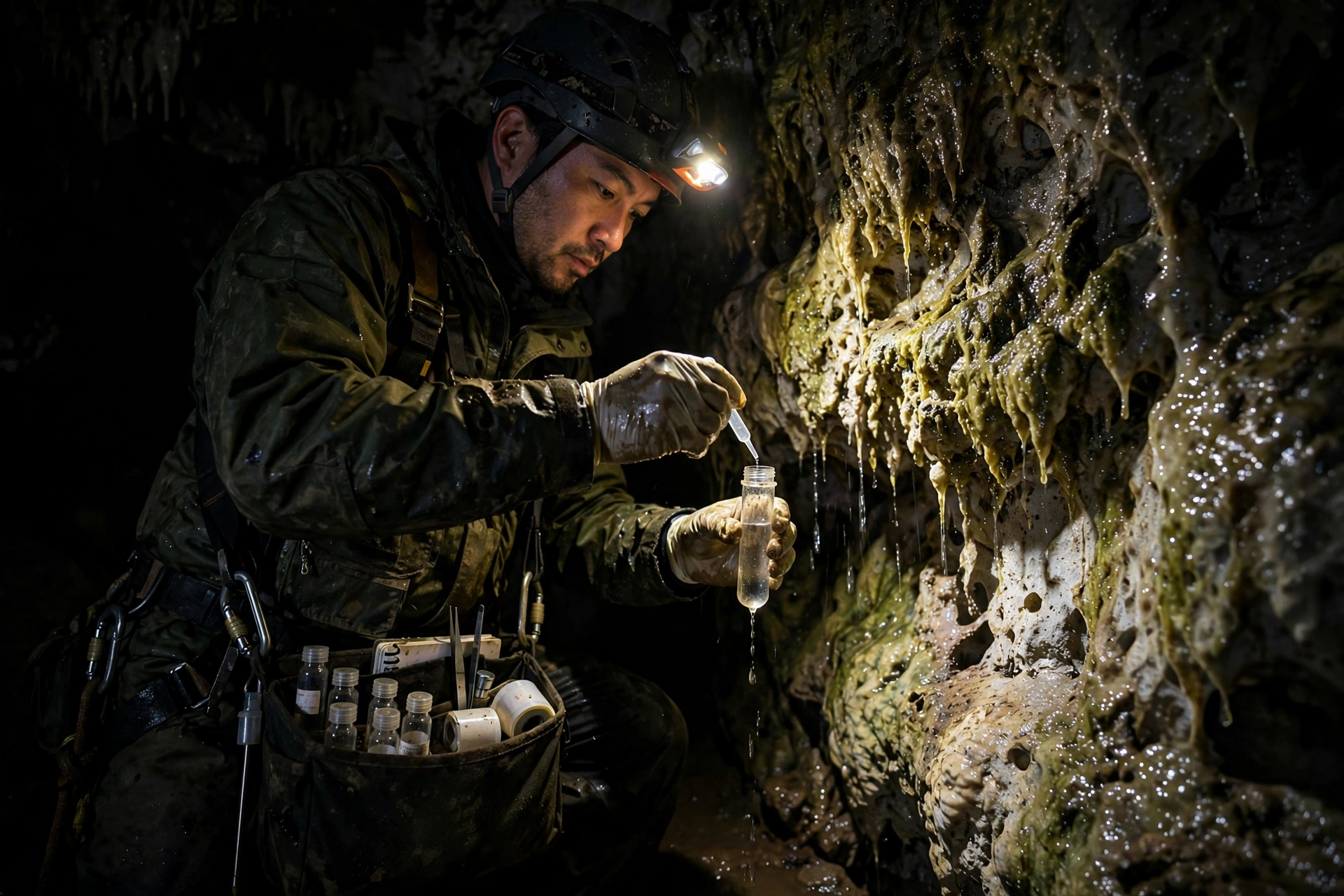
That is why astrobiologists pay attention to caves like this. An ecosystem sealed in darkness, running without sunlight, looks a lot like what life might look like in the subsurface oceans of Europa or Enceladus. Every sample from Veryovkina is a small rehearsal for the search for life beyond Earth. And the cave keeps producing: expeditions have collected previously unknown invertebrates from the deep zones, animals that have never seen light and never will. If flooded cave systems fascinate you, the cenotes of Mexico are the warmer, more welcoming cousins of this world, sacred sinkholes you can actually dive.
Could you ever visit Veryovkina? The honest answer
Probably not, and that’s fine. Here is the honest breakdown.
Veryovkina has no tourist infrastructure, no walkways, no lights, no guides-for-hire. Access is by expedition only, with permissions, and the region itself, Abkhazia, is politically complicated to enter. This is not a place you add to a holiday itinerary. The people who go down there are elite cavers on organized expeditions, and even they treat it with enormous respect after 2018 and 2020.
But the itch Veryovkina scratches, the desire to stand inside the Earth, is absolutely something you can satisfy elsewhere. There are show caves with walkways and lights across Europe and Asia: Postojna in Slovenia lets you ride a train through kilometres of passages, and the Waitomo glowworm caves in New Zealand put you in a boat under a ceiling of living stars. Start there. Learn vertical rope work with a proper caving club before you ever think about anything wilder. The underground will still be there when you’re ready, and the ready part is what keeps you alive.
Why a hole in a Georgian mountain should matter to you
Most of us will never see Veryovkina, and most of us shouldn’t try. But there’s something valuable in knowing it exists: a place on this planet still so far beyond normal human experience that our brains hallucinate light in it, where a storm on the surface becomes a freight train two kilometres down, where life runs on chemistry in water that has never seen the sun.
The bottom of the world isn’t a metaphor. It’s a real place, 2,209 metres down, with a lake at the bottom of it. And now you know its name.
Love going down the rabbit hole? Follow The Cavee on Pinterest for more underground worlds, and share this story with someone who thinks they’ve seen everything.