The Lost City of Colombia: Climbing 1,200 Stone Steps to Teyuna, the Jungle Ruin Older Than Machu Picchu (2026 Guide)
You have probably seen Machu Picchu at sunrise on a hundred Instagram feeds. You have probably not seen the other great stone city of South America, because almost nobody posts about it. It sits 1,200 meters up in the cloud forests of Colombia’s Sierra Nevada de Santa Marta, it was built around 800 AD (about 650 years before Machu Picchu), and the only way to reach it is a four-day jungle trek that ends with a climb up 1,200 moss-covered stone steps.
This is Ciudad Perdida, the Lost City. Locals call it Teyuna. And if you have been putting it off because the information online is a mess, conflicting prices, vague operators, mystery closures, then this guide is for you. Here is the 2026 rulebook, with real prices, the real route, and the booking tricks nobody tells you about.
What the Lost City Actually Is
Ciudad Perdida was not “discovered” in the romantic explorer sense. It was found in 1972 by a group of treasure hunters (guaqueros, in Spanish) who stumbled on the stone terraces while looking for gold. The Tayrona people who built it were already gone, their descendants still living in the same mountains as the Kogi, Wiwa, Arhuaco and Kankuamo indigenous communities.
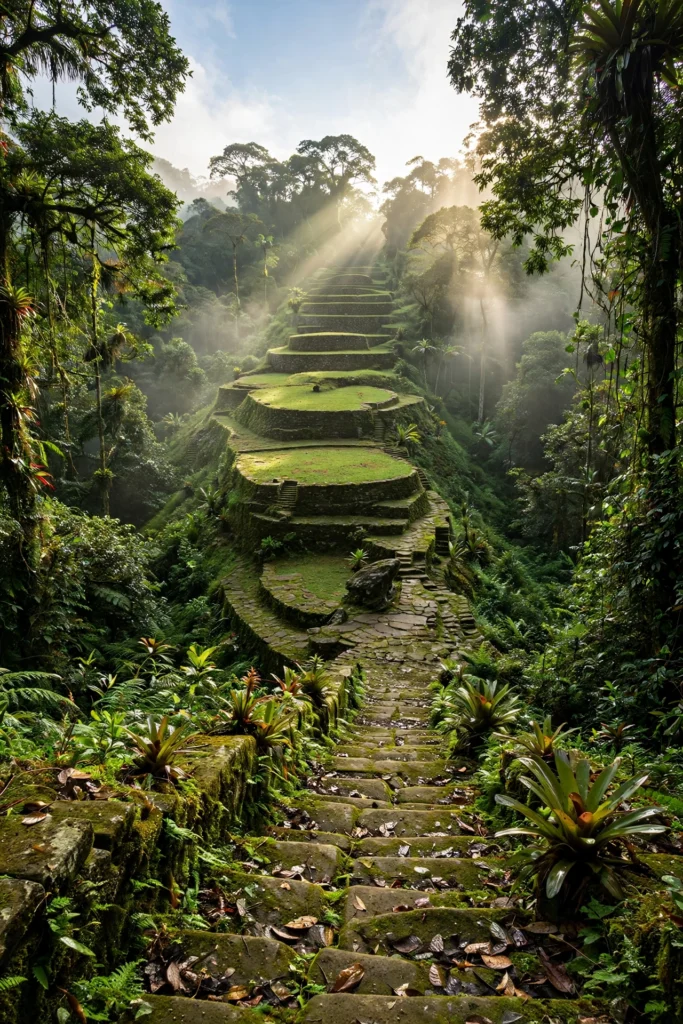
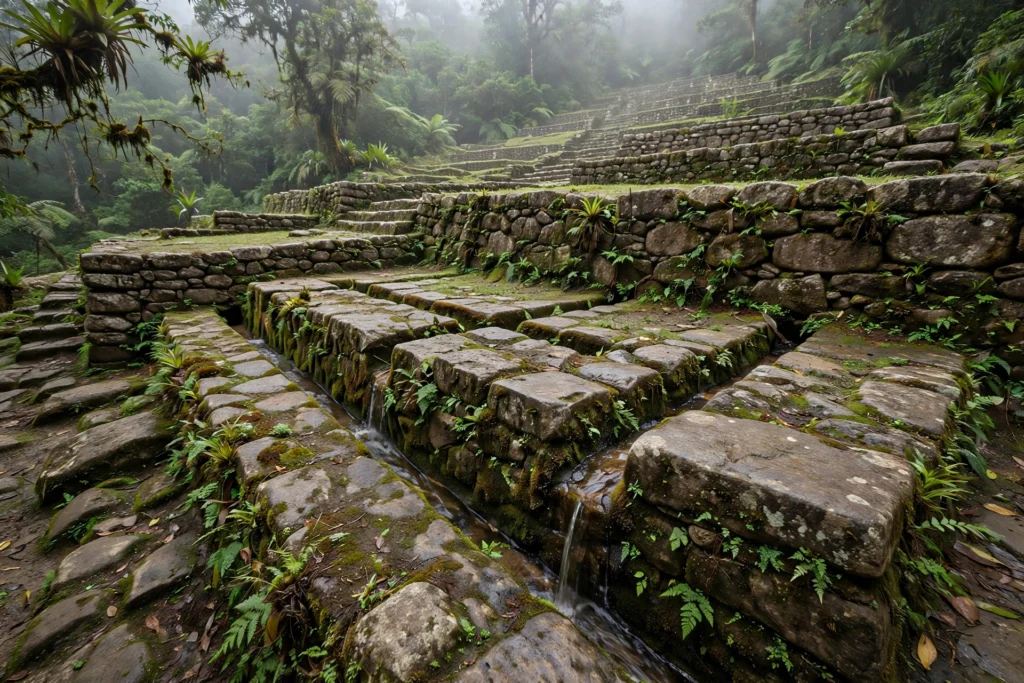
What the looters found was a city of around 169 circular stone terraces, built on a mountainside at roughly 1,200 meters of elevation, connected by paved paths and drainage channels that still work after a thousand years of rain. The Tayrona built Teyuna between the 7th and 14th centuries, trading gold, salt and cotton across the Caribbean coast long before the Spanish arrived.
When archaeologists finally got access, they found something the brochures underplay: this place is OLD. The main settlement dates to roughly 800 AD. Machu Picchu was built around 1450. So when people call Ciudad Perdida “Colombia’s Machu Picchu,” they have the comparison backwards. Machu Picchu is the younger sibling.
Why 2026 Changed the Game
For years, the Lost City trek ran on word of mouth and hopeful guesswork. That changed, and 2026 is the first full year under a tighter rulebook. Here is what is different now.
Only a handful of licensed operators. The trail sits on indigenous territory and is administered by ICANH, Colombia’s national anthropology and history institute. Under the 2026 framework, only four companies hold the permits to run the trek: Expotur, Magic Tour, Wiwa Tour and Turcol. (A few older blogs list slightly different counts, the paperwork gets reorganized, but the point stands: the number is tiny.) Everyone else selling you this trek, hostels, booking sites, “guaranteed spots” touts, is a reseller buying from one of the licensed operators and adding their cut. Book direct.
Prices are regulated. The four operators charge pooled, identical rates. In 2026: 3 days costs 2,200,000 COP, 4 days costs 1,860,000 COP, and 5 days costs 2,150,000 COP per person. Yes, the 3-day costs more, you pay for the speed and smaller group pacing. That converts to roughly $400 to $450 USD for the classic 4-day at normal exchange rates. The price includes transport from Santa Marta, a certified guide, all meals, camp accommodation, the ICANH park entry, insurance, and a contribution to the indigenous and campesino communities. It does not include your first morning’s breakfast, alcohol, tips, personal snacks (bring cash, only Colombian pesos work in the camps), or travel insurance.
A real closure calendar. The trail closes every year so the indigenous communities can perform their pagamentos, sacred rituals for the mountains. In recent years this has fallen in September or October, and in 2026 the closure is exceptionally short: October 1 to 15 only. Other years it has been the entire month. Check ICANH’s current-year calendar before you book flights, and do not trust a reseller who says the dates do not matter.
Conservation money finally arrived. In July 2025, the US Embassy in Bogota and the World Monuments Fund announced $300,000 for conservation and restoration work at Teyuna, coordinated with ICANH and the four indigenous peoples. If you trek in 2026, you might see restoration teams working on the terraces. That is your entrance fee doing something real.
The Trek: Day by Day
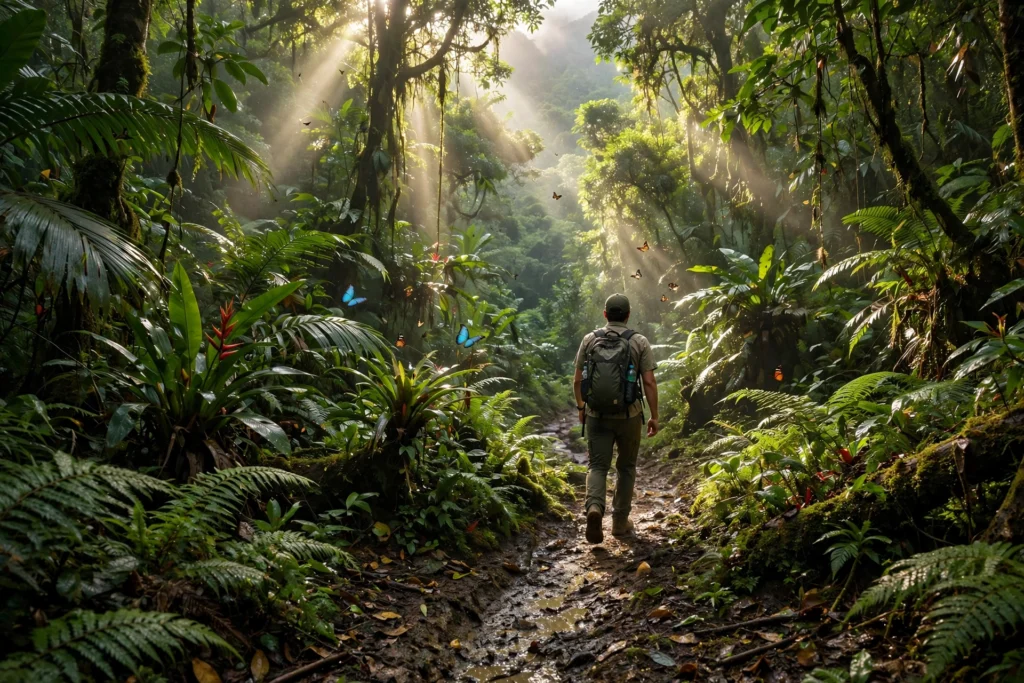
The classic trek is four days and roughly 60 kilometers round trip, starting and ending at Machete Pelao (El Mamey), a village about two to three hours by 4×4 from Santa Marta. Most operators offer 4, 5 and 6-day versions. The 4-day is the most common, the 5-day gives you an extra waterfall stop and a slower pace, and the 3-day is an athlete’s sprint. Groups are small, guides are local (many Wiwa and Kogi), and mules carry the camp food.
Day 1: Santa Marta to Adan (about 8 km of walking, 4×4 to the trailhead)
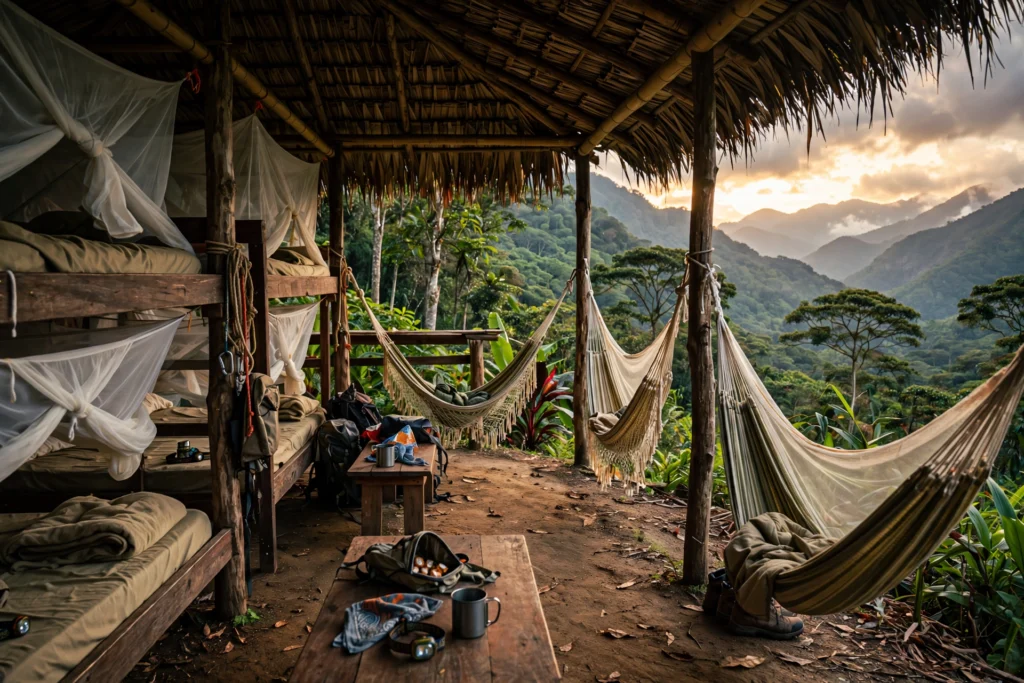
You leave Santa Marta early, bounce up mountain roads in a 4×4, and start walking by mid-morning. Day one is the warm-up: jungle trail, your first river views, and the first camp at Adan. You will eat better than you expected. The camps are resupplied by mule, and the kitchens turn out rice, chicken, fresh fruit and coffee that tastes miraculous after a day on the trail. Sleep in a hammock or a bunk, under a mosquito net, listening to the forest.
Day 2: Adan to Paso Lorenzo via Mumake (the long one)
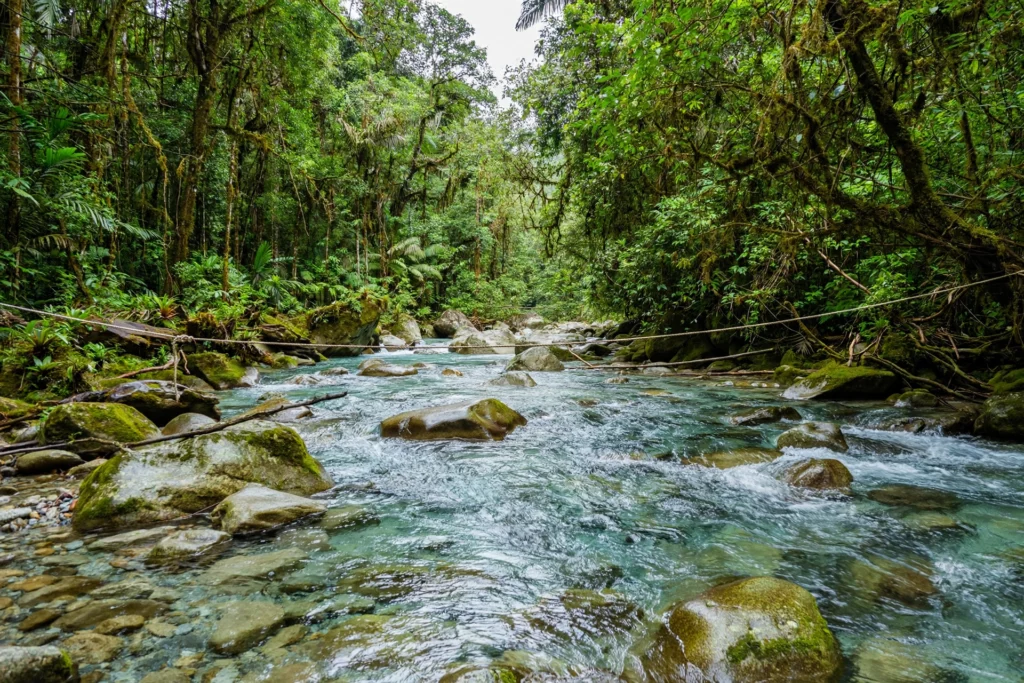
This is the hardest walking day, roughly 14 to 16 kilometers with real climbs. You cross the Buritaca River (expect to get your feet wet, river crossings are part of the trip), pass through small campesino farms where they grow coca and yucca, and start seeing the mountains stack up around you. The wildlife wakes up here too: toucans, howler monkeys, morpho butterflies the size of your hand. Paso Lorenzo camp sits high with views that make the whole day worth it.
Day 3: The 1,200 Steps to Teyuna
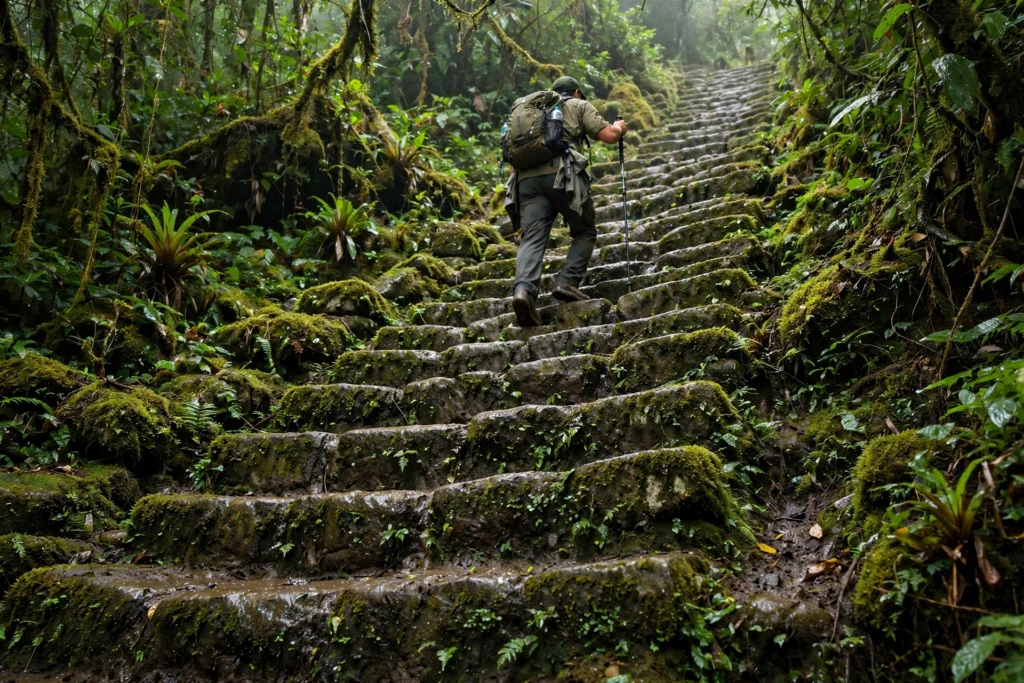
This is the day you came for. You wake early, descend to the river, and then climb. One thousand two hundred stone steps, wet, mossy, uneven, each one laid by Tayrona hands a millennium ago. It takes most people 45 minutes to an hour, and nobody is racing. At the top, the forest opens and the terraces appear: great grassy circles ringed by stone, disappearing up the mountainside, empty except for your group and maybe one other.
You get a guided walk through the site, time to sit on the terraces (yes, really), and the strange feeling of having an ancient city almost to yourself. Machu Picchu limits daily visitors to the thousands. Teyuna sees a few dozen people a day. Take the photos, then walk back down and on to Mumake camp.
Day 4: Mumake back to El Mamey and Santa Marta
The walk out is mostly downhill and feels easy compared to day two, which is exactly what your knees need. You retrace the trail, cross the rivers again, and reach El Mamey by early afternoon. The 4×4 brings you back to Santa Marta in time for a hot shower, a cold beer, and the realization that your legs are going to hate the stairs tomorrow.
How Hard Is It, Honestly?
Operators call it “moderately hard,” and that is fair, with one caveat: the challenge is not altitude (the site sits at just 1,200 meters) or technical skill. It is heat, humidity and mud. You will walk 10 to 15 kilometers a day, six to eight hours, on trails that turn to soup when it rains. You need reasonable fitness and broken-in shoes, not mountaineering experience. The minimum age is 12. People in their 60s do this trek every year.
The two things that actually cause problems are dehydration and blisters, both preventable. Drink water constantly (camps provide purified water, bring tablets as backup), tape your feet from day one, and accept that you will be damp for four days straight. Quick-dry everything. Cotton is the enemy.
The Booking Problem (And How to Solve It)
Here is the problem this guide exists to solve: Google the trek and you will find forty sellers with four different price lists. Here is the truth, stripped down.
There are only a few licensed operators. Everyone else is a middleman. You cannot trek independently, no exceptions, the indigenous communities and ICANH forbid it, and an army post near the site enforces it. So your job is simple: pick one of the four licensed companies and book direct. Wiwa Tour is indigenous-owned and a favorite for travelers who want Wiwa guides; Expotur and Magic Tour are the long-established names; Turcol is the original operator on the route.
Book a few weeks ahead for December to January and July to August, the dry seasons. Bring your passport for registration. Put down the 10% deposit (most operators take cards for the deposit), and carry the rest in Colombian pesos. And if a reseller quotes you double the regulated price, walk away: the price is the price, no matter who sells it.
What to Pack
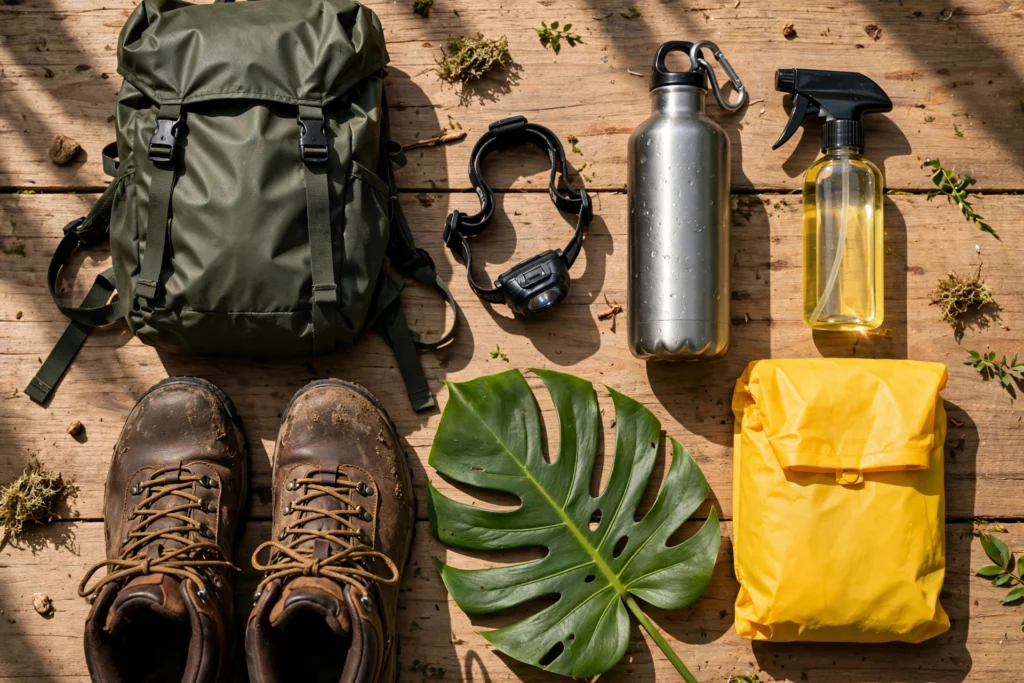
Pack light, the trail is not the place for a 20-kilo backpack, but pack smart. Broken-in hiking shoes or sturdy trail runners with real grip. A rain poncho or light rain jacket, even in dry season. Three to four sets of quick-dry clothes. A headlamp (camps are dark after sunset). Insect repellent and sunscreen. A dry bag or waterproof stuff sacks for everything. Water purification tablets as backup. Cash in Colombian pesos for snacks and drinks at camps. A small first-aid kit with blister tape. And earplugs, because jungle nights are LOUD and hammock camps are social.
Leave behind: anything cotton, anything white, anything you would cry about losing to the mud, and any expectation of phone signal. Most of the trail has no coverage. Four days offline is a feature, not a bug.
When to Go
The Sierra Nevada has two drier windows: December to March, and July to August. The trails hold up better, the rivers are calmer, and the views are clearer. It is also high season, so book ahead. The rainy months bring spectacular jungle but genuinely miserable mud, and river crossings can get serious after heavy rain.
And remember the ritual closure: the trail shuts for the indigenous pagamentos every year, usually in September or October (in 2026, October 1 to 15). Do not plan around it blindly. Check the current year’s dates with ICANH or your operator before booking anything non-refundable.
Combine It With Tayrona and Minca
Almost everyone pairs the trek with one of the two classic add-ons, and both leave from Santa Marta. Tayrona National Natural Park is the beach-and-jungle reset: white-sand coves, boulder-strewn shoreline, and the kind of swimming your blistered feet will worship. Give it two days after the trek. Minca, up in the coffee hills, is the softer option: waterfalls, coffee farm tours, hummingbird feeders, and hammocks with mountain views. Three to four days total for either, and your legs will thank you.
If multi-day routes are your thing, our guides to Vietnam’s Ha Giang Loop and the plank walk on China’s Mount Huashan cover two more of the world’s great hard-won journeys.
The Bottom Line
Machu Picchu is a wonder of the world, and you should see it. But Teyuna is the adventure Machu Picchu used to be: older stones, harder earned, a handful of people at the top instead of a few thousand. Four days of jungle, rivers and 1,200 ancient steps, and you stand in a city that was trading gold while Europe was in the Dark Ages.
The 2026 rulebook makes it simpler than it has ever been: fixed prices, named operators, a published closure calendar. Book direct, pack light, tape your feet, and go before the crowds figure out what they are missing.
Planning the trek? Save this guide on Pinterest and share it with your hiking crew. Follow The Cavee on Pinterest for more real adventure travel guides, and read the full story on thecavee.com before you book.
Quick Answers
Can I do the Lost City trek without a guide? No. Independent trekking is forbidden by the indigenous communities and ICANH. You must go with a licensed operator.
How much does it cost in 2026? 1,860,000 COP for 4 days, 2,150,000 COP for 5 days, 2,200,000 COP for 3 days, roughly $400 to $450 USD for the classic 4-day, all-inclusive.
Is it harder than the Inca Trail? Different hard. Less altitude, more humidity and mud. Most trekkers call it moderate to hard.
When is the trail closed? Every year for indigenous rituals, usually in September or October. In 2026 the closure is October 1 to 15. Always confirm the current year’s dates before booking.
Sources and further reading: the 2026 operational update from Sula Colombia and the detailed 3, 4 and 5-day itineraries at Lost City Tours.