Oaxaca Is Celebrating Day of the Dead Right Now: Marigolds, Midnight Vigils, and the Loudest Way to Remember Someone You Love
There is a moment in Oaxaca, late at night, when the noise drops for a second and you can hear it clearly. Candles flickering. A brass band warming up two streets away. Somebody laughing next to a grave covered in orange flowers. If you grew up thinking that remembering the dead has to be quiet and sad, Oaxaca will gently prove you wrong. Here, remembering is loud, bright, delicious, and deeply personal, all at once.
Right now, as you read this, the city is in the middle of it. The official 2026 program, called La Fiesta Mas Viva de Todas (The Most Alive Fiesta of All), runs from October 26 to November 3, with more than 100 events. The heart of it is October 31 to November 2. November 1 honors children who have died. November 2 honors adults. And the nights in between belong to the cemeteries, the parades, and the families who have been preparing for weeks.
This is not a show put on for tourists, even though visitors are welcome. It is a family tradition first, a street party second, and a masterclass in how to grieve without shutting down. If you go with respect, curiosity, and a bit of planning, it will stay with you longer than almost any trip you take this year.
What Day of the Dead Actually Is (And What It Is Not)
Dia de Muertos is often translated as Day of the Dead, but that translation misses the point. In Oaxaca, the belief is simple and beautiful: once a year, the souls of the departed return to visit the living. Families do not mourn them from a distance. They welcome them home.
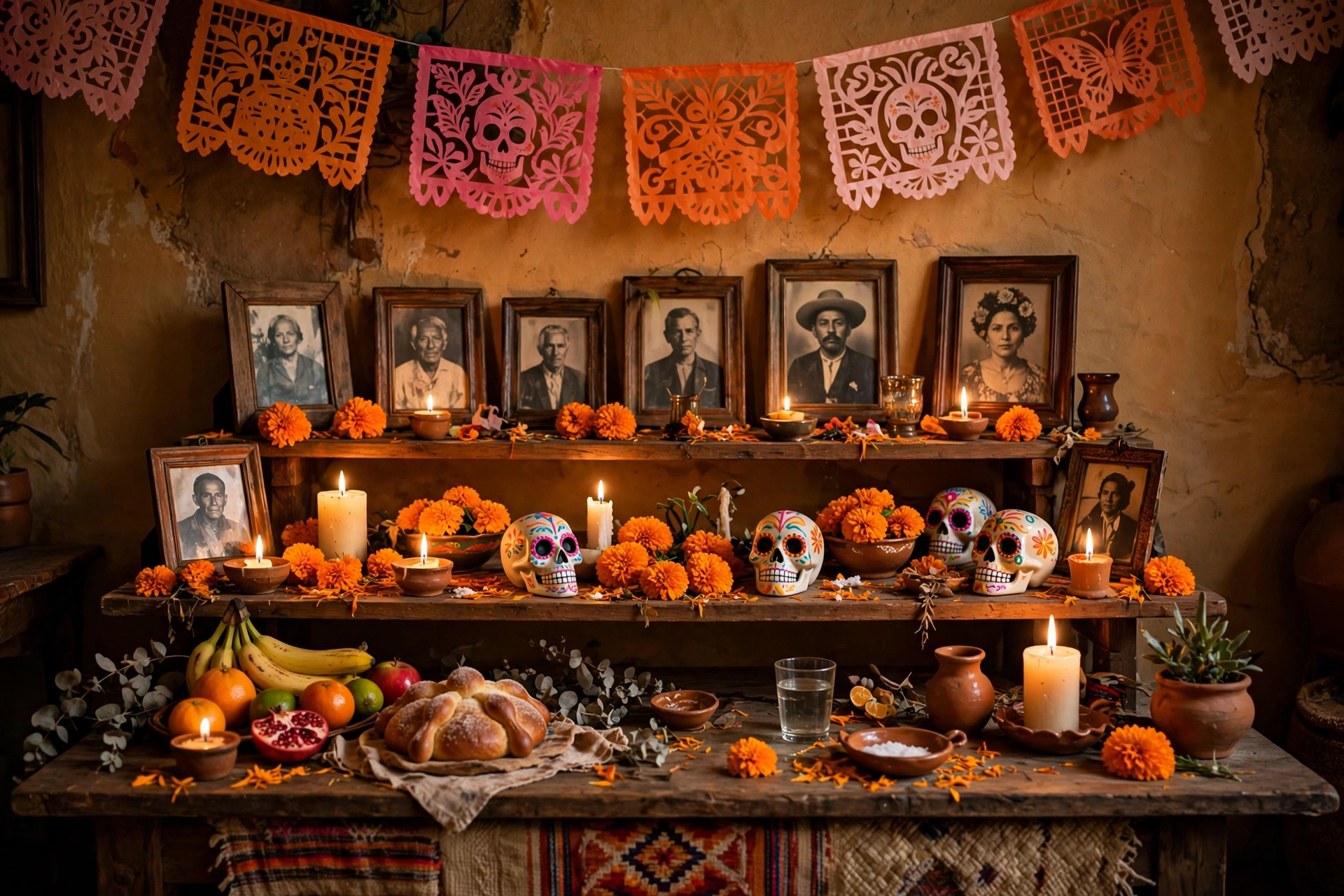
That welcome takes a very practical form. Homes fill with ofrendas, layered altars built for specific people. A photo goes up. Then the things that person loved. Their favorite food. Their favorite drink. A bottle of mezcal for grandpa, a sweet bread for a child, a pack of cigarettes for an uncle who never quit. Orange marigolds, called cempasuchil, are scattered everywhere, because tradition says their scent guides spirits home. Candles light the way. Incense fills the room. Sugar skulls, some inscribed with names, sit alongside fruit, chocolate, and pan de muerto, the soft, sweet bread of the dead.
It is not Halloween, even though the dates overlap. Halloween in much of the world is about being scared. Dia de Muertos in Oaxaca is about being together. The skeletons you see are not meant to frighten you. They are jokes, tributes, and reminders that death is part of life, not the opposite of it. A giant papier mache skeleton dancing in a parade is not mocking anyone. It is saying, we are still here, and so are they, in a way.
UNESCO recognized the tradition as Intangible Cultural Heritage of Humanity in 2008, and you can feel why within about ten minutes of arriving. This is not a museum piece. It is alive, noisy, and a little messy, in the best possible way.
The Three Nights That Matter Most
If you only have a few days, plan around these nights. Each one feels different, and each one teaches you something different about Oaxaca.
October 31: The Gran Comparsa and the Xoxocotlan Vigil
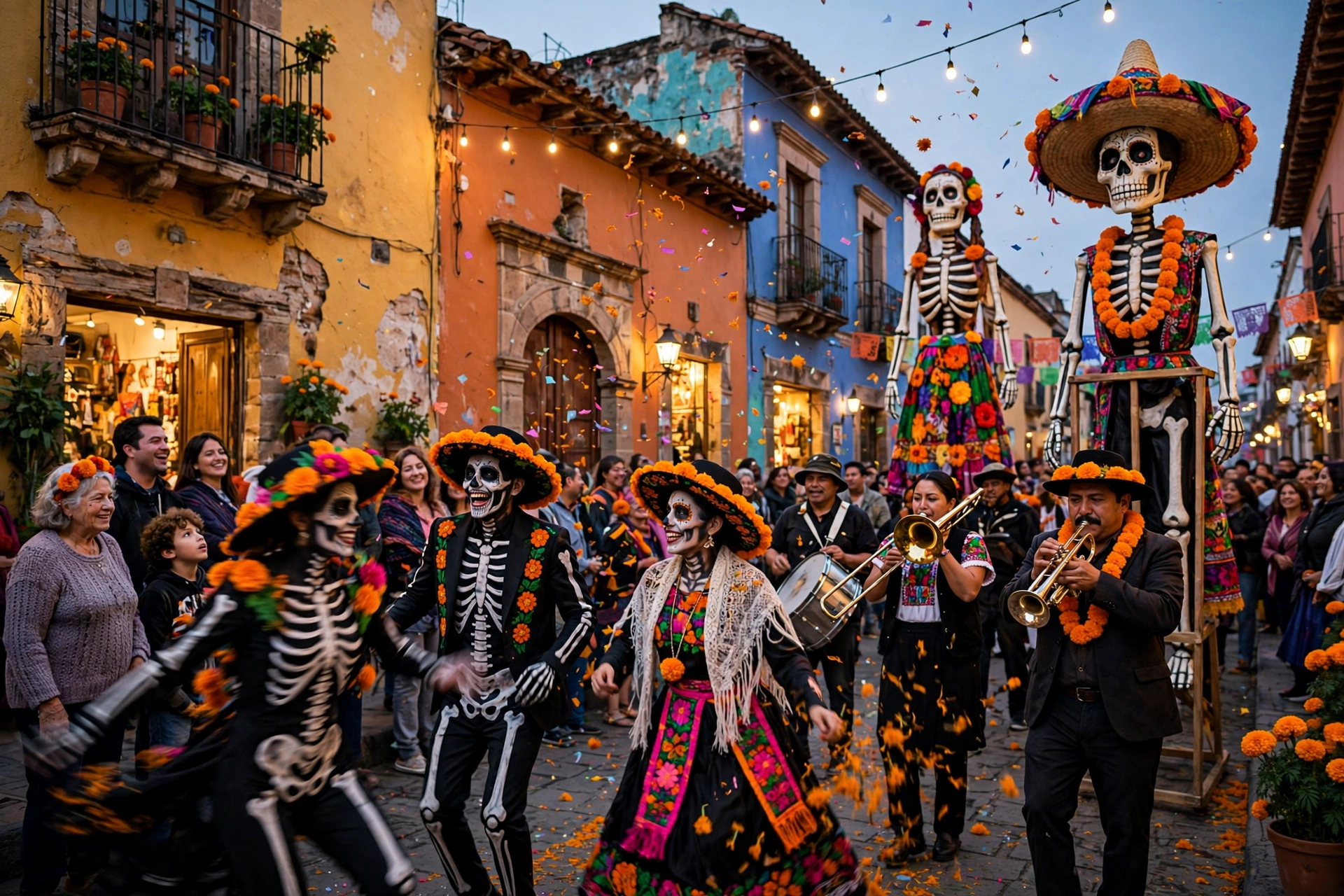
On October 31, the historic center fills for the Gran Comparsa, the big parade that starts in the late afternoon on Calzada Porfirio Diaz and winds toward Garcia Vigil. Expect costumed dancers, giant mojiganga puppets swaying above the crowd, brass bands that do not seem to get tired, and confetti in your hair for the rest of the night. It is the most accessible, most photogenic night of the festival, and a great first taste if you are new to all this.
Then, after dark, head to Santa Cruz Xoxocotlan, just outside the city. This is the biggest cemetery vigil for visitors, and it is the one most people remember forever. Families sit beside graves all night, candles burning, marigolds piled high, food shared, music drifting between the plots. It is crowded, yes, but it is also quiet in the way that matters. People are not performing for you. They are spending the night with someone they lost. Walk slowly. Speak softly. Ask before you take a photo of anyone, and take no for an answer with grace.
November 1: Todos Santos and the Muerteada of San Agustin Etla
November 1 is Todos Santos, traditionally the day for honoring children who have died. In the city, the Jalatlaco neighborhood holds a comparsa, and the Zocalo hosts monumental altars built by Oaxaca’s 16 Indigenous peoples and the Afro-Mexican community. Thirty altars, each one different, each one telling you something about a community you might never otherwise meet.
If you are up for a wilder night, San Agustin Etla, a village in the Etla Valley, holds its famous Muerteada on the night of November 1. It is louder, stranger, and more chaotic than the city parades, with costumed figures, satire, and dancing that goes late. Transport back to the city can be tricky at night, so sort your ride before you go, or go with a local guide who knows the drill. That one decision will save you a long, confusing walk in the dark.
November 2: Vigils, Altars, and a Slower Goodbye
November 2 turns the focus to adults who have died. Cemeteries across the region hold nighttime vigils again, including San Felipe del Agua, and the Zocalo altar competition gives you one more reason to linger in the center. The energy is a little slower on this night, a little more reflective. If October 31 felt like a party, November 2 feels like the morning after a great reunion, when everyone is tired, happy, and a little bit tender.
That rhythm is the point. A festival that only celebrated would feel shallow. A ritual that only mourned would feel heavy. Oaxaca does both, across three nights, and somehow it works.
The Problem Most Visitors Run Into (And How to Fix It)
Here is the honest problem with Day of the Dead in Oaxaca: it is easy to treat it like a theme park. You show up, take a hundred photos of strangers grieving, eat some street food, and leave thinking you experienced something profound. You did not. You watched something profound from the outside.
The fix is not complicated, but it does require effort. First, learn the etiquette before you go to a cemetery. Bring marigolds as a guest offering, not just as a photo prop. Do not step on graves. Do not use flash in a vigil if people are praying nearby. Do not pose next to a family’s altar like it is a backdrop. If a family invites you to sit, eat, or drink with them, say yes, and be genuinely grateful. Those invitations are the real experience, and they cannot be bought or scheduled.
Second, book early and stay central. Hotel prices in Oaxaca during this week can roughly triple, according to local guides, and the best places sell out months ahead. Staying in the historic center means you can walk to the parades, the Zocalo altars, and the markets, and you can go home for a nap when the crowds get to be too much. That nap matters more than you think. The best nights start late and end very late.
Third, give yourself at least four or five days, not a weekend flyby. One day for the markets and altars. One day for the parades. One night for a cemetery vigil. One day trip outside the city. And one slow morning to eat mole, drink hot chocolate, and just sit with what you saw. Rushing this festival defeats the whole purpose of it.
What to Eat, Drink, and Buy While You Are There
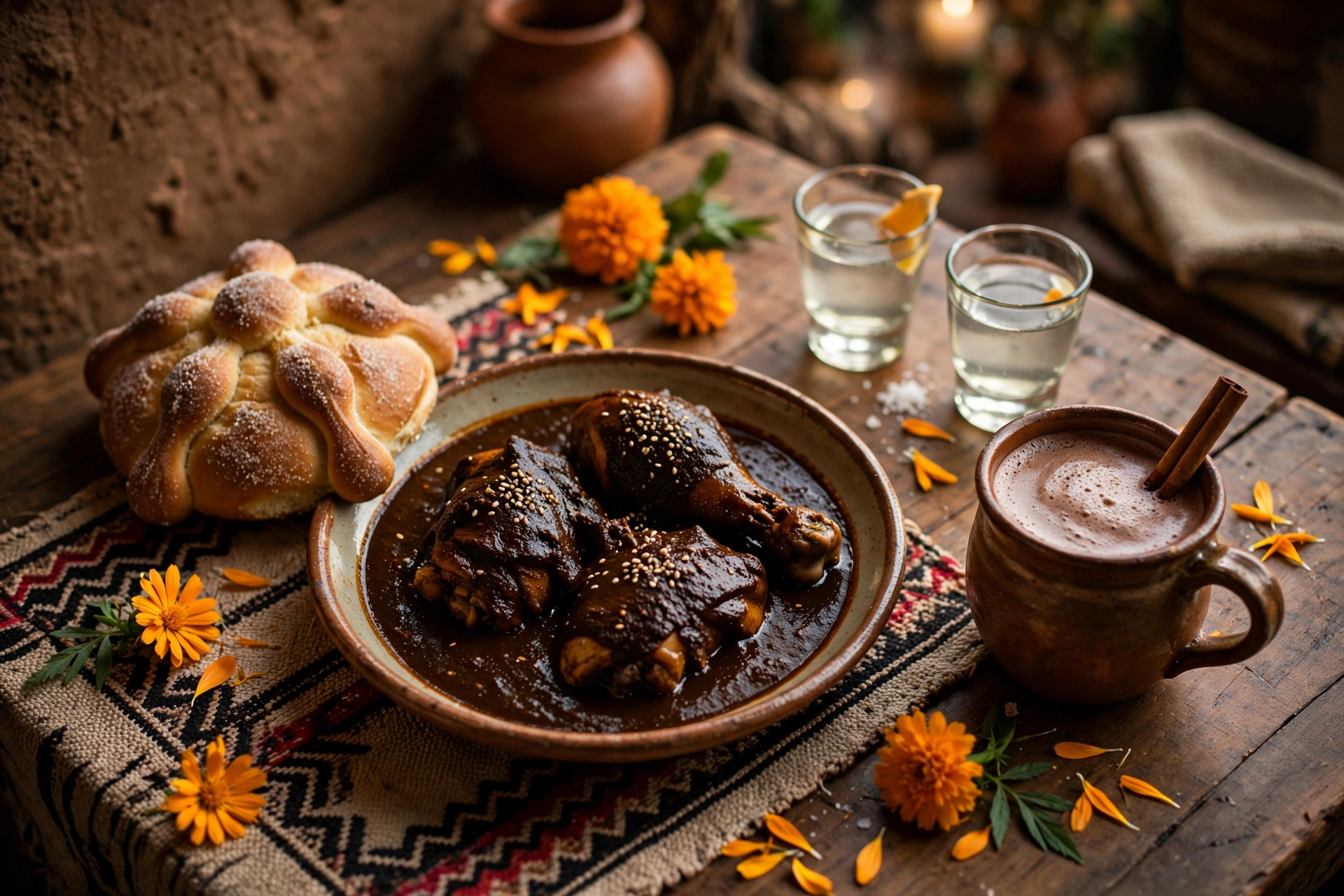
Oaxaca is one of Mexico’s great food cities all year, but during Dia de Muertos it goes into overdrive. Start with mole negro, the dark, complex chocolate and chili sauce served over turkey or chicken. It takes days to make properly, and every family swears theirs is the best. They might all be right.
Then try pan de muerto, the round, sweet bread topped with little dough bones, sold everywhere during the season. Pair it with hot chocolate made with Oaxacan chocolate, whisked until frothy. In the markets, you will find tamales, atole (a warm, thick corn drink), and sugar skulls in every color. Buy the skulls. Write a name on one if a vendor offers. It is a small, respectful way to take part.
Mezcal deserves its own paragraph, because in Oaxaca it is not just a drink. It is a craft, a livelihood, and, during Dia de Muertos, an offering. Visit a small palenque outside the city if you can, where agave is roasted, crushed, and distilled by hand. Taste slowly. Ask questions. Buy a bottle from the maker, not from a random souvenir shop, if you want the real thing. And remember that mezcal on an ofrenda is not decoration. It is a gift for someone who is not here to drink it anymore. That changes how you taste it.
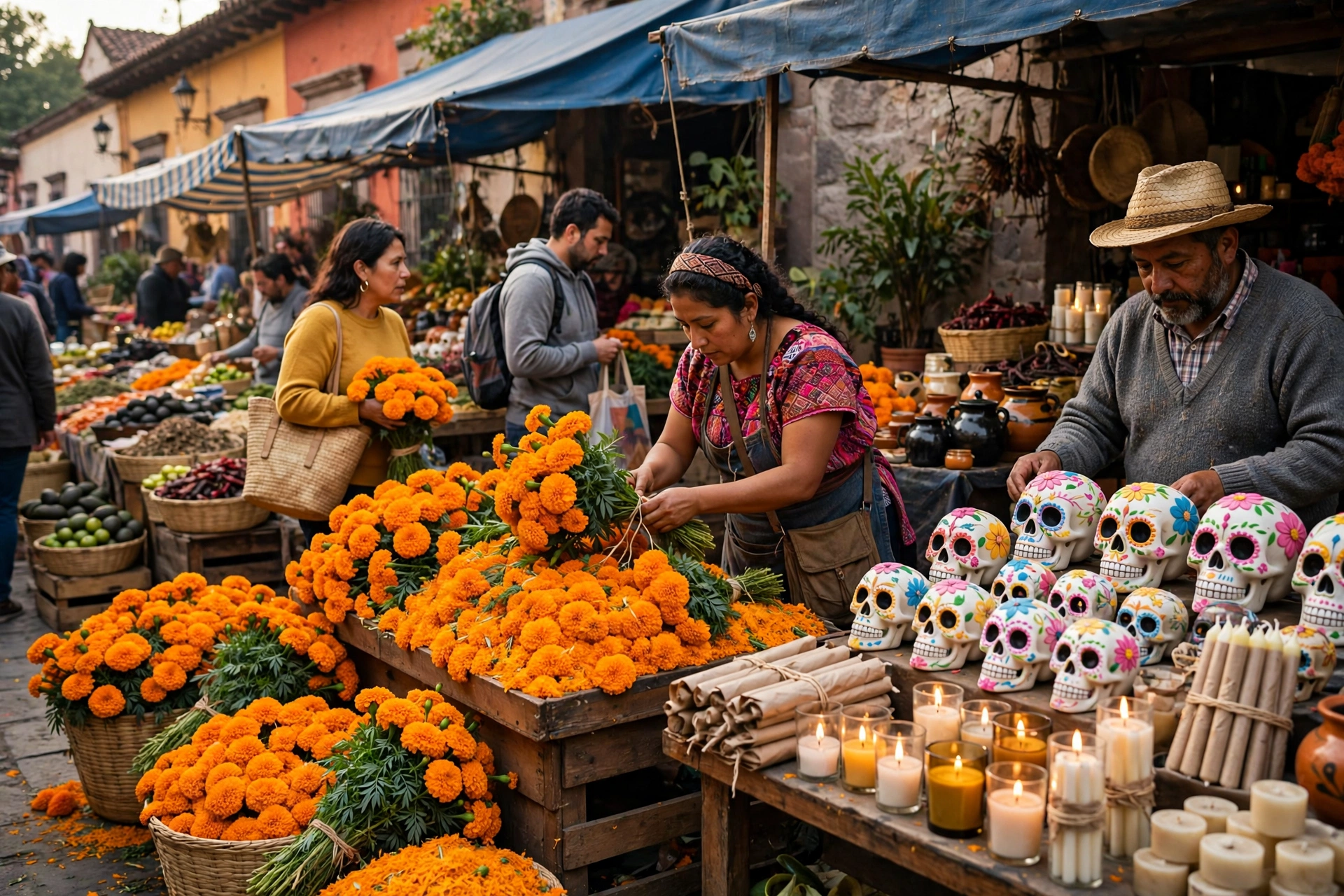
For shopping, the markets are the experience. The Benito Juarez and 20 de Noviembre markets overflow with marigolds, candles, papel picado (perforated paper banners), and altar supplies in late October. Go in the morning, when vendors are setting up and the light is good, and bring cash in small bills. Haggle politely, smile a lot, and do not be surprised if a vendor throws in an extra marigold for luck.
A Simple 4 Day Itinerary That Actually Works
Day one: arrive, settle into the historic center, and walk. Visit the Zocalo altars, the Santo Domingo church and cultural center, and the markets. Eat mole for dinner. Go to bed early, because the next nights will be long.
Day two: spend the morning at the markets and the Jalatlaco neighborhood. In the afternoon, find a good spot for the Gran Comparsa. At night, go to Xoxocotlan for the vigil. Bring a warm layer. November nights in Oaxaca are cooler than the sunny days suggest.
Day three: sleep in, then explore the monumental altars again in daylight, when you can read the details. In the evening, choose between the Jalatlaco comparsa and the San Agustin Etla Muerteada. If you pick Etla, arrange transport in advance.
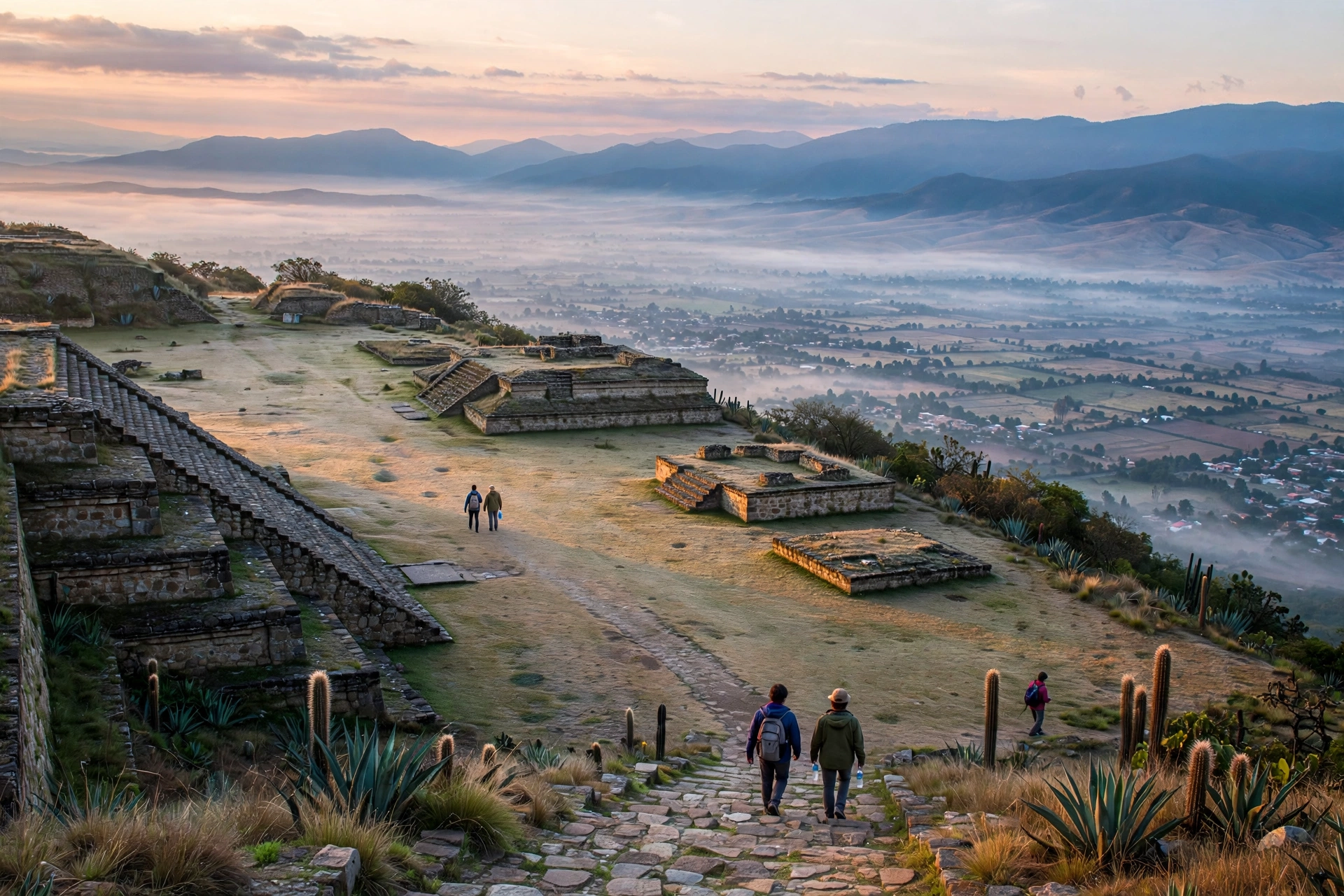
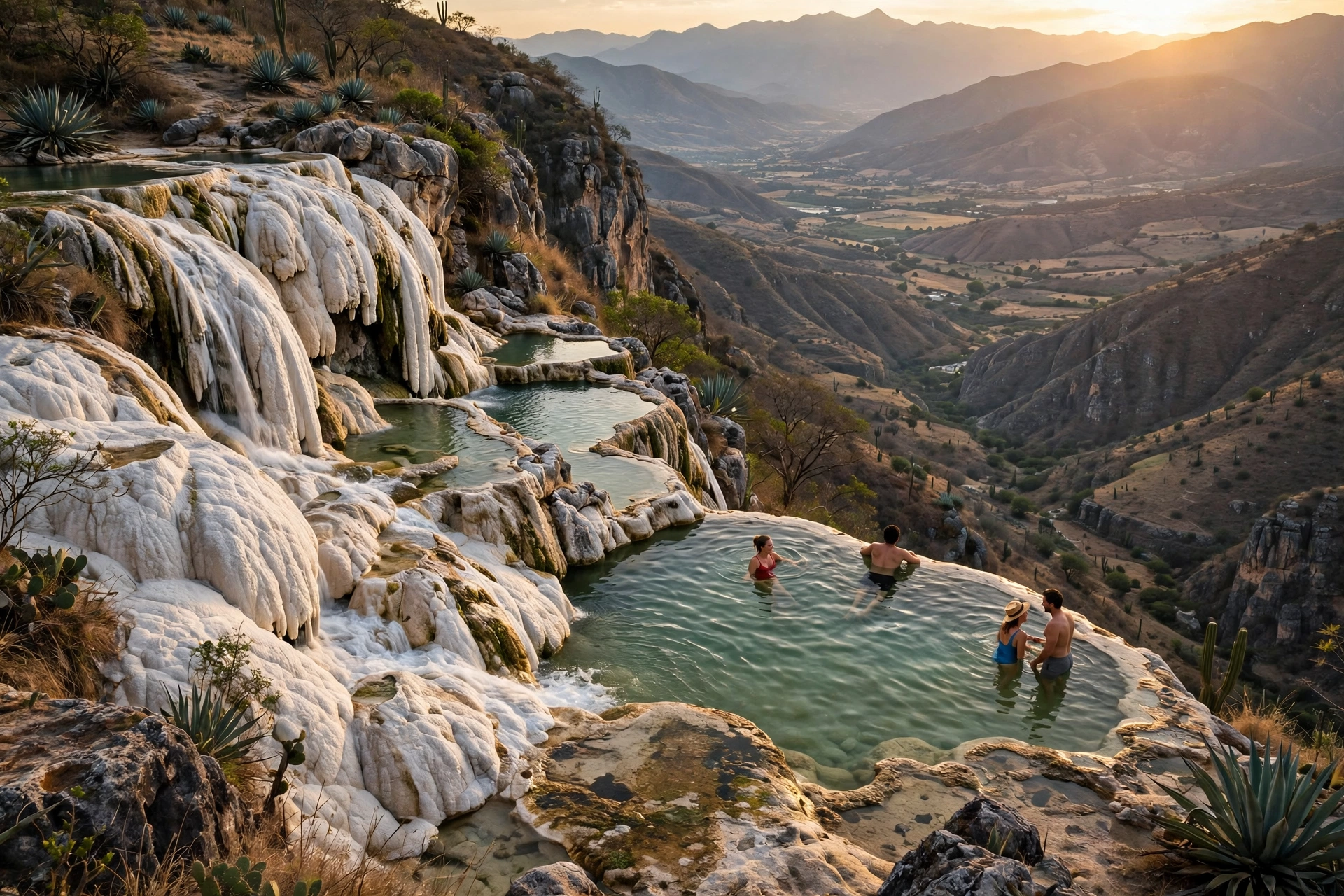
Day four: take a day trip. Monte Alban, the ancient Zapotec capital on a mountaintop above the valley, is about 30 minutes away and gives you the deep history behind everything you have been seeing. Or go to Hierve el Agua, the petrified waterfalls with natural infinity pools on a cliff edge, for a completely different kind of wow. Or visit a mezcal palenque in Santiago Matatlan. Any of the three will remind you that Oaxaca is much more than one festival, however wonderful that festival is.
Day five, if you have it: stay for November 2, the final vigils, and the slower goodbye. Then leave on November 3 with marigold petals still in your bag and a story you will tell for years.
Day Trips Worth Your Time
Monte Alban is the obvious one, and it earns the hype. Founded around 500 BC, it was one of Mesoamerica’s first cities, with grand plazas, ball courts, and carved stones that still puzzle archaeologists. Go early to beat the heat and the tour buses, and hire a guide at the gate if you want the stories, not just the stones.
Hierve el Agua looks like a waterfall frozen in time, because in a way it is. Mineral rich water has deposited rock over centuries, forming pale, cliff like cascades above a valley. The pools at the top are perfect for a swim, and the views are ridiculous in the best sense. Go on a weekday if you can, and bring water shoes for the rocky paths.
If you prefer villages to viewpoints, head to Teotitlan del Valle for handwoven rugs, or San Bartolo Coyotepec for black pottery. Both are easy half day trips, both support artisan families directly, and both will give you gifts that actually mean something when you get home.
Practical Tips That Will Save You Headaches
Getting there: Oaxaca City has an international airport (OAX) with connections through Mexico City and other hubs. From the airport, a taxi or colectivo to the center is straightforward. Once you are in the center, walk everywhere. The historic center is compact, flat, and made for wandering.
Money: bring pesos in cash, especially for markets, cemeteries, and small villages. Many places take cards in the center, but the best experiences often do not. ATMs in the center are fine, but avoid withdrawing late at night in quiet streets.
Safety: Oaxaca City during Dia de Muertos is crowded and festive, and normal travel sense applies. Keep your bag in front of you in parades, do not flash expensive gear in a packed crowd, and use official taxis or ride apps at night. Cemetery vigils are generally safe and welcoming, but go with a friend or a guide if you are nervous, and leave valuables at the hotel.
What to pack: comfortable walking shoes you have already broken in, a light jacket for late nights, a reusable water bottle, sunscreen for the daytime sun, and a small bag for market purchases. Face paint is everywhere during the festival, and getting yours done by a local artist in the Zocalo is a fun, respectful way to join in, if you do it with a smile and not as a costume joke.
Language: you will get by with basic Spanish and a lot of gestures, but learning a few phrases goes a long way. Gracias, por favor, con permiso (excuse me, especially useful in crowded cemeteries), and que hermoso (how beautiful) will open more doors than any guidebook.
Why This Festival Matters More Than Ever
We live in a world that is very good at distracting us from loss. We scroll past it, work through it, and tell ourselves we will deal with it later. Oaxaca does the opposite. Once a year, it stops, builds altars, cooks the favorite meals, lights the candles, and says the names out loud. It turns grief into a gathering, and a gathering into a celebration, without pretending that the loss did not hurt.
That is why people cry at cemetery vigils and then laugh five minutes later, and why nobody thinks that is strange. Both feelings are true at the same time. If you have lost someone, and most of us have, standing in a marigold covered cemetery in Oaxaca at midnight can feel strangely healing. You are not alone in missing someone. An entire city is missing someone, together, and they brought food.
So if you are looking for an adventure that is thrilling, joyful, and genuinely meaningful, skip the generic beach trip this November. Go to Oaxaca. Walk in a comparsa. Sit quietly in a cemetery. Eat mole until you cannot move. Drink mezcal slowly. And when you get home, build a small altar of your own, even if it is just a photo and a candle and a favorite snack. That is how traditions travel, and how the dead stay close, long after the marigolds fade.
Want more adventures like this? Follow The Cavee on Pinterest for weekly travel stories, cave adventures, and handcrafted finds, and read the full story on thecavee.com. If Oaxaca is on your list for 2026 or 2027, start planning now, because the best rooms, guides, and cemetery tours go first, and this is one festival you do not want to watch from the sidelines.
Further reading: Go Oaxaca: Day of the Dead in Oaxaca, dates, cemeteries and parades 2026 and Day of the Dead Festival 2026 guide to Mexico and US celebrations. More from The Cavee: The Maya Called These Sinkholes Gateways to the Underworld, Brazil Just Beat New Zealand as the World’s Number 1 Thrill-Seeker Destination, and Ha Giang Loop 2026: Vietnam’s Wildest Motorbike Adventure.