Your Dog Has Been Eating Off the Floor Its Whole Life. This $85 Wooden Stand Fixes That in One Move
Every dog owner knows the sound. The clatter of a steel bowl skidding across the kitchen tiles at six in the morning, followed by the splash of water spreading toward the fridge. You mop it up, you sigh, and you do the exact same thing tomorrow. Meanwhile your dog is hunched over like a giraffe drinking from a puddle, front legs splayed, neck bent down to a bowl that sits flat on the floor.
It feels normal because it is how most of us grew up feeding dogs. Bowls on the floor, end of story. But spend five minutes watching an older dog eat that way and the picture changes. The stiff legs. The slow lowering of the head. The way they pause halfway through, like the meal itself is hard work. A raised feeder does not just tidy up your kitchen. For the right dog, it changes the whole experience of eating. And when the feeder is a handmade wooden stand, it does something else too. It looks like it belongs in your home instead of looking like a piece of equipment you are hiding behind the bin.
This is the story of one such stand, a $85 pine double bowl feeder from a small Etsy workshop, and everything you should know before you buy one, including the part most sellers will never tell you.
The Puddle by the Fridge Is Not a Dog Problem. It Is a Bowl Problem
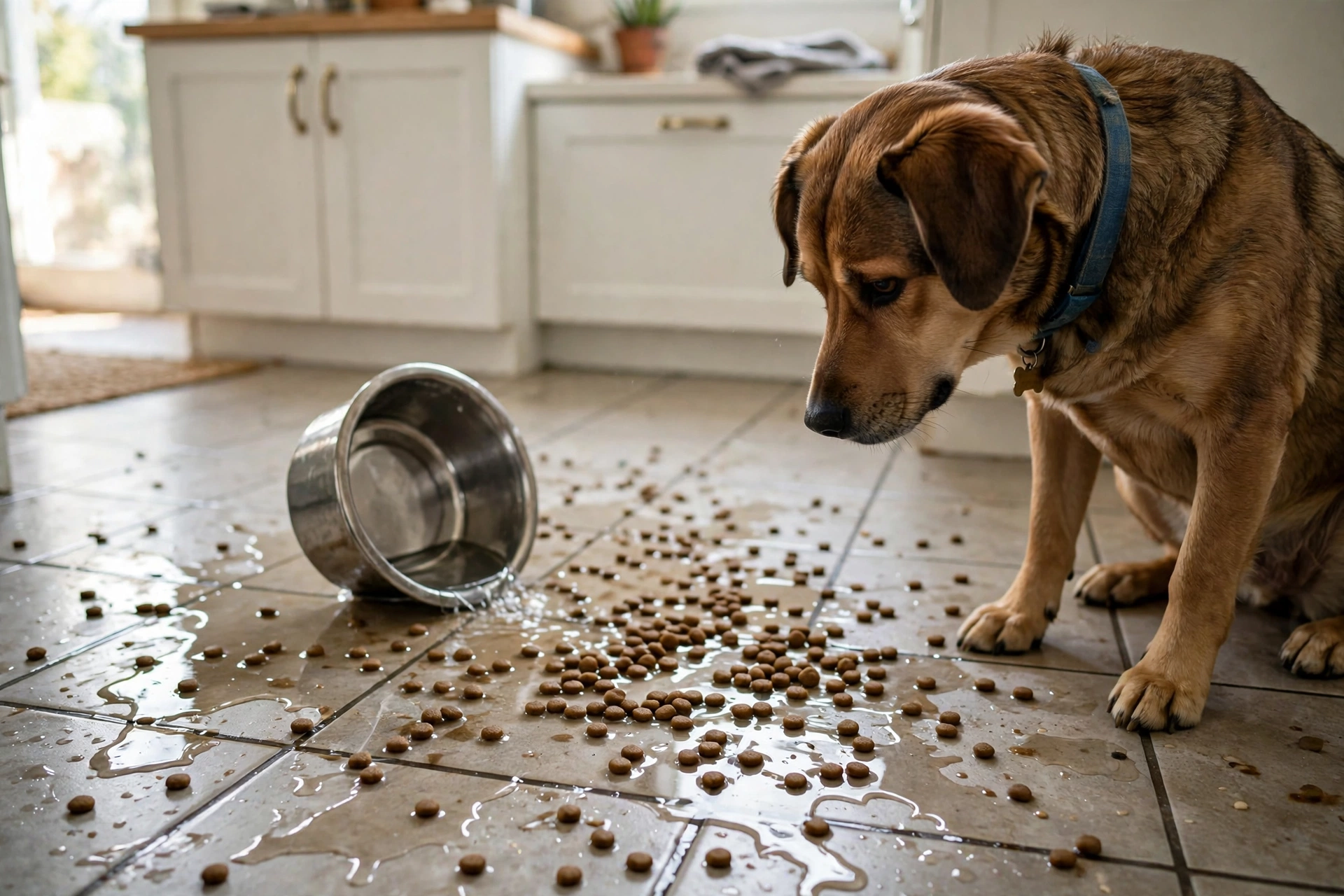
Let us start with the mess, because the mess is what most people notice first. A bowl on a smooth floor has nothing holding it in place. A big dog nudges it with its nose while eating. A small dog paws at it. A thirsty dog drinks with enthusiasm and pushes the water bowl a full foot across the tiles. The result is the same every time. Water on the floor, kibble under the cabinets, and a faint smell you can never quite trace.
I used to keep a towel next to my dog’s bowls, which tells you everything about how well that system worked. The towel was always damp. The floor around the bowls had a permanent ring of water stains. And once a week I would find a piece of kibble that had rolled under the stove and started a tiny ant expedition.
A raised stand solves the sliding problem in the simplest way possible. The bowls sit inside cutouts in a solid wooden frame. They cannot slide, they cannot tip, and they cannot be nosed across the room. The stand itself is heavy enough to stay put, and the bowls lift straight out when you need to wash them. That one change, bowls held in a frame instead of loose on the floor, ends about ninety percent of the daily mess.
There is a second benefit that is easy to miss. When the bowls are raised, the dog is not pushing food out of the bowl with the same downward force, so less food escapes onto the floor in the first place.
Meet the Stand: $85 of Solid Pine From a Small Etsy Workshop
The stand at the center of this story is the 7 inch Raised Dog Feeding Stand Double Bowl, Classic Custom, made by HawthorneHardwoods on Etsy. It costs $85.00, it is in stock, and it carries a perfect 5 out of 5 star rating from buyers.
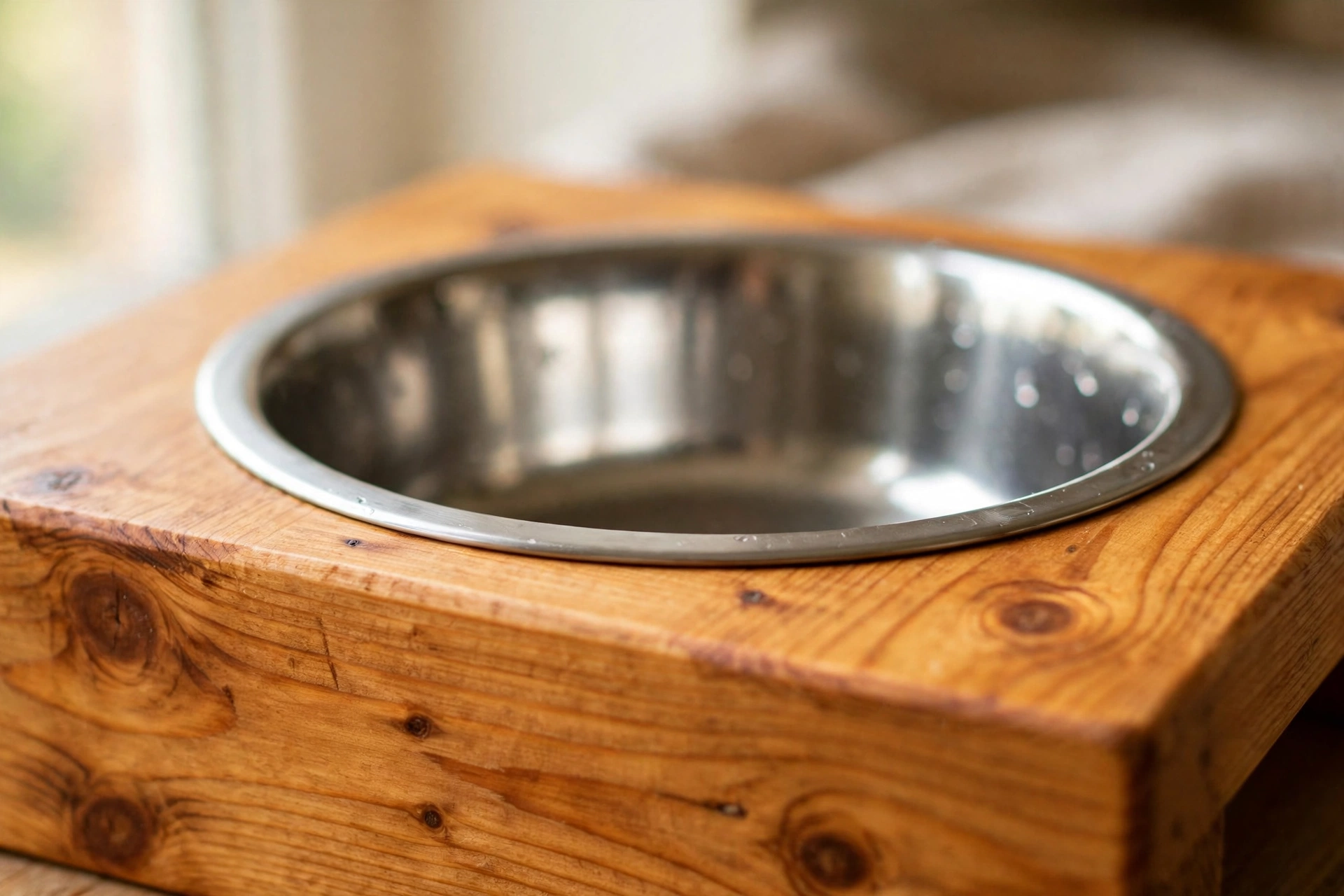
Here is what you actually get for that money. A solid pine frame with a stained wood top, 23 inches long, 10.5 inches deep and 7.5 inches tall, holding two 32 ounce food grade stainless steel bowls. The bowls are 18/8 steel, which is the same grade used in decent kitchenware, so they will not rust or hold smells the way cheap bowls do. The shop offers custom sizes too, so if 7 inches is not right for your dog, you can ask for a different height before you order.
Eighty five dollars is not the cheapest feeder on the internet. You can buy a plastic elevated feeder for half that. But this is the difference between a thing you replace every year and a thing that sits in your kitchen for a decade. Solid pine, properly stained, does not crack the way molded plastic does, and it does not look like a vet clinic accessory. It looks like furniture. That matters when the feeder lives in the middle of your kitchen, which is where most of them live.
If you want to see it for yourself, the listing is here: 7 inch Raised Dog Feeding Stand Double Bowl on Etsy, made by HawthorneHardwoods.
Why Raising the Bowl Helps Some Dogs So Much
Watch a dog eat from the floor and pay attention to the neck. To reach a bowl on the ground, a medium or large dog has to lower its head well below shoulder level and hold it there for the whole meal. For a young, healthy dog, that is no big deal. For an older dog with arthritis, a stiff neck, or a sore back, it is genuinely uncomfortable.
Vets commonly recommend raised feeders for exactly those dogs. A senior dog with arthritis in its neck or spine does not have to bend as far. A dog recovering from surgery can eat without straining. And dogs with megaesophagus, a condition where food does not move down the throat normally, often need to eat upright so gravity can help the food reach the stomach. For these dogs, a raised bowl is not a luxury. It is part of their care.
The right height is simple to work out. Measure your dog from the floor to the top of its shoulders, then subtract three to six inches. The rim of the bowl should sit around lower chest height, so your dog can eat with its neck mostly straight instead of bent down or craned up. The 7 inch stand in this article suits small to medium dogs. A tall dog like a Great Dane needs something much higher, sometimes 16 to 20 inches, and that is where a shop that makes custom heights earns its money.

The Honest Part: The Bloat Question Nobody Puts in the Product Description
Here is the part most sellers skip, and it matters, so read it carefully. For years, raised feeders were sold as a way to prevent bloat in large dogs. Then the research came back and said the opposite might be true.
Bloat, properly called gastric dilatation and volvulus or GDV, is a fast, life threatening emergency where the stomach fills with gas and twists. It mostly strikes large and giant deep chested breeds like Great Danes, Weimaraners, Saint Bernards and Irish Setters. A Purdue University study published in 2000, known as the Glickman study, followed about 1,637 large and giant breed dogs for around five years. It found that feeding from a raised bowl was associated with an increased risk of GDV in that group, with the authors estimating that roughly 20 percent of GDV cases in large breeds and about 52 percent in giant breeds could be attributed to a raised feed bowl.
That is a striking finding, and it is also not the whole story. The study was observational, which means it found a link, not proof that the bowl caused the bloat. A later survey of 2,551 dogs published in 2012 found no significant link between feeder height and bloat. A systematic review in Veterinary Evidence concluded the evidence is limited and not strong enough for a confident blanket recommendation either way. The American Kennel Club reflects that caution in its own guidance, noting the older study and advising owners of at risk dogs to ask their vet.
So where does that leave you? With a simple, honest rule. If your dog is a healthy small or medium breed, or an older dog with arthritis or neck pain, a raised feeder is a reasonable, comfortable choice. If your dog is a large or giant deep chested breed, talk to your vet before you elevate anything, and feed from the floor unless your vet says otherwise. A raised bowl is a targeted tool, not a universal upgrade, and your vet knows your dog’s risk better than any product page does.
You can read the AKC’s guidance on choosing the right bowl here: AKC: Choosing the Right Dog Bowl.

Big Dogs, Small Dogs, and Getting the Height Right
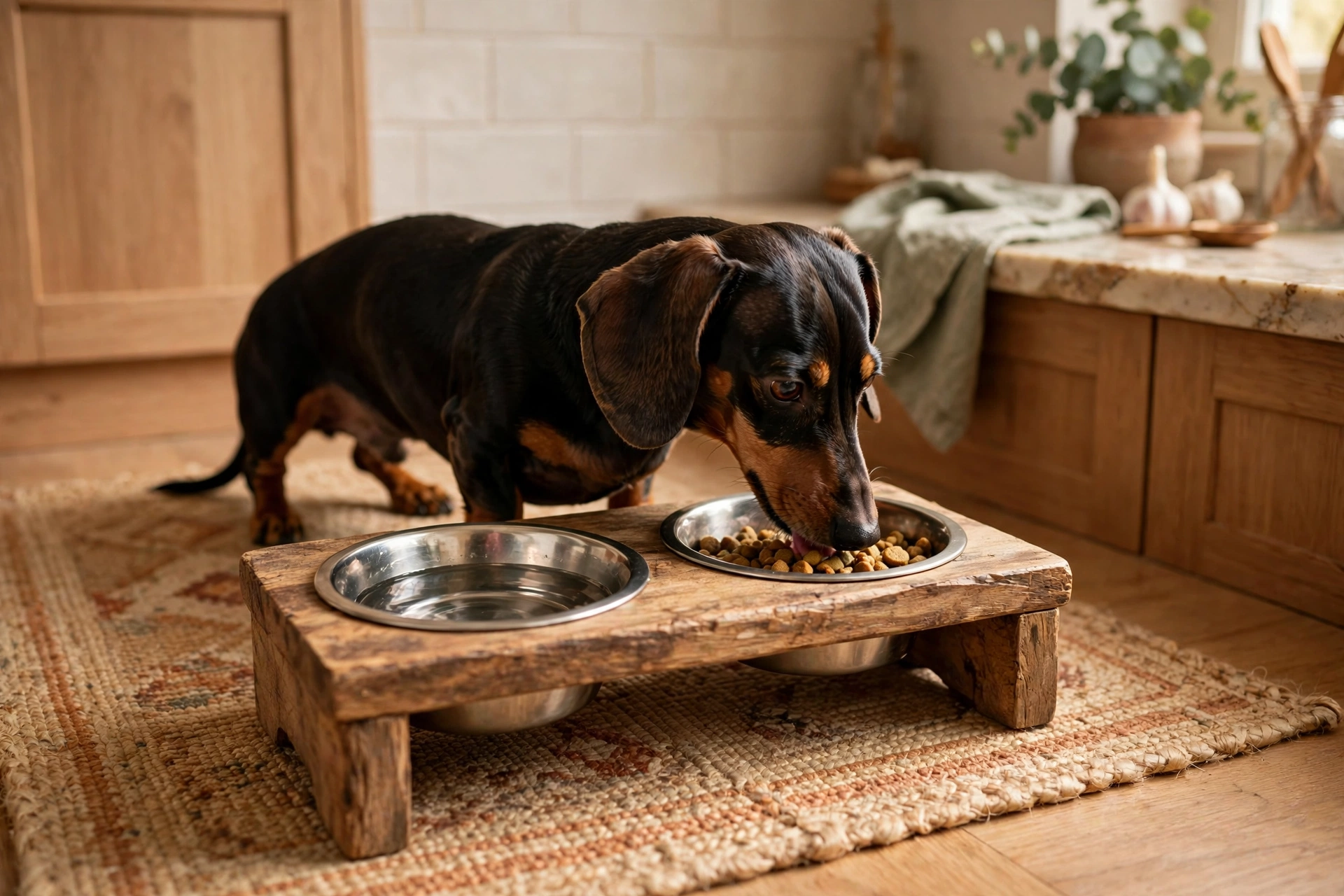
One size does not fit all dogs, and this is where most people go wrong with raised feeders. A stand that is perfect for a beagle is useless for a Great Dane, and a stand built for a Dane will have a dachshund eating with its chin in the air.
For small dogs, a 4 to 7 inch stand is usually right. For medium dogs like spaniels, border collies and labs, 7 to 12 inches is the common range. For large dogs, 12 to 16 inches. For giant breeds, 16 to 20 inches, and only after the vet conversation above. Puppies are a special case. They grow fast, and a stand that fits in March will be too short by June, so either buy adjustable or wait until they are close to full grown.
The HawthorneHardwoods stand comes at 7 inches as standard, which puts it squarely in the small to medium range, and the shop makes custom heights on request. That matters, because a feeder at the wrong height is worse than no feeder at all. Too low and nothing changes. Too high and your dog is reaching up to eat, which strains the neck in the other direction.
Measure twice. Stand your dog on a flat floor, measure from the floor to the top of the shoulders, subtract three to six inches, and that is your target bowl height. Write the number down before you shop, and do not guess.
Wood, Plastic, or Metal: What Actually Lasts in a Kitchen
Plastic feeders are cheap and light, and that is their whole argument. They slide around, they scratch, and scratched plastic harbors bacteria in the grooves. They also look like what they are, which is fine in a laundry room and less fine in a kitchen you actually care about.
Metal stands are sturdy and easy to wipe, but they can be noisy, they can rust at the joints if the coating chips, and they tend to look industrial. Stainless steel bowls are the gold standard for the bowls themselves, and the HawthorneHardwoods stand uses them, but the frame is where wood wins.
Pine is a softwood, so it needs a decent finish to survive daily water splashes, and that is the one thing to check before you buy any wooden feeder. The stain and sealant should be food safe and water resistant. Ask the seller what they use. A well sealed pine stand wipes clean with a damp cloth, and the bowls lift out for a proper wash. If you ever need to refinish it, a light sand and a fresh coat of food safe oil brings it back.
Wood also ages well in a way plastic never does. A pine stand picks up a patina. It starts to look like it has always been in your kitchen, which is exactly what you want from a piece of handmade furniture.
What to Check Before You Buy Any Raised Feeder
Before you spend money, run through this short list. It takes two minutes and it saves you from buying the wrong thing.
First, the height. Measure your dog and match the stand to the number, not to the photo. Second, the bowl size. Two 32 ounce bowls suit most medium dogs, but a big drinker or a multi dog household may need more. Third, stability. A stand should be heavy enough that a determined dog cannot shove it across the room. Solid wood wins here. Fourth, cleaning. The bowls should lift out easily, and the wood should wipe down without soaking up water. Fifth, the finish. Food safe, water resistant, and no strong chemical smell when it arrives.
And one more, because it matters more than people think. Check the return policy and the reviews. A 5 star rating across real buyers, like this stand has, tells you the shop delivers what it promises. A shop that offers custom heights tells you they actually make the thing instead of reselling it.
Where It Fits in Your Home
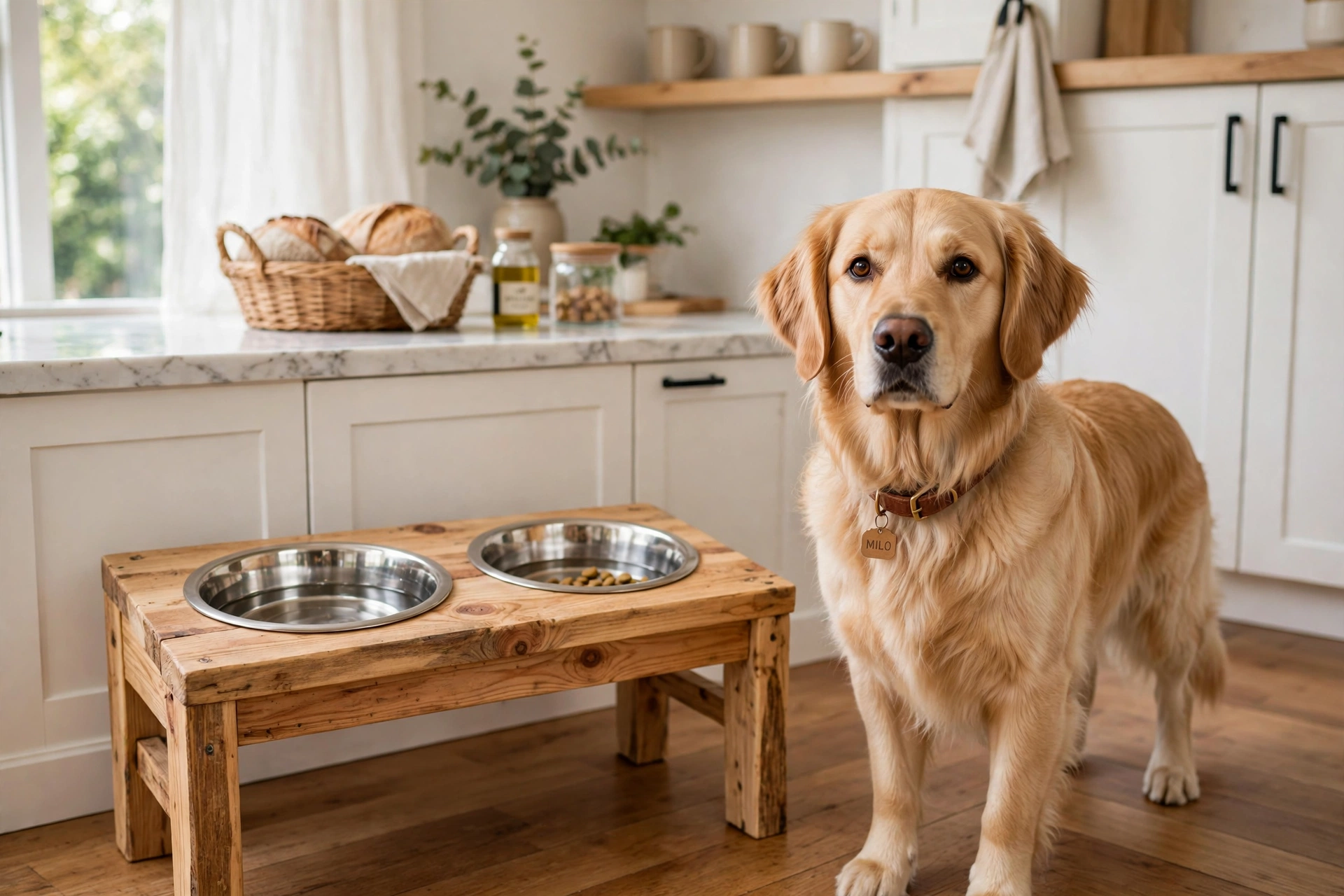
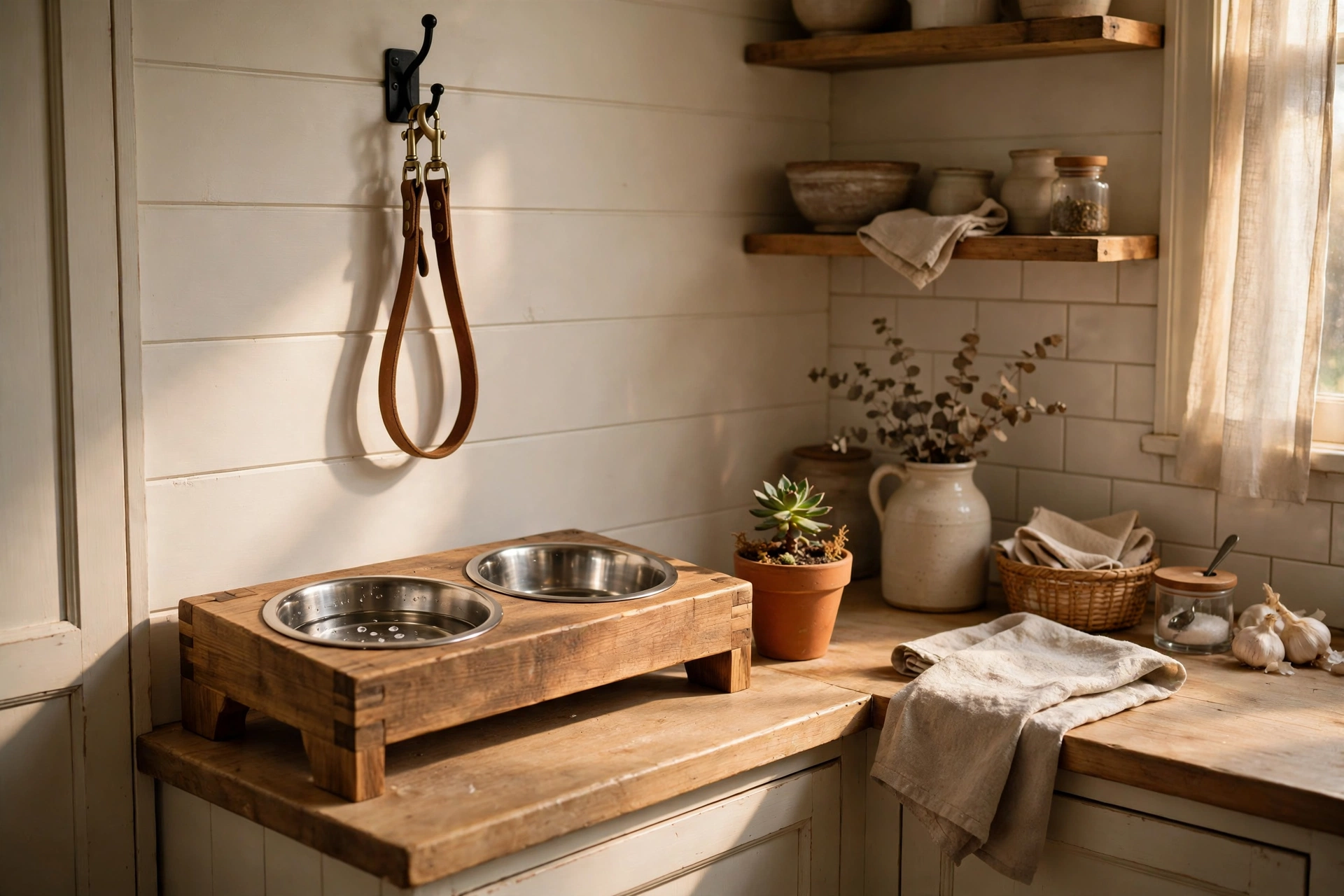
This is the part that surprised me most. A wooden feeder does not need to be hidden. The HawthorneHardwoods stand, with its warm stained pine and clean lines, looks at home next to a farmhouse kitchen island or under a window in a cottage style kitchen. Hang the leash on a hook above it, put a small plant nearby, and the dog’s corner stops looking like a dog’s corner and starts looking like part of the room.
That is the real appeal of handmade wooden pet furniture. It treats your dog’s space as part of your home, not as an afterthought. If you have ever tried to make a plastic feeder look good in a photo, you know exactly what I mean.
If you like this kind of handmade wooden home decor, you will enjoy our guide to handmade wood and epoxy resin coasters, which solve a different daily annoyance in the same warm, crafted style. Our handmade wooden cookbook stand guide is another kitchen favorite, and the book shaped acacia cutting board set is the most fun thing in our kitchen right now.
The Verdict: Who Should Buy This Stand
Buy it if your dog is small or medium sized, if your kitchen floor is always wet around the bowls, if your older dog hesitates before lowering its head to eat, or if you simply want the dog’s corner of your kitchen to look like it belongs there. At $85, with solid pine, two food grade steel bowls and a 5 star track record, it is fairly priced for what it is, and it will outlast three plastic feeders.
Skip it, or at least call your vet first, if your dog is a large or giant deep chested breed. That is not a flaw in the product. It is a fact about bloat risk that applies to every raised feeder, and any honest guide should say so.
For the rest of us, the change is simple and immediate. No more puddle by the fridge. No more bowl skidding across the tiles at dawn. No more watching an old friend struggle to eat. Just a solid piece of handmade wood, two steel bowls, and a dog that can finally eat like it is comfortable.
Want more handmade wooden finds like this one? Follow The Cavee on Pinterest, where we share a new handcrafted wooden piece every day, and read the full story on thecavee.com.