The Stairs of Death Are Real: Your 2026 Guide to Climbing Huayna Picchu Above Machu Picchu
Here is the thing most visitors to Machu Picchu never find out until it is too late. That steep green pyramid in the background of every postcard photo? You can climb it. And the view from the top is, honestly, the best view in Peru. The catch is that only a few hundred people a day are allowed up there, the tickets sell out months ahead, and a regular Machu Picchu ticket does not include the climb at all.
I have watched too many travelers stand in the citadel, point at the peak, and ask their guide how to get up there, only to hear that the permits for their date sold out in June. This guide exists so that does not happen to you. Below is the 2026 ticket price, the exact ticket to buy, the booking steps, what the climb is actually like, and what to do if the permits are already gone.
First, What Is Huayna Picchu?
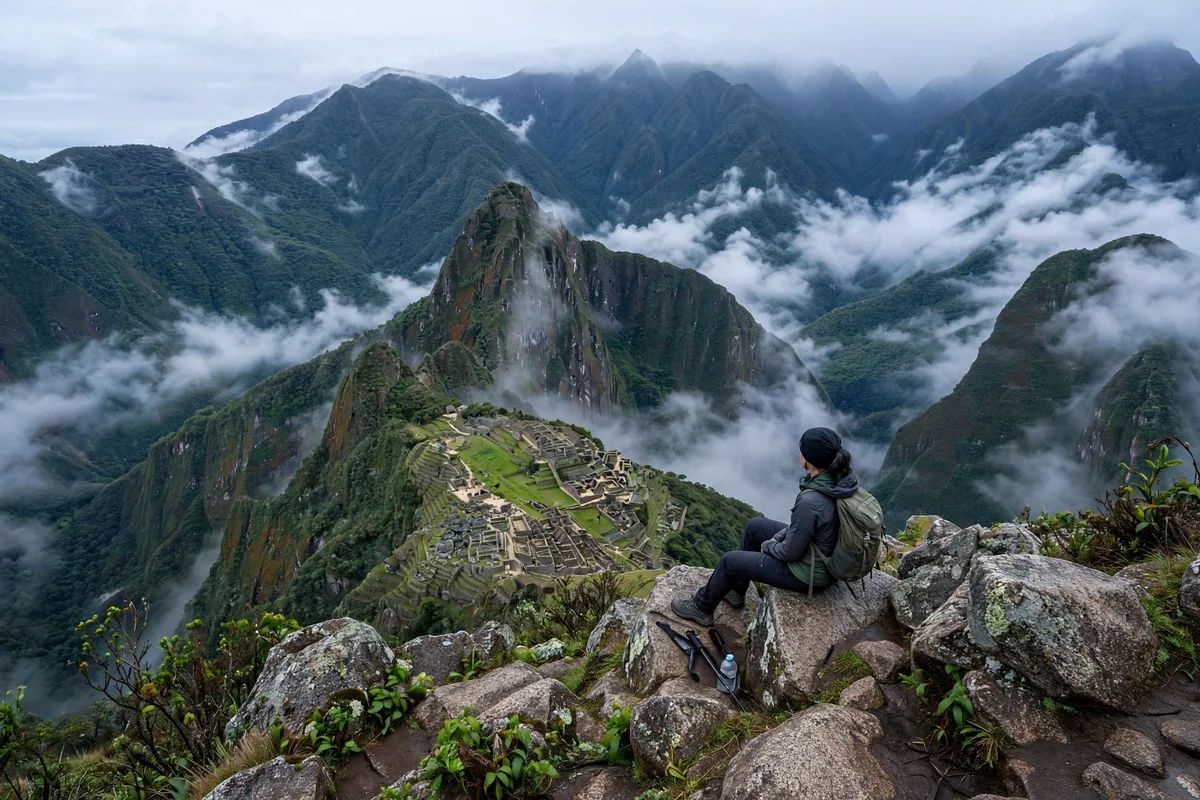
Huayna Picchu, spelled Waynapicchu in Quechua, means young peak. It is the sharp mountain that rises directly behind the Machu Picchu ruins, the one you see in every famous photograph. The citadel sits at about 2,430 metres above sea level. The summit of Huayna Picchu is 2,720 metres, so you climb roughly 300 metres above the ruins, on stone stairs built by the Inca themselves.
The Inca did not just admire the peak from below. They built terraces and a small temple on the summit, and the trail to the top is an original Inca path, which is part of what makes the climb feel so strange and special. You are not walking on a modern hiking trail. You are walking on steps that have been there for about 500 years, and some of them are barely wider than your foot.
The whole climb takes most people two to three hours there and back. It is not a technical climb. There are no ropes and no climbing gear involved. But it is steep, exposed in places, and it demands your full attention. That combination, easy to attempt and impossible to forget, is exactly why it is so popular.
The Real Problem: The Ticket
Let us get the hard part out of the way first, because this is where most trips go wrong. You cannot just turn up and climb Huayna Picchu. It needs its own ticket, sold as Circuit 3, Route 3-A, and it is separate from every other Machu Picchu ticket. If you buy the classic Circuit 2 ticket, the one most people buy, you get the famous postcard viewpoint and the citadel, but not the mountain.
Here are the numbers that matter for 2026. A foreign adult pays 200 soles for the Route 3-A fare, plus an 11 sole conservation charge, so 211 soles in total, which works out to roughly 55 to 60 US dollars depending on the exchange rate. Students and minors pay less, and Peruvian and Andean Community visitors pay a lower promotional fare. Prices are published in soles, so the dollar figure moves around, and you should always check the final total at checkout.
The daily allocation is small, only a few hundred permits a day, and the route routinely sells out three to five months ahead in the dry season. There are two morning entry groups, and the exact times are printed on your ticket, so check them carefully when you book. Once you are on the mountain, you have a maximum of three hours between the entry and exit controls. Climbers need to be at least 12 years old.
The only official place to buy is tuboleto.cultura.pe, the booking platform run by Peru’s Ministry of Culture. That is the whole secret. Book the ticket first, then build your trains and hotels around the date and time printed on it. Third party sellers will happily charge you double for the same ticket, and some of them sell the wrong circuit entirely. For a full breakdown of how the 2026 circuits and prices work, this 2026 Machu Picchu tickets guide is a useful second opinion.
One more thing worth knowing: the ministry also sells about 1,000 tickets a day in person at the cultural centre in Aguas Calientes, the town below Machu Picchu. That sounds like a safety net, but Huayna Picchu permits almost never survive to the in-person sale in high season. Do not plan your trip around it.
The Climb, Step by Step
Your day starts at the checkpoint near the Sacred Rock, at the back of the citadel. You show your passport, sign the register, and then the stairs begin. The first twenty minutes are a warm up through cloud forest, wide enough to walk comfortably, with the sound of the Urubamba river far below. Then the mountain stops being polite.
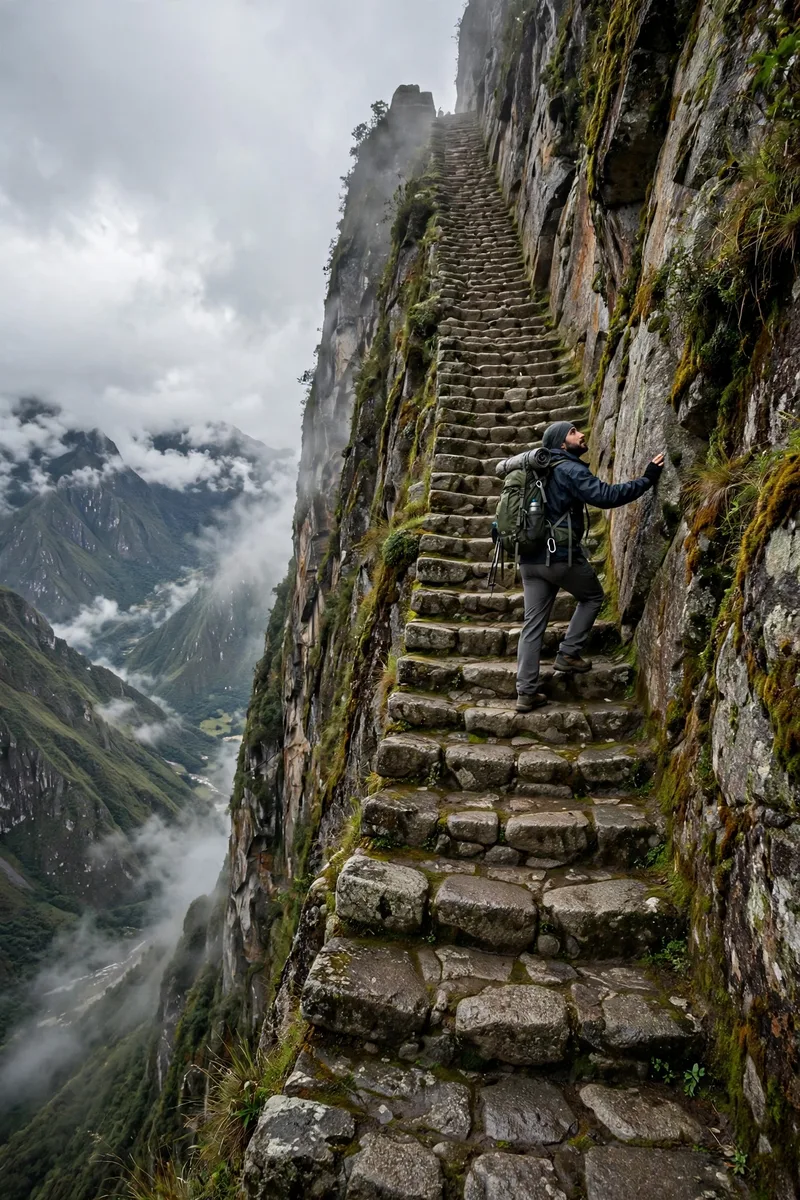
The steps get narrower and steeper, and the trail starts to hug the rock. This is the section everyone talks about: the Stairs of Death. It is a flight of steep granite steps with a sheer drop on one side and no handrail. The name is dramatic, and yes, it is dramatic on purpose, but the steps themselves are the real deal. You go slowly, you keep three points of contact, and you do not look at your phone. Most people find it far less scary than they expected, because the rock is solid and the steps are carved deep. The fear comes from the exposure, not from the footing.
After the stairs there is a short tunnel through the rock, low enough that you duck, and then the trail levels out toward the summit. The top is a small, flat area with the ruins of a little temple and a 360 degree view that genuinely stops people mid sentence. The citadel sits below you like a model village. The Urubamba river curls around the base of the mountain. Green peaks roll away in every direction, and on a clear morning the clouds sit below you instead of above you.
Most people spend twenty to thirty minutes on top, taking photos and catching their breath, and then head down. The descent is often harder than the climb. Your knees do the work, the stone can be slick, and you go down the Stairs of Death facing the rock, which feels odd but is much safer. Total time, up and down, is two to three hours for most hikers.
How Hard Is It, Honestly?
Let us be straight about this, because the internet is full of both exaggeration and understatement. The climb is not a mountaineering expedition, and you do not need to be an athlete. If you can climb several flights of stairs without stopping, you are fit enough. The altitude is not the problem either. The summit is 2,720 metres, which is lower than Cusco at about 3,400 metres, so if you have spent a day or two acclimatising in Cusco, your body will already be used to thinner air.
The real filter is fear of heights. There are exposed sections, and there is no getting around them. If drops make your stomach turn, this climb will be miserable for you, and there is no shame in skipping it. The citadel itself is extraordinary, and a miserable climb ruins a wonderful day. On the other hand, if you are nervous but not phobic, most people find the exposure manageable once they are moving. The trick is to look at the steps, not at the drop.
Who should skip it? Anyone under 12, since that is the official minimum age. Anyone with bad knees, a heart condition, or serious vertigo. And anyone who is already exhausted from the Inca Trail or a long travel day. Huayna Picchu deserves fresh legs.
What to Pack for the Climb
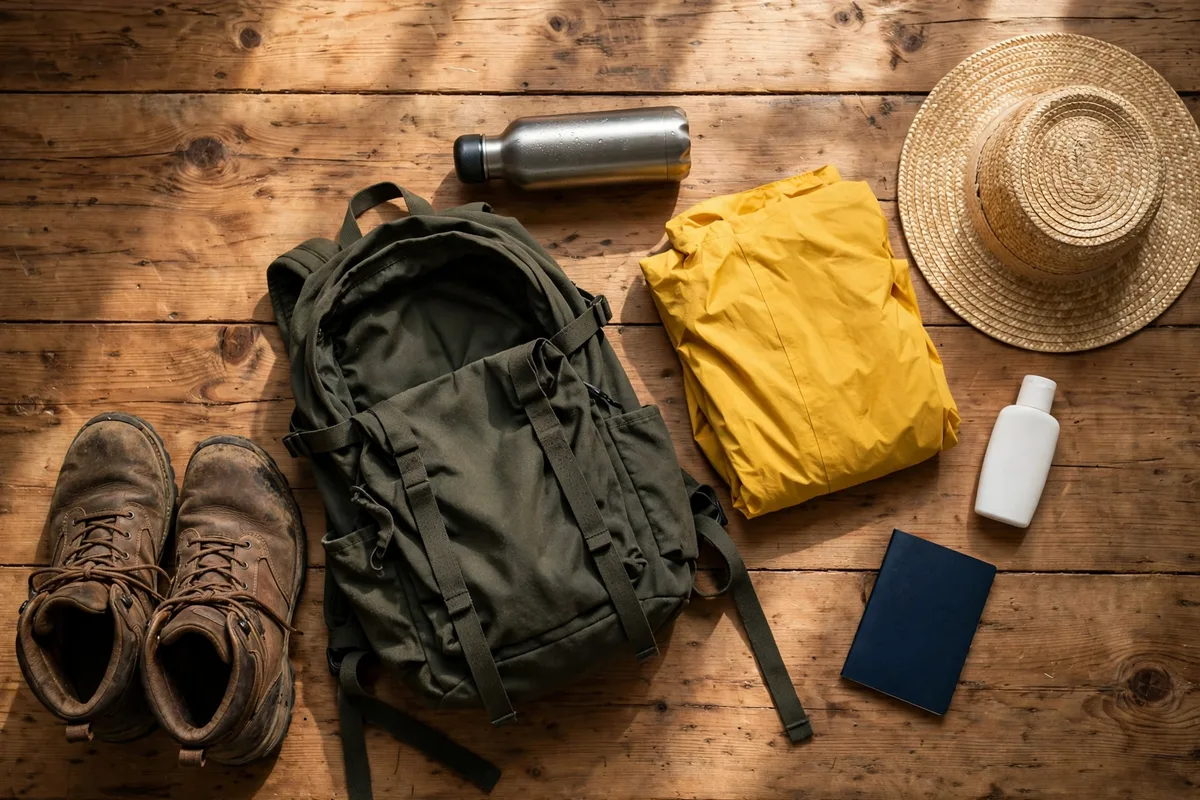
Pack light, because you carry everything up 300 metres of stairs. One litre of water per person is the minimum, and two is better on a sunny day. There is no water for sale on the mountain. Sun protection matters more than most people expect, because the sun at altitude is fierce even when the morning feels cool. A rain jacket is worth carrying year round, since mountain weather changes fast.
Wear shoes with real grip. Trainers with worn soles are a bad idea on smooth, wet granite. Hiking shoes or trail runners are perfect. A small daypack, a sun hat, snacks, and your passport, which you need at the checkpoint, complete the list. Leave the big luggage in Aguas Calientes. You will not want it on the stairs, and there is nowhere to store it at the checkpoint.
Getting There: Cusco to the Summit
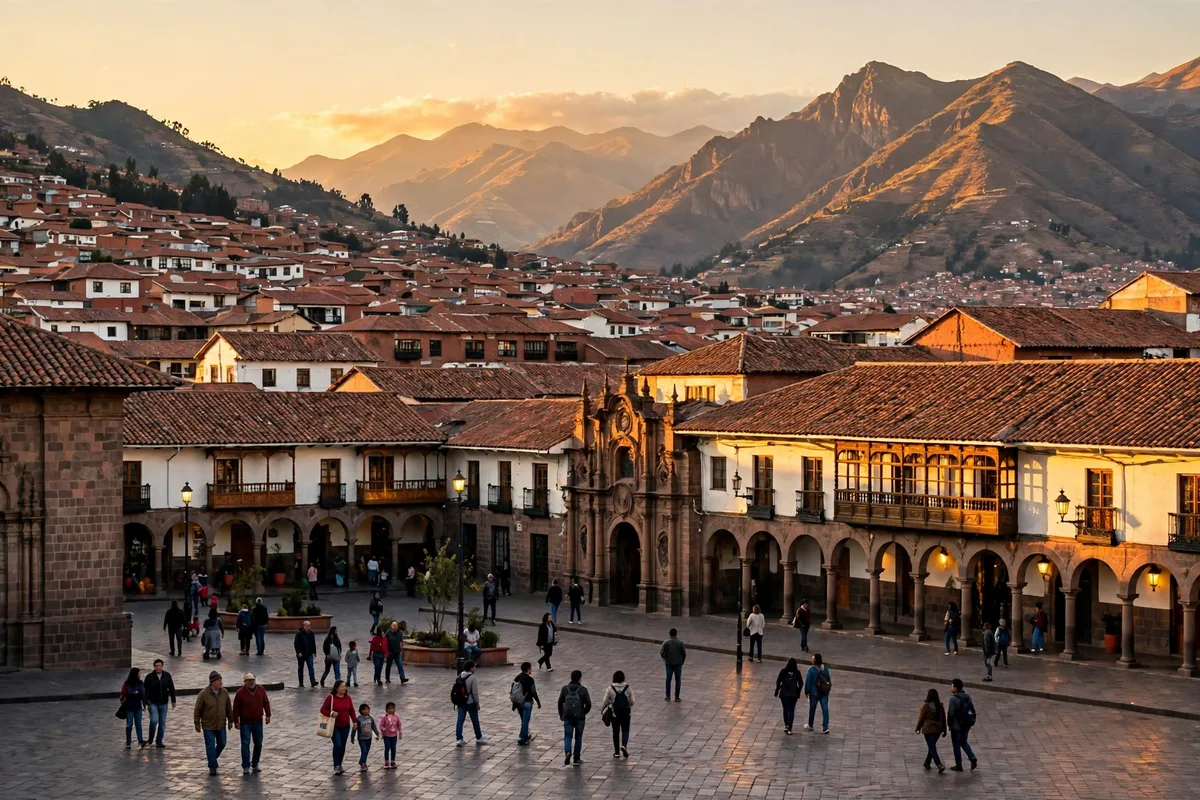
Almost every Huayna Picchu climb starts in Cusco. Fly in, spend one or two days acclimatising, and enjoy the city itself, which is one of the most beautiful old cities in South America. Then take the train from Ollantaytambo, or from Cusco itself, down to Aguas Calientes, the small town at the foot of Machu Picchu. The train ride follows the Urubamba river through a deep green gorge, and it is a lovely trip in its own right.
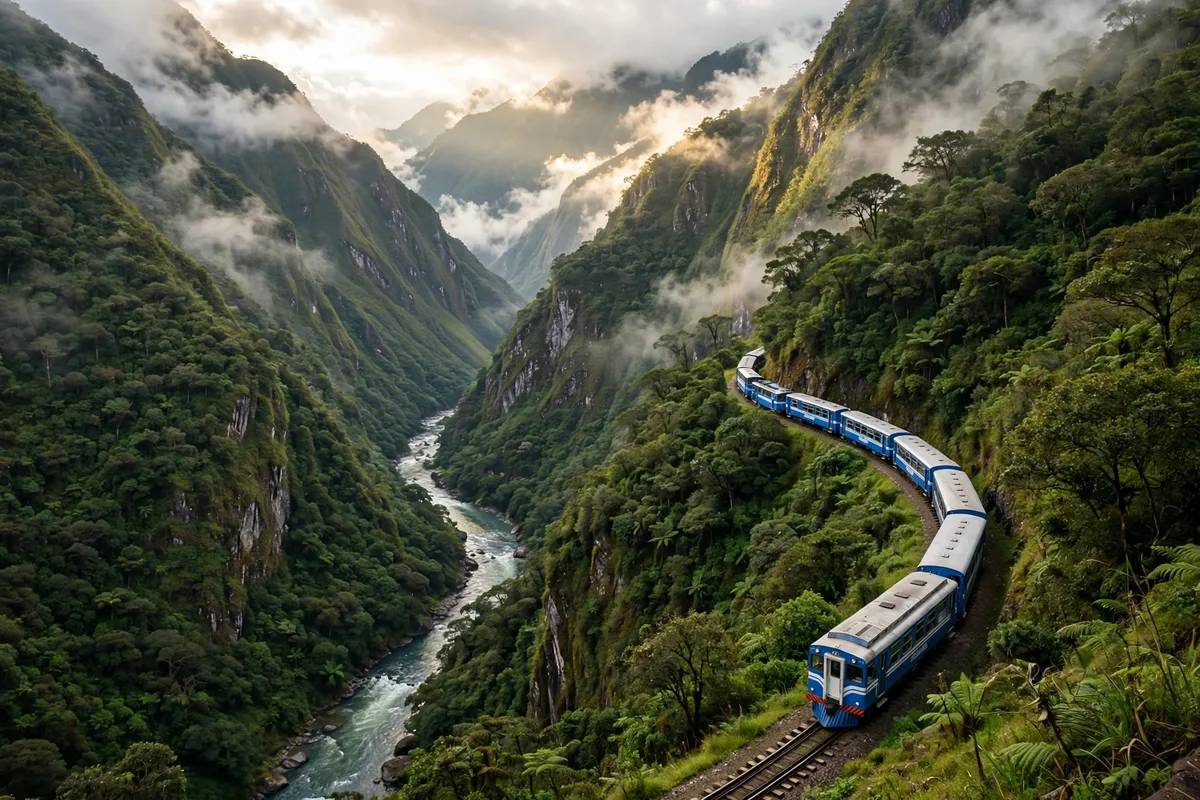
Sleep in Aguas Calientes the night before your climb. In the morning, take the bus up to the Machu Picchu entrance, which takes about 25 minutes, or hike the stone stairway from town, which takes about an hour and a half and is a serious workout on its own. Either way, arrive early. Your entry group is timed, and if you miss your window, you lose the slot. There are no refunds and no second chances.
A word on the wider numbers: Machu Picchu itself caps visitors at about 5,600 a day in high season and 4,500 the rest of the year, and those caps include every circuit. That is why the whole trip rewards planning. Buy the Huayna Picchu ticket first, then the train, then the hotel, in that order. And if you are thinking of the Inca Trail as well, remember it closes every February for maintenance.
When to Go
The dry season, May to September, is the classic window. Skies are clearest, the stairs are driest, and the views from the summit are at their best. It is also when tickets are hardest to get, so book as early as you can. November, when this guide is written, is a shoulder month. The landscape is greener, the crowds are thinner, and you can still get clear mornings, but afternoon rain becomes more likely.
December to March is the wettest stretch. The climb is still possible, and some of the quietest days of the year happen in the rainy season, but the stone gets slippery and the mountain is more often wrapped in cloud. If you go in the wet season, pick the earliest entry group you can, because mornings are usually the driest part of the day.
Sold Out? Here Are the Backups
If Route 3-A is sold out for your dates, you still have good options, and each one needs its own ticket, so check availability on the official platform before you rearrange anything.
Machu Picchu Mountain, Route 1-A, is the bigger, gentler sibling. At 3,082 metres it is higher than Huayna Picchu, the trail is wider and less exposed, and the climb takes three to four hours. The view from the top is wider and more sweeping, and it suits people who want the summit feeling without the Stairs of Death.
Huchuy Picchu, Route 3-D, is the easy one. It takes about 30 to 45 minutes, the trail is short and gentle, and it works well for families and for anyone short on time. The view is still lovely, just lower and closer to the citadel.
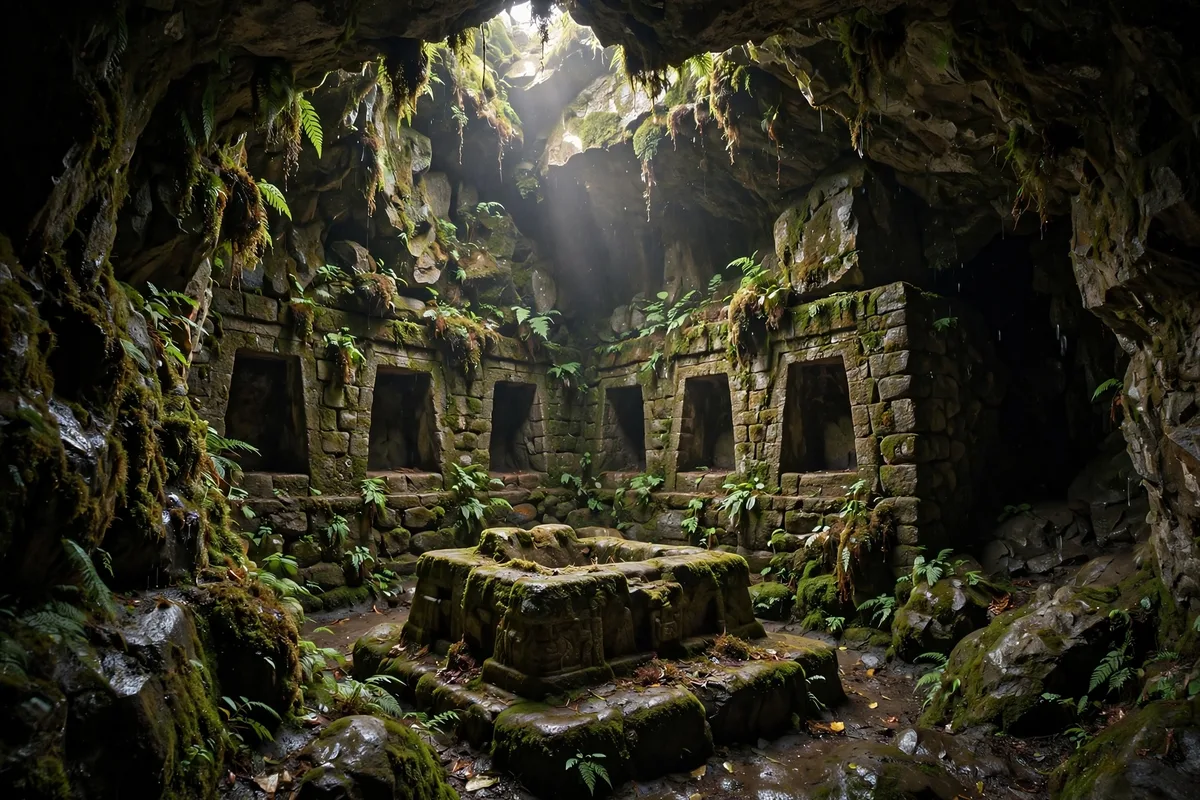
The Great Cavern, Route 3-C, is the mysterious one. It leads to the Temple of the Moon, a carved stone chamber inside a natural cave on the back side of Huayna Picchu. It is a separate ticket and a separate route from the summit climb, and it feels like a different world: cool, quiet, and strange after the bright open citadel. If you like caves and hidden places, this is the one to chase. You can read more about it in this Huayna Picchu guide, which covers the routes side by side.
And if none of the mountain routes work out, remember that Peru has no shortage of big walks. The trek to Choquequirao, Machu Picchu’s sister city, is a harder, quieter, multi-day alternative that most visitors never hear about, and the Colca Canyon is one of the deepest canyons on earth, with condors flying right past your face. A missed permit is a reason to plan a second trip, not a reason to feel cheated.
Mistakes That Ruin the Day
Most ruined Huayna Picchu days come from the same short list, and every item on it is avoidable. Buying the wrong circuit is number one. Circuit 2, the classic view, does not include the climb, and no amount of arguing at the gate will change that. Booking trains before tickets is number two, because the ticket is the scarce thing, not the train. Arriving late for your entry group is number three, and the checkpoint staff are strict about it.
Then there are the smaller ones. No water. No sun protection. Smooth-soled shoes on wet granite. Skipping acclimatisation in Cusco and arriving at 2,400 metres straight off a plane. And the most common mistake of all: assuming you can decide on the day. Huayna Picchu rewards planners and punishes spontaneity, which is annoying, but it is also the reason the summit never feels crowded.
The View Is Worth the Paperwork
Here is my honest verdict. The ticket system is fiddly, the permits sell out too fast, and the climb is not for everyone. But standing on that little summit, looking down at a city the Inca built 500 years ago, with clouds drifting through the valley below your feet, is one of those moments that stays with you for years. It is the difference between seeing Machu Picchu and understanding it. The citadel makes sense from above in a way it never quite does from inside.
So book early, pack light, respect the stairs, and take your time on top. And if you want more big walks like this one, our guide to the Ha Giang Loop in Vietnam is the same kind of trip on two wheels: a wild mountain road, real planning required, and a payoff that justifies every bit of the effort.
Found this guide useful? Pin it for your Peru trip planning, and read the full story on thecavee.com before you book. The mountain will still be there. The permits, though, will not wait.