Postojna Cave: Ride a Train Into the Earth and Meet Real Baby Dragons
Most caves ask you to walk in. Postojna asks you to sit down, hold on, and let a train carry you two kilometres into the dark. That is the first thing that makes this place different, and it is not even the strangest part. Somewhere in the water below the walkways lives a pale, blind little creature that locals once believed was a baby dragon. They were not entirely wrong about the magic, just about the fire.
Postojna Cave sits in southwestern Slovenia, about 50 kilometres from Ljubljana, and it has been pulling visitors underground for more than 200 years. Over 38 million people have ridden that train. The cave system runs for 24.34 kilometres, carved by the Pivka River over millions of years, and the part you can visit covers more than five kilometres of halls, passages, and chambers so big that one of them can hold 10,000 people at once. It is, by any honest measure, the queen of European show caves. If you like caves that break the scale of everything you thought possible, Son Doong in Vietnam, the largest cave passage on Earth, is the next one to read about.
This guide covers everything you actually need: what the visit feels like, what it costs in 2026, how to beat the crowds, what to wear, and the castle nine kilometres down the road that turns a good day trip into a great one.
First, the Train: the Only One of Its Kind on Earth
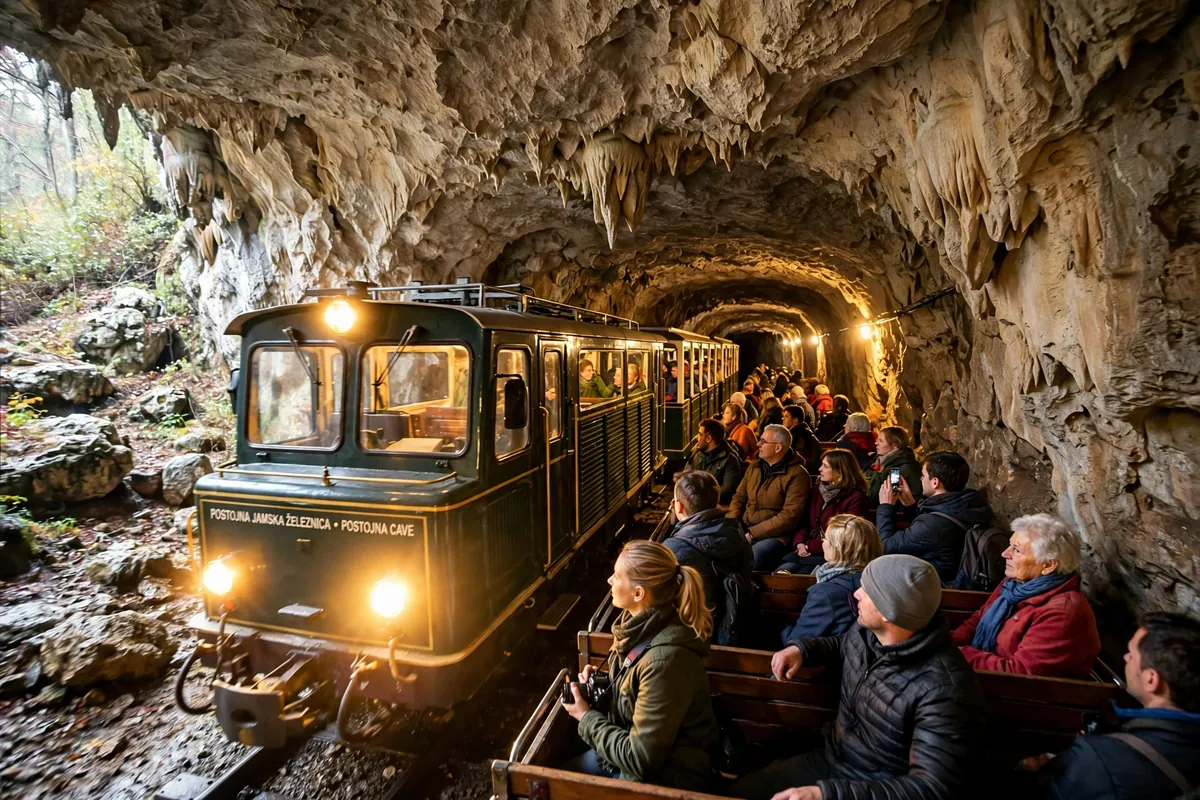
Here is the fact that sells the whole trip. Postojna is the only show cave in the world where you arrive by train. Not a little shuttle, not a funicular, a proper open-air electric train that rattles through tunnels and chambers like a slow roller coaster, flicking sideways just when you think you are about to hit a wall.
The railway is older than most of the countries tourists come from. The first tracks were laid in 1872, and the cave was lit with electric light in 1884, before many European cities had it. Today the train carries you about two kilometres in, roughly ten minutes each way, through passages where the rock glows amber under the lights and stalactites sweep past close enough to make you duck out of instinct. Kids love it. Adults pretend they are only enjoying it for the kids.
After the train drops you at the Great Mountain, the walking part begins. The guided route is about 1.2 kilometres on foot, with no steps on the standard tour, though there is one stretch of about 200 metres at a 20 percent incline, up and then back down. The whole visit takes around 90 minutes. It sounds short on paper. It never feels short underground.
The Halls: Rooms So Big They Have Their Own Weather (Almost)
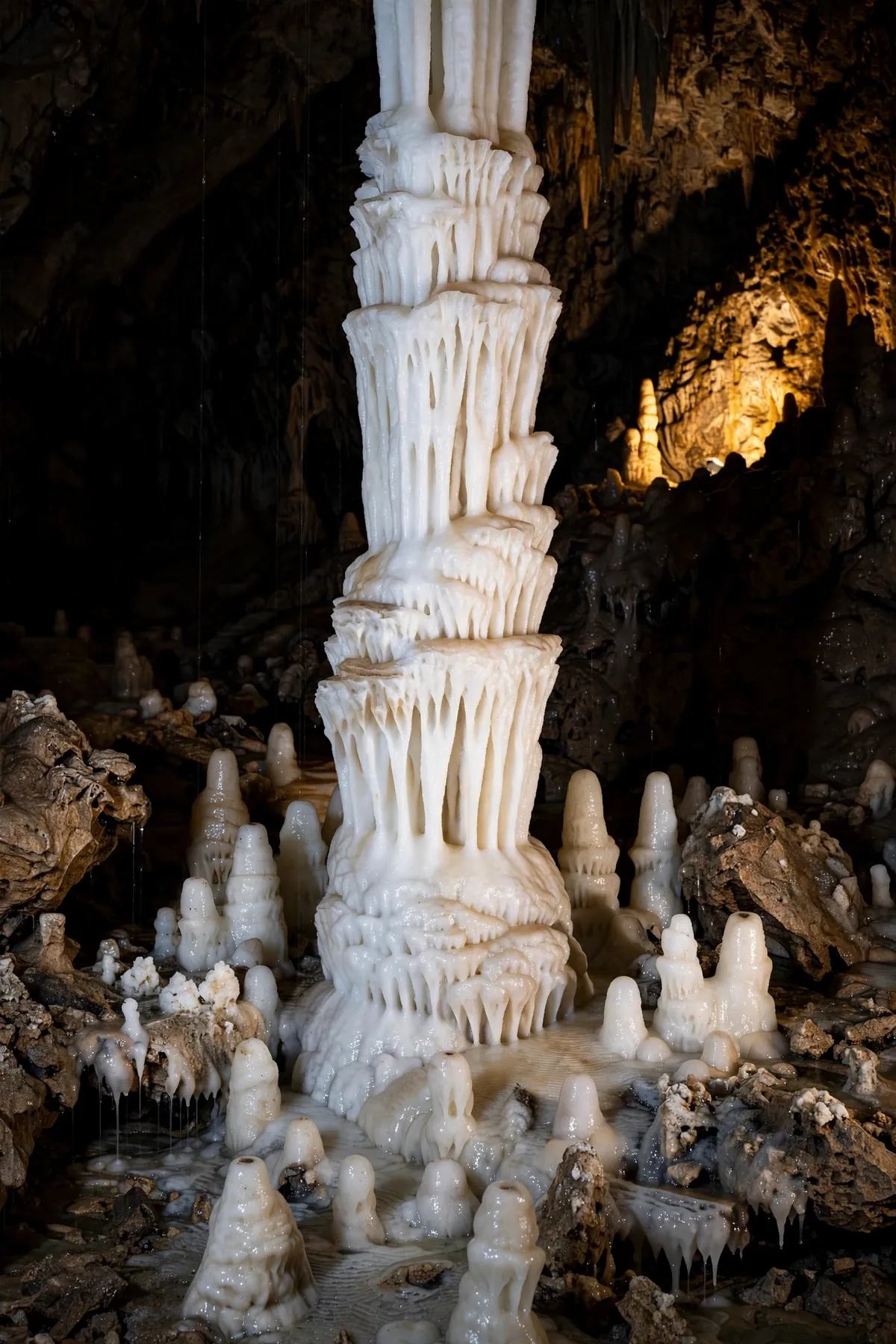
The walking route threads through a series of chambers with names that sound like they belong in a fantasy novel. The Beautiful Caves are exactly what they promise, white and red dripstone in shapes that look poured rather than grown. The Brilliant Passage holds the cave’s most famous formation, a five-metre-tall stalagmite called the Brilliant, the white symbol of Postojna itself. It took thousands of years to grow a few metres. Standing next to it puts your own lifespan in a perspective that is hard to shake.
Then there is the Concert Hall. It is the largest chamber in the cave system, big enough for 10,000 standing visitors, and it earns its name. Concerts are genuinely held here. The acoustics in a room that size, wrapped in limestone, are the kind of thing sound engineers dream about. Even empty, with just your tour group shuffling through, the space has a hush to it that makes people lower their voices without being told.
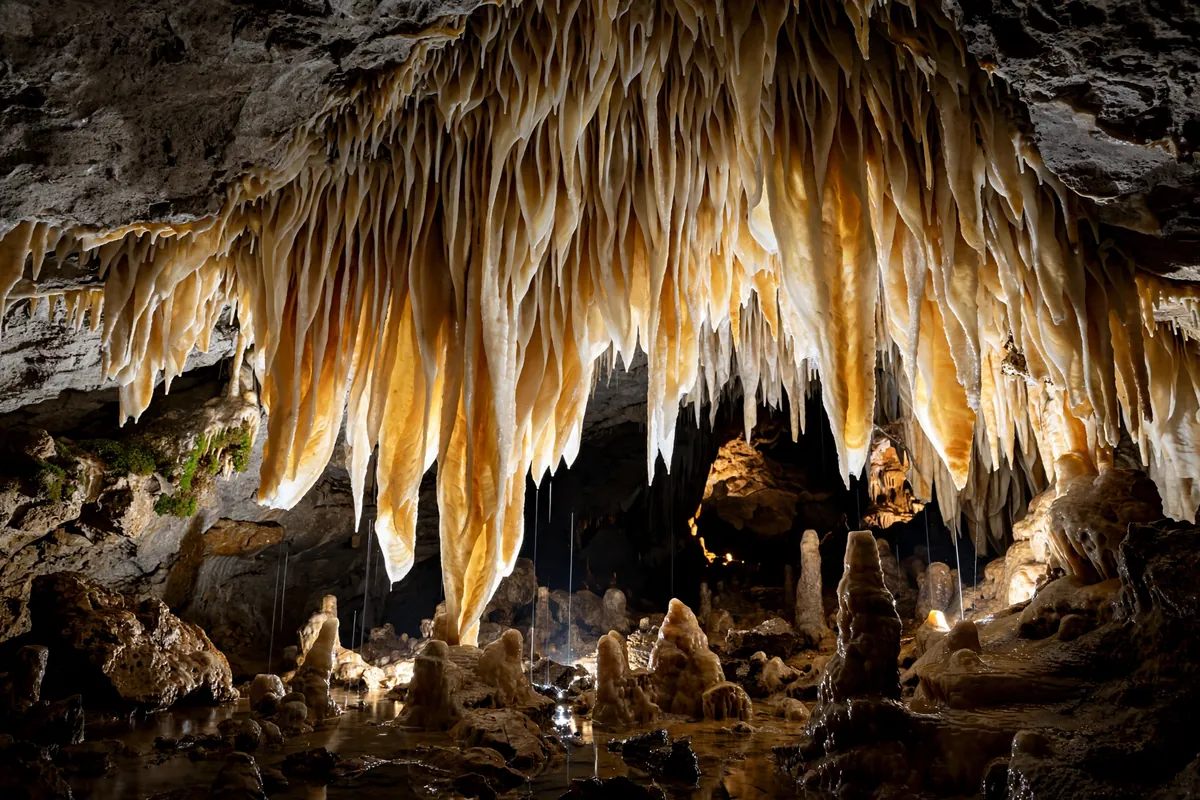
What surprises most first-timers is the colour. Caves in the imagination are grey and black. Postojna is cream, rust, amber, and white. The formations have names like curtains and draperies for a reason. Thin sheets of calcite hang in ripples that catch the light like fabric. In the Spaghetti Hall, thousands of thin straw-like stalactites hang from the ceiling so densely that they look like a frozen rainstorm.
One honest warning: the cave is a constant 10 degrees Celsius all year round. That is the whole point of a cave in summer, gloriously cool air when it is 30 degrees outside, but it is also the reason half the visitors in July are shivering in t-shirts by the halfway point. Bring a layer. You will not regret it.
The Baby Dragons Are Real (Sort Of)
Every cave has a mascot. Postojna’s is the olm, a blind cave salamander called Proteus anguinus, and it is one of the strangest animals in Europe. It is pale pink, almost translucent, with feathery external gills, four tiny legs, and no working eyes at all. It lives its entire life in underground water, in total darkness, and it can live for up to 100 years. It can also go more than ten years without eating. Try that at home.
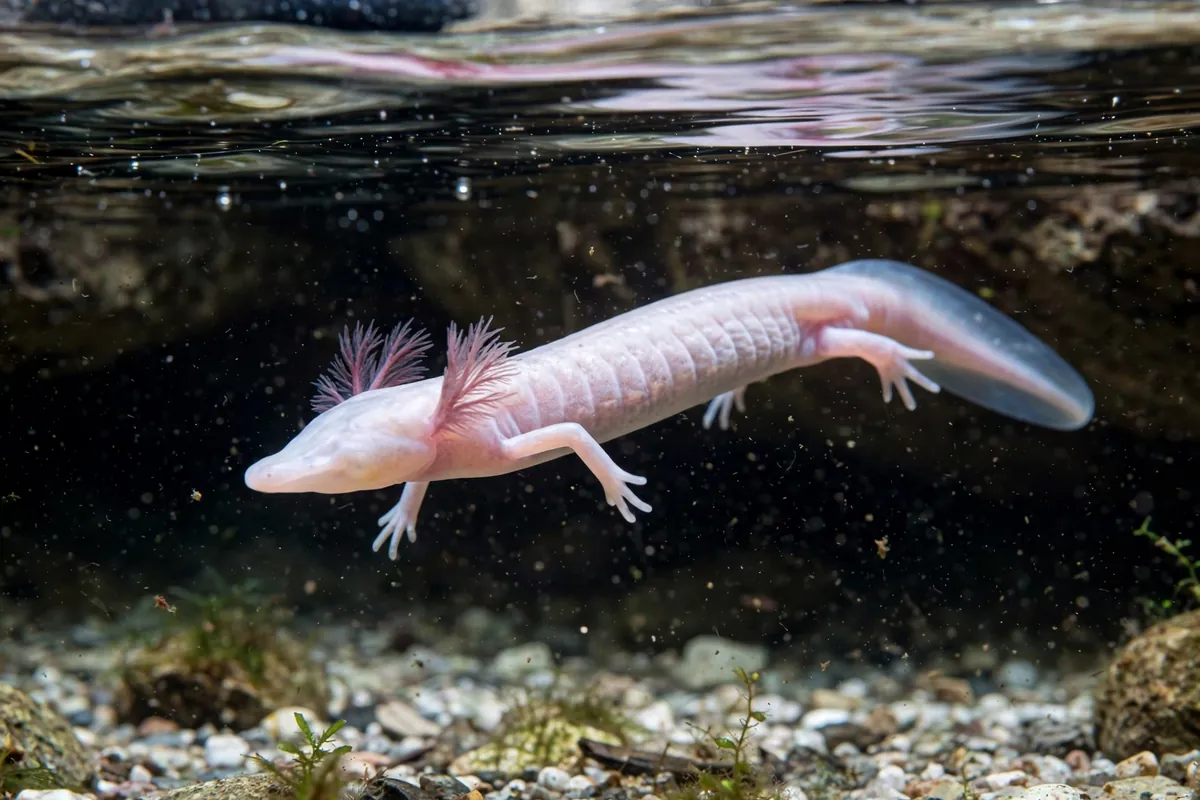
Locals called them baby dragons for centuries. After heavy rain, floods occasionally washed olms out of the cave system and into daylight, where people who had never seen one assumed they were the young of the dragons in Ljubljana’s legends. The city even has a dragon bridge. The nickname stuck, and Postojna has embraced it completely. You can see live olms in the aquarium near the end of the tour, and in the Vivarium exhibition by the entrance.
Here is the part that makes the olm more than a cute story. It is the only vertebrate in Europe that lives exclusively in caves, and it is the largest cave-dwelling amphibian in the world. It is also vulnerable. The IUCN lists it as a threatened species, and the cave’s researchers have spent years studying how to breed them. When baby olms hatched at Postojna’s research facility, it was genuine news in the scientific world, not just a tourist attraction. The olm is proof that this cave is not a museum. It is a living ecosystem, and the tour is a visit to someone’s home.
That is also why the rules matter. You cannot touch the formations. You cannot wander off the path. The cave grows a few millimetres a century, and a single careless handprint can stop a stalactite growing for good. The guides will tell you this. Listen to them.
A Short History: 200 Years of Going Underground
Postojna was not always a tourist attraction. The cave was first described scientifically in the 17th century by Johann Weikhard von Valvasor, a pioneer of karst studies. The real story starts in 1818, when a local lamplighter named Luka Cec lowered himself into a previously unknown passage with a lantern and found the chambers that became the tour route. Within a year, the cave was open to visitors. Archdukes and emperors came. Then everyone else did.
The railway arrived in 1872, the electric lighting in 1884, and by the early 20th century Postojna was already one of the most visited caves on the planet. It survived two world wars, including a period when the cave was used as a fuel depot, and kept growing. Today it is Slovenia’s most visited single attraction after Lake Bled, and the numbers keep climbing.
There is a small museum quality to the older parts of the tour. You can still see the tracks of the earliest trains and the signatures of 19th-century visitors carved into the walls, which is a reminder that tourists have always been tourists, even when they wore top hats.
The Other Half of the Day: Predjama Castle
Nine kilometres from the cave, built into the mouth of a cave halfway up a 123-metre cliff, sits Predjama Castle. It holds the Guinness World Record as the largest cave castle in the world, and it looks like someone built a fortress as a dare. Predjama’s full story, from its 1274 first mention to the secret tunnels behind it, is worth reading before you go.
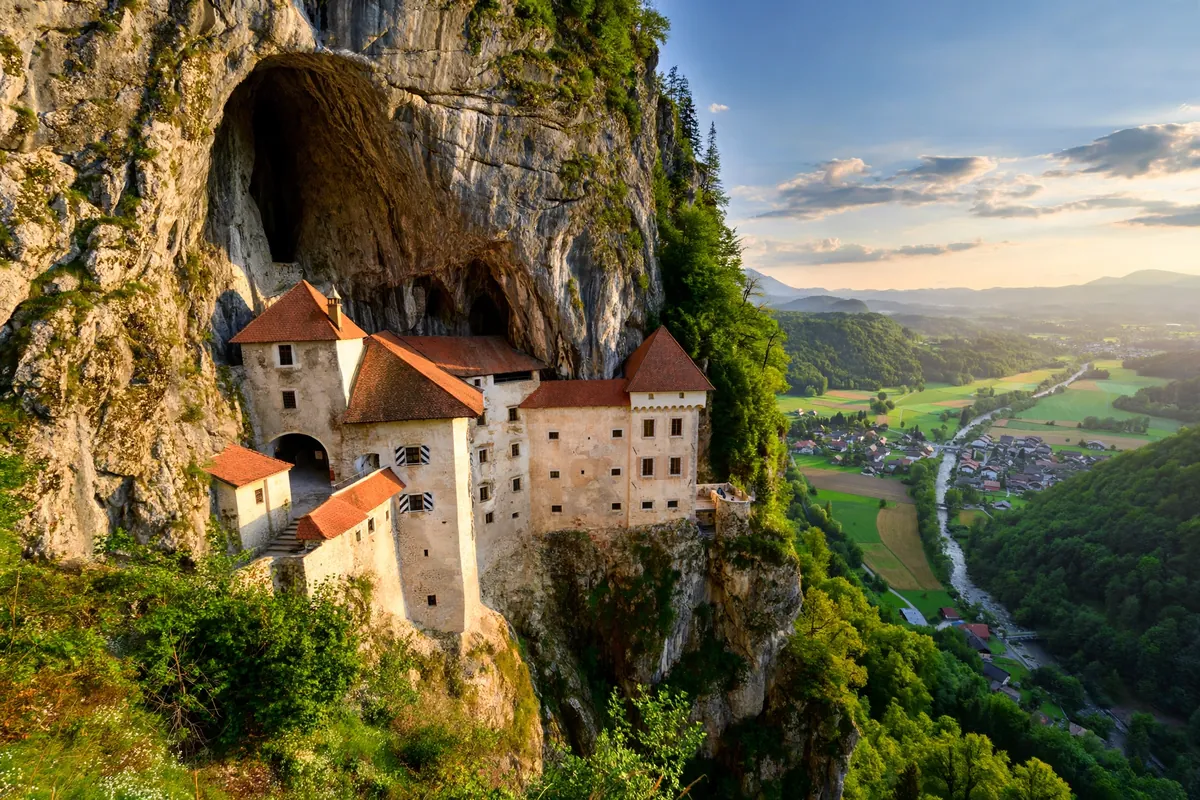
The castle was first mentioned in 1274. The Renaissance building you see today dates to 1570, and it was home to the knight Erazem Lueger, a 15th-century robber baron who defied the Habsburg emperor from behind these walls for over a year. The story goes that he was supplied through secret passages in the cave behind the castle, which is why the siege failed and why the place is now a legend. Underneath the castle runs its own cave system, about 14 kilometres in total, with a 700-metre tourist section that includes the stables, the great hall, and the exit to the surface.
One practical note: the castle cave is closed in winter because a colony of bats hibernates there. The castle itself stays open. If you are visiting between November and March, check the seasonal schedule before you plan the cave tour under the castle.
The combination ticket is the smart buy. Postojna Cave plus Predjama Castle costs 49.90 euros for an adult in 2026, against 34.90 for the cave alone, and the castle-only ticket is 24 euros. The full park experience, cave plus castle plus Vivarium plus the Expo Cave Karst exhibition, is 59.90 euros. If you are driving, parking at the cave park is 6 euros for the full day.
Tickets, Prices, and the 2026 Numbers That Matter
Prices have crept up over the years, so here are the 2026 figures as listed on the official Postojna Cave ticket page in October 2026. Always confirm on the day you book, because seasonal pricing changes.
- Postojna Cave only: 34.90 euros adult, 27.80 student (16 to 25), 20.70 child (6 to 15)
- Cave plus Predjama Castle: 49.90 euros adult, 39.90 student, 29.90 child
- Cave plus Vivarium: 39.90 euros adult, 31.90 student, 23.90 child
- Cave, castle, and Vivarium: 55 euros adult, 44 student, 33 child
- Full park experience: 59.90 euros adult
- Parking: 6 euros for the full day
Tickets are timed, and that is the single most important planning fact. You pick a date and a time slot, and the whole operation runs with military precision. In summer, slots sell out days ahead, especially the morning ones. Book online before you go. Showing up without a ticket in July means either waiting hours or not getting in at all.
Children under 5 enter for a small fee, and children 14 and under must be accompanied by an adult. The longer adventure tours through the Erazem and Eastern passages, which run three to six hours, have age limits and are a different world from the standard visit. They are worth it if you are fit and genuinely keen, but they are not a casual add-on.
Getting There: Easier Than You Think
Postojna is about an hour from Ljubljana by car or by train, and the cave is roughly a half-hour walk from Postojna station. Buses run from Ljubljana too, and day tours from the capital are everywhere, often bundling the cave and the castle with a guide and transport. From the Croatian coast or Trieste in Italy, it is an easy half-day trip.
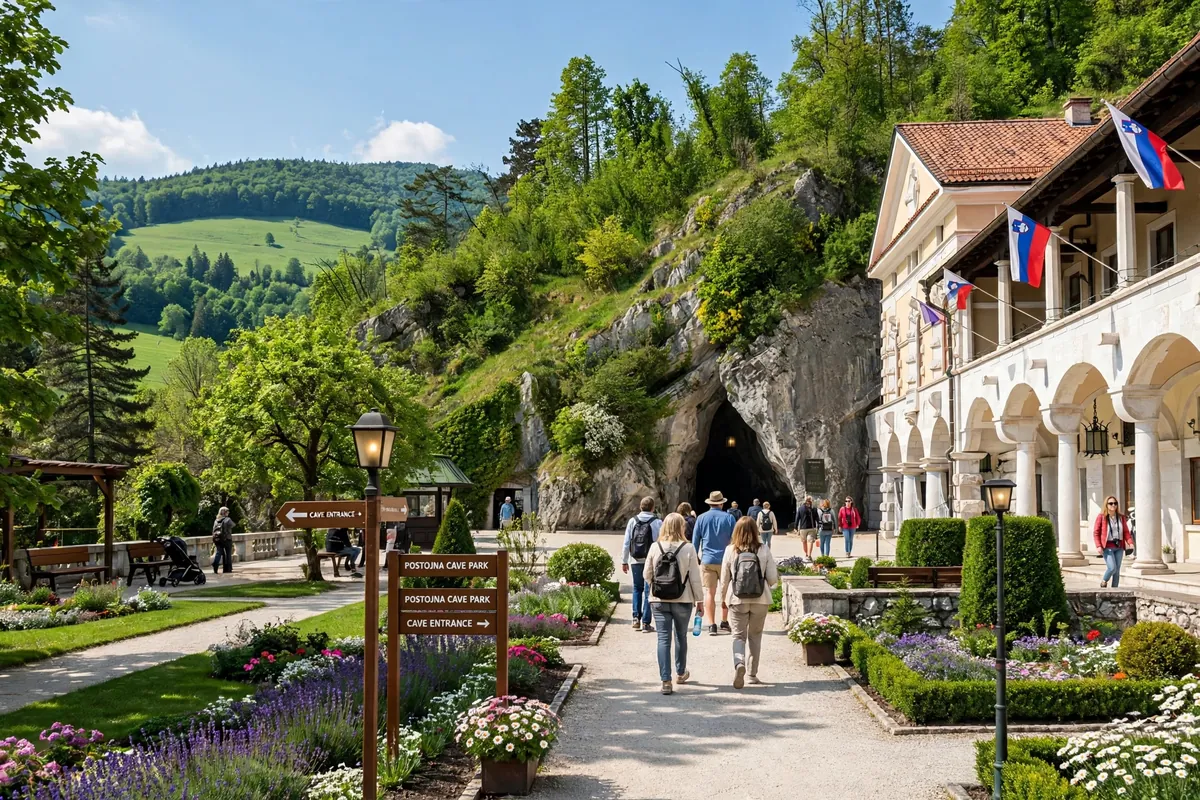
If you are driving, the cave park has its own car park, and the whole site is built for coach groups, which means it handles crowds well but also means the entrance area can feel like a small theme park in high season. Do not let that put you off. Once the train doors close and the tunnel swallows the light, none of that matters.
For a fuller day, the Karst region around Postojna is worth an extra stop. Skocjan Caves, a UNESCO World Heritage site with an underground river canyon, is about 30 minutes away by car, and the town of Postojna itself has a couple of decent restaurants for lunch after the tour. If you only have one day in Slovenia outside Ljubljana and Lake Bled, this is the day trip most locals would recommend.
How to Beat the Crowds (and the Cold)
Postojna’s biggest problem is its own popularity. Summer draws enormous coach groups, and even with timed tickets the entrance hall can feel packed. Here is what actually works.
Go early or go late. The first tour of the day and the last one are noticeably quieter. Midday in July is the worst slot.
Visit in spring or autumn. April, May, September, and October are the sweet spot. The cave is the same temperature all year, so you lose nothing by going off-season, and you gain shorter queues and cheaper accommodation nearby.
Book the earliest castle slot too. If you are doing the combo, do the cave first and the castle second, or the other way round, but book both in advance. The castle is a ten-minute drive from the cave, and there is a shuttle in season.
Dress for 10 degrees. A light jacket is enough, but a t-shirt is not. Closed shoes help too. The paths are paved and mostly flat, but they are damp in places.
Leave the big camera bag behind. Photography is allowed on the standard tour, but flash is not, and tripods are not practical in a moving group. A phone with a decent night mode does the job. The train ride is the hardest part to photograph well, so just enjoy that bit and shoot on the walking route.
Is Postojna Worth It? The Honest Answer
This is the question every guide dodges, so here is a straight answer. Yes, with one condition: go knowing what it is. Postojna is a show cave, not a wild caving expedition. The paths are paved, the lights are installed, the guides speak four languages, and there is a gift shop at the end. If what you want is mud, ropes, and crawling through a crack with a headlamp, you want an adventure tour in the same cave system or a different cave entirely. For a taste of that wilder side, read our guide to rappelling 60 metres into Jomblang Cave in Indonesia, or our 2026 guide to Iceland’s blue ice caves for a completely different kind of underground cold.
What Postojna gives you instead is scale and access. A five-kilometre route through chambers the size of cathedrals, a train ride no other cave on Earth offers, a creature that lives nowhere else, and a castle built into a cliff nine kilometres away. For families, for first-time cave visitors, for anyone who wants the underground world without the risk, there is nothing else like it in Europe.
The price stings a little. At 34.90 euros for 90 minutes, it is not a cheap ticket. But the combo with Predjama Castle fills a full day, and a full day in one of Europe’s most unusual landscapes is fair value by any measure. Book ahead, wear a jacket, and go early. The cave has waited millions of years. It can wait for you to be ready, but the tickets cannot.
Quick Answers Before You Go
How long does a Postojna Cave visit take?
About 90 minutes for the standard tour, including the train ride both ways and the guided walk. Add another hour or two if you are combining it with Predjama Castle.
Is Postojna Cave good for kids?
Yes, it is one of the most family-friendly caves in the world. The train ride delights younger kids, the walk is step-free, and the olm is a genuine thrill. Children under 15 are not allowed on the longer adventure tours.
Can you visit Postojna Cave in winter?
Yes, the cave is open year-round, even on Sundays and public holidays. Winter is actually one of the best times to go, because the crowds thin out and the cave is the same 10 degrees it always is.
Is photography allowed inside?
Yes, without flash. A phone camera works fine on the walking route. The train ride is too dark and too fast for good photos, so enjoy it instead.
How is Postojna different from Skocjan Caves?
Postojna is a classic show cave with a train, huge halls, and the olm. Skocjan is wilder, a UNESCO site with an underground river canyon, a longer walk, and about a thousand steps. If you have time for one, pick Postojna for the spectacle. If you have time for both, do both. They are half an hour apart.
If this guide helped you plan the trip, save it for later and share it with someone who still thinks caves are just dark holes in the ground. They have no idea what is waiting under Slovenia. And if you want more underground adventures like this one, follow The Cavee on Pinterest, where every week brings a new cave, a new expedition, and a new reason to go underground.
Pingback: Cova 338: The 6,000-Year-Old Cave Home at 2,235m in the Pyrenees (2026 Study)