People Lived in This Cave 6,000 Years Ago, 2,235 Metres Up a Mountain: Inside Cova 338, the Pyrenees’ Highest Prehistoric Home
Picture the highest place you have ever slept. Now add a thousand metres. Then imagine doing it without a tent, without a sleeping bag, without a stove, and with winter coming. That is what the people of Cova 338 did, not once, but again and again for more than 5,000 years.
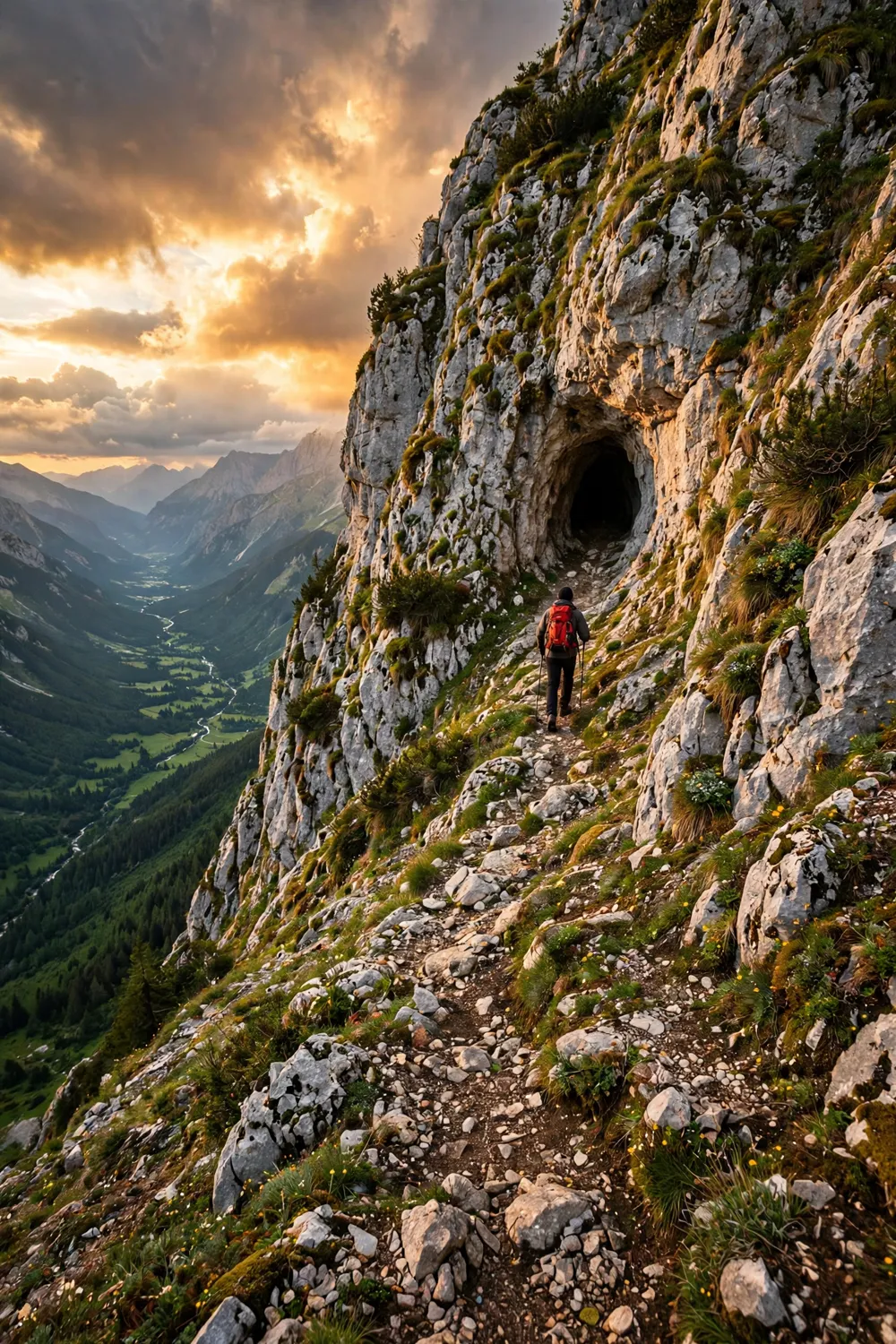
Cova 338 is a cave in the Núria Valley in the eastern Pyrenees, in Catalonia, Spain. It sits at 2,235 metres above sea level, halfway between the Sanctuary of Núria and the summit of Puigmal. And a study published in 2026 has just confirmed what nobody expected: this cold, windswept hole in the rock was a real home. People lit fires there, cooked there, made tools there, and kept coming back from the early 5th millennium BCE to the end of the 1st millennium BCE. That is roughly 6,000 years of history in a place most of us would struggle to reach for a day hike.
For decades, archaeologists assumed the high Pyrenees were a place people passed through, not a place they lived. Cova 338 has just proved that idea wrong.
A cave with an address nobody would choose
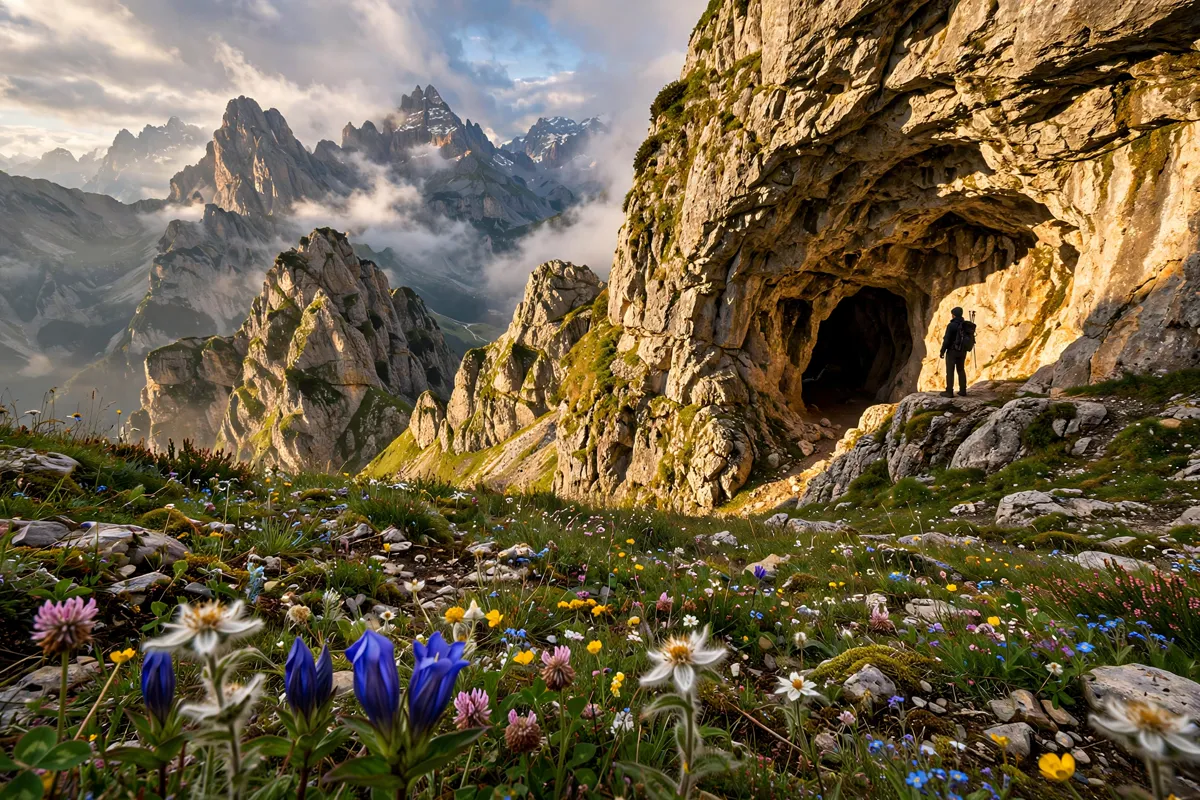
Let me put the altitude in perspective. At 2,235 metres, Cova 338 sits higher than the summit of Ben Nevis, the tallest mountain in Britain. It is higher than most ski resorts in the Alps. The air is thinner, the nights are cold even in summer, and snow can arrive early and stay late. Everything the people who used this cave needed, food, water, firewood, had to be carried up or found on a steep mountainside.
The cave itself is not one big hall. It is a karstic cavity of just over 100 square metres, structured around two small caves separated by about six metres, in a spot called the Coma de l’Embut, on the north-eastern slope of the valley. It lies inside the Natural Park of the Ter and Freser Headwaters, in the municipality of Queralbs, in the Ripollès region of Girona. The locals knew about it long before the archaeologists arrived. The cave was first mentioned in a speleological journal called Cavernes, published by the Grup Espeleològic de Badalona, back in 1964. It also goes by two older local names, Cova del Catau de l’Os and Cova del Forat de l’Embut.
What nobody knew, until the excavations of 2021 to 2023, was just how much history was packed into its floor.
The 2026 study that changed the story
The research was led by Carlos Tornero, a professor of prehistory at the Universitat Autònoma de Barcelona, and the Institut Català de Paleoecologia Humana i Evolució Social, known as IPHES-CERCA. Researchers from the Universitat Rovira i Virgili, the University of Granada, Pompeu Fabra University, and the University of the Balearic Islands took part too. The work ran under the ARRELS project, a programme funded by the Catalan government to study the prehistoric roots of human mobility and transhumance in the Upper Ripollès region.
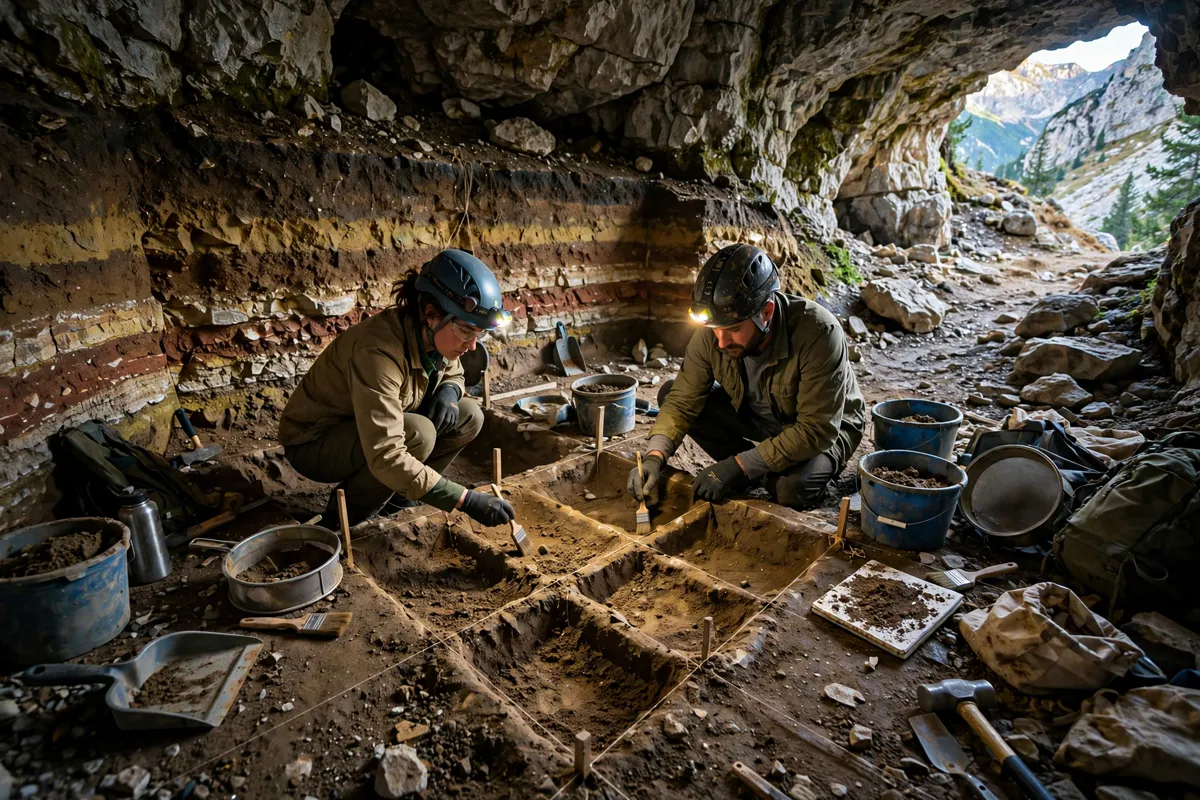
Excavations ran from 2021 to 2023, and the team had to do everything on foot. There is no road to Cova 338. No motorised transport is allowed up there, so every tool, every bucket of sediment, and every recovered fragment had to be carried in and out by hand. The team used 3D spatial recording, systematic sediment sampling, and flotation techniques to document every fragment.
The results were published in 2026 in the journal Frontiers in Environmental Archaeology, in a paper titled “Beyond 2,000 meters, first evidence of intense prehistoric occupation in the Pyrenees”. The headline finding is simple and startling: Cova 338 is the highest-altitude prehistoric cave with evidence of sustained, intense human occupation documented so far in the Pyrenees.
That word, sustained, is doing a lot of work. This was not a shelter someone ducked into during a storm. Radiocarbon dates show people returned to this cave over and over, across discrete phases, from at least the early 5th millennium BCE to the late 1st millennium BCE. That is more than 5,000 years of repeat visits, separated by quieter intervals, but always coming back to the same spot.
What they actually found inside
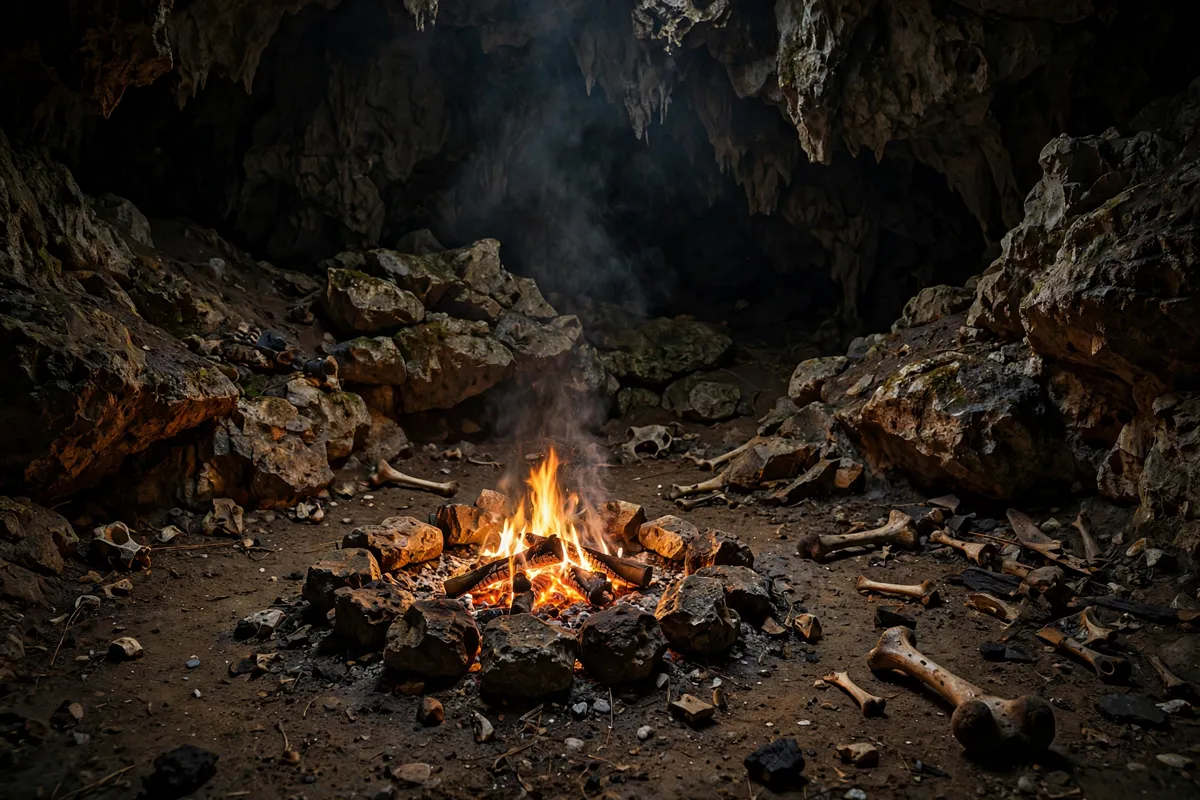
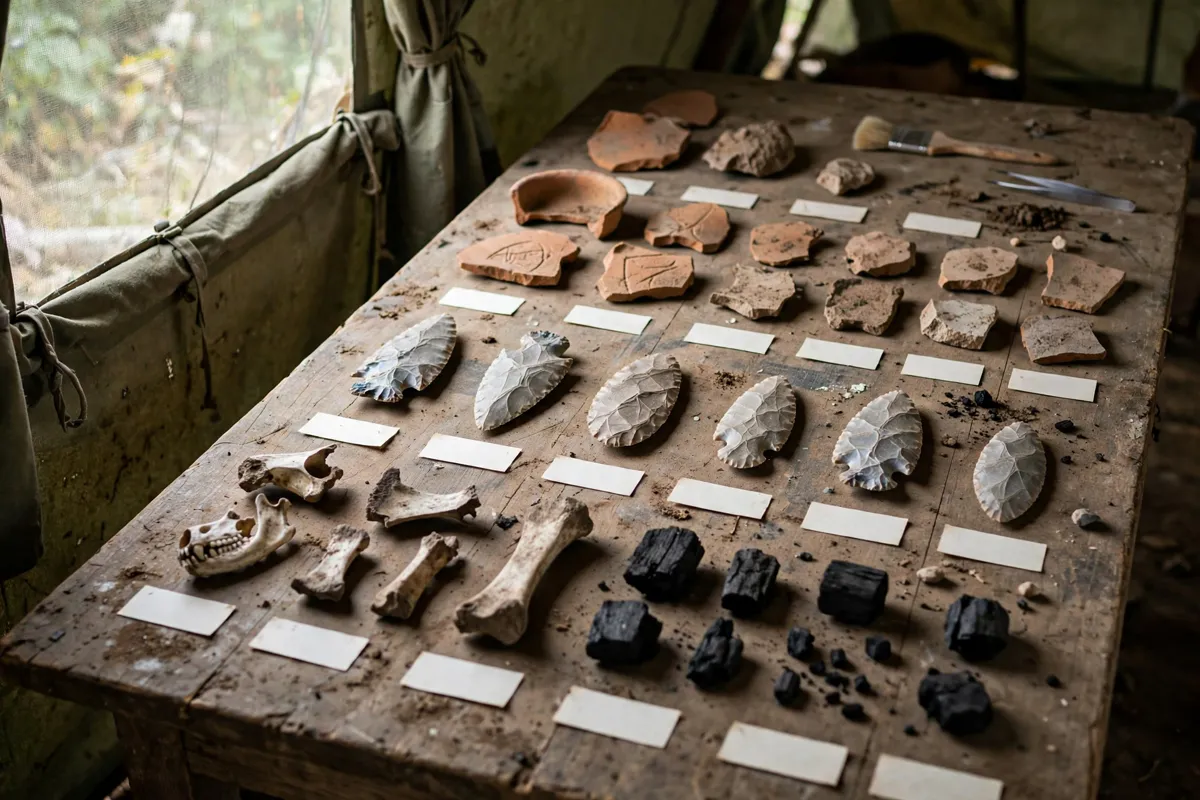
The dig uncovered an exceptional, well-layered archaeological sequence. The team documented 23 pit-like combustion structures, in plain language, hearths and fire pits, spread across several occupation phases. More than a thousand artifacts and ecofacts came out of the ground: handmade pottery, animal bones, charcoal, stone tools, and crushed green mineral fragments.
Think about what 23 hearths means. A hearth is not something you build by accident. You clear a spot, you ring it with stones, you keep a fire going, you cook over it, you sit around it. Twenty-three of them, in different layers, means generation after generation of people made the same decision in the same place: this is where we stop, this is where we make fire, this is where we stay.
The animal bones tell their own story. The people who used Cova 338 were hunting and herding in the high mountains. The pottery fragments show they were carrying ceramic vessels up to 2,235 metres, which means they were not travelling light. They were setting up camp properly, with the gear they needed to cook, store, and eat. The charcoal remains are now being studied to understand what the mountain environment looked like while the cave was in use, and future work will look at pollen and seeds too.
The green stones that should not have been there
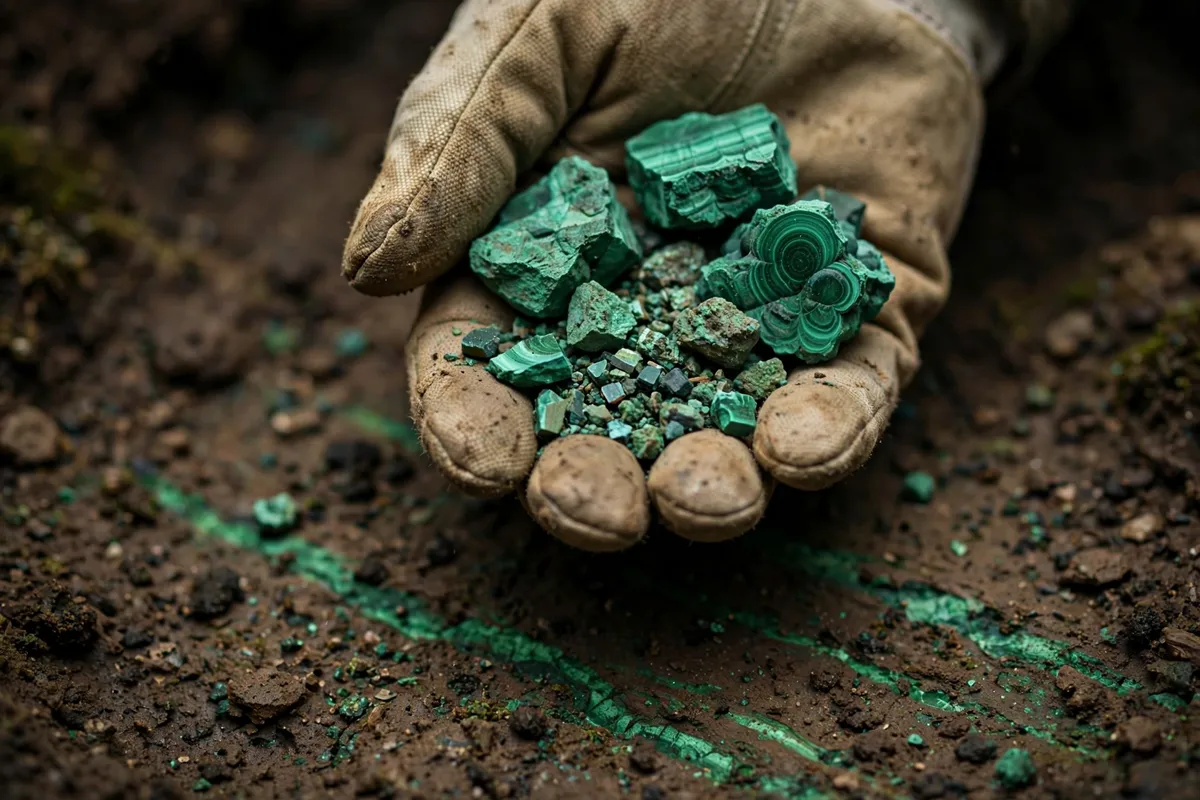
Here is the part of the story that made archaeologists sit up. Among the finds was an extraordinary assemblage of green mineral fragments, most likely malachite, a copper-rich mineral. The fragments were repeatedly brought into the cave and processed there, on site.
That matters for two reasons. First, malachite does not just happen to be lying around a cave at 2,235 metres. Somebody went looking for it, carried it up, and worked it in the cave. Second, it puts Cova 338 among the earliest documented sites of high-mountain copper-rich mineral exploitation in Western Europe. In other words, the people using this cave were not just surviving up there. They were prospecting. They were working with the materials that would eventually lead to the Bronze Age.
It flips the usual picture of prehistoric mountain life on its head. The high Pyrenees were not a blank, empty margin on the map. They were a resource. People knew where the good stone and the green minerals were, and they went up to get them, year after year, century after century.
Why people kept coming back for 5,000 years
So why this cave? Why climb to 2,235 metres when there are perfectly good valleys below? The honest answer is that the archaeologists are still working on it, but the picture forming is a practical one.
The Núria Valley sits on old routes of seasonal movement. Herders have moved animals up to high summer pastures in the Pyrenees for thousands of years, a practice called transhumance, and the ARRELS project exists precisely to study those prehistoric roots. A cave like Cova 338, dry, sheltered, halfway to the high passes, is exactly the kind of place a herding party would use again and again. It is a base, a workshop, and a shelter in one.
The site also sits between the valley floor and the high ground around Puigmal, which at 2,910 metres is the highest peak in the area. From the cave, you can watch the weather, the herds, and the routes. In a world without maps or phones, a place with a view and a roof was worth returning to.
And there is something deeply human about the pattern. The occupations came in phases, with quiet gaps in between. People left, and then, years or generations later, someone else climbed the same slope, found the same sheltered hollow, and lit a fire in the same spot. The cave outlasted them all.
Can you visit Cova 338?
This is the question every reader will ask, so here is the honest answer: Cova 338 is a protected archaeological site, not a tourist cave. There is no ticket office, no guided tour, and no path laid out for visitors. The excavations are ongoing, and researchers plan to keep digging in the coming years. The right thing to do is to admire it from the landscape around it and leave the site itself alone.
That sounds like a disappointment, but it is actually the point of the trip. The reward here is not standing inside the cave. It is standing in the valley below it, looking up at the same slopes those people climbed, and understanding what they did. The Núria Valley is one of the most beautiful high valleys in the Pyrenees, and it is very much open to visitors.
If you love caves and want one you can actually walk into, our guide to Postojna Cave in Slovenia, where a train carries you underground to meet the olms, is a good next stop. And if ancient cave art is your thing, the story of 15,000-year-old cave art found in Ireland shows how much of our history is still hiding in the dark.
Planning the hike: Vall de Núria and Puigmal
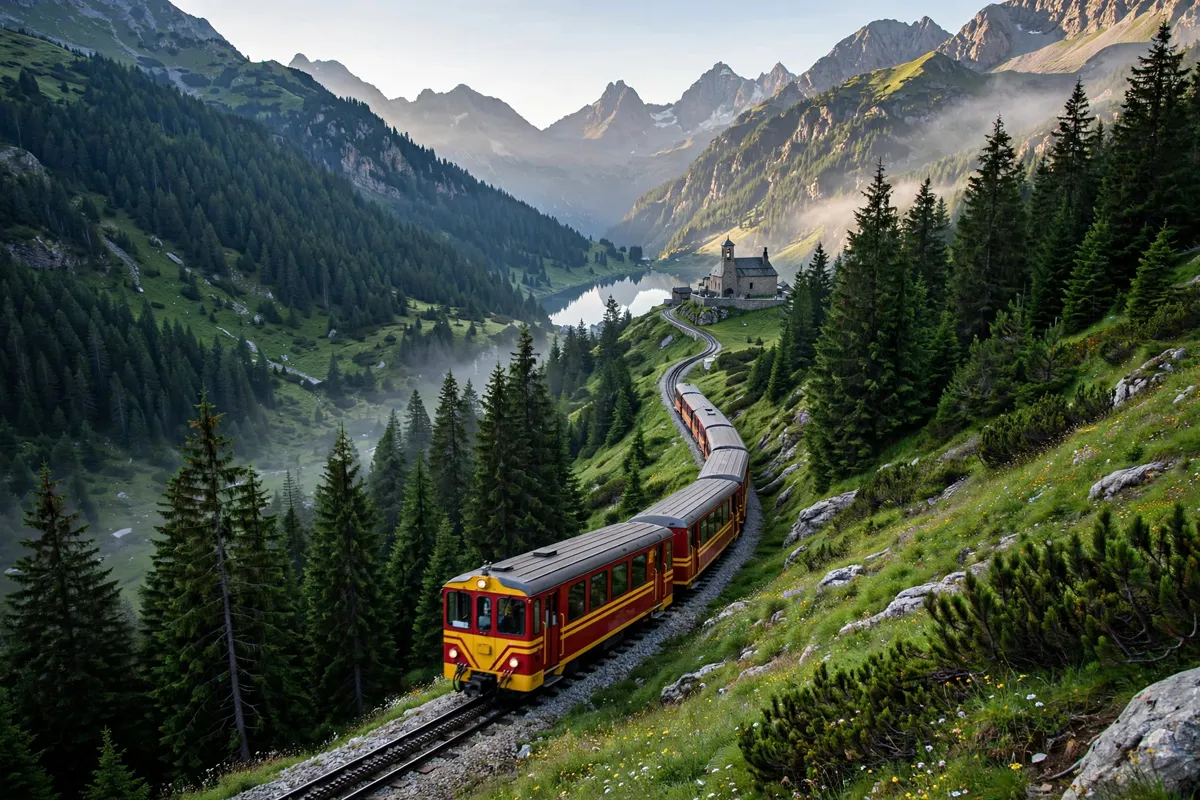
The adventure starts with the journey in. Vall de Núria can only be reached by rack railway, the Cremallera, or on foot. The train runs from Ribes de Freser, with stops at Ribes-Vila and Queralbs, up to the Sanctuary of Núria at almost 2,000 metres. The sanctuary is a place of pilgrimage in its own right, set in a glacial cirque of alpine meadows, with a lake, a hotel, and a little mountain church.
From the sanctuary, the classic hike is the climb to Puigmal. The direct route is about 9.3 kilometres round trip with roughly 958 metres of climbing, and takes around two and a half hours up for a fit walker. The longer loop, taking in Pic del Segre and the Olla de Núria, runs about 7.7 miles with 3,487 feet of elevation gain and takes five to six hours. The best months are June through October, when the snow has melted and the weather is most stable. In winter, this is serious snow country, and the same slopes that sheltered prehistoric herders become a different world entirely.
If you would rather walk in than ride, the old Camí Vell from Queralbs to Núria follows the GR11 trail up the Freser River gorge, past historic bridges like the Pont de Cremal. It is about 10.3 miles point to point and takes five to six hours. It is the same valley the people of Cova 338 walked, and on a quiet morning, with the river loud below you and the peaks ahead, it is not hard to feel the connection.
What to pack and what to know before you go
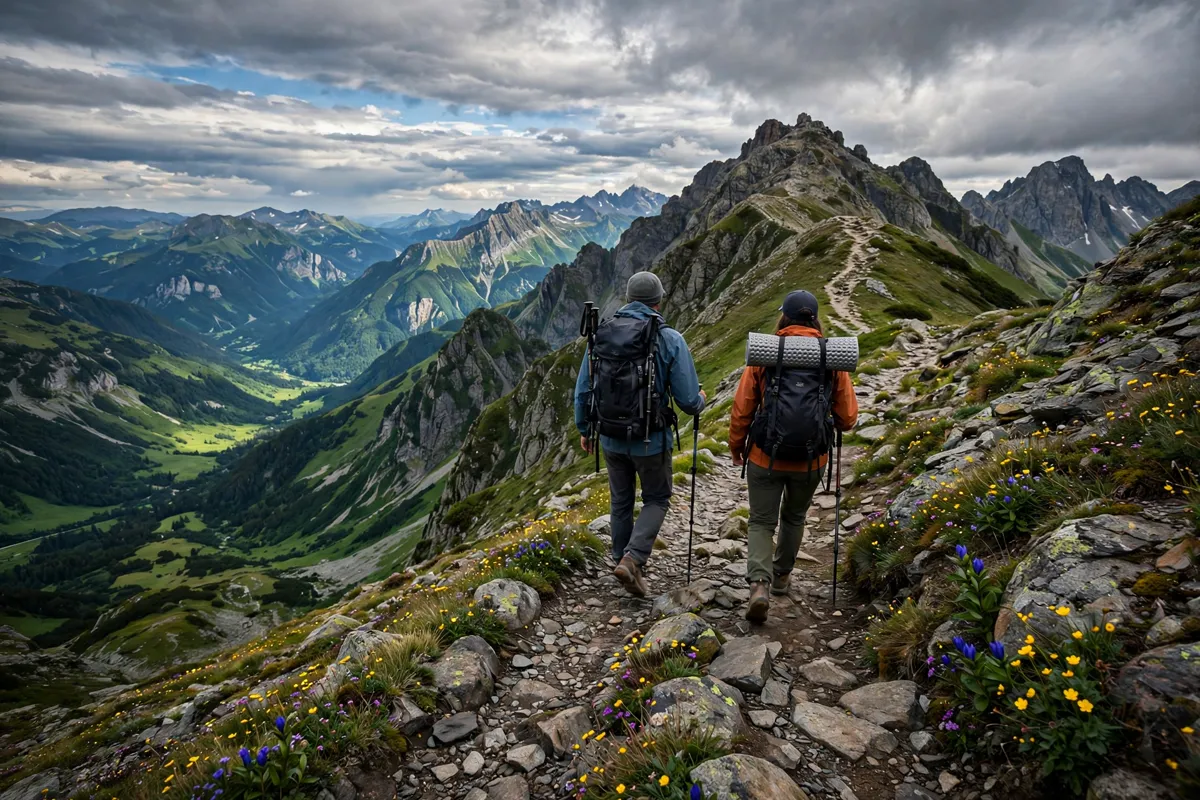
Altitude is the thing people underestimate here. The sanctuary sits at nearly 2,000 metres, and the trails climb from there. Drink more water than you think you need, go slower than you think you should, and give yourself time to adjust if you have come from sea level. The sun is stronger up high, so sunscreen and a hat matter even on a cloudy day.
Weather in the Pyrenees changes fast. A clear morning can turn into an afternoon thunderstorm, and the high trails have very little shelter. Check the forecast the night before and again in the morning, carry a waterproof layer even in July, and turn back if the clouds start building over the peaks. The mountain will still be there tomorrow.
Wear proper hiking boots with ankle support. The trails around Núria are rocky, and the loose stones on the Puigmal climb are exactly the kind of ground that twists ankles. Bring layers, because the temperature at the sanctuary can be ten degrees cooler than in the valley, and the wind at the summit is often strong enough to make photography a challenge.
Finally, respect the archaeology. The whole valley is a protected natural park, and sites like Cova 338 are fragile. Do not dig, do not take stones or artifacts, and do not wander off marked paths into excavation areas. The best souvenir from a place like this is a photograph and a story, not a fragment of someone else’s history.
Why a cave at 2,235 metres matters
Cova 338 matters because it changes a story we thought we knew. For a long time, the textbook version of prehistory said that high mountains were the edge of the world, a place people crossed but never settled. Cova 338 says otherwise. People did not just cross the high Pyrenees. They lived there, worked there, and returned there for longer than the pyramids have existed, longer than the Roman Empire, longer than almost any civilisation you can name.
It also matters because it is a reminder that the map of human history still has blank spots, and some of them are very close to home. This cave was first mentioned in a caving journal in 1964. It took until 2021 for anyone to dig into it properly. How many other Cova 338s are out there, sitting quietly above a hiking trail, waiting for someone to look down at the right moment?
The team at the UAB and IPHES-CERCA is still working. Pollen, charcoal, seeds, and animal remains from the cave will tell us more about the mountain environment these people lived in, and future digs will fill in the gaps between the occupation phases. The full study is published open access in Frontiers in Environmental Archaeology, and the university’s own announcement is a good place to start if you want the science in full. You can read the paper here and the UAB announcement here.
The mountain keeps its secrets, until it doesn’t
Somewhere above the Núria Valley, in a hollow of limestone at 2,235 metres, people lit fires for 5,000 years. They were herders and hunters, toolmakers and prospectors, and they chose a hard place to live because it gave them something they needed. We know their fires, their pots, and their green stones. We do not know their names, their language, or what they called the mountain. But we know they were there, and now we know they stayed.
If that story grabs you the way it grabbed me, save this one for later. The wildest cave stories we have found, from the world’s largest cave in Vietnam to a cave train in Slovenia, are all waiting on thecavee.com, and there is a new one every single day. Follow The Cavee on Pinterest for the next discovery before it hits the blog. The mountains have been keeping secrets for 6,000 years. We are only just learning how to listen.