Your Pepper Has Been Dead for Weeks: The Handmade Olive Wood Mill That Brings It Back to Life
Go to your kitchen right now and shake some pepper onto your hand. Taste it. If it tastes like dusty nothing, with maybe a faint memory of heat somewhere in the back, I have bad news. Your pepper is dead. It probably died weeks ago, maybe months ago, and nobody told you. The little jar has been sitting there doing its job of looking like pepper while tasting like grey sand.
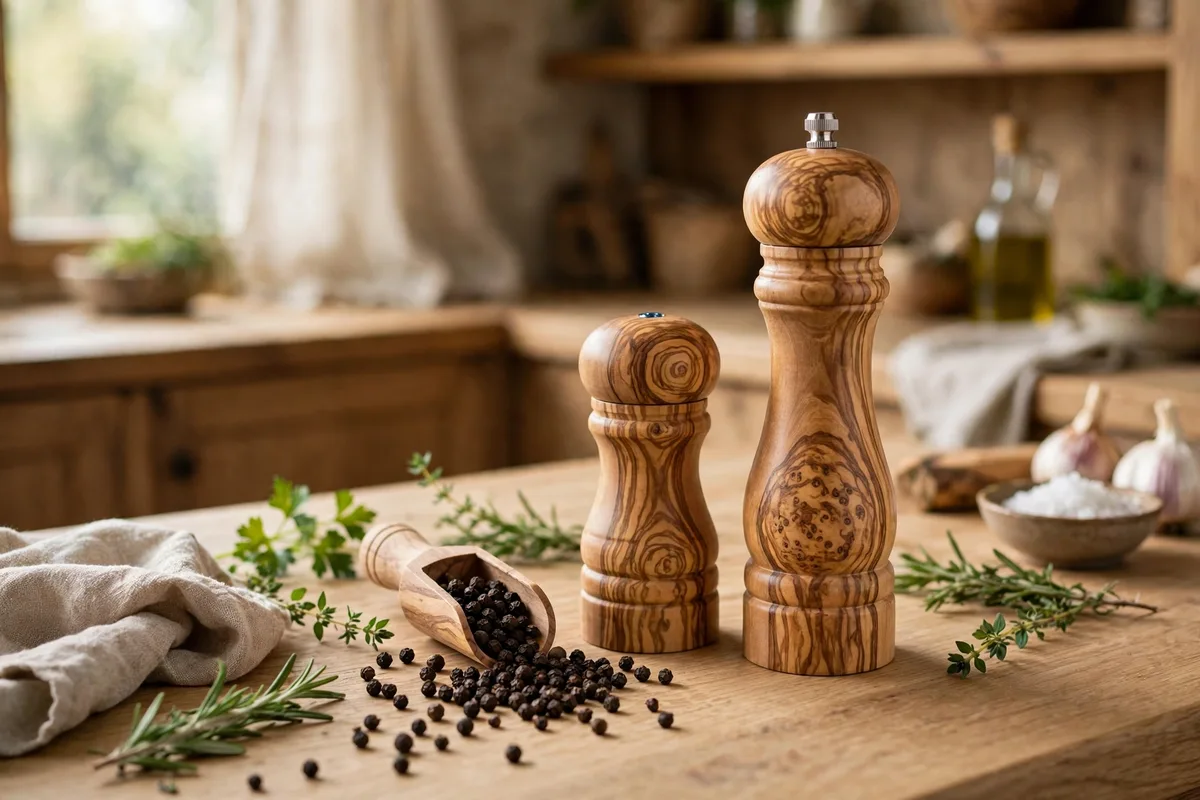
That is the exact moment I started looking at handmade wooden salt and pepper mills. Not because I collect kitchen gadgets. I do not. My drawers are full of things I bought once and never touched again. But pepper is different. It goes on nearly everything I cook, and I had been seasoning food with something that had lost its whole point. A handmade olive wood mill fixed that for less than the cost of a takeaway dinner, and it sits on my counter looking like it belongs there, which is more than I can say for the plastic shaker it replaced.
The Problem With the Pepper You Already Own
Here is the thing nobody puts on the label. The moment black pepper is ground, it starts losing the volatile oils that give it its heat and its smell. Within a week or two, a good chunk of that flavor is gone. Within a month, you are basically shaking grey dust on your food and calling it seasoning. The jar in your cupboard might have a best-before date a year away, but the flavor left long before that.
Whole peppercorns are a different story. Kept whole, they hold onto their oils for years. Crack them open fresh and the smell hits you straight away, sharp and warm and almost floral, nothing like the tired powder from the jar. That is the whole argument for a mill, and it is a strong one. You grind what you need, when you need it, and every meal gets the full flavor instead of the faded version.
So why does almost every kitchen still have the dead jar? Because most mills are annoying. The cheap ones jam. The plastic ones crack, or the grinding mechanism strips after a few months and starts spitting out whole peppercorns or nothing at all. And the disposable grinders that come pre-filled in the supermarket are the worst deal of all. You pay for the grinder, you cannot refill it, and you throw the whole thing away when it runs out.
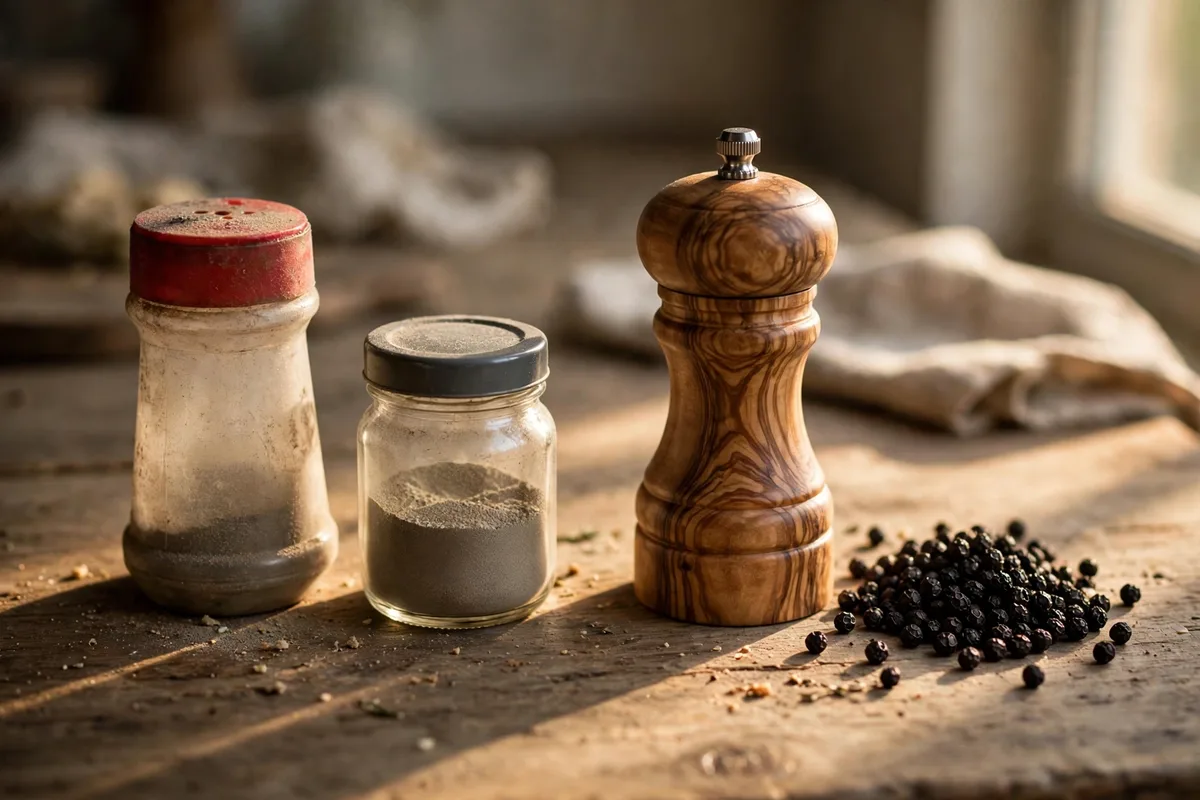
That is the problem this olive wood mill solves. It is a simple, manual, refillable grinder made from a single beautiful piece of wood, with a proper adjustable mechanism. You fill it with whole peppercorns or coarse sea salt, you twist, and you get fresh seasoning every single time. No batteries, no plastic parts to crack, nothing to throw away.
What Makes Olive Wood Different
Not all wood is equal when it comes to a kitchen tool you will touch every day. Olive wood is dense, hard, and naturally oily, which means it stands up to kitchen life far better than soft pine or cheap beech. It does not soak up moisture the way lighter woods do, and it does not go grey and tired after a few months of use. The grain is the real show, though. Every piece has its own swirling pattern of honey, gold, and deep brown, so no two mills ever look alike. The one on your counter is genuinely one of a kind.
There is a Mediterranean character to it that suits a kitchen in a way plastic never will. Olive trees grow slowly, often for centuries, and the wood carries that feeling of something made to last. People have been carving olive wood into kitchen tools for generations, and the pieces still in use in old farmhouse kitchens are proof that it works.
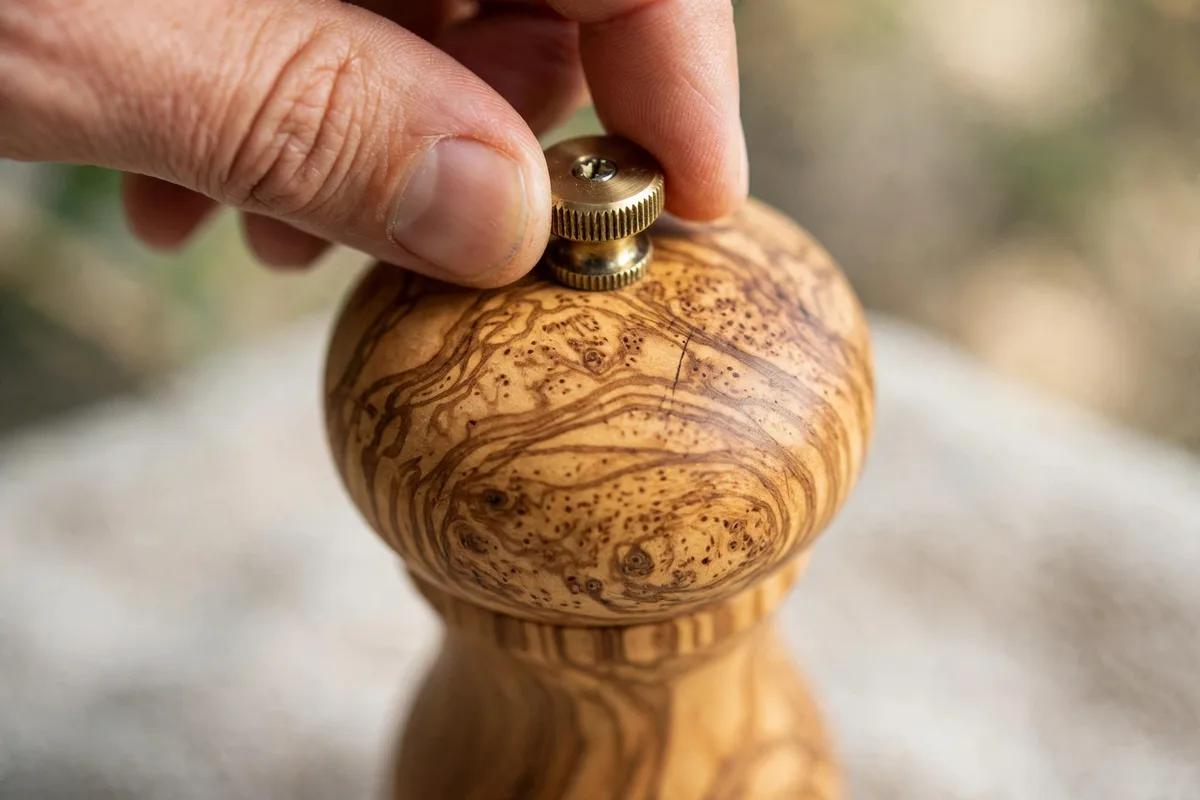
The mill itself is a traditional manual grinder. You hold the curved wooden body, which fits the hand comfortably, and you twist the top. The adjustable knob on top is the part that matters most. Turn it one way for a fine grind, the other way for coarse, and you can switch between them depending on what you are cooking. Fine for scrambled eggs and soups, coarse for steaks and salads where you want to actually see and bite the pepper. Cheap mills give you one grind and you live with it. This one lets you choose.
The Mill Itself: What You Actually Get
The mill I looked at is made by House of Olive Wood, a small UK maker that works in olive wood. Each mill is sold individually, which is worth knowing if you want a matching pair. You pick salt or pepper, pick your size, and that is your mill. The price runs from £19 to £68 depending on the height you choose, and it is in stock at the time I checked.
Here are the specs, plain and simple:
- Material: natural olive wood with a unique grain pattern on every piece
- Mechanism: traditional manual grinder with an adjustable top knob
- Sizes: five heights, 16 cm, 20 cm, 24 cm, 28 cm, and 34 cm
- Price: £19 to £68 depending on size, sold individually
- Delivery: UK delivery £3.95 for items under 2 kg, free on orders of £99 or more, arrives in 2 to 3 days
- Care: wipe with a soft, slightly damp cloth and dry immediately, never immerse in water or put in the dishwasher, treat occasionally with a little food-safe oil
You can see the full listing here: Olive Wood Salt and Pepper Mill at House of Olive Wood.
One honest note. The maker is a small shop, and this particular listing has no customer reviews on the page yet. What it does have is a long trail of happy Google reviews for the shop itself, with buyers praising the quality of the olive wood pieces and the personal service. That counts for more than a star rating on a single listing, in my opinion.
How to Pick the Right Size
Five sizes sounds like a lot, and it is, until you think about where the mill will live. The smallest, at 16 cm, is a compact tabletop mill. It suits a small dining table or a kitchen where counter space is tight, and it is the easiest one to grab with one hand while you are stirring something with the other. The 20 cm is the everyday all-rounder, the one I would pick if I could only have one. It holds enough peppercorns that you are not refilling it every week, but it does not dominate the table.
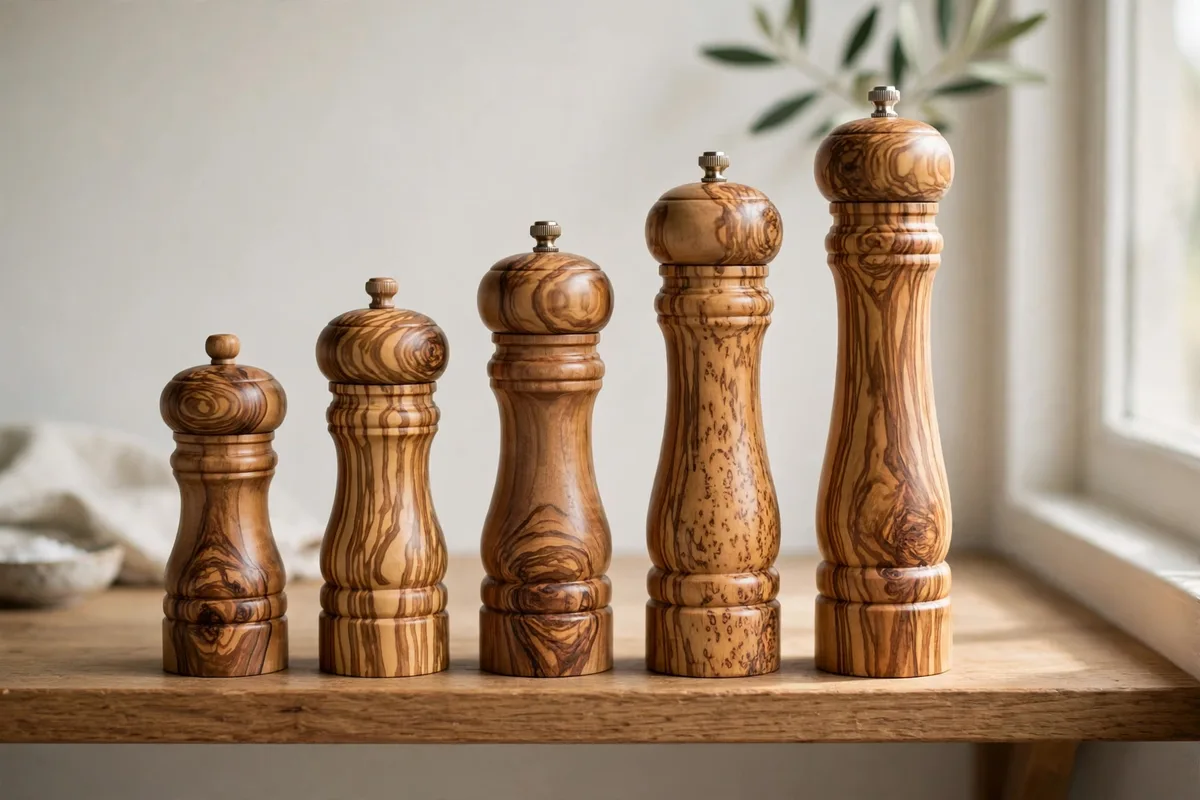
The 24 cm is the balanced middle, a proper kitchen workhorse that looks at home next to the stove. The 28 cm starts to make a statement. It is tall enough to notice when guests sit down, and it holds plenty, so it suits a bigger household or someone who cooks a lot. The 34 cm is the showpiece, an extra-large mill for a big dining table or a kitchen counter where you want one beautiful object instead of five ordinary ones. If you are buying a gift, the 20 cm or 24 cm is the safe middle ground.
My honest advice is to buy two if you can stretch to it, one for pepper and one for salt. A matching pair on the table looks wonderful, and coarse sea salt ground fresh is just as much of an upgrade as fresh pepper. Flaky sea salt from a mill lands on food in a completely different way than the fine white powder from a shaker. It crunches, it sparkles, and it seasons more evenly.
The Fresh Grind Difference, in Plain Words
I am not going to pretend I am a food scientist, but the reason fresh grinding tastes better is simple enough to explain. Black pepper gets its heat from a compound called piperine, and its smell from a bunch of volatile oils with names I cannot pronounce. Those oils evaporate. Once the peppercorn is cracked open, the clock starts. Grind it fresh and the oils are still there, in your food, where they belong. Grind it in a factory six months ago and most of them are gone, and no amount of shaking will bring them back.
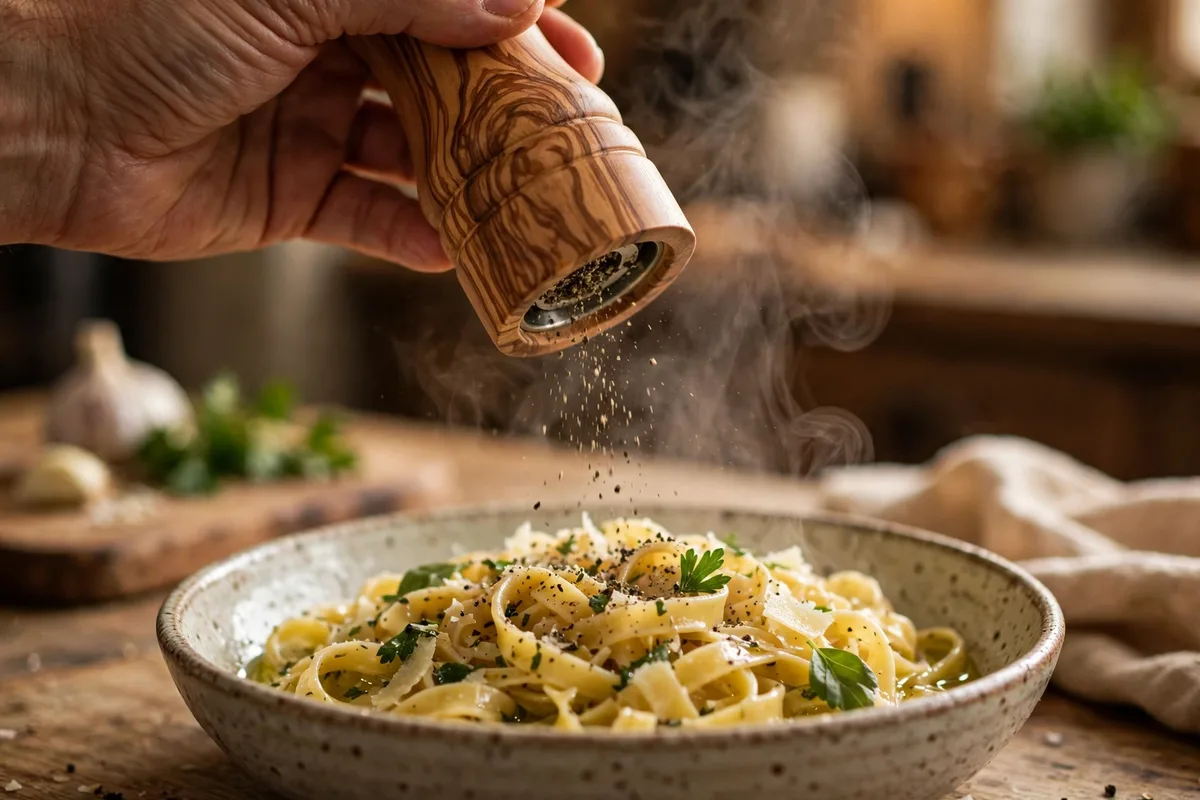
The difference is easiest to taste on simple food. Try it on a fried egg, or on buttered pasta, or on a tomato salad with nothing else on it. With pre-ground pepper, you taste heat and not much else. With fresh ground pepper, you taste something almost fruity underneath the heat, a warmth that builds instead of just stinging. Once you notice it, you cannot un-notice it, and you will start reaching for the mill without thinking.
Taking Care of It So It Lasts Decades
A wooden mill is not a plastic gadget, and it does ask a little bit of you in return. The good news is that the care routine is about thirty seconds, once in a while. Wipe the outside with a soft, slightly damp cloth and dry it straight away. Never put it in the dishwasher, and never leave it soaking in the sink. Water is the enemy of wooden kitchen tools, and a mill that lives in a puddle will crack or warp no matter how good the wood is.
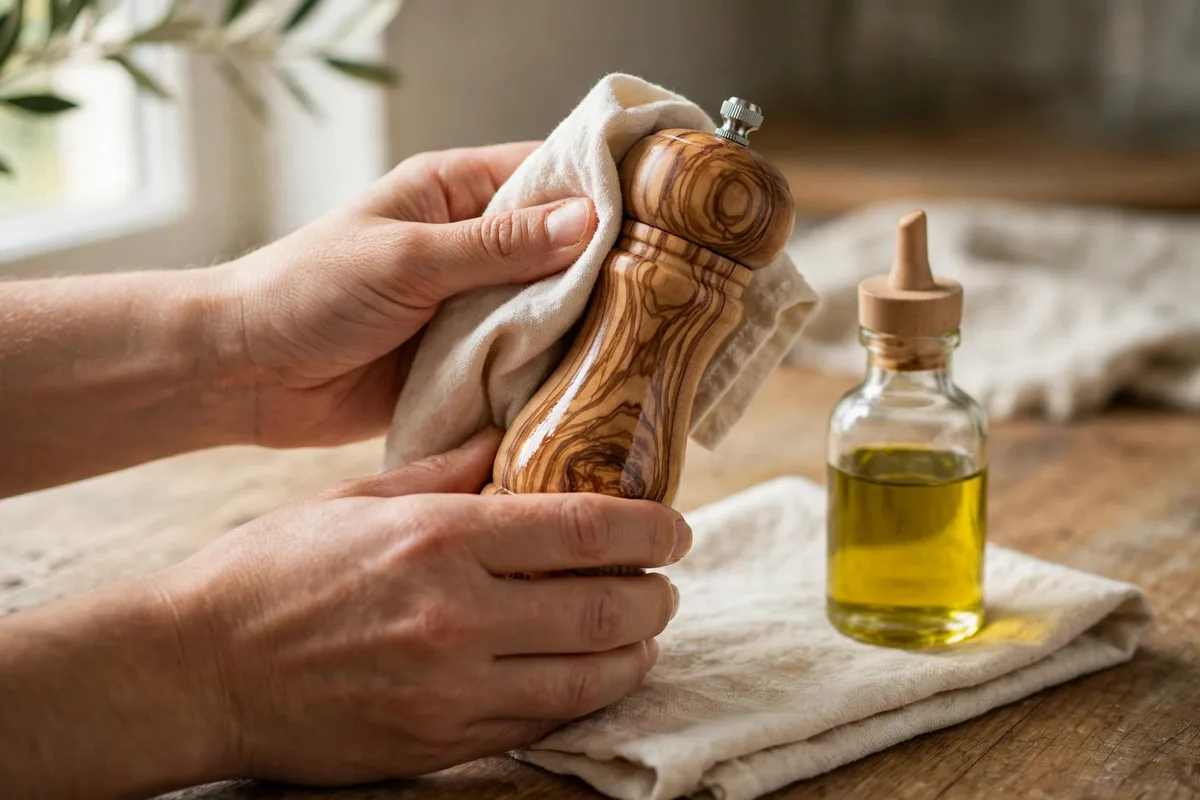
Every month or so, rub a tiny amount of food-safe oil into the wood with a soft cloth. Mineral oil made for cutting boards works, and so does a specialist wood butter. The oil feeds the wood, brings the grain back to life, and keeps the surface from drying out. It takes less time than making a cup of tea, and a mill that gets this treatment will look better in five years than the day you bought it. Olive wood ages beautifully. It deepens in color, the grain gets richer, and it picks up a patina that tells the story of every meal it seasoned.
Who This Is For, and Who Should Skip It
This mill is for anyone who cooks most days and is tired of seasoning food with dead pepper. It is for the person whose kitchen is starting to feel grown up, who has a decent knife and a proper pan and wants the small things to match. It is for new homeowners, who need one good mill more than they need ten gadgets. And it is a genuinely good gift, which matters in November, when everyone is quietly panicking about Christmas lists.
As a gift, it has three things going for it. It is useful, so it will not end up in a drawer. It is beautiful, so it feels like a real present and not a practical chore. And it is personal in a way a gift card never is, because no two pieces of olive wood look the same. Wrap it in brown kraft paper with a bit of twine and a sprig of pine, and you have a present that looks like you thought about it, because you did.

Who should skip it? If you want an electric mill, this is not it. Some people have arthritis or wrist trouble and need a push-button grinder, and a manual mill would be the wrong gift for them. And if you genuinely never use pepper, no mill in the world will change that. But for everyone else, for the daily cook who wants their food to taste like it should, this is one of the cheapest real upgrades a kitchen can get.
If you like the idea of handmade wooden pieces in the kitchen, you will probably also like the handmade wood and epoxy resin coasters we covered before, and the book-shaped acacia cutting board set that turns a bookshelf joke into a real kitchen tool. For the rest of the house, the handmade wooden blanket ladder solves the eternal problem of where all the throw blankets actually live.
Other Wooden Mills Worth a Look
The olive wood mill is my pick, but it is not the only good handmade wooden mill out there, and it is worth knowing the alternatives before you spend your money. If you like the idea of a ceramic grinding mechanism, La Plantation makes a wooden salt and pepper mill from Cambodian acacia wood fitted with a CrushGrind ceramic mechanism, priced at about 38.12 euros. It has a distinctive double-sphere shape that looks more like a piece of sculpture than a kitchen tool, and the ceramic mechanism is known for grinding very evenly. You can see it here: Wooden Salt and Pepper Mill at La Plantation. Do check stock before you fall in love with it, since it sells out regularly.
The Bottom Line
Most kitchen upgrades cost a fortune and change nothing. A handmade olive wood salt and pepper mill costs from £19, takes up no extra space, and changes the flavor of nearly everything you cook. Fresh pepper tastes like pepper is supposed to taste. Fresh salt crunches the way salt is supposed to crunch. And the mill itself, with its swirling olive wood grain, is one of those rare objects that gets more beautiful the more you use it.
If your pepper has been dead for weeks and you never noticed, now you know. Fix it before your next meal, not your next kitchen renovation. A good mill is the smallest, cheapest, most honest upgrade a kitchen can get, and this one happens to look wonderful doing it.
Love handmade wooden pieces as much as we do? Follow us on Pinterest for more kitchen finds, wooden crafts, and gift ideas, and share this story with the cook in your life who still shakes dead pepper on everything. Read the full story on thecavee.com, and tell us in the comments, what is the one kitchen tool you would never give up?
Frequently Asked Questions
Can I adjust the grind on this olive wood mill?
Yes. The top knob lets you vary the grind from fine to coarse. Turn it one way for a fine powder that suits soups and eggs, and the other way for a coarse crack that suits steaks and salads.
Can the olive wood mill go in the dishwasher?
No. Wipe the outside with a soft, slightly damp cloth and dry it immediately. Never immerse it in water or put it in the dishwasher, and keep the grinding mechanism dry.
What sizes does the mill come in?
Five heights: 16 cm, 20 cm, 24 cm, 28 cm, and 34 cm. Each mill is sold individually, so you can buy one for pepper, one for salt, or a matching pair in different sizes. The price runs from £19 to £68 depending on the size.
Is a handmade wooden mill a good Christmas gift?
Yes, it is one of the safer handmade gifts. It is useful, it looks beautiful on a table, and no two pieces of olive wood have the same grain, so it feels personal. The 20 cm or 24 cm size is the safest choice if you are not sure about the recipient’s table.
How long will an olive wood mill last?
With basic care, decades. Olive wood is dense and naturally oily, so it resists moisture and wear far better than soft woods. Wipe it dry, oil it occasionally, keep it out of the dishwasher, and it will outlast several plastic mills.