Salar de Uyuni Mirror Season Is Starting: Your 2026 Guide to Walking on the Sky in Bolivia
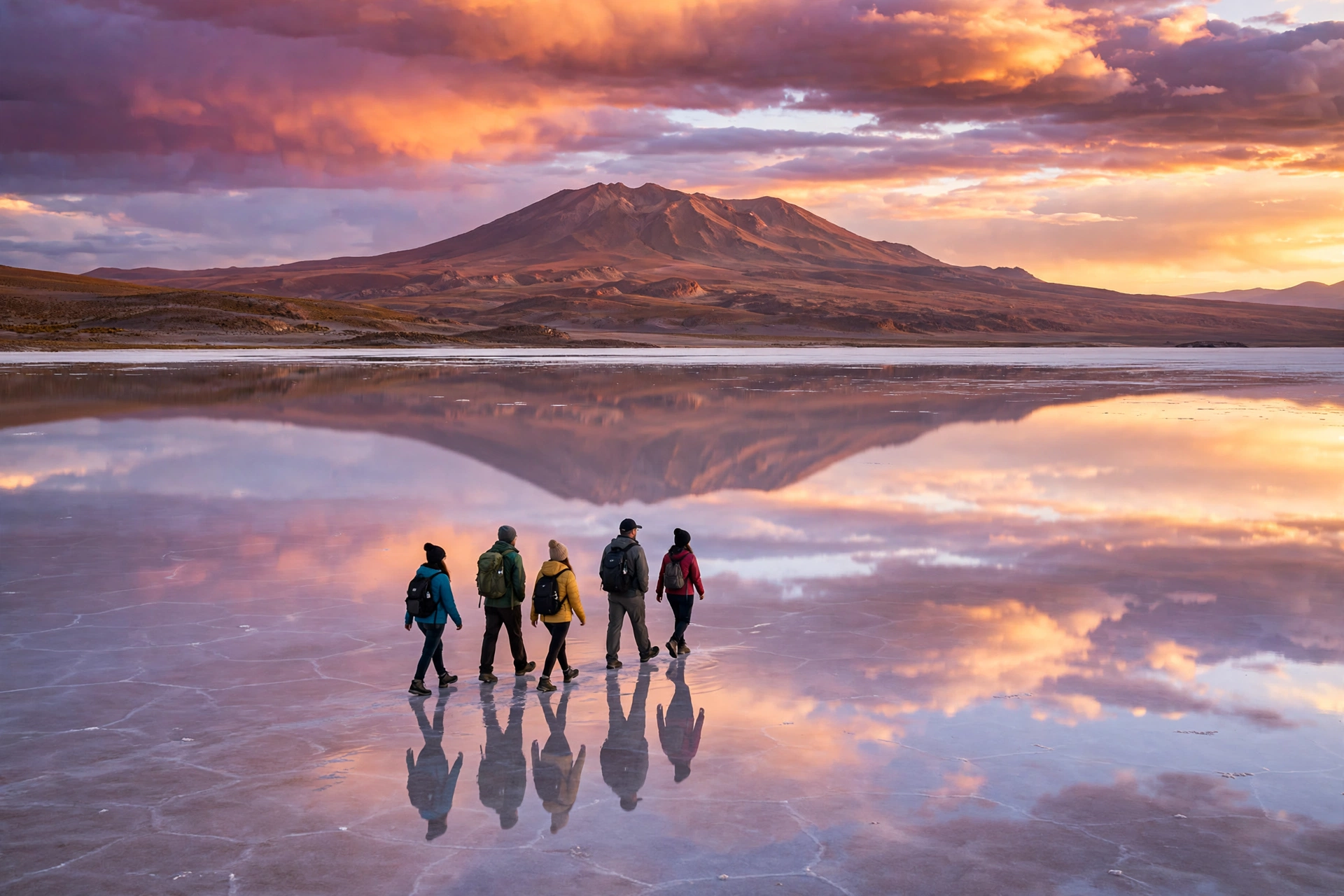
There is a place in Bolivia where the sky falls down and lands at your feet. For a few months every year, rain turns the largest salt flat on Earth into a mirror so perfect that you cannot tell where the ground ends and the clouds begin. People walk across it and look like they are strolling through heaven. Their reflections walk upside down beneath them. Photos from this place break the internet every single year, and the season is starting right now.
That place is Salar de Uyuni. November is when the mirror season begins. If you have ever saved one of those impossible photos, the ones where a person stands on a sheet of sky, this is your window. This guide covers when the mirror actually appears, what it costs, which tour to pick, and the mistakes that ruin the trip for first timers.
What the Mirror Effect Really Is
Salar de Uyuni is the largest salt flat in the world. It covers about 10,582 square kilometres in southwest Bolivia, high in the Andes at 3,656 metres above sea level. That is roughly the size of a small country, made entirely of salt. Under the white crust sits a layer of salt up to 8 metres thick, and beneath that, brine rich in lithium. The flat is so level that its elevation varies by less than one metre across the whole surface. Satellites use it to calibrate their instruments because there is almost nowhere on Earth this flat.
That flatness is what makes the mirror possible. When the rainy season arrives, a thin layer of water, just 2 to 5 centimetres deep, spreads across the crust. Because the ground underneath is almost perfectly level, the water sits still and smooth. The sky reflects in it without a ripple. Stand in the middle of it at dawn and the horizon disappears. There is no line between earth and sky anymore. You are walking on clouds.
It does not happen all year. The mirror needs rain, and rain in the Bolivian Altiplano comes between November and April. That is the window. Miss it and you get a different, still beautiful, but very different salt flat.
When to Go: The Honest Month by Month Truth
Every guide will tell you the mirror season runs November to April. That is true, but it hides the detail that matters when you are booking flights.
November is the start of the season. The first rains arrive and the mirror begins to form, but it is a transition month. Early November can be patchy. Some days the water is there, some days it is not, and the effect may only cover parts of the flat. By mid to late November, conditions usually settle into the reliable pattern that runs through the core season. The upside of November is real: fewer crowds, easier bookings, and you catch the season before the peak rush.
December through February is the peak. This is when the rain is most consistent and the mirror is at its best. January and February are the most reliable months of all. The trade off is access. Heavy rain can flood sections of the flat so deeply that 4×4 jeeps cannot cross them. Incahuasi Island, the cactus covered rock in the middle of the salar, is usually closed to tours from January through March because the water around it gets too deep.
March is still strong, and April is the tail end. The rains taper off but the first half of April can still produce stunning reflections. After that the flat dries out and the mirror season is over until the next November.
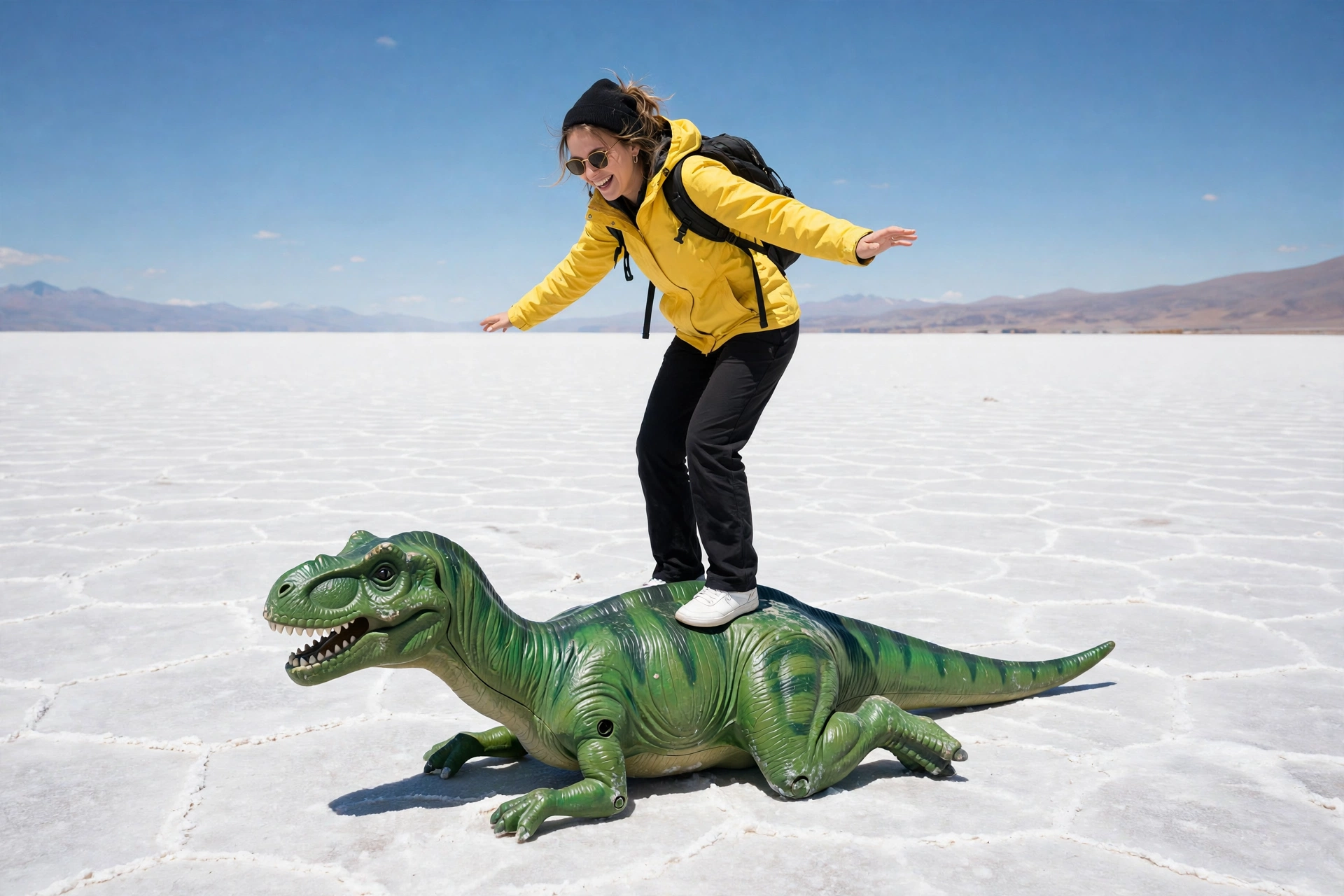
And if you go in the dry season, from May to November, you get something else entirely. The crust hardens into vivid hexagonal patterns. You can drive anywhere, including out to Incahuasi Island. The famous perspective photos, the ones where a toy dinosaur looks fifty feet tall, work best then. Nights drop as low as minus 20 degrees though, so you trade the mirror for cold and full access.
So the honest answer: if the mirror is the reason you are going, aim for late November at the earliest, and December to February if you want the safest bet. November is the sweet spot for people who hate crowds and do not mind a little uncertainty.
Getting There Without the Headache
Uyuni is a small, dusty town on the edge of the flat, and it is the gateway for almost every visitor. Most travellers reach it from La Paz. The standard route is an overnight tourist bus, and the company most experienced travellers trust is Todo Turismo. You leave La Paz in the evening, sleep (sort of) on the bus, and arrive in Uyuni in the morning, ready to start a tour the same day.
The part nobody warns you about is the altitude. The salt flat sits at 3,656 metres, and La Paz sits at about 3,640 metres, so if you spend a day or two in La Paz first, your body starts adjusting before you reach the flat. That is the smart move. Arrive in La Paz, take it slow for a day, drink far more water than you think you need, and skip the alcohol on your first night. Altitude sickness feels like a bad hangover mixed with a headache that will not quit, and it can flatten a whole day of your trip. The multi day tours climb even higher, past 4,500 metres around the lagoons, so the acclimatisation matters even more if you pick the three day option.
Book your tour in Uyuni itself or in advance through a reputable operator. The town is full of agencies, and the quality gap between the best and the worst is enormous. A good operator means a well maintained Land Cruiser, a driver who knows where the water is, and a cook who can feed you properly at 4,000 metres. A bad one means a broken down jeep in the middle of nowhere. Read recent reviews, not the posters in the window.
One Day or Three Days: Which Tour Actually Makes Sense
Almost every visitor picks one of two options, and the right choice depends entirely on what you want from the trip.
The one day tour is the mirror hunter’s best friend. It starts around 10 in the morning and returns by evening. You see the Train Cemetery on the edge of town, the salt processing village of Colchani, the flat itself, Incahuasi Island when it is open, and a sunset spot at the edge of the salar. In the wet season it adds a mirror photography session, and one day is genuinely enough to photograph the effect properly. Prices in 2026 run about 35 to 55 US dollars per person in a shared six seat 4×4, and some operators list day trips from around 30 dollars. If the mirror is your whole reason for coming, and your time is short, this is the tour.
The three day southwest circuit is the trip for people who want the full Altiplano. It runs from Uyuni to the Chilean border, or the other way around, and adds Laguna Colorada, a red lagoon where three species of flamingo feed, the Sol de Manana geysers, Laguna Verde, and the Eduardo Avaroa Reserve. Shared three day tours cost roughly 70 to 120 dollars per person. A private three day tour with your own vehicle and guide runs about 250 to 400 dollars. You sleep in basic hostels and salt hotels along the way, and the second and third days take you far higher and far colder than the flat itself.
My honest take: if you have three days, take the three day tour. The mirror is the headline, but the flamingo lagoons and the geyser fields are the part people talk about years later. If you only have one day, do not feel short changed. One day on the mirror at the right light is enough to fill a camera roll and a lifetime of dinner party stories.
What You Will Actually See Out There
The Train Cemetery
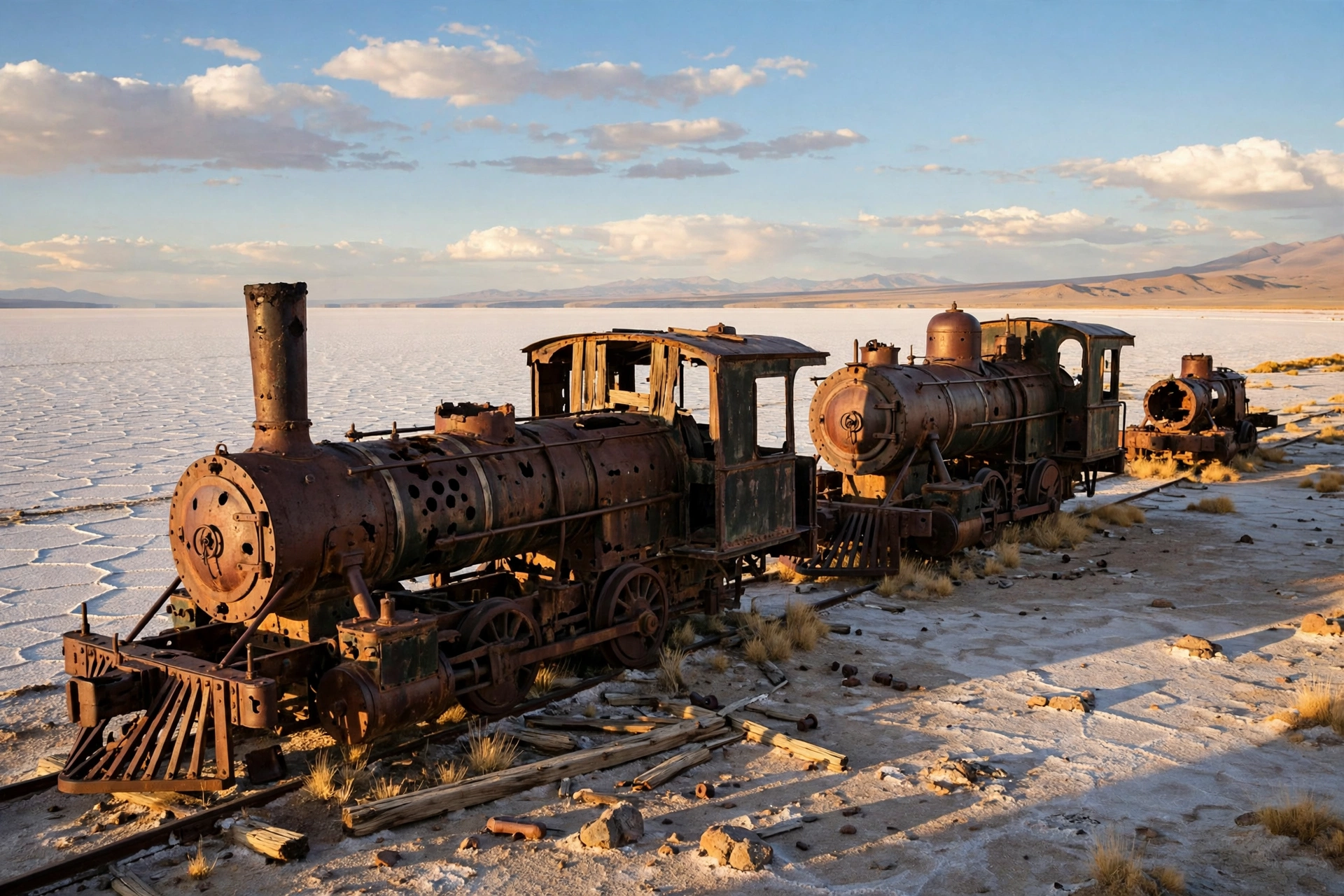
Just outside Uyuni town sits a graveyard of 19th century steam locomotives, abandoned when the mining boom ended. They rust in the desert wind, and at golden hour they look like something from a film set. It is the first stop on almost every tour and it is worth more than the ten minutes most groups give it. Walk around the back of the engines, away from the crowd, and the photos get dramatically better.
Colchani and the Salt
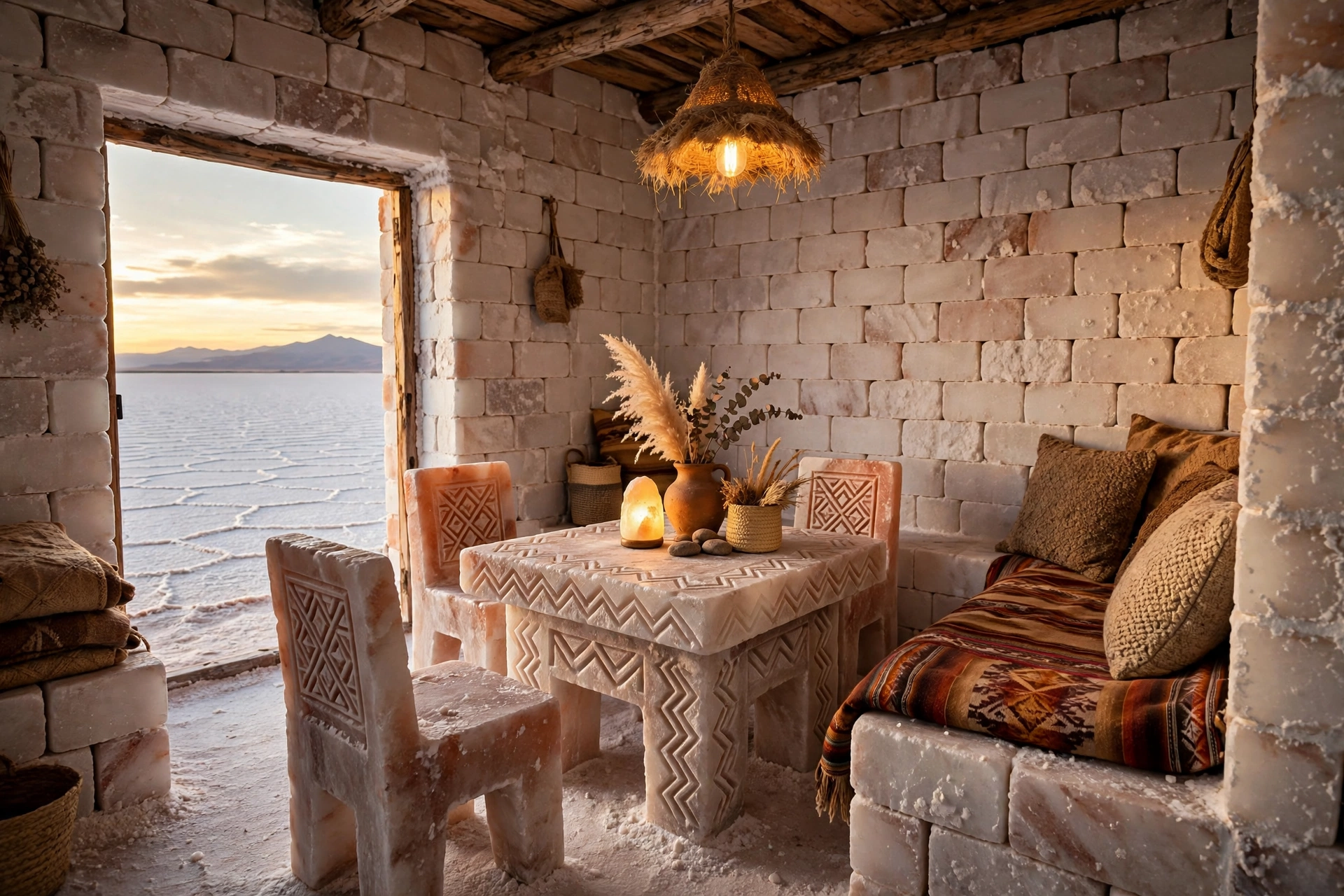
The village of Colchani is where locals still harvest salt by hand, scraping it into piles and loading it onto trucks. There is a small salt museum and stalls selling salt souvenirs, including little llamas carved from salt blocks. It is a quick stop, but it is the first hint of how central salt is to life out here. The first salt hotel, Palacio de Sal, was built from salt blocks in 1993 to 1995, right in the middle of the flat. Newer salt hotels sit near the edge of the salar now, and sleeping in a room where the walls, the floor and even the furniture are made of salt is one of those travel stories that never gets old.
Incahuasi Island
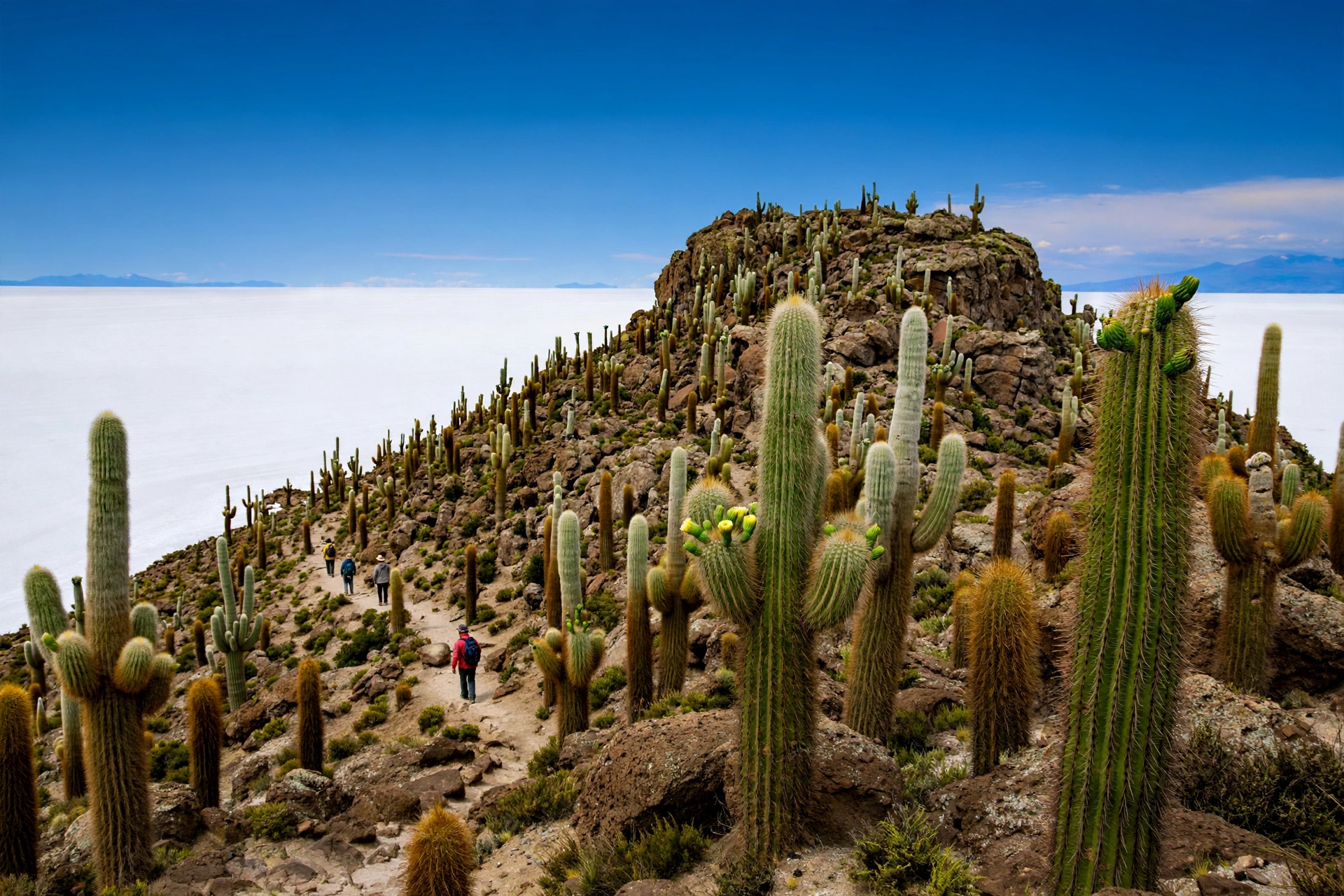
In the middle of the white nothing, a rocky island rises out of the salt. It is covered in giant cacti, some of them centuries old, and the view from the top is the whole salar spread out to the horizon in every direction. The island is the remains of an ancient volcano top, left behind when the prehistoric lakes that formed the flat dried up. Remember that it is usually closed from January to March in the wet season, so if the island matters to you, November or December is your window, or come in the dry season.
The Perspective Photos
With no trees, no buildings and no horizon line, your brain loses all sense of scale on the salar. That is what makes the perspective photos work. Drivers carry props, toy dinosaurs, a bottle, a shoe, and they know exactly where to place them so a tiny object looks enormous and a person looks like they are standing on a dinosaur’s back. It is silly and it is wonderful. Bring your own small props if you want photos nobody else has. A toy car, a coffee cup, anything with a recognisable shape works.
Laguna Colorada and the Flamingos
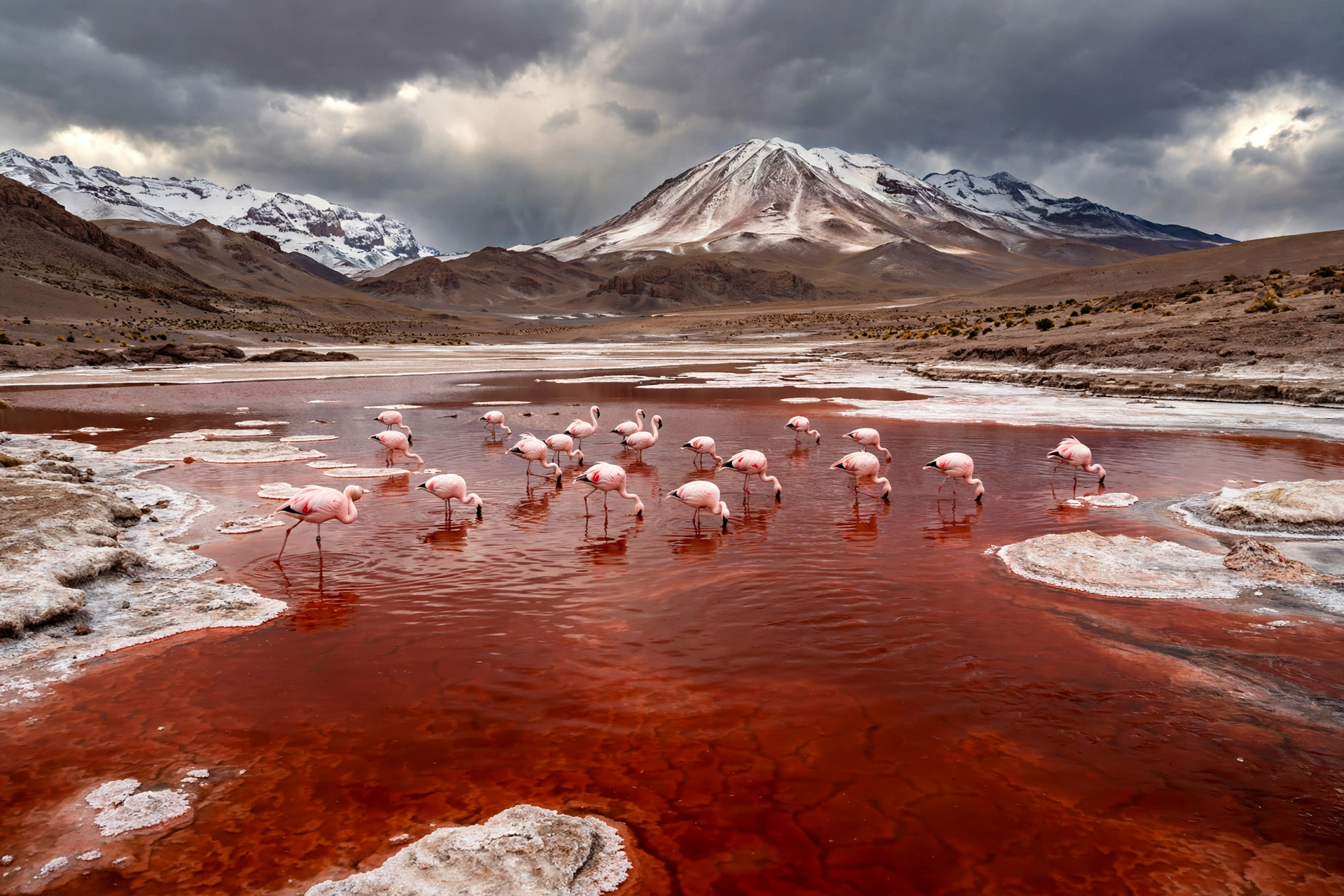
On the three day circuit, the red lagoon is the showstopper. Laguna Colorada gets its colour from algae and minerals in the water, and three species of flamingo feed in it, pink against red, with snow capped Andes behind them. It is one of the highest flamingo breeding grounds on Earth. The same circuit takes you past steaming geyser fields and a green lagoon at the foot of a volcano. None of it looks real. All of it is.
Sunset and Stars
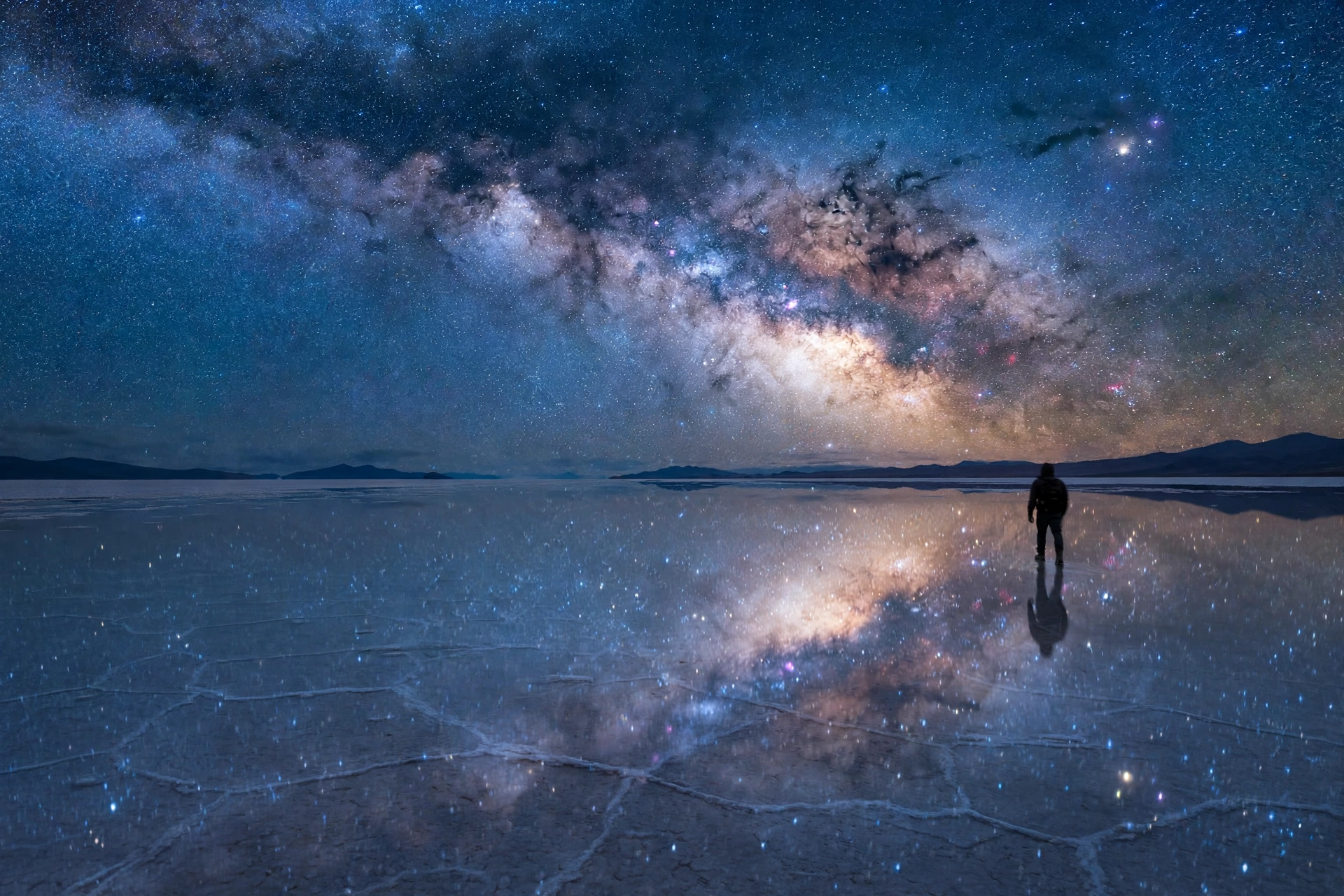
The best mirror light is not at midday. It is 30 minutes after sunrise and 30 minutes before sunset, when the low sun paints the water gold and pink. Midday sun washes the reflection out. If your tour only offers a midday visit, ask specifically about timing, or book a sunrise or sunset tour. Some operators run dedicated sunset and stargazing trips, and they are worth every penny. On a clear night the Milky Way reflects in the shallow water too, so the stars are above you and below you at the same time. It is the closest thing to standing in space that most of us will ever get.
The Problems Nobody Warns You About (And How to Solve Them)
Uyuni is not a difficult trip, but it punishes people who wing it. Here are the problems that actually show up, and the fixes.
Altitude sickness. The flat is at 3,656 metres and the three day tour goes higher. Spend a day in La Paz first, drink water constantly, eat light, and avoid alcohol the night before the tour. Coca tea is offered everywhere and locals swear by it. If you get a splitting headache, nausea or real shortness of breath, tell your guide immediately and get to lower ground. Do not tough it out.
The cold. Days on the salar are warm in the sun, but the wind cuts straight through you, and nights on the three day tour drop below freezing. The dry season can hit minus 20 degrees at night. Pack layers, a proper windproof jacket, gloves and a warm hat, even in November. The sun is brutal at this altitude too, so sunscreen, sunglasses and lip balm are not optional. The salt reflects sunlight back up at you, so you burn from below as well as above.
Wet feet. The mirror means standing in water, and that water is salty and cold. Bring waterproof boots or cheap rubber wellies. Some tours provide them. Ask before you book, because walking the mirror in soaked trainers is a miserable way to spend a day.
Flooded sections and closed stops. In the peak wet season, parts of the salar become impassable and Incahuasi Island closes. This is not a failure of your tour, it is the season working as it always does. November is actually the smart hedge here: the mirror is forming, but the flooding has not reached its worst yet.
Choosing a bad operator. This is the one problem that can actually ruin the trip. The cheapest jeep in Uyuni is cheap for a reason. Check recent reviews, confirm what is included (meals, water, entrance fees, a Spanish or English speaking guide), and confirm the vehicle is a proper 4×4 with a working heater. Pay a little more for a company with a track record. The difference between a great Uyuni trip and a miserable one is almost always the operator.
What to Pack for the Mirror Season
Keep it simple, but do not skip the unglamorous stuff. Waterproof footwear or wellies. A windproof jacket and warm layers. Sunscreen, sunglasses and lip balm with SPF. A power bank, because cold drains phone batteries fast and there is nowhere to charge on the flat. A small daypack with water and snacks. Cash in Bolivianos for entrance fees and tips, because card machines are rare once you leave town. And props for the perspective photos, if you want the fun shots.
Photographers, one extra note: bring a cloth to wipe salt spray off your lens, and keep your camera in a sealed bag when you are not shooting. Salt dust gets into everything out there.
Is November Really the Right Time?
Yes, with one honest caveat. November is the start of the season, not the peak of it. The mirror is forming, the crowds have not arrived, the tours are easier to book, and the flooding that closes parts of the flat in January has not set in yet. What you trade for that is certainty. An early November visit can catch a week when the rains have not properly started, and the mirror is patchy. By late November, that risk drops a lot.
If you can choose your dates freely, go in late November or December. If your dates are fixed in early November, go anyway. Even a partial mirror is one of the strangest and most beautiful sights on the planet, and the dry salt patterns, the trains, the island and the sunset are there regardless of the water level. The worst Uyuni trip is still better than most people’s best holiday.
For more on planning big seasonal adventures, see our guide to Iceland’s ice cave season, and if you like the idea of a long overland route, our Ha Giang Loop guide covers another bucket list road trip in the same spirit. And if you want the pure thrill-seeker angle, Brazil’s run as the world’s top thrill destination is worth a read before you plan your next adventure.
The mirror season only lasts a few months a year. November is your first chance to catch it. Book the tour, pack the wellies, and go stand on the sky.
Found this guide useful? Save it on Pinterest and share it with someone who needs a reason to book Bolivia. Follow The Cavee on Pinterest for more adventure travel guides, cave explorations and handcrafted travel inspiration, and read the full story on thecavee.com.
Sources and further reading: Love Bolivia’s Salar de Uyuni guide for tour prices and mirror conditions, and Bolivia Hop’s wet versus dry season guide for the month by month breakdown.