Most people picture the Sahara as one endless stretch of sand. Flat, empty, the same dune after the same dune. That picture is wrong, and nowhere proves it more than Tassili n’Ajjer, a plateau in southeastern Algeria where wind and water carved sandstone into a stone forest, and where people painted their lives on the rock walls more than 12,000 years ago.
Here is the part that still surprises me. This place holds one of the largest collections of prehistoric art on Earth, more than 15,000 paintings and engravings, and most travelers have never even heard its name. It is a UNESCO World Heritage site. It has a lost city made entirely of rock, canyons with emerald pools in the middle of the desert, and right now, in November 2026, it is in the middle of its best season of the year.
The Saharan tourist season kicked off in late October, and the window runs through to late March. Daytime temperatures sit around 22 to 26 degrees, the sky is clear, and the desert nights are crisp. If you have ever wanted to see the Sahara at its best, this is the moment, and Tassili is the place.
What exactly is Tassili n’Ajjer?
Tassili n’Ajjer is a vast sandstone plateau in the Algerian Sahara, near the oasis town of Djanet. The name means “plateau of rivers” in the Tamahaq language of the Tuareg people, which sounds strange for a desert until you see the dry riverbeds and deep canyons cutting through it. This was not always desert. Thousands of years ago, this land was green, with rivers, lakes, grassland and herds of wild animals. The people who lived here painted what they saw, and then the climate changed, the water dried up, and the desert moved in. The paintings stayed.
UNESCO listed Tassili as a World Heritage site in 1982, for both its natural and its cultural value. The park covers more than 72,000 square kilometers, which makes it one of the largest protected areas in Africa. Inside it, erosion sculpted the sandstone into arches, towers, pillars and maze-like canyons that look like the ruins of a civilization. They are not ruins. They are rock, shaped by wind over millions of years. But when you walk between them, your brain keeps insisting someone built this place.
That is the first thing to understand about Tassili. It is two wonders stacked on top of each other: a geological wonder and an archaeological one. You come for the rock art, but the landscape alone would be worth the trip.
The rock art: 12,000 years of history painted on stone
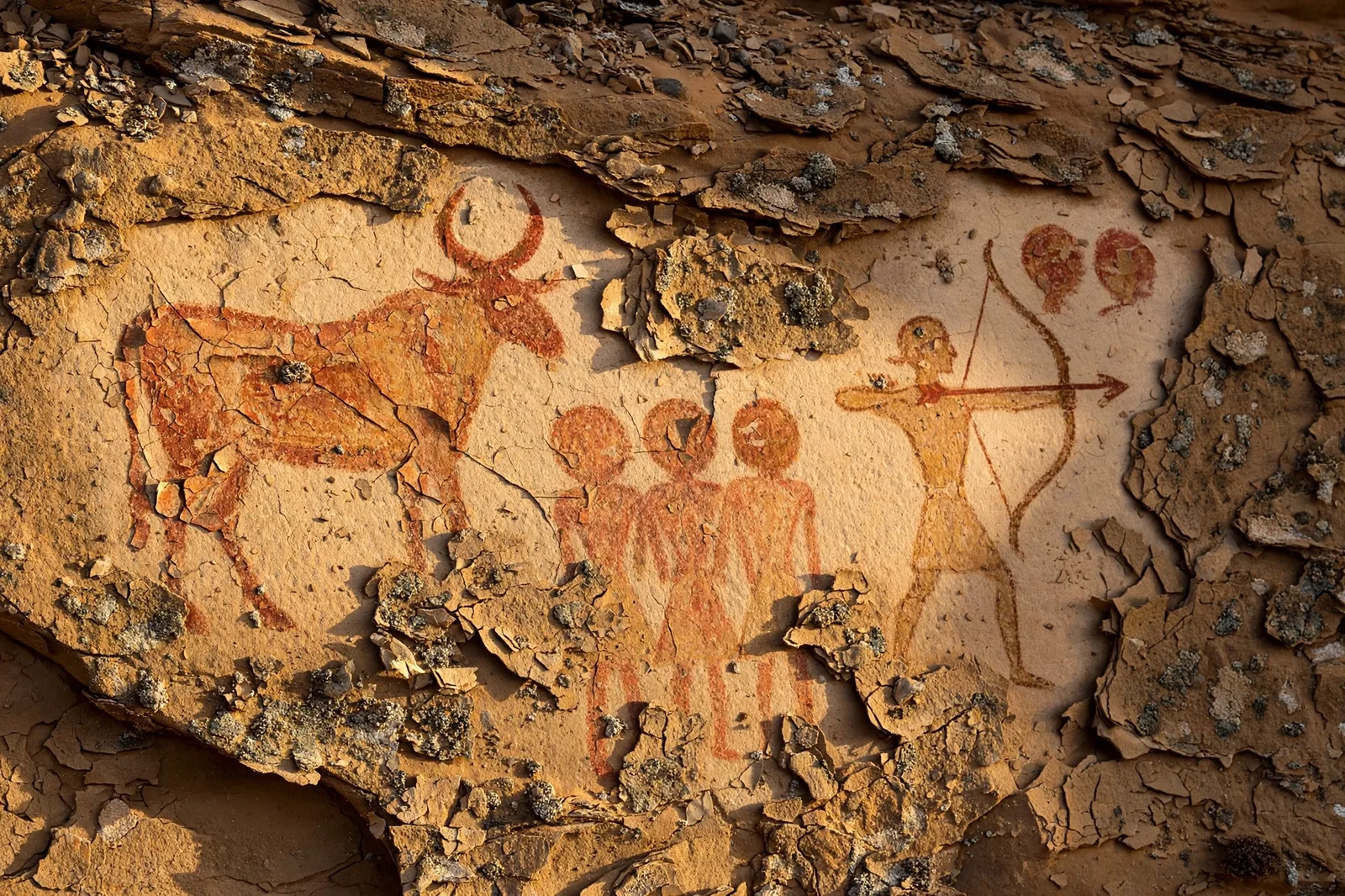
The rock art of Tassili is the reason this place matters to the whole world, not just to Algeria. More than 15,000 paintings and engravings have been catalogued across the plateau, and new ones are still being found. The oldest date back around 12,000 years. The youngest are roughly 2,000 years old. That means the walls of Tassili record about ten thousand years of human life, climate change and migration, drawn by the people who lived through it.
Archaeologists divide the art into four broad periods, and once you know them, the paintings start to read like chapters of a book. The earliest engravings, from the Bubaline period, show large wild animals: elephants, giraffes, rhinos and buffalo, creatures that could only have lived here when the Sahara was wet and green. Then came the Round Head period, with mysterious human figures that have round, featureless heads. The Bovidian period brought herds of cattle and scenes of daily life, people milking cows, herding, dancing. Finally, the Cameline period shows camel riders and warriors, the desert as we know it today.
The most famous single image is the “Crying Cow” at Tegharghart, a delicate bas-relief of a cow with a tear running down its face, carved into the rock near Djanet. People come from all over the world to see it at sunset, when the low light makes the carving seem to move. It is small, it is quiet, and it is unforgettable. A 12,000-year-old artist carved an emotion into stone, and you can still read it today.
There is a rule that every visitor needs to take seriously. Do not touch the paintings. Do not wet them to make them show up better in photos. Do not use flash. The pigments are fragile, and every touch, every drop of water, every flash of light takes a little bit of them away. Your guide will remind you. Listen to them. These paintings survived twelve millennia, and the last thing they need is a tourist’s fingerprint.
If ancient art in caves fascinates you, you will love our story about the 15,000-year-old cave art found in Ireland, and the flooded cave in Brazil where 400 skeletons rewrote the story of the first Americans. Tassili belongs in the same conversation, except here the gallery is the size of a country.
Sefar, the lost stone city
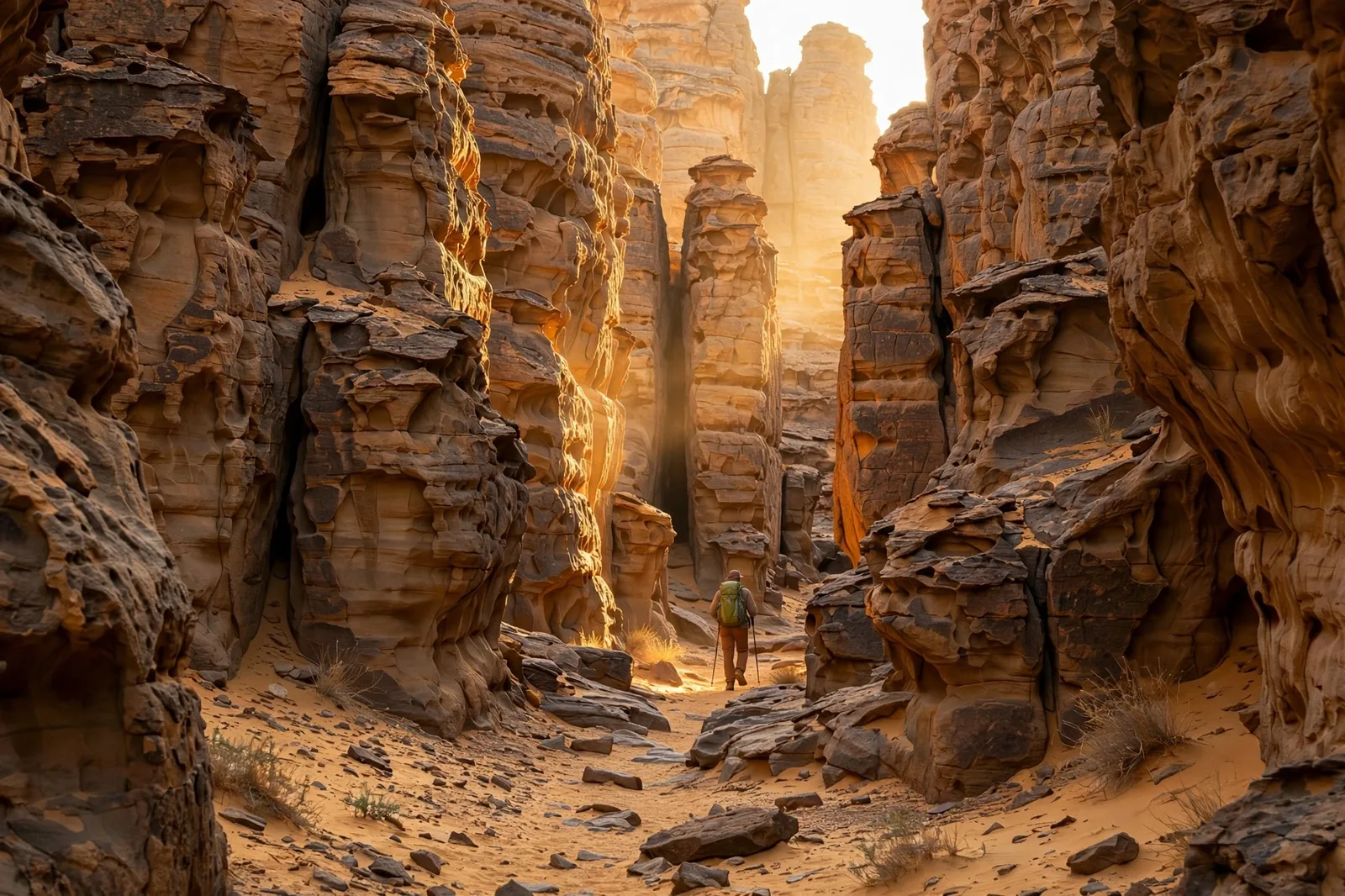
If the rock art is Tassili’s soul, Sefar is its showstopper. Sefar is a natural stone city on the high plateau, a maze of sandstone towers and narrow passages that looks exactly like the ruined streets of some ancient metropolis. Travelers and guides call it the “Louvre of the Desert,” and the nickname is not an exaggeration. The rock art at Sefar spans all four periods, from 12,000-year-old animal engravings to camel riders from 2,000 years ago, all of it concentrated in one extraordinary place.
Getting there is the adventure. Sefar is only accessible on foot, with a steep climb up onto the plateau and then days of walking through the stone forest with donkeys carrying the gear. The classic Sefar trek runs 7 to 10 days, and it is rated hard. You sleep in bivouacs under the stars, you walk four to six hours a day, and you eat what the cameleers cook over the fire. It is not a casual day trip. It is a proper expedition, and that is exactly why it is special.
Some people describe Sefar as the oldest and biggest stone city in the world. That is a stretch, because it is a natural formation, not a built city. But walk through its narrow passages at golden hour, with the rock glowing orange and the shadows stretching between the towers, and you will understand why people reach for that description.
When to go: the season is open right now
This is the practical part, and it matters, because the Sahara punishes bad timing. The best window for Tassili is November to February. Daytime temperatures run about 18 to 26 degrees, nights drop to 5 to 10 degrees, and the sky is usually clear. March is still workable but warmer. From June to September, treks are effectively impossible, with temperatures above 45 degrees.
The 2026 season kicked off in late October, so mid-November is prime time. The light is beautiful, the desert is at its most comfortable, and the big group tours are running. If you are planning around this article, aim for the next few months and book your guide four to six weeks ahead in high season, because the good Tuareg agencies in Djanet fill up.
How to get there
Every Tassili trip starts in Djanet, a small oasis town of about 6,000 people and the gateway to the plateau. You reach Djanet by domestic flight from Algiers, which takes around three and a half hours and costs roughly 100 euros one way. From Djanet, your agency handles everything: the 4x4s, the camels, the food, the camping gear and, most importantly, the permit.
Here is the part you cannot skip. Tassili n’Ajjer is a protected national park, and access requires a permit from the Park Office, plus a licensed local guide. You cannot just drive in on your own. This is not a bureaucratic annoyance. It is what keeps the art safe and the desert clean, and the guides are genuinely worth it. Tuareg guides know this plateau the way you know your own neighborhood. They read the rock, they find water, they know which canyon hides a guelta, and they cook a mean tagine over a fire in the middle of nowhere.
Budget for a 7-day all-inclusive trek, guide, cameleer or 4×4, meals, bivouac gear and permit, at roughly 600 to 1,200 euros per person, depending on the route and the group size. Shorter trips cost less. A one-day excursion to Essendilene and the Crying Cow runs about 12,000 to 18,000 Algerian dinars. A two-day trip to Tikobawen and the Erg Admer dunes runs about 25,000 to 35,000 dinars. The high plateau trek to Sefar and Jabbaren, five to seven days on foot, runs about 75,000 to 110,000 dinars. Prices vary by agency and season, so treat these as a guide, not a promise, and confirm before you book.

Which trek should you pick?
This is the question every traveler asks, and the honest answer is that it depends on your fitness, your time and how much desert you actually want. Here is how the main routes compare.
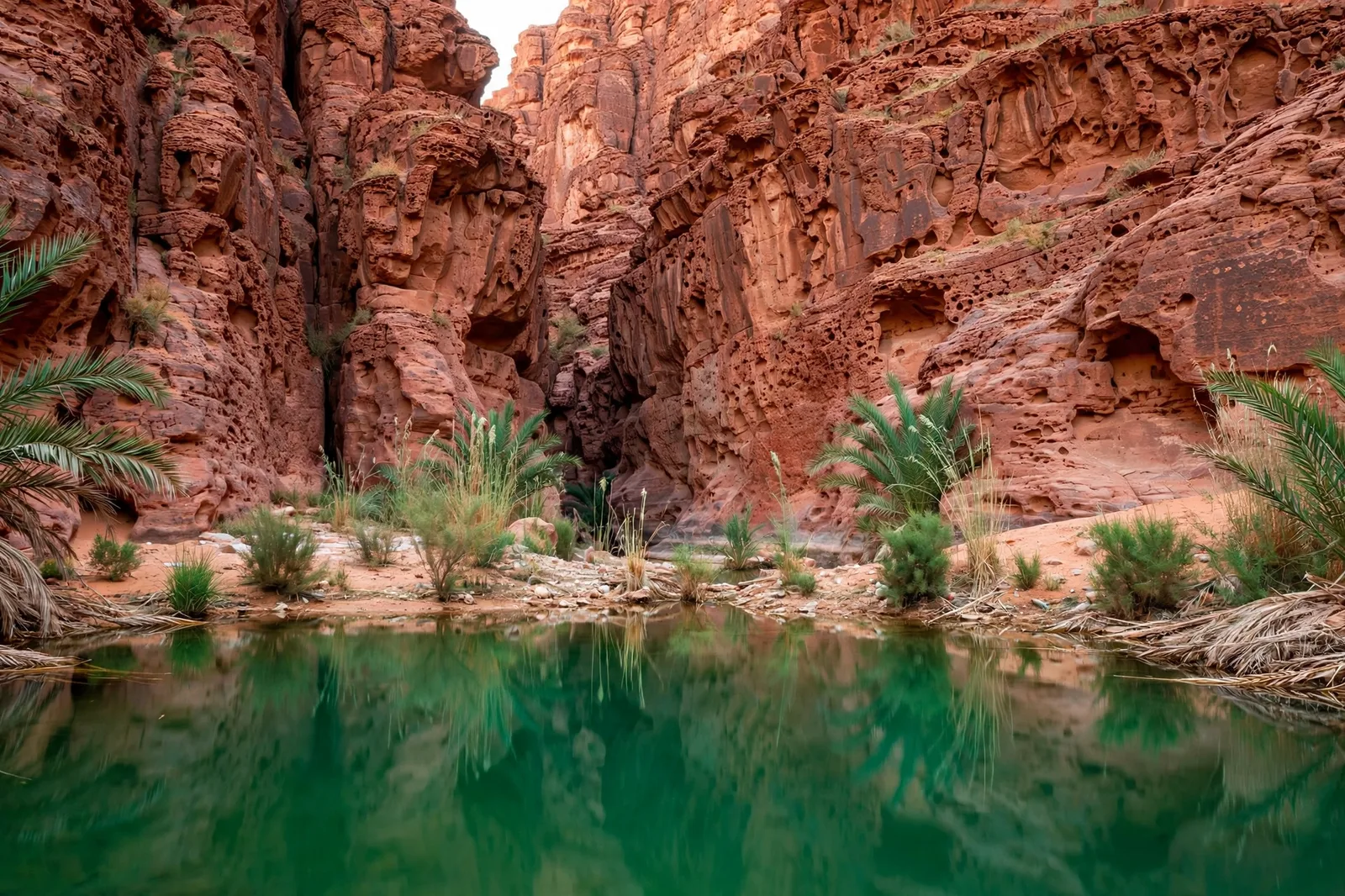
Essendilene and Tegharghart, 1 day, easy. A 4×4 trip plus an easy walk. You see the emerald guelta pool in Essendilene canyon, the Crying Cow engraving, and a beautiful canyon walk. This is the right choice if you have one day, if you are traveling with kids, or if you want a gentle introduction. All fitness levels can do it.
Tikobawen and Erg Admer, 2 days and 1 night, easy to moderate. A 4×4 trip with dune hiking. Stone arches, a dune sunset, and your first night sleeping in a bivouac under the stars. This is the sweet spot for most travelers: you get the desert night without committing to a full expedition.
Essendilene Canyon, 3 to 5 days, easy. A longer walk through the canyon system, with natural pools and engravings along the way. Good for people who like walking but do not want the hard climbs of the high plateau.
Jabbaren, 5 to 7 days, very hard. A pack-mule foot trek to one of the greatest rock painting sites on the plateau. The art here is extraordinary, but the walking is demanding. Go here if you are fit and the art is your main reason for coming.
Red Tadrart, 7 to 8 days, moderate. A 4×4 and walking circuit through red dunes and canyons, with some of the most photogenic landscapes in the Sahara. If you are a photographer, this is your route.
Sefar and the high plateau, 7 to 10 days, hard. The full experience. The stone city, the complete range of rock art periods, ancient cypress trees, and days of walking through a landscape that feels like another planet. This is the one you tell your grandchildren about.
Minimum five days is what most guides recommend to really explore Tassili. Ten days covers the whole plateau, Sefar, Jabbaren and Ouan Tabu included. If you can only spare a weekend, do the Essendilene day trip and the Tikobawen overnight. You will still see the Crying Cow, a guelta, a dune sunset and a sky full of stars, which is more than most people see in a lifetime.
Sleeping in the desert: the bivouac night
Let me be honest about the nights, because they are half the reason to go. A bivouac in Tassili is not a hotel. It is a sleeping mat, a sleeping bag, and a sky so full of stars that first-timers often just lie there staring for an hour. There is no light pollution for hundreds of kilometers in any direction, and the Milky Way looks close enough to touch.
Dinner is cooked over a fire, usually a tagine or grilled meat with bread baked in the sand, and tea is poured the Tuareg way, from high above the glass so it froths. Your guides will tell stories, or sing, or just sit quietly with you while the fire burns down. Then you crawl into your sleeping bag, and the desert goes completely silent in a way that is hard to describe until you have heard it. It is the kind of quiet that resets something in your head.
Practical note: nights are cold, sometimes down to 5 degrees. Bring a warm layer and a beanie. Your agency provides the bivouac gear on all-inclusive treks, but a thermal base layer of your own makes a real difference.

What to pack
Desert packing is a skill, and the rule is simple: light, but not careless. You will walk with a daypack while the donkeys or 4×4 carry the rest, so keep your daypack under control.
Bring broken-in hiking boots with ankle support, because the plateau is rocky and uneven. Bring sun protection that actually works: a wide-brimmed hat, sunglasses, and high-SPF sunscreen, and reapply it, because desert sun at altitude is stronger than you think. Bring a refillable water bottle, at least a liter, and drink constantly, even when you do not feel thirsty. Bring a warm layer and a windproof jacket for the evenings. Bring a headlamp with a red light mode, which is kinder to your night vision and to everyone else’s. Bring a power bank, because there are no plugs in the desert, and bring your camera, obviously, plus a spare memory card.
What not to bring: heavy luggage, white clothes (the red dust gets everywhere), and any expectation of phone signal. There is no signal on the plateau. Tell your family before you go, then enjoy being unreachable for a few days.
Is Algeria safe for tourists?
This is the question everyone asks, so let us answer it straight. The Djanet and Tassili area is visited by guided tour groups every season, and the permit and licensed-guide system means you are never wandering around alone. The agencies are established and the local Tuareg communities welcome visitors. That said, Algeria is a big country with regions that have different security situations, and the Sahara is remote by definition. Check your government’s travel advisory before you book, buy travel insurance that covers remote trekking, and go with a reputable agency. Do not try to freelance your way into a protected national park.
If you want a second opinion from people who run these trips, the specialist guides at Kel Sahara publish a detailed 2026 guide to the top five hikes in Tassili n’Ajjer, and UNESCO’s own listing for the park is at whc.unesco.org. Read both before you book anything.
A sample 7-day itinerary
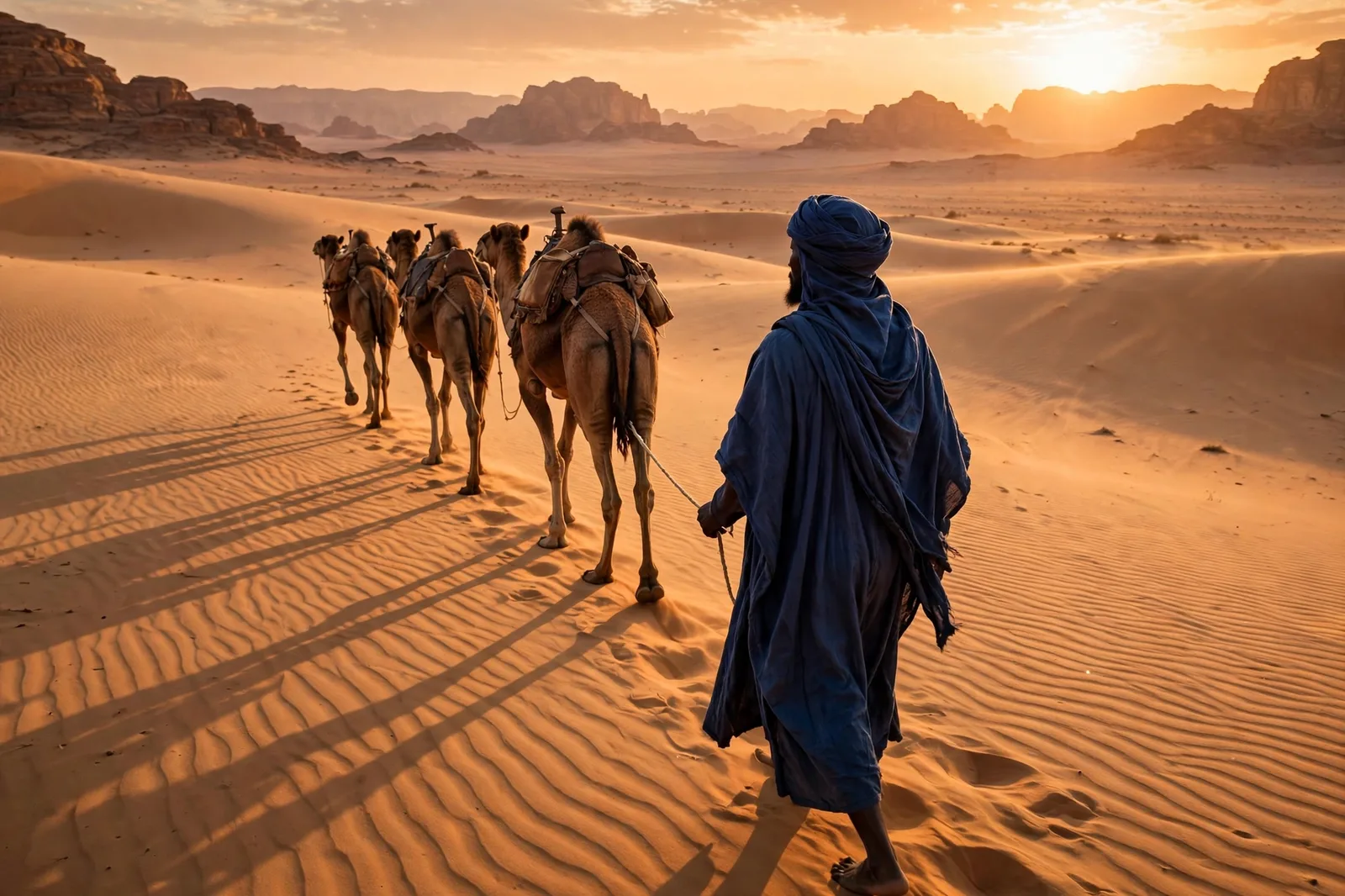
Here is what a classic week looks like, based on the routes the Djanet agencies run. Day 1: fly Algiers to Djanet, meet your guide, drive to the plateau edge for your first sunset and first bivouac night. Day 2: Essendilene canyon and the emerald guelta, then the Crying Cow at Tegharghart at sunset. Day 3: climb onto the high plateau and walk toward Sefar. Day 4: Sefar itself, a full day among the rock towers and paintings. Day 5: walk on to Jabbaren, passing more painting sites including the Round Head figures. Day 6: Jabbaren’s painted shelters, then down to the Erg Admer dunes for sunset. Day 7: sunrise over the dunes, a last canyon walk, and back to Djanet for a hot shower. Use this as a template and let your agency adjust it. Seven days sounds like a lot until you are there, and then it feels too short.
Why now is the moment
Algeria is having a moment. Travel experts named it one of the most compelling emerging adventure destinations for 2026, with its highest tourism growth in twenty years. The Sahara season just opened. The agencies are running, the flights are flying, and Tassili is still nowhere near as crowded as the famous desert destinations in Morocco or Egypt. You can walk through a 12,000-year-old art gallery and not see another tourist all day.
That will not last forever. Right now, Tassili is in the sweet spot: accessible enough to visit safely with a good guide, remote enough to feel like a real expedition.
So here is the problem this trip solves. If your travel list is full of places you have already seen on Instagram a thousand times, Tassili is the answer. It is genuinely different, genuinely ancient, and genuinely beautiful, and it is open right now. Book the flight to Djanet, find a licensed Tuareg guide, and go and stand in front of a painting that someone made when mammoths still walked the Earth. You will come home with a story nobody else at the dinner table has.
Want more adventures like this? Follow The Cavee on Pinterest for a new destination every day, and check our 2026 guide to Saudi Arabia’s Red Sea coast for another emerging adventure destination that is wide open right now.
Quick answers before you go
Do I need a visa for Algeria? Most nationalities need a visa, arranged in advance through an Algerian embassy. Start the process early, and ask your tour agency for a letter of invitation, which helps.
Can I visit Tassili without a guide? No. A permit and a licensed guide are mandatory, and your agency arranges both.
What is the best month? November to February, with November and December offering the best combination of weather and light.
How fit do I need to be? The one-day trips suit anyone who can walk comfortably. The Sefar and Jabbaren treks need good fitness and a willingness to walk four to six hours a day on rocky ground.
What does it cost? Roughly 600 to 1,200 euros per person for a 7-day all-inclusive trek, or 12,000 to 18,000 dinars for a one-day excursion from Djanet.
