You Will Get Wet, You Will Laugh, You Might Swear a Little: Wadi Mujib, Jordan’s River Canyon, Before Its Season Closes
Here is the problem with most Jordan itineraries. They go Petra, Wadi Rum, Dead Sea, done. That is a fine trip, but it misses the one day that people actually talk about for years afterward. It is not the day they floated in the Dead Sea. It is the day they waded waist deep through a canyon, climbed a waterfall with a rope in one hand and a grin on their face, and came out soaked, sunburned, and weirdly proud of themselves.
That day is Wadi Mujib. And if you are reading this in late October, there is a clock ticking on it. The wet trails in Wadi Mujib run from April 1 to October 31. After that, the Siq Trail, the famous one, closes for the season. You can still walk the dry Ibex Trail in winter, and that is a lovely hike in its own right, but it is not the same thing. It does not get you wet. It does not make you laugh out loud in the middle of a river. So this guide is written for two kinds of reader at once: the lucky person who can still squeeze in a late October visit, and the smart planner who is going to book the first good week of April and do it properly.
I will be honest with you up front. This is not a gentle riverside stroll with a cafe at the end. You will get wet up to your waist, sometimes deeper. You will slip. You will use muscles you forgot you had. And you will probably, at least once, look at a waterfall in front of you and think, seriously, I have to climb that? Yes. Yes, you do. And that is exactly why it works.
What Wadi Mujib actually is
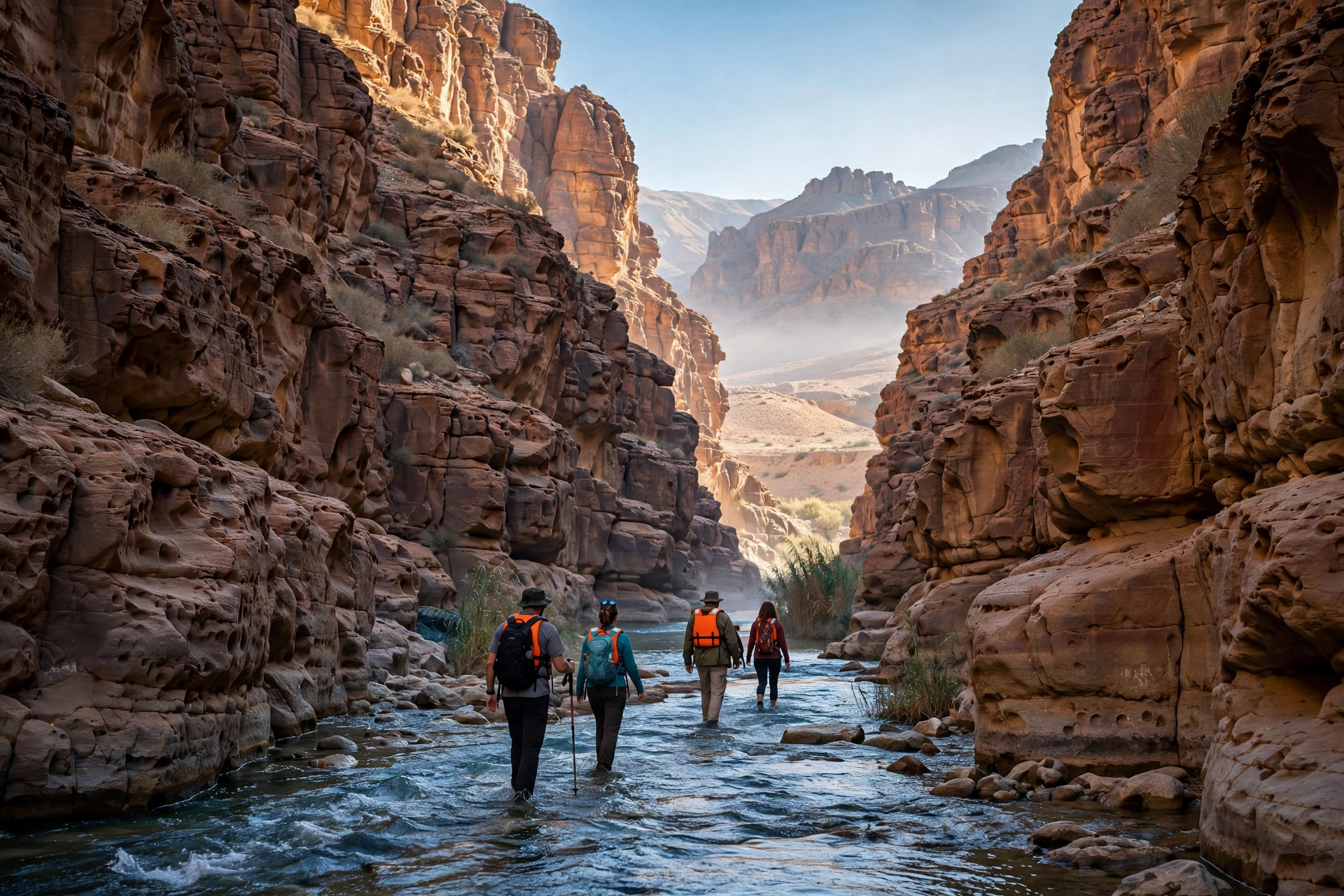
Wadi Mujib is a deep river canyon in Jordan, not far from the Dead Sea. The reserve sits on the eastern side of the Dead Sea, roughly between Amman, Madaba, and the Dead Sea road, and the canyon cuts down through sandstone in layers of red, pink, and ochre that look almost painted. The Mujib River runs through it, which is why this canyon is different from the dry wadis that most visitors picture when they hear the word desert. This one has water in it, real flowing water, and in the heat of a Jordanian summer that water is the whole point.
The reserve is managed by the Royal Society for the Conservation of Nature, known as the RSCN, and that matters for your planning. This is not a free for all where you just turn up and wander in. Trails have seasons, opening hours, age and height rules, and staff posted at the tricky spots. That structure is a good thing. It keeps the canyon safer, it keeps visitor numbers manageable, and it means you are never completely on your own when a crossing gets awkward.
The Siq Trail at a glance
The Siq Trail is the trail most people mean when they say Wadi Mujib. It starts at the Wadi Mujib Adventure Centre, near the Dead Sea road, and it goes upstream, against the flow, into the canyon. Guides from recent seasons put it at about 2 to 3 hours, covering roughly 3 kilometres in total there and back, although the exact distance feels longer when you are wading. You start in the morning, because the centre opens at 8 in the morning during the season and last entry is in the afternoon, and you finish back at the centre, wet and happy, in time for lunch.
Here is the part that surprises first timers. The Siq Trail ticket includes an RSCN guide, and staff are positioned at the harder crossings to help you through. You are not hiring a private guide as an extra, and you are not expected to figure out the waterfall climbs alone. That changes the whole feel of the day. It is adventurous, but it is supervised adventure, which is the best kind for most of us.
On prices, be ready for small differences between sources, because operators and guides update their numbers at different times. Recent 2026 guides put the Siq Trail at around 21 to 23 Jordanian dinars per person at the centre, including a life vest. Longer guided trails in the reserve cost more, with the Canyon Trail listed at around 31 dinars and the Malaqi Trail at around 44 dinars in a guide updated in October 2026. Water shoe rental is a few dinars on top. Private day trips from Amman cost far more, because you are paying for the car and driver for the whole day, not just the trail. Budget for the trail ticket, plus transport, plus a dry bag if you do not bring your own, and you will not get any nasty surprises.
What actually happens, step by step
You arrive at the Adventure Centre, you check in, you put on a life vest, and you walk down to the water. The first stretch is almost deceptively easy. The canyon is wide, the water is shallow, and you think, this is fine, I could do this all day. Then the walls start to close in, the water gets deeper, and the current starts to make itself known. That is when the trip gets interesting.
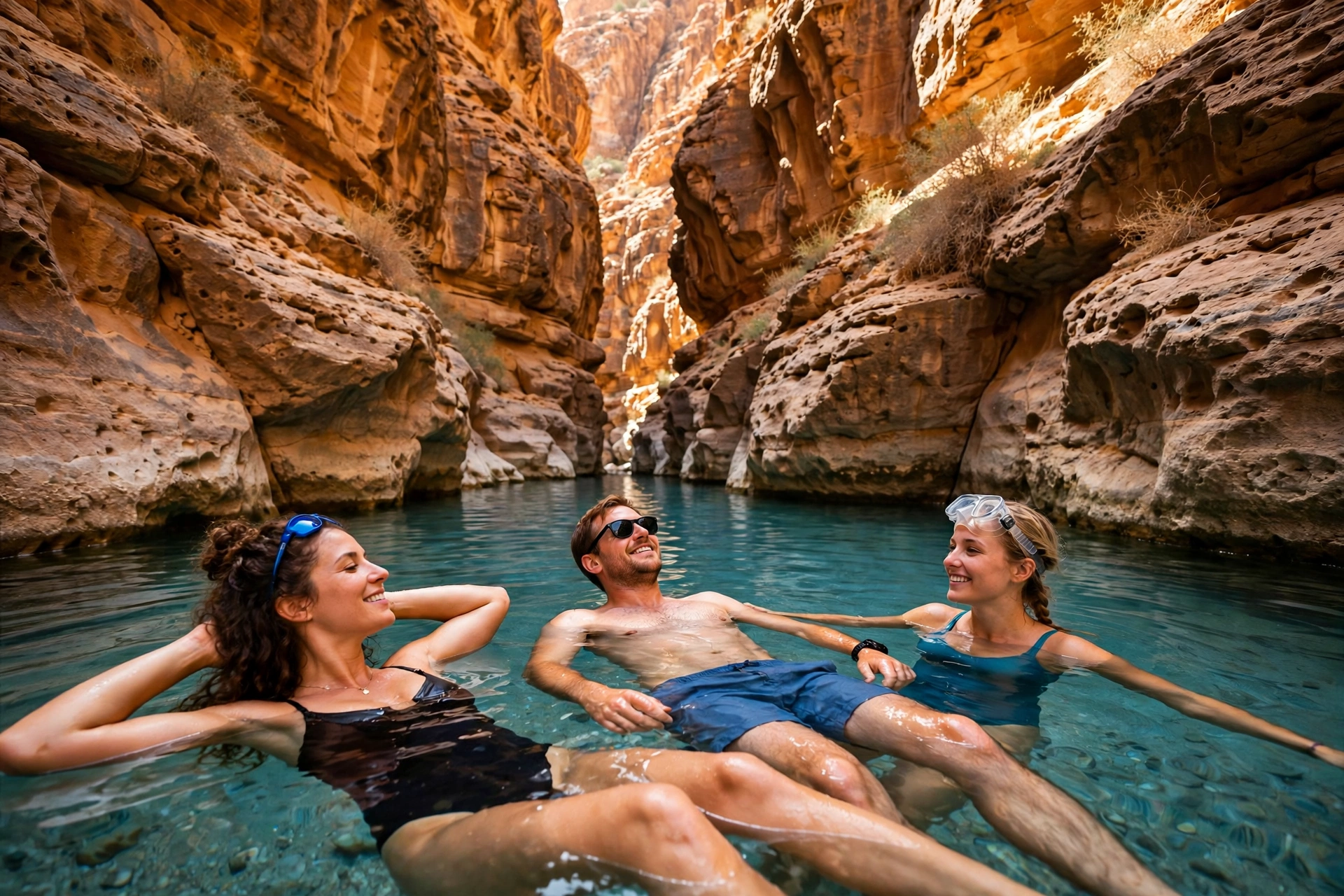
Most of the Siq Trail is wading and scrambling. You walk in the river, you climb over smooth boulders, you hold on to rocks, and you swim short stretches where the pools are too deep to walk through. Your life vest does a lot of the work in those pools, which is reassuring if you are not a strong swimmer, although the reserve does expect visitors on the wet trails to be competent in moving water. This is not a place to learn to swim. It is a place to enjoy swimming you already know how to do.
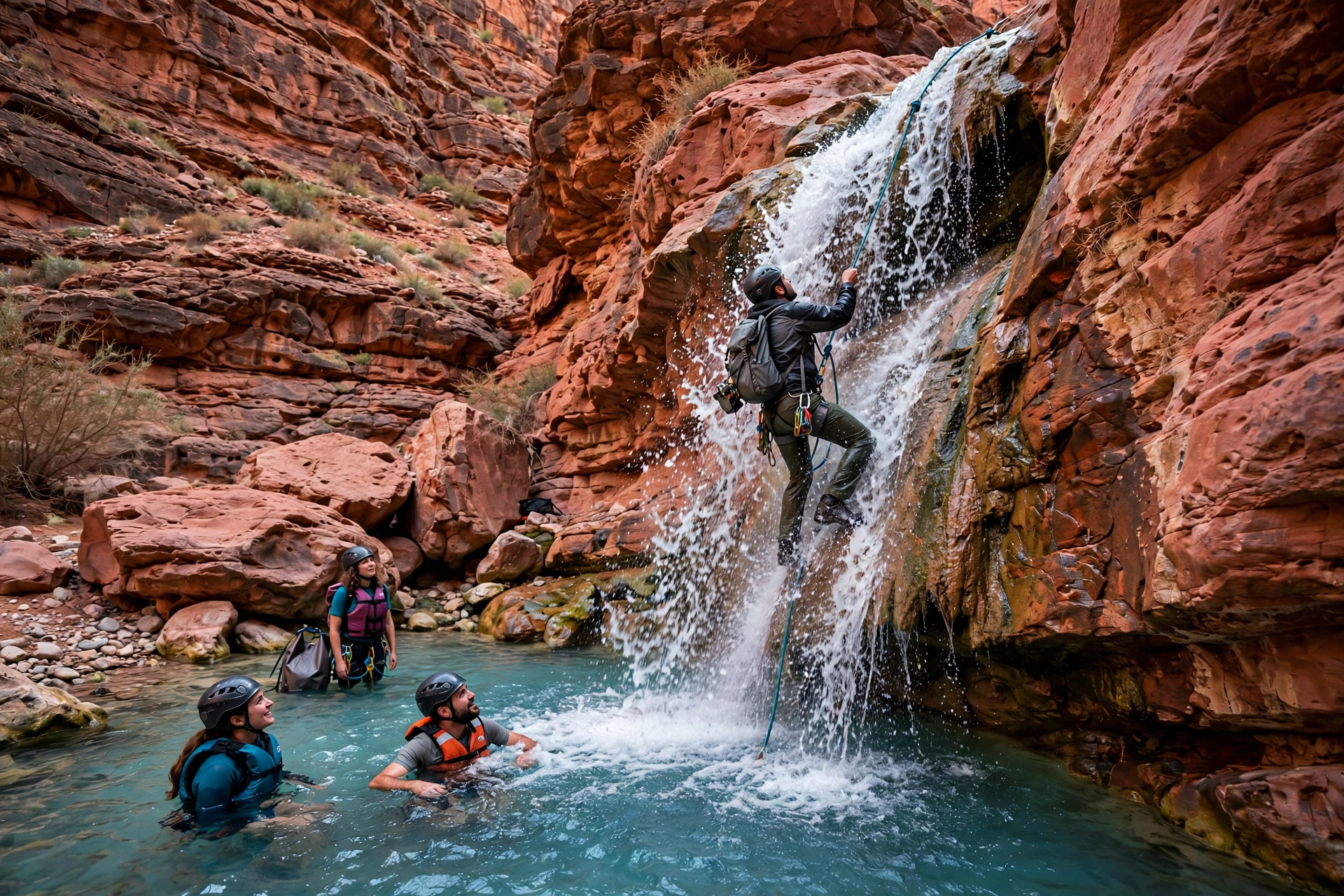
Then come the waterfalls. They are not huge, thundering falls. They are smaller drops, maybe a metre or two, with ropes fixed to help you climb up them against the flow. This is the moment that makes the trip. You plant your feet, you pull on the rope, the water pushes at your legs, someone ahead of you shouts encouragement, and then you are up, standing in a pool above the fall, dripping and laughing. Do that three or four times and you start to feel like a different person from the one who nervously put on a life vest an hour earlier.
The honest difficulty question: can I actually do this?
This is the question everyone really wants answered, so let me answer it plainly. If you can walk for a few hours, you can swim a short distance, you are comfortable getting wet, and you do not panic in moving water, you can do the Siq Trail. You do not need to be an athlete. You do need to be honest about your fitness and your comfort in water.
It is graded easy to moderate by most guides, and that feels about right. The walking itself is not hard. The challenge is the combination: wet rock, current, a bit of climbing, and heat. People who struggle are usually not unfit. They are usually wearing the wrong shoes, carrying too much stuff, or trying to keep their phone dry with one hand while climbing with the other. Solve those three problems and the trail gets much easier.
Age and height rules apply, and the centre checks them. The wet trails are not for young children, and the reserve treats the Siq Trail as unsuitable for small children or anyone who is not confident in moving water. Older children and teenagers who swim well generally manage it fine. If you are travelling with small kids, do not try to bend this rule. Take the dry Ibex Trail instead, which runs all year, and come back for the Siq Trail when they are older. Everyone will have a better day that way.
If you have a bad knee, a bad shoulder, or a fear of deep water, talk to the centre staff before you pay. They see hundreds of visitors a week in season and they will tell you straight whether the Siq Trail is a good idea for you. The longer Malaqi Trail, at about 6 kilometres and 6 to 7 hours, and the Canyon Trail, at about 4 kilometres and 2 to 3 hours, are both guided trips that need advance booking, and they are harder. Start with the Siq. If you love it, you have a reason to come back.
What to wear and what to pack
This section solves the problem that ruins more Wadi Mujib days than anything else: people turn up dressed for a desert viewpoint, not for a river. So here is the list that actually works.
Wear water shoes with grip, not flip flops and not your best trainers. You can rent water shoes at the centre for a few dinars, but your own pair, broken in, is better. Wear swimwear under quick dry shorts and a top you do not mind getting soaked. A rash guard or a light long sleeve top is smart, because it protects you from sun and from scrapes on the rock. Leave the cotton t shirt at the hotel if you can. Cotton gets heavy when wet and stays wet for hours.
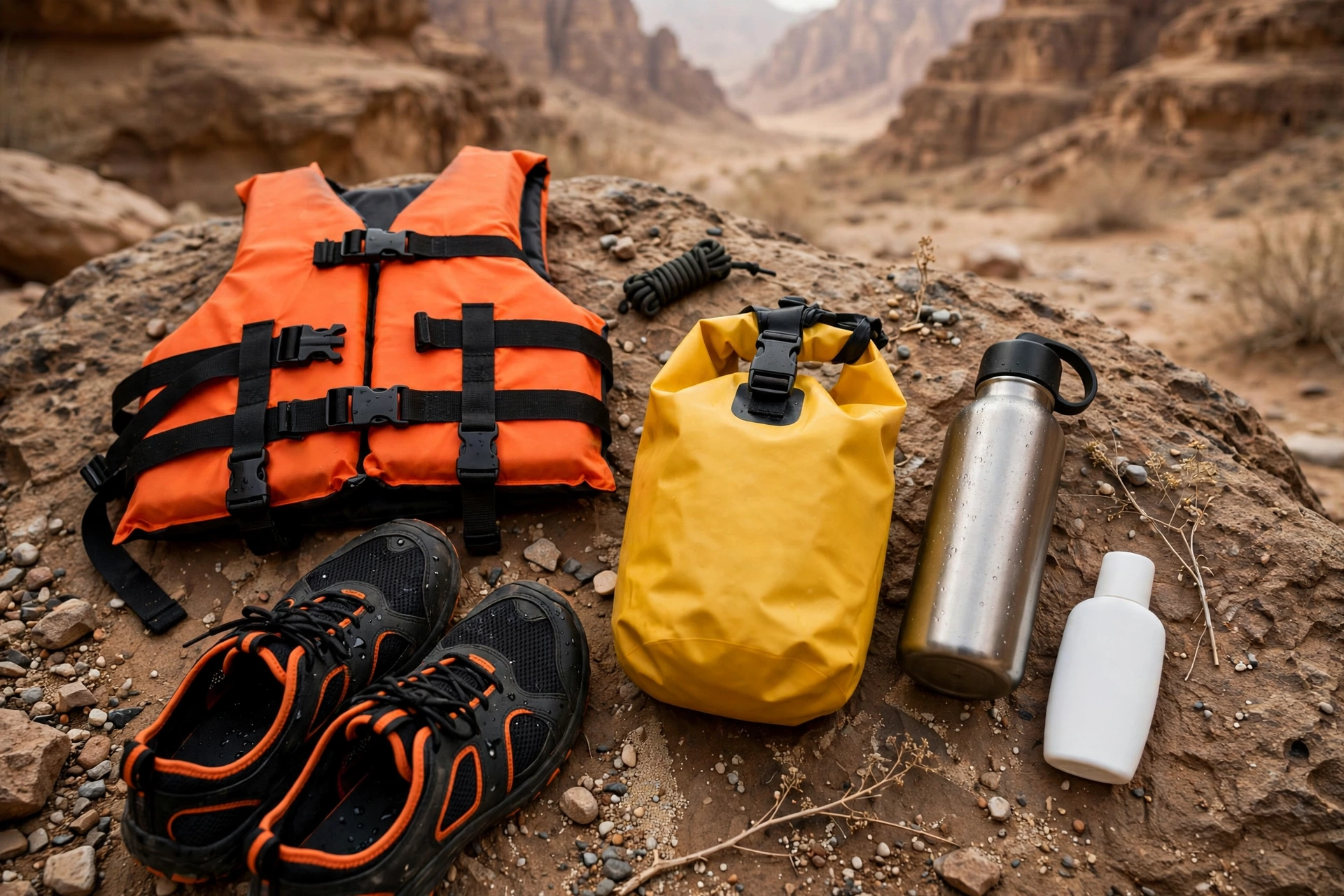
Bring a dry bag for your phone and your car keys, and test it before you get in the water. Put a tissue inside, seal it, dunk it in a sink, and check. That thirty second test has saved more phones than any waterproof case marketing ever will. Better still, leave the phone in a locker if you can, and let the guides take photos at the good spots. The centre has a small number of free lockers, but you need your own padlock, and padlocks are sometimes available at the desk for a small fee.
Bring water, sunscreen, and a hat for the walk to and from the centre, but do not carry a big backpack in the canyon. A small dry bag on your back is enough. Eat a proper breakfast, because you will burn a lot of energy in the water, and plan a real lunch afterward. There is nothing like a plate of food after two hours in a river to make you feel like you have earned your holiday.
Getting there and building a day around it
Wadi Mujib sits on the Dead Sea side of Jordan, and most visitors come from Amman, Madaba, or a Dead Sea hotel. The drive from Amman takes about an hour and a half to two hours depending on traffic and your exact starting point, and the Dead Sea road itself is part of the experience. It drops down, down, down to the lowest point on earth, and the landscape changes from city to desert to salt flats in a way that never gets boring.
If you are based in Amman, consider combining Wadi Mujib with Madaba and Mount Nebo on the way back. Madaba is famous for its mosaics, Mount Nebo has the view over the Jordan Valley, and both are on a sensible route back toward the capital.
If the Siq Trail is closed, or not for you
Wadi Mujib has more than one trail, and the reserve closes individual wet trails inside the season for rain, flooding, or low water. If you arrive and the Siq Trail is closed that day, do not argue with the staff and do not try to sneak in. Flash floods in desert canyons are real, fast, and deadly, and the staff are closing the trail because they know something about the water that you do not.
Instead, ask about the Ibex Trail. It is a dry trail, about 5 kilometres there and back, that runs all year and climbs up above the canyon with views over the Dead Sea. You will likely see ibex if you go quietly, which is where the trail gets its name, and you will get the scale of the canyon in a way that you cannot from inside the river. It is a different experience, but it is a good one, and it is far better than a wasted day.
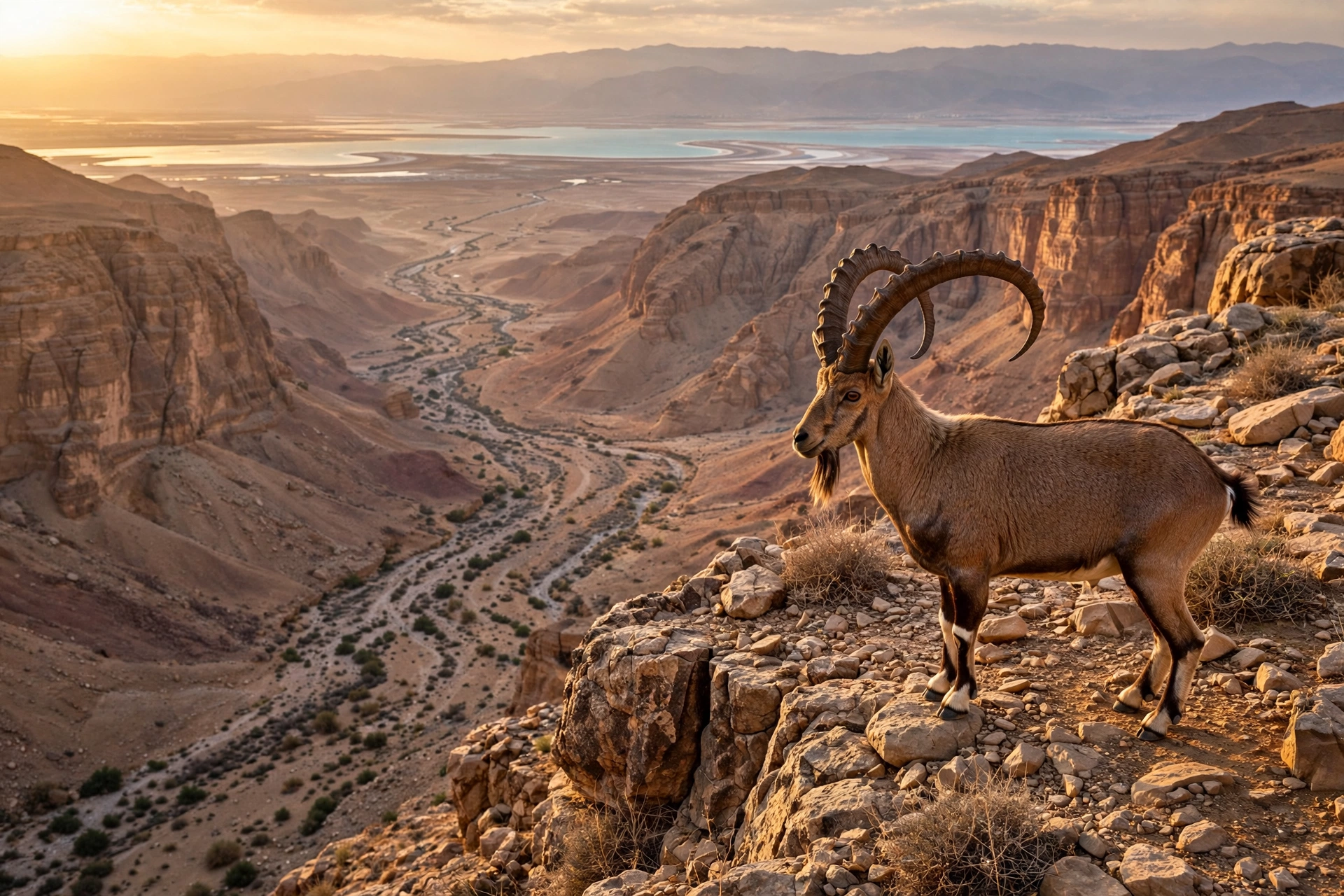
The longer guided trails are worth knowing about for a return trip. The Malaqi Trail is the full day adventure, about 6 kilometres and 6 to 7 hours, with a guide and advance booking required. The Canyon Trail is about 4 kilometres and 2 to 3 hours, also guided and booked ahead. Both cost more than the Siq Trail and both need a higher level of fitness and water confidence. Think of the Siq as the introduction, and these as the sequel.
Common mistakes, and how to avoid them
Mistake one: turning up late. The centre has opening hours and a last entry time for a reason. Turn up at noon in July expecting a leisurely start and you will either be turned away or rushed. Go early, every time.
Mistake two: bringing a phone with no protection and a bag you love. The canyon will win that fight. Dry bag, locker, or leave it behind. Your photos will be better if you are not worrying about your phone for two hours anyway.
Mistake three: wearing jeans. I have seen it, and I still do not understand it. Jeans in a river are heavy, cold, and miserable. Quick dry clothes are not a fashion statement here. They are the difference between a great day and a soggy trudge.
Mistake four: skipping water and sunscreen because you will be in water all day. You will be in water, but you will also be walking in the sun to and from the canyon, and you will be working hard. Drink before you feel thirsty, reapply sunscreen on the parts of you that are out of the water, and eat properly afterward.
Safety, honestly
Let me be direct about safety, because canyoning guides who gloss over it are doing you no favours. Moving water is powerful. Wet rock is slippery. Desert canyons can flood with very little warning when rain falls upstream, even if the sky above you is blue. That is why the reserve has seasons, opening hours, guides, and the right to close trails at short notice. Respect all of it.
Do not go alone into side canyons, do not climb above the trail end waterfall, and do not try to swim against a strong current to prove something. The trail is designed to be fun within clear limits, and staying within those limits is what keeps it fun. If the water looks higher or faster than you expected, tell a guide. If you feel tired, say so. The canyon will still be there next season, and you want to be there too.
The bottom line
Wadi Mujib solves a specific travel problem. Jordan has world famous sights, but world famous sights can sometimes feel like looking at a postcard in person. Wadi Mujib feels like being inside the postcard, cold water and all. It is physical without being extreme, it is guided without being sanitised, and it is the story you will tell at dinner for months afterward, usually starting with the words, you will not believe what I climbed today.
If the season is still open when you read this, and you are anywhere near the Dead Sea, go. Go early, wear the right shoes, protect your phone, listen to the guides, and let yourself laugh when the water hits you. If the season has just closed, do not be sad. Book for April, put it at the start of your Jordan plan rather than as an afterthought, and build the rest of the trip around a morning in the river. Either way, Wadi Mujib is worth the planning, worth the wet shoes, and worth the drive down to the Dead Sea.
Want more adventures like this? Follow The Cavee on Pinterest for weekly travel ideas, and read the full story here on thecavee.com. If you loved the water, you will also enjoy our guide to Saudi Arabia’s Red Sea coast, our Ha Giang Loop motorbike guide in Vietnam, and our Upper Mustang permit guide in Nepal. For Wadi Mujib specifics, check the Salt in Our Hair Wadi Mujib guide and the Drink Tea Travel Wadi Mujib reserve guide, both updated in 2026.