Your Coffee Table Is Begging for Better Coasters: Why Handmade Wood and Epoxy Resin Ones Are Worth Every Penny
Last spring I finally bought the coffee table I had been eyeing for two years. Solid wood, beautiful grain, the kind of piece that makes a living room feel finished. Within a week, it had a white ring on it. One glass of iced coffee, one distracted afternoon, and there it was: a pale ghostly circle staring up at me every time I sat down.
I tried the usual fixes. Those thin cork coasters that slide around the moment you set a mug down. The silicone ones that look like they belong in a laboratory. A stack of old magazines, which honestly worked but made my living room look like a waiting room at a dentist’s office. Nothing felt right.
Then a friend showed me her set: handmade cedar coasters with clear epoxy resin centers, sitting in a matching little holder. They looked like tiny pieces of art. She had bought them on Etsy for less than the cost of a pizza night. I ordered a set that same evening, and two years later they are still the most complimented things in my house.
This is the story of why handmade wood and epoxy resin coasters went from a craft-fair curiosity to one of the most searched home decor items on Etsy, and how to pick a set you will actually love.
The White Ring Problem Nobody Talks About
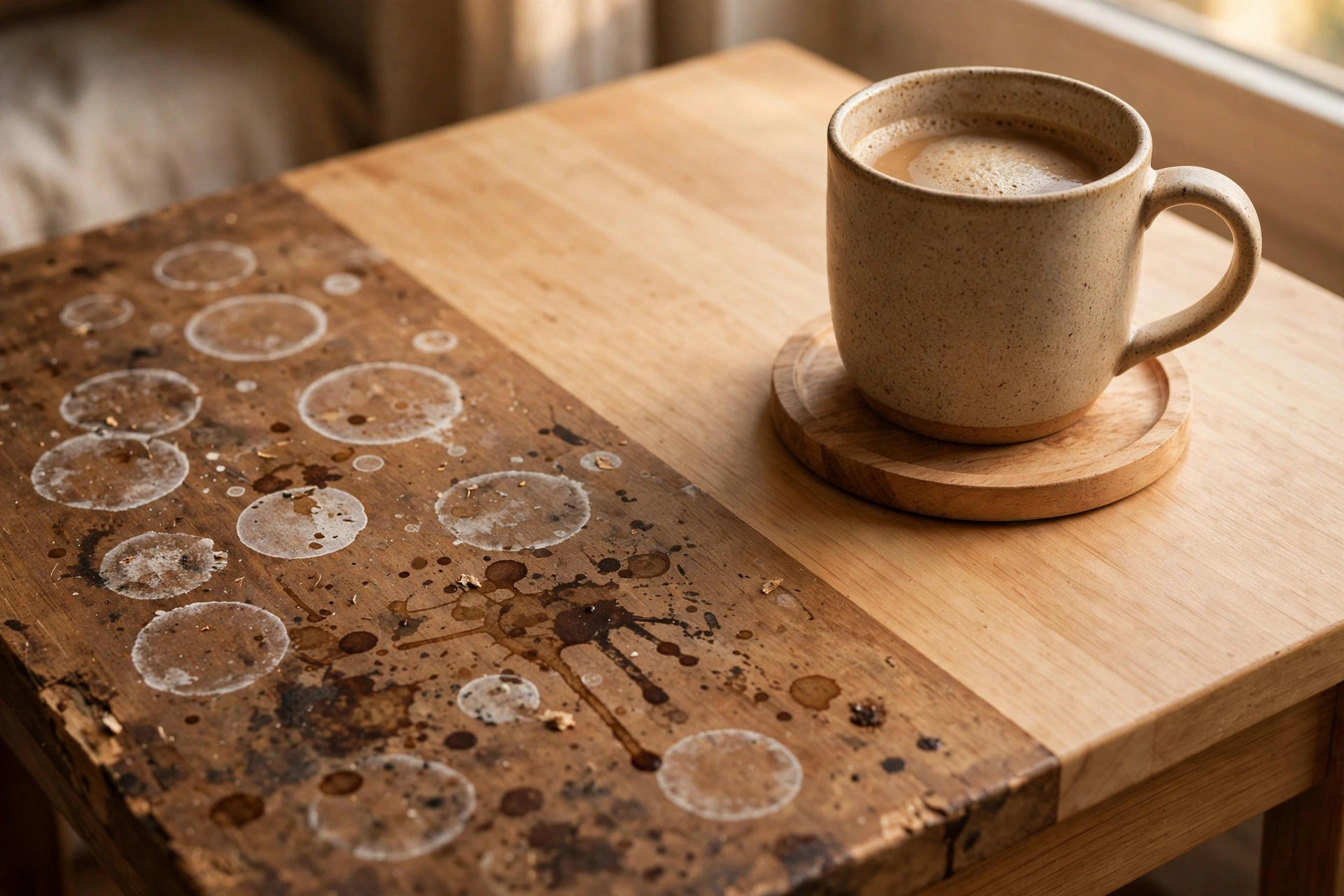
Here is what actually happens when you set a cold drink on bare wood. Condensation runs down the glass, pools underneath, and moisture seeps into the finish. With hot drinks it is even worse: heat softens many common furniture finishes, and the moisture gets trapped, leaving that cloudy white mark. Furniture repair folks have a name for the panic this causes. They see it constantly.
The math is what sold me. Refinishing or even spot-repairing a good wooden table can cost hundreds of dollars and days of hassle. A quality handmade coaster set costs somewhere between 25 and 90 dollars. It is one of those rare purchases where the cheap option genuinely protects the expensive one.
But here is the thing most people learn the slow way: not all coasters are equal. Thin mass-produced ones absorb moisture, warp, and look tired within months. A well-made handmade wooden coaster, sealed properly, will outlast most of the furniture it sits on. That is not marketing talk. Wood sealed with oil or resin simply does not let water through.
What “Handmade Wood and Epoxy Resin” Actually Means
The phrase sounds fancy, but the idea is simple. A woodworker takes a slab of real wood, often with a live edge or an interesting grain pattern, and pours tinted or clear epoxy resin into the gaps, cracks, or a carved channel. Once it cures, the whole thing is sanded glass-smooth and sealed. The result is one piece: warm wood flowing into glossy resin, like a river running through a forest.
Every single one is different. Wood grain never repeats itself, resin swirls settle differently each pour, and many makers burn fractal lightning patterns into the wood before sealing it. You are not buying a product off an assembly line. You are buying the one piece that came out of that particular pour, and nobody else on earth has its twin.
That uniqueness is exactly why these blew up on Pinterest and Etsy. In a world of identical everything, people are hungry for objects with a fingerprint.
The Woods That Carry the Whole Look

The wood is not just a base. It decides the entire personality of the coaster. Here are the ones you will see most, and what each one brings:
Cedar
Light, warm, and it smells faintly of a forest when new. Cedar is soft enough to carve beautifully, which is why so many artisan sets use it. A cedar set with clear resin, like the popular six-piece sets with matching holders, has a bright, Scandinavian feel that works in almost any room.
Walnut
Dark, dramatic, and unmistakably premium. Walnut is the wood of the famous “river” coasters, where a channel of blue or emerald resin runs through deep brown grain. It photographs beautifully, which is half the reason walnut sets dominate the bestseller lists.
Olive wood
Wild, swirling grain with honey and caramel tones. Olive wood grows slowly, so every piece has character. Hand-carved olive wood coasters with resin accents feel Mediterranean and warm, and they pair perfectly with wine glasses and dinner parties.
Honorable mention goes to acacia, the workhorse of handmade kitchenware. It is hard, naturally water-resistant, and takes a gorgeous polish. If you want coasters that can survive daily abuse from a busy household, acacia is a smart pick.
Epoxy Resin: Pretty, But Does It Actually Work?
Fair question. Resin looks like glass, so people worry it will crack, melt, or look cheap. Here is the honest version.
Good epoxy resin, fully cured, is waterproof, stain-resistant, and wipes clean with a damp cloth. Coffee, red wine, condensation: none of it soaks in the way it does with raw wood or cork. For cold drinks and warm mugs, resin coasters perform beautifully.
The one real limit is extreme heat. Most craft-grade resins start to soften somewhere well above what a coffee mug delivers, but you should not set a screaming-hot teapot straight off the stove on one. For normal drinks, you are completely fine. If you are a “kettle directly on the table” person, look for sets marketed as heat-resistant, or keep one trivet for the heavy-duty jobs.
One more honest note: cheap resin can yellow in strong direct sunlight over time. Quality makers use UV-stable resin, and keeping coasters off a sun-blasted windowsill solves the rest. Ask the seller what resin they use if you are spending real money. A good maker will tell you proudly.
The Styles People Are Actually Buying Right Now

I dug through Etsy’s current bestseller lists and wood craft categories to see what is genuinely selling, not just what looks good in photos. Five styles keep showing up:
1. The resin river set
The classic. Dark walnut with a vivid resin river, beveled edges, oil-sealed wood. Shops like Urthwoodstudio sell these around $39.99 with five-star reviews, and buyers rave about how the resin catches the light. This is the style that started the whole trend, and it is still the safest choice if you want the “wow” factor.
2. The lightning-burn showpiece
Makers run high-voltage current through the wood to burn fractal, lightning-like patterns, then fill them with colored resin. WoodenStarling’s walnut sets with this pattern start around $91 and are marked as rare finds. They are genuinely miniature art pieces. Expensive, yes, but people buy them as statement pieces, not just drink protection.
3. The cedar everyday set with holder
Six cedar coasters in clear resin with a matching holder, the kind of set that lives on the coffee table permanently. AvocraftsCo sells these from $26.55 on sale with five-star ratings. This is the best value on this list by a mile: handmade, beautiful, and cheaper than most boring mass-produced options.
4. The olive wood rounds
Thick, hand-carved olive wood discs with resin inlays, sold in small sets. MadeOfOliveWood lists a three-piece set at $53.93. Each one has completely unique grain. These feel the most “artisan” of the bunch, and they make dinner tables look instantly more expensive.
5. The custom color set
Some buyers want their coasters to match their decor exactly. Shops like BeginningsHomeDecor offer sets of four in custom colors, from sleek black to romantic rose tones, around $30, with gift wrapping available. If your living room has a color scheme, this is your lane.

Prices move with sales and seasons, so treat these as a snapshot, but the pattern is clear: handmade sets cluster in the 25 to 90 dollar range, which puts them firmly in “thoughtful purchase, not luxury splurge” territory.
How to Pick a Set You Won’t Regret
After buying two sets and gifting three more, here is my honest checklist:
Size matters more than you think. Standard coasters run about 3.5 to 4 inches across. That fits mugs, wine glasses, and most tumblers. If you drink from oversized mugs or mason jars, look for the larger end of that range.
Thickness equals durability. The good ones are around 0.4 inches thick. They feel substantial, they do not slide around, and they survive being knocked off the table by a cat.
Check the finish. Look for listings that mention food-safe oil, lacquer, or a proper sealant. “Raw wood” coasters will stain. Sealed ones will not. This is the single biggest quality divider.
Get the holder if one exists. A matching holder turns six loose coasters into one tidy object that lives on the table. Without it, coasters migrate to every room in the house and you can never find more than three.
Read the reviews for the boring details. Star ratings are nice, but the useful reviews mention shipping speed, whether colors matched the photos, and how the coasters held up after months of use. That is where the truth lives.
Message the maker. Seriously. Most Etsy woodworkers love talking about their work. Ask what wood and resin they use, whether a set can be customized, how long processing takes. Their answer tells you everything about the quality you are about to receive.
Caring for Them Takes About 90 Seconds a Month

This is the part people overthink. Handmade wooden coasters are not delicate flowers. Here is the entire maintenance routine:
Wipe them with a damp cloth when they get sticky. That is the daily part, and you were going to wipe the table anyway.
Once every month or two, rub a thin coat of food-safe mineral oil into the wood parts with a soft cloth, let it sit for a few minutes, and buff off the excess. It takes about ninety seconds for a set of six. The oil keeps the wood from drying out and deepens the grain beautifully. Many makers include a small care card with the set.
Do not put them in the dishwasher. Do not soak them. Keep them out of blazing direct sun if you can. That is genuinely the whole list. My oldest set is two years into daily coffee duty and looks better now than the day it arrived, because the wood has developed a richer patina.
Why These Make Ridiculously Good Gifts

Here is a problem everyone has: what do you buy for someone who has everything? Housewarmings, weddings, holidays, the coworker gift exchange with the 30-dollar limit. Handmade coasters solve this beautifully.
They are personal without being risky. Nobody has strong opinions against coasters, yet a handmade set feels thoughtful in a way a gift card never will. Many shops offer engraving or custom colors, so you can match them to the recipient’s home. They arrive gift-ready from most sellers, and at 25 to 50 dollars they hit the sweet spot for almost every gift budget.
Quick tip if you sell handmade items yourself, or want to: the photos sell the piece. Good lighting and a styled scene (coffee steaming, table set) will do more for your sales than any description. If you want a crash course in making small objects look stunning on camera, these cave photography tips translate surprisingly well to product shots. Light is light, whether you are shooting underground or on your kitchen table.
Where to Actually Buy Them
Etsy remains the best place to find genuine handmade sets, because you can talk directly to the maker and see real buyer photos in reviews. Start with the wood best sellers section to see what is trending right now, then filter by the style and wood you like.
What to look for in a shop: Star Seller status or consistently high ratings, clear photos of the actual product (not renders), a description that names the wood species and finish, and reviews with customer photos. Red flags: stock photos, no mention of materials, and prices that seem too good for real wood. A six-piece handmade walnut set for twelve dollars is not handmade walnut.
Amazon and eBay carry resin coasters too, but read carefully: many are factory-made resin with no real wood at all. There is nothing wrong with those if you just want the look, but do not pay handmade prices for them.
The Bottom Line
Two years after that first white ring appeared on my coffee table, I have strong opinions about coasters, which is a sentence I never expected to write. But here we are.
A handmade wood and epoxy resin coaster set does three jobs at once: it protects furniture that costs ten times more, it looks like a small piece of art sitting on your table, and it supports an actual craftsperson instead of a warehouse. For 25 to 90 dollars, that is a lot of value per square inch.
If your tables are currently defended by a stack of junk mail, consider this your sign. Your furniture will thank you.
Loved this? Pin it for later and follow The Cavee on Pinterest for more handmade home ideas. Read the full story and more craft guides on thecavee.com.
Pingback: Book-Shaped Cutting Boards: The Viral Acacia Kitchen Set (2026 Review)
Pingback: Handmade Wooden Blanket Ladder: The Cozy Storage Fix for Throw Blanket Clutter (2026 Guide)
Pingback: Handmade Wooden Magnetic Knife Block Review (2026): Burl Wood + Epoxy, From $178
Pingback: Handmade Piano Coat Rack: Flip-Down Wooden Hooks Review 2026
Pingback: Handmade Black Walnut Phone Speaker Stand: Acoustic Amplifier Review
Pingback: Your Plastic Christmas Decor Looks Cheap Every Year. These Solid Wood Trees Fix That Forever - thecavee
Pingback: Handmade Beach Resin Lazy Susan: Acacia Wood Turntable That Ends Kitchen Clutter
Pingback: Handmade Wooden Bread Box: Keep Bread Fresh for Days (2026 Guide)